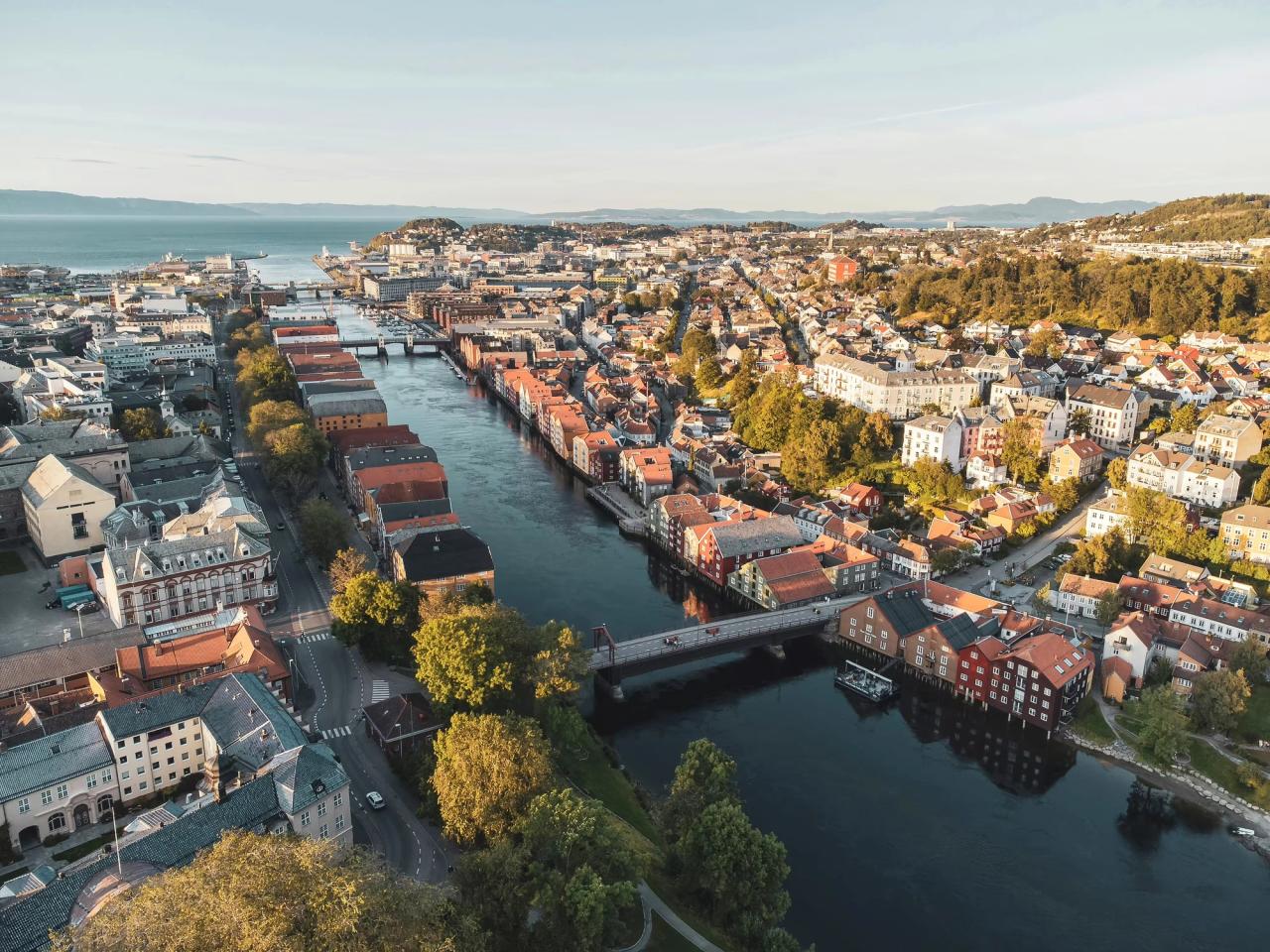
Trondheim ist Norwegens drittgrößte Stadt und die unangefochtene Technologie- und Bildungshauptstadt des Landes. Hier befinden sich die NTNU – die Norwegische Universität für Wissenschaft und Technologie – und der beeindruckende Nidarosdom. Trondheim verbindet mittelalterliches Erbe mit modernster Forschung und Innovation. Die studentische Energie, die überschaubare Größe und die Nähe zur Natur machen die Stadt bei Akademikern, Ingenieuren und Familien, die ein ruhigeres norwegisches Leben suchen, besonders beliebt.
Trondheim auf einen Blick
- Einwohnerzahl
- ~215.000 (Ballungsraum ~280.000)
- Region
- Mittelnorwegen (Trøndelag)
- Bekannt für
- NTNU, Nidarosdom, Technologie- und Forschungszentrum
- Durchschnittsmiete (1 Zimmer)
- NOK 9.500–13.000/Monat (Stadtzentrum)
- Durchschnittsgehalt
- NOK 33.000–39.000/Monat netto
- Expat-Community
- Mittel — geprägt von Studierenden, Forschenden und Technikern
Warum ein Umzug nach Trondheim
- Technologie- und Forschungszentrum: Die NTNU treibt ein starkes Startup-Ökosystem an und zieht Tausende internationale Forschende an.
- Bezahlbares Leben: Niedrigere Mieten und Lebenshaltungskosten als in Oslo und Bergen bei wettbewerbsfähigen Gehältern.
- Nidarosdom: Das größte mittelalterliche Bauwerk Skandinaviens und Norwegens nationales Heiligtum.
- Natur vor der Tür: Fjorde, Wälder und Loipen sind nur wenige Minuten vom Stadtzentrum entfernt.
- Studentische Atmosphäre: Mit über 40.000 Studierenden hat die Stadt eine jugendliche, lebendige Ausstrahlung.
Wohnungssuche in Trondheim
Durchschnittsmieten
| Stadtteil | 1-Zimmer (NOK/Monat) | 3-Zimmer (NOK/Monat) | Charakter |
|---|---|---|---|
| Midtbyen (Zentrum) | 11.000–14.000 | 20.000–27.000 | Zentral, historisch, nahe dem Dom |
| Bakklandet | 10.000–13.000 | 18.000–24.000 | Reizende Holzhäuser, Cafés, am Flussufer |
| Moholt | 8.000–10.500 | 14.000–18.000 | Studentenorientiert, nahe dem NTNU-Campus |
| Byåsen | 9.000–12.000 | 16.000–22.000 | Familienfreundlich, erhöht gelegen, naturnah |
| Lade | 9.500–12.500 | 17.000–23.000 | Küstennah, moderne Wohnungen, Einkaufsmöglichkeiten |
| Ila | 8.500–11.000 | 15.000–20.000 | Ruhig, Wohngebiet, gutes Preis-Leistungs-Verhältnis |
Wohnungssuche
- Finn.no: Die wichtigste Plattform für Miet- und Kaufangebote in ganz Trondheim.
- Hybel.no: Beliebt für Wohngemeinschaften und Studentenwohnungen.
- SIT (Studentsamskipnaden i Trondheim): Studentenwohnungen für NTNU — bewerben Sie sich sofort nach der Zulassung.
- Facebook-Gruppen: „Trondheim Bolig“ und Studenten-Wohnungsgruppen veröffentlichen regelmäßig Angebote.
Tipps für Expats
- Die Konkurrenz steigt im August vor Semesterbeginn — beginnen Sie die Suche Monate im Voraus.
- Studentenwohnungen über SIT sind günstiger, haben jedoch lange Wartelisten.
- Eine fødselsnummer wird meist für den Mietvertrag benötigt — sorgen Sie zunächst für eine Übergangsunterkunft.
- Prüfen Sie, ob Nebenkosten enthalten sind — viele Inserate zeigen nur die Kaltmiete (kald husleie).
- Die meisten Wohnungen sind unmöbliert — planen Sie ein Budget für Möbel ein oder suchen Sie nach möblierten (møblert) Angeboten zu höherer Miete.
- Parkplätze (p-plass) in Trondheim können 1.000–2.000 NOK/Monat kosten, falls sie nicht zur Wohnung gehören.
Stadtteilführer
- Midtbyen: Das historische Zentrum. Fußgängerfreundlich, lebhaft und zentral gelegen. Hohe Miete für Trondheim.
- Bakklandet: Wahrzeichen mit bunten Holzhäusern am Fluss. Cafés, Galerien und Charme. Mittlere Miete.
- Moholt: Studentenviertel nahe dem NTNU-Campus. Bezahlbare Wohnblocks und Lebensmittelgeschäfte. Niedrige Miete.
- Byåsen: Elevateds Wohngebiet, beliebt bei Familien. Größere Häuser und schneller Zugang zum Bymarka-Wald. Mittlere Miete.
- Lade: Küstennaher Stadtteil östlich des Zentrums mit Einkaufszentren und neueren Wohngebieten. Mittlere Miete.
- Ila: Ruhiges Wohngebiet westlich des Zentrums mit einer Mischung aus alter und neuer Bebauung. Niedrige bis mittlere Miete.
- Ranheim: Östlicher Vorort mit neueren Häusern, Schulen und Küstennähe. Familienfreundlich. Niedrige bis mittlere Miete.
Lebenshaltungskosten in Trondheim
Monatliche Budgetübersicht
| Kategorie | Budgetrahmen (NOK) |
|---|---|
| Miete (1-Zimmer, zentral) | 9.500–13.000 |
| Nebenkosten | 1.300–2.000 |
| Internet | 450–650 |
| Lebensmittel | 3.500–4.800 |
| Verkehr (Monatskarte) | 700–800 |
| Essen gehen (4×/Monat) | 1.800–3.200 |
| Freizeit/Fitnessstudio | 400–650 |
| Gesamt | 17.550–25.100 |
Alltagskosten
- Kaffee: NOK 45–55
- Mittagessen (ungezwungen): NOK 130–170
- Monatliche Verkehrskarte: NOK 700–800
- Bier (Bar): NOK 80–105
- Kinoticket: NOK 130–155
- Laib Brot: NOK 30–42
- 1 Liter Milch: NOK 18–22
- Monatliche Fitnessstudio-Mitgliedschaft: NOK 350–550
- Pizza zum Mitnehmen: NOK 170–230
- Flasche Wein (Vinmonopolet): NOK 150–250
- Monatlicher Mobilfunktarif: NOK 250–400
Unterwegs in Trondheim
- Öffentlicher Nahverkehr: AtB betreibt Busse, den Metrobuss BRT (als Ersatz für die frühere Gråkallbanen-Straßenbahn) und Fähren. Eine Monatskarte kostet etwa NOK 700–800.
- Fahrrad: Flaches Stadtzentrum mit guter Fahrradinfrastruktur. Trondheim hat den einzigen Fahrradaufzug der Welt (Sykkelheisen Trampe).
- Auto: Überschaubarer Verkehr, aber die Parkplätze im Zentrum sind begrenzt und kostenpflichtig.
- Flughafen: Trondheim Værnes (TRD), 35 km östlich. Der Flughafen-Expressbus braucht 30–40 Minuten.
- Fernverkehr: Zugverbindungen nach Oslo (~6,5 Stunden) und Bodø. Busverbindungen zu Küstenstädten. Die Dovrebanen ist eine der malerischsten Eisenbahnstrecken Norwegens.
Gesundheitsversorgung in Trondheim
- Krankenhäuser/Kliniken: Das St. Olavs Hospital ist das Hauptkrankenhaus für Mittelnorwegen und mit der medizinischen Fakultät der NTNU verbunden.
- Englischsprachige Ärzte: Weit verbreitet, insbesondere an universitätsnahen Kliniken.
- Apotheken: Apotek 1, Boots und Vitusapotek.
- Notrufnummern: 113 (Krankenwagen), 110 (Feuerwehr), 112 (Polizei).
- Hausarztanmeldung: Registrieren Sie Ihren fastlege auf Helsenorge.no.
Erhalten Sie einen persoenlichen Umzugsplan
Hinterlassen Sie Ihre E-Mail, und wir senden Ihnen eine passende Checkliste plus drei Angebote gepruefter Umzugsunternehmen.
Visa und Aufenthaltsrecht
- Arbeitserlaubnis für Fachkräfte (faglært): Erfordert ein Stellenangebot und entsprechende Qualifikationen. Norwegen ist kein EU-Mitglied — es gibt kein EU-Blaue-Karte-System. Antragstellung über UDI (udi.no).
- Aufenthaltserlaubnis für Studierende: Für Personen, die an der NTNU oder anderen norwegischen Einrichtungen zugelassen wurden.
- Familiennachzugserlaubnis: Für enge Verwandte von in Norwegen lebenden Personen.
- Forschungsaufenthaltserlaubnis: Für Personen mit einer Gastvereinbarung mit NTNU oder SINTEF.
EU-/EWR-Bürger können frei leben und arbeiten, müssen sich jedoch innerhalb von 3 Monaten registrieren.
Visainformationen: https://www.udi.no/en/want-to-apply
Versorgung und Internet
- Strom: Zu den Anbietern gehören TrønderEnergi, Fjordkraft und Tibber. Durchschnittlich 700–1.400 NOK/Monat. Die Winter sind kalt, daher steigen die Heizkosten von November bis März.
- Internet: Telenor, Telia und Altibox bieten in den meisten Gebieten Glasfaseranschlüsse an. Rechnen Sie mit 450–650 NOK/Monat für 100–500 Mbit/s.
- Wasser und Abfall: In der Regel in den Kommunalgebühren oder Hauskosten enthalten.
- Heizung: Elektrische Heizkörper sind Standard. Achten Sie bei Wohnungsbesichtigungen auf Energieausweise – ältere Gebäude können teuer in der Beheizung sein.
Kultur & Lebensstil
- Studentische Atmosphäre: Mit über 40.000 Studierenden gibt es ständig Kneipen, Livemusik und kulturelle Veranstaltungen.
- Nidarosdomen: Norwegens nationales Heiligtum – die Architektur ist atemberaubend.
- Bakklandet-Charme: Alte Lagerhäuser, Cafés am Fluss und kopfsteingepflasterte Straßen – eines der fotogensten Viertel Skandinaviens.
- Wintersport: Langlauf in Bymarka und das Skigebiet Oppdal sind beliebt (November–April).
- Rockheim: Norwegens nationales Museum für populäre Musik am Hafen.
Essen & Gastronomie
- Lokale Spezialitäten: Klippfisk (Trockenfisch), Sodd (Fleischsuppe), lokal gebrautes Craft-Bier.
- Beste Ausgehviertel: Midtbyen, Bakklandet und Solsiden (umgebaute Werft mit Restaurants).
- Günstige Optionen: Bäckereien und studentenfreundliche Cafés in der Nähe der NTNU ab 100–140 NOK.
Expat-Community
- NTNU International House: Spezielle Unterstützung für internationale Studierende und Forschende.
- Trondheim International School Community: Aktives soziales Netzwerk für Expat-Familien.
- Meetup- und Facebook-Gruppen: Sprachaustausch, Wandergruppen und gesellige Treffen.
- Sportvereine: Fußball-, Handball- und Klettervereine heißen internationale Mitglieder willkommen.
Arbeitsmarkt in Trondheim
- Wichtigste Branchen: Technologie und IT, Forschung und Bildung, Gesundheitswesen, Öl und Gas (Subsea), Aquakultur, Verteidigung.
- Größte Arbeitgeber: NTNU, SINTEF, Equinor, Kongsberg Maritime, DNV, Nammo.
- Durchschnittsgehälter nach Branche (brutto monatlich):
| Branche | Durchschnitt (NOK) |
|---|---|
| IT / Technologie | 55.000–80.000 |
| Forschung | 50.000–70.000 |
| Ingenieurwesen | 52.000–72.000 |
| Gesundheitswesen | 42.000–58.000 |
| Bildung | 43.000–55.000 |
| Öffentlicher Sektor | 40.000–52.000 |
- Stellensuche: Finn.no/jobb, Nav.no, LinkedIn, NTNU-Karriereservices, TEKNA-Stellenbörse.
Bildung in Trondheim
- Internationale Schulen: Trondheim International School (ThIS), bietet zweisprachigen Unterricht für Kinder von 5 bis 16 Jahren.
- Universitäten: NTNU – Norwegens größte Universität mit erstklassigen Studiengängen in Ingenieurwissenschaften, Technologie und Naturwissenschaften (über 42.000 Studierende).
- Sprachschulen: Folkeuniversitetet, NTNU-Norwegischkurse (oft kostenlos für eingeschriebene Studierende).
Bankwesen und Anmeldung
Eröffnen Sie ein Bankkonto mit: Reisepass, fødselsnummer oder D-Nummer, Meldebescheinigung und Beschäftigungs- oder Studiennachweis. Registrieren Sie sich bei Skatteetaten für Ihre fødselsnummer – sie ist unerlässlich für Bankwesen, Gesundheitsversorgung und Steuern. Der Vorgang dauert in der Regel 2 bis 4 Wochen.
Umzugscheckliste für Trondheim
- Aufenthaltserlaubnis oder EU/EWR-Registrierung bestätigen.
- Studentisches Wohnzimmer über SIT sofort nach Erhalt der Zusage beantragen.
- Vorübergehende Unterkunft für die ersten Wochen organisieren.
- Über den norwegischen Winter informieren – warme Kleidung und wasserdichte Schichten einpacken.
- Bei Skatteetaten für fødselsnummer oder D-Nummer registrieren.
- Ein Bankkonto eröffnen (DNB, Nordea oder Sparebanken Midt-Norge).
- Ein AtB-Monatsticket für den Nahverkehr kaufen.
- Dauerhaften Wohnraum über Finn.no oder Hybel.no finden.
- Bei einem Hausarzt (fastlege) auf Helsenorge.no registrieren.
- Eine norwegische Telefonnummer besorgen.
Umzug nach Trondheim: Ihr Hab und Gut transportieren
Die Versandkosten variieren je nach Volumen und Herkunftsort. Übliche Marktpreise:
| Umzugstyp | Zeit | Kosten (USD) |
|---|---|---|
| 20-Fuß-Container (FCL) | 2–6 Wochen | $1.500–4.200 |
| 40-Fuß-Container (FCL) | 2–6 Wochen | $2.500–5.200 |
| Luftfracht (~1 m³) | 3–5 Tage | $1.800+ |
Norwegen ist nicht in der EU — Einfuhrzoll 0–10 % + 25 % MwSt. auf den CIF-Wert fallen an. Gebrauchte Haushaltsgegenstände, die seit über 6 Monaten im Besitz sind, können zollfrei eingeführt werden, wenn Sie 12 oder mehr Monate im Ausland gelebt haben.
Ein Auto nach Trondheim mitbringen
Die Einfuhr eines Fahrzeugs erfordert eine Zollerklärung, 25 % MwSt. und eine Anmeldesteuer (Engangsavgift). Importierte Autos müssen eine technische Prüfung bestehen. EU-/EWR-Führerscheine sind ohne Umtausch gültig. Nicht-EU-Führerscheine müssen innerhalb von 12 Monaten umgetauscht werden.
Haustiere nach Trondheim mitbringen
Haustiere müssen mit einem Mikrochip versehen sein, gegen Tollwut geimpft sein und ein EU-Gesundheitszeugnis oder einen Heimtierausweis besitzen. Nicht-EU-Haustiere benötigen eine tierärztliche Bescheinigung, die innerhalb von 10 Tagen ausgestellt wurde. Bestimmte Hunderassen sind in Norwegen verboten. Haustiere aus Ländern außerhalb der EU/des EWR reisen über bestimmte Eingangsstellen ein und können von Mattilsynet kontrolliert werden.
Steuerpflichten in Trondheim
Steuerinländer (183+ Tage/Jahr) werden auf ihr weltweites Einkommen besteuert. Progressive Steuersätze: ca. 22 %–45 %. Sozialabgaben ca. 8 % des Einkommens. Doppelbesteuerungsabkommen mit über 90 Ländern.
Norwegische Sprache und Integration
- Ist Norwegisch notwendig? Sie kommen an der NTNU und im Alltag gut mit Englisch aus, aber es wird empfohlen, Norwegisch zu lernen, um sich vollständig zu integrieren und mehr berufliche Möglichkeiten zu haben.
- Kostenlose Kurse: Trondheim Kommune bietet kostenlose Norwegischkurse für gemeldete Einwohner an. Die NTNU bietet Norwegischkurse für internationale Studierende und Mitarbeiter.
- Online-Ressourcen: Duolingo (Norwegisch Bokmål), der kostenlose Online-Norwegischkurs der NTNU und Memrise.
- Sprachniveaus: B1–B2 wird von den meisten Arbeitgebern innerhalb von 1–2 Jahren erwartet. Die Staatsbürgerschaft erfordert A2 in Wort und Schrift.
- Trønder-Dialekt: Der lokale Dialekt Trondheims (Trøndersk) unterscheidet sich vom Standard-Bokmål, ist aber gut verständlich, sobald Sie die Grundlagen beherrschen.
Verwandte Ratgeber
- Umzug nach Norwegen — umfassender Länderführer
- Umzug nach Oslo — Hauptstadtguide
- Umzug nach Bergen — Tor zu den Fjorden
- Umzug nach Stavanger — Norwegens Ölhauptstadt
- Umzug nach Tromsø — Leben nördlich des Polarkreises
- Umzug nach Drammen — erschwingliche Pendlerstadt bei Oslo