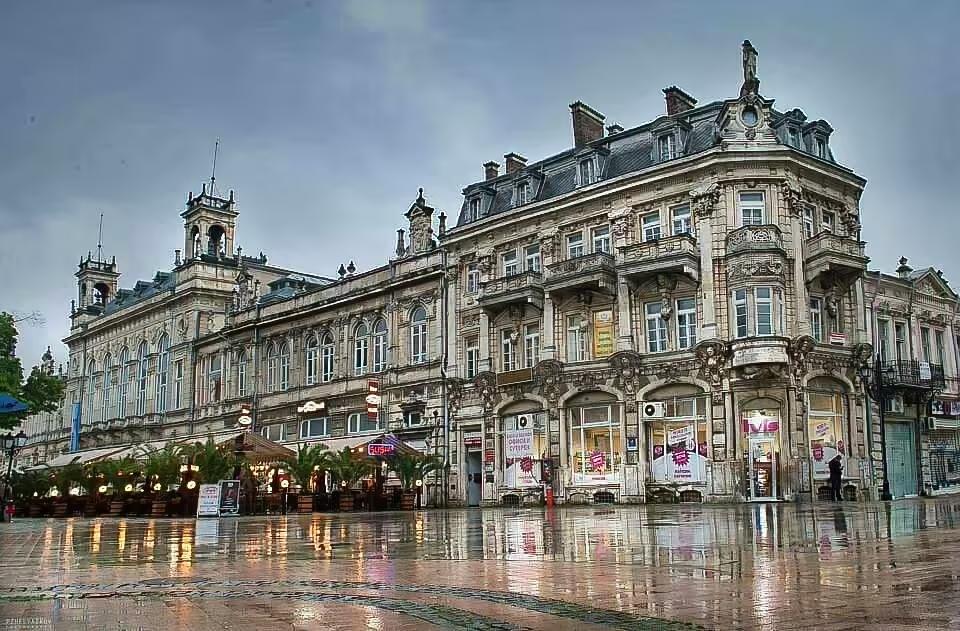
Ruse liegt am Südufer der Donau, direkt gegenüber der rumänischen Stadt Giurgiu. Die Stadt wird oft "Kleines Wien" genannt – wegen ihrer prachtvollen Belle-Époque-Fassaden. Ruse ist die sechstgrößte Stadt Bulgariens und dessen wichtigster Donauhafen. Sie zieht Expats an, die authentisches bulgarisches Leben ohne die Preise oder das Tempo von Sofia suchen – Schriftsteller, Remote-Worker, Rentner und Grenzpendler fühlen sich hier gleichermaßen wohl. Wenn Sie Leben am Fluss, fußgängerfreundliche Straßen und mitteleuropäisch anmutende Architektur schätzen, sollte Ruse ernsthafte Beachtung finden.
Die Stadt stieg im späten 19. Jahrhundert als Handelszentrum an der Donau zu Bedeutung auf. Der Reichtum der Belle-Époque-Hinterließ eine Reihe grandioser öffentlicher Gebäude, kunstvoller Schmiedeeisenbalkone und breiter Boulevards, die bis heute das Stadtbild prägen. Dieses architektonische Erbe – verbunden mit der gemächlich dahinfließenden Donau, dem flachen, begehbaren Gelände und einem Lebensrhythmus, der lange Café-Vormittage belohnt – verleiht Ruse einen unverwechselbaren Charakter, der in Bulgarien einzigartig ist.
Ruse auf einen Blick
- Einwohnerzahl
- ~121.000 (urban ~137.000, 2024)
- Region
- Provinz Ruse, Nordzentralbulgarien
- Bekannt für
- Belle-Époque-Architektur, Donauhafen, "Kleines Wien"
- Durchschnittsmiete (1-Zimmer)
- BGN 350–620 (€180–€317) (geschätzt)
- Durchschnittsgehalt
- BGN 1.300–1.800/Monat netto
- Expat-Gemeinschaft
- Klein, aber wachsend – hauptsächlich EU-Bürger, Rentner, Remote-Worker
Warum ein Umzug nach Ruse sich lohnt
- Bezahlbares Leben am Fluss: Ruse bietet Donaublicke und fußgängerfreundliche Boulevards für einen Bruchteil dessen, was ähnliche Städte in Westeuropa verlangen.
- Architektonischer Charme: Das Stadtzentrum ist ein Freilichtmuseum neobarocker, jugendstil- und neorokokker Gebäude aus dem späten 19. Jahrhundert.
- Grenzüberschreitende Anbindung: Die Donaubrücke verbindet Ruse mit Rumänien und macht Tagesausflüge nach Bukarest (unter 2 Stunden mit dem Auto) mühelos.
- Authentische bulgarische Kultur: Der Tourismus ist im Vergleich zu Sofia oder der Schwarzmeerküste gering, sodass das tägliche Leben echt lokal wirkt.
- Moderate Lebenshaltungskosten: Lebensmittel, Gastronomie und Dienstleistungen gehören zu den günstigsten in der EU. Ein komfortabler Lebensstandard ist mit BGN 1.600–2.000/Monat erreichbar.
- Kompakt und fußgängerfreundlich: Das gesamte Stadtzentrum ist gut zu Fuß erreichbar, und die meisten Besorgungen erfordern kein Auto.
- Vorteile der EU-Mitgliedschaft: Bulgarien ist in der EU, sodass EU-Bürger Freizügigkeit, Zugang zur Gesundheitsversorgung über die EHIC und unkomplizierte Aufenthaltsverfahren genießen.
- Geringe Bürokratie im Alltag: Im Vergleich zu westeuropäischen Städten sind Anmeldung, Einrichtung von Versorgungsleistungen und die Navigation durch lokale Dienste überraschend unkompliziert – besonders mit einem bulgarischsprachigen Freund oder Makler.
Wohnungssuche in Ruse
Durchschnittsmieten
| Stadtteil | 1-Zimmer | 3-Zimmer | Charakter |
|---|---|---|---|
| Zentrum (Zentr) | BGN 420–620 (geschätzt) | BGN 600–950 (geschätzt) | Historische Gebäude, fußgängerfreundlich, nah an Sehenswürdigkeiten |
| Zdravets | BGN 350–450 (geschätzt) | BGN 550–700 (geschätzt) | Wohngebiet, Grünflächen, ruhiger |
| Charodeyka | BGN 300–400 (geschätzt) | BGN 500–650 (geschätzt) | Moderne Blöcke, familienfreundlich, günstig |
| Vazrazhdane | BGN 350–500 (geschätzt) | BGN 600–800 (geschätzt) | Mischung aus alt und neu, nahe dem Flusspark |
| Druzhba | BGN 280–380 (geschätzt) | BGN 450–600 (geschätzt) | Östlicher Vorort, gute Busverbindungen, niedrigste Mieten |
So finden Sie eine Wohnung
- Imoti.bg: Größtes bulgarisches Immobilienportal – die meisten Inserate in Ruse erscheinen hier zuerst.
- OLX.bg: Gut für kurzfristige und möblierte Mietangebote.
- Facebook-Gruppen: Suchen Sie nach "Ruse Apartments" oder "Наеми Русе" – Vermieter posten oft direkt.
- Lokale Makler: Die Provision beträgt in der Regel eine Monatsmiete. Nützlich, wenn Sie kein Bulgarisch sprechen.
- Mundpropaganda: In einer Stadt dieser Größe führen Nachfragen in Cafés und Geschäften oft zu nicht gelisteten Angeboten.
Tipps für Expats
- Besichtigen Sie immer vor der Unterschrift. Online-Fotos können veraltet oder Jahre alt sein.
- Die Heizungsart ist wichtig: Fragen Sie, ob die Wohnung Fernwärme, Gas oder Strom nutzt – die Kosten variieren erheblich.
- Verhandeln Sie. Angegebene Preise in Ruse sind oft verhandelbar, insbesondere bei Mietverträgen ab 6 Monaten.
- Prüfen Sie den Wasserdruck und die Warmwasserversorgung. Einige ältere Gebäude haben eine unzuverlässige Versorgung.
- Fragen Sie nach dem Gebäudeerhaltungsfonds (такса поддръжка) – er kann BGN 20–50/Monat zusätzlich zur Miete ausmachen.
- Möblierte Wohnungen sind seltener als in Sofia. Planen Sie BGN 500–1.500 für Grundmöbel ein, falls Sie unmöbliert mieten.
- Mietverträge sind in der Regel auf Bulgarisch. Lassen Sie einen Übersetzer oder einen bulgarischsprachigen Freund den Vertrag vor der Unterschrift prüfen.
Stadtteilführer
- Zentrum (Zentr): Ideal für Erstbesucher und alle, die überall zu Fuß hingehen möchten. Vorkriegsarchitektur, Cafés, die Haupteinkaufsstraße. Die Mieten sind die höchsten in der Stadt, aber nach EU-Standards immer noch sehr erschwinglich.
- Zdravets: Ruhiges Wohngebiet nördlich des Zentrums. Parks, Schulen, Supermärkte. Gut für Familien und Rentner, die Platz suchen, ohne die Stadt zu verlassen.
- Charodeyka: Sowjetische Wohnblöcke mit modernen Renovierungen. Die günstigste Option. Nahe der Universität und eines großen Parks.
- Vazrazhdane: Westlich des Zentrums, nahe dem Donau-Flusspark. Gemischter Wohnungsbestand – einige ältere Häuser, einige neuere Bauten. Beliebt bei jüngeren Bewohnern und Künstlern.
- Druzhba: Östliches Wohngebiet mit zuverlässigen Busverbindungen ins Zentrum. Praktisches, zweckmäßiges Wohnen mit gutem Preis-Leistungs-Verhältnis. Viele lokale Geschäfte und ein Wochenmarkt.
- Rodska: Südliche Stadtränder mit Einfamilienhäusern und größeren Grundstücken. Beliebt bei Familien, die einen Garten möchten. Auto empfohlen.
Lebenshaltungskosten in Ruse
Monatliches Budget
| Kategorie | Budgetrahmen |
|---|---|
| Miete (1-Zi., Zentrum) | BGN 350–620 (geschätzt) |
| Nebenkosten (Strom, Wasser, Heizung, Kühlung, Müll) | BGN 110–175 (geschätzt) |
| Internet (100 Mbps) | BGN 20–30 (geschätzt) |
| Lebensmittel | BGN 300–400 (geschätzt) |
| Öffentlicher Nahverkehr | BGN 40–60 (geschätzt) |
| Essen gehen (4× pro Monat) | BGN 80–120 (geschätzt) |
| Freizeit/Fitnessstudio | BGN 40–70 (geschätzt) |
| Mobilfunktarif | BGN 15–25 (geschätzt) |
| Gesamt | BGN 985–1.520 (€505–€777) (geschätzt) |
Tägliche Kosten
- Kaffee (Espresso): BGN 2–3
- Mittagessen (einfaches Restaurant): BGN 12–18
- Abendessen für zwei (Mittelklasse): BGN 40–60
- Monatliche Nahverkehrskarte: BGN 25–30
- Bier (Bar, 500 ml): BGN 3–5
- Kinoticket: BGN 8–12
- Brot (Laib): BGN 1,50–2
- Monatliche Fitnessstudiomitgliedschaft: BGN 40–60
- 1,5-l-Flaschenwasser: BGN 0,60–1
Unterwegs in Ruse
- Öffentlicher Nahverkehr: Stadtbusse verbinden die meisten Strecken. Einzelfahrscheine kosten BGN 1,50; eine Monatskarte kostet etwa BGN 25–30. Der Service ist zuverlässig, aber das Angebot wird nach 21 Uhr spärlicher.
- Fahrrad: Flaches Gelände und die Donaupromenade machen das Radfahren angenehm. Ein eigenes Radwegenetz gibt es noch nicht, aber der Verkehr ist leicht genug, um sicher zu fahren.
- Auto: Die Straßen sind ausreichend. Parken im Zentrum ist meist kostenlos oder sehr günstig. Staus sind außerhalb der Stoßzeiten selten. Für bulgarische Autobahnen ist eine Vignette (Straßennutzungsgebühr) erforderlich — online unter bgtoll.bg erhältlich.
- Taxis: Taxameter-Taxis sind günstig — rechnen Sie mit BGN 1,00–1,30/km. Apps wie TaxiMe funktionieren in Ruse.
- Flughafen: Ruse hat keinen Verkehrsflughafen. Die nächsten Optionen sind Bukarest Henri Coandă (100 km, ca. 1,5 Stunden) und Warna (200 km, ca. 3 Stunden).
- Fernverkehr: Regelmäßige Busse und Züge verbinden Ruse mit Sofia (ca. 4,5 Stunden), Warna (ca. 3 Stunden) und Weliko Tarnowo (ca. 1,5 Stunden). Der Zug nach Bukarest überquert die Donaubrücke — prüfen Sie die Fahrpläne, da er unregelmäßig verkehrt.
Gesundheitsversorgung in Ruse
- Krankenhäuser/Kliniken: Das Universitätskrankenhaus Ruse ist die wichtigste öffentliche Einrichtung. Mehrere private Kliniken — darunter Medica Ruse und City Clinic — bieten schnelleren Service zu fairen Preisen.
- Englischsprachige Ärzte: Begrenzt, aber in Privatpraxen verfügbar, insbesondere in der Zahnmedizin und Allgemeinmedizin. Bukarest ist eine Option für Fachbehandlungen.
- Apotheken: Reichlich in der ganzen Stadt vorhanden, gekennzeichnet mit grünen Kreuzen. Viele Medikamente werden rezeptfrei über die Theke verkauft. Apotheker sind im Allgemeinen kompetent und hilfsbereit.
- Notrufnummer: 112 (EU-weit)
- Zahnbehandlung: Private Zahnkliniken sind beliebt und sehr erschwinglich. Eine Füllung kostet BGN 30–60; eine Reinigung BGN 40–80. Einige Kliniken werben gezielt bei Expats und bieten englischsprachigen Service.
- Krankenversicherung: EU-Bürger mit EHIC sind für Notfallbehandlungen abgesichert. Für längere Aufenthalte ermöglicht die NHIF-Registrierung (ca. BGN 30/Monat) den Zugang zum öffentlichen System. Die meisten Expats haben zusätzlich eine private Versicherung für schnelleren Service.
- Psychische Gesundheit: Englischsprachige Angebote sind örtlich begrenzt. Online-Therapieplattformen sind der praktischste Weg für Expats, die Beratung oder psychiatrische Unterstützung benötigen.
Erhalten Sie einen persoenlichen Umzugsplan
Hinterlassen Sie Ihre E-Mail, und wir senden Ihnen eine passende Checkliste plus drei Angebote gepruefter Umzugsunternehmen.
Strom, Wasser und Internet einrichten
- Strom: Wird von EVN in der Region Ruse bereitgestellt. Rechnungen kommen monatlich. Durchschnittliche Kosten BGN 60–100/Monat je nach Heizungsart und Jahreszeit.
- Wasser: Wasserversorgungsgesellschaft Ruse. Die Rechnungen sind günstig — typischerweise BGN 10–20/Monat.
- Internet: Glasfaser ist im Stadtzentrum weit verbreitet. Anbieter sind A1, Yettel und Vivacom. Ein 100-Mbps-Tarif kostet BGN 20–30/Monat; 300-Mbps-Tarife kosten BGN 30–40. Die Installation dauert in der Regel 2–5 Tage. Mobile Daten sind günstig — 10–20-GB-Tarife ab BGN 10/Monat.
- Gas: Nicht in allen Gebäuden verfügbar. Wo vorhanden, wird es zum Heizen und Kochen genutzt. Andernfalls sind Elektroheizungen oder Zentralheizungen üblich. Prüfen Sie die Verfügbarkeit vor Vertragsabschluss, wenn Gasheizung für Sie wichtig ist.
- Müllabfuhr: Kommunaler Service, in den Nebenkosten enthalten oder separat mit BGN 5–10/Monat zu bezahlen.
Aufenthalt und Visa
- EU-/EWR-Bürger: Können bis zu 90 Tage ohne Registrierung bleiben. Für längere Aufenthalte registrieren Sie sich innerhalb von 90 Tagen nach Ankunft bei der örtlichen Migrationsdirektion (ОДМВР). Sie benötigen Einkommensnachweis, Krankenversicherung und einen Mietvertrag. Hinweis: Bulgarien ist im März 2024 dem Schengen-Raum teilweise beigetreten (Luft- und Seegrenzen), aber Kontrollen an Landgrenzen (einschließlich der Donaubrücke nach Rumänien) können bis zum vollständigen Beitritt noch gelten.
- Nicht-EU-Bürger: Beantragen Sie ein Langzeitvisum (Typ D) bei einer bulgarischen Botschaft vor der Einreise. Gängige Wege sind Beschäftigung, Selbstständigkeit, Ruhestand oder Studium. Nach der Ankunft beantragen Sie eine Aufenthaltserlaubnis über die Migrationsdirektion.
- Digitale Nomaden: Bulgarien hat noch kein spezielles Digitale-Nomaden-Visum, aber der Weg über Selbstständigkeit oder Freiberuflichkeit durch eine Einzelhandelsregistrierung (Едноличен търговец) ist eine gängige Alternative. Der pauschale Steuersatz von 10 % ist attraktiv.
- Daueraufenthalt: Nach 5 Jahren durchgehendem legalem Aufenthalt verfügbar. Erfordert Nachweis eines stabilen Einkommens, Krankenversicherung und grundlegende Bulgarischkenntnisse.
- Weg zur Staatsbürgerschaft: Nach 5 Jahren Daueraufenthalt möglich (insgesamt 10 Jahre). Doppelstaatsbürgerschaft ist für EU-Bürger grundsätzlich erlaubt.
Kultur & Lebensstil
- Belle-Époque-Architektur: Die Fassaden im Stadtzentrum sind das prägende Merkmal von Ruse — Neobarock-, Jugendstil- und Neorokokostil säumen die Hauptstraßen. Geführte Rundgänge werden angeboten, aber die meisten erkunden die Stadt auf eigene Faust.
- Donauufer: Die Flusspromenade ist das soziale Herz der Stadt, besonders bei Sonnenuntergang. Einheimische treffen sich hier ganzjährig, und entlang der Ufer finden saisonale Feste statt.
- Museen und Theater: Das Regionalgeschichtliche Museum, das Nationale Verkehrsmuseum und Dohodno Zdanie (das prunkvolle Theatergebäude) bilden das kulturelle Zentrum.
- Naturpark Rusenski Lom: Eine kurze Fahrt Richtung Süden — dieser Flusskanon bietet Wanderungen, Felsformationen und die mittelalterlichen Höhlenklöster von Ivanovo (UNESCO-Weltkulturerbe).
- Nachtleben: Überschaubar — eine Handvoll Bars und Clubs im Zentrum. Das meiste Sozialleben findet in Cafés und Restaurants statt.
- Festivals: Ruse veranstaltet kulturelle Festivals, darunter Musik- und Filmveranstaltungen, saisonale Feiern entlang der Donau und Weihnachtsmärkte auf dem zentralen Platz jeden Dezember. Die Kukeri-Karnevalstradition wird in der weiteren Region gepflegt. (Hinweis: "März-Musik-Tage" wird in einigen Quellen erwähnt, überschneidet sich aber möglicherweise mit dem gleichnamigen Festival in Warna - vor spezifischer Nennung überprüfen.)
- Sport: Fußball ist beliebt — FC Dunav Ruse spielt in der lokalen Liga. Die Donau wird für Rudern und Kajakfahren genutzt. Es gibt mehrere Fitnessstudios und ein öffentliches Schwimmbad. Das flache Gelände macht das Joggen auf der Flusspromenade zu einer beliebten ganzjährigen Aktivität.
Essen & Gastronomie
- Probieren Sie lokale Gerichte wie Kjopolu (rauchiger Auberginenaufstrich), Donaufischsuppe und Shopska-Salat.
- Die Aleksandrowska-Straße und der zentrale Platz haben die höchste Dichte an Restaurants.
- Ein vollständiges Menü in einem Restaurant kostet selten mehr als BGN 20–25 pro Person.
- Straßenessen (Kebaptsche, Baniza) kostet BGN 2–5 und ist in Bäckereien und Kiosks in der ganzen Stadt erhältlich.
- Märkte: Der zentrale Markt (Pasar) verkauft frisches Obst und Gemüse, Milchprodukte und Fleisch zu niedrigeren Preisen als Supermärkte. Am besten morgens besuchen.
- Supermarktketten: Billa, Lidl und Kaufland sind alle in Ruse vertreten. Die Preise sind einheitlich und wettbewerbsfähig.
- Internationale Küche ist begrenzt, aber wachsend — einige türkische, chinesische und italienische Restaurants gibt es im Zentrum.
- Bulgarischer Wein ist hervorragend und günstig (BGN 5–15 pro Flasche im Handel). Lokale Weingüter aus der Donauebene sind einen Besuch wert.
Expats
- Facebook-Gruppen wie "Foreigners in Bulgaria" und allgemeine Ruse-Community-Gruppen haben kleine, aber aktive Mitglieder. Eine eigenständige "Expats in Ruse"-Gruppe ist nicht unabhängig verifiziert.
- Sprachaustausch-Treffen finden gelegentlich in Cafés in der Aleksandrowska-Straße statt.
- Die internationale Community ist eng verbunden — die meisten Expats kennen sich innerhalb weniger Wochen nach der Ankunft.
- Grenzgänger und rumänisch-bulgarische Geschäftsleute bilden eine einzigartige soziale Schicht.
- Die Universität Ruse zieht eine kleine Anzahl internationaler Studierender an, was die ausländische Community bereichert.
Arbeitsmarkt in Ruse
- Wichtigste Branchen: Logistik (Donauhafen), Produktion, Callcenter, Bildung und kleinere IT.
- Größte Arbeitgeber: Hafenbetreiber Ruse, Yazaki Bulgaria (Automobilkabel), Kommunalverwaltung und Universität Ruse „Angel Kantschew".
- Durchschnittsgehälter nach Branche:
- IT / Remote-Arbeit: BGN 2.000–4.000
- Produktion: BGN 1.000–1.500
- Bildung: BGN 900–1.300
- Dienstleistungen / Einzelhandel: BGN 800–1.100
- Stellensuche: Jobs.bg, LinkedIn und das örtliche Arbeitsamt. Remote-Arbeit ist der geeignetste Weg für Bewerber, die nur Englisch sprechen.
- Freiberuflichkeit: Bulgariens einheitlicher Einkommensteuersatz von 10 % macht das Land für registrierte Freiberufler attraktiv. Die niedrigen Lebenshaltungskosten in Ruse verstärken diesen Vorteil.
Bildung in Ruse
- Internationale Schulen: Es gibt derzeit keine vollständige internationale Schule in Ruse. Die nächsten Angebote befinden sich in Bukarest oder Sofia. Die örtlichen bulgarischen Schulen sind kostenlos; einige Eltern ergänzen den Unterricht durch private Nachhilfe.
- Universitäten: Die Universität Ruse "Angel Kantschew" ist eine angesehene technische Universität mit einigen englischsprachigen Studiengängen in Ingenieurwesen, IT und Wirtschaft. Etwa 8.000 Studierende sind dort eingeschrieben, was der Stadt trotz ihres ruhigen Rufs eine jugendliche Ausstrahlung verleiht.
- Sprachschulen: Mehrere private Schulen bieten Bulgarisch für Ausländer sowie Englisch- und Deutschkurse an. Online-Lehrkräfte sind ebenfalls weit verbreitet. Größere Kulturinstitute (z. B. Alliance Française, Goethe-Institut) haben ihren Sitz in der Regel in Sofia.
- Angebote für Kinder: Jugendsportvereine, Musikschulen und eine öffentliche Bibliothek mit einer Kinderabteilung bieten Familien vielfältige Möglichkeiten. Die Donaupromenade ist ein beliebter Ort zum Radfahren und für Outdoor-Aktivitäten.
Grenzüberschreitendes Leben: Ruse und Rumänien
Einer der einzigartigen Vorteile von Ruse ist die Nähe zu Rumänien über die Donaubrücke. Dadurch ergeben sich Möglichkeiten, die die meisten bulgarischen Städte nicht bieten:
- Tagesausflüge nach Bukarest: Die rumänische Hauptstadt ist etwa 65–70 km entfernt — rund 1–1,5 Stunden mit dem Auto. Einkaufen, Restaurants, internationale Flughäfen, Botschaften und spezialisierte medizinische Versorgung sind alle gut erreichbar.
- Zwei-Länder-Komfort: Manche Expats leben in Ruse und pendeln zur Arbeit nach Giurgiu oder Bukarest. Die Grenzüberquerung mit einem EU-Pass oder Personalausweis ist unkompliziert. Hinweis: Bulgariens teilweise Schengen-Mitgliedschaft (März 2024, nur Luft/See) gilt möglicherweise noch nicht für die Donau-Landgrenze — prüfen Sie die aktuellen Bestimmungen.
- Kostenarbitrage: Rumänische Waren und Dienstleistungen sind bei bestimmten Artikeln gelegentlich günstiger. Grenzüberquerungen für gezielte Einkaufsfahrten sind unter Einheimischen verbreitet.
- Anbindung an internationale Flughäfen: Der Henri-Coandă-Flughafen in Bukarest bietet Direktflüge in ganz Europa und darüber hinaus. Das macht Ruse trotz des fehlenden eigenen Verkehrsflughafens überraschend gut angebunden.
Umzugscheckliste für Ruse
- Visum- oder Aufenthaltserlaubnisvoraussetzungen klären (EU-Bürger registrieren sich nach 90 Tagen)
- Vorübergehende Unterkunft für die ersten 2–4 Wochen sichern
- Krankenversicherungsoptionen prüfen — EHIC für EU-Bürger, ansonsten private Versicherung
- Beglaubigte Dokumente zusammenstellen (Geburtsurkunde, Hochschulzeugnis, Führungszeugnis)
- Offline-Karten von Ruse auf Ihr Handy herunterladen
- Ihre Adresse beim örtlichen Migrationsamt registrieren
- Ein bulgarisches Bankkonto eröffnen (UniCredit Bulbank, DSK Bank)
- Eine lokale SIM-Karte besorgen (A1, Yettel oder Vivacom — alle günstig, BGN 10–20/Monat)
- Das Stadtzentrum erkunden und Ihren bevorzugten Wohnbezirk ausfindig machen
- Ein TaxiMe-Konto einrichten, um sich fortzubewegen, bevor Sie die Busverbindungen kennen
- Einen langfristigen Mietvertrag unterschreiben
- Beim Nationalen Krankenversicherungsfonds (NHIF) für die Gesundheitsversorgung registrieren
- Versorgungsverträge einrichten (Strom, Wasser, Internet)
- Mit bulgarischen Sprachgrundlagen beginnen — selbst ein paar Phrasen helfen enorm
- Lokalen Facebook-Gruppen beitreten und an einem Treffen teilnehmen
- Die Umgebung erkunden — Naturpark Rusenski Lom und die Höhlenklöster von Ivanovo
Verwandte Ratgeber
- [Umzug nach Bulgarien] — umfassender Länderführer
- [Umzug nach Sofia] — Hauptstadt-Führer
- [Umzug nach Varna] — Führer zur Schwarzmeerküste
- [Umzug nach Veliko Tarnovo] — Führer für die nahegelegene historische Stadt
- [Umzug nach Bukarest] — nächste große Hauptstadt (Rumänien)