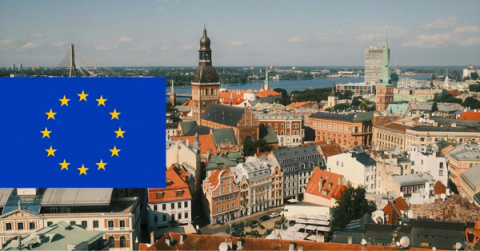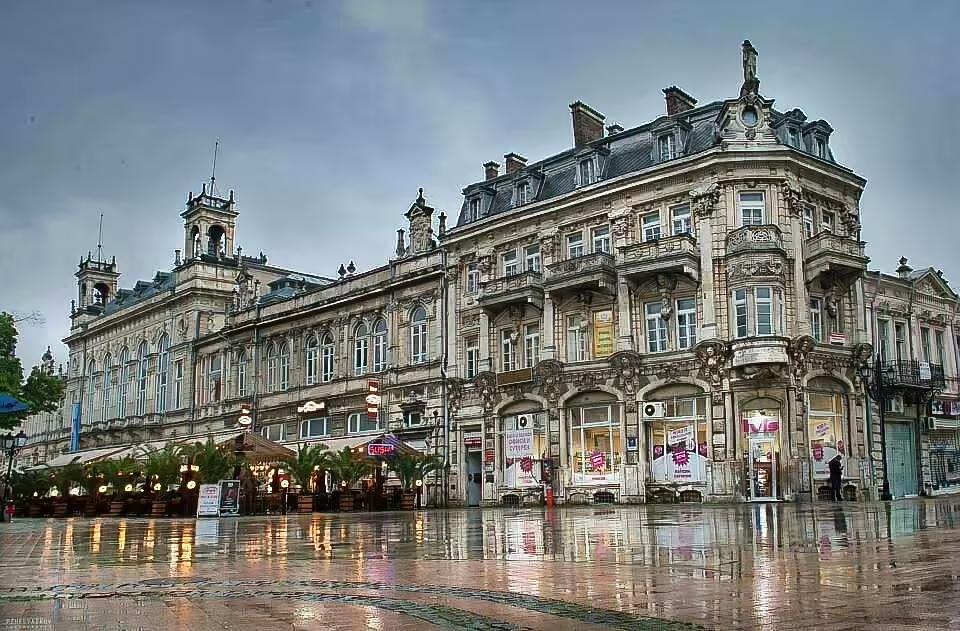
Ruse sits on the south bank of the Danube, directly across from the Romanian city of Giurgiu. Often called "Little Vienna" for its ornate Belle Époque facades, Ruse is Bulgaria's sixth-largest city and its most important Danube port. It attracts expats who want authentic Bulgarian life without Sofia's prices or pace — writers, remote workers, retirees, and cross-border commuters all find a home here. If you value riverfront living, walkable streets, and architecture that feels Central European rather than Balkan, Ruse deserves a serious look.
The city rose to prominence in the late 19th century as a trading hub on the Danube, and its wealth during the Belle Époque era left a legacy of grand public buildings, ornamental ironwork balconies, and wide boulevards that still define the skyline today. This architectural heritage — combined with the slow-moving Danube, the flat walkable terrain, and a pace of life that rewards long café mornings — gives Ruse a character unlike anywhere else in Bulgaria.
Ruse at a Glance
- Population
- ~121,000 (urban ~137,000, 2024)
- Region
- Ruse Province, North-Central Bulgaria
- Known For
- Belle Époque architecture, Danube River port, "Little Vienna"
- Average Rent (1BR)
- BGN 350–620 (€180–€317)
- Average Salary
- BGN 1,300–1,800/month net
- Expat Community
- Small but growing — mostly EU nationals, retirees, remote workers
Why Move to Ruse
- Affordable riverfront living: Ruse offers Danube views and walkable boulevards at a fraction of what similar cities charge in Western Europe.
- Architectural charm: The city center is an open-air museum of Neo-Baroque, Art Nouveau, and Neo-Rococo buildings dating from the late 1800s.
- Cross-border access: The Danube Bridge connects Ruse to Romania, making day trips to Bucharest (under 2 hours by car) effortless.
- Authentic Bulgarian culture: Tourism is light compared to Sofia or the Black Sea coast, so daily life feels genuinely local.
- Mild cost of living: Groceries, dining, and services remain among the cheapest in the EU. A comfortable lifestyle is achievable on BGN 1,600–2,000/month.
- Compact and walkable: The entire city center is pedestrian-friendly, and most errands don't require a car.
- EU membership benefits: Bulgaria is in the EU, so EU citizens enjoy freedom of movement, healthcare access via EHIC, and straightforward residency processes.
- Low bureaucracy for day-to-day life: Compared to Western European cities, registering, setting up utilities, and navigating local services is surprisingly straightforward — especially with a Bulgarian-speaking friend or agent.
Finding Housing in Ruse
Average Rents
| Neighborhood | 1-Bedroom | 3-Bedroom | Character |
|---|---|---|---|
| Center (Tsentr) | BGN 420–620 | BGN 600–950 | Historic buildings, walkable, closest to landmarks |
| Zdravets | BGN 350–450 | BGN 550–700 | Residential, green spaces, quieter |
| Charodeyka | BGN 300–400 | BGN 500–650 | Modern blocks, family-friendly, budget |
| Vazrazhdane | BGN 350–500 | BGN 600–800 | Mix of old and new, near the river park |
| Druzhba | BGN 280–380 | BGN 450–600 | Eastern suburb, good bus links, lowest rents |
How to Find Housing
- Imoti.bg: Largest Bulgarian property portal, most Ruse listings appear here first.
- OLX.bg: Good for short-term and furnished rentals.
- Facebook groups: Search "Ruse Apartments" or "Наеми Русе" — landlords often post directly.
- Local agents: Commission is typically one month's rent. Useful if you don't speak Bulgarian.
- Word of mouth: In a city this size, asking around cafés and shops often surfaces unlisted options.
Tips for Expats
- Always visit before signing. Online photos can be outdated or years old.
- Heating type matters: ask whether the apartment uses central heating, gas, or electric — costs vary widely between them.
- Negotiate. Listed prices in Ruse are often flexible, especially for leases of 6 months or longer.
- Check water pressure and hot water system. Some older buildings have inconsistent supply.
- Ask about the building's maintenance fund (такса поддръжка) — it can add BGN 20–50/month on top of rent.
- Furnished apartments are less common than in Sofia. Budget BGN 500–1,500 for basic furniture if renting unfurnished.
- Lease contracts are usually in Bulgarian. Have a translator or Bulgarian-speaking friend review before signing.
Neighborhoods Guide
- Center (Tsentr): Best for first-time visitors and those who want to walk everywhere. Pre-war architecture, cafés, the main pedestrian street. Rents are the highest in the city but still very affordable by EU standards.
- Zdravets: Quiet residential zone north of the center. Parks, schools, supermarkets. Good for families and retirees who want space without leaving the city.
- Charodeyka: Soviet-era housing blocks with modern renovations. The most budget-friendly option. Close to the university and a large park.
- Vazrazhdane: West of the center, near the Danube river park. Mixed housing stock — some older houses, some newer builds. Popular with younger residents and artists.
- Druzhba: Eastern residential area with reliable bus links to the center. Practical, no-frills living with good value for money. Lots of local shops and a weekly market.
- Rodska: Southern outskirts with detached houses and larger plots. Popular with families who want gardens. Car recommended.
Cost of Living in Ruse
Monthly Budget Breakdown
| Category | Budget Range |
|---|---|
| Rent (1BR, center) | BGN 350–620 |
| Utilities (electric, water, heating, cooling, garbage) | BGN 110–175 |
| Internet (100 Mbps) | BGN 20–30 |
| Groceries | BGN 300–400 |
| Local transport | BGN 40–60 |
| Dining out (4x/month) | BGN 80–120 |
| Leisure/Gym | BGN 40–70 |
| Mobile phone plan | BGN 15–25 |
| Total | BGN 985–1,520 (€505–€777) |
Day-to-Day Costs
- Coffee (espresso): BGN 2–3
- Lunch (casual restaurant): BGN 12–18
- Dinner for two (mid-range): BGN 40–60
- Monthly transport pass: BGN 25–30
- Beer (bar, 500ml): BGN 3–5
- Cinema ticket: BGN 8–12
- Bread (loaf): BGN 1.50–2
- Monthly gym membership: BGN 40–60
- 1.5L bottled water: BGN 0.60–1
Getting Around Ruse
- Public transport: City buses cover most routes. Single tickets cost BGN 1.50; a monthly pass is around BGN 25–30. Service is reliable but routes thin out after 9 PM.
- Cycling: Flat terrain and the Danube river promenade make cycling pleasant. No dedicated bike-lane network yet, but traffic is light enough to ride safely.
- Driving: Roads are adequate. Parking in the center is mostly free or very cheap. Traffic congestion is rare outside rush hour. A vignette (road tax sticker) is required for Bulgarian highways — buy it online at bgtoll.bg.
- Taxis: Metered taxis are cheap — expect BGN 1.00–1.30/km. Apps like TaxiMe work in Ruse.
- Airport: No commercial airport in Ruse. The nearest options are Bucharest Henri Coandă (100 km, ~1.5 hours) and Varna (200 km, ~3 hours).
- Intercity: Regular buses and trains connect Ruse to Sofia (~4.5 hours), Varna (~3 hours), and Veliko Tarnovo (~1.5 hours). The train to Bucharest crosses the Danube Bridge — check schedule availability as it runs intermittently.
Healthcare in Ruse
- Hospitals/Clinics: Ruse University Hospital is the main public facility. Several private clinics — including Medica Ruse and City Clinic — offer faster service at reasonable prices.
- English-speaking doctors: Limited but available in private practices, especially dentistry and general medicine. Bucharest is an option for specialized care.
- Pharmacies: Abundant throughout the city, marked with green crosses. Many medications are sold over the counter without prescription. Pharmacists are generally knowledgeable and helpful.
- Emergency number: 112 (EU-wide)
- Dental care: Private dental clinics are popular and very affordable. A filling costs BGN 30–60; a cleaning BGN 40–80. Some clinics advertise specifically to expats and offer English-language service.
- Health insurance: EU citizens with EHIC get emergency care covered. For long-term stays, NHIF registration (around BGN 30/month) gives access to the public system. Most expats also carry private insurance for faster service.
- Mental health: Limited English-speaking options locally. Online therapy platforms are the most practical route for expats needing counseling or psychiatric support.
Planning your move?
Tell us about your move to compare quotes from international moving companies.
Setting Up Utilities and Internet
- Electricity: Provided by EVN in the Ruse region. Bills arrive monthly. Average cost BGN 60–100/month depending on heating type and season.
- Water: Ruse Water Supply Company. Bills are cheap — typically BGN 10–20/month.
- Internet: Fiber optic is widely available in the city center. Providers include A1, Yettel, and Vivacom. A 100 Mbps plan costs BGN 20–30/month; 300 Mbps plans are BGN 30–40. Installation usually takes 2–5 days. Mobile data is cheap — 10–20 GB plans start at BGN 10/month.
- Gas: Not available in all buildings. Where available, it's used for heating and cooking. Otherwise, electric heating or central heating systems are common. Check availability before signing a lease if gas heating is important to you.
- Waste collection: Municipal service, included in utility bills or paid separately at BGN 5–10/month.
Residency and Visas
- EU/EEA citizens: Can stay up to 90 days without registration. For longer stays, register at the local Migration Directorate (ОДМВР) within 90 days of arrival. You'll need proof of income, health insurance, and a rental contract. Note: Bulgaria joined Schengen partially in March 2024 (air and sea borders), but land border checks (including the Danube Bridge to Romania) may still apply until full accession.
- Non-EU citizens: Apply for a long-stay visa (type D) at a Bulgarian embassy before arrival. Common routes include employment, self-employment, retirement, or study. After arrival, apply for a residence permit through the Migration Directorate.
- Digital nomads: Bulgaria doesn't have a specific digital nomad visa yet, but the self-employment or freelance route through a sole trader registration (Едноличен търговец) is a common workaround. The flat 10% tax rate is attractive.
- Permanent residence: Available after 5 years of continuous legal residence. Requires proof of stable income, health insurance, and basic Bulgarian language knowledge.
- Path to citizenship: Possible after 5 years of permanent residence (10 years total). Dual citizenship is generally allowed for EU nationals.
Culture & Lifestyle
- Belle Époque architecture: The city center's facades are Ruse's defining feature — Neo-Baroque, Art Nouveau, and Neo-Rococo styles line the main streets. Walking tours are available but most people explore independently.
- Danube riverfront: The river promenade is the social heart of the city, especially at sunset. Locals gather here year-round, and seasonal festivals take place along the banks.
- Museums and theater: The Regional Historical Museum, National Museum of Transport, and Dohodno Zdanie (the ornate theater building) anchor the cultural scene.
- Rusenski Lom Nature Park: A short drive south, this river canyon offers hiking, rock formations, and the medieval cave monasteries of Ivanovo (UNESCO World Heritage Site).
- Nightlife: Modest — a handful of bars and clubs in the center. Most socializing happens in cafés and restaurants.
- Festivals: Ruse hosts cultural festivals including music and film events, seasonal celebrations along the Danube, and Christmas markets in the central square each December. The Kukeri carnival tradition is observed in the broader region. (Note: "March Music Days" is referenced in some sources but may overlap with Varna's festival of the same name — verify before citing specifically.)
- Sports: Football is popular — FC Dunav Ruse plays in the local league. The Danube is used for rowing and kayaking. There are several gyms and a public swimming pool. The flat terrain makes running along the river promenade a popular year-round activity.
Food & Dining
- Try local dishes like kyopolou (smoky eggplant spread), Danube fish soup, and shopska salad.
- Alexandrovska Street and the central square have the densest concentration of restaurants.
- A full meal at a sit-down restaurant rarely exceeds BGN 20–25 per person.
- Street food (kebapche, banitsa) costs BGN 2–5 and is available at bakeries and kiosks throughout the city.
- Markets: The central market (pazar) sells fresh produce, dairy, and meat at lower prices than supermarkets. Best visited in the morning.
- Supermarket chains: Billa, Lidl, and Kaufland are all present in Ruse. Prices are consistent and competitive.
- International cuisine is limited but growing — a few Turkish, Chinese, and Italian restaurants operate in the center.
- Bulgarian wine is excellent and cheap (BGN 5–15 per bottle in shops). Local wineries from the Danube plain are worth exploring.
Expat Community
- Facebook groups such as "Foreigners in Bulgaria" and general Ruse community groups have small but active members. A dedicated "Expats in Ruse" group is not independently verified.
- Language exchange meetups happen occasionally at cafés on Alexandrovska Street.
- The international community is tight-knit — most expats know each other within weeks of arriving.
- Cross-border commuters and Romanian-Bulgarian business people form a unique social layer.
- Ruse University attracts a small number of international students, adding to the foreign community.
Job Market in Ruse
- Main industries: Logistics (Danube port), manufacturing, call centers, education, and small-scale IT.
- Major employers: Ruse Port operators, Yazaki Bulgaria (automotive wiring), local government, and Ruse University "Angel Kanchev."
- Average salaries by sector:
- IT / Remote: BGN 2,000–4,000
- Manufacturing: BGN 1,000–1,500
- Education: BGN 900–1,300
- Services / Retail: BGN 800–1,100
- Job search resources: Jobs.bg, LinkedIn, and the local labor office. Remote work is the most viable path for English-only speakers.
- Freelancing: Bulgaria's flat 10% income tax rate makes it attractive for registered freelancers. Ruse's low costs amplify the benefit.
Education in Ruse
- International schools: No full international school in Ruse currently. The nearest options are in Bucharest or Sofia. Local Bulgarian schools are free; some parents supplement with private tutoring.
- Universities: Ruse University "Angel Kanchev" is a well-regarded technical university with some English-taught programs in engineering, IT, and business. Around 8,000 students attend, giving the city a youthful energy despite its quiet reputation.
- Language schools: Several private schools offer Bulgarian for foreigners, plus English and German language courses. Online tutors are also widely available. Larger cultural institutes (e.g., Alliance Française, Goethe) are typically based in Sofia.
- Children's activities: Youth sports clubs, music schools, and a public library with a children's section provide options for families. The Danube promenade is a popular spot for cycling and outdoor play.
Cross-Border Living: Ruse and Romania
One of Ruse's unique advantages is its proximity to Romania via the Danube Bridge. This opens up possibilities that most Bulgarian cities don't offer:
- Bucharest day trips: The Romanian capital is roughly 65–70 km away — about 1–1.5 hours by car. Shopping, dining, international airports, embassies, and specialist healthcare are all within reach.
- Dual-country convenience: Some expats live in Ruse and commute to Giurgiu or Bucharest for work. Border crossing is straightforward with an EU passport or ID card. Note: Bulgaria's partial Schengen membership (March 2024, air/sea only) may not yet apply to the Danube land border — check current regulations.
- Cost arbitrage: Romanian goods and services are occasionally cheaper for certain items. Crossing for specific shopping trips is common among locals.
- International airport access: Bucharest's Henri Coandă airport offers direct flights across Europe and beyond, making Ruse surprisingly well-connected despite lacking its own commercial airport.
Moving Checklist for Ruse
- Confirm visa or residence permit requirements (EU citizens register after 90 days)
- Secure temporary accommodation for the first 2–4 weeks
- Research health insurance options — EHIC for EU citizens, private insurance otherwise
- Gather apostilled documents (birth certificate, degree, criminal record)
- Download offline maps of Ruse on your phone
- Register your address at the local Migration office
- Open a Bulgarian bank account (UniCredit Bulbank, DSK Bank)
- Get a local SIM card (A1, Yettel, or Vivacom — all cheap, BGN 10–20/month)
- Explore the city center and identify your preferred neighborhood
- Set up a TaxiMe account for getting around before you learn the bus routes
- Sign a long-term rental lease
- Register for healthcare with the National Health Insurance Fund (NHIF)
- Set up utility accounts (electricity, water, internet)
- Start Bulgarian language basics — even a few phrases help enormously
- Join local Facebook groups and attend a meetup
- Explore surrounding areas — Rusenski Lom Nature Park and the Ivanovo cave monasteries
Yes. Ruse has a low crime rate by European standards. Violent crime is rare, and petty crime like pickpocketing is uncommon compared to larger cities. The center and residential areas feel safe at all hours. As with any city, use normal precautions at night in less-trafficked areas.
You can get by, especially with younger residents and in the city center, but daily life is much easier with basic Bulgarian. Official paperwork, some medical visits, and smaller shops often require Bulgarian. Language apps and local tutors help quickly. Many expats report reaching conversational level within 6 months of immersion.
The Danube Bridge (Friendship Bridge) connects Ruse to Giurgiu, Romania. You can cross by car, bus, or occasionally by train. Border checks take 10–30 minutes depending on traffic. Bring your passport or EU ID card. The bridge toll is around €6 for a standard car.
Ruse uses the Bulgarian lev (BGN). The fixed exchange rate is BGN 1.95583 = €1. Bulgaria is expected to adopt the euro in the coming years, though the timeline has shifted. Cards are widely accepted in the center; carry cash for markets, smaller shops, and bus tickets.
Yes, if you don't need a bustling coworking scene. Internet is fast and cheap (100 Mbps for BGN 20–30/month), cafés have Wi-Fi, and the low cost of living stretches a remote salary significantly. The quiet pace of life suits focused work. Dedicated coworking spaces are limited, but several cafés cater to laptop workers.
Ruse has a continental climate. Summers are hot (30–35°C), winters are cold with occasional snow (−5 to 5°C). Spring and autumn are mild and pleasant. The Danube moderates temperatures slightly compared to inland areas. July and August can feel oppressive without air conditioning — make sure your apartment has AC or plan to install it.
Ruse is about 250 km from Sofia. Driving takes roughly 3 hours via the Hemus motorway. Buses run several times daily (3.5–4.5 hours). Train connections exist but are slower (5–6 hours) and may require a transfer.
Yes. EU citizens can buy property in Bulgaria with the same rights as Bulgarian citizens. Non-EU citizens can buy buildings but not land directly — a workaround is to purchase through a Bulgarian-registered company. Legal fees and taxes are low compared to Western Europe. A notary handles the transaction, and total fees usually run 3–5% of the purchase price.
Ruse is famous for its well-preserved Belle Époque architecture, earning it the nickname "Little Vienna." It is also known for the Monument of Liberty, Dohodno Zdanie (Sava Ognianov Theater), and the National Museum of Transport. Its position as Bulgaria's largest Danube port has made it a crossroads of cultures for centuries.
Dedicated coworking spaces are limited, but the situation is improving. The university and local business associations occasionally host coworking events. Most remote workers operate from cafés with reliable Wi-Fi or work from home. Ruse University's library is another quiet option with good internet.
Yes. The city is safe, compact, and has several parks and playgrounds. Schools are free, healthcare is accessible, and the cost of living makes raising children affordable. The main drawback is the lack of an international school, which may be a concern for non-Bulgarian-speaking families.
Not for daily life. The city center is flat and walkable, and buses cover most residential areas. A car is useful for weekend trips to Rusenski Lom Nature Park, Veliko Tarnovo, or crossing into Romania, but many expats live comfortably without one. Parking is rarely a problem.
Related Guides
- [Moving to Bulgaria] — comprehensive country guide
- [Moving to Sofia] — capital city guide
- [Moving to Varna] — Black Sea coast guide
- [Moving to Veliko Tarnovo] — nearby historic city guide
- [Moving to Bucharest] — nearest major capital (Romania)