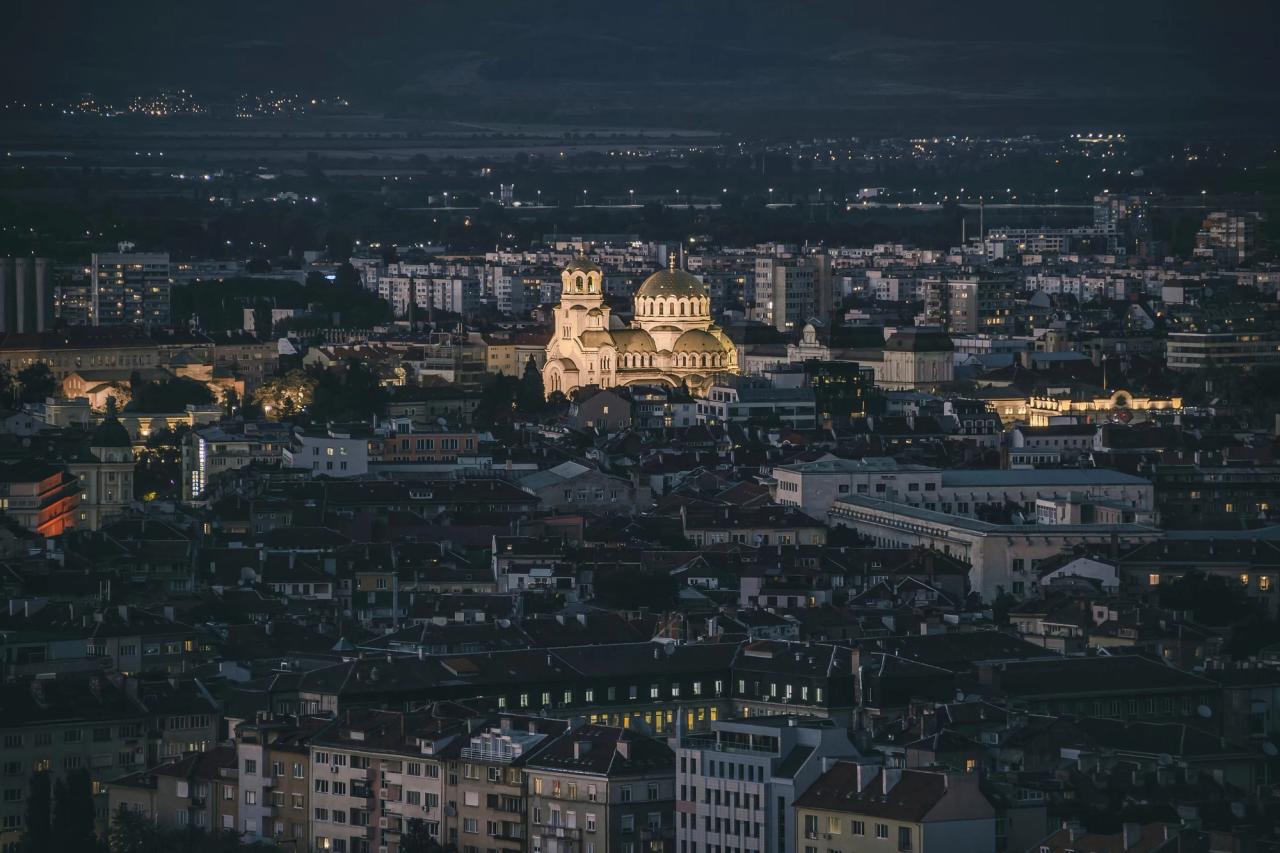
Sofia is one of Europe's most underrated capitals — a city where 2,000-year-old Roman ruins sit beside Soviet-era monuments and gleaming glass towers. Set against the dramatic backdrop of Vitosha Mountain, Bulgaria's capital draws expats with its remarkably low cost of living, fast-growing tech sector, and a laid-back lifestyle that's hard to match at this price point. The city has a population of roughly 1.3 million and has been quietly reinventing itself over the past decade: coworking spaces fill old factory buildings, specialty coffee shops outnumber traditional cafés, and the tech industry now accounts for a significant share of the local economy.
Whether you're a remote worker stretching your budget, a tech professional eyeing Southeastern Europe's startup boom, or a retiree seeking culture without the Western European price tag, Sofia deserves a serious look. The combination of EU membership, a flat 10% income tax rate, and living costs that are a fraction of Western European norms makes it one of the most compelling options on the continent.
Sofia at a Glance
- Population
- ~1.3 million (metro area ~1.6 million)
- Region
- Sofia City Province, western Bulgaria
- Known For
- Vitosha Mountain, Alexander Nevsky Cathedral, affordable urban living
- Average Rent (1BR)
- лв 1,000–1,565 (€510–800)
- Average Salary
- ~лв 2,800–2,850 net/month (€1,430–1,460)
- Expat Community
- Growing — strong tech and digital nomad presence
Why Move to Sofia
Sofia consistently ranks among the best-value cities in Europe for expats. Here's what makes it stand out:
- Affordability: Sofia is one of the cheapest capitals in the EU. A comfortable lifestyle for a single person costs around лв 2,500–3,500/month, a fraction of what you'd spend in Berlin, Lisbon, or Prague. Groceries, rent, dining, and transport are all significantly below Western European averages.
- Tech scene: Bulgaria's IT sector has been growing at 10–15% annually. Sofia hosts offices of VMware, SAP, Oracle, and dozens of startups, making it a legitimate tech hub with competitive salaries in the sector. IT salaries in Sofia are competitive regionally, with senior roles offering solid compensation, though still below Western European capitals.
- Low taxes: Bulgaria has a flat 10% personal income tax rate — one of the lowest in the EU. For freelancers and remote workers, this is a major draw.
- Nature on your doorstep: Vitosha Mountain is a 30-minute bus ride from the city center, offering hiking in summer and skiing in winter — a rare perk for any European capital. Borisova Garden and South Park also provide green space right in the urban core.
- EU membership: Bulgaria is an EU member state, which means free movement for EU citizens and a straightforward residence permit path for non-EU nationals. Bulgaria joined the Schengen Area for air and sea borders on 31 March 2024 and for land borders on 1 January 2025.
- Cultural depth: From the gold-domed Alexander Nevsky Cathedral to the communist-era National Palace of Culture (NDK) and the ruins of ancient Serdica, Sofia layers centuries of history in a walkable city.
- Compact and walkable: Most of Sofia's attractions, restaurants, and nightlife are within a walkable central zone. The metro and tram network fill in the gaps efficiently.
- Gateway to the Balkans: Sofia's location makes it easy to explore the wider region. Thessaloniki, Skopje, Belgrade, and Istanbul are all reachable by bus or a short flight.
Finding Housing in Sofia
Average Rents
Rents in Sofia vary significantly by district. The city center and Lozenets command the highest prices, while outer districts like Mladost and Obelya are much cheaper.
| Neighborhood | 1-Bedroom | 3-Bedroom | Character |
|---|---|---|---|
| Lozenets | лв 1,100–1,600 (€560–820) | лв 1,900–2,800 (€970–1,435) | Leafy, upscale, popular with expats |
| Studentski Grad | лв 800–1,100 (€410–560) | лв 1,200–1,900 (€615–970) | Young, lively, near university |
| Oborishte | лв 1,000–1,500 (€510–770) | лв 1,700–2,600 (€870–1,330) | Central, historic, walkable |
| Mladost | лв 700–1,000 (€360–510) | лв 1,100–1,700 (€560–870) | Suburban, affordable, family-friendly |
| Vitosha | лв 1,000–1,400 (€510–720) | лв 1,700–2,600 (€870–1,330) | Near the mountain, quiet, green |
| Iztok / Dianabad | лв 950–1,350 (€485–690) | лв 1,550–2,350 (€790–1,205) | Quiet, residential, near Borisova Garden |
How to Find Housing
- Imot.bg: Bulgaria's largest property portal — most listings are here. Search by district and price range.
- OLX.bg: General classifieds site with a strong rental section. Good for finding deals from private landlords.
- Facebook groups: "Apartments for Rent in Sofia" and "Expats in Sofia" groups are active and often have listings before they hit the big sites. Posting what you're looking for often gets quick responses.
- Estate agents: Can be helpful for finding furnished apartments or negotiating in English, but expect to pay a commission of one month's rent.
- Local tip: Many landlords prefer cash payment and may not declare rental income. Negotiate openly and ask for a written contract regardless.
Tips for Expats
- Budget for a deposit of one to two months' rent upfront. Some landlords also ask for the first and last month's rent.
- Inspect heating systems carefully — older panel buildings ("panelki") can have poor insulation and high winter heating bills. Central heating (toplofikatsiya) costs vary wildly between buildings.
- Avoid paying anything before viewing the apartment in person. Online-only scams exist, especially on lesser-known classified sites.
- Learn to read Cyrillic before you arrive. Street signs, bus numbers, and most menus are in Bulgarian script. It takes a day or two to learn and makes navigating the city dramatically easier.
- Register your rental contract with the local tax office. This protects you legally and is required for certain residence permit applications.
Neighborhoods Guide
Choosing the right neighborhood shapes your day-to-day experience in Sofia. Here's what each major area offers:
- Lozenets: The go-to district for expats. Quiet streets, international restaurants, proximity to South Park and Vitosha. Higher rents by Sofia standards but still affordable by Western European measures. Ideal for professionals and families who want a polished residential feel.
- Oborishte: Central and walkable, close to Sofia's main landmarks. A mix of renovated pre-war buildings and newer developments. Good for professionals who want to be in the heart of things. Slightly bohemian, with independent cafés and galleries.
- Studentski Grad: Budget-friendly and energetic, dominated by university students. Nightlife, cheap eateries, and shared apartments. Best for younger expats or those on a tight budget. Can be noisy on weekends.
- Mladost: A large residential district in the southeast. Practical, affordable, and well-connected by metro. Families and long-term residents tend to settle here. Less charm but very functional.
- Vitosha: Named after the mountain it borders. A greener, quieter option with quick access to hiking trails. Slightly pricier but appeals to nature lovers and those who want to escape the urban grind without leaving the city.
- Obelya / Nadezhda: Northern districts that are very affordable and less touristy. Good metro access to the center. Worth considering if budget is the top priority. Less English spoken here, which can be a plus for immersion.
- Iztok / Dianabad: Quiet residential areas near the city center. Popular with families and older professionals. Well-connected, safe, and close to Borisova Garden.
Cost of Living in Sofia
One of Sofia's biggest draws is how far your money goes. Even on a modest Western salary, you can live comfortably here.
Monthly Budget Breakdown
| Category | Budget Range |
|---|---|
| Rent (1BR, center) | лв 1,000–1,600 (€510–820) |
| Utilities | лв 200–420 (€102–215) |
| Internet | лв 20–30 (€10–15) |
| Groceries | лв 500–700 (€255–360) |
| Transport | лв 50–80 (€26–41) |
| Dining out (4x/month) | лв 200–350 (€102–180) |
| Leisure/Gym | лв 50–120 (€26–61) |
| Total | лв 2,020–3,570 (€1,030–1,830) |
Note: Winter utilities (November–March) can push costs up by лв 100–200/month due to heating, especially in older buildings.
Day-to-Day Costs
- Coffee (cappuccino): лв 4–6 (€2–3)
- Lunch (casual restaurant): лв 18–35 (€9–18)
- Monthly transport pass: лв 50 (€26)
- Beer (0.5L, bar): лв 4–8 (€2–4)
- Cinema ticket: лв 15–18 (€7.50–9)
- Gym membership: лв 50–100/month (€26–51)
- Loaf of bread: лв 1.50–2.50 (€0.75–1.30)
- 1L milk: лв 2.80–4.00 (€1.43–2.05)
- Dozen eggs: лв 5.50–8.40 (€2.80–4.29)
- Dinner for two (mid-range): лв 80–170 (€41–87)
Getting Around Sofia
Sofia's public transport is cheap, reasonably reliable, and covers most of the city. A combined monthly pass for all modes costs just лв 50.
- Metro: Two main lines that cross the city, with a third line opened recently. Clean and efficient. Connects the airport to the city center in about 20 minutes (costs лв 1.60 per ride).
- Trams: The tram network is extensive and iconic — some lines run vintage orange trams that are a Sofia trademark. Trams are the best way to get around the central zone.
- Buses and trolleybuses: Fill the gaps where metro and tram lines don't reach. Routes can be confusing at first, but Google Maps handles Sofia's transit well.
- Cycling: The city is building more bike lanes, but Sofia is not yet fully bike-friendly. Borisova Garden and South Park are good for recreational cycling.
- Driving: Traffic congestion is a daily frustration, especially during rush hours. Parking in the center is limited and often chaotic. Most expats rely on public transport or ride-hailing apps like TaxiMe and Yellow Taxi.
- Airport: Sofia Airport (SOF) has direct flights to most major European cities and growing intercontinental connections via hubs like Istanbul and Vienna. Budget airlines like Wizz Air and Ryanair offer cheap flights across Europe.
- Intercity: Trains are slow but scenic — the route to Plovdiv or Veliko Tarnovo is a nice day trip. Buses (via companies like Union Ivkoni) are faster and connect Sofia to all major Bulgarian cities and neighboring countries.
Healthcare in Sofia
Sofia has the best medical infrastructure in Bulgaria. Private healthcare is affordable and generally of good quality, while the public system is functional but can involve long waits.
- Hospitals/Clinics: Sofia has the best medical infrastructure in Bulgaria. Major public hospitals include Alexandrovska and Pirogov. Private clinics like Tokuda Hospital, City Clinic, and SofiaMed offer modern facilities with shorter wait times and English-speaking staff.
- English-speaking doctors: Available in private clinics, particularly in specialties like dentistry, dermatology, and general practice. Many younger doctors speak English well. Expect to pay лв 50–100 for a standard consultation at a private clinic.
- Pharmacies: Widely available, often open late or 24 hours in central locations. Many medications that require prescriptions elsewhere are sold over the counter in Bulgaria. Look for the green cross sign.
- Dental care: Dental tourism is a thing in Bulgaria — quality is high and prices are a fraction of Western European rates. Many expats get dental work done in Sofia rather than waiting until they visit home.
- Emergency number: 112 (EU-wide emergency number, operators typically speak English). Ambulance response times in the center are generally quick.
- Health insurance: If employed, your employer registers you for national health insurance. Voluntary coverage is available for self-employed individuals at around лв 30–50/month through the national system.
Planning your move?
Tell us about your move to compare quotes from international moving companies.
Culture & Lifestyle
Sofia blends Eastern European grit with Mediterranean warmth. The city doesn't try to be flashy — it's unpretentious, relaxed, and surprisingly rich in things to do.
- Borisova Garden: Sofia's central park, perfect for jogging, walking, or just sitting under the trees with a book. The rose garden and open-air café scene make it a social hub in warmer months.
- NDK (National Palace of Culture): A massive 1980s congress and event center surrounded by a landscaped park. Hosts concerts, exhibitions, and festivals year-round. The park behind it is a favorite weekend hangout, especially in summer when open-air concerts take over.
- Nightlife and café culture: Sofia's bar and café scene punches above its weight. Craft cocktail bars, specialty coffee shops, and live music venues are scattered across the center and Lozenets. The area around Shishman Street and Rakovski Street is the nightlife epicenter.
- Vitosha Boulevard: The city's main pedestrian shopping street, lined with cafés, shops, and street performers. It runs straight toward the mountain — a visual reminder of how close nature is.
- Museums and galleries: The National Gallery, the Museum of Socialist Art, and the Sofia City Garden are worth visiting. Many galleries in the center are free or cost just a few lev to enter.
- Thermal springs: Sofia sits on natural hot springs. The public mineral water fountains near the Central Bathhouse and the Presidential building dispense free hot mineral water — a quirky local tradition.
Food & Dining
- Bulgarian cuisine leans on fresh salads (Shopska is the national staple), grilled meats, yogurt, and hearty stews. Expect to pay лв 10–20 for a sit-down meal with a drink.
- Kapana-style street food and kebapche are cheap and everywhere. A filling street meal can cost under лв 8.
- The areas around Vitosha Boulevard, Oborishte, and Lozenets have the best concentration of international restaurants — Italian, Asian, Middle Eastern, and modern Bulgarian.
- Must-try local dishes: Banitsa (flaky cheese pastry, perfect for breakfast with ayran or boza), kavarma (slow-cooked meat stew), meshana skara (mixed grill plate), and tarator (cold yogurt and cucumber soup in summer).
- Markets: The Central Market Hall (Tsentralni Hali) and Zhenski Pazar are great for fresh produce, local cheese, and spices at lower prices than supermarkets.
Expat Community
- Meetup.com and Facebook: The primary ways expats connect. Groups like "Expats in Sofia," "Internations Sofia," and "Sofia Digital Nomads" are active and welcoming. Regular social events, hikes up Vitosha, and pub crawls keep the community lively.
- Language exchanges: Regular events at bars and coworking spaces where Bulgarians practice English and foreigners pick up Bulgarian. These are one of the best ways to break into local social circles.
- Coworking spaces: Places like Puzl CowOrking, SOHO, and Networking Premium attract a mixed crowd of freelancers, developers, and entrepreneurs. Monthly memberships range from лв 150–350.
- Who moves to Sofia: The expat mix skews toward young professionals in tech, freelancers, and language teachers. There's also a steady stream of retirees from Western Europe attracted by the cost of living. The community is smaller than in Prague or Budapest but arguably friendlier.
Job Market in Sofia
Sofia's economy is increasingly driven by the tech and outsourcing sectors, though traditional industries like finance and manufacturing still play a role.
- Main industries: IT and software development, outsourcing (BPO), finance, manufacturing, and tourism.
- Major employers: VMware, SAP, Oracle, Telelink, Paysafe, Experian, and a growing roster of startups.
- Average salaries by sector:
| Sector | Average Monthly Net (лв) |
|---|---|
| IT / Software | 3,500–6,000 (€1,800–3,070) |
| Finance | 2,000–3,500 (€1,025–1,800) |
| Marketing / Creative | 1,500–2,500 (€770–1,280) |
| Education (language schools) | 1,200–2,000 (€615–1,025) |
| General BPO | 1,400–2,200 (€720–1,125) |
- Job search resources: Jobs.bg, LinkedIn (widely used), and Indeed.bg. Networking events and coworking communities are also good channels.
- Freelancing: Bulgaria's flat 10% income tax rate makes it attractive for freelancers and remote workers. Many expats register as self-employed or open a small company (OOD) to invoice clients legally.
Education in Sofia
- International schools: The Anglo-American School of Sofia, British School of Sofia, and Deutsche Schule Sofia are the main options for expat families. Tuition ranges from €5,000–€15,000/year depending on grade level. Waitlists can be long, so apply early.
- Universities: Sofia University "St. Kliment Ohridski" is the country's oldest and most prestigious. The Technical University of Sofia and New Bulgarian University also have strong reputations. Several programs are taught in English, particularly at the master's level.
- Language schools: English, Bulgarian for foreigners, German, and French courses are widely available. The British Council and Alliance Française both have a presence. Private Bulgarian lessons for foreigners cost around лв 15–25/hour.
Moving Checklist for Sofia
- Confirm visa/residence requirements (EU citizens: register after 90 days; non-EU: apply for a long-stay visa at a Bulgarian embassy)
- Secure temporary accommodation (Airbnb or hotel for the first 2–4 weeks)
- Research neighborhoods based on your budget and lifestyle
- Join expat Facebook groups to ask questions and find leads
- Learn the Cyrillic alphabet — it takes a few hours and makes a huge difference
- Get a local SIM card (A1, Yettel, and Vivacom are the main carriers — prepaid plans start at лв 10/month)
- Open a Bulgarian bank account (UniCredit Bulbank or DSK Bank are expat-friendly)
- Register your address at the local municipality if staying long-term
- Buy a rechargeable public transport card from any metro station
- Download the Sofia public transport app and TaxiMe for ride-hailing
- Find long-term housing and sign a lease
- Register for health insurance (mandatory if employed; optional voluntary coverage available)
- Explore coworking spaces if you work remotely
- Start learning basic Bulgarian — even a few phrases go a long way
- Get a Bulgarian tax number (if self-employed or freelancing)
- Visit Vitosha Mountain on a weekend to reset from the urban grind
- Join a coworking space or expat meetup to start building a social network
- Familiarize yourself with the local emergency numbers and nearest hospital
- Set up a Wise or Revolut account for easy BGN/EUR transfers
Sofia is generally safe. Violent crime rates are low compared to other European capitals. Petty crime like pickpocketing can happen in crowded areas and on public transport, but it's not a major concern. The main safety issue for newcomers is poorly maintained sidewalks in winter when ice makes walking hazardous.
Not necessarily, especially in the short term. English is widely spoken among younger Bulgarians and in expat-friendly areas like Lozenets and the city center. However, dealing with government offices, landlords, and older generations often requires Bulgarian. Learning the basics makes daily life significantly easier.
The currency is the Bulgarian lev (лв / BGN). Bulgaria is expected to adopt the euro eventually, though the target date has slipped repeatedly; as of 2026 the lev remains the official currency. The exchange rate is fixed at approximately 1 EUR = 1.96 BGN. Cards are widely accepted in the city, though smaller shops and markets may prefer cash.
Yes. EU citizens can enter Bulgaria with just an ID card or passport and stay for up to 90 days without registration. For longer stays, you need to register for "continued residence" status, valid for up to five years. After five years of legal residence, you can apply for permanent residency.
Sofia has a continental climate with cold winters. Temperatures regularly drop below freezing from December to February, sometimes reaching -15°C. Snowfall is common. Heating costs can spike during winter months, so factor this into your budget and check the insulation quality of any apartment before signing a lease.
Yes. Sofia ticks most boxes for digital nomads: affordable living, fast internet (averaging 80–100 Mbps), a growing number of coworking spaces, and a lively social scene. The main drawbacks are the cold winters and limited direct flights to some non-European destinations. The digital nomad community is smaller than in Lisbon or Bali but is active and growing.
Non-EU nationals typically enter on a long-stay visa (Type D) obtained at a Bulgarian embassy before arrival. Once in Bulgaria, you apply for a residence permit through the Migration Directorate. Common grounds for residency include employment, self-employment (often via registering a Bulgarian company), study, or pension status. Permits are usually issued for one year and renewable. After five years of continuous legal residence, you may apply for permanent residency.
Sofia has excellent internet by European standards. Fiber-optic connections are widespread, and speeds of 100–300 Mbps are standard in urban areas. Providers like A1, Yettel, and Vivacom offer home broadband packages starting around лв 20–30/month. Mobile data is also cheap and fast — unlimited 4G/5G plans cost as little as лв 15–20/month.
Related Guides
- [Moving to Bulgaria] — comprehensive country guide covering residency, taxes, and nationwide living costs
- [Moving to Plovdiv] — Bulgaria's cultural capital and a quieter alternative to Sofia
- [Moving to Varna] — the Black Sea coast option for those who prefer beachside living