
Romania is one of Europe's most underrated destinations for expats — a country where ancient Carpathian landscapes meet a booming tech scene, where the cost of living is a fraction of Western Europe, and where legendary hospitality makes newcomers feel welcome from day one. Whether you are drawn by career opportunities in Bucharest or Cluj-Napoca, the charm of Transylvanian villages, or simply the appeal of fast internet and affordable living, this guide covers every step of relocating to Romania in 2026. From visas and residence permits to healthcare, banking, housing, and cultural integration, you will find practical, up-to-date information to plan your move with confidence.
Romania at a Glance

- Population
- ~19 million
- Capital
- Bucharest
- Currency
- Romanian Leu (RON) — Romania has not yet adopted the euro
- Average Salary
- ~9,000 RON gross / ~6,000 RON net per month (~€1,200 net)
- Language
- Romanian (Latin-based, not Slavic); English widely spoken in cities and among younger generations
- Climate
- Temperate continental — cold winters, warm summers; mountain regions see heavy snowfall
- Time Zone
- EET (UTC+2), EEST (UTC+3 in summer)
- EU Member
- Yes (since 2007); Full Schengen member since 1 January 2025 (air/sea from 31 March 2024)
- Internet
- Among the fastest in the world
Why Move to Romania in 2026
- Extremely Affordable: Romania remains one of the least expensive EU countries — rent, groceries, dining, and transport cost significantly less than in Western Europe, allowing a comfortable lifestyle on a moderate salary.
- Growing IT & Tech Hub: Cluj-Napoca and Bucharest have become major European tech centres, attracting multinational companies and startups with competitive salaries and a deep talent pool.
- EU Membership Benefits: As an EU member state, Romania offers free movement and simplified residency for all EU/EEA citizens, plus access to EU-wide healthcare reciprocity through the EHIC system.
- World-Class Internet: Romania consistently ranks among the top countries globally for internet speed, with widespread fibre-optic coverage even in smaller cities — a major draw for remote workers and digital nomads.
- Stunning Natural Landscapes: The Carpathian Mountains, the Danube Delta (a UNESCO Biosphere Reserve), the Black Sea coast, and vast forests provide outdoor experiences that rival any European destination.
- Safe and Welcoming: Romania has low crime rates by European standards and a culture of deep hospitality — strangers are often invited in for coffee or a meal, especially outside the major cities.
Moving Costs to Romania
Relocation costs vary by origin, shipment volume, and transport method. Below are typical market rates as of early 2026:
| Origin | Estimated Cost Range | Container/Volume |
|---|---|---|
| Western Europe (UK, Germany, France) | €1,200–€3,000 | 20-ft container (shared or full) |
| North America (USA, Canada) | €2,500–€5,500 | 20-ft to 40-ft container |
| Asia (China, India) | €2,000–€4,500 | 20-ft to 40-ft container |
| Within Eastern Europe | €500–€1,500 | Partial or full load |
Component Costs Explained
- Transportation: €600–€2,500 depending on distance and whether you use road, sea, or air freight.
- Insurance: €80–€300 for transit insurance covering loss or damage during shipment.
- Customs Clearance: €100–€400 for documentation, brokerage, and inspection fees — waived for duty-free personal goods.
- Packing Materials: €50–€200 for boxes, wrapping, and protective materials if not included by the mover.
- Storage (if needed): €50–€150 per month for short-term warehouse storage in Romania.
- Administrative Fees: €50–€150 for notarised translations, apostilles, and document processing.
Need a personalised estimate?
Get three vetted moving-company quotes in under 48 hours.
Visa & Residency Requirements
Romania's immigration rules differ significantly depending on whether you are an EU/EEA citizen or a third-country national. As an EU member, Romania grants broad freedom of movement to European citizens while maintaining structured permit categories for everyone else.
For EU/EEA Citizens
EU and EEA citizens do not need a visa to enter, live, or work in Romania. You may stay freely for up to 90 days with just a valid identity card or passport. For stays beyond 90 days, you must register with the local Inspectoratul General pentru Imigrări (IGI) — the Romanian General Inspectorate for Immigration — and obtain a certificate of registration (certificat de înregistrare).
Requirements for registration:
- Valid passport or national ID card
- Proof of employment, self-employment, study, or sufficient financial resources
- Proof of health insurance (EHIC or Romanian policy)
- Proof of address (rental contract or property ownership)
The registration certificate is typically issued within 30 days and is valid for up to five years.
For Non-EU Nationals: Main Visa Categories
Work Permit and Long-Stay Visa (D/AM)
- Requirements: A job offer from a Romanian employer who has obtained a work permit from the IGI. The employer must prove that no suitable EU/EEA candidate was available for the role.
- Processing time: 30–60 days for the work permit; 10–30 days for the visa after permit approval.
- Duration: Up to one year, renewable. After five continuous years, you may apply for long-term resident status.
- Key details: The work permit is tied to a specific employer and role. Changing jobs requires a new permit application.
Digital Nomad Visa (D/AS)
- Requirements: Employment with or ownership of a company registered outside Romania. Minimum income threshold of approximately €3,700/month (three times the Romanian average gross salary). Valid health insurance.
- Processing time: 10–30 days.
- Duration: Up to one year, renewable for an additional year.
- Key details: Designed for remote workers who do not provide services to Romanian clients. Increasingly popular due to Romania's fast internet and low cost of living.
Student Visa (D/SD)
- Requirements: Letter of acceptance from a Romanian educational institution, proof of tuition payment or scholarship, proof of financial means (~€2,500/year minimum), and health insurance.
- Processing time: 10–30 days.
- Duration: Corresponds to the length of the study programme, renewable annually.
- Key details: Students may work part-time (up to four hours/day) without a separate work permit.
Family Reunification Visa (D/VF)
- Requirements: Proof of family relationship (spouse, minor child, dependent parent) with a Romanian citizen or legal resident. Adequate housing and financial means.
- Processing time: 30–60 days.
- Duration: Matches the sponsor's residence permit period.
- Key details: The family member in Romania initiates the application with the IGI; the visa is then issued at the consulate abroad.
Self-Employment / Business Visa (D/PF)
- Requirements: Business plan, proof of investment capital, registration of a Romanian company (SRL or PFA), and proof of qualifications in the relevant field.
- Processing time: 30–60 days.
- Duration: Up to one year, renewable.
- Key details: Popular among freelancers registering as PFA (Persoană Fizică Autorizată) — sole proprietor — or entrepreneurs opening an SRL (Societate cu Răspundere Limitată) — limited liability company.
Obtaining Your CNP (Personal Numeric Code)
The CNP (Cod Numeric Personal) — Personal Numeric Code — is Romania's unique 13-digit identification number assigned to every resident. It is the backbone of Romanian bureaucracy and is essential for virtually all official transactions.
What Is the CNP?
The CNP encodes your date of birth, sex, and region of registration. It is similar to a Social Security Number in the United States or a National Insurance Number in the United Kingdom. Without a CNP, you cannot legally work, pay taxes, open a bank account, enrol in health insurance, or sign many contracts.
How to Obtain a CNP
EU citizens: A CNP is assigned automatically when you receive your certificate of registration from the IGI.
Non-EU nationals: A CNP is issued when your long-stay visa or residence permit is approved. The IGI assigns it during the permit processing stage.
Required Documents
- Valid passport
- Long-stay visa or residence permit (for non-EU nationals)
- Certificate of registration (for EU nationals)
- Proof of address in Romania
When You Will Receive It
- EU citizens: At the time of registration, usually within 1–2 weeks of application.
- Non-EU nationals: Printed on your residence permit card, typically within 30 days of arrival and registration.
Finding Housing in Romania
Romania's rental market is active, relatively affordable by European standards, and heavily concentrated in its five major cities: Bucharest, Cluj-Napoca, Timișoara, Iași, and Brașov. Most apartments are rented unfurnished or semi-furnished, though furnished options exist at a premium. Tenant protections are moderate — leases are enforceable, but the market is less regulated than in Western Europe.
Average Rents by Major City (2026)
| City | 1-Bedroom (City Centre) | 3-Bedroom (City Centre) | Market Competitiveness |
|---|---|---|---|
| Bucharest | 2,500–3,200 RON (€500–€640) | 4,000–6,000 RON (€800–€1,200) | High |
| Cluj-Napoca | 2,200–3,000 RON (€440–€600) | 3,500–5,500 RON (€700–€1,100) | High |
| Timișoara | 1,800–2,500 RON (€360–€500) | 2,800–4,500 RON (€560–€900) | Moderate |
| Iași | 1,500–2,200 RON (€300–€440) | 2,500–4,000 RON (€500–€800) | Moderate |
| Brașov | 1,800–2,600 RON (€360–€520) | 3,000–4,500 RON (€600–€900) | Moderate |
Romanian Rent Terminology
- Chirie: The general word for rent.
- Utilități: Utilities — electricity, gas, water, and building maintenance fees. Usually paid separately from rent and not included in the listed price.
- Garantie: Security deposit, typically 1–2 months' rent, returned at the end of the lease minus any damages.
- Contract de închiriere: The formal rental agreement. Always insist on a written contract — verbal agreements offer little legal protection.
How to Find Housing
Online Platforms:
- Imobiliare.ro: The largest Romanian property portal, with extensive rental listings across all cities.
- OLX.ro: Classifieds platform with a large real estate section — good for finding private landlords.
- Storia.ro: Modern property search platform with map-based filtering and verified listings.
- Facebook Groups: Expat-focused groups like "Expats in Bucharest" and "Apartments for Rent in Cluj-Napoca" are very active.
Local Resources:
- Agencies imobiliare (real estate agencies): Traditional agents who charge a fee of 50–100% of one month's rent, paid by the tenant.
- Word of mouth: Especially in smaller cities, personal referrals from colleagues or neighbours are a common way to find quality rentals.
Tips for Foreigners Finding Housing
- Always visit in person before signing a lease — photos can be misleading.
- Confirm whether utilități are included in the rent or paid separately.
- Request a contract de închiriere and verify that the landlord is the legal owner or authorised representative.
- Negotiate — listed rents, especially on OLX, often have room for a 5–10% reduction.
- Budget for the garantie (deposit) plus the first month's rent upfront — you will need both before moving in.
Rental Agreement & Legal Protection
Romanian rental contracts are governed by the Civil Code. Standard leases run for 12 months with automatic renewal unless either party gives 30–60 days' written notice. Landlords must return the security deposit within 30 days of lease termination, minus justified deductions for damages. If disputes arise, tenants can seek resolution through the local courts (judecătorie).
Warning: Rental Scams
Beware of listings that demand payment before a property viewing, landlords who claim to be abroad and cannot show the apartment, or prices significantly below market rate. Always verify the landlord's identity and property ownership documents (a certificat de proprietate or extras de carte funciară — land registry extract) before transferring any money.
Healthcare & Insurance
Romania's healthcare system is a two-tier model: a mandatory public system funded through the CNAS (Casa Națională de Asigurări de Sănătate) — National Health Insurance House — and a growing private sector. Public healthcare is free at the point of use for all insured residents, but wait times can be long and infrastructure varies. Many expats supplement public coverage with private insurance for faster access and higher-quality facilities.
Public Health Insurance
CNAS
- Cost: 10% of gross salary (employee contribution). Employers deduct this automatically. Self-employed individuals pay 10% of declared income.
- Coverage: GP visits, specialist referrals, hospital stays, emergency care, maternity services, and subsidised medications.
- Eligibility: All employees, pensioners, students, and long-term residents with a valid CNP. EU citizens can use the EHIC (European Health Insurance Card) for temporary stays.
- Best for: Anyone working legally in Romania — it is mandatory, not optional.
Private Health Insurance
- Cost: €500–€2,000/year depending on age, coverage level, and provider.
- Coverage: Faster specialist access, private hospital rooms, dental care, and sometimes international coverage.
- Eligibility: Available to all residents regardless of employment status.
- Best for: Expats who want shorter wait times, English-speaking doctors, and access to modern private clinics.
Top Insurance Providers
- MedLife: One of Romania's largest private healthcare networks with clinics and hospitals in major cities.
- Regina Maria: Premium private healthcare provider known for modern facilities and English-speaking staff.
- Sanador: Well-regarded private hospital and clinic network with competitive insurance packages.
Getting Healthcare Coverage (Timeline)
-
Obtain your CNP upon registration or visa approval.
-
If employed, your employer registers you with CNAS — contributions begin with your first salary.
-
If self-employed, register directly with your local Casa de Asigurări de Sănătate (CAS — County Health Insurance House) and pay quarterly contributions.
-
Choose a GP (medic de familie) at any public clinic — you must register with one to access non-emergency care.
-
Optionally purchase private health insurance from MedLife, Regina Maria, or Sanador for supplementary coverage.
Out-of-Pocket Costs
- GP visit (private clinic): 150–300 RON (€30–€60)
- Specialist consultation (private): 200–500 RON (€40–€100)
- Prescriptions: Generally subsidised under CNAS; private costs vary
- Dental cleaning (private): 200–400 RON (€40–€80)
- Hospital stay (private): 500–1,500 RON/day (€100–€300)
Get a personalised relocation plan
Drop your email and we'll send a tailored checklist plus three quotes from vetted movers.
Banking & Finance
Romania's banking sector is modern and competitive, with widespread digital banking adoption. Opening an account is straightforward for residents, and most banks offer services in English. Note that Romania uses the leu (RON), plural lei, and has not yet adopted the euro — all transactions and contracts are in RON.
Opening a Bank Account
- When: As soon as you have your CNP and proof of address — ideally within the first two weeks of arrival.
- Required documents: Valid passport, CNP, proof of address (rental contract), and residence permit (for non-EU nationals).
- Top banks for expats:
- Banca Transilvania (BT): Romania's largest bank by assets, known for competitive fees and a strong digital banking app.
- BCR (Banca Comercială Română): Part of Erste Group, offering extensive branch networks and English-language support.
- BRD – Groupe Société Générale: Popular among professionals, with good international transfer services.
- ING Bank Romania: Favourite among expats for its user-friendly app, low fees, and English-speaking customer service.
- Raiffeisen Bank: Reliable full-service bank with good branch coverage and online banking.
The Romanian Credit System (BC / Biroul de Credit)
Romania operates a credit bureau system through Biroul de Credit (BC) — Credit Bureau. Banks report loan repayments, credit card usage, and defaults. As a newcomer, you start with a blank record. Building a positive history requires taking out a small loan or credit card and making consistent on-time payments. Most banks will check your BC record before approving mortgages or large loans.
Getting Your Tax Identification Number
- What it is: Your CNP doubles as your tax identification number in Romania. In some business contexts, companies receive a separate CUI (Cod Unic de Identificare) — Unique Identification Code.
- When issued: At the time of residence registration or visa approval.
- Why you need it: Required for employment contracts, tax filing, opening bank accounts, and signing utility contracts.
Bank Account Features & Costs
- Monthly account fee: 0–15 RON (€0–€3) depending on bank and account type
- Debit card: Usually free or included with the account
- Credit card: Available after 3–6 months of account history; annual fees of 50–200 RON
- International transfers (SEPA): Free or minimal fees within the EU
- International transfers (outside EU): 0.1–1% of transfer amount, varies by bank
Payment Culture
Card payments are widespread in Romanian cities — Visa and Mastercard are accepted almost everywhere. Contactless and mobile payments (Apple Pay, Google Pay) are increasingly popular. However, small shops, rural markets, and some taxis may still be cash-only. ATMs are abundant in all cities. It is wise to carry some lei in cash, especially outside major urban centres.
Cost of Living in Romania
Romania is one of the most affordable countries in the European Union. While salaries are lower than in Western Europe, the low cost of housing, food, and transport means that disposable income can stretch remarkably far — especially for remote workers earning in euros or dollars.
Monthly Budget Breakdown by City
| City | One-Person Budget | Family of 3 Budget | Cost Level |
|---|---|---|---|
| Bucharest | 4,500–6,500 RON (€900–€1,300) | 9,000–14,000 RON (€1,800–€2,800) | Moderate |
| Cluj-Napoca | 4,000–6,000 RON (€800–€1,200) | 8,000–13,000 RON (€1,600–€2,600) | Moderate |
| Timișoara | 3,500–5,500 RON (€700–€1,100) | 7,500–11,000 RON (€1,500–€2,200) | Low–Moderate |
| Iași | 3,200–5,000 RON (€640–€1,000) | 7,000–10,000 RON (€1,400–€2,000) | Low |
| Brașov | 3,500–5,500 RON (€700–€1,100) | 7,500–11,000 RON (€1,500–€2,200) | Low–Moderate |
Detailed Cost Breakdown
Housing:
- 1-bedroom apartment (city centre): 2,200–3,200 RON (€440–€640)
- 3-bedroom apartment (city centre): 3,500–6,000 RON (€700–€1,200)
- Utilities (electricity, gas, water, heating): 500–900 RON (€100–€180) per month
- Internet (fibre, 1 Gbps): 40–80 RON (€8–€16) — among the cheapest and fastest in Europe
Groceries & Food:
- Weekly groceries (1 person): 250–450 RON (€50–€90)
- Restaurant meal (casual dining): 40–80 RON (€8–€16)
- Restaurant meal (mid-range, two courses): 80–160 RON (€16–€32)
- Coffee (espresso): 8–15 RON (€1.60–€3)
Transportation:
- Monthly public transport pass: 70–125 RON (€14–€25)
- Taxi / ride-hailing (10 km): 20–40 RON (€4–€8)
- Petrol (1 litre): 7–9 RON (€1.40–€1.80)
- Car insurance (annual, basic): 600–1,200 RON (€120–€240)
Insurance & Healthcare:
- CNAS contribution (employee): 10% of gross salary — deducted automatically
- Private health insurance: 2,500–10,000 RON/year (€500–€2,000)
Leisure & Entertainment:
- Gym membership: 100–250 RON/month (€20–€50)
- Cinema ticket: 25–45 RON (€5–€9)
- Streaming services (Netflix, HBO Max): 30–55 RON/month (€6–€11)
Comparison with Other Countries
- vs Germany: 40–55% cheaper overall, with rent roughly 60% lower.
- vs United Kingdom: 50–65% cheaper, especially in housing and dining.
- vs Spain: 20–35% cheaper, particularly in groceries and transport.
- vs Poland: Comparable, with Romania slightly cheaper for rent but similar food costs.
Language & Culture Tips
Do You Need Romanian?
Romanian is essential for daily bureaucracy, dealing with landlords in smaller cities, and fully integrating into social life. In Bucharest, Cluj-Napoca, and Timișoara, English is widely spoken among younger people, in the IT sector, and in international companies. However, government offices, medical clinics, and many older residents speak little to no English. Learning at least conversational Romanian will dramatically improve your experience.
Romanian Language: Key Facts
Romanian is a Romance language — it evolved from Latin, just like French, Italian, Spanish, and Portuguese. Despite Romania's geographical location in Eastern Europe, Romanian is not a Slavic language, though it has absorbed some Slavic vocabulary over the centuries. It uses the Latin alphabet, which makes it more accessible to Western European speakers than Bulgarian, Serbian, or Russian.
Romanian Language Levels (CEFR)
- A1 (Beginner): Greetings, basic ordering at restaurants, asking for directions — achievable in 2–3 months of part-time study.
- A2 (Elementary): Simple conversations, understanding signs and forms, basic phone calls — 4–6 months.
- B1 (Intermediate): Everyday conversations, understanding colleagues, reading news articles — 8–12 months.
- B2 (Upper Intermediate): Professional discussions, nuanced social interactions, understanding humour and idioms — 18–24 months.
Language Learning Resources
- Duolingo (Romanian course): Free app-based learning, good for vocabulary and basic grammar.
- Romanian courses at local universities: Universities like Universitatea din București and Babeș-Bolyai in Cluj offer affordable language programmes for foreigners.
- iTalki / Preply: Online tutors for one-on-one Romanian lessons, typically 50–100 RON/hour.
- Pimsleur Romanian: Audio-based course focused on conversational skills.
Cultural Norms & Etiquette
Hospitality (Ospitalitate):
- Romanians are famously welcoming. If invited to someone's home, bring a small gift — flowers (odd numbers only, except 13), wine, or chocolates.
- Refusing food or drink offered by a host can be considered impolite. Accept at least a small portion even if you are not hungry.
Greetings:
- Handshakes are standard in formal settings. Close friends and family greet with kisses on both cheeks.
- Use "Domnule" (Mr.) and "Doamnă" (Mrs.) followed by the surname until invited to use first names.
Dracula and Vlad the Impaler:
- The Dracula legend is rooted in Vlad Țepeș (Vlad the Impaler), a 15th-century Wallachian prince known for his fierce resistance against the Ottoman Empire. Bran Castle near Brașov is marketed as "Dracula's Castle," though the historical connection is tenuous. Romanians acknowledge the legend but take pride in the real history of Vlad as a defender of the realm.
Orthodox Traditions:
- Romania is predominantly Eastern Orthodox Christian. Major holidays like Christmas (celebrated on December 25, though the Orthodox calendar sometimes varies) and Easter involve rich traditions — painted eggs, lamb dishes, and midnight church services. Respect religious customs, especially in rural areas.
Communism Legacy:
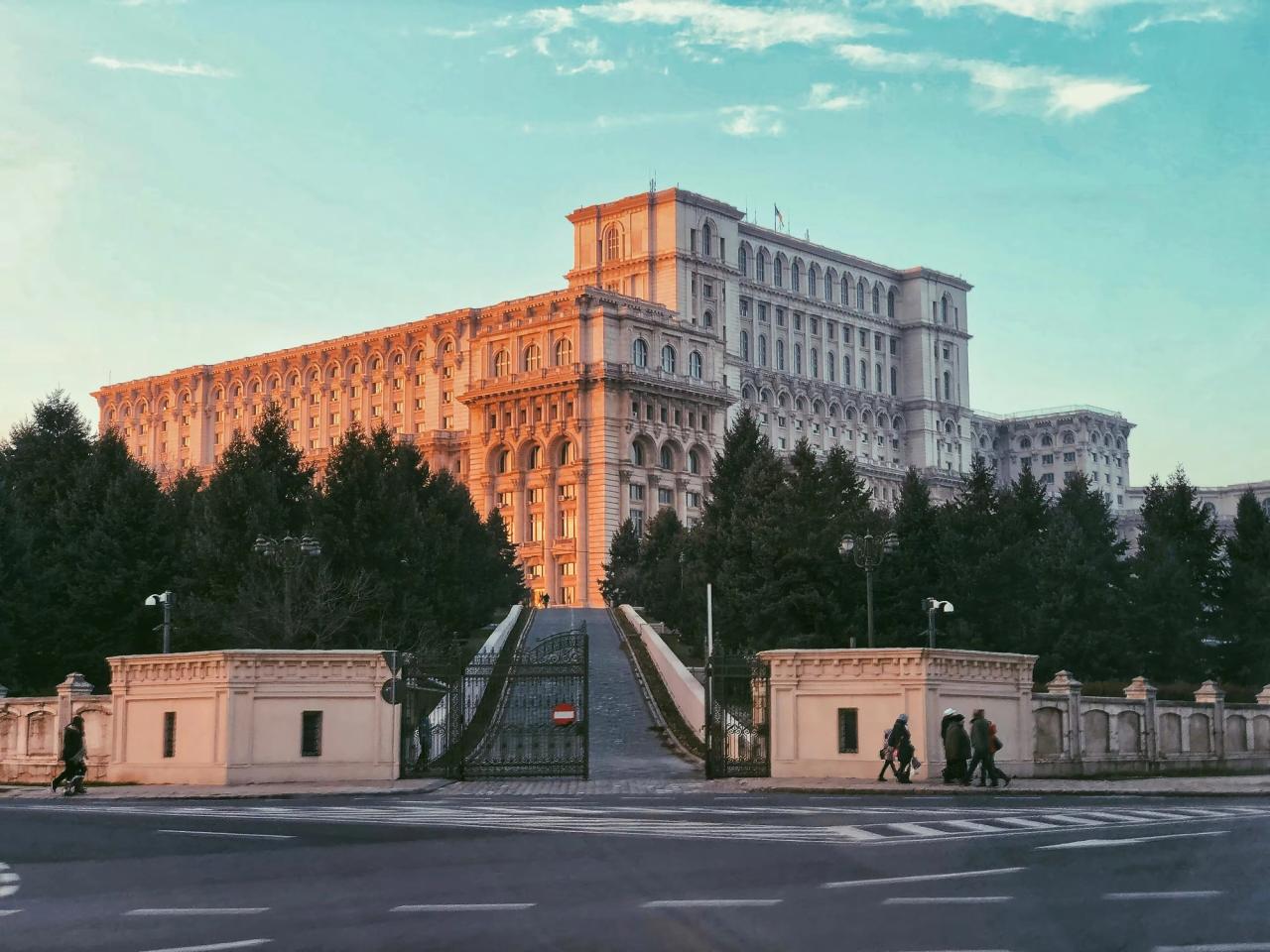
- Romania endured decades of communist rule under Nicolae Ceaușescu until the 1989 Revolution. The legacy is visible in Bucharest's massive Palatul Parlamentului (Palace of the Parliament) — the second-largest administrative building in the world — and in older apartment blocks across cities. Older generations carry memories of scarcity and repression, which shapes a deep appreciation for current freedoms and EU membership.
Social Integration
- Join expat communities on Facebook (e.g., "Expats in Bucharest," "Foreigners in Cluj-Napoca") and Meetup.com groups.
- Attend language exchange events (schimb de limbi) held weekly in most major cities.
- Volunteer with organisations like Habitat for Humanity Romania or local environmental groups.
- Participate in cultural festivals — the George Enescu Festival (classical music), Untold Festival (electronic music in Cluj), and local sărbători (village festivals) are excellent for meeting people.
Moving Checklist
- Research visa or residence requirements and begin gathering documents.
- Get documents apostilled or legalised as needed (birth certificate, marriage certificate, diplomas).
- Obtain certified Romanian translations of key documents.
- Request quotes from international moving companies through ReloAdvisor.
- Begin decluttering — sell, donate, or store items you will not take.
- Finalise your moving company and confirm shipping dates.
- Arrange health insurance — apply for EHIC (EU citizens) or research private policies.
- Research housing in your target city; begin contacting landlords or agents.
- Notify your current employer, landlord, and utility providers of your departure.
- Begin Romanian language study — even basic phrases help enormously.
- Cancel or transfer subscriptions, memberships, and recurring services.
- Arrange mail forwarding from your current address.
- Confirm your moving date and delivery timeline with the moving company.
- Prepare a "first-week essentials" bag — documents, medications, chargers, basic clothing.
- Book temporary accommodation (Airbnb, hotel) for your first 1–2 weeks in Romania.
- Finalise packing and inventory of shipped items.
- Confirm arrival details with your moving company.
- Ensure you have all original documents — passport, visa, translations, medical records.
- Withdraw cash in lei for immediate expenses upon arrival.
- Notify your bank of your move to avoid card blocks.
- Complete property handover at your previous home.
- Arrive in Romania and settle into temporary accommodation.
- Purchase a local SIM card (Vodafone, Orange, or Digi Mobil — available at airports and shops).
- Locate the nearest Direcția Generală de Evidență a Persoanelor — population registry office — for address registration.
- Familiarise yourself with your neighbourhood: supermarkets, pharmacies, transport stops.
- Register your address with local authorities (evidența populației).
- Obtain your CNP if not already assigned.
- Register with CNAS for public health insurance or purchase a private policy.
- Choose and register with a medic de familie (GP).
- Open a Romanian bank account (Banca Transilvania, ING, BCR, BRD, or Raiffeisen).
- If employed, provide your CNP and bank details to your employer for payroll setup.
- Finalise your permanent housing — sign the contract de închiriere.
- Set up utilities (electricity, gas, water, internet) in your name.
- Register your vehicle or begin the driver's licence exchange process if applicable.
- Explore your city — visit local markets, parks, and cultural landmarks.
- Join at least one expat or local social group to begin building your network.
Where to Find Tools and Resources
ReloAdvisor Tools:
- Volume calculator
- Video survey
- Moving cost calculator
Official Romanian Resources:
- General Inspectorate for Immigration (IGI): https://igi.mai.gov.ro
- National Health Insurance House (CNAS): https://cnas.ro
- Romanian Tax Authority (ANAF): https://anaf.ro
- Ministry of Foreign Affairs — visa information: https://mae.ro
Expat Communities:
- Expats in Bucharest (Facebook group)
- Foreigners in Cluj-Napoca (Facebook group)
- InterNations Romania: https://www.internations.org/romania-expats
- Meetup.com — search "expats" in Romanian cities
Related Guides:
- Moving to Hungary
- Moving to Bulgaria
- Moving to Poland