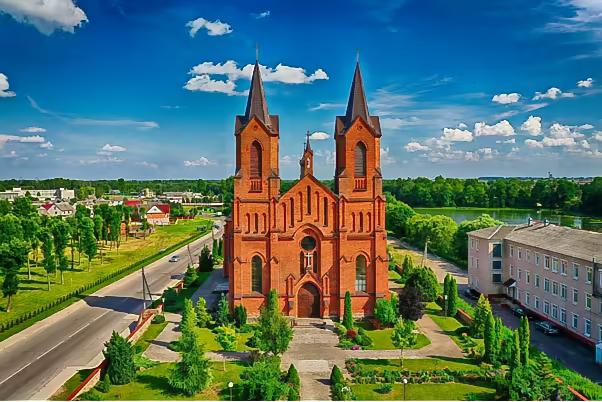
Belarus offers one of the most affordable lifestyles in Eastern Europe, with a thriving IT sector, lush unspoiled nature, and cities where Soviet-era grandeur meets modern ambition. Whether you are drawn by career opportunities in Minsk's booming tech scene, the pristine forests of Belovezhskaya Pushcha, or simply the low cost of living, this guide walks you through every stage of relocating to Belarus — from visas and registration to healthcare, banking, housing, and cultural integration.
This guide covers the essential steps for professionals, entrepreneurs, students, and families planning a move to Belarus in 2026.
Belarus at a Glance
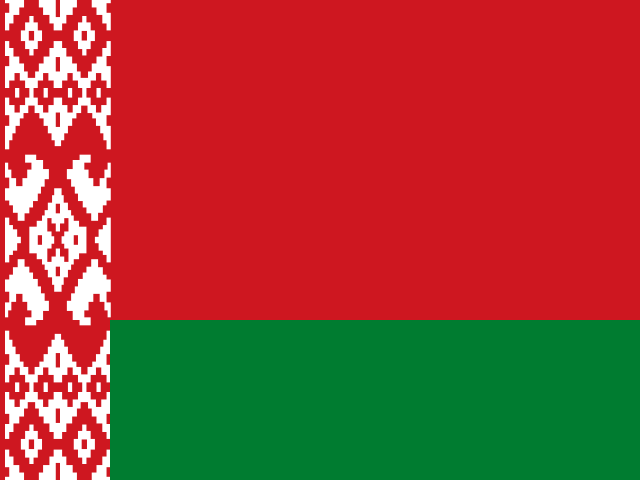
- Population
- ~9.1 million
- Capital
- Minsk
- Currency
- Belarusian ruble (BYN)
- Average Salary
- ~2,746 BYN/month (~$700–$780)
- Languages
- Belarusian (official) and Russian (most widely spoken); English increasingly common in business and among younger people
- Climate
- Humid continental — cold winters (−4 °C to −8 °C / 25 °F to 18 °F), warm summers (17 °C to 22 °C / 63 °F to 72 °F), four distinct seasons
- Time Zone
- UTC+3 (Moscow Standard Time)
Why Move to Belarus in 2026
- Very affordable cost of living: Belarus is significantly cheaper than Western Europe — rent, groceries, transport, and dining out are all a fraction of Western prices, letting expats enjoy a comfortable lifestyle on a modest budget.
- Growing IT sector: Minsk's Hi-Tech Park is home to hundreds of tech companies, attracting international developers and engineers with competitive salaries and a strong work-life balance.
- Visa-free entry for many nationalities: Citizens of numerous countries can enter Belarus without a visa for up to 30 days through Minsk National Airport, making short-term stays and initial scouting trips straightforward.
- Safe and clean environment: Belarus consistently ranks as one of the safer countries in the region, with low crime rates, clean air, and abundant green spaces including the UNESCO-listed Belovezhskaya Pushcha National Park.
- Excellent public transport in Minsk: The capital's metro, bus, tram, and trolleybus network is efficient, reliable, and very cheap — a monthly pass costs around 56 BYN (~€17–€18).
- Rich cultural heritage: From centuries-old Orthodox and Catholic traditions to vibrant banya (sauna) culture and hospitable locals, Belarus blends Slavic warmth with a unique national identity.
Moving Costs to Belarus
Understanding the financial aspects of your move is crucial for proper planning.
| Origin | Estimated Cost Range | Container/Volume |
|---|---|---|
| Western Europe | €1,195–€2,575 | 20-ft container |
| Western Europe | €2,205–€4,415 | 40-ft container |
| North America | €2,800–€5,600 | 20-ft container |
| North America | €4,500–€7,800 | 40-ft container |
| Air freight | €3.70–€7.35+ per kg | Per kilogram |
Component Costs Explained
- Transportation: Sea freight to the port of Klaipėda (Lithuania) or road transport across Europe is typical; transit takes 2–4 weeks depending on origin.
- Insurance: Transit insurance usually adds 1–2 % of declared shipment value.
- Customs clearance: Expect €140–€460+ for standard household goods, depending on volume and documentation.
- Packing materials: Professional packing services range from €150–€400 for a one-bedroom apartment.
- Storage (if needed): Short-term storage in Minsk costs approximately €50–€120 per month.
- Administrative fees: Notarized translations and consular paperwork typically add €50–€150.
Money-Saving Tips
- Book a shared container (LCL) if you have fewer than 15 cubic meters of belongings.
- Ship used household goods — items owned for at least six months qualify for duty-free import.
- Obtain at least three quotes from international movers and compare transit insurance terms.
- Avoid peak summer moving season (June–August) when freight rates spike.
Real-life case: "I relocated to Minsk in April 2025 with about 12 cubic meters of belongings using a shared 20-ft container. The total cost, including customs clearance and delivery to my new apartment, was around $1,850. The shipment arrived in about two to three weeks, and the moving company handled everything efficiently, making my relocation to Belarus smooth and stress-free." — Simon C., moved in April 2025
Need a personalised estimate?
Get three vetted moving-company quotes in under 48 hours.
Visa and Residency Requirements
Belarus has a relatively accessible immigration system. Citizens of many countries can enter visa-free for up to 30 days via Minsk National Airport, though this cannot be extended and does not grant the right to work. For longer stays, expats need a visa or residence permit.
Visa-Free Entry
Nationals of over 70 countries — including EU/EEA member states, the United States, Canada, Australia, Japan, and others — may enter Belarus without a visa for up to 30 days if they arrive and depart through Minsk National Airport. Travelers must show proof of onward travel, travel insurance, and sufficient funds.
Main Visa Categories
Type B (Transit Visa)
- Purpose: Transit through Belarus for up to 48 hours.
- Requirements: Valid passport, onward travel documents.
- Processing time: 5 working days.
- Duration: Single or double transit.
Type C (Short-Term Visa)
- Purpose: Tourism, business meetings, or short visits up to 90 days.
- Requirements: Invitation letter or hotel booking, passport, travel insurance.
- Processing time: 5 working days (standard) or 2 working days (express).
- Duration: Single, double, or multiple entry; up to 90 days per year.
Type D (Long-Term Visa)
- Purpose: Work, study, family reunification, or other long-term stays exceeding 90 days.
- Requirements: Work permit or university admission letter, passport, medical certificate, proof of accommodation.
- Processing time: 5–10 working days.
- Duration: Up to 1 year; multiple entry.
- Valid passport
- Employment contract or job offer letter
- Medical certificate
- Proof of qualifications (diploma, professional certificates)
- Proof of accommodation (rental agreement or property ownership)
- Proof of financial means
- Valid health insurance
- Clean criminal record certificate from the home country
- Medical examination in Belarus
Registration with Local Authorities
Upon arrival in Belarus for a long-term stay, you must register with the local citizenship and migration office within five business days. This is a mandatory step — failure to register can result in fines or problems with future visa applications.
Required Documents
- Valid passport with visa (if applicable)
- Migration card (issued at the border)
- Proof of accommodation (rental agreement or hotel registration)
- Passport-sized photographs
- Health insurance documentation
The Registration Process (Step-by-Step)
-
Obtain your migration card at the border checkpoint upon arrival.
-
Visit the local citizenship and migration office (ОГиМ) within five business days.
-
Submit your passport, migration card, and proof of accommodation.
-
Pay the registration fee (approximately 0.5 base units, which is roughly BYN 150 as of 2026; the base unit is set periodically by the government — currently 297 BYN).
-
Receive a registration stamp or certificate confirming your legal stay.
If you change your address during your stay, you must re-register at your new location within five business days.
Finding Housing in Belarus
Belarus has a property market dominated by apartments — standalone houses for rent are rare in cities. Most rentals are unfurnished or semi-furnished. The market is generally less competitive than in Western Europe, but quality options in Minsk can be snapped up quickly.
Average Rents by Major City (2026)
| City | 1-Bedroom (City Centre) | 1-Bedroom (Outside Centre) | 3-Bedroom (City Centre) | Market Competitiveness |
|---|---|---|---|---|
| Minsk | ~1,652 BYN (~€612) | ~1,180 BYN (~€437) | ~3,200 BYN (~€1,185) | Moderate |
| Brest | ~950 BYN (~€352) | ~680 BYN (~€252) | ~1,800 BYN (~€667) | Low |
| Hrodna (Grodno) | ~870 BYN (~€322) | ~620 BYN (~€230) | ~1,650 BYN (~€611) | Low |
| Homiel (Gomel) | ~820 BYN (~€304) | ~580 BYN (~€215) | ~1,500 BYN (~€556) | Low |
| Mahiliou (Mogilev) | ~780 BYN (~€289) | ~550 BYN (~€204) | ~1,400 BYN (~€519) | Low |
Local Rent Terminology
- Аренда (Arenda): The general term for rent or rental agreement in both Belarusian and Russian.
- Коммунальные услуги (Kommunalnye uslugi): Utility charges — electricity, water, heating, gas, and waste disposal — usually paid separately from rent on a monthly basis.
- Залог (Zalog): Security deposit, typically 1–3 months' rent paid upfront.
How to Find Housing
Online Platforms:
- Kufar.by: The largest classifieds platform in Belarus; the primary marketplace for rental listings.
- Realt.by: A dedicated real estate portal with detailed apartment listings across all major cities.
- Onliner.by: A popular tech and lifestyle site that also hosts a substantial housing section.
Local Resources:
- Real-estate agencies (agencies typically charge one month's rent as a commission fee).
- Word of mouth and expat community groups on social media.
Tips for Foreigners Finding Housing
- Learn basic Russian phrases — most landlords do not speak English.
- Always insist on a written rental agreement (договор аренды) to protect your rights.
- Verify that the landlord has proof of property ownership before signing.
- Ask about utility costs separately — winter heating can significantly increase monthly expenses.
Rental Agreement and Legal Protection
A standard lease in Belarus runs for 12 months and must include the rental amount, payment schedule, deposit terms, and a description of the property and its condition. Either party can terminate the lease early with written notice — typically one to three months depending on the contract. Tenants are protected under the Belarusian Housing Code, which prohibits arbitrary eviction and guarantees the right to a habitable living environment.
Warning: Rental Scams
Be cautious of listings that request payment before you have seen the apartment in person or via video call. Avoid transferring money through unofficial channels. Always verify the landlord's identity and property ownership documents before paying any deposit or rent.
Healthcare and Insurance
Belarus operates a public healthcare system funded through mandatory social insurance contributions. All residents — including foreign nationals with a temporary residence permit — are required to have health insurance through the state system, which covers general practitioner visits, specialist consultations, hospital treatment, and certain medications.
Public Health Insurance
- Cost: Funded through mandatory social insurance contributions deducted from salary (approximately 35 % of gross salary paid by the employer, covering pension, health, and social insurance).
- Coverage: GP visits, specialist referrals, hospital stays, emergency care, and subsidized medications.
- Eligibility: All legally employed residents and those with temporary residence permits.
- Best for: Long-term residents and employees who want comprehensive coverage at minimal out-of-pocket cost.
Private Health Insurance
- Cost: Varies by provider and plan; typically €500–€2,000 per year for comprehensive coverage.
- Coverage: Access to private clinics, shorter waiting times, English-speaking doctors, international coverage options.
- Eligibility: Available to anyone; commonly used by short-term visitors, expats without employment, or those seeking faster service.
- Best for: Short-term visitors, expats who want faster access to specialists, or those who prefer treatment at international-standard private clinics.
Top Insurance Providers
- Belgosstrakh: The largest state-owned insurance company; offers mandatory and supplementary health plans.
- Beleximgarant: Another major state provider with a range of health insurance products.
- International providers (Cigna, Allianz Care): Available for expats who want global coverage including Belarus.
Getting Healthcare Coverage (Timeline)
-
Obtain your temporary residence permit or employment contract.
-
Register with the State Social Protection Fund (ФСЗН) through your employer or independently.
-
Choose a polyclinic (поликлиника) at your registered address and register with a GP.
-
Receive your health insurance certificate and begin accessing public healthcare services.
Out-of-Pocket Costs
- GP visit (public): Covered by insurance; private clinic visit ~30–80 BYN (~€11–€30).
- Prescriptions: Subsidized through the public system; common generics cost 5–30 BYN (~€2–€11).
- Dental care: Public dental is covered for basic procedures; private dental cleaning ~50–150 BYN (~€19–€56).
- Hospital stay (public): Covered by insurance; private hospital rooms ~100–300 BYN/day (~€37–€111).
Planning your move?
Tell us about your move to compare quotes from international moving companies.
Banking and Finance
Opening a Bank Account
- When: As soon as you have your passport, residence registration, and personal number (УНП).
- Required documents: Valid passport, proof of residence, personal number (tax ID), and in some cases your employment contract.
- Top banks for expats:
- Belarusbank: The largest state-owned bank; extensive branch and ATM network; online and mobile banking available.
- Belagroprombank: Major state bank with a wide range of personal and business banking services.
- Priorbank: A subsidiary of Raiffeisen Bank International; known for good customer service and English-language support; modern mobile app.
- MTBank: Popular for its digital-first approach and competitive personal banking products.
Getting Your Tax Identification Number (ИНН)
- What it is: A unique taxpayer identification number (ИНН / Идентификационный номер налогоплательщика) issued by the Ministry of Taxes and Duties.
- When issued: Automatically assigned when you register for employment or apply through the tax office.
- Why you need it: Required for salary payments, tax filing, opening a bank account, and most official transactions.
Bank Account Features and Costs
- Monthly fee: 0–5 BYN (~€0–€2) depending on the bank and account type.
- Debit card: Often free with the account; annual maintenance 0–20 BYN.
- International transfers: Fee of 0.5–2 % of the transfer amount, plus possible correspondent bank charges.
- Online/mobile banking: Free at most banks; Priorbank and MTBank have particularly user-friendly apps.
Payment Culture
Cash remains common in smaller shops, markets, and rural areas, but card payments (Visa and Mastercard) are widely accepted in Minsk and other major cities. Contactless payments via card or smartphone are growing. Note that international sanctions may affect the usability of certain foreign cards — check with your home bank before travelling. Belarusian banks issue local БЕЛКАРТ cards, which work reliably throughout the country.
Cost of Living in Belarus
Belarus is one of the most affordable countries in Europe. A single person can live comfortably in Minsk on a moderate budget, and costs drop significantly in smaller cities.
Monthly Budget Breakdown by City
| City | One-Person Budget (excl. rent) | Family of 3 Budget (excl. rent) | Cost Level |
|---|---|---|---|
| Minsk | ~1,593 BYN (~€589) | ~4,200 BYN (~€1,556) | Low–Moderate |
| Brest | ~1,350 BYN (~€500) | ~3,500 BYN (~€1,296) | Low |
| Hrodna (Grodno) | ~1,300 BYN (~€482) | ~3,400 BYN (~€1,259) | Low |
| Homiel (Gomel) | ~1,280 BYN (~€474) | ~3,300 BYN (~€1,222) | Low |
| Mahiliou (Mogilev) | ~1,250 BYN (~€463) | ~3,200 BYN (~€1,185) | Low |
Detailed Cost Breakdown
Housing:
- 1-bedroom apartment (Minsk centre): ~1,652 BYN (~€612)/month
- 1-bedroom apartment (Minsk outskirts): ~1,180 BYN (~€437)/month
- Utilities (electricity, water, heating, waste): ~150–350 BYN (~€56–€130)/month depending on season
- Internet (50–100 Mbps): ~20–40 BYN (~€7–€15)/month
Groceries and Food:
- Weekly groceries (1 person): ~70–120 BYN (~€26–€44)
- Restaurant meal (casual): ~15–30 BYN (~€6–€11)
- Restaurant meal (mid-range, 2 courses): ~40–80 BYN (~€15–€30)
- Coffee (café latte): ~4–7 BYN (~€1.50–€2.60)
Transportation:
- Monthly public transport pass (Minsk): ~56 BYN (~€17–€18)
- Single metro/bus ride: ~0.85 BYN (~€0.31)
- Taxi (10 km): ~8–15 BYN (~€3–€6)
- Petrol (1 litre, 95 octane): ~2.40 BYN (~€0.89)
Insurance and Healthcare:
- Mandatory social insurance: Covered by employer (~35 % of gross salary employer contribution)
- Private health insurance: ~400–1,700 BYN (~€150–€630)/year
Leisure and Entertainment:
- Gym membership: ~50–120 BYN (~€19–€44)/month
- Cinema ticket: ~10–18 BYN (~€4–€7)
- Streaming services: ~10–25 BYN (~€4–€9)/month
Comparison with Other Countries
- vs. Poland: Belarus is approximately 30–40 % cheaper across most categories, especially rent and dining.
- vs. Germany: Belarus is roughly 50–60 % cheaper; rent alone can be one-third of Berlin prices.
- vs. Lithuania: Belarus is approximately 20–30 % cheaper, though Lithuania offers easier EU market access.
Money-Saving Tips
- Shop at local markets (рынок / rynok) for fresh produce — prices are lower than supermarkets and quality is excellent.
- Use the Minsk metro rather than taxis — it is fast, clean, and costs a fraction of rideshare prices.
- Cook at home — Belarusian groceries are inexpensive, and local staples like potatoes, cabbage, beetroot, and dairy are very affordable.
- Take advantage of state-subsidized cultural venues — museums, theatres, and concert halls are remarkably cheap.
Language and Culture Tips
Do You Need Belarusian or Russian?
Russian is the dominant language in daily life, business, and government — over 90 % of the population uses it as their primary language. Belarusian is the co-official language and is used in education, media, and cultural contexts. English is increasingly spoken in the IT sector, international companies, and among younger Minsk residents, but it is not widely understood outside these circles. Learning at least conversational Russian is strongly recommended for navigating bureaucracy, renting apartments, and building social connections.
Russian Language Levels (CEFR)
- A1 (Beginner): Greetings, numbers, ordering food — achievable in 2–3 months of regular study.
- A2 (Elementary): Simple conversations, asking directions, basic workplace interaction — 4–6 months.
- B1 (Intermediate): Discussing everyday topics, understanding routine workplace communication — 8–12 months.
- B2 (Upper Intermediate): Professional discussions, understanding news and media, nuanced social interaction — 18–24 months.
Language Learning Resources
- Lingualeo / Busuu: Popular apps with Russian courses; convenient for self-study.
- Belarusian State University language courses: Affordable evening and weekend classes available in Minsk.
- Local tutors (Kufar.by, Preply.com): One-on-one lessons from ~20–50 BYN (~€7–€19) per hour.
Cultural Norms and Etiquette
Hospitality (Гостеприимство):
- Belarusians are known for their genuine warmth toward guests — being invited to someone's home is common and considered an honour.
- Bring a small gift when visiting: flowers (always an odd number), chocolates, or a bottle of wine. Avoid yellow flowers, which symbolize separation.
Banya (Sauna) Culture:
- The banya is a cherished social tradition — a place for relaxation, bonding, and even business discussion.
- Invitations to a banya are a sign of friendship; accept graciously and follow the host's lead on etiquette, which includes birch-branch steaming (venik) and cold-water immersion.
Religion and Traditions:
- Belarus has both a strong Orthodox Christian (majority) and Roman Catholic (significant minority, especially in the west) tradition.
- Major holidays — Christmas (celebrated on December 25 in the Catholic west and January 7 in the Orthodox east), Easter, and Kupalle (Midsummer) — are important cultural events.
- Respect religious customs when visiting churches and monasteries; modest dress is expected.
Nature and Outdoor Life:
- Belarusians take great pride in their natural environment — Belovezhskaya Pushcha, one of Europe's last and largest remaining parts of primeval forest, is a UNESCO World Heritage Site and a source of national pride.
- Weekend trips to dachas (country houses), mushroom and berry foraging, and hiking are popular pastimes.
Social Integration
- Join expat communities on Facebook, Internations, and Telegram to meet fellow newcomers.
- Attend local cultural events, language exchange meetups, and sports clubs — Belarusians are welcoming once a connection is established.
- The IT community in Minsk (especially around the Hi-Tech Park) has its own vibrant social scene with regular meetups, hackathons, and conferences.
Moving Checklist
- Research visa requirements and begin gathering documents for your visa or residence-permit application.
- Obtain or renew your passport — ensure it is valid for at least 6 months beyond your planned arrival.
- Request quotes from at least three international moving companies.
- Begin decluttering — sell, donate, or dispose of items you will not need.
- Research the housing market in your target city.
- Submit your visa or long-term visa application.
- Book your moving company and confirm shipment dates.
- Obtain certified copies and notarized translations of key documents (birth certificate, marriage certificate, diplomas).
- Arrange international health insurance coverage for the transition period.
- Notify your current landlord, bank, and utility providers of your move.
- Confirm your flight and accommodation for the first weeks in Belarus.
- Prepare a detailed inventory of your shipment for customs clearance.
- Exchange or withdraw Belarusian rubles (BYN) for immediate expenses upon arrival.
- Download offline Russian language resources and essential local apps.
- Set up mail forwarding from your current address.
- Confirm arrival details with your moving company and customs broker.
- Pack a carry-on bag with essential documents: passport, visa, migration card, rental agreement, insurance papers.
- Back up all important documents digitally (cloud storage or USB drive).
- Inform your embassy in Belarus of your planned arrival.
- Exchange contact details with your new landlord or property manager.
- Complete the migration card at the border checkpoint.
- Register with the local citizenship and migration office within five business days.
- Inspect your rental apartment and document its condition with photos.
- Purchase a local SIM card (MTS, A1, or life:)) for calls and mobile data.
- Set up basic utilities and internet if not included in the rent.
- Open a bank account at Belarusbank, Priorbank, or another major bank.
- Register with a polyclinic at your address for healthcare access.
- Obtain your personal number (УНП) from the tax office.
- Register your residence with the local migration office.
- Explore your neighbourhood — locate the nearest supermarket, pharmacy, hospital, and metro station.
- Set up online banking and mobile payment apps.
- Enroll in a Russian or Belarusian language course.
- Connect with local expat communities and attend a social event.
- Familiarize yourself with public transport routes and purchase a monthly pass.
- Register for any required work-permit or residence-permit extensions well before deadlines.
Citizens of many countries — including EU/EEA states, the US, Canada, Australia, and Japan — can enter Belarus visa-free for up to 30 days through Minsk National Airport. You must show proof of onward travel, travel medical insurance, and sufficient funds (approximately €25 per day). This visa-free allowance cannot be extended and does not permit employment. For longer stays or work, you must apply for a Type D long-term visa or a temporary residence permit.
Your employer must apply for a work permit on your behalf through the local citizenship and migration office. The application requires your passport, employment contract, medical certificate, and proof of qualifications. Processing typically takes 15–30 days. IT professionals working for companies in the Minsk Hi-Tech Park may benefit from simplified procedures. Once the work permit is approved, you can apply for a Type D visa and then a temporary residence permit.
The personal number (Учетный номер физического лица / УНП) is a unique identification number assigned to every foreign resident in Belarus. It is used for tax filings, salary payments, banking, and interactions with government agencies. You receive it when you register with the local migration office or tax authority. It is essential for opening a bank account, signing an employment contract, and paying taxes.
A one-bedroom apartment in central Minsk costs approximately 1,652 BYN (~€612) per month, while outside the centre the price drops to around 1,180 BYN (~€437). A three-bedroom apartment in the city centre averages about 3,200 BYN (~€1,185). Utilities are paid separately and typically run 150–350 BYN (~€56–€130) per month, with higher costs in winter due to heating.
Belarus has a publicly funded healthcare system that covers residents who contribute to mandatory social insurance. If you are legally employed, your employer's social insurance contributions cover your healthcare. Private clinics are also available and offer faster service and English-speaking doctors, but you will need private health insurance or pay out of pocket — a private GP visit costs roughly 30–80 BYN (~€11–€30).
Priorbank (a Raiffeisen subsidiary) is often recommended for expats due to its English-language customer support, modern mobile app, and international transfer capabilities. Belarusbank offers the largest branch and ATM network across the country. MTBank is popular for its digital-first approach. All major banks require your passport, proof of residence, and personal number (УНП) to open an account.
Belarus is generally considered a safe country with low rates of violent crime. Petty crime such as pickpocketing can occur in crowded areas but is uncommon. Expats should stay informed about the political situation, follow local laws carefully, and maintain valid documentation at all times. Registering with your home country's embassy is also advisable.
Yes, but imported vehicles must pass a technical inspection and meet Belarusian safety and emissions standards. Cars from outside the Eurasian Economic Union may be subject to customs duties and VAT. To register your vehicle, submit the title, proof of ownership, and compliance certificates to the State Traffic Inspectorate (GIBDD). Foreign driver's licenses are valid for up to 90 days; long-term residents must exchange their license for a Belarusian one, which may require a written and practical test.
The banya (баня) is a traditional steam sauna that plays a central role in Belarusian social life. It is a place for relaxation, health rituals, and bonding with friends, family, or business associates. The typical banya experience includes alternating hot steam sessions with birch-branch steaming (using a venik / веник) and cold-water immersion. Accepting an invitation to a banya is a sign of trust and friendship. Modesty norms vary — in private banyas, groups are often gender-separated.
You must register with the local citizenship and migration office within five business days of arrival. Bring your passport, migration card (received at the border), and proof of accommodation. The process takes one to two visits and involves a small fee (approximately 18–36 BYN). If you move to a new address, you must re-register within five business days. Failure to register on time can result in fines or complications with future visa applications.
Belarus has two official languages: Belarusian and Russian. Russian is the primary language of daily life, business, and government for over 90 % of the population. While English is increasingly common in the IT sector and among younger professionals in Minsk, it is not widely spoken elsewhere. Learning conversational Russian is highly recommended for navigating bureaucracy, renting apartments, and building meaningful social connections. Belarusian language courses are also available for those interested in the national language.
Where to Find Tools and Resources
ReloAdvisor Tools:
- Volume calculator
- Video survey
- Moving cost calculator
Official Belarus Resources:
- Belarus Ministry of Foreign Affairs – Visa Information
- Belarus Ministry of Taxes and Duties
- National Bank of the Republic of Belarus
- Belarus Ministry of Health
- Belarus State Customs Committee
- Belarusian State Traffic Inspectorate (GAI)
Expat Communities:
- Internations Belarus: internations.org/belarus-expats
- Facebook groups: "Expats in Minsk," "外国人 в Минске / Foreigners in Minsk"
Related Guides:
- Moving to Poland
- Moving to Lithuania
- Moving to Ukraine