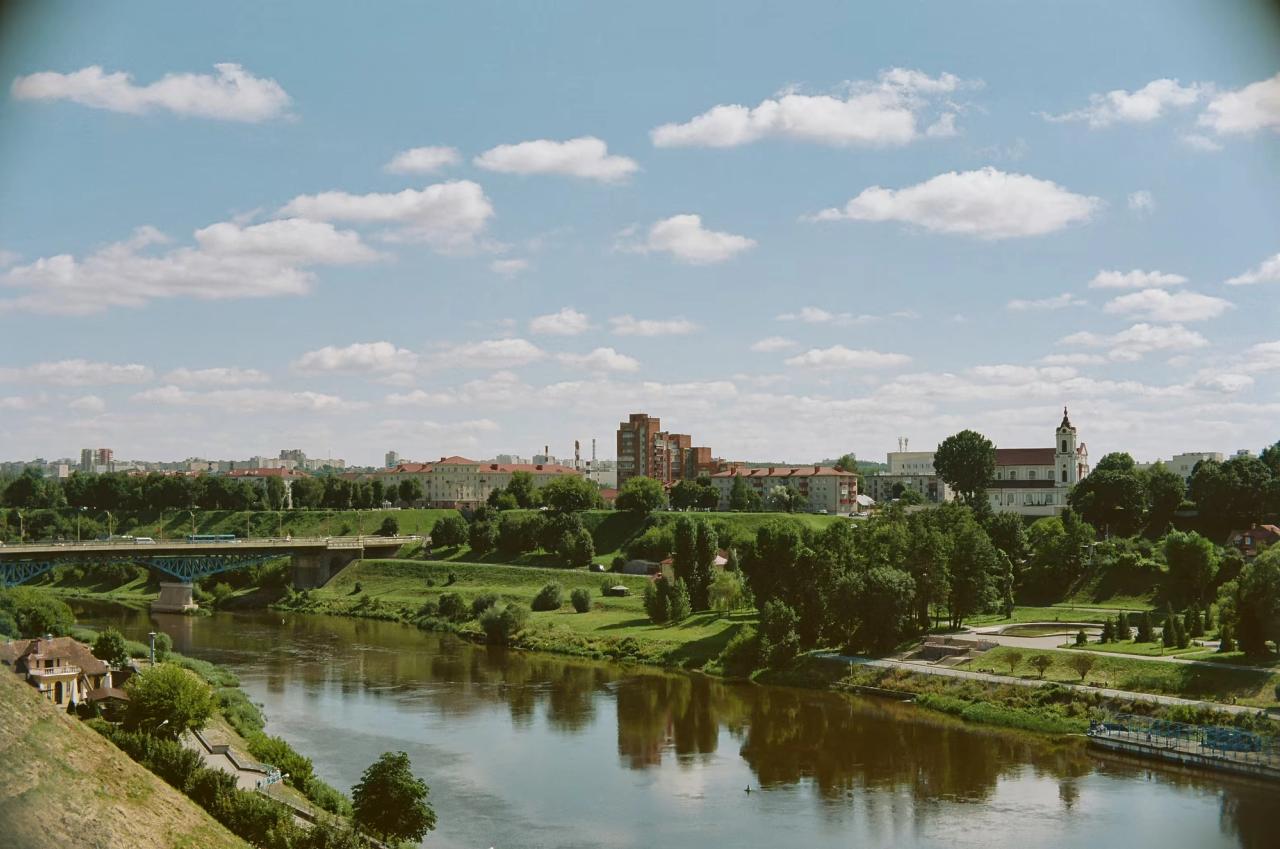
Hrodna — known as Grodno in Russian — sits on the Neman River in western Belarus, just kilometres from the Polish and Lithuanian borders. Its remarkably well-preserved Old Town, laid-back pace of life, and low cost of living make it one of Belarus's most charming and underrated cities. Whether you're a student drawn to Yanka Kupala State University, a remote worker stretching your budget, or someone looking for a quieter European base with easy Schengen access, Hrodna delivers an uncommon mix of history, affordability, and border-region convenience.
With a population of roughly 364,000 (2025), Hrodna is Belarus's fourth-largest city but feels far more intimate than its size suggests. The city blends Baroque and Renaissance architecture from its centuries-long ties to Poland and Lithuania with Soviet-era residential districts and a growing modern service sector. For expats, it offers an entry point to Belarus that is cheaper, greener, and closer to the EU than Minsk.
Hrodna at a Glance
- Population
- ~364,000 (city proper, 2025)
- Region
- Hrodna Oblast, western Belarus
- Known For
- Old Town Baroque & Renaissance architecture, Polish–Lithuanian border proximity, Yanka Kupala State University
- Average Rent (1BR)
- 600–1,100 BYN/month (city centre)
- Average Salary
- ~2,200 BYN/month net (~€730)
- Expat Community
- Small but growing — students, cross-border traders, remote workers
- Climate
- Continental — warm summers (18–24°C), cold winters (−5 to −15°C)
- Languages
- Belarusian and Russian (official); Polish spoken near the border
Why Move to Hrodna
- Affordable cost of living: Grodno is one of the cheapest cities in Europe. A single person can live comfortably on under 2,000 BYN/month excluding rent — roughly €660 at current rates.
- Old Town charm: The historic centre features Baroque churches, Renaissance merchants' houses, and tree-lined boulevards that rival cities several times its size.
- Border access: Poland's Białystok is under 90 minutes by car, and Lithuania's capital Vilnius is reachable in half a day — ideal for Schengen-zone weekend trips.
- University town energy: Yanka Kupala State University attracts Belarusian and international students, giving Grodno a lively cultural and academic atmosphere.
- Walkability: The compact city centre is best explored on foot — most landmarks, restaurants, and services sit within a 20-minute walk of each other.
- Safety: Low crime rates and a relaxed social atmosphere make Grodno one of the more comfortable cities in the region for newcomers.
Grodno's location in the far west of Belarus also makes it a practical base for exploring Eastern Europe. Warsaw, Vilnius, and Kaunas are all within a day's reach, and weekend trips across the border are a normal part of life for many residents. The city's visa-free entry regime for short stays (up to 30 days for citizens of many countries via designated border checkpoints) also makes it accessible for newcomers who want to explore before committing.
Current situation note: Since 2021, the geopolitical situation in Belarus has shifted significantly. EU and US travel advisories currently recommend against non-essential travel. Some border crossings with Poland and Lithuania have been subject to intermittent closures. Western-issued Visa/Mastercard credit and debit cards do not work in Belarus due to sanctions — plan to rely on cash exchange on arrival, Belarusian-issued cards, or alternative transfer services. Always check your country's latest travel advisory before planning a move.
Finding Housing in Hrodna
Average Rents
| Neighborhood | 1-Bedroom | 3-Bedroom | Character |
|---|---|---|---|
| Old Town (Centr) | 900–1,100 BYN | 1,800–2,500 BYN | Historic, walkable, tourist-friendly |
| Zavodsky District | 600–800 BYN | 1,200–1,700 BYN | Soviet-era blocks, parks, budget-friendly |
| Leninsky District | 650–900 BYN | 1,400–1,900 BYN | Residential, schools, quieter streets |
| Oktyabrsky District | 700–950 BYN | 1,500–2,000 BYN | Modern apartments, family-oriented |
| University Quarter | 500–750 BYN | 1,000–1,500 BYN | Student housing, shared flats, lively streets |
How to Find Housing
- Kufar.by: Belarus's largest classifieds site — the go-to for apartment listings across all price ranges. Most landlords list here first.
- Onliner.by: Popular portal with rental listings, reviews, and price comparisons. Useful for checking neighbourhood ratings.
- Local agents: Estate agents charge roughly one month's rent as a fee and can help with lease translation and negotiation — particularly useful if you don't speak Russian.
- Telegram groups: Many Grodno landlords post directly in city-specific Telegram channels, often before listings appear on websites.
- Word of mouth: Ask at the university international office or local cafés — some of the best deals never make it online.
Tips for Expats
- Leases are typically 12 months; expect to pay one month's rent as a security deposit plus the first month upfront.
- Utilities (heating, water, electricity, internet) are usually paid separately — budget an extra 150–300 BYN/month depending on season.
- Always request a written lease in both Russian and your native language to avoid disputes.
- Central heating is controlled by the city and switches on/off by season — individual apartments generally cannot adjust it independently.
- Inspect older buildings carefully for insulation quality before signing; winter heating costs can spike in poorly insulated Soviet-era flats.
- Furnished apartments are common and often only marginally more expensive than unfurnished ones.
Neighborhoods Guide
Choosing the right neighbourhood in Hrodna depends on your budget, lifestyle, and proximity needs. The city is divided into several distinct districts, each with its own character.
- Old Town (Centr): Best for singles and couples who want walkability, cafés, and historic atmosphere on their doorstep. Rents are highest here but still affordable by European standards. The area around Sovetskaya Street is the social heart of the city, with restaurants, bookshops, and weekend markets.
- Zavodsky District: West of the centre — large Soviet-era housing blocks, green parks, and lower rents. Good for budget-conscious expats and families who don't mind a short commute. Well connected by trolleybus. Local shops and playgrounds make daily life convenient.
- Leninsky District: South-central — quieter residential streets with schools, local shops, and easy bus links to the centre. A solid middle-ground choice for professionals and families seeking balance between price and convenience.
- Oktyabrsky District: East side — newer apartment complexes, sports facilities, and a more suburban feel. Popular with young families and professionals. Has its own shopping centres and restaurants, so you don't always need to head into the centre.
- University Quarter: Surrounding Yanka Kupala State University — lively, youthful, with affordable shared accommodation and plenty of student cafés. Ideal for younger expats on a tight budget who enjoy a social atmosphere. Shared flats here can cost as little as 500 BYN/month per room.
Cost of Living in Hrodna
Monthly Budget Breakdown
| Category | Budget Range (BYN) |
|---|---|
| Rent (1BR, centre) | 900–1,100 |
| Utilities | 150–300 |
| Internet (50 Mbps+) | 25–45 |
| Groceries | 400–600 |
| Transport | 30–55 |
| Dining out (4x/month) | 120–200 |
| Leisure/Gym | 50–100 |
| Total | 1,675–2,400 |
At current exchange rates, 1,675–2,400 BYN equals roughly €550–€790 per month — placing Hrodno among the most affordable cities on the continent.
Day-to-Day Costs
- Coffee (café): 4–7 BYN
- Lunch (casual restaurant): 12–20 BYN
- Monthly transport pass: ~32 BYN
- Beer (bar): 5–9 BYN
- Cinema ticket: 8–12 BYN
- Loaf of bread: 2–4 BYN
- Monthly gym membership: 50–100 BYN
- Dozen eggs: 3–5 BYN
- Taxi across the city centre: 5–10 BYN
Getting Around Hrodna
- Public transport: An extensive network of buses, trolleybuses, and marshrutkas (minibuses) covers the city. A monthly pass costs around 32 BYN (~€12). Single rides are inexpensive, routes are well-signed, and services run from early morning until around 11 PM.
- Cycling: The flat terrain and riverside paths make cycling viable in warmer months, though dedicated bike infrastructure is limited. Local bike-sharing schemes are starting to appear near the embankment and parks.
- Driving: Roads are generally in good condition; parking in the centre is manageable and usually free or very cheap. Petrol is significantly cheaper than in the EU. Traffic congestion is minimal compared to larger cities.
- Airport: Hrodno Airport handles limited domestic flights. Most expats fly via Minsk National Airport (MSQ), roughly 4 hours by car or train. Warsaw Chopin Airport is a popular alternative for international routes, reachable in about 4 hours via Białystok.
- Intercity: Regular trains and buses connect Hrodna to Minsk (~5 hours by train), Brest (~3 hours), and across the border to Białystok, Poland (~90 minutes by bus). Cross-border bus services to Lithuania are also available. The Grodno train station is centrally located and easy to navigate.
Healthcare in Hrodna
- Hospitals/Clinics: Hrodna Regional Clinical Hospital is the main public facility, offering a full range of services including emergency care. Several private clinics — such as Medika and dental practices in the centre — offer faster appointments, modern equipment, and a more comfortable environment.
- English-speaking doctors: Limited in the public system; private clinics in the centre are more likely to have English-speaking staff or provide translation assistance. Ask ahead when booking.
- Pharmacies: Widely available throughout the city, many open 24 hours. Prescription requirements differ from EU norms — some medications available over the counter here require prescriptions elsewhere and vice versa. Bring a supply of any specialised medications until you find local equivalents.
- Emergency number: 103 (ambulance), 101 (fire), 102 (police).
- Health insurance: Public healthcare is free for registered residents with mandatory insurance contributions. Many expats supplement this with private cover for faster access and English-speaking consultations. Private health insurance can be arranged through international providers or local companies.
- Dental care: Dental clinics in Grodno are well-regarded and significantly cheaper than in Western Europe. Many expats use local dentists for routine and cosmetic work. Quality private dental clinics in the centre offer modern equipment and competitive pricing.
- Mental health support: Mental health services are available through the public system, though English-speaking therapists are rare. Some private practitioners offer counselling in Russian, and online therapy in English is a growing option among expats.
Get a personalised relocation plan
Drop your email and we'll send a tailored checklist plus three quotes from vetted movers.
Culture & Lifestyle
- Historic architecture: The Old Town features the 17th-century Cathedral of St. Francis Xavier, the Old Castle, and the New Castle — all within walking distance of each other. The Farny Church is one of the oldest brick churches in Belarus. Walking tours are available in summer.
- Theatre and music: Grodno has a regional drama theatre, a philharmonic hall, and frequent open-air concerts in summer. The annual Grodno City Day in September brings street performances, food stalls, and fireworks along the river embankment.
- Nature and outdoors: The Neman River embankment, city parks, and the nearby Augustów Canal (a historic 19th-century cross-border canal on Poland's tentative UNESCO World Heritage list) offer walking, kayaking, fishing, and weekend escapes. The Belovezhskaya Pushcha National Park (a UNESCO World Heritage Site as part of the Białowieża Forest, home to European bison) is a few hours away by car.
- Cross-border culture: Grodno's proximity to Poland and Lithuania gives it a multicultural character — you'll find Polish-language signs, Lithuanian cultural events, and a blend of influences in local cuisine that you won't see elsewhere in Belarus.
- Nightlife: Modest compared to Minsk, but the Old Town has a selection of bars, pubs, and live-music venues that stay open late on weekends. The student crowd keeps the social scene active during the academic year. Craft beer bars and cocktail lounges have appeared in recent years.
- Shopping: Grodno has several shopping centres including Triniti and Old City Mall, alongside traditional markets where you can buy fresh produce, clothing, and household goods at lower prices.
- Sports and recreation: The city has public swimming pools, fitness centres, ice skating rinks, and football stadiums. The Neman River and surrounding countryside offer opportunities for hiking, cycling, and fishing in summer.
Food & Dining
- Local cuisine: Draniki (potato pancakes) are the national dish and everywhere in Grodno. Also try machanka (pork stew), cold beet soup (khaladnik) in summer, and fresh dark rye bread from local bakeries. Belarusian cuisine is hearty, potato-heavy, and excellent in cold weather.
- Best dining areas: Sovetskaya Street and the Old Town pedestrian zone are lined with cafés and restaurants offering everything from traditional Belarusian fare to Italian and Asian cuisine. Several riverside restaurants offer scenic dining in summer.
- Budget options: Canteen-style stolovayas serve hearty meals for 8–15 BYN — a staple for students and locals alike. Market halls also sell fresh produce, dairy, and prepared foods at low prices. Supermarkets like Green and Euroopt stock a wide range of imported and local goods.
Expat Community
- Groups: Small but active Facebook and Telegram communities for expats in western Belarus. Search for "Expats in Grodno" or "Foreigners in Hrodna" on social platforms to connect.
- International connections: The Polish consulate in Grodno hosts cultural events, exhibitions, and language courses; cross-border workers from Poland add to the international mix in the city.
- Language exchanges: Yanka Kupala State University organises occasional language tandem meetups, and several local cafés host informal conversation nights in Russian, English, and Polish.
Job Market in Hrodna
- Main industries: Light manufacturing, food processing, education, cross-border trade, and a growing IT sector.
- Major employers: Grodno Azot (one of Belarus's largest chemical plants), Belcard (cardan shafts manufacturer), regional government offices, Yanka Kupala State University, and several mid-size IT companies.
- Average salaries by sector:
| Sector | Average Monthly Net (BYN) |
|---|---|
| Manufacturing | 1,800–2,500 |
| Education | 1,500–2,000 |
| IT | 3,000–5,000+ |
| Retail/Services | 1,200–1,800 |
| Healthcare | 1,400–2,200 |
- Job search resources: Rabota.by (the main Belarusian job portal) and LinkedIn for international roles. The local employment office (upravlenie po trudu) can assist with registered vacancies and labour market information.
- Remote work note: Many expats in Grodno work remotely for foreign employers. Coworking spaces are growing, and reliable home internet makes this a practical option. Ensure your visa type permits remote work for a foreign employer.
- Business registration: Foreign nationals can register as individual entrepreneurs or establish a company in Belarus, though the process involves paperwork and local legal guidance is recommended. The Grodno Oblast Executive Committee provides information on foreign investment and business permits.
Visa and Residency Overview
Foreign nationals planning to live in Hrodna long-term generally need a visa or residence permit. Common pathways include:
- Work permits: Issued through an employer; valid for up to 2 years and renewable.
- Student visas: Available for those enrolled at Yanka Kupala State University or Grodno State Medical University.
- Temporary residence permits: Granted for employment, study, or family reunification; valid for up to 2 years.
- Long-term residence: Available after holding a temporary permit for the required period, demonstrating stable income, and passing health and character checks.
Address registration with local migration authorities is mandatory within 5 business days of arrival. Keep copies of all immigration documents and carry your passport at all times.
Education in Hrodna
- International schools: Limited — most expat families enrol children in local Belarusian schools or use private tutoring for supplementary instruction. Some families opt for online international schooling to maintain a foreign curriculum.
- Universities: Yanka Kupala State University of Grodno is the city's flagship institution, offering programmes in humanities, sciences, engineering, and economics. It has exchange agreements with European universities and accepts international students. Grodno State Medical University also attracts international medical students, particularly from South Asia and the Middle East, offering programmes in English.
- Language schools: Private centres offer Russian and Belarusian courses for foreigners; some university programmes include a preparatory language year for international students looking to study in Russian.
- School system: Belarusian schools follow a national curriculum with instruction in Russian or Belarusian. The school year runs from September to May, and education is compulsory through age 15. Schools are generally well-funded and teachers are well-qualified. After-school care and extracurricular clubs are widely available at low or no cost.
Banking and Finances
- Major banks: Belarusbank (the largest state-owned bank), Belagroprombank, and Priorbank (now operating under sanctions constraints) are the most common choices for residents. All offer current accounts, debit cards, online banking, and mobile apps.
Important: Due to international sanctions, Western-issued Visa/Mastercard credit and debit cards do not work in Belarus. You must open a Belarusian bank account to get a working card. Apple Pay and Google Pay availability is limited due to sanctions on the Belarusian financial sector.
- Opening an account: You typically need a valid passport, proof of residence, and a residence permit (for non-citizens). Account setup is usually completed within one business day.
- Currency exchange: Exchange offices (obmenniki) are found throughout the city and offer competitive rates for BYN, EUR, USD, PLN, and RUB. Avoid exchanging money at unofficial points.
- Digital payments: Card payments are accepted in most shops, restaurants, and service providers. Apple Pay and Google Pay are available through select banks. Cash remains important at markets and smaller vendors.
- International transfers: Sending and receiving money internationally is possible through bank wire transfers, though fees and processing times vary. Services like Western Union and MoneyGram are also available at bank branches. Note that many international transfer services have suspended or restricted operations with Belarus due to sanctions.
- Tax obligations: If you stay in Belarus for more than 183 days in a calendar year, you are considered a tax resident and taxed on worldwide income. Non-residents are taxed only on Belarusian-sourced income. Consult a local accountant for specifics related to your situation.
Moving Checklist for Hrodna
- Confirm visa or residence permit requirements for your nationality
- Arrange health insurance valid in Belarus
- Secure temporary accommodation (Airbnb, hotel, or short-term rental)
- Prepare apostilled copies of key documents (diploma, birth certificate, marriage certificate)
- Research housing options on Kufar.by and Onliner.by
- Notify your bank of the move and check international ATM withdrawal limits
- Download offline maps of Grodno (2GIS or Maps.me work well)
- Check your country's latest travel advisory for Belarus
- Plan alternative payment methods — Western-issued cards will not work in Belarus
- Register your address with local migration authorities within 5 business days of arrival
- Obtain a local SIM card (A1, MTS, or life:)) — available at kiosks and carrier shops
- Open a bank account at Belarusbank or Priorbank
- Apply for a local tax ID (TIN) if you plan to work
- Familiarise yourself with public transport routes and download the Moovit or 2GIS app
- Buy a transport card for trolleybus and bus travel
- Find long-term housing and sign a lease
- Register with a local polyclinic (polyklinika) for healthcare access
- Register your foreign vehicle or apply for a Belarusian driver's licence if needed
- Connect utilities and set up home internet (Beltelecom or local fibre providers)
- Explore the Old Town, find your favourite café, and join a local community group
- Set up a regular grocery routine at local markets and supermarkets like Green or Euroopt
- Attend a language exchange or expat meetup to start building your social network
- Locate your nearest hospital, pharmacy, and police station for emergencies
Related Guides
- [Moving to Belarus] — comprehensive country guide covering visas, residency, taxes, and customs
- [Moving to Minsk] — Belarus's capital city guide
- [Moving to Brest] — border city guide for southwestern Belarus
- [Moving to Białystok] — nearby Polish city just across the border
Use the ReloAdvisor moving calculator to get a tailored cost estimate for shipping your belongings to Hrodno.