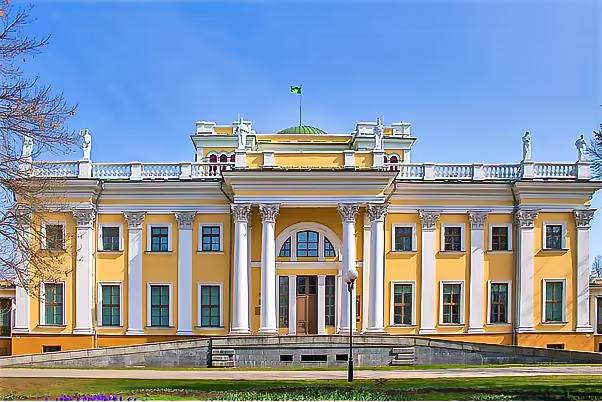
Gomel (Homiel) is Belarus's second-largest city, set along the Sozh River just 30 km from the Ukrainian border. Best known for the stunning Rumyantsev-Paskevich Palace and Park — one of the finest palace complexes in Eastern Europe — Gomel offers a quieter, more affordable alternative to Minsk with a laid-back riverside lifestyle. It suits remote workers, retirees, and anyone looking for low living costs in a historically rich city.
Gomel at a Glance
- Population
- ~501,000 (2025)
- Region
- Gomel Oblast, southeastern Belarus
- Known For
- Rumyantsev-Paskevich Palace, Sozh River, proximity to Ukraine
- Average Rent (1BR)
- 550–800 BYN/month (~€155–€225)
- Average Salary
- 1,200–1,500 BYN/month net
- Expat Community
- Small but growing; mostly Ukrainian, Russian, and Central Asian expats
- Language
- Russian (dominant), Belarusian (official)
- Climate
- Continental — cold winters (−6°C avg Jan), warm summers (+20°C avg July)
- Time Zone
- UTC+3 (Moscow time)
Why Move to Gomel
- Affordability: Gomel is significantly cheaper than Minsk across rent, groceries, and dining — one of the most budget-friendly cities in Europe.
- Palace Park & Green Spaces: The Rumyantsev-Paskevich park complex spans over 20 hectares along the Sozh River and is a daily retreat for residents.
- Riverside Living: The Sozh River shapes the city's character, with embankments, beaches, and waterfront cafes in warmer months.
- Border Location: Just 30 km from Ukraine. Note: all land border crossings between Belarus and Ukraine have been suspended since 2022. Pre-war connections to Kyiv took approximately 4–5 hours by train.
- Less Congestion: Traffic is minimal compared to Minsk; commute times are short and the pace of life is noticeably slower.
- Rich History: The city dates back to the 12th century and has layers of Lithuanian, Polish, Russian, and Soviet heritage visible in its architecture and museums.
- Compact City: Most daily needs are within walking or short transit distance. The city is easy to navigate even without a car.
Finding Housing in Gomel
Average Rents
| Neighborhood | 1-Bedroom | 3-Bedroom | Character |
|---|---|---|---|
| Tsentralny (Center) | 600–800 BYN | 800–1,200 BYN | Central, walkable, near palace park |
| Novobelitsky | 400–550 BYN | 500–750 BYN | Residential, quiet, family-friendly |
| Sovetsky | 500–650 BYN | 600–900 BYN | Mixed Soviet/new-build, good transit |
| Zheleznodorozhny | 400–550 BYN | 500–800 BYN | Near train station, convenient transport |
How to Find Housing
- Onliner.by: The largest Belarusian classifieds site — primary platform for apartment listings.
- Kufar.by: Popular marketplace with a strong real estate section.
- Local agents: Real estate agents (riyeltor) are common; expect a one-time fee of 50% of one month's rent.
- Word of mouth: Many rentals are found through personal networks — ask colleagues or local contacts.
Tips for Expats
- Inspect apartments carefully; many buildings are Soviet-era and heating/plumbing can vary.
- Negotiate rent — listed prices often have 10–15% wiggle room.
- Always sign a lease agreement (dogovor) for tenant protection.
- Heating is centralized; confirm your building's heating schedule before winter.
- Furnished apartments are less common; expect to find basic or unfurnished units outside the center.
- Utility costs vary significantly by season — winter heating bills can double summer costs.
Neighborhoods Guide
- Tsentralny (Center): Best for newcomers who want walkability and proximity to cafes, the palace park, and government offices. Mid-range rents. The area around Lenina Square and the Sozh embankment is the liveliest part of town.
- Novobelitsky: Southern district with a quieter, suburban feel. Lower rents, good for families and those who prefer space. Several parks and schools make it practical for long-term stays.
- Sovetsky: Eastern Gomel with a mix of Soviet apartment blocks and newer developments. Well-connected by tram and bus. A solid mid-range option with decent local shops and markets.
- Zheleznodorozhny: Near the main railway station. Practical for frequent travelers to Minsk or Kyiv. Budget-friendly rents but noisier due to rail traffic.
- Nepromyshlenny: Industrial western district. Cheapest rents in the city but less green space and fewer amenities. Best for those who prioritize cost above all else.
- Voyenno: Northern area near military facilities. Mostly residential with older housing stock. Very affordable but further from central attractions.
Cost of Living in Gomel
Monthly Budget Breakdown
| Category | Budget Range (BYN) |
|---|---|
| Rent (1BR, center) | 600–800 |
| Utilities | 190–260 |
| Internet | 25–40 |
| Groceries | 300–450 |
| Transport | 35–50 |
| Dining out (4x/month) | 120–200 |
| Leisure/Gym | 90–130 |
| Total | ~1,170–1,700+ |
Day-to-Day Costs
- Coffee (cafe): 5–8 BYN
- Lunch (casual restaurant): 12–20 BYN
- Monthly transport pass: 30–40 BYN
- Beer (bar): 5–10 BYN
- Cinema ticket: 8–15 BYN
- Loaf of bread: 1.50–3 BYN
- 1 liter of milk: 1.80–2.50 BYN
- Dozen eggs: 3.50–5 BYN
- Gym membership (monthly): 90–130 BYN
- Basic meal at stolovaya (canteen): 8–15 BYN
- Bottled water (1.5L): 1–2 BYN
- Taxi across town: 5–12 BYN
Getting Around Gomel
- Public transport: Gomel runs an extensive network of buses, trolleybuses, and a tram line. Single rides cost ~1.00 BYN; monthly passes around 35–45 BYN. Service runs from roughly 5:30 AM to 11 PM. The tram system is the most reliable and scenic way to cross the city.
- Taxis: Affordable and widely used. Use the Maxim or Yandex apps for reliable pricing. Short rides within the city cost 5–12 BYN. Avoid unmarked taxis.
- Cycling: Flat terrain makes cycling viable in warmer months, though dedicated bike infrastructure is limited. Few rental options exist; most cyclists own their bikes.
- Driving: Traffic is minimal compared to Minsk. Parking is generally free or very cheap outside the center. Roads are in variable condition — watch for potholes on secondary streets. Foreign licenses are valid for 90 days; longer stays require conversion to a Belarusian license.
- Airport: Gomel Airport (GME) has very limited scheduled flights; most expats fly via Minsk (MSQ). International connections are currently limited due to regional restrictions.
- Intercity trains: Trains connect Gomel to Minsk (~4 hours) and Brest (~7 hours). Note: train service to Kyiv and other Ukrainian cities has been suspended since 2022. Comfortable sleeper options available for longer routes.
- Intercity buses: Cheaper than trains but slower. Good for reaching smaller towns within Gomel Oblast.
- Getting to Ukraine: All cross-border connections to Ukraine (trains and buses) have been suspended since 2022 due to the war. No land border crossings between Belarus and Ukraine are currently operational.
Healthcare in Gomel
- Hospitals/Clinics: Gomel has several public hospitals and polyclinics, including Gomel Regional Clinical Hospital. Private clinics like MedKlinik offer faster service and cleaner facilities.
- English-speaking doctors: Limited — primarily in private clinics. Bring a translator or use translation apps for public facilities.
- Dental care: Private dental clinics are affordable and of good quality. Many expats use private dental services even without insurance.
- Pharmacies: Widely available (aptly, Farmatsevtika chains). Most medications are affordable, but bring prescriptions for specialized drugs. 24-hour pharmacies exist in the center.
- Health insurance: Expats on long-term residence permits are required to enroll in the public health insurance system. Private insurance is recommended as a supplement.
- Emergency number: 103 (ambulance), 101 (fire), 102 (police).
Get a personalised relocation plan
Drop your email and we'll send a tailored checklist plus three quotes from vetted movers.
Culture & Lifestyle
- Rumyantsev-Paskevich Palace: The city's crown jewel — an 18th–19th century palace complex with landscaped English-style gardens, a chapel, a winter garden, and panoramic river views.
- Sozh River Embankment: A popular walking and gathering spot, especially in summer with open-air cafes and seasonal events. Locals swim and picnic along the riverbanks.
- Theaters & Museums: Gomel Regional Drama Theater, Puppet Theater, and several local history museums offer cultural programming throughout the year.
- Seasonal Festivals: City Day (September), Kupalle (midsummer bonfire festival), Orthodox Christmas celebrations, and various folk and music events.
- Parks & Recreation: Beyond the palace park, Gomel has multiple green spaces including parks along the Sozh, sports facilities, and lakes used for fishing and recreation in warmer months.
Food & Dining
- Try draniki (potato pancakes), machanka (pork stew), salo (cured fatback), borshch (beet soup), and syrniki (cottage cheese pancakes).
- The center has several mid-range restaurants; Sovetsky and Novobelitsky have budget-friendly canteens (stolovaya) where meals cost 8–15 BYN.
- Markets like Gomel Central Market offer fresh produce, dairy, and meats at low prices — often cheaper than supermarkets.
- Georgian restaurants are popular and serve khachapuri, khinkali, and grilled meats at reasonable prices.
- Fast food options include local chains and some international brands in the center.
- Nightlife is limited; a handful of bars and clubs operate in the center, but Gomel is not a late-night city.
- International cuisine options are sparse — expect mostly Belarusian, Russian, Georgian, and basic European fare.
Climate & Seasons
- Winter (Dec–Feb): Cold and snowy, averaging −5 to −10°C. Central heating keeps apartments warm but dry. Dress in layers and invest in a quality winter coat.
- Spring (Mar–May): Gradual thaw, muddy conditions in March. By May, temperatures reach 15–20°C and the city greens up quickly.
- Summer (Jun–Aug): Warm and pleasant, 20–27°C. Long daylight hours. Best season for river activities, park visits, and outdoor cafes.
- Autumn (Sep–Nov): Early autumn is mild and colorful. By November, temperatures drop below freezing and daylight shortens significantly.
- Rainfall: Moderate throughout the year, peaking in June and July. An umbrella is useful year-round.
Expat Community
- Small but welcoming — most expats connect through Telegram groups and local coworking spaces.
- Ukrainian community is the largest foreign group due to proximity and recent migration trends.
- Language exchange meetups occasionally organized through social media groups.
- Several international organizations maintain small offices in Gomel, providing some expat networking.
- Volunteering opportunities exist through local NGOs and cultural organizations, offering a way to integrate into the community.
Banking & Finances
- Opening an account: Bring your passport and proof of residence to Belarusbank, Priorbank, or Belgazprombank. Accounts can usually be opened same day. Online banking is available at most banks.
- Currency: All transactions use the Belarusian ruble (BYN). Foreign currency can be exchanged at banks and exchange offices (obmenny punkt). Rates are regulated and consistent.
- Cards: Visa and Mastercard are widely accepted in shops, restaurants, and supermarkets. Contactless payments are common.
- Cash: Still needed for markets, small vendors, and some taxis. ATMs are plentiful throughout the city.
- International transfers: Available through banks and services like Western Union. Processing times and fees vary. Some restrictions apply due to international sanctions — verify current rules before relying on cross-border transfers.
- Tipping: Not expected but appreciated. Rounding up the bill or leaving 5–10% at restaurants is considered generous.
Visa & Residency
- Visa-free entry: Citizens of many countries can enter Belarus visa-free for up to 30 days via Minsk National Airport. Land border entries from EU countries may have different rules.
- Short-stay visas: Tourist, business, and private visit visas are available through Belarusian embassies and consulates.
- Temporary residence permit: Required for stays over 90 days. Issued for work, study, or family reunification. Apply through the local migration office (OVIR) in Gomel.
- Registration: All foreign visitors must register with migration authorities within 5 business days of arrival. Hotels do this automatically; private renters must register at the local OVIR office.
- Long-term: After several years of temporary residence, permanent residency may be possible given stable income and clean record.
- Work permits: Employers typically handle work permit applications. Processing takes 2–4 weeks. Self-employed expats face additional requirements.
Job Market in Gomel
- Main industries: Machinery and heavy equipment, oil refining (Mozyr Oil Refinery nearby), IT outsourcing, agriculture, textiles.
- Major employers: Gomselmash (agricultural machinery), Belorusneft, Gomeltransneft, several IT outsourcing companies.
- Average salaries by sector:
| Sector | Average Monthly (BYN) |
|---|---|
| IT | 2,500–4,500 |
| Engineering | 1,500–2,500 |
| Healthcare | 1,000–1,500 |
| Education | 800–1,200 |
| Retail/Service | 700–1,100 |
- Job search resources: Praca.by, Rabota.by, HH.by (HeadHunter Belarus), LinkedIn (limited local postings).
- Freelancing: Remote work is increasingly common among younger residents. Coworking spaces are limited but emerging.
Education in Gomel
- International schools: Limited — no full international school as of 2026. Some private schools offer enhanced English instruction.
- Universities: Gomel State University (Francisk Skorina), Gomel State Technical University, Gomel State Medical University — collectively enrolling tens of thousands of students.
- Language schools: Several private Russian/Belarusian language schools cater to expats. English instruction available through private tutors and some university programs.
- Children's education: Public schools are free and of reasonable quality. Russian is the language of instruction; Belarusian is taught as a separate subject.
- Higher education: Gomel universities attract students from across the CIS. Tuition for international students is affordable compared to Western Europe.
Safety & Practical Tips
- Gomel is generally safe with low violent crime. Petty theft (pickpocketing) can occur in crowded areas — keep valuables secure.
- Bureaucracy can be slow and paper-heavy. Bring multiple copies of all documents and expect to visit offices in person.
- English signage is limited outside the center. Learn basic Russian phrases or use a translation app.
- Wi-Fi is widely available in cafes and public buildings. Mobile data is cheap — a local SIM with 10 GB costs around 10–15 BYN.
- Belarus uses Type C/F electrical plugs (220V). Bring adapters if coming from outside Europe.
- Postal services are reliable for domestic mail; international shipping takes longer. Use DHL or EMS for urgent international packages.
Coworking & Remote Work
- Coworking spaces: Limited compared to Minsk, but several small spaces and cafe-style options exist in the center. Monthly hot-desk rates range from 100–250 BYN.
- Cafes with Wi-Fi: Most central cafes offer free Wi-Fi. Popular spots near Lenina Square and the embankment have reliable connections.
- Home internet: Fiber broadband is standard in most apartments, making home offices viable. Upload speeds of 20–50 Mbps are typical.
- VPN considerations: Some international services are restricted or throttled. A reliable VPN is recommended for remote workers who depend on specific platforms.
- Time zone: UTC+3 (Moscow time) overlaps well with European business hours but is less convenient for US-based teams.
Moving Checklist for Gomel
Before Arriving
- Obtain a visa or check visa-free entry eligibility
- Secure temporary accommodation (hotel or short-term rental)
- Prepare apostilled documents (diplomas, marriage certificate)
- Arrange health insurance valid in Belarus
- Notify your bank about the move
- Download offline Russian phrasebook or translation app
- Research neighborhoods to narrow your housing search
First Week
- Register with local migration office (OVIR) within 5 business days
- Get a local SIM card (A1, MTS, or life:))
- Open a bank account (Belarusbank, Priorbank, or Belgazprombank)
- Explore neighborhoods in person before signing a lease
- Locate nearest pharmacy, clinic, and grocery store
First Month
- Sign a long-term lease agreement
- Register your address with local authorities
- Set up internet and utilities in your name
- Register with your country's embassy (if applicable)
- Join local expat Telegram groups and social networks
- Familiarize yourself with public transport routes
- Visit the Rumyantsev-Paskevich Palace and explore the city on foot
Frequently asked
Related Guides
- [Moving to Belarus] — comprehensive country guide
- [Moving to Minsk] — Belarus's capital city guide
- [Moving to Brest] — western Belarus border city guide