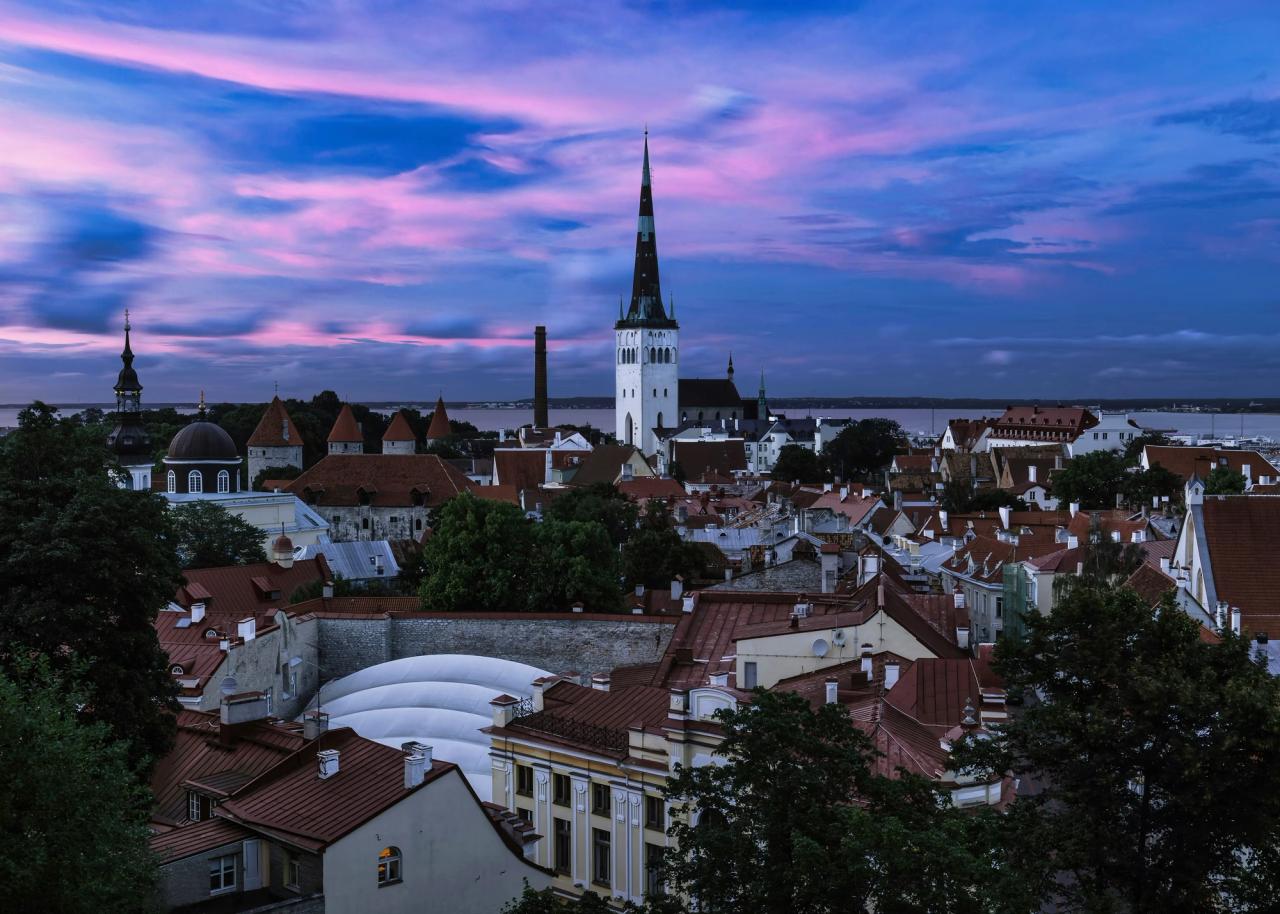

Estonia is one of Europe's most quietly revolutionary countries. A tiny Baltic nation of 1.4 million people, it pioneered e-governance, built a world-class digital society, and became a startup magnet — all while maintaining vast forests, a coastline dotted with islands, and a culture that values silence, nature, and efficiency. Whether you are an EU citizen relocating for work, a digital nomad drawn by the Digital Nomad Visa, an entrepreneur eyeing e-Residency for digital business, or simply someone looking for an affordable, safe, tech-forward European life, this guide walks you through every practical step of moving to Estonia in 2026.
This guide covers visas and residency, registration, housing, healthcare, banking, taxes, cost of living, cultural integration, and a detailed moving checklist — all tailored to Estonia's unique systems.
Estonia at a Glance

- Population
- ~1.36 million (2026)
- Capital
- Tallinn
- Currency
- Euro (EUR / €)
- Average Salary
- ~€21,000 per year (~€1,750/month gross)
- Language
- Estonian (Finno-Ugric); English widely spoken in cities
- Climate
- Continental: warm summers (15–25°C), cold winters (−5 to −15°C)
- Time Zone
- EET (UTC+2), EEST (UTC+3 in summer)
- Government
- Parliamentary republic, EU and NATO member
Why Move to Estonia in 2026
- World-leading digital infrastructure: Estonia offers e-voting, e-ID, e-prescriptions, and fully digital government services — you can establish a company online in under 20 minutes.
- Thriving startup ecosystem: Tallinn has one of the highest startup-per-capita rates in Europe, with unicorns like Wise, Bolt, and Pipedrive born here.
- Very affordable cost of living: Rent, groceries, and transport are significantly cheaper than in Western Europe, often 30–50% below cities like Berlin or Amsterdam.
- Safe and stable: Low crime rates, NATO membership, EU membership, and a functioning rule of law make Estonia one of the safest countries in Europe.
- EU freedom of movement: EU/EEA citizens can live and work freely; non-EU nationals benefit from clear visa pathways including the Digital Nomad Visa.
- Excellent English proficiency: Despite Estonian being difficult, nearly everyone under 40 in cities speaks strong English, making daily life manageable from day one.
- Nature and quality of life: Over 50% of the country is forest, there are 2,000+ islands, and sauna culture is embedded in daily life — Estonians balance digital life with deep respect for the outdoors.
Moving Costs to Estonia
The cost of moving depends on shipment volume, origin, and transport method. Typical market rates as of 2026:
| Origin | Estimated Cost Range | Container/Volume |
|---|---|---|
| UK / Western Europe | €1,500–€3,000 | 10–20 CBM (shared load) |
| USA / Canada | €3,500–€6,500 | 20 ft FCL |
| Australia / Asia | €5,000–€9,000 | 20 ft or 40 ft FCL |
| Within Baltics / Nordics | €500–€1,500 | 5–15 CBM |
Component Costs Explained
- Transportation: €800–€4,000 depending on distance and whether you choose sea freight (cheapest, 3–5 weeks) or air freight (fastest, 5–10 days, significantly more expensive).
- Insurance: Typically 1–3% of declared shipment value; highly recommended for international moves.
- Customs clearance: €100–€300 for standard household goods; Estonia uses EU customs rules.
- Packing materials: €100–€400 if not included by the moving company.
- Storage (if needed): €50–€150 per month for a 10 CBM unit in Tallinn.
- Administrative fees: €50–€200 for documentation, translation, and notarisation.
Need a personalised estimate?
Get three vetted moving-company quotes in under 48 hours.
Customs and Import Rules for Belongings
If you are relocating to Estonia, you may qualify for duty-free import of used household goods. To qualify:
- Items must have been owned and personally used for at least 6 months before shipment.
- Goods must arrive within 12 months of your arrival in Estonia.
- You must present a detailed inventory, passport, valid visa or residence permit, and proof of prior residence abroad (rental agreement, utility bills).
New items, vehicles, alcohol, tobacco, or commercial goods may be subject to import duties (0–12% on CIF value) and 24% VAT (standard rate from July 2025), applied on the customs value including freight and insurance.
Visa and Residency Requirements
Estonia's immigration system is straightforward by European standards. As an EU member state, it applies freedom of movement rules for EU/EEA citizens and offers several clear visa pathways for non-EU nationals.
For EU/EEA/Swiss Citizens
EU, EEA, and Swiss citizens have the right to live and work in Estonia without a visa. You must register your place of residence with the local government within 3 months of arrival. You will receive an isikukood (personal identification code) upon registration, which is essential for employment, healthcare, banking, and all government services.
Required for registration:
- Valid passport or national ID card
- Proof of address in Estonia (rental contract)
- Completed registration form at the Population Register (Rahvastikuregister)
For Non-EU Citizens: Main Visa Categories
Work Permit (Type D Visa / Temporary Residence Permit)
- Requirements: A confirmed job offer from an Estonian employer; the employer must register the position with the Estonian Unemployment Insurance Fund (Töötukassa) in most cases.
- Processing time: 1–3 months for a temporary residence permit; short-term Type D visas may be faster.
- Duration: Temporary residence permits are typically issued for up to 5 years, renewable.
- Key details: Your employer usually initiates the process. Highly qualified specialists may benefit from the EU Blue Card route.
Digital Nomad Visa
- Requirements: Proof of remote employment or freelance contracts with clients outside Estonia; minimum monthly income of €4,500 (gross, averaged over the 6 months prior to application).
- Processing time: Approximately 30 days.
- Duration: Up to 1 year (non-renewable — you must leave and reapply after a gap).
- Key details: One of Europe's first dedicated digital nomad visas. You can work remotely for any non-Estonian employer or client while residing in Estonia.
Startup Visa
- Requirements: An innovative, scalable business model assessed and approved by a special Startup Committee; minimum funding or revenue thresholds apply.
- Processing time: 1–2 months for committee review, then 1–3 months for residence permit processing.
- Duration: Up to 5 years.
- Key details: Designed for tech founders. Estonia's startup ecosystem (coworking spaces, accelerators, angel networks) actively supports visa holders.
Student Visa / Residence Permit for Study
- Requirements: Acceptance letter from a recognised Estonian educational institution; proof of sufficient funds (at least €800 per month); health insurance.
- Duration: Matches the study programme length, renewable.
- Key details: Students may work up to 20 hours per week during term and full-time during holidays.
Family Reunification
- Requirements: Proof of family relationship (spouse, minor child, dependent parent) with an Estonian resident or citizen; proof of adequate income and housing.
- Duration: Matches the sponsor's residence permit, up to 5 years.
- Cost: €150 application fee.
- Processing time: 3–8 weeks.
- Who it is for: Freelancers, digital nomads, and entrepreneurs worldwide who want an EU company footprint without relocating.
Registration: Getting Your Isikukood
The isikukood (personal identification code) is Estonia's unique 11-digit identification number assigned to every resident. It is the backbone of Estonian bureaucracy — you need it for employment contracts, tax filings, healthcare registration, bank accounts, and virtually every interaction with government services.
How to Get Your Isikukood
-
Register your residence at the local government office (kohalik omavalitsus) or through the Population Register (Rahvastikuregister).
-
Present your passport and valid visa or residence permit (non-EU) or national ID (EU citizens).
-
Provide proof of address — your rental contract or property ownership documents.
-
Receive your isikukood — assigned on the spot during registration for EU citizens; for non-EU citizens, it is typically issued alongside your residence permit.
The isikukood encodes your date of birth and gender. It never changes, even if you leave Estonia and return years later.
Finding Housing in Estonia
Estonia's rental market is accessible and relatively affordable compared to Western Europe. The market is dominated by private landlords, and most rentals are unfurnished or partially furnished. Tenant protections exist but are less extensive than in countries like Germany or the Netherlands.
Average Rents by Major City (2026)
| City | 1-Bedroom (Centre) | 1-Bedroom (Outside Centre) | 3-Bedroom (Centre) | Market Competitiveness |
|---|---|---|---|---|
| Tallinn | €550–€800 | €400–€600 | €900–€1,400 | Moderate to high |
| Tartu | €400–€600 | €300–€450 | €650–€1,000 | Moderate |
| Pärnu | €350–€550 | €250–€400 | €550–€850 | Low (seasonal) |
| Narva | €200–€350 | €150–€250 | €350–€550 | Low |
| Viljandi | €250–€400 | €200–€300 | €400–€650 | Low |
Rent Terminology
- Üür: Rent (the general term).
- Kommunaalkulud / Kommunaalid: Utility costs, often listed separately from rent. Includes heating, water, waste management, and building maintenance. These can be €80–€200/month in winter (especially in older panel buildings) and €40–€80/month in summer.
- Tagatisraha: Security deposit, typically 1–2 months' rent.
- Ettemaks: Advance payment — usually the first month's rent paid before moving in.
How to Find Housing
Online Platforms:
- KV.ee: Estonia's largest real estate portal; the go-to site for rentals and purchases.
- City24.ee: Another major portal with extensive listings and English-language filters.
- Facebook groups: "Apartments for Rent in Tallinn" and "Tartu Housing" groups are active with direct landlord listings.
Local Resources:
- Real estate agencies (e.g., Uus Maa, Pindi Kinnisvara, 1Partner) — useful if you do not speak Estonian and want help navigating the market.
- University housing offices — Tartu and Tallinn universities offer dormitories and rental assistance for students.
Tips for Foreigners Finding Housing
- Start searching 3–4 weeks before your move; the market moves quickly but does not require months of lead time.
- Budget for kommunaalkulud (utilities) separately — ask landlords for a 12-month breakdown so you can see winter vs. summer costs.
- Have your documents ready: passport, proof of income or employment, and ideally your isikukood if already issued.
- Be cautious of listings that demand payment before a viewing — this is a common scam tactic.
- In Tallinn, consider areas like Kalamaja (trendy, near the sea), Mustamäe (affordable, good transport), Kristiine (family-friendly), or the City Centre (convenient but pricier).
Rental Agreement and Legal Protection
- Standard lease contracts are for 1 year, often with a 1-month notice period for tenants and landlords.
- The deposit (tagatisraha) is refundable at the end of the lease, minus any documented damages.
- Landlords must give at least 3 months' notice to terminate an indefinite lease.
- Always insist on a written contract — verbal agreements are legally binding but difficult to enforce.
Warning: Rental Scams
Never transfer money without visiting the property in person or via a verified video call. Scammers often copy listings from legitimate sites and repost them at lower prices with urgent demands for deposits. Verify the landlord's identity against the Land Register (Maa-amet) if possible.
Healthcare and Insurance
Estonia operates a universal public healthcare system funded through mandatory social contributions. The system is managed by the Haigekassa (Health Insurance Fund — officially the Estonian Health Insurance Fund, EHIF). Coverage is generally tied to employment or registered residency status.
Public Health Insurance
Haigekassa
- Cost: Funded through social contributions — employees pay approximately 1.6% of gross salary; employers pay approximately 13% (combined with other social taxes, the employer's total social contribution is around 33%).
- Coverage: GP visits, specialist referrals, hospital care, subsidised prescriptions, maternity care, and some dental for children and specific groups.
- Eligibility: Anyone employed under an Estonian contract, registered self-employed persons, students, pensioners, and registered unemployed. EU citizens can use the European Health Insurance Card (EHIC) for temporary stays.
- Waiting times: Can be long for specialist appointments (weeks to months); this is a known issue in the Estonian system.
Private Health Insurance
- Cost: €50–€200/month depending on age, coverage level, and provider.
- Coverage: Faster access to specialists, broader dental coverage, private hospital rooms, and sometimes international coverage.
- Eligibility: Available to anyone; often provided as an employee benefit by larger companies and startups.
- Best for: Expats who want faster specialist access, those without Haigekassa coverage, and families wanting comprehensive dental care.
Top Insurance Providers
- ERGO: One of the largest insurers in Estonia, offering health, home, and travel insurance.
- If Kindlustus: Strong private health and property insurance options.
- Swedbank Kindlustus: Linked to Swedbank, convenient if you bank there.
- Salva: Estonian insurer with competitive health and travel packages.
Getting Healthcare Coverage (Timeline)
-
Obtain your isikukood through residence registration.
-
If employed, your employer registers you with Haigekassa — coverage begins once social contributions start flowing.
-
If self-employed, register as a sole proprietor (FIE — füüsilisest isikust ettevõtja) and begin making social contributions.
-
EU citizens
carry your EHIC until your Haigekassa coverage activates.
-
Consider private insurance as a bridge if there is a gap before public coverage starts.
Out-of-Pocket Costs (Without Insurance)
- GP visit: €5–€10
- Specialist visit: €30–€80
- Prescriptions: varies widely; generic medications are affordable
- Dental cleaning: €40–€80
- Dental filling: €50–€120
- Hospital day (with Haigekassa): small co-pay may apply
Get a personalised relocation plan
Drop your email and we'll send a tailored checklist plus three quotes from vetted movers.
Banking and Finance
Opening a Bank Account
Estonia's banking sector is modern and well-developed, with strong digital services. The main banks — Swedbank, SEB, LHV, and Luminor — all offer accounts to residents with proper documentation.
When to open: As soon as you have your isikukood and proof of address. Most employers require an Estonian bank account for salary payments.
Required documents:
- Passport or EU national ID card
- Isikukood (personal identification code)
- Proof of address in Estonia (rental contract)
- Sometimes proof of employment, study enrolment, or income source
Top banks for expats
Swedbank
- Largest bank in Estonia
- extensive branch and ATM network
- full English-language online and mobile banking.
SEB
- Strong digital services
- good for everyday banking
- English support available.
LHV
- Estonian-founded bank
- popular with startups and tech workers
- excellent app
- integrates well with e-Residency services.
Luminor
- Nordic-owned
- solid range of products
- competitive mortgage rates.
Bank Account Features and Costs
- Monthly fee: €0–€2 depending on the account type and bank.
- Debit card: Usually free with the account; Mastercard or Visa Debit.
- Credit card: €1–€3/month; requires income verification.
- International transfers (SEPA): Free within the Eurozone.
- International transfers (SWIFT): €10–€30 per transaction depending on amount and destination.
Payment Culture
Estonia is overwhelmingly cashless. Contactless card payments (Visa, Mastercard) and mobile payments (Apple Pay, Google Pay, Swedbank/SEB/LHV mobile apps) are accepted virtually everywhere — including market stalls and small cafés. Carrying cash is rarely necessary in Tallinn or Tartu. ATMs are widely available if needed.
Getting Your Tax Identification Number
Your isikukood also functions as your Tax Identification Number (TIN) in Estonia. Once you register your residence and start working, your tax information is managed through the Estonian Tax and Customs Board (EMTA — Maksu- ja Tolliamet). No separate TIN application is needed — it is assigned automatically.
Tax and Pension Obligations
If you are a tax resident in Estonia (living more than 183 days per year or having a permanent home there), you are generally taxed on your worldwide income. Contributions to social security and pension schemes are mandatory for employees.
| Tax Component | Description | Notes |
|---|---|---|
| Income Tax | Flat rate: 22% on most income | Non-residents taxed only on Estonia-sourced income; basic personal exemption of €8,400/year (€700/month, 2026) |
| Social Contributions | Cover pension, healthcare, parental leave, unemployment | Employee ~1.6% (unemployment insurance); employer ~33% social tax + 0.8% unemployment insurance; II pillar (2–6%) optional for employees since 2021 |
| Pension Pillars | I pillar (state pension), II pillar (mandatory funded), III pillar (voluntary) | II pillar is 2% from employee + 4% from employer; III pillar offers tax-deductible contributions up to 15% of gross salary |
| Double Tax Treaties | Prevent double taxation | Estonia has treaties with 60+ countries including all EU members, UK, USA, Canada, Australia |
Estonia's flat tax system is one of the simplest in Europe. Tax returns are filed digitally through the e-MTA portal, often pre-filled by the system — most residents spend less than 5 minutes filing.
Cost of Living in Estonia
Estonia is one of the most affordable countries in the EU, particularly outside Tallinn.
Monthly Budget Breakdown by City
| City | One-Person Budget | Family of 3 Budget | Cost Level |
|---|---|---|---|
| Tallinn | €1,000–€1,500 | €2,200–€3,200 | Moderate |
| Tartu | €850–€1,300 | €1,800–€2,800 | Low to moderate |
| Pärnu | €750–€1,100 | €1,600–€2,500 | Low |
| Narva | €600–€900 | €1,300–€2,000 | Very low |
Detailed Cost Breakdown
Housing:
- 1-bedroom apartment (Tallinn centre): €550–€800/month
- 3-bedroom apartment (Tallinn centre): €900–€1,400/month
- Utilities (average, including heating): €100–€200/month in winter, €50–€90 in summer
- Internet (100 Mbps+ fibre): €15–€25/month
Groceries and Food:
- Weekly groceries (1 person): €35–€55
- Restaurant meal (casual, e.g. lunch special): €7–€12
- Restaurant meal (mid-range, dinner for two): €40–€70
- Coffee (cappuccino): €3–€4
Transportation:
- Monthly public transport pass (Tallinn): Free for registered Tallinn residents; otherwise ~€30/month
- Single bus/tram ticket: €2
- Taxi (city centre ride): €5–€10
- Petrol (1 litre): €1.60–€1.80
Insurance and Healthcare:
- Private health insurance: €50–€150/month
- Home insurance: €10–€30/month
Leisure and Entertainment:
- Gym membership: €30–€60/month
- Cinema ticket: €8–€12
- Streaming (Netflix standard): ~€14/month
Comparison with Other Countries
- vs Germany: Estonia is roughly 25–35% cheaper, particularly in rent and dining.
- vs Finland: Estonia is 40–50% cheaper across most categories — many Finns cross the Gulf of Finland for shopping and dining.
- vs Portugal: Comparable overall, with Estonia slightly cheaper for rent but similar food costs.
Language and Cultural Tips
Do You Need Estonian?
Estonian is a Finno-Ugric language — related to Finnish and Hungarian, not to Indo-European languages like English, German, or Russian. It is considered one of the most difficult languages in Europe for English speakers, with 14 cases, vowel harmony, and a vocabulary with almost no cognates.
Where English works: In Tallinn and Tartu, English is widely spoken — in restaurants, shops, government offices (many forms are available in English), and especially in the startup and tech scene. You can live comfortably in English for years.
Where Estonian matters: Dealing with older generations, official legal documents, rural areas, deeper social integration, and long-term career growth outside the tech sector. Estonians deeply appreciate any effort to learn their language.
Estonian Language Levels (CEFR)
- A1 (Beginner): Basic greetings, ordering food, asking directions. Achievable in 3–6 months of part-time study.
- A2 (Elementary): Simple conversations about daily life, understanding basic forms. 6–12 months.
- B1 (Intermediate): Handling most daily situations, understanding main points of clear speech. 1–2 years.
- B2 (Upper Intermediate): Professional conversations, understanding complex texts. 2–4 years — an achievement Estonians genuinely respect.
Language Learning Resources
- Keeleklikk.ee: Free online Estonian course developed by the Integration Foundation; excellent for beginners.
- Multilingua Language Centre: Popular language school in Tallinn offering group and private Estonian courses.
- Speakly: Estonian-developed language learning app; includes Estonian with a focus on real-life conversation.
- University of Tartu and Tallinn University: Both offer intensive Estonian summer courses popular with expats.
Cultural Norms and Etiquette
Directness and silence:
- Estonians are famously direct. They say what they mean without excessive politeness formulas — this is not rudeness, it is efficiency.
- Silence is comfortable and normal. Estonians do not feel the need to fill every pause with small talk. A quiet dinner among friends is perfectly fine.
- Personal space is important. Stand at arm's length in conversation.
Sauna culture:
- The sauna (saun) is a cornerstone of Estonian social life — used for relaxation, socialising, business discussions, and even health rituals.
- Traditionally, saunas are used naked, though mixed-gender sessions may allow swimwear. Follow your host's lead.
- An invitation to someone's sauna is a sign of genuine friendship — accept it.
Punctuality and reliability:
- Be on time. Estonians value punctuality highly — arriving 5 minutes late without notice is considered impolite.
- If you say you will do something, do it. Reliability is a core Estonian value.
Nature and outdoor culture:
- Estonians have a deep bond with nature. Over 50% of the country is forest, and berry-picking, mushroom-hunting, hiking, and cross-country skiing are national pastimes.
- The right to roam (looduses liikumise õigus) allows everyone to walk, ski, cycle, and camp on most uncultivated land — respect the environment while doing so.
Food culture:
- Traditional Estonian food is hearty: black bread (leib), potatoes, pork, herring, and dairy.
- Try kama (a mix of roasted barley, pea, rye, and oat flour mixed into yogurt or kefir) — a uniquely Estonian staple.
- Christmas includes blood sausage (verivorst) and sauerkraut (hapukapsas).
Social Integration
- Join expat groups: "Expats in Tallinn" and "International Tartu" on Facebook are active communities.
- Attend events at coworking spaces (Lift99, Spring Hub, Workland) — the startup scene is welcoming and international.
- Volunteer with organisations like the Estonian Refugee Council or Tallinn Volunteer Centre.
- Join sports clubs, hiking groups, or choirs — singing is central to Estonian identity (the Song Festival is a UNESCO-listed tradition).
Moving Checklist
- Research visa requirements and begin applications if non-EU
- Get quotes from international movers and book your shipment
- Gather and apostille/translate key documents (birth certificate, marriage certificate, diplomas, driving licence)
- Begin searching for housing on KV.ee and City24.ee
- Notify your current landlord and employer of your departure
- Confirm your housing in Estonia — sign the lease if possible
- Arrange pet transport (microchip, rabies vaccination, import permit from PTA)
- Cancel or transfer subscriptions and services in your current country
- Research health insurance options (Haigekassa eligibility and private options)
- Start learning basic Estonian on Keeleklikk.ee
- Ship your belongings; confirm customs paperwork for duty-free import
- Set up mail forwarding from your current address
- Notify your bank of your move; research Estonian banks
- Download essential apps: Tallinn public transport, Bolt (ride-hailing), Taxify, bank apps
- Prepare your arrival documents folder: passport, visa, lease, inventory list, proof of income
- Confirm arrival details with your landlord
- Pack an essentials bag: documents, laptop, medications, warm clothing (if arriving in autumn/winter)
- Exchange some currency or ensure your bank card works internationally (Visa/Mastercard accepted everywhere in Estonia)
- Say proper goodbyes — Estonians value sincerity over spectacle
- Collect your keys and inspect the apartment; take dated photos for the deposit record
- Register your residence at the local government office to get your isikukood
- Open a bank account at Swedbank, SEB, LHV, or Luminor
- Get an Estonian mobile number (Telia, Elisa, or Tele2 — prepaid SIMs available at any supermarket)
- Buy a transport card or register for free Tallinn public transport (if applicable)
- Register with Haigekassa (or confirm employer registration)
- Sign up for e-MTA (Estonian Tax and Customs Board online portal) — manage taxes digitally
- Get an ID-kaart or Mobile-ID if eligible — these let you sign documents and access services digitally
- Register your car (if imported) with the Transpordiamet (Estonian Transport Administration)
- Exchange your driving licence if required (EU licences are valid; non-EU licences may need exchange within 12 months)
- Explore your neighbourhood — find your nearest supermarket, pharmacy, and health centre (tervisekeskus)
- Register with a family doctor (perearst) — you can choose one with available spots through the Haigekassa portal
- Join at least one social group, coworking space, or expat community
- Set up your home internet and utilities
- Take a weekend trip — visit Tartu, Pärnu, Lahemaa National Park, or take the ferry to Helsinki
Where to Find Tools and Resources
ReloAdvisor Tools:
- Volume calculator
- Video survey
- Moving cost calculator
Official Estonian Resources:
- Estonian Police and Border Guard Board — visa, residence permit, and registration information
- Estonian Tax and Customs Board (EMTA) — tax obligations, e-MTA portal
- Estonian Health Insurance Fund (Haigekassa) — public healthcare registration and coverage
- Estonian Unemployment Insurance Fund (Töötukassa) — employment services and work permit info
- Statistics Estonia — official demographic and economic data
- Work in Estonia — government portal for international talent
Expat Communities:
- Expats in Tallinn (Facebook)
- International Tartu (Facebook)
- InterNations Estonia
Language Learning:
- Keeleklikk.ee — free Estonian online course
- Speakly — Estonian-developed language app
Related Guides:
- Moving to Latvia
- Moving to Finland
- Moving to Lithuania