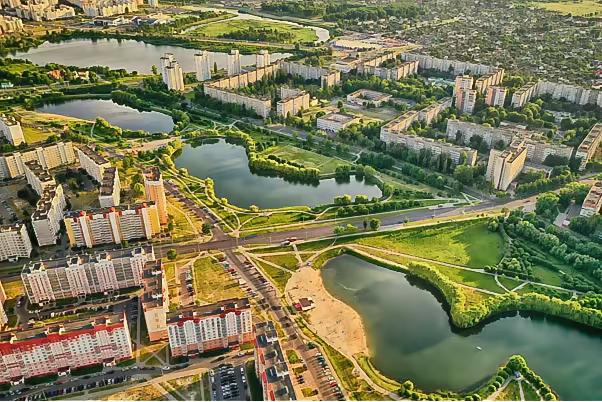
Minsk is the capital and largest city of Belarus, home to roughly 2 million people. Known for its striking Soviet-era architecture, wide boulevards, and remarkably clean streets, Minsk offers a safe, affordable, and well-organized urban lifestyle that appeals to expats seeking a quieter European base without the high price tag of Western capitals. If you value affordable living, efficient public transit, and a city that feels both grand and manageable, Minsk deserves serious consideration.
The city was extensively rebuilt after World War II, resulting in the grand Stalinist avenues and monumental public buildings that define its skyline today. Despite this grand scale, Minsk feels surprisingly uncrowded and orderly — a city where rush-hour commutes rarely test your patience and parks are never more than a short walk away.
Minsk at a Glance
- Population
- ~2 million (metro area ~2.1 million)
- Region
- Minsk Oblast (capital territory)
- Known For
- Soviet architecture, Victory Square, Niamiha district, affordability
- Average Rent (1BR)
- BYN 1,300–1,900 (~€460–€680)
- Average Salary
- BYN 2,500–3,200/month (~€890–€1,140 net)
- Expat Community
- Small but growing; professionals, IT workers, students from CIS and EU
Why Move to Minsk
- Affordable cost of living: Minsk remains significantly cheaper than most European capitals — housing, transport, and dining are all budget-friendly by regional standards.
- Safety and cleanliness: The city consistently ranks among the safest capitals in Europe, with low crime rates and spotless public spaces maintained year-round.
- Efficient metro system: Minsk's three-line metro connects major districts reliably, with frequent trains, modern stations, and low fares.
- Soviet and post-Soviet character: Wide avenues, monumental architecture, and carefully preserved landmarks like Victory Square give the city a unique visual identity unlike anywhere else in Europe.
- Compact and walkable: Despite being a capital city, Minsk's centre is easily explored on foot, with most key attractions within a 30-minute walk of each other.
- Growing IT sector: A thriving tech scene with international companies like EPAM and Wargaming offers career opportunities, particularly for software engineers. Belarus's Hi-Tech Park is one of the largest IT clusters in the region.
- Capital city advantages: As the political, economic, and cultural centre of Belarus, Minsk offers the best access to government services, international embassies, career opportunities, and cultural events in the country.
- Quality of life: Clean air, low traffic, accessible green spaces, and a generally unhurried pace of life contribute to a high quality of daily living for those who prefer calm over chaos.
Finding Housing in Minsk
Average Rents
| Neighborhood | 1-Bedroom | 3-Bedroom | Character |
|---|---|---|---|
| Tsentralny (Centre) | BYN 1,700–2,200 | BYN 3,200–4,500 | Central, walkable, premium rents |
| Pershamayski | BYN 1,400–1,800 | BYN 2,600–3,800 | Trendy cafés, nightlife, younger crowd |
| Maskouski | BYN 1,200–1,600 | BYN 2,200–3,200 | Residential, parks, good metro access |
| Frunzenski | BYN 1,100–1,500 | BYN 2,000–2,900 | Family-friendly, modern complexes |
| Savyetski | BYN 1,000–1,400 | BYN 1,800–2,600 | Quiet, green, affordable |
| Zavodski | BYN 900–1,300 | BYN 1,600–2,400 | Budget-friendly, industrial edges |
How to Find Housing
- Realt.by — the largest Belarusian property portal with rental and purchase listings across all districts.
- Onliner.by — popular classifieds site with an active real-estate section.
- Kufar.by — general classifieds platform where private landlords frequently post rentals.
- Local agents — real-estate agents (riyeltor) are common; expect to pay one month's rent as a commission.
Tips for Expats
- Most leases are 12 months. A security deposit of 1–3 months' rent plus the first month's payment is standard.
- Utilities (electricity, water, gas, internet) are usually paid separately and are inexpensive — expect BYN 120–200 per month for a one-bedroom flat.
- Always request a signed contract in Russian or Belarusian; have it translated if needed.
- Furnished apartments are less common than unfurnished ones but can be found in the centre and Pershamayski.
- Inspect heating systems before signing — most buildings use central heating that switches on and off seasonally.
Neighborhoods Guide
- Tsentralny (Centre): The heart of Minsk. Walking distance to major landmarks, restaurants, and government buildings. Best for professionals who want convenience; rents are the highest in the city. Independence Avenue runs through this district, lined with Soviet-era grandeur and modern shops.
- Pershamayski: Trendy and full of cafés, bars, and creative spaces. Popular with young professionals and expats. Moderate-to-high rents. This is where much of Minsk's nightlife and cultural energy lives.
- Niamiha district: A historic area near the Svislach River, home to archaeological sites, upscale restaurants, and proximity to Old Town charm. Compact and walkable; suited for those who appreciate atmosphere. The name references the ancient Niamiha river, now underground, and the area carries deep historical significance.
- Maskouski: A well-connected residential district with leafy parks and reliable metro links. Mid-range rents; good for singles and couples who want a quieter base with easy access to the centre.
- Frunzenski: Modern apartment blocks, green parks, and family-oriented amenities. Affordable rents and a calm pace of life. Schools, playgrounds, and supermarkets are all within easy reach.
- Savyetski: Quiet, spacious, and among the most affordable districts. Popular with families and long-term residents who prioritize green space over nightlife. Excellent for budget-conscious expats.
Cost of Living in Minsk
Monthly Budget Breakdown
| Category | Budget Range |
|---|---|
| Rent (1BR, centre) | BYN 1,500–2,200 (~€530–€780) |
| Utilities | BYN 120–200 (~€42–€70) |
| Internet (60 Mbps+) | BYN 25–40 (~€9–€14) |
| Groceries | BYN 400–600 (~€140–€210) |
| Transport (monthly pass) | BYN 56 (~€16) |
| Dining out (4x/month) | BYN 200–350 (~€70–€125) |
| Leisure/Gym | BYN 70–150 (~€25–€53) |
| Total | BYN 2,330–3,530 (~€830–€1,250) |
Day-to-Day Costs
- Coffee (cappuccino): BYN 5–8 (~€1.80–€2.80)
- Lunch (casual restaurant): BYN 15–25 (~€5–€9)
- Monthly transport pass: BYN 56 (~€16)
- Beer (bar, 0.5L): BYN 5–9 (~€1.80–€3.20)
- Cinema ticket: BYN 15–25 (~€5.30–€8.80)
- Loaf of bread: BYN 2–4 (~€0.70–€1.40)
- Monthly gym membership: BYN 70–150 (~€25–€53)
- Bottle of water (1.5L): BYN 1.50–3 (~€0.50–€1.10)
- Taxi (5 km within city): BYN 8–15 (~€2.80–€5.30)
Getting Around Minsk
- Public transport: Minsk operates an extensive network of buses, trolleybuses, trams, and a three-line metro system (36 stations, 44.9 km). A monthly pass covering all modes costs around BYN 56 (~€16). The metro is fast, clean, and runs from roughly 5:30 AM to midnight. Stations are spacious and well-lit, many featuring Soviet-era mosaics and marble finishes worth admiring.
- Cycling: Growing infrastructure with bike lanes along major avenues; bike-sharing services are available in warmer months. The flat terrain makes cycling practical across most of the city.
- Driving: Traffic is moderate compared to larger capitals. Parking is generally available and inexpensive, though central zones can be congested during rush hour. Foreign licenses are valid for up to 90 days.
- Airport: Minsk National Airport (MSQ) is located ~40 km east of the city, with direct flights to major European and CIS hubs. Bus and taxi connections to the city centre take 40–60 minutes.
- Intercity: Rail links connect Minsk to Brest, Hrodna, Homiel, and Mahiliou, as well as international routes to Moscow, Kyiv, Vilnius, and Warsaw. Long-distance buses are also available and often cheaper.
- Taxis and ride-hailing: Affordable and widely available. Local apps like Yandex Taxi and local services offer metered rides across the city for BYN 5–15 for most intra-city trips. Avoid unlicensed taxis — always use an app or call a dispatcher.
- Walking: The city centre is flat and pedestrian-friendly, with wide sidewalks and underground passages at major intersections. Most central attractions are within walking distance of each other.
Healthcare in Minsk
- Hospitals/Clinics: Minsk has both public hospitals and modern private clinics (e.g., LODE, Ecomedservice, Nordin). Public facilities are affordable but may have longer wait times and limited English support.
- English-speaking doctors: Available in private clinics, particularly those catering to expats and diplomats. The American Medical Center and certain embassy-recommended practices also serve the international community.
- Pharmacies: Widely available throughout the city; many operate 24/7. Prescription requirements are generally less restrictive than in the EU, and many medications are sold over the counter.
- Emergency number: 103 (ambulance), 101 (fire), 102 (police).
- Health insurance: Public health insurance is mandatory for long-term residents. Private insurance from international providers (e.g., Cigna, Allianz) is accepted at most private clinics and recommended for faster, English-friendly care.
Get a personalised relocation plan
Drop your email and we'll send a tailored checklist plus three quotes from vetted movers.
Culture & Lifestyle
- Soviet architecture and landmarks: Monumental buildings line Independence Avenue, and Victory Square serves as the city's iconic memorial to World War II, featuring an eternal flame and a 38-metre obelisk. The area around the square is a popular gathering spot and a symbol of Minsk's identity. The National Library building — a rhombicuboctahedron shape — is another architectural highlight worth visiting.
- Theatres and museums: The Bolshoi Theatre of Belarus, the National Art Museum, and the Belarusian State Museum of the History of the Great Patriotic War are major cultural draws. Classical music and ballet are popular and accessible at low ticket prices (often BYN 10–40).
- Green spaces: Gorky Park, Chelyuskintsev Park, and the Botanical Garden offer peaceful retreats within the city. The Svislach River embankment is a favourite walking and jogging route, especially in summer.
- Nightlife: Concentrated in the centre and Pershamayski district, with cocktail bars, live-music venues, and nightclubs. Craft beer culture is growing, and rooftop bars appear in warmer months.
- Markets: Komarovsky Market is the city's best-known fresh-food market, offering local produce, meats, dairy, and flowers in a lively atmosphere. Haggling is not common — prices are generally fixed.
- Sports: Minsk hosted the 2014 Ice Hockey World Championship and has modern sporting facilities. Football, ice hockey, and basketball are popular spectator sports, and gyms are affordable (BYN 70–150/month).
Food & Dining
- Traditional Belarusian cuisine — draniki (potato pancakes), machanka (pork stew), and cold beet soup (khaladnik) — is widely available in restaurants and canteens.
- The centre and Niamiha district offer the best variety of international restaurants, from Georgian and Italian to Japanese and Korean. Niamiha in particular has become a hub for upscale dining.
- Budget-friendly canteens (stolovaya) serve hearty meals for BYN 8–15 — a staple for cost-conscious residents.
- Grocery shopping is dominated by chains like Euroopt, Green, and local markets. Supermarkets are well-stocked and affordable. Fresh dairy, bread, and seasonal vegetables are particular highlights of Belarusian grocery culture.
Expat Community
- Small but active expat scene centred around language exchanges, international meetups, and coworking spaces like Imaguru and SPACE.
- Facebook groups and Telegram channels for expats in Minsk are the primary way to connect and share advice. Search for "Expats in Minsk" or "Foreigners in Belarus" on these platforms.
- The International Association of Belarus and various embassy-organised events provide networking opportunities, particularly around national holidays and cultural events.
- Volunteering opportunities with local NGOs and cultural organisations are another way to integrate and meet locals.
- InterNations has an active Minsk chapter with regular social events and meetups for newcomers.
Job Market in Minsk
- Main industries: IT and software development, manufacturing, finance, logistics, education, and pharmaceuticals.
- Major employers: EPAM Systems, IBA Group, Belarusbank, Belaruskali, Wargaming (founded in Minsk, headquarters relocated in 2022), and numerous smaller tech startups in the Hi-Tech Park.
- Average salaries by sector:
| Sector | Average Monthly Net (BYN) |
|---|---|
| IT / Software | 4,000–7,000+ |
| Finance | 2,500–4,000 |
| Education | 1,500–2,500 |
| Retail / Services | 1,200–2,000 |
| Healthcare | 1,800–3,000 |
- Job search resources: Jobs.tut.by, LinkedIn, Onliner.by career section, and the Minsk Hi-Tech Park job board.
- Work permits: Foreign nationals need a work permit arranged through their employer. The process typically takes 2–4 weeks and requires a signed employment contract.
- Self-employment: Freelancers and self-employed individuals can register as individual entrepreneurs. Tax rates vary by regime — simplified options range from approximately 6% to 20% of turnover depending on the type of activity, with streamlined reporting requirements.
- Networking: The Minsk Hi-Tech Park hosts over 1,000 resident companies and regularly organises hackathons, meetups, and career fairs — a strong entry point for tech professionals.
Education in Minsk
- International schools: Minsk International School, QSI International School of Minsk, and the Belarusian State University International Lyceum offer English-language curricula for expat families. Fees range from €5,000–€15,000 per year depending on the grade level and school.
- Universities: Belarusian State University (BSU), Belarusian National Technical University (BNTU), and Minsk State Linguistic University are well-regarded across the CIS region and beyond. BSU ranks among the top universities in Eastern Europe and offers exchange programmes with EU institutions.
- Language schools: Numerous private centres offer Russian and Belarusian courses for foreigners; English-language instruction is also available. Prices are low compared to Western European language programmes — expect BYN 300–800/month for group courses.
- Preschool and kindergarten: Both public and private options exist. Private kindergartens with English instruction are available but limited in number. Waitlists for popular private kindergartens can be several months long.
- Online learning: Coursera, Stepik (a Belarus-founded platform), and local providers offer accessible options for continued professional development in Minsk.
Visa and Residency
Foreign nationals moving to Minsk need a visa or residence permit depending on their nationality and purpose of stay.
- Short stays (up to 30 days): Citizens of many countries can enter Belarus visa-free through Minsk National Airport for stays up to 30 days (with proof of departure). Check the latest list on the Belarusian MFA website before travelling.
- Work permits: Long-term employment requires a work permit arranged by the employer. The process typically takes 2–4 weeks and involves submitting an employment contract, passport, and medical certificates.
- Temporary residence permit: Available for those with employment, family ties, or study enrolment. Valid for one year and renewable. Applications are submitted through the local migration office.
- Permanent residence: Eligible after holding a temporary residence permit for the required period (typically 3–7 years depending on the basis), demonstrating stable income, and passing health and character checks.
- Registration: All foreigners must register their address with local authorities within 5 business days of arrival. Hotels handle this automatically; private renters must visit the local migration office.
For the latest visa policies, visit the Belarusian Ministry of Foreign Affairs or contact your nearest Belarusian embassy.
Settling In: Practical Tips
- Language apps: Download Yandex.Translate or Google Translate for offline Russian. A phrasebook or language app is essential for the first few weeks.
- Mobile operators: A1, MTS, and life:) all offer affordable prepaid plans with data (BYN 10–30/month). SIM cards are available at kiosks and carrier shops with just a passport.
- SIM registration: SIM cards require passport registration, which is handled at the point of purchase.
- Electricity: Belarus uses the European standard 220V, 50Hz with Type C/F plugs. No adapter needed for most European appliances.
- Water: Tap water is generally safe to drink in Minsk, though many residents prefer filtered or bottled water out of habit.
- Postal services: Belpost handles domestic and international mail. Delivery times for international parcels can be 2–6 weeks depending on origin.
- Pet ownership: Dogs must be registered and kept on a lead in public areas. Veterinary clinics are affordable and widely available across the city.
- Winter preparation: Central heating is government-controlled and switches on automatically in autumn (usually October) and off in spring (April). Indoor temperatures are kept warm, but invest in a heavy coat for outdoor commuting.
- Cultural adjustment: Belarusians tend to be reserved at first but warm up quickly once a relationship is established. Learning even basic Russian phrases signals respect and goes a long way socially.
Moving Checklist for Minsk
- Confirm visa or residence permit requirements with the Belarusian embassy
- Obtain apostilled or legalised copies of key documents (birth certificate, diploma, marriage certificate)
- Arrange international health insurance valid in Belarus
- Research housing options on Realt.by and Onliner.by
- Begin basic Russian language study — even a few phrases will help immensely
- Check if your driving licence needs an International Driving Permit for the first 90 days
- Register your address with local authorities within 5 business days of arrival
- Open a bank account at Belarusbank or Priorbank with your passport and registration
- Purchase a local SIM card (A1, MTS, or life:))
- Obtain a transport card (Minsktrans) for metro, bus, and tram
- Familiarise yourself with the nearest hospital, pharmacy, and police station
- Apply for a tax identification number (TIN) if employed locally
- Register with a health insurance provider
- Enrol children in school if applicable
- Explore neighbourhoods to find the right long-term fit
- Join local expat groups on Telegram or Facebook for ongoing advice
Related Guides
- [Moving to Belarus] — comprehensive country guide
- [Moving to Brest] — western border city guide
- [Moving to Hrodna] — historic city near Poland and Lithuania