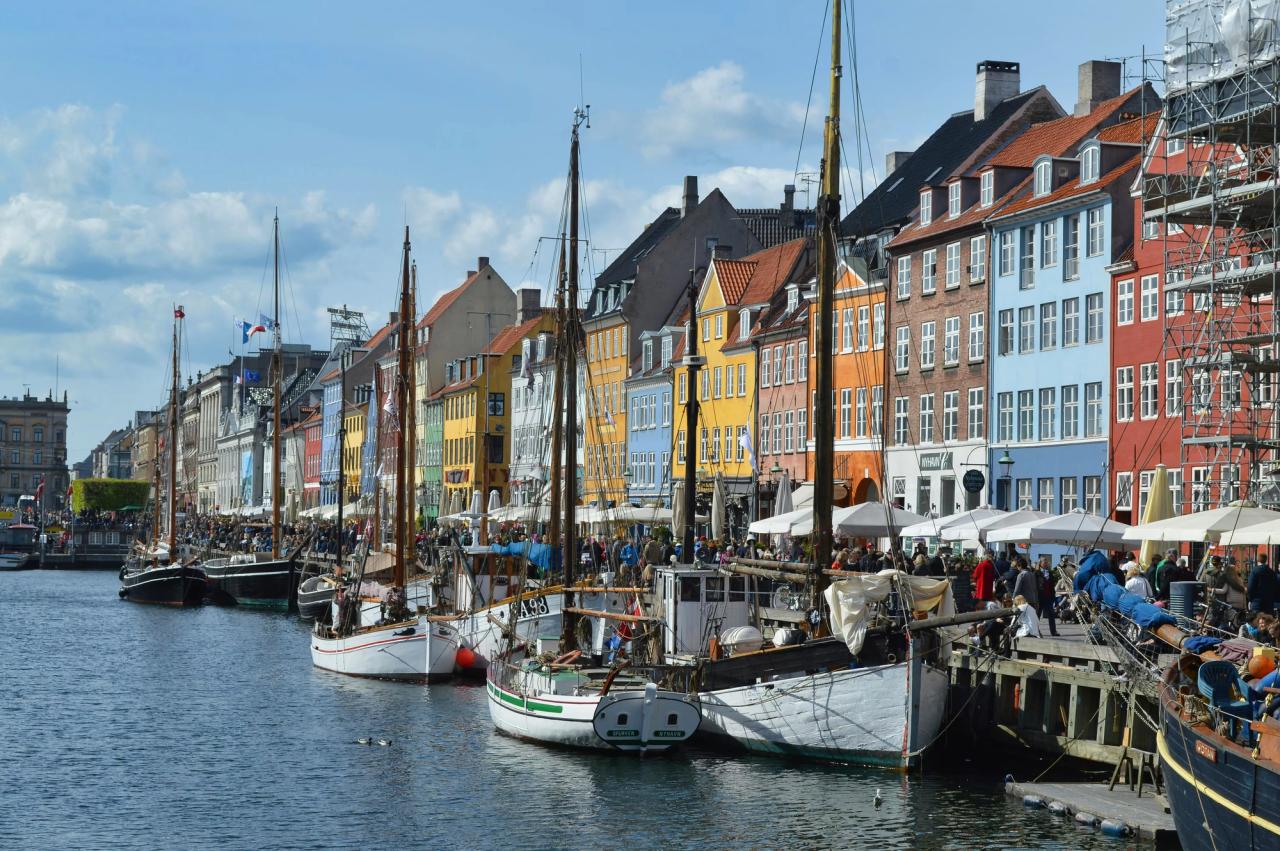

Denmark consistently ranks among the happiest and most liveable countries in the world. Known for its universal welfare system, world-class cycling infrastructure, and the uniquely Danish concept of hygge (a feeling of warmth, cosiness, and togetherness), Denmark attracts professionals, students, and families from every corner of the globe. Whether you are relocating for work, study, or a lifestyle change, this guide covers every practical step — from visas and the all-important CPR number to housing, healthcare, taxes, and cultural integration — so you can start your Danish chapter with confidence.
Denmark at a Glance
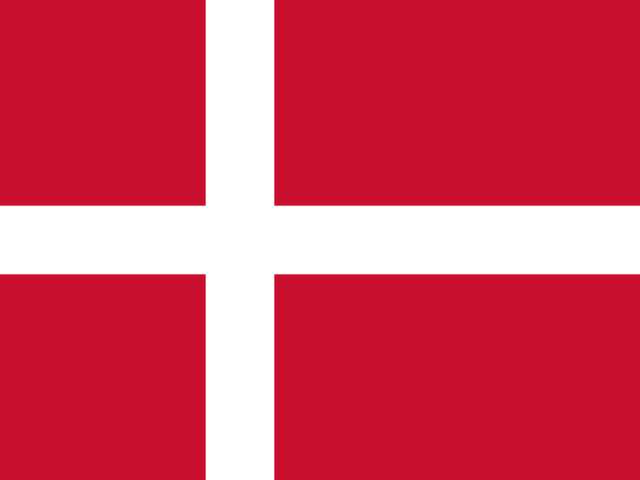
- Population
- ~6.0 million
- Capital
- Copenhagen
- Currency
- Danish Krone (DKK)
- Average Salary
- ~DKK 370,000–430,000 per year (€50,000–55,000)
- Language
- Danish (English widely spoken — ~86% proficiency)
- Climate
- Temperate maritime; mild winters (0–5 °C), cool summers (15–22 °C)
- Time Zone
- CET (UTC+1) / CEST (UTC+2 in summer)
Why Move to Denmark in 2026
- Universal Welfare: Denmark's tax-funded system delivers free healthcare, tuition-free university, generous parental leave (up to 52 weeks shared), and the SU (Statens Uddannelsesstøtte) student grant — available even to qualifying residents.
- Work-Life Balance: A standard 37-hour workweek is the norm, overtime is discouraged, and hygge culture prioritises personal time with family and friends.
- Bike-Friendly Infrastructure: Copenhagen alone has over 400 km of dedicated bike lanes. Nationwide, cycling is a legitimate commuting method, not just recreation.
- Strong Labour Market: Denmark's "flexicurity" model combines flexible hiring and firing with robust unemployment insurance (A-kasse) and active retraining, making it easy to enter and change the job market.
- Safety and Quality of Life: Denmark consistently places in the global top five for safety, public services, and overall happiness.
- Flat Hierarchy: Danish workplaces run on first-name basis, open-door management, and consensus-driven decisions — titles and formality carry little weight.
Moving Costs to Denmark
Understanding the financial aspects of your move is crucial for proper planning.
| Origin | Estimated Cost Range | Container/Volume |
|---|---|---|
| Within Europe (EU) | DKK 10,000–35,000 (€1,350–4,700) | 1–2 CBM |
| North America | DKK 20,000–55,000 (€2,700–7,400) | 1–2 CBM |
| Asia / Middle East | DKK 25,000–60,000 (€3,400–8,100) | 1–2 CBM |
| South America / Africa | DKK 30,000–65,000 (€4,000–8,800) | 1–2 CBM |
Component Costs Explained
- Transportation: DKK 8,000–40,000 depending on distance and whether you choose sea or air freight.
- Insurance: DKK 1,500–5,000; always recommended given the value of household goods.
- Customs Clearance: DKK 2,000–6,000 for paperwork, inspections, and broker fees.
- Packing Materials: DKK 1,000–4,000 if not included in your moving package.
- Storage (if needed): DKK 500–1,500 per month at a Danish facility.
- Administrative Fees: DKK 500–2,000 for documentation and translations.
Need a personalised estimate?
Get three vetted moving-company quotes in under 48 hours.
Customs & Import Rules for Household Goods
Under Danish Customs (Toldstyrelsen) rules, you may qualify for duty-free and VAT-free import of used household goods when relocating. To qualify:
- Items must have been owned and personally used for at least 6 months.
- You must have lived outside the EU for 12 consecutive months.
- Goods must arrive within 6 months before or 12 months after your move to Denmark.
Documents required at customs:
- Detailed inventory list (preferably in Danish or English).
- Proof of residency abroad (utility bills, lease agreements).
- Valid passport or Danish residence permit.
New items, vehicles, alcohol, tobacco, and high-value goods are subject to 25% VAT (moms) plus any applicable duties.
Visa & Residency Requirements
Denmark has its own immigration system and is not bound by EU-wide visa agreements for all categories. The main gateway is SIRI — the Danish Agency for International Recruitment and Integration.
For EU/EEA/Swiss Citizens
EU, EEA, and Swiss citizens can enter Denmark freely and stay for up to three months without registration. To stay longer, you must apply for an EU residence document (EU-opholdsdokument) through SIRI. You will also need to register for a CPR number at your local Borgerservice (Citizen Service Centre).
For Non-EU Nationals: Main Visa Categories
Positive List Work Permit
- For: Professionals whose occupation appears on Denmark's Positive List (Positivlisten) — a regularly updated catalogue of shortage professions including IT, engineering, healthcare, and teaching.
- Requirements: A signed job offer, relevant qualifications, and a minimum salary set by the Positive List threshold.
- Processing time: ~1–3 months.
- Duration: Up to 4 years, renewable.
Pay Limit Scheme (Beløbsordningen)
- For: Any non-EU professional earning above the annual salary threshold (DKK 552,000 in 2026).
- Requirements: A Danish employment contract meeting or exceeding the pay limit; no occupation restriction.
- Processing time: ~1–3 months.
- Duration: Up to 4 years, renewable.
Fast-Track Scheme
- For: Employees of certified companies that have been pre-approved by SIRI to recruit international staff.
- Requirements: Employment by a certified employer.
- Processing time: Can be as fast as 30 days.
- Duration: Matches the employment contract, up to 4 years per permit.
Student Residence Permit
- For: Accepted students at Danish higher-education institutions.
- Requirements: Proof of admission, financial means (~DKK 7,426/month for 2026), and health insurance.
- Duration: Length of study programme + 6 months job-seeking.
Family Reunification
- For: Spouses, registered partners, children, or parents of Danish residents or citizens.
- Requirements: Cohabitation requirement, economic self-sufficiency (~DKK 61,709 collateral guarantee in 2026), language test (Danish A1).
- Processing time: ~2–7 months.
The CPR Number: Denmark's Gateway Registration
The CPR number (Det Centrale Personregister / Central Person Register number) is a unique 10-digit personal identification number assigned to everyone registered as living in Denmark. It is, without exaggeration, the single most important thing you will obtain after arriving. You need it for virtually everything:
- Opening a bank account
- Receiving a salary
- Accessing healthcare
- Signing a mobile phone contract
- Renting an apartment
- Enrolling children in school
How to Register
- Secure a fixed address in Denmark (rental contract, sublet, or employer-provided housing).
- Book an appointment at your municipality's Borgerservice (Citizen Service Centre).
- Bring your passport (or national ID for EU citizens), residence permit (if applicable), proof of address, and marriage/birth certificates if registering family members.
- Receive your CPR number on the spot or within a few days by post.
You will also receive a sundhedskort (health insurance card) during the process — this is your proof of membership in the Danish public healthcare system.
Tip: You can pre-register online via borger.dk to speed up the in-person appointment.
Finding Housing in Denmark
Denmark has a competitive rental market, especially in Copenhagen and Aarhus. Most long-term rentals are unfurnished, and tenant protections under the Lejeloven (Rent Act) are strong — but finding a place in the first place can be challenging.
Average Rents by Major City (2026)
| City | 1-Bedroom (Centre) | 1-Bedroom (Outside Centre) | 3-Bedroom (Centre) | Market Competitiveness |
|---|---|---|---|---|
| Copenhagen | DKK 10,000–14,000 | DKK 7,000–10,000 | DKK 18,000–26,000 | Very High |
| Aarhus | DKK 7,500–10,500 | DKK 5,500–8,000 | DKK 13,000–18,000 | High |
| Odense | DKK 5,500–8,000 | DKK 4,500–6,500 | DKK 9,000–14,000 | Moderate |
| Aalborg | DKK 5,000–7,500 | DKK 4,000–6,000 | DKK 8,500–13,000 | Moderate |
| Esbjerg | DKK 4,500–6,500 | DKK 3,500–5,500 | DKK 7,500–11,000 | Low–Moderate |
Danish Rent Terminology
- Husleje: Basic rent — the amount paid to the landlord each month.
- A conto: Advance payment toward utilities (heating, water), settled annually against actual usage.
- Depositum (Deposit): Typically 1–3 months' rent, held by the landlord.
- Forudbetalt leje (Prepaid rent): Usually 1 month, covering your last month in the property.
- Lejekontrakt: The rental contract — always get one in writing.
How to Find Housing
Online Platforms:
- Boligportal.dk: Denmark's largest rental listing platform; subscription required but comprehensive.
- Lejebolig.dk: Broad selection with filters for price, size, and city.
- Facebook Groups: Groups like "Room/flat/house for rent in Copenhagen" are very active and free.
Local Resources:
- KAB and other housing associations (boligforening): Offer social housing with waiting lists — sign up early even if you do not need housing immediately.
- Employer networks: Many Danish companies maintain internal housing boards or cooperate with relocation agents.
Tips for Foreigners Finding Housing
- Start searching 2–3 months before your move date.
- Have your CPR number and proof of income ready — landlords will ask.
- Be wary of "too good to be true" listings; never transfer money before viewing the property.
- Consider temporary housing (Airbnb, serviced apartments) for your first 1–2 months while you search in person.
- Subletting (fremleje) is common and legal with the landlord's written consent.
Rental Agreement & Legal Protection
Danish tenant law is highly protective. Under Lejeloven:
- Rent increases are regulated and must be justified.
- Landlords must give at least 12 months' notice to terminate an open-ended lease.
- Tenants typically must give 1–3 months' notice (as stated in the lejekontrakt).
- The deposit must be returned within a reasonable time after move-out, minus justified deductions for damage beyond normal wear.
Warning: Rental Scams
Scams targeting foreigners are not uncommon. Red flags include:
- Requests for wire transfers (especially Western Union or cryptocurrency) before a viewing.
- Listings with professional photos at suspiciously low rents.
- "Landlords" claiming to be abroad and unable to show the property in person.
- Pressure to pay quickly to "secure" the apartment.
Always view the property in person or via a trusted contact, and never pay deposits before signing a lease.
Healthcare & Insurance
Denmark operates a universal, tax-funded healthcare system. Once you have a CPR number and sundhedskort (yellow health insurance card), you are covered. There are no premiums or co-payments for general practitioner (GP) visits, hospital stays, or emergency care.
Public Health Insurance
Sygesikring
- Cost: Funded entirely through income taxes — no separate premium.
- Coverage: GP visits, specialist referrals, hospital treatment, maternity care, mental health services, and most prescriptions.
- Eligibility: All legal residents with a CPR number.
- Best for: Everyone — there is no opting out, and there is no reason to.
Private Health Insurance
Private insurance exists in Denmark but is supplementary, not a replacement.
- Faster access to specialists and elective procedures.
- Private hospital rooms.
- Dental care (only partially covered by the public system).
- Physiotherapy, chiropractic, and alternative treatments.
- Danmark Sygeforsikring: Denmark's largest voluntary health insurance group; offers multiple tiers.
- Tryg Forsikring: Bundles health, home, and accident insurance.
- Alm. Brand: Competitive rates for supplementary health plans.
Getting Healthcare Coverage (Timeline)
-
Arrive in Denmark and secure a fixed address.
-
Register at Borgerservice → receive CPR number.
-
Your sundhedskort is issued automatically or mailed within 1–2 weeks.
-
Choose a GP (praktiserende læge) through borger.dk or at Borgerservice.
-
You are now covered — no waiting period.
Out-of-Pocket Costs
- GP visit: Free (covered by sundhedskort).
- Specialist (with referral): Free or minimal co-pay.
- Prescriptions: Partially subsidised; most common medications cost DKK 50–300.
- Dental: Adults pay full price unless covered by private insurance (children under 18: free).
- Hospital (emergency): Free.
Get a personalised relocation plan
Drop your email and we'll send a tailored checklist plus three quotes from vetted movers.
Banking & Finance
Opening a Bank Account
When: As soon as you have a CPR number — most banks require it.
Required documents:
- Passport or national ID.
- CPR number.
- Proof of address (rental contract or official letter).
- Employment contract or proof of income (sometimes).
Top banks for expats
Danske Bank
- Largest bank in Denmark
- full English-language online banking and app.
Nordea
- Strong Nordic presence
- expat-friendly with English services.
Jyske Bank
- Known for personal service and competitive mortgage rates.
Nykredit
- Major mortgage provider
- also offers standard current accounts.
Lunar
- Digital-only bank
- fast account opening via app
- popular with younger expats.
Getting Your NemKonto (Easy Account)
Every Danish resident must designate a NemKonto — a standard bank account where salary, tax refunds, and government benefits are deposited automatically. Your bank sets your primary account as your NemKonto when you open it, but you can change it later via borger.dk.
Bank Account Features & Costs
- Monthly fee: DKK 0–50 (many accounts are free for students and under-28s).
- Debit card (Dankort/Visa Debit): Usually free or included.
- Credit card: DKK 0–200/year.
- International transfers: DKK 0–50 per transaction depending on bank and amount.
Payment Culture
Denmark is one of the most cashless societies in the world. Contactless card payments and MobilePay (Denmark's dominant mobile payment app) are accepted almost everywhere, including market stalls and small businesses. Many restaurants and shops are card-only. Carrying cash is rarely necessary.
Tax & Pension System
If you live in Denmark for more than 183 days in a 12-month period or have significant ties (housing, work, family), you are considered a tax resident and taxed on your worldwide income.
Tax Overview
| Tax Component | Rate | Notes |
|---|---|---|
| Kommuneskat (Municipal tax) | ~22–27% | Varies by municipality |
| Sundhedsbidrag (Health contribution) | ~5% (included in municipal rate) | No separate billing |
| Mellemskat (Middle tax, 2026 reform) | 7.5% | On income between ~DKK 565,100 and DKK 777,900 (before AM-bidrag) |
| Topskat (Top tax) | 15% | On income above ~DKK 777,900 (before AM-bidrag) |
| Labour market contribution (AM-bidrag) | 8% | Deducted before other taxes |
| Church tax (Kirkeskat) | ~0.5–1.5% | Only if registered as a member of the Danish National Church |
Effective top marginal rate: Up to ~55% for very high earners. Denmark has among the highest tax rates in the world, but the return in public services — free healthcare, education, childcare, and infrastructure — is substantial.
Pension System
- ATP (Arbejdsmarkedets Tillægspension): Mandatory supplementary pension. Contributions are split between employer and employee (~DKK 90/month each for full-time workers).
- Labour-market pensions: Most collective agreements include employer-contributed pension schemes (typically 10–18% of gross salary).
- Private pensions: Voluntary savings via ratepension or aldersopsparing; tax-advantaged.
Double Taxation
Denmark has double tax treaties with over 80 countries, including the UK, US, Germany, India, Australia, and China. These treaties prevent you from being taxed twice on the same income.
Language & Culture Tips
Do You Need Danish?
In daily life — especially in Copenhagen, Aarhus, and at international companies — you can manage with English. Danes are among the best non-native English speakers in the world. However, for long-term integration, learning Danish is strongly recommended. Government services, social circles, and many workplaces default to Danish. Several residence permits and permanent residency require proof of Danish language skills (Prøve i Dansk 3 or equivalent for permanent residency).
Danish Language Levels (CEFR)
- A1 (Beginner): Basic greetings, ordering food, understanding simple signs. Achievable in ~3–4 months of part-time study.
- A2 (Elementary): Simple conversations about daily life, filling in forms. ~6–9 months.
- B1 (Intermediate): Following workplace conversations, reading news articles. ~12–18 months.
- B2 (Upper Intermediate): Participating in meetings, writing emails, socialising fluently. ~24+ months.
Language Learning Resources
- Studieskolen: Copenhagen-based language school; intensive and evening Danish courses.
- UCplus: Offers free or subsidised Danish language education (sprogskole) for residents.
- Duolingo / Babbel: Useful supplements for vocabulary and daily practice.
- Clavis: Language centre with courses across multiple Danish cities.
Cultural Norms & Etiquette
Hygge:
- The centrepiece of Danish social life — creating a warm, relaxed atmosphere with candles, coffee, and close company.
- Not a party or event but a feeling; an invitation to hygge is a sign of genuine friendship.
Flat Hierarchy:
- Managers are addressed by first name; decision-making is consensus-driven.
- Disagreeing openly with your boss is normal and even expected.
- Do not flaunt status or seniority — understatement is valued.
Punctuality:
- Being on time is non-negotiable. Arriving 5 minutes early is considered polite; 10+ minutes late without notice is rude.
Cycling Culture:
- Respect bike lanes — pedestrians must not walk in them.
- Signal your turns, obey traffic lights, and lock your bike properly.
- Many Danes cycle year-round, even in rain and snow.
Directness:
- Danes communicate directly and honestly. This is not rudeness — it is efficiency and transparency.
Social Integration
- Join a forening (volunteer association) — sports clubs, hobby groups, and neighbourhood organisations are central to Danish social life.
- Attend language cafés and expat meetups organised through Internations and Facebook.
- Accept invitations, even if your Danish is basic — effort is appreciated more than fluency.
- Be patient: forming close friendships with Danes takes time, but the bonds are genuine and lasting.
Moving Checklist
- Apply for or confirm your visa/residence permit.
- Start housing search; register with boligforening waiting lists.
- Request quotes from international movers through ReloAdvisor.
- Begin gathering documents: passport, degree certificates, marriage/birth certificates.
- Research schools if moving with children.
- Book your moving company and confirm shipping dates.
- Arrange temporary accommodation for the first 1–2 months.
- Notify your current landlord, employer, and utility providers.
- Start or continue Danish language study.
- Obtain apostilled or translated copies of key documents.
- Cancel or transfer subscriptions and memberships.
- Arrange mail forwarding.
- Confirm arrival date with temporary housing.
- Prepare an essentials box (documents, laptop, chargers, basic clothing).
- Download MobilePay and Boligportal apps.
- Final packing and inventory check.
- Confirm moving company pickup date and customs paperwork.
- Notify your bank of your move.
- Scan and back up all important documents.
- Register at Borgerservice and obtain your CPR number and sundhedskort.
- Choose a GP (praktiserende læge).
- Open a Danish bank account.
- Sign up for MitID (digital identity used for all government services; NemID was phased out in 2024).
- Register your address with SKAT (Danish tax authority).
- Set up MobilePay and link your Danish bank account.
- Activate your NemKonto.
- Register for Danish language courses (sprogskole).
- Get a Danish SIM card (TDC, Telenor, Telia, or 3).
- Explore your neighbourhood by bike.
- Start your job or study programme.
- Register with a trade union (fagforening) and unemployment fund (A-kasse) if working.
- Set up digital mailbox on e-Boks for official correspondence.
- Apply for a rejsekort (travel card) for public transport.
- Begin building your social network through foreninger and expat groups.
Where to Find Tools and Resources
ReloAdvisor Tools:
- Volume calculator — estimate your shipment size
- Video survey — get an accurate remote quote
- Moving cost calculator — compare international movers
Official Danish Resources:
- New in Denmark (nyidanmark.dk): https://nyidanmark.dk — immigration, visas, and work permits
- Borger.dk: https://borger.dk — citizen services, CPR registration, MitID
- SKAT (Danish Tax Agency): https://skat.dk — tax registration, annual tax returns
- Sundhed.dk: https://sundhed.dk — healthcare portal, GP registration
Expat Communities:
- Internations Denmark: https://www.internations.org — networking events and forums
- Copenhagen Expats (Facebook): Active community of 30,000+ members sharing advice and housing tips
- Aarhus Expats (Facebook): Smaller but engaged group for Denmark's second city
Related Guides:
- Moving to Sweden — Denmark's Scandinavian neighbour
- Moving to Germany — Denmark's southern border and largest trade partner