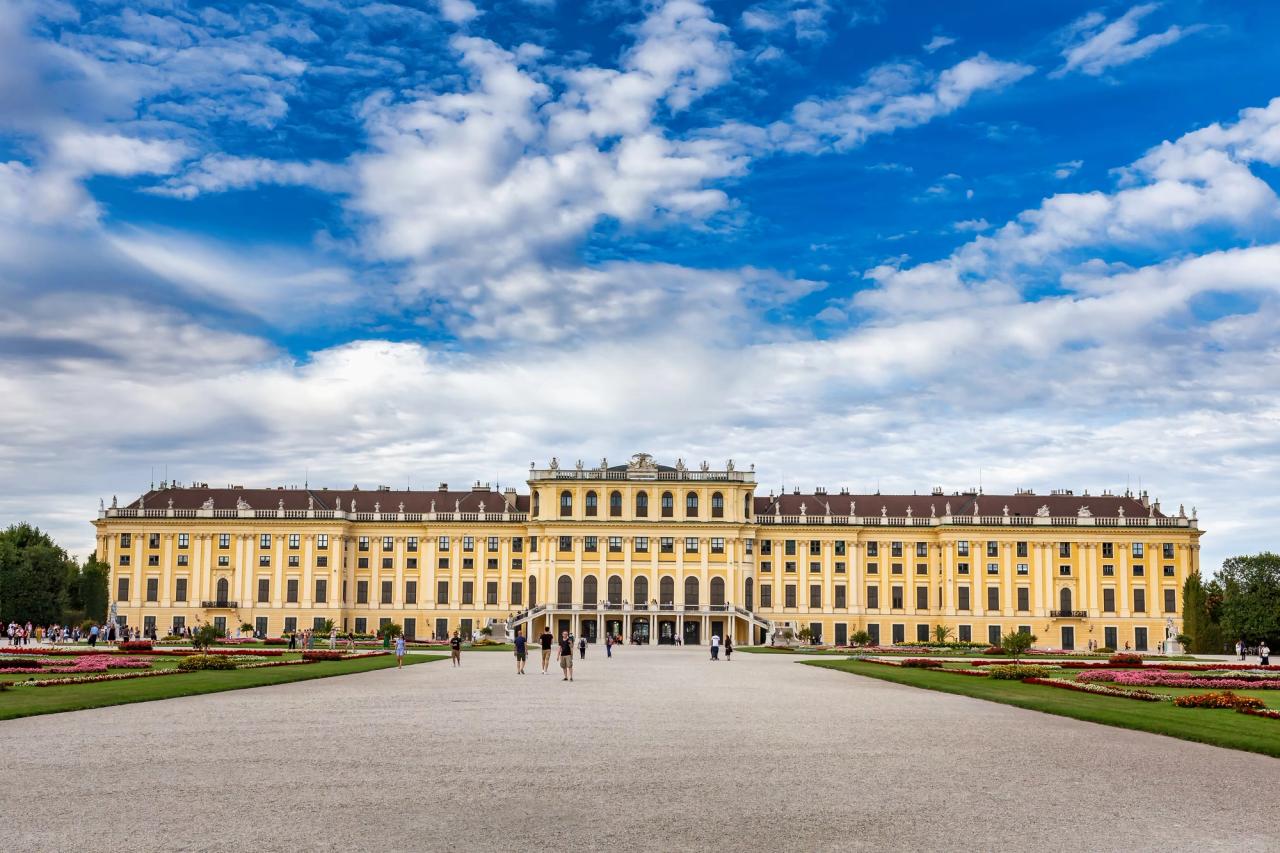

Considering a move to Austria? With Vienna consistently ranked as the world's most livable city, stunning Alpine scenery, excellent public services, and a rich cultural heritage, Austria offers expats an exceptional quality of life. This guide covers everything you need for a smooth relocation in 2026.
Austria at a Glance

- Population
- Around 9.2 million
- Capital
- Vienna
- Currency
- Euro (EUR)
- Average Salary
- Around €2,630/month net (€38,000-€48,000/year gross)
- Language
- German (Austrian German dialect; English widely spoken in cities)
- Climate
- Continental — cold winters, warm summers; Alpine in the west
- Time Zone
- CET (UTC+1) / CEST (UTC+2)
Why Move to Austria in 2026
- World's most livable city: Vienna has topped the Mercer and Economist quality of life rankings for years — excellent public transport, safety, culture, and infrastructure.
- Exceptional healthcare: Austria's social insurance system provides comprehensive coverage. Healthcare quality and accessibility are among Europe's best.
- Stunning natural environment: The Alps offer world-class skiing, hiking, and outdoor activities. Lakes, mountains, and vineyards are within easy reach of every city.
- Strong economy: Low unemployment, high wages, and a stable job market — especially strong in tech, engineering, finance, and tourism.
- Central European location: Vienna is a crossroads between Western and Eastern Europe. Bratislava is 1 hour, Budapest 2.5 hours, Prague 4 hours by train.
- Rich cultural heritage: Mozart, Freud, Klimt — Austria's contributions to music, art, philosophy, and science are legendary. World-class opera, classical concerts, and museums.
- Excellent public transport: Vienna's U-Bahn, trams, and buses are efficient and affordable. The annual Klimaticket covers all public transport nationwide.
Moving Costs to Austria
Costs by Origin Region
| Origin | Estimated Cost Range | Shipment Type |
|---|---|---|
| Germany to Austria | €500 - €1,500 | Part load / shared container |
| UK to Austria | €1,200 - €2,500 | Part load / shared container |
| USA to Austria | €3,500 - €7,000 | 20ft container |
| Italy to Austria | €600 - €1,500 | Part load / shared container |
| Within Austria | €300 - €1,000 | Removal van |
Component Costs Explained
- Transportation: €400 - €4,000 depending on distance and volume
- Insurance: €80 - €300
- Customs clearance: Free for EU moves; €100-€300 for non-EU
- Packing materials: €80 - €250
- Storage: €50 - €150/month
Real-life case: "I moved from Munich to Vienna in February 2025 with about 25 cubic meters. Total cost was around €1,800. It was straightforward since both countries are in the EU — no customs hassle." — Stefan H., moved in February 2025
Need a personalised estimate?
Get three vetted moving-company quotes in under 48 hours.
Visa & Residency Requirements
For EU/EEA Citizens
EU citizens can live and work in Austria without a visa. You must:
- Register at your local Meldebehörde (registration office) within 3 days of moving in
- Obtain a Meldezettel (registration confirmation)
- Apply for a Anmeldebescheinigung (registration certificate) within 4 months if staying longer than 3 months
For Non-EU Nationals: Main Visa Categories
Rot-Weiß-Rot Karte (Red-White-Red Card)
- Who it's for: Skilled workers in shortage occupations, very highly qualified workers, key workers, graduates of Austrian universities
- Requirements: Points-based system considering qualifications, work experience, language skills, and age. Minimum salary thresholds apply.
- Duration: 24 months, then can apply for Rot-Weiß-Rot Karte Plus (unrestricted work)
- Key detail: Austria's main work immigration pathway — the points system makes it more structured than many countries
EU Blue Card
- Who it's for: Highly qualified non-EU workers
- Requirements: University degree + minimum gross salary of €51,500/year (2025 threshold; 2026 threshold: €55,678/year)
- Duration: 24 months
- Key detail: Facilitates EU mobility after 18 months
Student Residence Permit
- Who it's for: Enrolled in Austrian educational institutions
- Requirements: University acceptance, proof of funds, health insurance
- Duration: Duration of studies + 1 year
- Key detail: Can work up to 20 hours/week
Self-Employment Visa
- Who it's for: Entrepreneurs, freelancers
- Requirements: Business plan, proof of investment, economic benefit to Austria
- Duration: Initially 2 years
- Key detail: Higher requirements than employee visas — must demonstrate economic contribution
Settlement Permit (Niederlassungsbewilligung)
- Who it's for: Various categories including family members, financially independent persons
- Requirements: Varies by category — may require proof of income, German language skills (A1-A2), accommodation
- Duration: 1 year initially, renewable
- Valid passport/ID
- Completed Meldezettel form (available at the office or online)
- Landlord's signature on the form (Bestätigung des Wohnungsgebers)
Finding Housing in Austria
Vienna has one of Europe's best housing markets — extensive social housing keeps prices reasonable for a capital city. Salzburg and Innsbruck are more expensive.
Average Rents by Major City (2025-2026)
| City | 1-Bedroom (Center) | 1-Bedroom (Outside) | 3-Bedroom (Center) | Market Level |
|---|---|---|---|---|
| Vienna | €700 - €1,100 | €550 - €850 | €1,300 - €2,200 | Moderate (social housing helps) |
| Salzburg | €750 - €1,200 | €600 - €900 | €1,400 - €2,300 | Competitive |
| Innsbruck | €750 - €1,200 | €600 - €950 | €1,400 - €2,500 | Competitive |
| Graz | €500 - €800 | €400 - €650 | €900 - €1,500 | Relaxed |
| Linz | €500 - €750 | €400 - €600 | €900 - €1,400 | Relaxed |
Source: Numbeo, March 2026. National average 1BR center: €873.
Understanding Austrian Rent Terms
- Mietzins (Rent): Monthly rent amount
- Betriebskosten (Operating costs): Building management, waste, water — typically €100-€250/month extra
- Kaution (Deposit): Usually 3 months' rent
- Genossenschaftswohnung (Cooperative housing): Affordable option — pay a deposit (often €5,000-€30,000) and lower monthly rent
- Gemeindebau (Municipal housing): Vienna's famous public housing — very affordable but requires Viennese residency
How to Find Housing
Online Platforms:
- Willhaben.at: Austria's largest classifieds site — most rental listings
- ImmobilienScout24.at: Major property portal
- ImmoNet.at: Good selection
- Standard Wohnungssuche: Newspaper classifieds (Der Standard)
Required Documents for Renting
- Meldezettel (current registration)
- Valid passport/ID
- Proof of income (employment contract, salary statements)
- SCHUFA/KSV credit check (sometimes required)
- Bank statements
Tips for Foreigners
- Vienna is uniquely affordable for a capital city thanks to extensive social housing
- Genossenschaftswohnung (cooperative) apartments are excellent value — but require upfront deposit
- Betriebskosten are always extra — budget €100-€250/month on top of rent
- Furnished apartments (möbliert) are less common — most apartments come unfurnished
- In Salzburg and Innsbruck, competition is fierce — start searching early
Healthcare & Insurance
Austria has an excellent mandatory social insurance system covering all workers and their families.
How It Works
If you're employed, you're automatically covered by ÖGK (Österreichische Gesundheitskasse) — the public health insurance. Your employer registers you and contributions are deducted from your salary.
Public Health Insurance (ÖGK)
- Cost: ~7.65% of gross salary (employee contribution; employer pays ~3.78% additional)
- Coverage: GP visits, specialists, hospital care, prescriptions, dental (basic), maternity care
- E-Card: Your insurance card — present it at all medical appointments
- Family coverage: Non-working spouse and children are covered at no extra cost
Private Health Insurance
Many Austrians and expats also carry supplementary private insurance:
- Cost: €30-€150/month
- Benefits: Private hospital rooms, shorter wait times, free choice of doctor, alternative medicine
- Top providers: UNIQA, Generali, Wiener Städtische
Doctor Visits & Costs
- GP visit: Free with E-Card (prescription fee: €7.55 per medication, as of January 2025)
- Specialist: Free with referral from GP; without referral, small additional fee
- Hospital: Free with E-Card (€15.10/day co-pay)
- Dental: Basic covered; major work partially covered — private insurance helps
- Emergency: Free
Get a personalised relocation plan
Drop your email and we'll send a tailored checklist plus three quotes from vetted movers.
Banking & Finance
Opening a Bank Account
Required documents:
- Valid passport/ID
- Meldezettel (proof of registration)
- Visa or residence permit (for non-EU)
- Sometimes proof of income
Top banks
Erste Bank / Sparkasse
- Largest Austrian bank
- extensive network
Bank Austria (UniCredit)
- Second-largest
Raiffeisenbank
- Strong in rural areas
N26
- Popular online option
- quick to open
Bawag/PSK
- Post office bank
- good for basic accounts
Tax System
- Income tax: Progressive rates from 0% to 55% (2025 brackets)
- 0% up to €13,308
- 20% up to €21,617
- 30% up to €35,836
- 40% up to €69,166
- 48% up to €103,072
- 50% up to €1,000,000
- 55% above €1,000,000
- Social contributions: ~18.07% of gross salary (employee share)
- VAT: 20% standard, 10% reduced, 13% special rate
ORF-Beitrag (Broadcasting Fee — Replaced GIS)
Since January 1, 2024, Austria's GIS fee has been replaced by the ORF-Beitrag (ORF household contribution), a mandatory per-household levy:
- Fixed at €15.30/month per household (through at least 2026)
- Plus provincial surcharge where applicable
- No more device-based assessment or inspector visits
- Exemptions available for vulnerable households (low income, social benefits recipients)
- Collected by ORF Beitrags Service (OBS, formerly GIS)
Cost of Living in Austria
Monthly Budget Breakdown by City
| City | One-Person Budget | Family of 3 Budget | Cost Level |
|---|---|---|---|
| Vienna | €1,500 - €2,300 | €2,800 - €4,500 | Moderate-High |
| Salzburg | €1,600 - €2,400 | €3,000 - €4,800 | High |
| Innsbruck | €1,600 - €2,400 | €3,000 - €4,800 | High |
| Graz | €1,100 - €1,700 | €2,200 - €3,500 | Moderate |
| Linz | €1,100 - €1,700 | €2,100 - €3,400 | Moderate |
Detailed Cost Breakdown
Housing:
- 1-bedroom (city center): €610 - €1,350/month
- 1-bedroom (outside center): €500 - €1,000/month
- Utilities (85m²): €218 - €500/month (heating is expensive in winter)
- Internet: €25 - €45/month
Groceries & Food:
- Monthly groceries (1 person): €250 - €400
- Restaurant meal (inexpensive): €10 - €25
- Mid-range restaurant for 2: €50 - €110
- Coffee (Melange in a Kaffeehaus): €3.50 - €5.50
- Beer (0.5l, in a bar): €3.50 - €6.00
Transportation:
- Monthly transport pass (Vienna): €36.50 (Jahreskarte: €365/year!)
- Klimaticket (all Austria): €1,095/year (€950 for under-26)
- Taxi start: €4.00 - €9.00
- Gasoline (1 liter): €1.48 - €1.89
Comparison with Other Countries
- vs Germany: Austria is 5-10% more expensive overall; salaries are slightly higher
- vs Switzerland: Austria is significantly cheaper (30-40%) but salaries are lower
- vs France: Comparable for most expenses; rent slightly higher but transport cheaper
Language & Culture Tips
Do You Need German?
Yes, for daily life, bureaucracy, and social integration. In Vienna's international companies, English works, but German is essential for dealing with landlords, doctors, Meldebehörde, and building a social life. Austrian German differs from standard German — pronunciation, vocabulary, and some expressions are unique.
Language Resources
- Volkshochschule (VHS): Adult education centers offering affordable German courses (€200-€500/semester)
- Integration courses (AMS): Government-funded courses for eligible newcomers
- Private schools (Berlitz, Goethe): €300-€800/month
- Tandem partners: Available through apps and university programs
German Levels (CEFR)
- A1 (Beginner): Basic phrases. Required for some residence permits. 2-3 months.
- A2 (Elementary): Daily interactions. Minimum for integration. 4-6 months.
- B1 (Intermediate): Most everyday situations. Required for permanent residence. 8-12 months.
- B2 (Upper Intermediate): Professional level. Required for citizenship. 1-2 years.
Cultural Norms
Coffee house culture:
- Vienna's Kaffeehauskultur is UNESCO-listed — lingering over coffee with a newspaper is the tradition
- Ordering a Melange (Viennese cappuccino) and staying for hours is perfectly normal
- Famous cafés: Café Central, Café Sacher, Café Hawelka
Social norms:
- Austrians are formal initially — use Herr/Frau + last name until invited to use first names
- Punctuality is very important
- Greetings: Handshake in business; cheek kisses (Bussi) among friends
- Recycling is taken seriously — follow the Mülltrennung (waste separation) rules
Outdoor culture:
- Skiing in winter, hiking in summer — it's a way of life
- Heuriger (wine taverns) in the Vienna wine region are a beloved tradition
- Donauinselfest (Danube Island Festival) is the world's largest free open-air festival
Social Integration
- Join a Verein (club) — sports, cultural, or hobby groups
- Attend local events and markets
- Expat groups are active in Vienna (Internations, Facebook groups)
- Learning German is the most important step for integration
Moving Checklist
- Research visa requirements (Rot-Weiß-Rot Karte if non-EU)
- Start learning German (at least A1)
- Get moving quotes
- Research cities and neighborhoods
- Apply for visa at Austrian embassy/consulate
- Book moving company
- Arrange temporary accommodation
- Register at Meldebehörde within 3 days (Meldezettel)
- Get Austrian SIM card (A1, Magenta, Drei)
- Open Austrian bank account
- Apply for Anmeldebescheinigung (EU) or residence permit (non-EU)
- Begin housing search
- Register with ÖGK if employed
- Sign a lease and move into permanent housing
- Register for ORF-Beitrag (broadcasting fee)
- Get a Klimaticket or Jahreskarte for transport
- Start German language course
Where to Find Tools and Resources
ReloAdvisor Tools:
- Volume calculator
- Video survey
- Moving cost calculator
Official Austrian Resources:
- oesterreich.gv.at (successor to help.gv.at) – Official government portal
- ÖGK – Health insurance
- Migration.gv.at – Immigration and residence
Expat Communities:
- Expat.com Austria
- Internations Austria
- Americans in Vienna (Facebook)
Related Guides:
- Moving to Germany
- Moving to Switzerland