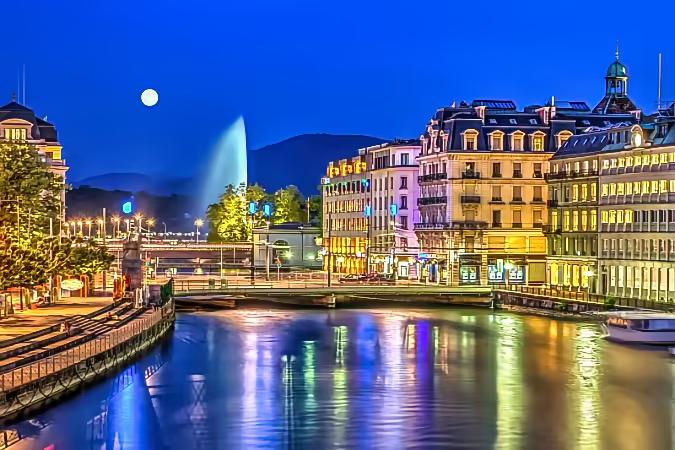
Genf ist die internationalste Stadt der Schweiz und Sitz des europäischen Hauptquartiers der Vereinten Nationen, des CERN und von über 200 internationalen Organisationen. Am Ufer des Genfersees gelegen, mit Blick auf den Mont Blanc an klaren Tagen, zieht die Stadt Diplomaten, Forschende und Fachkräfte aus aller Welt an. Wenn Sie einen kosmopolitischen Lebensstil, eine mehrsprachige Kultur und die Nähe zu den französischen Alpen schätzen, ist Genf kaum zu übertreffen - vorausgesetzt, Sie kommen mit den Kosten zurecht.
Genf zählt regelmäßig zu den fünf teuersten Städten der Welt, doch die Gehälter in internationalen Organisationen und im Finanzsektor sind entsprechend angepasst. Die Stadt funktioniert auf Französisch, auch wenn Englisch dank der internationalen Bevölkerung, die fast die Hälfte der Einwohner ausmacht, überall präsent ist. Für viele Expats ist Genf das Tor zum Leben in der Schweiz.
Genf auf einen Blick

- Bevölkerung
- 205,000 (Metropolregion ~1,000,000 einschließlich grenznahes Frankreich)
- Region
- Kanton Genf, Westschweiz
- Bekannt für
- Vereinte Nationen, CERN, Genfersee, Luxusuhren
- Durchschnittsmiete (1 Schlafzimmer)
- CHF 1,800-2,500/Monat
- Durchschnittsgehalt
- CHF 6,500-8,000/Monat netto
- Expat-Community
- Sehr groß - ~45% der Einwohner sind ausländische Staatsangehörige
Warum nach Genf ziehen
- Internationales Zentrum: Genf beherbergt das europäische Hauptquartier der UN, WHO, WTO, ICRC, WMO und Dutzende NGOs. Dadurch entsteht ein dichtes Netzwerk internationaler Karrieremöglichkeiten in Diplomatie, öffentlicher Gesundheit, Handelspolitik und humanitärer Arbeit.
- Forschung auf Weltklasseniveau: CERN, die Europäische Organisation für Kernforschung, zieht Wissenschaftler und Ingenieure aus aller Welt an. Campus Biotech - Heimat der EPFL Geneva, der Life-Sciences-Abteilungen der Universität Genf, des Global Health Innovation Hub und zahlreicher Biotech-Startups - ergänzt CERN um beeindruckende fachliche Tiefe.
- Mehrsprachiges Umfeld: Französisch ist die Hauptsprache, doch Englisch wird wegen der internationalen Bevölkerung in Arbeitsumfeldern, Schulen und im Alltag breit gesprochen. Deutsch, Italienisch und Dutzende weitere Sprachen sind auf den Straßen zu hören.
- Lebensqualität: Der Genfersee, der ikonische Jet d'Eau und der schnelle Zugang zu den Alpen machen Outdoor-Aktivitäten das ganze Jahr über zu einem Teil des Alltags. Die Stadt ist sauber, sicher und gut organisiert.
- Strategische Lage: Genf liegt an der französischen Grenze mit einfachem Zugang nach Italien, ins Schweizer Mittelland und darüber hinaus. Wochenendausflüge nach Lyon (2 h mit dem Zug), Turin (3h 30m) oder Annecy (45 min mit dem Auto) machen die Stadt zu einem ausgezeichneten Ausgangspunkt für Entdeckungen in Westeuropa.
Wohnungssuche in Genf
Durchschnittliche Mieten
| Viertel | 1 Schlafzimmer | 3 Schlafzimmer | Charakter |
|---|---|---|---|
| Eaux-Vives | CHF 1,900-2,400 | CHF 3,200-4,500 | Seeufer, lebhafte Cafés, beliebt bei jungen Berufstätigen |
| Champel | CHF 2,000-2,600 | CHF 3,500-5,000 | Gehobenes Wohnviertel, ruhige Straßen, nahe Krankenhäusern |
| Pâquis | CHF 1,700-2,200 | CHF 2,800-3,800 | Multikulturell, lebhaftes Nachtleben, zentrale Lage |
| Plainpalais | CHF 1,800-2,300 | CHF 3,000-4,200 | Kreativ geprägt, nahe der Universität, studierendenfreundlich |
| Carouge | CHF 1,600-2,100 | CHF 2,600-3,600 | Italienisch geprägter Charme, Kunsthandwerksläden, entspanntes Tempo |
| Nations | CHF 1,900-2,500 | CHF 3,300-4,600 | Nahe UN-Büros, Atmosphäre eines Diplomatenviertels |
So finden Sie eine Wohnung
- Homegate.ch: Größtes Schweizer Immobilienportal mit umfassenden Genfer Inseraten. Täglich aktualisiert mit Tausenden aktiven Anzeigen.
- ImmoScout24.ch: Starke Auswahl über alle Preisklassen und Viertel hinweg.
- Lokale Agenturen: Genfer Agenturen wie Naef, Wetag und Comptoir Immobilier sind auf lokale Mietobjekte spezialisiert und können helfen, sich im umkämpften Markt zurechtzufinden.
- Expat-Foren: Facebook-Gruppen (Geneva Expats, Geneva Housing) und InterNations listen häufig Untermieten, WG-Angebote und möblierte Wohnungen.
- Fondations: Gemeinnützige Wohnstiftungen (fondations de logement) bieten Mieten unter Marktniveau, auch wenn Wartelisten Monate oder Jahre dauern können.
Tipps für Expats
- Seien Sie bereit, schnell zu handeln - beliebte Inserate sind innerhalb weniger Tage vergeben. Halten Sie Ihre Unterlagen (Ausweis, Arbeitsvertrag, Gehaltsnachweis, Betreibungsauszug) vorbereitet und einreichbereit.
- Vermieter verlangen in der Regel ein Schweizer Bankkonto und eine caution bancaire (Mietkautionsgarantie von 1-3 Monatsmieten, die auf einem Sperrkonto gehalten wird).
- Die meisten Mietverträge erfordern eine Kündigungsfrist von drei Monaten. Rechnen Sie im ersten Jahr mit befristeten Verträgen, bevor diese in unbefristete Vereinbarungen übergehen.
- Wenn Sie für eine UN-Agentur arbeiten, fragen Sie Ihre Organisation nach Wohnungsunterstützung oder Inseraten - viele Agenturen führen interne Wohnungsbörsen für Mitarbeitende.
- Möblierte Wohnungen gibt es, sie sind aber knapp und teuer. Planen Sie für möblierte Optionen CHF 500-1,000 mehr pro Monat ein.
Guide zu den Vierteln
- Eaux-Vives: Viertel mit Blick auf den See, einem lebhaften Dienstags- und Samstagsmarkt, beliebten Restaurants entlang der Rue du Marché und vielen jungen Berufstätigen. Mittlere bis hohe Mieten. Ideal für alle, die am See wohnen möchten, ohne zu weit vom Zentrum entfernt zu sein.
- Champel: Grün, ruhig und nahe an großen Krankenhäusern (HUG) sowie dem Hauptbahnhof. Hohe Mieten, beliebt bei Familien und medizinischen Fachkräften. Gut per Bus angebunden.
- Pâquis: Das vielfältigste und energiegeladenste Viertel der Stadt. Für Genfer Verhältnisse erschwinglich, mit ausgezeichnetem Essen aus allen Kontinenten und einer lebhaften Barszene. Einige Straßen wirken rau, doch das Viertel hat eine treue Anhängerschaft.
- Plainpalais: Nahe der Universität Genf und dem berühmten Flohmarkt von Plainpalais. Eine Mischung aus Studierenden, Akademikern und Kreativen. Der große offene Platz beherbergt das ganze Jahr über Zirkusse, Märkte und Veranstaltungen.
- Carouge: Eine Stadt in der Stadt mit mediterraner Atmosphäre, geprägt vom Erbe ihrer sardischen Gründer. Kunsthandwerksboutiquen, ein wöchentlicher Bauernmarkt am Mittwoch und Samstag sowie ein entspanntes Tempo machen den Ort bei Familien und Künstlern beliebt.
- Nations/Ariana: Ideal, wenn Sie bei der UN oder internationalen Organisationen arbeiten. Das Gebiet rund um die Place des Nations umfasst den Palais des Nations, das Rotkreuzmuseum und den Ariana-Park. Wohnlich, gut per Tram angebunden, höhere Mieten.
Lebenshaltungskosten in Genf
Monatliche Budgetaufstellung
| Kategorie | Budgetspanne (CHF) |
|---|---|
| Miete (1 Schlafzimmer, Zentrum) | 1,800-2,500 |
| Nebenkosten | 150-200 |
| Internetkosten | 50-70 |
| Lebensmittel | 450-600 |
| Transport | 70-85 |
| Auswärts essen (4x/Monat) | 200-350 |
| Freizeit/Fitnessstudio | 60-120 |
| Krankenversicherung | 350-500 |
| Gesamt | 3,130-4,425 |
Alltagskosten
- Kaffee: CHF 4.50-6.00
- Mittagessen (einfaches Restaurant): CHF 20-30
- Monatspass für den Nahverkehr: CHF 70 (Unireso)
- Bier (Bar): CHF 7-9
- Kinoticket: CHF 18-20
- Brotlaib: CHF 3.00-4.50
- 12 Eier: CHF 6.50-8.00
- Monatliche Fitnessstudio-Mitgliedschaft: CHF 60-120
Tipps für den Lebensmitteleinkauf
Kaufen Sie den täglichen Bedarf bei Migros und Coop - den beiden führenden Schweizer Supermarktketten. Beide führen Budgetlinien (M-Budget bei Migros, Prix Garantie bei Coop), die deutlich günstiger sind. Grenzüberschreitendes Einkaufen in nahegelegenen französischen Orten wie Annemasse oder Gaillard kann 30-40% bei Lebensmitteln sparen, besonders bei Fleisch, Käse und Wein. Freiluftmärkte wie die Märkte in Plainpalais und Carouge sind an Markttagen ideal für frische Produkte.
Tipps zur Kostensenkung
- Wählen Sie eine höhere Versicherungsfranchise (franchise) von CHF 2,500, um die monatlichen Prämien um CHF 50-100 zu senken.
- Kochen Sie zu Hause - auswärts essen ist in Genf teuer. Eine Mahlzeit im Restaurant kostet schnell CHF 25-40 pro Person.
- Nutzen Sie die Kundenkarten von Coop und Migros für regelmäßige Rabatte und Cashback.
- Kaufen Sie Grundbedarf wie Reinigungsprodukte, Toilettenartikel und Vorräte jenseits der Grenze in Frankreich.
- Erwägen Sie eine Wohngemeinschaft (WG/Wohngemeinschaft), um die Miete zu teilen, besonders im ersten Jahr.
- Nutzen Sie kostenlose Aktivitäten: Schwimmen im See, Wandern am Salève und kostenlose Kulturveranstaltungen im Parc La Grange und Parc des Bastions.
- Monatliche Mobilfunktarife von Salt oder Sunrise beginnen bei CHF 20-30 für Basisdaten - Swisscom ist teurer, hat aber die beste Abdeckung in ländlichen Gebieten.
Fortbewegung in Genf
- Öffentlicher Verkehr: Das TPG-Netz (Trams, Busse, Trolleybusse) deckt die Stadt und die Vororte umfassend ab. Ein Monatspass kostet rund CHF 70. Das Unireso-System integriert Busse, Trams, Züge und sogar die gelben Mouettes-Boote auf dem See innerhalb des Kantons.
- Radfahren: Die Stadt baut ihre Radinfrastruktur mit eigenen Spuren auf wichtigen Achsen stetig aus. Genève Roule ist das öffentliche Veloprogramm der Stadt und bietet Kurzzeitmieten an Stationen im ganzen Kanton. Das flache Gelände am See macht Radfahren zu einer praktischen Alltagsoption.
- Autofahren: Parkplätze sind knapp, teuer und stark reguliert. Eine Anwohnerparkkarte kostet je nach Zone CHF 60-100/Jahr. Die meisten Expats verlassen sich auf den öffentlichen Verkehr und gelegentliches Carsharing mit Mobility.
- Flughafen: Der Flughafen Genf (GVA) liegt nur 6 km vom Stadtzentrum entfernt, direkte Züge brauchen 7 Minuten. Wichtige europäische Drehkreuze und interkontinentale Strecken (New York, Dubai, Beijing) sind gut angebunden.
- Intercity: Direkte Züge nach Lausanne (40 min), Bern (1h 45min), Zürich (2h 45min) und Paris mit TGV Lyria (3h 10min). Mailand ist mit dem Zug 4 Stunden entfernt.
Gesundheitsversorgung in Genf
- Krankenhäuser/Kliniken: Die Geneva University Hospitals (HUG) sind das größte öffentliche Krankenhaus des Kantons und ein wichtiges Lehrkrankenhaus. Clinique Générale-Beaulieu und Clinique La Colline sind bekannte private Alternativen für schnellere Termine.
- Englischsprachige Ärzte: Aufgrund der internationalen Bevölkerung breit verfügbar. HUG hat einen eigenen internationalen Patientendienst mit mehrsprachigem Personal. Viele Hausärzte in Eaux-Vives und Champel betreuen gezielt Expats.
- Apotheken: In der ganzen Stadt reichlich vorhanden. Viele haben verlängerte Öffnungszeiten. Das Pharmacie de Nuit-System stellt sicher, dass jede Nacht mindestens eine 24-Stunden-Apotheke im Wechsel geöffnet ist.
- Notrufnummern: 144 (Ambulanz), 112 (europäischer Notruf), 117 (Polizei), 145 (Giftnotruf).
- Krankenversicherung: Die Grundversicherung (LaMal/KVG) ist für alle Einwohner obligatorisch und muss innerhalb von drei Monaten nach Ankunft abgeschlossen werden. Monatliche Prämien in Genf liegen je nach Versicherer und gewählter Franchise bei CHF 350-500.
Erhalten Sie einen persoenlichen Umzugsplan
Hinterlassen Sie Ihre E-Mail, und wir senden Ihnen eine passende Checkliste plus drei Angebote gepruefter Umzugsunternehmen.
Kultur & Lebensstil
- Genfersee: Schwimmen, Segeln, Stand-up-Paddling und Spaziergänge am See prägen das Sommerleben. Die Bains des Pâquis - ein öffentliches Bad auf einem Steg im See - sind ein ikonischer Ganzjahresort für Schwimmen, Fondue und Sauna.
- Internationale Szene: Kulturveranstaltungen von der Fête de Genève (August) bis zu Konzerten in der Victoria Hall und im Grand Théâtre spiegeln den globalen Charakter der Stadt wider.
- Museen: Rotkreuz- und Rothalbmondmuseum, Patek Philippe Museum (Uhrmachergeschichte), Musée d'Art et d'Histoire, Musée d'Ethnographie und CERN's Science Gateway (eröffnet 2023).
- Zugang zur Natur: Skifahren in Chamonix (1 Stunde) oder Verbier (1.5 Stunden). Wandern im Juragebirge direkt vor der Haustür. Paragliding vom Salève, Genfs Hausberg direkt jenseits der Grenze in Frankreich.
Essen & Ausgehen
- Fondue und Raclette gehören dazu - probieren Sie sie in den Bains des Pâquis oder im legendären Café du Soleil in Petit-Saconnex.
- Rue du Marché, Rue de la Coulouvrenière und das Marktgebiet von Carouge bieten vielfältige internationale Küche von äthiopisch bis japanisch.
- Günstigere Optionen sind die vielen Boulangeries (frisches Brot und Sandwiches für unter CHF 10), der Food-Markt in Plainpalais und Mittagsmenüs in Restaurants, die deutlich günstiger sind als das Abendessen.
- Genfs Lage an der französischen Grenze bedeutet, dass ausgezeichnete französische Patisserie und Wein leicht verfügbar sind.
Expat-Community
- InterNations Geneva: Regelmäßige Networking-Events, soziale Treffen und Aktivitätsgruppen (Sport, Sprachen, Familienveranstaltungen).
- Welcome Office (Office d'accueil): Vom Kanton finanzierter Dienst mit kostenlosen Orientierungsterminen, Unterstützung bei Formalitäten und praktischen Tipps für Neuankömmlinge, die in Genf ankommen.
- Sprachaustausch: Genf ist ideal, um in Französisch einzutauchen. Gruppen wie Mundo Lingo organisieren mehrsprachige soziale Abende. Tandem-Sprachpartnerschaften sind an der Universität Genf beliebt.
- Communitys nach Nationalität: Große britische, amerikanische, französische, spanische, indische und brasilianische Communitys pflegen aktive soziale Netzwerke über Facebook-Gruppen und WhatsApp-Chats.
Arbeitsmarkt in Genf
- Wichtigste Branchen: Internationale Organisationen, Finanz- und Bankwesen, Luxusuhrenherstellung, Rohstoffhandel, Gesundheitswesen und Pharma, Forschung und Bildung.
- Wichtige Arbeitgeber: United Nations (und spezialisierte Agenturen), CERN, ICRC, WHO, WTO, UBS, Patek Philippe, Richemont, Merck Serono, Firmenich.
- Durchschnittsgehälter nach Sektor:
| Sektor | Monatlich netto (CHF) |
|---|---|
| Internationale Organisationen | 6,000-10,000 |
| Finanzen/Bankwesen | 6,500-12,000 |
| Technologie/Forschung | 5,500-9,000 |
| Gesundheitswesen | 5,000-8,000 |
| Gastgewerbe | 3,800-5,000 |
| Bildung | 4,500-7,000 |
- Ressourcen für die Jobsuche: UN Careers Portal (careers.un.org), ReliefWeb für humanitäre Stellen, jobup.ch, local.ch, LinkedIn und Networking über InterNations-Events.
Bildung in Genf
- Internationale Schulen: International School of Geneva (Ecolint - die erste internationale Schule der Welt, gegründet 1924), Institut Le Rosey (nahe Rolle, eines der weltweit renommiertesten Internate), Geneva English School, École Internationale de Genève.
- Universitäten: University of Geneva (gegründet 1559), Geneva Graduate Institute of International and Development Studies (IHEID), EHL Hospitality Business School (nahe Lausanne).
- Sprachschulen: Institut Richelieu (erschwingliche, staatlich unterstützte Französischkurse für Neuankömmlinge), ELFI, Berlitz Geneva, Migros Klubschule.
Banking und Finanzen
- Bankkonto eröffnen: Erforderlich sind ein gültiger Reisepass, ein Nachweis des Wohnsitzes in Genf (Registrierungsbestätigung des OCP) und manchmal eine Arbeitserlaubnis. Zu den großen Banken gehören UBS, Credit Suisse (jetzt Teil von UBS), PostFinance und Kantonalbanken. Viele ermöglichen die Kontoeröffnung aus der Ferne vor der Ankunft.
- AHV-Nummer: Die Sozialversicherungsnummer (AHV/AVS) wird automatisch vergeben, wenn Sie Ihren Wohnsitz bei den kantonalen Behörden anmelden.
- Steuern: Einwohner von Genf unterliegen Bundes-, Kantons- und Gemeindesteuern auf ihr weltweites Einkommen. Die Steuersätze gehören zu den höchsten der Schweiz, doch die Abzugsmöglichkeiten sind großzügig. Für das erste Jahr ist professionelle Steuerberatung empfehlenswert.
Umzugscheckliste für Genf
- Beantragen Sie das richtige Visum oder die passende Aufenthaltsbewilligung über das Schweizer Konsulat in Ihrem Land.
- Sichern Sie sich ein Jobangebot oder einen Nachweis ausreichender finanzieller Mittel.
- Recherchieren Sie Wohnviertel und kontaktieren Sie Makler 6-8 Wochen vor der Ankunft.
- Besorgen Sie apostillierte oder legalisierte Kopien wichtiger Dokumente (Geburtsurkunde, Heiratsurkunde, Hochschuldiplome, Führerschein).
- Vergleichen Sie Krankenversicherungen - der Abschluss ist innerhalb von 3 Monaten nach Ankunft obligatorisch, aber ein früher Vergleich ist sinnvoll.
- Informieren Sie Ihre aktuelle Bank und prüfen Sie Schweizer Bankoptionen.
- Melden Sie sich innerhalb von 14 Tagen nach Ankunft beim kantonalen Einwohneramt (Office cantonal de la population, OCP) an.
- Eröffnen Sie ein Schweizer Bankkonto - bringen Sie Ihre Wohnsitzregistrierungsbestätigung mit.
- Unterschreiben Sie den Mietvertrag und richten Sie die caution bancaire (Mietkautionsgarantie) ein.
- Kaufen Sie eine Schweizer SIM-Karte (Swisscom für die beste Abdeckung, Salt oder Sunrise für günstigere Tarife).
- Melden Sie sich bei Ihrer commune (Gemeinde) an, wenn Sie außerhalb der eigentlichen Stadt wohnen.
- Melden Sie Kinder in der Schule oder Crèche an (Wartelisten für Kinderbetreuung können lang sein - beginnen Sie früh).
- Melden Sie sich bei Bedarf für Französischkurse an.
- Beantragen Sie einen TPG-Transportpass (monatlich oder jährlich).
- Registrieren Sie sich bei Bedarf bei einem lokalen Arzt, Zahnarzt und Gynäkologen.
- Erkunden Sie Ihr Viertel - finden Sie den nächsten Supermarkt, die nächste Apotheke, Postfiliale und Polizeistation.
Schweizer Kultur und Integrationstipps
Die Schweizer Kultur legt Wert auf Pünktlichkeit, Präzision und Respekt vor Regeln. Pünktlich zu sein ist nicht optional - es ist ein Zeichen von Respekt. Ruhezeiten (Ruhezeit) werden strikt eingehalten, typischerweise von 10 PM bis 7 AM und den ganzen Sonntag. Laute Tätigkeiten wie Bohren oder Staubsaugen am Sonntag sind ungern gesehen und können Beschwerden von Nachbarn auslösen.
Recycling wird ernst genommen. Die Schweiz hat ein detailliertes System zur Abfalltrennung - prüfen Sie die Vorgaben Ihrer Gemeinde für Glas, Papier, Karton, Metall und Bioabfall. Unerlaubte Entsorgung kann Bußgelder nach sich ziehen. Sie müssen offizielle Müllsäcke (Taxpunkte) kaufen, die eine Entsorgungsgebühr enthalten.
Menschen zu grüßen ist wichtig. Sagen Sie Bonjour (Französisch) zu Nachbarn, Ladeninhabern und Passanten in Ihrem Gebäude. Small Talk ist weniger üblich als in angelsächsischen Kulturen, aber grundlegende Höflichkeit bringt viel.
Hunde sind in vielen Restaurants, Geschäften und öffentlichen Verkehrsmitteln willkommen (mit ermäßigtem Ticket). Die Schweizer nehmen verantwortungsvolle Tierhaltung ernst - führen Sie immer Beutel mit und halten Sie Hunde dort an der Leine, wo es vorgeschrieben ist.
Zoll und Einfuhr von persönlichem Eigentum
Alle persönlichen Gegenstände müssen bei der Ankunft mit dem Schweizer Zollformular 18.44 deklariert werden. Wenn Sie Ihren Hauptwohnsitz nach Genf verlegen, sind gebrauchte Haushaltswaren und persönliche Effekten in der Regel von Einfuhrabgaben befreit. Für neue oder hochwertige Gegenstände (Elektronik, Luxusgüter, Kunst) können MwSt. von 8.1% oder andere anwendbare Steuern anfallen. Bewahren Sie detaillierte Rechnungen und Packlisten auf, um eine reibungslose Zollabfertigung zu erleichtern.
Wenn Sie ein Fahrzeug verschiffen, muss es separat deklariert werden. Einfuhrabgaben und MwSt. fallen an, es sei denn, das Fahrzeug war vor dem Umzug bereits über sechs Monate in Ihrem Besitz und die entsprechenden Nachweise liegen vor. Die meisten EU/EEA-Führerscheine können innerhalb von 12 Monaten ohne erneute Prüfung in einen Schweizer Führerschein umgetauscht werden.
Haustiere nach Genf mitbringen
Haustiere müssen gechippt und gegen Tollwut geimpft sein und einen gültigen EU- oder Schweizer Heimtierausweis besitzen. Hunde müssen innerhalb von 10 Tagen nach Ankunft bei den lokalen Genfer Behörden registriert werden. Je nach Herkunftsland können zusätzliche Gesundheitsprotokolle gelten. Genf hat mehrere Hundeparks und eine tierfreundliche Kultur - Hunde dürfen mit ermäßigtem Ticket in öffentlichen Verkehrsmitteln mitfahren.
Sicherheit und Notfallinformationen
Genf hat eine niedrige Kriminalitätsrate. Kleindiebstahl ist das wichtigste Risiko, besonders rund um den Bahnhof und touristische Bereiche. Bewahren Sie Wertsachen sicher auf und lassen Sie Gegenstände in Straßencafés nicht unbeaufsichtigt. In Notfällen wählen Sie 144 für Ambulanz, 117 für Polizei oder 112 für den europäischen Notruf. Die Feuerwehr erreichen Sie unter 118.
Verwandte Guides
- [Umzug in die Schweiz] - umfassender Länder-Guide
- [Umzug nach Zürich] - die größte Stadt der Schweiz und Finanzhauptstadt
- [Umzug nach Basel] - Pharma-Hub am Rhein
- [Umzug nach Bern] - die Hauptstadt mit mittelalterlicher Altstadt