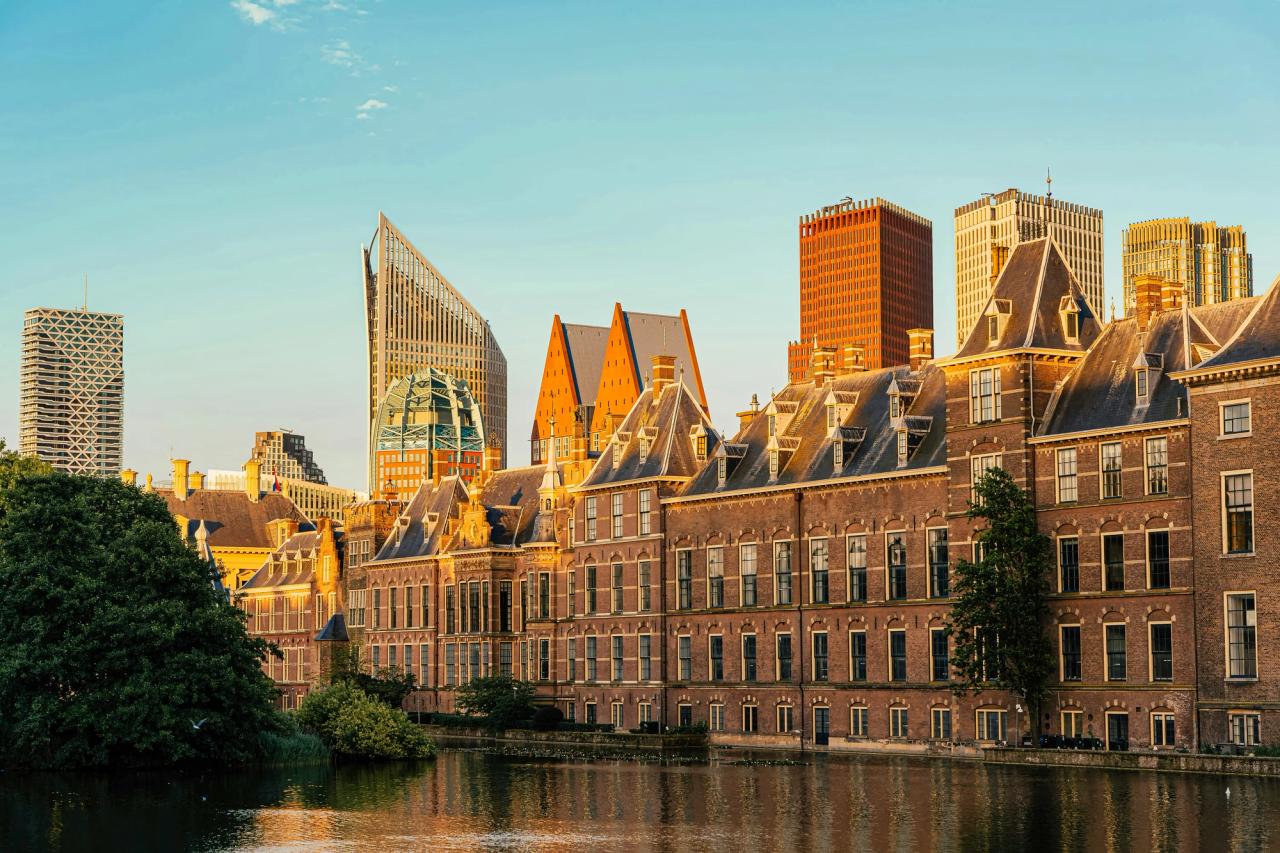
Den Haag ist der Regierungssitz der Niederlande, Sitz des Internationalen Gerichtshofs und von über 200 internationalen Organisationen — und wirkt dennoch alles andere als eine steife Hauptstadt. Die Stadt erstreckt sich zwischen eleganten Parks und dem sandigen Strand von Scheveningen und bietet einen gehobenen, entspannten Lebensstil, der Diplomaten, Juristen, NGO-Mitarbeiter und Familien gleichermaßen anzieht. Den Haag verbindet königliches Erbe, Leben am Meer und eine echt kosmopolitische Atmosphäre, die von Botschaften aus über 150 Ländern geprägt wird. Wenn Sie Lebensqualität, internationale Karrieremöglichkeiten und die Möglichkeit schätzen, nach der Arbeit zum Meer zu spazieren, könnte Den Haag Ihr perfektes Zuhause in den Niederlanden sein.
Den Haag auf einen Blick
- Einwohnerzahl
- 560.000 (Gemeinde), 1,1 Millionen Metropolregion
- Region
- Südholland, westliche Niederlande
- Bekannt für
- Regierung, internationale Gerichte, Friedenspalast, Strand von Scheveningen
- Durchschnittsmiete (1-Zimmer)
- €1.200–€1.900 (Stadtzentrum), €900–€1.350 (äußere Stadtteile)
- Durchschnittsgehalt
- €2.900 netto/Monat
- Expat-Community
- Große diplomatische Community, internationale Organisationen, EU- und NATO-Mitarbeiter
Gründe für einen Umzug nach Den Haag
- Internationale Organisationen: Keine andere europäische Stadt bietet diese Dichte an globalen Institutionen. Der Internationale Gerichtshof (ICJ), der Internationale Strafgerichtshof (ICC), der Internationale Seegerichtshof, Europol und über 200 NGOs haben hier ihren Hauptsitz und schaffen unvergleichliche Karrierewege in Recht, Diplomatie und Politik.
- Leben am Strand: Der Strand von Scheveningen ist nur 15 Minuten mit der Straßenbahn vom Regierungsviertel entfernt. Surfen, Kiteboarding, Beachvolleyball und Strandterrassen werden Teil Ihres Alltags — ein Angebot, das keine andere große niederländische Stadt in diesem Maßstab bietet.
- Diplomatische Community: Botschaften aus über 150 Ländern schaffen ein kosmopolitisches soziales Umfeld. Botschaftsempfänge, Kulturprogramme und internationale Netzwerkmöglichkeiten sind das ganze Jahr über fest in das Stadtleben integriert.
- Lebensqualität: Den Haag belegt regelmäßig Spitzenplätze in niederländischen Lebensqualitätsstudien. Baumbestandene Alleen, weniger Touristen als in Amsterdam, hervorragende Parks und ein entspanntes Tempo machen die Stadt echt familienfreundlich mit großzügigem Wohnraum im Vergleich zu anderen Randstad-Städten.
- Strategische Lage: Der Flughafen Schiphol ist in 30 Minuten mit dem direkten Intercity erreichbar, Amsterdam in 40 Minuten und Rotterdam in 25 Minuten. Brüssel und Paris sind über Eurostar-Hochgeschwindigkeitszüge (ehemals Thalys) erreichbar, und der Flughafen Rotterdam Den Haag bietet günstige europäische Flüge.
- Königliche Atmosphäre: Den Haag ist der Arbeitswohnsitz der niederländischen Königsfamilie. Das Palais Noordeinde und Huis ten Bosch sind aktive königliche Residenzen, und die jährliche Prinsjesdag-Prozession (Haushaltstag) zieht nationale Aufmerksamkeit auf sich.
Wohnungssuche in Den Haag
Durchschnittsmieten
| Stadtteil | 1-Zimmer | 3-Zimmer | Charakter |
|---|---|---|---|
| Centrum | €1.400–€2.100 | €2.200–€3.200 | Regierungsviertel, Binnenhof, Palais Noordeinde |
| Statenkwartier | €1.100–€1.600 | €1.700–€2.400 | Museumsviertel, internationales Flair, Botschaften |
| Scheveningen | €1.200–€1.700 | €1,800–€2,600 | Strandleben, Surfkultur, Fischrestaurants |
| Benoordenhout | €1,100–€1,600 | €1,700–€2,400 | Grün, ruhig, beliebt bei Botschaftspersonal |
| Segbroek | €900–€1,300 | €1,400–€1,900 | Familienfreundlich, nahe dem Strand, grüne Vororte |
| Loosduinen | €800–€1,200 | €1,200–€1,700 | Traditionelle niederländische Dorfatmosphäre, am erschwinglichsten |
Wohnungssuche
- Pararius und Funda: Umfangreiche Mietangebote in allen Den Haager Stadtteilen mit englischsprachiger Oberfläche und täglichen Aktualisierungen.
- WoningNet Haagse Woningcorporaties: Sozialer Wohnungsmarkt — melden Sie sich frühzeitig an, da die Wartelisten in beliebten Gegenden lang sind.
- Facebook-Gruppen: „The Hague Housing“ und Expats-Gruppen veröffentlichen häufig Angebote vor den großen Plattformen. Überprüfen Sie diese täglich für die besten Ergebnisse.
- Makler: FVO Makelaars und ortsansässige Makler betreuen expat-freundliche Angebote mit englischsprachigem Service und Kenntnissen über diplomatenspezifische Wohnungsanforderungen.
- Arbeitgeberprogramme: Diplomatisches Personal und NGO-Mitarbeiter finden oft Wohnungen über Programme ihrer Arbeitgeber — erkundigen Sie sich bei Ihrer Organisation, bevor Sie selbstständig suchen.
Tipps für Expats
- Der Markt ist wettbewerbsintensiv, aber ruhiger als in Amsterdam — rechnen Sie mit Tagen statt Stunden für Entscheidungen, was Ihnen mehr Zeit lässt.
- Beginnen Sie die Suche mindestens vier Wochen vor Ihrem Umzug; Statenkwartier und Benoordenhout erfordern Geduld aufgrund der hohen Nachfrage aus der internationalen Gemeinschaft.
- Die Strandbezirke (Scheveningen, Kijkduin) bieten ein hervorragendes Preis-Leistungs-Verhältnis und ein einzigartiges Lebensgefühl — die Straßenbahn erreicht das Regierungszentrum in 15 Minuten.
- Die Gemeinde Den Haag setzt strenge Mieterschutzmaßnahmen gegen unbegründete Mieterhöhungen und Räumungen durch und bietet damit mehr Sicherheit als einige andere niederländische Städte.
- Diplomatisches Personal kann über seinen Arbeitgeber Zugang zu speziellen Wohnungsprogrammen oder Zuschüssen haben — informieren Sie sich, bevor Sie sich für den privaten Mietmarkt entscheiden.
Stadtteilführer
- Statenkwartier: Das internationalste Viertel, nahe dem Parlament, dem Friedenspalast und den wichtigsten Museen. Beliebt bei Diplomaten und NGO-Mitarbeitern. Mittlere Mieten, hervorragende Restaurants und die Einkaufsstraße Frederik Hendriklaan („De Fred“) für den täglichen Bedarf. Das kosmopolitischste Viertel der Stadt.
- Scheveningen: Das Strandviertel — Surfen, Beachclubs, die Seebrücke und Boulevard-Gastronomie. Verbindet sommerliches Touristentreiben mit ganzjähriger Wohnruhe in den Seitenstraßen. Zu Fuß erreichbar: Dünen, Hafen und frische Fischrestaurants. Eine einzigartige Lebensstilwahl unter den niederländischen Städten.
- Benoordenhout: Ruhig, grün und elegant. Wunderschöne Architektur aus dem frühen 20. Jahrhundert, Nähe zum Waldpark Haagse Bos und dörfliche Atmosphäre trotz zentraler Lage. Beliebt bei Botschaftsfamilien und Führungskräften, die Ruhe suchen.
- Centrum: Das historische Herz, geprägt vom Binnenhof (Parlamentskomplex), dem Palais Noordeinde und dem Grote Markt. Höhere Mieten spiegeln die Nähe zu allen Regierungseinrichtungen und das lebendige Nachtleben rund um die Grote Marktstraat und die umliegenden Straßen wider.
- Segbroek: Nördlicher Vorortbereich mit guten Schulen, mehreren Parks und erschwinglicherem Wohnraum als im Zentrum von Den Haag. Ideal für Familien, die Grünflächen suchen und dabei nah am Strand und Stadtzentrum mit zuverlässigen Straßenbahnverbindungen bleiben möchten.
- Loosduinen: Ein traditionelles niederländisches Dorf, das nun in den westlichen Stadtrand eingemeindet ist. Authentisches Ortsleben, echte Erschwinglichkeit und ein entspannteres Tempo — perfekt für alle, die Viertelcharme dem städtischen Trubel vorziehen und einen längeren Arbeitsweg in Kauf nehmen.
Lebenshaltungskosten in Den Haag
Monatliche Budgetaufschlüsselung
| Kategorie | Budgetrahmen |
|---|---|
| Miete (1-Zimmer-Wohnung, Zentrum) | €1,200–€1,900 |
| Nebenkosten | €120–€185 |
| Internet | €32–€50 |
| Lebensmittel | €240–€390 |
| Verkehr (HTM-Karte) | €85–€115 |
| Essen gehen (4×/Monat) | €70–€110 |
| Freizeit/Fitnessstudio | €30–€55 |
| Gesamt | €1.850–€2.850 |
Alltagskosten
- Kaffee: €2,50–€4,50 (Spezialitäten-Kaffeehäuser im Statenkwartier sind teurer)
- Mittagessen (ungezwungen): €7–€12 (Mittagsangebote für Berufstätige in der Nähe der Regierungsgebäude; Strandrestaurants etwas teurer)
- Monatliche Verkehrskarte: €85–€115 (HTM unbegrenztes Fahren mit Straßenbahn und Bus)
- Bier (Bar): €4–€6,50 (bruin cafés eher am unteren Ende, Strandclubs in Scheveningen am oberen Ende)
- Kinoticket: €12–€16 (Multiplex und Filmhaus-Arthouse-Kino)
- Fitnessstudio-Mitgliedschaft: €30–€55 (Basic Fit als günstige Option, Premium-Studios nahe dem Centrum)
Unterwegs in Den Haag
- Öffentlicher Nahverkehr: HTM betreibt Straßenbahnen und Busse in der ganzen Stadt und bis nach Scheveningen. Monatskarte €85–€115. Die RandstadRail verbindet Den Haag effizient mit Rotterdam und den umliegenden Vororten. Nachtbusse fahren freitags und samstags und decken die wichtigsten Ausgehviertel ab.
- Fahrrad: Ausgezeichnete Radinfrastruktur mit separaten Radwegen bis zum Strand. Die ebene Topografie macht das Radfahren in der gesamten Stadt angenehm. Gebrauchtfahrräder ab €100 über marktplaats.nl. Die Fahrt nach Scheveningen auf den dafür vorgesehenen Wegen ist ein beliebter Arbeitsweg.
- Auto: Der Verkehrsfluss ist besser als in Amsterdam — einer der echten Vorteile von Den Haag. Parkausweise kosten €50–€100/Monat in den zentralen Zonen, und Parkplätze sind in der Regel verfügbar, ohne dass es extrem lange Wartelisten wie in Amsterdam gibt.
- Flughafen: Rotterdam The Hague Airport (25 Min. mit dem Bus) bedient europäische Flüge. Schiphol ist 30 Minuten mit dem direkten Intercity erreichbar — bequem genug für internationale Reisen, ohne dass ein lokaler Flughafen nötig ist.
- Fernverkehr: Den Haag Centraal — Amsterdam 40 Min., Schiphol 30 Min., Rotterdam 25 Min., Brüssel 2 Std. 45 (Eurostar), Paris 3 Std. 30 (Eurostar). Hervorragende europäische Anbindung für eine Stadt dieser Größe.
Gesundheitsversorgung in Den Haag
- Krankenhäuser/Kliniken: Das HagaZiekenhuis bietet eine umfassende Versorgung einschließlich eines 24/7-Notdienstes. Das MC Haaglanden bietet Allgemeinmedizin an mehreren Standorten. Das International Health Centre (IHC) ist auf die Gesundheitsversorgung von Expats spezialisiert mit englischsprachigem Personal und Abrechnung internationaler Krankenversicherungen — eine einzigartige Ressource für die diplomatische Gemeinschaft.
- Englischsprachige Ärzte: Dank der internationalen Bevölkerung sehr leicht zu finden. Das IHC unterhält englischsprachige Hausärzte, die mit diplomatischen Protokollen und internationalen Versicherungsansprüchen vertraut sind. Suchen Sie auf zorgkaartnederland.nl mit dem englischen Filter nach Hausärzten in Ihrer Nähe.
- Apotheken: Apotheken in jedem Stadtteil, in der Regel Mo–Sa geöffnet. Außerhalb der Sprechzeiten erreichen Sie den diensthabenden Apotheker unter 0900-8589 für die wechselnden Standorte. Die meisten Apotheker sprechen fließend Englisch.
- Notrufnummer: 112 (Polizei, Feuerwehr, Rettungsdienst). Polizei (kein Notfall): 0900-8844. Ärztlicher Bereitschaftsdienst (kein Notfall): 0800-362 23 22.
Erhalten Sie einen persoenlichen Umzugsplan
Hinterlassen Sie Ihre E-Mail, und wir senden Ihnen eine passende Checkliste plus drei Angebote gepruefter Umzugsunternehmen.
Kultur & Lebensstil
- Internationale Einrichtungen: Besichtigen Sie den Friedenspalast (Vredespaleis), der von Andrew Carnegie finanziert wurde und Sitz des Internationalen Gerichtshofs ist. Besucherzentren erläutern die Geschichte des Völkerrechts. Der IGH, Europol, die OPCW und Dutzende weiterer Organisationen bieten öffentliche Programme und Tage der offenen Tür an.
- Strandkultur: Scheveningen bietet das ganze über Aktivitäten — im Sommer Sonnenbaden und Beachvolleyball, im Winter Kiteboarding und Sturmbeobachtung sowie die monatlichen Strandfestivals, die Tausende anziehen. Im Hafen gibt es frischen Hering und Kibbeling direkt von den Fischkuttern. Kijkduin im Süden ist ruhiger und familienfreundlicher.
- Museen: Das Mauritshuis beherbergt Vermeers Mädchen mit dem Perlenohrring sowie Meisterwerke von Rembrandt und Rubens. Escher im Palast zeigt die optischen Illusionen des Grafikers in einer ehemaligen königlichen Residenz. Das Kunstmuseum (früher Gemeentemuseum) präsentiert Mondrians Victory Boogie Woogie und eine umfangreiche Modesammlung.
- Königliche Veranstaltungen: Am Prinsjesdag (Haushaltstag, dritter Dienstag im September) zieht die Kutschprozession vom Palais Noordeinde zur Ridderzaal nationale Aufmerksamkeit auf sich. Die Königsfeierlichkeiten im April verwandeln die Stadt mit orangefarbenen Dekorationen, Straßenmärkten und Open-Air-Konzerten.
- Grünflächen: Der Haagse Bos — ein jahrhundertealter Wald im Stadtzentrum — bietet Laufstrecken und Tierbeobachtung. Der Westbroekpark ist berühmt für seinen Rosengarten. Der Clingendael-Park verfügt über einen japanischen Garten, der nur im Frühjahr und Herbst geöffnet ist. Die Dünen zwischen Scheveningen und Kijkduin bilden ein geschütztes Naturschutzgebiet.
Banken und Steuern
- Bankwesen: Das niederländische Bankwesen ist unkompliziert. ING, ABN AMRO und Rabobank sind die drei traditionellen Banken mit Filialen in ganz Den Haag. Bunq bietet eine App-basierte Banklösung, die bei technikaffinen Expats beliebt ist. iDEAL — das nationale Online-Zahlungssystem — wird für praktisch den gesamten E-Commerce genutzt; Sie benötigen ein niederländisches Bankkonto, um es zu nutzen.
- Einkommensteuer: Die Niederlande haben ein progressives Einkommensteuersystem. Im Jahr 2026 werden Einkommen bis ca. €38.000 mit 36,97 % besteuert, darüber liegende Einkommen mit 49,50 %. Die 30%-Regelung senkt die effektiven Sätze für qualifizierte Expats, die aus dem Ausland angeworben wurden. Diplomatisches Personal kann besondere Steuerregelungen über seine Botschaft haben — erkundigen Sie sich vor der Steuererklärung.
- MwSt. und Verbraucherkosten: Die MwSt. (BTW) ist in allen angezeigten Preisen enthalten — was Sie sehen, ist das, was Sie bezahlen. Der Regelsatz beträgt 21 %; der ermäßigte Satz von 9 % gilt für Lebensmittel, Bücher und einige Dienstleistungen.
Niederländische Sprachgrundlagen für den Alltag
- Hallo / Hoi — Hallo / Hi
- Dank je wel — Danke
- Alstublieft — Bitte / Bitte sehr
- Spreekt u Engels? — Sprechen Sie Englisch?
- Ik zou graag... — Ich möchte gerne...
- Tot ziens — Auf Wiedersehen
- Mag ik de rekening? — Kann ich bitte die Rechnung haben?
- Pinnen? — Kann ich mit Karte bezahlen?
Die internationale Bevölkerung von Den Haag bedeutet, dass Sie sich völlig auf Englisch verständigen können. Niederländisch zu lernen zeigt jedoch Respekt vor dem Gastland und öffnet Türen bei Behörden und lokalen Institutionen.
Internet und Mobilfunk
- Festnetzinternet: Die wichtigsten Anbieter sind Ziggo (Kabel), KPN (Glasfaser/DSL) und T-Mobile (Glasfaser). Rechnen Sie mit €32–€50 pro Monat für 100–500 Mbps. Die Glasfaserabdeckung in zentralen Stadtvierteln ist flächendeckend. Verträge laufen in der Regel 12 Monate.
- Mobilfunk: KPN, Vodafone und T-Mobile sind die Hauptanbieter. Prepaid-SIM-Karten sind in Supermärkten ab €10 erhältlich. Monatsabos mit Datenvolumen beginnen bei €15–€25. EU-Roaming ist inklusive.
- Öffentliches WLAN: Weit verbreitet in Cafés, Restaurants und öffentlichen Gebäuden. Das International Health Centre und die Botschaftsviertel bieten zuverlässige Verbindungen für die Remote-Arbeit.
Kinderbetreuung und Elternschaft
- Kita (kinderdagverblijf): Wird durch die niederländische Regierung bezuschusst (kinderopvangtoeslag). Die monatlichen Kosten für eine Vollzeitbetreuung liegen vor der Bezuschussung bei €1.700–€2.300. Beantragen Sie die Bezuschussung über die Belastingdienst nach der Anmeldung bei der Gemeente Den Haag.
- Hort (BSO): Verfügbar für Kinder von 4–12 Jahren, in der Regel €500–€850 pro Monat vor der Bezuschussung. Internationale Schulen arbeiten oft mit verbundenen BSO-Anbietern zusammen.
- Familienleben: Den Haag ist außergewöhnlich familienfreundlich. Der Strand von Scheveningen, der Miniaturpark Madurodam, das Kuppelkino Omniversum und zahlreiche Parks machen die Stadt zu einem echten Paradies für Kinder. Die Dünen und der Strand bieten das ganze Jahr über Aktivitäten für Familien im Freien.
Abfall und Recycling
- Hausmüll: Den Haag nutzt ein System aus unterirdischen Containern. Sie öffnen die Container mit Ihrem Gemeindeausweis (milieupas). Restafval (Restmüll), GFT (Bioabfall) und PMD (Kunststoff/Metall/Getränkekartons) werden getrennt. Papier und Glas gehören in entsprechende Straßencontainer.
- Sperrmüll: Planen Sie eine kostenlose Abholung großer Gegenstände über die Website der Gemeinde.
- Gebrauchtwaren: Marktplaats.nl ist das niederländische Gegenstück zu Craigslist — kaufen und verkaufen Sie gebrauchte Artikel in Ihrer Nähe. Den Haag hat ausgezeichnete kringloopwinkels (Gebrauchtwarenläden) für Möbel und Haushaltswaren.
Coworking-Spaces
- The Hague Tech: Innovationshub und Coworking-Space in Bahnhofsnähe, beliebt bei Technologie-Startups und internationalen Fachkräften.
- Spaces Den Haag: Flexible Büros und Hot Desks im Stadtzentrum mit einer starken internationalen Gemeinschaft.
- Impact Hub The Hague: Fokus auf Sozialunternehmen und NGOs, verbindet die internationale Organisationsgemeinschaft mit lokalen Unternehmern.
Essen und Gastronomie
- Lokale Spezialitäten: Frischer Hering und Meeresfrüchte am Hafen von Scheveningen, Bitterballen in traditionellen braunen Cafés, niederländische Pannenkoeken (Pfannkuchen) in speziellen Pfannkuchenrestaurants in den Dünen und indonesischer Rijsttafel als Spiegel der Kolonialgeschichte.
- Beste Viertel zum Essen: Frederikstraat für gehobene Bistros und Brunch-Angebote, Hafen von Scheveningen für Meeresfrüchte mit Meerblick, Grote Markt für lebhaftes Essen auf Terrassen mit Einheimischen und Chinatown nahe dem Stadtzentrum für authentische asiatische Küche.
- Günstige Optionen: Tägliche Mittagsgerichte (dagschotel) ab €8 in lokalen Restaurants, Wochenmärkte am De Helena und der Herman Costerstraat für erschwingliche frische Produkte und Streetfood sowie Supermarktketten für fertige Mahlzeiten unter €6.
Expat-Gemeinschaft
- Meetup-Gruppen: InterNations The Hague (monatliche Networking-Veranstaltungen für Tausende), The Hague Expat Group (gesellige Treffen, Stadtrundfahrten) und The Hague International Meetups, die alles abdecken — von Wandertouren über berufliche Weiterbildung bis hin zu Eltern-Themen.
- Internationale Organisationen: ICJ, ICC, Europol, NATO Communications, OPCW und über 200 NGOs schaffen dichte Expat-Netzwerke. Viele veranstalten interne soziale Events und Integrationsprogramme für neue Mitarbeiter und deren Familien, was den Übergang erleichtert.
- Sprachtandems: Wöchentliche niederländische Konversationsgruppen in Gemeindezentren und Cafés. ROC bietet bezahlbare Abendkurse an. Botschaften veranstalten regelmäßig Kulturprogramme einschließlich Sprachkursen für Familien des diplomatischen Personals. Tandem-Apps verbinden internationale mit niederländischsprachigen Nutzern.
Arbeitsmarkt in Den Haag
- Wichtigste Branchen: Völkerrecht und Diplomatie, niederländische Regierung und Politikgestaltung, NGOs und humanitäre Organisationen, Verteidigung und Sicherheit (NATO, Europol, OPCW), IT-Beratung und Politik für erneuerbare Energien.
- Großarbeitgeber: International Court of Justice, International Criminal Court, niederländische Ministerien, Europol, TNO (angewandte Forschungsorganisation), Shell (Abteilung für Politik) und ein wachsender Technologiecluster rund um das Bezuidenhout-Viertel.
| Branche | Netto pro Monat (geschätzt) | Bruttojahresgehalt (Richtwert) |
|---|---|---|
| Recht/Völkerrecht | €3.500–€6.000 | €55.000–€90.000 |
| Regierung/Politik | €3.000–€4.500 | €45.000–€70.000 |
| NGOs/Humanitäre Hilfe | €2.500–€4.000 | €38.000–€62.000 |
| IT/Beratung | €3.200–€5.000 | €48.000–€78.000 |
| Bildung | €2.400–€3.500 | €36.000–€52.000 |
- Stellensuche-Ressourcen: LinkedIn, Indeed.nl, The Hague International Platform (lokales Jobportal), UN Careers Portal (careers.un.org), ReliefWeb für humanitäre Positionen sowie spezialisierte Personalberatungen wie Michael Page und das Netzwerk des Clingendael Instituts.
Bildung in Den Haag
- Internationale Schulen: International School of The Hague (ISH, IB-Programm), American School of The Hague (ASH, amerikanischer Lehrplan und SAT/AP), British School in The Hague (britischer Lehrplan und IGCSE/A-Levels). Gebühren: €5.000–€22.000/Jahr. Wartelisten sind üblich — bewerben Sie sich so früh wie möglich.
- Universitäten: Leiden University Campus Den Haag (Völkerrecht, Öffentliche Verwaltung, Governance), The Hague University of Applied Sciences (Wirtschaft, Ingenieurwesen, IT, Hospitality) und Campus Den Haag der TU Delft für technische Studiengänge.
- Sprachschulen: ROC für erschwingliche Niederländischkurse auf allen Niveaus, Privatschulen wie Taalhaus und Loqman für Intensivprogramme, von Botschaften organisierte Sprachaustausche und Universitäts-Sprachzentren für akademisches Niederländisch.
Umzugscheckliste für Den Haag
- Sichern Sie sich eine Stelle bei einer internationalen Organisation, einer Botschaft oder einem niederländischen Arbeitgeber
- Prüfen Sie die Visums-/Genehmigungsanforderungen — für diplomatisches Personal gelten andere Verfahren als für reguläre hochqualifizierte Zuwanderer
- Organisieren Sie eine vorübergehende Unterkunft für die ersten 4–6 Wochen (Airbnb, HousingAnywhere oder vom Arbeitgeber gestellte Unterkünfte)
- Informieren Sie sich über Krankenversicherungsoptionen; diplomatisches Personal kann besondere Versicherungspflichten über seine Botschaft haben
- Wenn Sie Kinder mitbringen, bewerben Sie sich umgehend bei internationalen Schulen — ISH und ASH haben beide Wartelisten
- Melden Sie sich bei der Gemeente Den Haag für Ihre BSN an (innerhalb von 5 Tagen nach Ankunft für Aufenthalte über 4 Monate erforderlich)
- Eröffnen Sie ein niederländisches Bankkonto (ING, ABN AMRO oder Bunq)
- Aktivieren Sie die Krankenversicherung (basisverzekering, €135–€155/Monat) oder bestätigen Sie die diplomatische Abdeckung
- Kaufen Sie eine HTM OV-chipkaart für Straßenbahnen und Busse
- Finden Sie eine dauerhafte Unterkunft — Statenkwartier und Benoordenhout sind bei der Expat-Gemeinschaft am beliebtesten
- Registrieren Sie sich bei einem huisarts (Hausarzt) in Ihrer Nähe; das IHC ist eine ausgezeichnete expat-freundliche Option
- Beantragen Sie eine Aufenthaltserlaubnis, wenn Sie nicht aus der EU kommen und keinen Diplomatenstatus haben
- Erkunden Sie Niederländischkurse über ROC oder Gemeindezentren — selbst Grundkenntnisse verändern den Alltag
Verwandte Leitfäden
- [Umzug in die Niederlande] – umfassender Länderleitfaden zu Visa, Besteuerung und nationaler Kultur
- [Umzug nach Amsterdam] – die lebendige Kulturszene und das internationale Geschäftszentrum der niederländischen Hauptstadt
- [Umzug nach Rotterdam] – die Hafenstadt der Niederlande mit moderner Architektur und niedrigeren Lebenshaltungskosten
- [Umzug nach Utrecht] – zentral gelegene Studentenstadt mit mittelalterlichem Charme