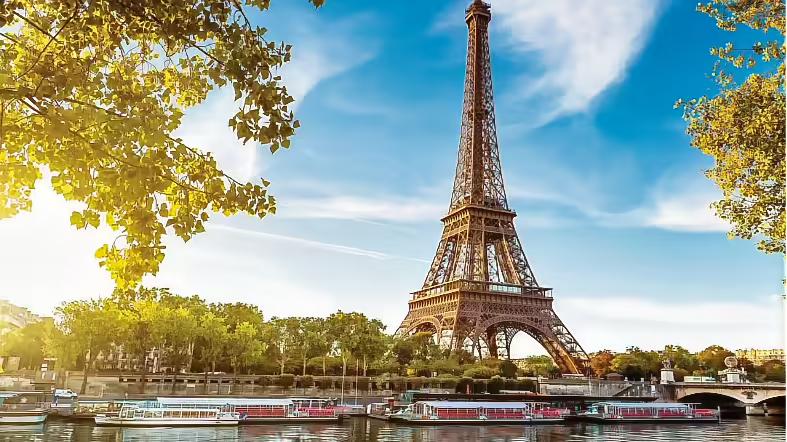
Paris ist die Hauptstadt Frankreichs und eine der ikonischsten Städte der Welt. Sie zieht Kreative, Finanzfachleute, Akademiker und alle an, die ein von Kunst, Geschichte und erstklassiger Gastronomie geprägtes Alltag leben möchten. Die Stadt erstreckt sich über 20 Arrondissements, von denen jedes seinen eigenen Charakter hat — von den kopfsteingepflasterten Gassen des Marais bis zu den bohemian Hängen von Montmartre. Das Leben hier ist rasant und lohnend, aber die Wohnkosten und die bürokratischen Hürden erfordern einen durchdachten Plan, bevor Sie ankommen.
Paris ist keine günstige Stadt, bietet aber eine unübertroffene Dichte an Kultur, Karrieremöglichkeiten und europäischer Anbindung. Ob Sie für eine Tech-Stelle im Sentier kommen, eine Finanzposition in La Défense antreten oder ein Sabbatjahr im Louvre verbringen — dieser Leitfaden fasst zusammen, was Sie wissen müssen.
Paris auf einen Blick
- Einwohnerzahl
- 2,1 Millionen (Stadtgebiet), 12,4 Millionen (Metropolregion)
- Region
- Île-de-France
- Bekannt für
- Kunst, Mode, Gastronomie
- Durchschnittliche Miete (1-Zimmer-Wohnung)
- €1,100 – €1,800
- Durchschnittsgehalt
- 2.600 – 3.200 €/Monat netto
- Expat-Community
- Sehr groß — eine der größten in Europa
- Klima
- Milde Winter, warme Sommer; typischerweise 10–25 °C
- Sprache
- Französisch (Englisch wird in den zentralen Arrondissements weit verbreitet gesprochen)
Warum ein Umzug nach Paris
- Karrierezentrum: Hauptsitz großer französischer und multinationaler Unternehmen aus den Bereichen Finanzen, Technologie, Luxusgüter und Medien. Die Region Île-de-France (Paris und Großraum Paris) erwirtschaftet rund 30 % des französischen BIP.
- Kultur überall: Über 130 Museen, tausende Galerien, Livemusik und Theater an jeder Ecke. Viele nationale Museen sind am ersten Sonntag jedes Monats kostenlos zugänglich.
- Verkehrsnetz: Umfassendes Metro-, RER- und Bussystem — ein Auto brauchen Sie selten. Der Navigo-Pass deckt das gesamte Metro-, RER-, Bus- und Straßenbahnnetz ab, einschließlich Flughafentransfers (aber nicht Orlyval).
- Zentraleuropäische Lage: Schnellzugverbindungen nach London (2 Std. 15 via Eurostar), Brüssel (1 Std. 20 via Eurostar), Amsterdam (~3 Std. via Eurostar) und in französische Großstädte innerhalb weniger Stunden.
- Bildung und Forschung: Heimat erstklassiger Universitäten, Grandes Écoles und internationaler Schulen mit britischen, amerikanischen und IB-Lehrplänen.
- Gesellschaftliches Leben: Die englischsprachige Expat-Community ist riesig, was es einfach macht, schnell einen Freundeskreis aufzubauen.
Wohnungssuche in Paris
Durchschnittsmieten
| Stadtviertel | 1-Zimmer | 3-Zimmer | Charakter |
|---|---|---|---|
| Le Marais (3./4. Arrondissement) | 1.400 – 2.200 € | 3.000 – 4.800 € | Historisch, trendig, LGBTQ+-freundlich |
| Saint-Germain-des-Prés (6. Arrondissement) | 1.600 – 2.500 € | 3.500 – 5.500 € | Luxuriös, literarische Cafés |
| Montmartre (18. Arrondissement) | 1.000 – 1.600 € | 2.200 – 3.500 € | Dorfcharakter, künstlerisch |
| Belleville (19./20. Arrondissement) | 900 – 1.400 € | 1.800 – 2.800 € | Multikulturell, erschwinglich |
| Bastille (11./12. Arrondissement) | 1.100 – 1.700 € | 2.400 – 3.800 € | Nachtleben, junge Berufstätige |
| Batignolles (17. Arrondissement) | 1.050 – 1.550 € | 2.200 – 3.400 € | Familienfreundlich, grün |
Die Mieten unterscheiden sich stark zwischen den Arrondissements. Das 1. bis 7. Arrondissement ist wegen der Nähe zu Sehenswürdigkeiten und dem Prestige am teuersten. Das 18., 19. und 20. Arrondissement bietet deutlich erschwinglichere Optionen bei guter Metro-Anbindung. Vorstadtorte wie Montreuil oder Pantin bieten mit RER-Anbindung noch niedrigere Mieten.
So finden Sie eine Wohnung
- SeLoger: Das größte französische Mietportal — filtern Sie nach Arrondissement, Budget und möbliert/unmöbliert.
- Leboncoin: Kleinanzeigenportal mit direkten Vermieterinseraten; schneller, aber weniger aufbereitet. Mehrmals täglich überprüfen.
- PAP (Particulier à Particulier): Inserate ohne Maklergebühren zwischen Mietern und Vermietern.
- Jinka: Eine mobile App, die Inserate von mehreren Plattformen bündelt und sofortige Benachrichtigungen sendet.
- Lodgis: Eine englischsprachige Agentur, die auf möblierte Wohnungen für Expats spezialisiert ist.
- Arbeiten Sie mit einem Relocation-Agenten zusammen, wenn Sie kein Französisch sprechen — Vermieter bevorzugen Mieter, die auf Französisch verhandeln können.
Tipps für Expats
- Planen Sie ein, eine Bewerbungsmappe einzureichen: die letzten drei Gehaltsabrechnungen, die Steuererklärung, den Personalausweis und einen Bürgen, falls Ihr Gehalt unter dem Dreifachen der Miete liegt.
- Möblierte Mietverträge („meublé“) laufen 1 Jahr, unmöblierte 3 Jahre — möbliert ist für Neuankömmlinge einfacher.
- Die Plattform DossierFacile hilft Ihnen, kostenlos eine vollständige Bewerbungsmappe zusammenzustellen.
- Visale ist ein kostenloses, staatlich gefördertes Bürgschaftsprogramm für Studierende und junge Berufstätige — prüfen Sie Ihre Anspruchsberechtigung, bevor Sie einen privaten Bürgen bezahlen.
- Die Konkurrenz ist groß: Antworten Sie innerhalb von Stunden auf Inserate und halten Sie alle Dokumente eingescannt und absendebereit.
- Seien Sie vorsichtig bei Betrug — überweisen Sie niemals Geld, bevor Sie die Wohnung nicht persönlich besichtigt haben.
Stadtviertel-Guide
- Le Marais (3./4. Arrondissement): Fußgängerfreundlich, lebendig und zentral. Ideal für junge Berufstätige und Paare, die im Zentrum leben möchten. Hervorragende Restaurants, Boutiquen und Nachtleben. Höhere Mieten.
- Saint-Germain-des-Prés (6. Arrondissement): Pariser Eleganz in Vollendung. Ideal für arrivierte Berufstätige und Kulturliebhaber. Heimat historischer Cafés wie Les Deux Magots und Café de Flore. Gehört zu den teuersten Vierteln.
- Montmartre (18. Arrondissement): Kopfsteinpflaster, Sacré-Cœur-Blick und ein ausgeprägtes Gemeinschaftsgefühl. Beliebt bei Künstlern und Kreativen mit moderatem Budget. Die steilen Hügel sind ein tägliches Workout.
- Belleville (19./20. Arrondissement): Das vielfältigste Viertel von Paris. Hervorragendes Streetfood, erschwingliche Mieten und eine wachsende Kreativszene. Der Parc de Belleville bietet Panoramablicke über die Stadt.
- Bastille (11./12. Arrondissement): Lebhaftes Nachtleben und Restaurantszene entlang der Rue Oberkampf und Rue de Charonne. Ein Favorit von Expats in ihren Zwanzigern und Dreißigern, die Lust auf Action und zentrale Lage haben.
- Batignolles (17. Arrondissement): Ruhig, Wohnviertel mit einem Dorfmarkt und dem Parc Martin Luther King. Eine gute Wahl für Familien mit Kindern. Ökostadtviertel mit modernen Wohnungsbauprojekten.
Lebenshaltungskosten in Paris
Monatliche Budgetaufschlüsselung
| Kategorie | Budgetbereich |
|---|---|
| Miete (1-Zimmer-Wohnung, Zentrum) | 1.300 – 2.000 € |
| Nebenkosten | 120 – 180 € |
| Internet | 25 – 45 € |
| Lebensmittel | 250 – 400 € |
| Verkehrsmittel | 86,40 € (Navigo-Monatskarte, Île-de-France Mobilités) |
| Essen gehen (4×/Monat) | 150 – 250 € |
| Freizeit/Fitnessstudio | 30 – 60 € |
| Gesamt | 1.961 – 3.021 € |
Alltägliche Kosten
- Kaffee (Espresso an der Bar): 1,50 – 2,50 €
- Mittagessen (Bistro, Plat du jour): 14 – 20 €
- Monatliche Verkehrskarte (Navigo): 86,40 €
- Bier (vom Fass, Bar): 6 – 8 €
- Kinoticket: 12 – 14 €
- Baguette: 1,10 – 1,40 €
- Monatliche Fitnessstudio-Mitgliedschaft: 30 – 60 €
- Arztbesuch (mit Sécurité Sociale): 1,50 € Eigenanteil nach Erstattung
Unterwegs in Paris
- Öffentlicher Nahverkehr: 16 Metrolinien, 5 RER-Vorortzuglinien, 9 Straßenbahnlinien und über 350 Buslinien (betrieben von RATP und SNCF unter der Régie Île-de-France Mobilités). Die Navigo-Monatskarte kostet 86,40 € und deckt alle fünf Zonen ab, einschließlich CDG und Orly per RER/Bus (Orlyval erfordert ein separates Ticket).
- Fahrrad: Vélib' hat über 1.400 Stationen in der ganzen Stadt. Geschützte Radwege werden entlang der großen Boulevards rasch ausgebaut. E-Bikes sind für hügelige Gegenden verfügbar.
- Auto: Für den täglichen Gebrauch nicht empfehlenswert — Parken ist teuer (3–5 €/Stunde im Zentrum) und der Verkehr ist dicht, besonders auf dem Boulevard Périphérique. Car-Sharing-Angebote wie Share'nGo und Free2Move eignen sich für gelegentliche Fahrten.
- Flughafen: Charles de Gaulle (CDG, 25 km nördlich) ist das wichtigste internationale Drehkreuz. Orly (ORY, 13 km südlich) bedient europäische und innerfranzösische Flüge. Beide sind per RER und Bus erreichbar; Orlyval erfordert ein separates Ticket (nicht im Navigo enthalten).
- Fernverkehr: Gare du Nord für den Eurostar (London in 2h15), Gare de Lyon für den TGV nach Süden (Lyon 2h, Marseille 3h20), Gare Montparnasse für die Bretagne und Südwestfrankreich, Gare de l'Est für Deutschland und Luxemburg.
Gesundheitsversorgung in Paris
- Krankenhäuser/Kliniken: Hôpital Américain (Neuilly), Hôpital Cochin, Hôpital Necker (Pädiatrie), Hôpital Européen Georges-Pompidou und Clinique Bizet. Sowohl öffentliche als auch private Einrichtungen sind hervorragend.
- Englischsprachige Ärzte: Weit verbreitet, besonders in den zentralen Arrondissements und den westlichen Vororten. Auf Doctolib.fr können Sie nach gesprochener Sprache filtern.
- Apotheken: Fast an jeder Straße zu finden. Achten Sie auf das grüne Kreuz. Die Apotheker können kleinere Beschwerden behandeln und rezeptfreie Medikamente empfehlen.
- Notrufnummer: 15 (SAMU — medizinische Notfälle) oder 112 (europäische Notrufnummer).
Erhalten Sie einen persoenlichen Umzugsplan
Hinterlassen Sie Ihre E-Mail, und wir senden Ihnen eine passende Checkliste plus drei Angebote gepruefter Umzugsunternehmen.
Kultur & Lebensstil
- Museen & Kunst: Der Louvre, Musée d'Orsay, Centre Pompidou sowie Hunderte kleinerer Galerien in Saint-Germain und dem Marais. Einige nationale Museen bieten am ersten Sonntag des Monats freien Eintritt (saisonal — für viele von Oktober bis März; einzelne Bestimmungen prüfen).
- Nachtleben: Von Cocktailbars im Marais bis hin zu Clubs an der Seine und Live-Musik in Bastille. Die Pariser Clubkultur hat sich zunehmend in Richtung Barkultur entwickelt, aber Orte wie Rex Club und Concrete halten die elektronische Szene am Leben.
- Grünflächen: Bois de Boulogne, Jardin du Luxembourg, Parc des Buttes-Chaumont und Canal Saint-Martin für Wochenendspaziergänge und Picknicks.
- Sport: PSG-Fußball im Parc des Princes, Roland-Garros-Tennis im Mai und das Tour-de-France-Finale auf den Champs-Élysées jeden Juli.
Essen & Trinken
- Paris ist eine weltweite Food-Metropole — von Drei-Sterne-Restaurants bis hin zum 10-€-Plat du jour in Eckbistros.
- Beste Viertel zum Essen: Saint-Germain, das Marais und das 11. Arrondissement (Rue de Charonne und Rue Oberkampf).
- Günstige Optionen: Bouillons (historische Arbeiterrestaurants wie Bouillon Chartier) servieren vollständige Menüs unter 15 €. Street-Crêpes kosten 3–6 €.
- Weinbars gibt es überall — achten Sie auf „cave à vin"-Schilder für erschwingliche Verkostungen glasweise.
- Lebensmittelmärkte wie der Marché d'Aligre und der Marché des Enfants Rouges bieten frische Produkte und fertige Gerichte.
Expats-Community
- InterNations Paris und Expats in Paris veranstalten regelmäßig Meetups und Networking-Events.
- American Church of Paris, English-Speaking Library und WICE bieten Kulturprogramme, Workshops und soziale Gruppen.
- Sprachtandem-Cafés sind beliebt — probieren Sie Mundo-Lingo- oder Franglish-Veranstaltungen, die wöchentlich in Bars in der ganzen Stadt stattfinden.
- Die anglophone Community ist riesig, was es leicht macht, ein soziales Netzwerk aufzubauen — der Austausch mit französischsprachigen Menschen bereichert das Erlebnis jedoch zusätzlich.
Arbeitsmarkt in Paris
- Wichtigste Branchen: Finanzwesen (La Défense), Luxusgüter, Technologie, Tourismus, Mode, Pharmazie, Medien und Beratung.
- Große Arbeitgeber: LVMH, L'Oréal, TotalEnergies, BNP Paribas, Sanofi, Google, Amazon und große französische Banken.
- Durchschnittsgehälter nach Branche:
| Branche | Durchschnittliches Netto-Monatsgehalt |
|---|---|
| Technologie / IT | 2.800 – 4.500 € |
| Finanzwesen / Banken | 3.000 – 5.500 € |
| Luxus / Mode | 2.500 – 4.000 € |
| Gastronomie | 1.600 – 2.200 € |
| Bildung | 1.800 – 2.600 € |
| Beratung | 2.800 – 5.000 € |
- Stellensuche-Ressourcen: LinkedIn France, Welcome to the Jungle, Indeed France, Apec (für Führungspositionen) und France Travail (ehemals Pôle Emploi — staatliches Jobportal).
Bildung in Paris
- Internationale Schulen: Lycée International de Saint-Germain-en-Laye, British School of Paris, American School of Paris und die International School of Paris (IB-Programm).
- Universitäten: Sorbonne, Sciences Po, Université Paris-Saclay, École Polytechnique, HEC Paris und ENS.
- Sprachschulen: Alliance Française, LSI Paris, Accord Langues, Campus Langues und Cours de Civilisation Française de la Sorbonne.
Umzugscheckliste für Paris
- Beantragen Sie Ihr Visum und sammeln Sie alle Dokumente zusammen (Reisepass, apostillierte Geburtsurkunde, Finanzierungsnachweis)
- Eröffnen Sie nach Möglichkeit vorab ein französisches Bankkonto (Online-Banken wie N26 oder Revolut für die erste Einrichtung)
- Organisieren Sie eine vorübergehende Unterkunft (Airbnb, möblierte Mietwohnung für die ersten 1–3 Monate)
- Beginnen Sie, grundlegendes Französisch zu lernen — es hilft bei Behördengängen und im Alltag
- Validieren Sie Ihr Visum online (VLS-TS-Validierung über die ANEF-Plattform)
- Eröffnen Sie ein lokales Bankkonto bei BNP Paribas, Société Générale oder einer Online-Bank
- Besorgen Sie sich eine französische Telefonnummer (Free Mobile für 19,99 €/Monat oder Orange/SFR Prepaid)
- Kaufen Sie Ihre Navigo-Monatskarte an jedem RATP-Schalter
- Registrieren Sie sich bei der CPAM für die Sozialversicherung
- Schließen Sie Ihre Wohnungssuche ab, mit einem fertigen Bewerbungsdossier
- Informieren Sie sich beim Rathaus (Mairie) Ihres Arrondissements über lokale Dienste, Müllabfuhr und Annehmlichkeiten für Anwohner
- Melden Sie Ihre Versorgungsleistungen an (EDF für Strom, Wasser über Ihren Vermieter)
- Erhalten Sie Ihre Sozialversicherungsnummer und beantragen Sie die Carte Vitale
- Schließen Sie eine ergänzende Mutuelle-Versicherung ab
- Melden Sie Ihre Kinder an einer lokalen Schule an, falls zutreffend
- Beginnen Sie, Ihr soziales Netzwerk über Meetups und Sprachtandems aufzubauen
- Eröffnen Sie ein Sparkonto (Livret A) bei Ihrer Bank für steuerfreie Zinsen
- Machen Sie sich mit dem französischen Erstattungssystem für Gesundheitsleistungen (Tiers payant) vertraut
Sicherheitstipps für Expats
- Taschendiebstahl ist die häufigste Straftat — bleiben Sie in der Metro, an Touristenattraktionen und an Bahnhöfen aufmerksam.
- Vermeiden Sie es, große Bargeldmengen bei sich zu tragen. Nutzen Sie kontaktloses Bezahlen (überall in Frankreich weit verbreitet).
- Die nördlichen Stadtviertel (18., 19., 20. Arrondissement) sind größtenteils sicher, haben aber einige Ecken, die nachts rauer sind — fragen Sie Einheimische nach konkreten Tipps.
- Registrieren Sie sich bei Ihrer Botschaft nach der Ankunft für Notfallwarnungen und konsularische Unterstützung.
- Die französische Notrufnummer 112 funktioniert von jedem Telefon, einschließlich gesperrter Handys.
- Pariser Leitungswasser ist trinkbar — bringen Sie eine wiederverwendbare Flasche mit, um Geld zu sparen.
- Sonntag ist ein ruhiger Tag — die meisten Geschäfte haben geschlossen, mit Ausnahme von Bäckereien und einigen Supermärkten.
Remote-Arbeit und Co-Working
- Station F (13. Arrondissement): Der größte Startup-Campus der Welt — über 1.000 Startups, Veranstaltungen und ein Co-Working-Space.
- WeWork: Mehrere Standorte im zentralen Paris.
- Morning: Beliebte französische Co-Working-Kette mit stilvollen Räumen im Marais, in République und Opéra.
- Café-Arbeitskultur: Pariser arbeiten in Cafés — kaufen Sie einen Kaffee und niemand wird Sie hetzen. Steckdosen können begrenzt sein, laden Sie Ihre Geräte also vorher auf.
- Die Internetgeschwindigkeit liegt durchschnittlich bei 100–300 Mbps mit Glasfaser in den meisten Arrondissements.
Sprache und Integration
- Grundkenntnisse im Französischen (Niveau A2) verbessern Ihr Erlebnis erheblich — Vermieter, Ärzte und Beamte sprechen selten fließend Englisch.
- Kostenlose Französischkurse sind über das OFII (Einwanderungsbehörde) nach Ihrer Visavalidierung verfügbar.
- Apps wie Duolingo und Tandem helfen beim täglichen Üben.
- Die Alliance Française bietet Intensivkurse vom Anfänger- bis zum Fortgeschrittenenniveau an.
- Paris bietet viele Französisch-Englische Sprachtandem-Meetups — eine tolle Möglichkeit zum Üben und um Freunde zu finden.
Verwandte Ratgeber
- [Umzug nach Frankreich] — umfassender Länderleitfaden
- [Umzug nach Lyon] — Frankreichs Gastronomie-Hauptstadt
- [Umzug nach Marseille] — Leitfaden für das Mittelmeerleben
- [Umzug nach Bordeaux] — Leitfaden der Weinhauptstadt
- [Umzug nach Toulouse] — Leitfaden der Luftfahrtmetropole