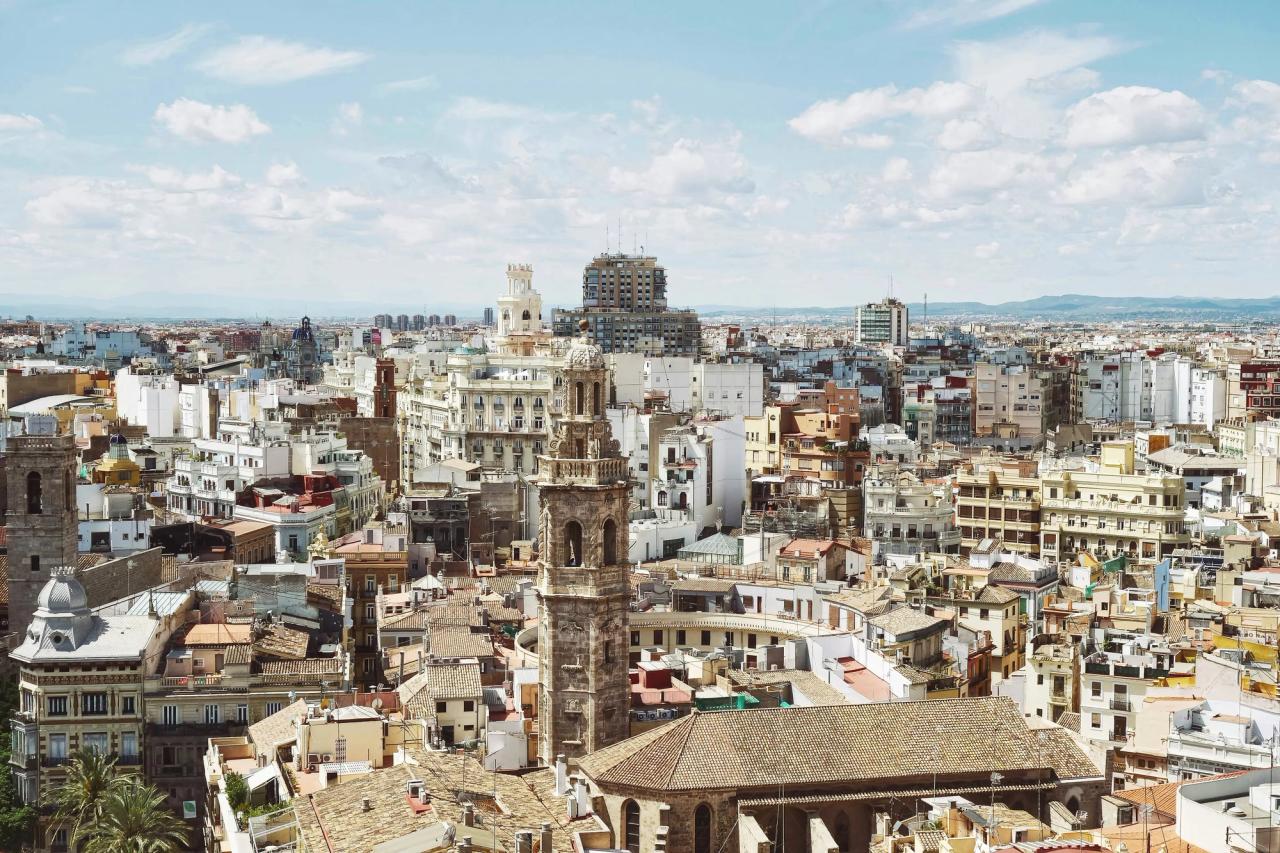

Valencia es la tercera ciudad más grande de España, situada en la costa mediterránea con una mezcla de arquitectura futurista, playas de arena y un ritmo de vida famosamente relajado. Conocida como la cuna de la paella, Valencia ofrece a los expatriados un coste de vida inferior al de Madrid o Barcelona sin renunciar a la cultura, el sol ni la calidad de vida.
Valencia de un vistazo

- Población
- 800.000 (ciudad) / 1,8 millones (área metropolitana)
- Región
- Comunidad Valenciana, este de España
- Conocida por
- Paella, Ciudad de las Artes y las Ciencias, festival de las Fallas
- Alquiler medio (1 dormitorio)
- 650–950 € al mes
- Salario medio
- 1.500–1.900 € netos al mes
- Comunidad expatriada
- En rápido crecimiento — fuerte presencia británica, alemana y latinoamericana
- Idioma
- Español y valenciano (ambos cooficiales)
- Clima
- Mediterráneo — inviernos suaves, veranos calurosos, 2.238 horas de sol
Por qué mudarse a Valencia
- Asequibilidad: El alquiler es un 30–40 % más bajo que en Madrid o Barcelona, lo que la convierte en una de las ciudades con mejor relación calidad-precio de la costa mediterránea.
- Playa y ciudad en una: Las playas de la Malvarrosa y el Cabanyal están a minutos del centro; el parque del antiguo cauce del Turia atraviesa toda la ciudad como una columna verde.
- Calidad de vida: 2.238 horas de sol al año, un excelente transporte público y un famoso ritmo mediterráneo relajado que prioriza el bienestar por encima del estrés.
- Escena cultural: Desde la Ciudad de las Artes y las Ciencias hasta la Lonja de la Seda, declarada Patrimonio de la Humanidad por la UNESCO, Valencia destaca por encima de lo que corresponde a una ciudad de su tamaño.
- Ecosistema emprendedor: Un polo tecnológico y creativo en crecimiento que atrae a trabajadores remotos y emprendedores de toda Europa — los espacios de coworking se multiplican.
- Cultura gastronómica: Como cuna de la paella, Valencia toma su gastronomía muy en serio. Mercados de productos frescos, restaurantes frente a la playa y chefs innovadores crean una vibrante escena culinaria.
Buscar vivienda en Valencia
Alquileres medios
| Barrio | 1 dormitorio | 3 dormitorios | Carácter |
|---|---|---|---|
| Ciutat Vella | 700–950 € | 1.200–1.700 € | Centro histórico, peatonal, muy turístico |
| Ruzafa | 750–1.000 € | €1.300–€1.800 | De moda, vida nocturna, restaurantes internacionales |
| Eixample | €700–€950 | €1.200–€1.700 | Calles en cuadrícula, edificios modernistas, céntrico |
| El Cabanyal | €550–€800 | €950–€1.400 | Junto a la playa, bohemio, en auge |
| Benimaclet | €550–€750 | €900–€1.300 | Ideal para estudiantes, ambiente de pueblo, económico |
| Patraix | €500–€700 | €850–€1.200 | Residencial tranquilo, mercados locales, buena relación calidad-precio |
Cómo buscar vivienda
- Idealista: El portal de alquiler por excelencia — filtre por precio, tamaño y barrio. La mayoría de los propietarios publican aquí primero.
- Fotocasa: Amplia oferta en Valencia con fotos detalladas, planos e información sobre los barrios.
- Milanuncios: Anuncios de propietarios particulares — suelen ser más baratos pero menos estandarizados.
- Agencias locales: Espere una comisión de un mes de alquiler más un 21 % de IVA. Las agencias son habituales en Eixample y Ciutat Vella.
- Grupos de Facebook: Los grupos «Pisos en Valencia» y «Valencia Expats Housing» tienen anuncios directos — verifique siempre antes de pagar.
Consejos para expatriados
- Las fianzas suelen ser de 1 a 2 meses. Algunos propietarios piden un avalista español.
- Los suministros cuestan entre 100 y 140 € al mes y casi siempre van aparte.
- Ruzafa y Ciutat Vella se llenan rápido — actúe con celeridad cuando encuentre un buen anuncio.
- El Cabanyal se está gentrificando rápidamente — sigue siendo asequible, pero los precios suben año tras año.
- El aire acondicionado es imprescindible de junio a septiembre — compruebe que funciona antes de firmar.
Guía de barrios
- Ciutat Vella: El corazón histórico — el Mercado Central (uno de los mercados de fresco más grandes de Europa), la Catedral y la Plaza de la Virgen. Animado pero ruidoso los fines de semana. Ideal para quienes quieran estar en el centro de todo.
- Ruzafa: El barrio más de moda de Valencia. Lleno de cafeterías para brunch, tiendas vintage, coctelerías y un ambiente mixto de expatriados y locales. Los alquileres han subido pero siguen por debajo de los de Eixample. El lugar ideal para jóvenes profesionales.
- Eixample: Un distrito amplio de calles en cuadrícula con avenidas anchas, fachadas modernistas y la calle comercial principal (Colón). Zonas residenciales tranquilas conviven con restaurantes de alta gama y el mercado gastronómico Mercado de Colón.
- El Cabanyal: Antiguo barrio pesquero abandonado junto a la playa. Se está gentrificando rápidamente con casas rehabilitadas, nuevos cafés y una escena artística emergente. Sigue siendo asequible pero los precios suben — adelántese.
- Benimaclet: Un antiguo pueblo con su propia plaza, arte urbano y una fuerte presencia estudiantil gracias a las universidades cercanas. Económico, con sentido de comunidad y un mercado de productores los sábados.
- Patraix: Un barrio puramente residencial al sur del centro. Tranquilo, asequible, con buenos mercados locales y acceso a metro. Ideal para familias y residentes de larga duración que buscan calles silenciosas y buena relación calidad-precio.
Coste de vida en Valencia
Desglose del presupuesto mensual
| Categoría | Rango de presupuesto |
|---|---|
| Alquiler (1 dormitorio, centro) | €700–€950 |
| Suministros (electricidad, agua, gas) | €100–€140 |
| Internet (fibra 300 Mbps+) | €30–€40 |
| Alimentación | €200–€300 |
| Transporte (Bonobus mensual) | €35–€45 |
| Comer fuera (4 veces/mes) | €60–€100 |
| Ocio/Gimnasio | €25–€45 |
| Tarifa de telefonía móvil | €10–€20 |
| Total | €1.160–€1.640 |
Gastos del día a día
- Café (café con leche): €1,30–€1,80
- Comida (menú del día): €9–€13
- Abono de transporte mensual (Bonobus ilimitado): €37,50
- Cerveza (bar, caña): €2,00–€3,00
- Entrada de cine: €7–€9
- Cuota mensual de gimnasio: €25–€45
- Barra de pan: €0,90–€1,30
Visado y residencia en Valencia
España ofrece varias vías de visado para ciudadanos no pertenecientes a la UE/EEE:
- Visado de trabajo: Requiere una oferta de empleo de un empleador español. El empleador inicia el trámite. La tramitación tarda de 1 a 3 meses.
- Visado de estudiante: Para estudiantes matriculados en instituciones valencianas. Permite trabajar a tiempo parcial hasta 20 horas/semana.
- Visado no lucrativo: Para jubilados o personas con ahorros suficientes. No se permite trabajar. Requiere justificar unos ingresos de ~€2.400+/mes.
- Visado de nómada digital (Ley de Startups): Para trabajadores remotos. Valencia se ha convertido en una de las ciudades más populares para este visado gracias a su bajo coste de vida y su calidad de vida. Ofrece un tipo impositivo fijo del 24% durante un máximo de cinco años.
- Tarjeta Azul UE: Para profesionales altamente cualificados. Requiere titulación universitaria y un salario superior a la media.
Una vez en España, necesitará un NIE (Número de Identificación de Extranjero) para prácticamente todas las gestiones oficiales. Solicítelo en la comisaría local o en la oficina de Extranjería con su pasaporte y el motivo de la solicitud.
Obligaciones fiscales
Los residentes fiscales (183+ días/año) tributan por renta mundial. El IRPF oscila entre el 19% y el 47%. La Comunidad Valenciana tiene sus propios tramos fiscales regionales: los tipos son moderados en comparación con Cataluña.
| Componente fiscal | Descripción | Tipo |
|---|---|---|
| Impuesto sobre la Renta (IRPF) | Sobre la renta mundial | 19 %–47 % progresivo |
| Seguridad Social | Cotizaciones obligatorias | ~6,35 % empleado / ~30 % empresario |
| IVA | Sobre bienes y servicios | 21 % general |
| Impuesto sobre el Patrimonio | Sobre el patrimonio neto superior a 500.000 € | 0,25 %–3,5 % |
Desplazarse por Valencia
- Transporte público: El metro (10 líneas en 5 zonas) y la red de autobuses cubren bien la ciudad. La tarjeta Bonobus (37,50 €/mes) ofrece viajes ilimitados en autobús y metro dentro de la zona urbana.
- Bicicleta: Valencia es plana y muy amigable con las bicicletas; es una de las mejores ciudades de España para pedalear. El servicio público de bicicletas Valenbisi cuesta ~30 €/año y cuenta con más de 275 estaciones por toda la ciudad.
- Coche: La ciudad es compacta y el aparcamiento es limitado. Un coche solo resulta útil para escapadas de fin de semana a la montaña, la Albufera o los pueblos costeros cercanos.
- Aeropuerto: Aeropuerto de Valencia (VLC), a 8 km al oeste. Las líneas 3 y 5 de metro conectan con el centro en 20 minutos (suplemento de 4,90 €). Las aerolíneas de bajo coste conectan con la mayoría de ciudades europeas.
- Interurbano: AVE a Madrid (1,5 h), trenes regionales a Alicante (1,5 h) y Castellón (30 min), y autobuses de larga distancia desde la estación central a Barcelona, Granada y otros destinos.
Sanidad en Valencia
- Hospitales y clínicas: Hospital La Fe (uno de los hospitales públicos más grandes de España), Hospital General Universitario de Valencia, Hospital Clínico. Entre las opciones privadas se encuentran el Hospital Quirónsalud Valencia y el Hospital Vithas Nisa.
- Médicos anglohablantes: Disponibles en clínicas y hospitales privados, especialmente en los que atienden a pacientes internacionales. El sistema público cuenta con menos profesionales que hablan inglés.
- Farmacias: Muy abundantes, identificables por la cruz verde. Los farmacéuticos están bien formados y pueden asesorar sobre dolencias menores sin necesidad de cita.
- Teléfono de emergencias: 112 (europeo), 061 para urgencias médicas.
- Seguro médico privado: Sanitas, Adeslas y MAPFRE son los más populares. Los precios oscilan entre 50 y 120 €/mes. Muchos expatriados utilizan seguro privado para acceder más rápido a los especialistas.
Recibe un plan de mudanza personalizado
Deja tu email y te enviaremos una checklist a medida y tres presupuestos de empresas verificadas.
Cultura y estilo de vida
- Las Fallas: El mundialmente famoso festival de marzo de Valencia — enormes esculturas de cartón piedra (fallas) desfilan por las calles y se queman de forma espectacular en una celebración de una semana dedicada al arte, el fuego y la comunidad.
- Ciudad de las Artes y las Ciencias: El complejo futurista de Santiago Calatrava alberga el Oceanogràfic (el acuario más grande de Europa), el Museu de les Ciències, el Hemisfèric (IMAX) y el Palau de les Arts (teatro de la ópera).
- Jardines del Turia: Un parque de 9 km construido en el antiguo cauce del río que atraviesa toda la ciudad — ideal para correr, ir en bicicleta, hacer un picnic, asistir a conciertos al aire libre e incluso dar un paseo en góndola en el Parque Gulliver (un enorme parque infantil).
- Playas: Malvarrosa, Las Arenas y Patacona ofrecen amplias arenas a pocos minutos de metro. Los chiringuitos abren de mayo a octubre.
Gastronomía y restaurantes
- La paella valenciana (la original, con conejo, judía verde y garrofón) es imprescindible — pero los locales insisten en que es un plato de comida, nunca de cena. Pruebe también el all i pebre (guiso de anguila), la fideuà (paella de fideos) y la horchata con fartons (una bebida dulce de chufa).
- Mejores zonas para comer: Ruzafa para cocina internacional, El Carmen para tapas, el paseo marítimo para paella de marisco y el Mercado Central para ingredientes frescos.
- Opciones económicas: Menú del día en la hora de comer — un menú completo de tres platos con bebida por 9–13 € es lo habitual en toda la ciudad.
Comunidad expatriada
- Grupos Meetup: Valencia Expat Meetup (más de 5.000 miembros), InterNations Valencia y eventos de intercambio de idiomas se organizan con regularidad por toda la ciudad.
- Organizaciones internacionales: American Club of Valencia, Angloinfo Valencia y British Chamber of Commerce in Spain (sección de Valencia).
- Intercambios de idiomas: Tandem Valencia, Mundo Lingo y noches de pub quiz reúnen a locales y expatriados — la mayoría de los eventos son gratuitos y se celebran en bares de Ruzafa y El Carmen.
Excursiones de un día y destinos cercanos
La ubicación mediterránea de Valencia permite llegar fácilmente a playas, montañas y pueblos históricos:
- Parque Natural de la Albufera: Una laguna de agua dulce a 10 km al sur de la ciudad. Dé un paseo en barca al atardecer y coma auténtica paella en los restaurantes ribereños de El Palmar, donde nació este plato.
- Peñíscola: Pueblo medieval amurallado sobre un promontorio, a 2 horas al norte en coche. Escenario de rodaje de Juego de Tronos.
- Xàtiva: Pueblo con castillo en lo alto de una colina, a 60 km al sur. Gran importancia histórica y excelentes rutas de senderismo. 30 minutos en tren.
- Buñol: Cuna de La Tomatina (festival del tomate, último miércoles de agosto). 40 minutos en coche.
- Cullera / Gandía: Pueblos costeros al sur de Valencia, a 30–60 minutos en tren. Menos concurridos que las playas de la ciudad.
- Teruel: Arquitectura mudéjar, fósiles de dinosaurios y la leyenda de Los Amantes de Teruel. 2,5 horas en coche.
Mercado laboral en Valencia
- Principales industrias: turismo, logística, cerámica (provincia de Castellón, cercana), agricultura, automoción (fábrica de Ford en Almussafes) y un sector tecnológico en crecimiento.
- Principales empleadores: Ford España, Mercadona (con sede cerca), Banco Sabadell, Autoridad Portuaria de Valencia, Global Omnium (servicio de agua), Grupo Bertolín.
- Salarios medios por sector:
| Sector | Rango salarial anual |
|---|---|
| Informática / Desarrollo de software | €24,000–€38,000 |
| Turismo / Hostelería | €16,000–€22,000 |
| Logística / Cadena de suministro | €18,000–€28,000 |
| Educación (enseñanza de idiomas) | €18,000–€25,000 |
| Ingeniería | €24,000–€40,000 |
| Marketing / Comunicación | €20,000–€32,000 |
- Recursos de búsqueda de empleo: InfoJobs.net, LinkedIn, Welcome to the Jungle, Valencia Activa (centro municipal de apoyo laboral — orientación profesional gratuita para residentes), Glassdoor.
Educación en Valencia
- Colegios internacionales: American School of Valencia, Caxton College, British School of Valencia, Cambridge House Community College, Deutsche Schule Valencia.
- Universidades: Universitat de València (UV — una de las más antiguas de España, fundada en 1499), Universitat Politècnica de València (UPV — destacada en ingeniería), CEU Cardenal Herrera, ESIC Business School.
- Escuelas de idiomas: Españolé IH Valencia, Don Quijote, El Tándem, TLCdénia — cursos de español y valenciano para todos los niveles, incluida la preparación del examen DELE.
Lista de comprobación para tu mudanza a Valencia
- Reserva alojamiento temporal para el primer mes (Airbnb o apartamento amueblado)
- Solicita tu visado (si eres extracomunitario) con bastante antelación — el visado de nómada digital de España es muy popular para Valencia
- Apostilla y traduce los documentos clave (certificado de nacimiento, título universitario, antecedentes penales) mediante un traductor jurado
- Contrata un seguro médico privado si no vas a tener acceso inmediato a la sanidad pública
- Únete a grupos de Facebook de expatriados en Valencia para consejos sobre vivienda y vida local
- Regístrate en tu ayuntamiento (empadronamiento) — lleva tu contrato de alquiler
- Solicita tu NIE en la Extranjería o la comisaría local (pide cita previa online)
- Abre una cuenta bancaria (CaixaBank, BBVA o bancos digitales como N26)
- Compra una tarjeta SIM o eSIM española (Vodafone, Orange, Digi)
- Regístrate en la sanidad pública (si eres elegible por empleo o residencia)
- Configura los suministros — electricidad (Iberdrola/Endesa), agua (Emivasa), gas (Naturgy) e internet
- Consigue una tarjeta Bonobus en cualquier estación de metro
- Explora varios barrios a pie antes de comprometerte con un alquiler a largo plazo
- Regístrate en tu embajada o consulado
- Obtén una tarjeta TIE (tarjeta de identificación de extranjero) si la duración de tu visado supera los 6 meses
- Suscríbete a Valenbisi, el servicio de bicicletas compartidas, para tus desplazamientos diarios
Guías relacionadas
- [Mudarse a España] — guía completa del país
- [Mudarse a Barcelona] — guía de la capital de Cataluña
- [Mudarse a Málaga] — guía de la ciudad de la Costa del Sol
- [Mudarse a Madrid] — guía de la capital de España