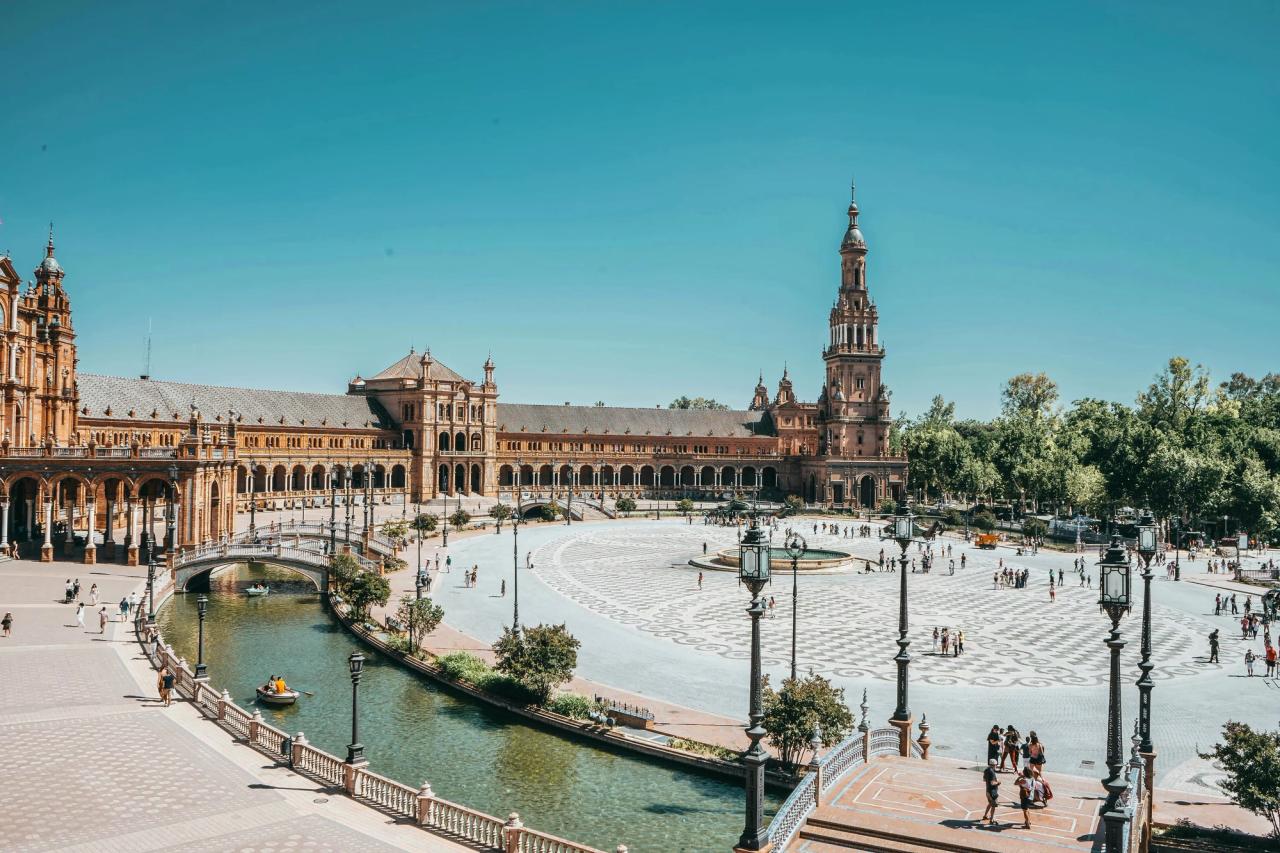

Seville is the capital of Andalusia and one of southern Spain's most captivating cities — a place where flamenco echoes through narrow alleyways, orange trees line sun-drenched plazas, and tapas culture is a way of life. If you're looking for authentic Spanish living with a rich cultural backdrop and a lower cost of big-city life, Seville deserves serious consideration.
Seville at a Glance
- Population
- 690,000 (city) / 1.5 million (metro area)
- Region
- Andalusia, southwestern Spain
- Known For
- Flamenco, Alcázar palace, Gothic cathedral, Semana Santa
- Average Rent (1BR)
- €600–€900 per month
- Average Salary
- €1,400–€1,800 net per month
- Expat Community
- Moderate — growing British, American, and Latin American presence
- Language
- Spanish (Andalusian dialect with distinct accent)
- Climate
- Mediterranean-continental — extreme heat in summer, mild winters
Why Move to Seville
- Authentic culture: Seville is the heartland of flamenco, tapas, and Andalusian traditions — a city where Spanish culture is lived daily, not just performed for tourists.
- Affordability: Rent and daily costs are well below Madrid, Barcelona, or Valencia, making it one of the most budget-friendly major cities in Spain.
- Climate: Over 3,000 hours of sunshine per year — the hottest major city in Europe. Summers regularly exceed 40°C; winters are mild and pleasant at 10–17°C.
- Walkability: The historic center is compact and best explored on foot. Most daily errands require no transport at all.
- Food scene: Endless tapas bars, traditional bodegas, and a thriving modern gastronomy scene. Seville is widely considered Spain's best tapas city.
- Quality of life: Despite the summer heat, Seville offers an exceptionally high quality of life with its vibrant street culture, friendly locals, and affordable leisure. The city regularly ranks among Spain's happiest.
- Strategic location: Seville is the Andalusian capital with AVE connections to Madrid (2.5 hrs), Córdoba (45 min), and Málaga (2 hrs), plus a growing international airport.
Finding Housing in Seville
Average Rents
| Neighborhood | 1-Bedroom | 3-Bedroom | Character |
|---|---|---|---|
| Centro Histórico | €700–€1,000 | €1,200–€1,800 | Cathedral, Alcázar, touristy, noisy |
| Triana | €550–€800 | €950–€1,400 | Traditional, flamenco roots, riverside |
| Alameda / Macarena | €500–€750 | €850–€1,300 | Bohemian, nightlife, affordable |
| Nervión | €550–€800 | €950–€1,400 | Modern, commercial, football stadium |
| Los Remedios | €650–€900 | €1,100–€1,600 | Upscale, quiet, Feria de Abril site |
| Santa Justa / San Bernardo | €550–€800 | €900–€1,350 | Residential, near train station, good value |
How to Find Housing
- Idealista: Largest rental portal — strong Seville coverage with daily updates.
- Fotocasa: Detailed listings with neighborhood filters and price history.
- Milanuncios: Private landlord ads — often cheaper but less formal arrangements.
- Local agencies: Common for Centro Histórico and Los Remedios listings. Expect a one-month agency fee.
- Word of mouth: In Seville, personal connections still matter — ask at local bars, markets, and through expat groups.
Tips for Expats
- Deposits are usually one month. Some landlords accept non-Spanish guarantors if you can demonstrate income.
- Air conditioning is absolutely essential — check the unit and its capacity before signing. Older buildings may lack proper insulation.
- Summer heat drives many Sevillanos out of the city in August; rental demand dips slightly — good time to negotiate.
- Many old-town apartments are on upper floors without elevators — confirm accessibility before committing.
Neighborhoods Guide
- Centro Histórico: The beating heart — the Cathedral, Alcázar, and Plaza de España are all here. Walking streets, tapas on every corner, and a constant buzz. Tourists make it lively but noisy, especially around Plaza de la Encarnación (Metropol Parasol).
- Triana: Across the Guadalquivir, Triana is the spiritual home of flamenco and ceramics. Tight-knit community, excellent tapas, and a strong local identity. More affordable than the center and increasingly popular with expats.
- Alameda / Macarena: Seville's bohemian quarter. LGBTQ+-friendly, street art, independent bars, and a younger crowd. Rents are among the lowest in the center. The Alameda de Hércules plaza is the social hub.
- Nervión: A modern commercial district with El Corte Inglés department store, Sevilla FC's stadium (Sánchez-Pizjuán), and good metro and bus links. Practical, residential, and less charming but very functional.
- Los Remedios: An upscale, leafy neighborhood south of the river. Wide avenues, private garages, and the Feria de Abril fairgrounds. Popular with families and professionals who want quiet streets and space.
- Santa Justa / San Bernardo: Home to Seville's AVE train station and well-connected by bus and metro. Quiet residential streets with mid-range rents — good for commuters and those who value transport access.
Cost of Living in Seville
Monthly Budget Breakdown
| Category | Budget Range |
|---|---|
| Rent (1BR, center) | €650–€900 |
| Utilities (electricity, water, gas — incl. heavy AC use) | €90–€130 |
| Internet (fiber 300 Mbps+) | €30–€40 |
| Groceries | €180–€280 |
| Transport (Tussam bus monthly) | €35–€45 |
| Dining out (4x/month) | €50–€90 |
| Leisure/Gym | €25–€40 |
| Mobile phone plan | €10–€20 |
| Total | €1,070–€1,545 |
Day-to-Day Costs
- Coffee (solo or cortado): €1.20–€1.60
- Lunch (tapas or menú del día): €8–€12
- Monthly transport pass (Tussam unlimited bus): €35
- Beer (bar, caña): €1.80–€2.50
- Cinema ticket: €7–€9
- Gym monthly membership: €25–€40
- Loaf of bread: €0.90–€1.30
Visa & Residency for Seville
Spain offers several visa pathways for non-EU/EEA citizens:
- Work Visa: Requires a job offer from a Spanish employer. The employer initiates the process. Processing takes 1–3 months.
- Student Visa: For enrolled students. Allows part-time work up to 20 hours/week.
- Non-Lucrative Visa: For retirees or those with sufficient savings. No work allowed. Requires proof of ~€2,400+/month income.
- Digital Nomad Visa (Ley de Startups): For remote workers. Offers a 24% flat tax rate for up to five years. Seville's low cost of living makes it attractive for digital nomads on this visa.
- EU Blue Card: For highly qualified professionals. Requires a degree and above-average salary.
Once in Spain, you'll need a NIE (Número de Identificación de Extranjero) for virtually all official transactions. Apply at the local police station or Extranjería.
Tax Obligations
Tax residents (183+ days/year) are taxed on worldwide income. IRPF ranges from 19% to 47%. Andalusia has moderate regional tax rates.
| Tax Component | Description | Rate |
|---|---|---|
| Income Tax (IRPF) | On worldwide income | 19%–47% progressive |
| Social Security | Mandatory contributions | ~6.35% employee / ~30% employer |
| VAT (IVA) | On goods and services | 21% standard |
| Wealth Tax | On net assets above €700,000 | 0.2%–3.03% |
Getting Around Seville
- Public transport: City buses (Tussam) cover most areas with 40+ routes. The metro has one line running north–south through the center — useful but limited. The €35 monthly bus pass is good value for daily commuters.
- Cycling: Sevici public bike-share has 250+ stations. The city is mostly flat and increasingly cycle-friendly, though summer heat limits daytime riding to early morning and evening.
- Driving: Not needed in the center. Parking is difficult, many streets are pedestrianized, and the historic core has restricted vehicle access. Useful only for weekend trips to the coast or pueblos blancos.
- Airport: Seville Airport (SVQ), 10 km east. Bus EA runs to Plaza de Armas (€4, 35 minutes). Growing European route network — Ryanair and Vueling are the main carriers.
- Intercity: AVE to Madrid (2.5 hrs), Córdoba (45 min), and Málaga (2 hrs). Regional buses connect smaller Andalusian towns — the bus station (Plaza de Armas) is well-organized.
Healthcare in Seville
- Hospitals/Clinics: Hospital Universitario Virgen del Rocío (the largest public hospital in Andalusia), Hospital Virgen Macarena, Hospital Quirónsalud Sagrado Corazón (private).
- English-speaking doctors: Available in private clinics and hospitals. Public system has limited English capacity — a Spanish-speaking friend or translator is helpful for appointments.
- Pharmacies: Abundant throughout the city. Green-cross signs everywhere. Pharmacists can advise on minor issues and dispense basic medications without prescription.
- Emergency number: 112 (pan-European), 061 for medical emergencies.
- Private insurance: Sanitas, Adeslas, and MAPFRE are commonly used. Costs from €50–€120/month. Many expats rely on private insurance for faster specialist access.
Planning your move?
Tell us about your move to compare quotes from international moving companies.
Culture & Lifestyle
- Flamenco: Seville is the world capital of flamenco. Catch performances at intimate tablaos in Triana and Centro, or attend the Bienal de Flamenco (biennial festival) — one of the most prestigious flamenco events globally.
- Semana Santa: The Holy Week processions (March/April) are among the most spectacular in the world — massive floats (pasos) carried through packed streets by hooded penitents. The city transforms for a full week.
- Feria de Abril: A week-long fair in Los Remedios with casetas (decorated tents), flamenco dresses (trajes de flamenca), sherry (rebujito), and horseback parades. The social highlight of the Sevillian calendar.
- Plaza de España: One of Spain's most beautiful squares — a semicircular Renaissance Revival masterpiece built for the 1929 Ibero-American Exposition, with tiled alcoves representing each Spanish province.
Food & Dining
- Must-try: pescaíto frito (mixed fried fish), salmorejo (cold tomato and bread soup — thicker than gazpacho), carrillada (braised pork cheeks), coliflor sevillana (Seville-style cauliflower), and churros with chocolate for breakfast.
- Best dining areas: Triana (Calle Betis for riverside dining and interior streets for tapas), Alameda for trendy spots, and the Santa Cruz quarter for traditional bodegas.
- Budget options: Tapas in Seville are still among the cheapest in Spain — many bars serve a tapa plus a caña for under €4. Menú del día runs €8–€12.
Expat Community
- Meetup groups: Seville Expat Meetup, InterNations Seville, Couchsurfing Seville — active communities with regular social events.
- International organizations: British Benevolent Fund of Seville, American Club of Andalucía.
- Language exchanges: Hablamos Seville, language tandems at Irish pubs and bars around Alameda de Hércules run weekly — a great way to meet locals and practice Spanish.
Day Trips & Nearby Destinations
Andalusia is one of Spain's richest regions for day trips:
- Córdoba: The Mezquita (mosque-cathedral), Jewish quarter, and patios filled with flowers. 45 minutes by AVE from Seville Santa Justa.
- Ronda: A dramatic mountaintop town split by a gorge. Famous for its bridge (Puente Nuevo) and the oldest bullring in Spain. 1.5 hours by car.
- Pueblos Blancos: White villages like Zahara de la Sierra, Grazalema, and Arcos de la Frontera dot the hills north of Ronda. Perfect for a scenic road trip.
- Doñana National Park: One of Europe's most important wetlands. Flamingos, lynx, and marshlands. 1 hour by car. Guided tours available.
- Itálica: Roman ruins just 9 km from Seville — birthplace of emperors Trajan and Hadrian. Reachable by bus in 30 minutes.
- Jerez de la Frontera: Sherry bodegas, flamenco, and the Royal Andalusian School of Equestrian Art. 1 hour by train.
Job Market in Seville
- Main industries: Tourism, aerospace (Airbus has a major facility), renewable energy (a European leader), agri-tech, and public administration (Junta de Andalucía regional government).
- Major employers: Airbus Defence and Space, Abengoa (renewable energy), Tecnalia, Universidad de Sevilla, Junta de Andalucía, Accenture.
- Average salaries by sector:
| Sector | Annual Salary Range |
|---|---|
| Aerospace / Engineering | €28,000–€45,000 |
| Tourism / Hospitality | €16,000–€22,000 |
| IT / Software | €22,000–€35,000 |
| Education (language teaching) | €16,000–€24,000 |
| Public Administration | €20,000–€35,000 |
| Marketing / Communications | €20,000–€30,000 |
- Job search resources: InfoJobs.net, LinkedIn, Empléate (public job portal), EURES (EU mobility portal), Welcome Talent Spain.
Education in Seville
- International schools: The British School of Seville, International School of Andalucía, St. George's School — offer British, IB, or American curricula.
- Universities: Universidad de Sevilla (founded 1505, one of Spain's oldest), Universidad Pablo de Olavide, Universidad Loyola Andalucía (Jesuit, strong in business).
- Language schools: CLIC IH Seville, Enforex, International House, Academia Hispánica — Spanish courses from beginner to advanced with DELE exam preparation.
Moving Checklist for Seville
- Arrange temporary accommodation for the first month (Airbnb, Spotahome, or serviced apartment)
- Apply for your visa (non-EU citizens) well in advance — allow 2–3 months
- Apostille and translate all key documents into Spanish by a sworn translator (traductor jurado)
- Secure private health insurance for at least the initial period
- Begin learning Spanish — Seville has fewer English speakers than northern cities
- Research Seville's neighborhoods online — each barrio has a very different character
- Register on the municipal census (empadronamiento) at your district office
- Apply for your NIE at the local police station or Extranjería (book cita previa online)
- Open a bank account (CaixaBank, Unicaja — local Andalusian bank — or digital banks like Revolut)
- Buy a Spanish SIM card (Movistar, Vodafone, Orange, or Digi)
- Enroll in the public healthcare system (if eligible through employment or residency)
- Set up utilities — electricity (Endesa/Iberdrola), water (Emasesa), gas (Naturgy), and internet
- Get a Tussam bus monthly pass at any tobacco shop (estanco)
- Explore neighborhoods on foot before committing to a long-term lease
- Register with your embassy or consulate
- Get a TIE card (foreigner ID card) if your visa duration exceeds 6 months
- Sign up for Sevici bike-share for daily cycling
It can be. July and August regularly reach 38–42°C, and heatwaves can push temperatures higher. Most apartments have air conditioning, and locals adapt their routines — siestas in the afternoon, late dinners on terraces, and escapes to the coast (Tarifa, Huelva) on weekends. Winter (November–March) is mild and pleasant, rarely dropping below 8°C.
Absolutely essential. Seville has far fewer English speakers than Madrid or Barcelona. Day-to-day life, bureaucracy, shopping, and healthcare all operate in Spanish. The Andalusian accent can be thick and fast — even fluent speakers from other regions sometimes struggle initially. Basic fluency is a minimum requirement.
Seville is one of Spain's safer major cities. Petty theft occurs around tourist areas (Cathedral, Plaza de España, Alameda) but violent crime is rare. The neighborhoods recommended for expats are generally very safe. Women report feeling comfortable walking alone at night in most central areas.
Triana and Alameda/Macarena are the most popular. Triana offers an authentic local feel with the best tapas in the city. Alameda is more bohemian, with nightlife right on the doorstep and the most affordable rents in the center. Both are walkable and well-connected.
Seville's center is compact and walkable — most things are within 20 minutes on foot. Buses and the single metro line cover outer areas. Sevici bike-share is ideal for short trips. The AVE train station at Santa Justa connects to Madrid, Málaga, and Córdoba quickly. You genuinely don't need a car living centrally.
Opportunities exist but are limited compared to Madrid or Barcelona. English teaching is the most common route (academies, private lessons). Some aerospace companies (Airbus) and international organizations use English in the workplace. Tech and remote-work roles offer more flexibility — many Seville-based expats work remotely for foreign companies.
A caña (small draft beer) costs €1.80–€2.50 in most bars. Seville has some of the cheapest tapas in Spain — a tapa and a caña together often cost under €4. Wine is even cheaper, with a glass of house wine running €1.50–€2.50.
Spring (March–May) is ideal. The weather is warm but not scorching, and you'll experience both Semana Santa and the Feria de Abril — Seville's two biggest events. Avoid August — the heat is extreme and many businesses close.
Related Guides
- [Moving to Spain] — comprehensive country guide
- [Moving to Malaga] — nearby Costa del Sol guide
- [Moving to Madrid] — Spain's capital city guide
- [Moving to Barcelona] — Catalonia's capital guide