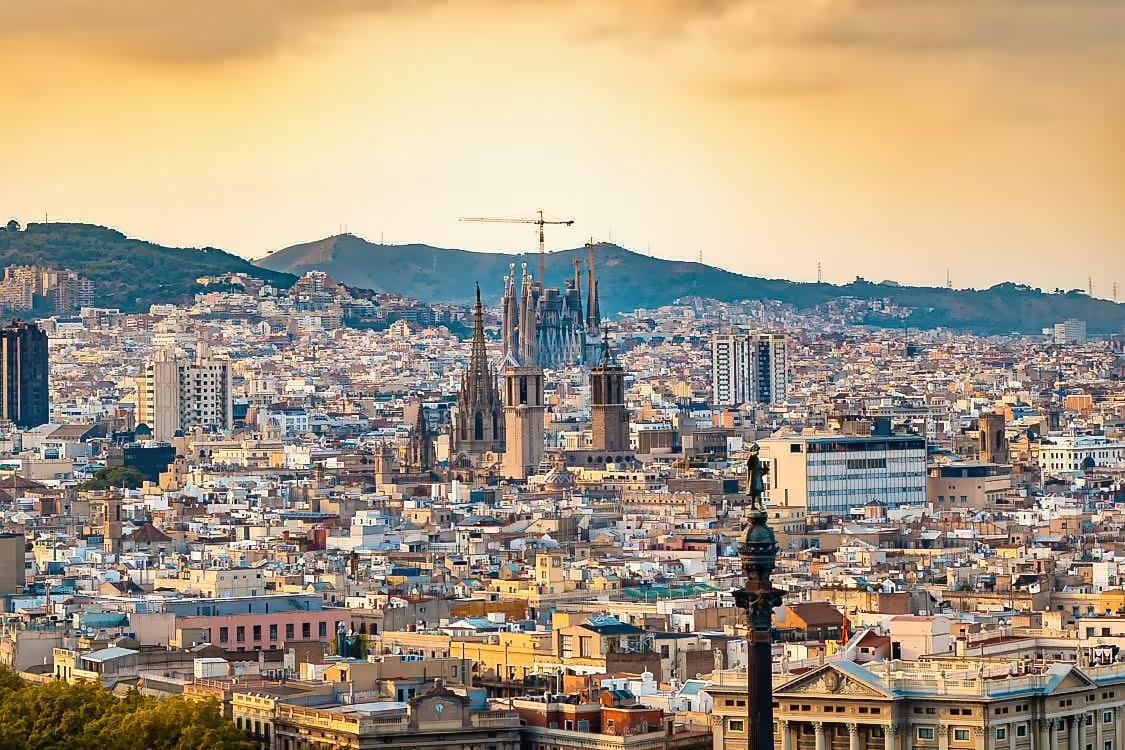

Barcelona is Spain's second-largest city and the capital of Catalonia, known worldwide for its unique blend of Mediterranean beach life, avant-garde architecture, and a buzzing creative economy. Whether you're a digital nomad, a young professional, or a family seeking sunshine and culture, Barcelona offers an unrivalled quality of life on the northeastern coast of Spain.
Barcelona at a Glance
- Population
- 1.69 million (city) / 5.5 million (metro area)
- Region
- Catalonia, northeastern Spain
- Known For
- Gaudí architecture, Mediterranean beaches, FC Barcelona
- Average Rent (1BR)
- €1,100–€1,500 per month
- Average Salary
- €1,800–€2,200 net per month
- Expat Community
- Large and diverse — over 300,000 foreign residents
- Language
- Spanish and Catalan (both co-official)
- Climate
- Mediterranean — mild winters, hot summers, 2,500+ sunshine hours
Why Move to Barcelona
- Mediterranean lifestyle: Over 2,500 hours of sunshine per year, mild winters, and direct beach access make outdoor living a year-round reality.
- Cultural richness: From the Sagrada Família to the Gothic Quarter, the city is an open-air museum spanning Roman ruins to contemporary art.
- Career opportunities: A thriving tech, design, and startup scene anchored by the 22@ district attracts international talent from across Europe and beyond.
- Connectivity: Barcelona–El Prat Airport offers direct flights to most European capitals and intercontinental hubs including New York, Dubai, and São Paulo.
- Food and social life: World-class dining, lively tapas bars, and a calendar packed with festivals create a vibrant social scene year-round.
- Walkability: The city is compact enough to navigate on foot, with an excellent metro system covering every corner.
Finding Housing in Barcelona
Average Rents
| Neighborhood | 1-Bedroom | 3-Bedroom | Character |
|---|---|---|---|
| Eixample | €1,100–€1,500 | €1,800–€2,500 | Iconic grid layout, modernist buildings, central |
| Gràcia | €1,000–€1,250 | €1,600–€2,300 | Bohemian village feel, local cafés, young crowd |
| Barceloneta | €1,050–€1,300 | €1,700–€2,400 | Beachfront, seafood restaurants, tourist-heavy |
| Poblenou | €1,000–€1,300 | €1,600–€2,200 | Tech hub, modern lofts, near the beach |
| El Born | €1,000–€1,400 | €1,600–€2,300 | Historic, artistic, tapas bars, narrow streets |
| Sarrià-Sant Gervasi | €1,100–€1,500 | €2,000–€3,000 | Upscale, quiet, family-friendly, green spaces |
How to Find Housing
- Idealista: Spain's largest rental portal — filter by neighborhood, price, and size. Most listings are updated daily.
- Fotocasa: Another major platform with verified listings and virtual tours.
- Spotahome: Online viewings for furnished apartments — useful if searching from abroad before arrival.
- Local agencies: Many landlords still prefer agency-managed listings; expect a one-month agency fee plus VAT.
- Facebook groups: "Pisos y habitaciones en Barcelona" and similar groups have direct landlord listings but watch out for scams.
Tips for Expats
- Budget for a deposit of 1–2 months' rent plus the first month in advance.
- Utilities are almost never included in the listed rent — expect an extra €100–€140 per month.
- Competition is fierce in September and October when universities reopen — start searching at least four weeks early.
- Many older buildings lack elevators and air conditioning — verify before signing a contract.
- Rental contracts are typically for one year, with the tenant having the right to extend up to five years under Spanish law.
Neighborhoods Guide
- Eixample: The heart of modernist Barcelona. Wide boulevards, excellent metro links, and a mix of upscale restaurants and local shops along Passeig de Gràcia. Best for professionals and couples who want to be central.
- Gràcia: A former village absorbed into the city, retaining a bohemian identity. Plaça del Sol is the social hub. Rents are moderate, the vibe is creative and relaxed, and the annual Festa Major transforms the streets every August.
- Barceloneta: Right on the Mediterranean. Ideal for beach lovers, though summers bring heavy tourist foot traffic and noise. Rents are above average for the size of the apartments.
- Poblenou: Barcelona's answer to Silicon Valley. Formerly industrial, now filled with co-working spaces, craft breweries, and new-build apartments. Good value compared to central neighborhoods.
- El Born: Narrow medieval streets packed with boutiques, galleries, and tapas bars. Walking distance to the beach and Parc de la Ciutadella. Popular with young creatives and design professionals.
- Sarrià-Sant Gervasi: A quieter, leafier district in the hills above the city. International schools, larger apartments, and a village feel — ideal for families seeking space and tranquility.
Cost of Living in Barcelona
Monthly Budget Breakdown
| Category | Budget Range |
|---|---|
| Rent (1BR, center) | €1,000–€1,300 |
| Utilities (electricity, water, gas) | €120–€170 |
| Internet (fiber 300 Mbps+) | €30–€45 |
| Groceries | €250–€350 |
| Transport (T-Casual / monthly) | €40–€55 |
| Dining out (4x/month) | €80–€120 |
| Leisure/Gym | €30–€50 |
| Mobile phone plan | €10–€20 |
| Total | €1,560–€2,110 |
Day-to-Day Costs
- Coffee (espresso): €1.50
- Lunch (menú del día): €10–€14
- Multi-trip ticket (T-Casual, 10 trips): €11.35
- Beer (bar, caña): €3.00–€4.50
- Cinema ticket: €8–€10
- Gym monthly membership: €30–€50
- Loaf of bread: €1.20–€1.80
Visa & Residency for Barcelona
Spain offers several visa pathways for non-EU/EEA citizens:
- Work Visa: Requires a job offer from a Spanish employer. The employer initiates the process at the Oficina de Extranjería. Processing takes 1–3 months.
- Student Visa: For enrolled students at recognized institutions. Allows part-time work (up to 20 hours/week).
- Non-Lucrative Visa: For retirees or those with sufficient savings. No work allowed. Requires proof of €2,400+/month income or savings.
- Digital Nomad Visa (Ley de Startups): For remote workers employed by non-Spanish companies. Offers a special tax regime (24% flat rate on income up to €600,000) for up to five years.
- EU Blue Card: For highly qualified professionals. Requires a degree and a salary above 1.5× the national average.
- Golden Visa: For real estate investments over €500,000. No minimum stay requirement. Being phased out — check current status.
Once in Spain, you'll need a NIE (Número de Identificación de Extranjero) for virtually all official transactions. Apply at the local police station with your passport and reason for application.
Tax Obligations
If you spend more than 183 days per year in Spain, you become a tax resident and are taxed on worldwide income. Spanish income tax (IRPF) ranges from 19% to 47% depending on income level. Social security contributions cover healthcare, pensions, and unemployment benefits. Spain has double taxation agreements with over 90 countries.
| Tax Component | Description | Rate |
|---|---|---|
| Income Tax (IRPF) | On worldwide income | 19%–47% progressive |
| Social Security | Mandatory contributions | ~6.35% employee / ~30% employer |
| VAT (IVA) | On goods and services | 21% standard |
| Solidarity Tax | Replaced wealth tax in Catalonia for high net worth individuals | 0.21%–3.5% on net assets above €3M (€700K threshold still applicable for calculation) |
Getting Around Barcelona
- Public transport: Extensive metro (12 lines), bus, and tram network covering the entire metropolitan area. The T-Casual card (€11.35 for 10 trips within Zone 1) is the most cost-effective option for occasional riders. A monthly pass costs around €40.
- Cycling: Over 200 km of bike lanes; Bicing is the city's bike-share system (annual subscription ~€50). E-bikes are increasingly available.
- Driving: Not recommended in the center — narrow streets, limited parking, and low-emission zones (ZBE) restrict older vehicles. A resident parking permit (Zona Verda) helps but spaces are scarce.
- Airport: Barcelona–El Prat (BCN), 15 km from the center. Direct metro (L9 Sud) and Aerobus connections (€7.75 one way, 35 minutes to Plaça Catalunya).
- Intercity: High-speed AVE trains to Madrid (2.5 hours), regional Rodalies commuter lines, and long-distance buses from Estació del Nord and Estació de Sants.
Healthcare in Barcelona
- Hospitals/Clinics: Hospital Clínic, Hospital de la Santa Creu i Sant Pau, Hospital del Mar — all publicly funded. Private options include Centro Médico Teknon and Hospital Quirónsalud Barcelona.
- English-speaking doctors: Widely available in private clinics; public system has fewer English speakers but interpreters can be arranged at major hospitals.
- Pharmacies: Green-cross signs everywhere. Most pharmacists speak some English. Prescription medications are heavily subsidized for residents.
- Emergency number: 112 (pan-European), 061 for medical emergencies.
- Health insurance: Private insurance (Adeslas, Sanitas, MAPFRE) costs €50–€150/month depending on age and coverage. Many expats use private insurance while waiting for public healthcare enrollment.
Get a personalised relocation plan
Drop your email and we'll send a tailored checklist plus three quotes from vetted movers.
Culture & Lifestyle
- Architecture: Gaudí's Sagrada Família, Park Güell, and Casa Batlló define the cityscape. The entire Eixample district is a modernist showcase with works by Domènech i Montaner and Puig i Cadafalch.
- Beaches: Barceloneta, Bogatell, and Nova Icària offer sandy stretches within city limits — ideal from May to October. Beach bars (chiringuitos) open in summer.
- Nightlife: Razzmatazz, Apolo, and countless rooftop bars keep the city alive until dawn. The nightlife scene spans electronic music, jazz, and indie.
- Festivals: La Mercè (September), Sant Joan (June — beach bonfires), and Gràcia's street festival (August — decorated streets compete for prizes) are unmissable.
Food & Dining
- Try local dishes: pa amb tomàquet (bread with tomato), fideuà (seafood noodle paella), crema catalana, and bombas (potato croquettes with spicy sauce).
- Best dining areas: El Born for upscale tapas, Gràcia for neighborhood bistros, Poble-sec (Carrer de Blai for unlimited pintxos).
- Budget options: Menú del día at lunchtime offers a full three-course meal with a drink for €10–€14 at many neighborhood restaurants.
Expat Community
- Meetup groups: Barcelona Expat Meetup (10,000+ members), InterNations Barcelona, and language exchange events run weekly across the city.
- International organizations: Catalan International Viewpoints, American Society of Barcelona, British Chamber of Commerce in Spain.
- Language exchanges: Tandem Barcelona and Mundo Lingo host free or low-cost language exchange nights in bars across the city — a great way to practice Spanish and Catalan.
Day Trips & Nearby Destinations
Barcelona's location on the Mediterranean coast means excellent weekend options:
- Montserrat: A stunning mountain monastery (60 km northwest). Take the rack railway for spectacular views. Free boys' choir performances most afternoons.
- Sitges: A charming beach town 35 km south with a lively arts scene and LGBTQ+-friendly atmosphere. 30 minutes by train.
- Girona: Medieval city with a Jewish quarter, city walls, and one of Spain's best food scenes. 40 minutes by AVE train.
- Costa Brava: Tossa de Lloret, Calella de Palafrugell, and other cove beaches are 1–2 hours north by car or bus.
- Pyrenees skiing: La Molina and Masella resorts are 2 hours north by car. Weekend ski trips are popular from December to March.
- Wine country: Penedès (cava production) and Priorat (premium reds) are within 1–2 hours. Many bodegas offer tours and tastings.
Job Market in Barcelona
- Main industries: Technology, tourism, logistics, design, finance, life sciences, and gaming.
- Major employers: SEAT/CUPRA, HP Inc., CaixaBank, Glovo, King (Activision Blizzard), Amazon (logistics hub), Adevinta.
- Average salaries by sector:
| Sector | Annual Salary Range |
|---|---|
| IT / Software Development | €30,000–€45,000 |
| Marketing / Communications | €24,000–€35,000 |
| Hospitality / Tourism | €18,000–€24,000 |
| Finance / Accounting | €28,000–€50,000 |
| Engineering | €30,000–€50,000 |
| Education (language teaching) | €18,000–€25,000 |
- Job search resources: InfoJobs.net, LinkedIn, Barcelona Activa (city job portal), Welcome Talent (for internationals), Glassdoor.
Education in Barcelona
- International schools: Benjamin Franklin International School, American School of Barcelona, British School of Barcelona, Kensington School.
- Universities: Universitat de Barcelona (UB), Universitat Politècnica de Catalunya (UPC), Universitat Pompeu Fabra (UPF), ESADE Business School, IESE.
- Language schools: International House, Speakeasy BCN, Linguaschools — offer Spanish and Catalan courses for all levels, including DELE exam preparation.
Moving Checklist for Barcelona
- Secure accommodation or at least a short-term rental for the first month
- Apply for the correct visa (if non-EU) — allow 2–3 months processing
- Gather apostilled documents (birth certificate, degree, criminal record check)
- Arrange international health insurance for the first months
- Start learning basic Spanish with apps like Duolingo or Babbel
- Register at the local town hall (empadronamiento) — required for almost all administrative processes
- Apply for your NIE (foreigner ID number) at the nearest police station
- Open a Spanish bank account (CaixaBank, Sabadell, or digital banks like N26)
- Get a Spanish SIM card (Movistar, Vodafone, Orange, or budget options like Digi)
- Register with the public healthcare system (CatSalut) if eligible
- Set up utilities in your name (electricity via Endesa or Iberdrola, water via Aigües de Barcelona, gas, and internet)
- Explore your neighborhood and locate nearest metro station, pharmacy, and supermarket
- Join local expat groups or language exchanges to start building a social network
- Register your rental contract with the tax office if required
- Get a TIE card (foreigner ID card) if your visa duration exceeds 6 months
- Register for the city's bike-share system (Bicing) if you plan to cycle
Related Guides
- [Moving to Spain] — comprehensive country guide
- [Moving to Madrid] — Spain's capital city guide
- [Moving to Valencia] — affordable Mediterranean alternative
- [Moving to Seville] — Andalusian culture and flamenco