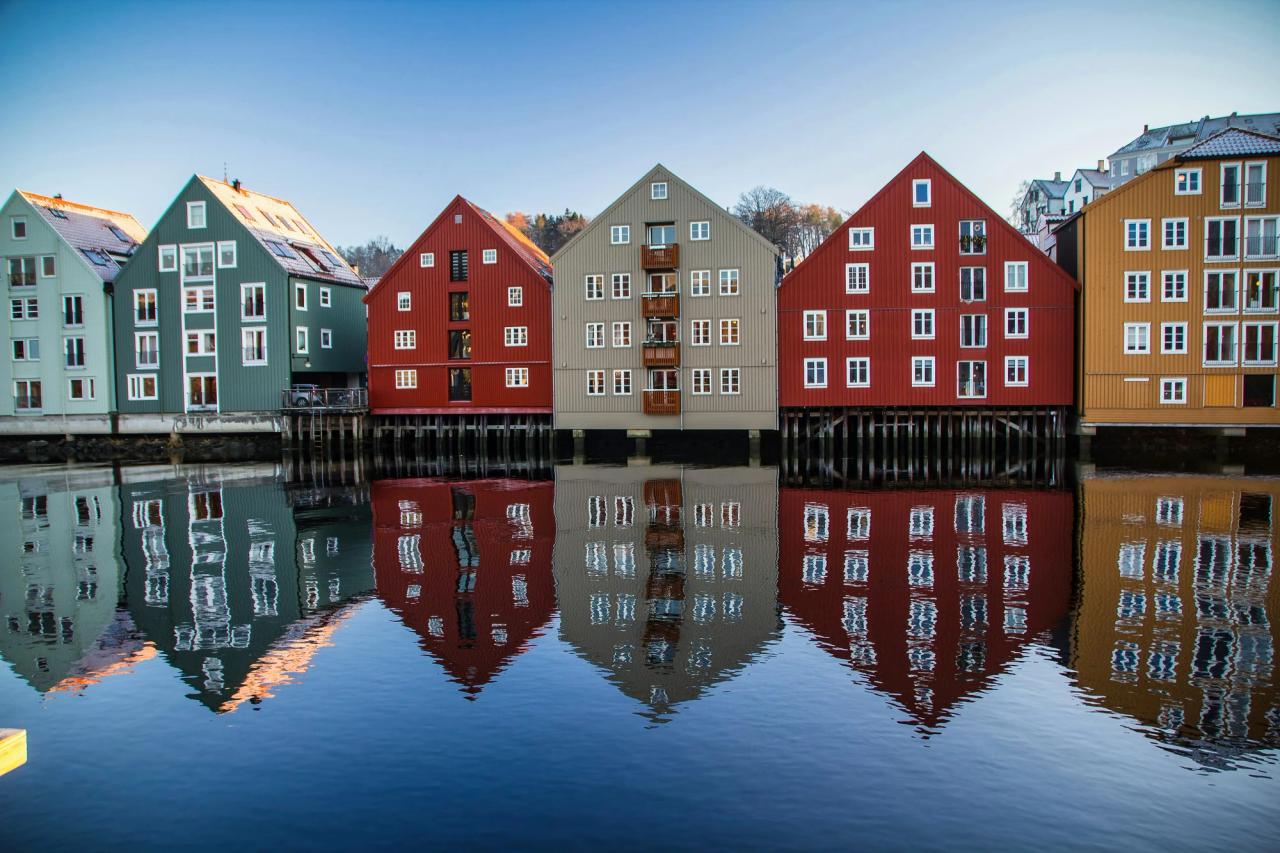
Norway consistently ranks among the world's best countries for quality of life, offering expats a unique blend of stunning natural beauty, robust social welfare, and a dynamic economy fueled by oil and gas wealth. Whether you're drawn by career opportunities, the famous friluftsliv (outdoor life) culture, or the promise of high salaries that compensate for the country's famously high cost of living, this guide covers everything you need to know about making Norway your home in 2026.
Norway at a Glance
- Population
- 5.5 million
- Capital
- Oslo
- Currency
- Norwegian Krone (NOK)
- Average Salary
- 600,000-700,000 NOK/year (≈€52,000-€61,000)
- Language
- Norwegian (Bokmål, Nynorsk); English widely spoken
- Climate
- Coastal temperate in south; Arctic in north; long winters, short summers
- Time Zone
- CET (UTC+1); CEST in summer
Why Move to Norway in 2026
- Highest Salaries in Europe: Norway offers some of the highest average salaries globally, with competitive compensation packages that often more than offset the high cost of living.
- World-Class Social Welfare: The Folketrygden (National Insurance Scheme) provides universal healthcare, generous parental leave, unemployment benefits, and a robust pension system funded by oil wealth.
- Stunning Natural Environment: From fjords to midnight sun, Norway offers unparalleled outdoor access. The friluftsliv culture encourages hiking, skiing, and year-round outdoor activities.
- Strong Economy & Job Market: Despite being a small country, Norway has a diversified economy with strong demand for skilled workers in technology, healthcare, engineering, and energy sectors.
- Egalitarian Society: Norway consistently ranks as one of the world's most egalitarian countries, with low corruption, strong worker protections, and a flat social structure where janteloven promotes humility over individualism.
- Quality of Life: Danish concept of koselig (coziness) extends to Norway, creating warm, welcoming communities despite the long winter nights. Excellent public services, low crime, and well-maintained infrastructure make Norway ideal for families.
Moving Costs to Norway
Understanding the financial aspects of your move is crucial for proper planning. Moving costs to Norway vary significantly based on your origin country and volume of household goods.
| Origin | Estimated Cost Range | Container/Volume |
|---|---|---|
| EU/EEA | 2,000-8,000 NOK | 1-3 m³ |
| UK | 8,000-15,000 NOK | 1-3 m³ |
| USA (East Coast) | 25,000-45,000 NOK | 20ft container |
| USA (West Coast) | 30,000-55,000 NOK | 20ft container |
| Canada | 25,000-50,000 NOK | 20ft container |
| Australia | 40,000-70,000 NOK | 20ft container |
Component Costs Explained
- Transportation: Sea freight from EU takes 3-7 days (5,000-15,000 NOK); from North America 2-4 weeks (20,000-40,000 NOK). Air freight costs 80-150 NOK per kg but arrives in 2-5 days.
- Insurance: Maritime insurance for household goods typically 1-2% of declared value. Ensure coverage includes Norwegian customs clearance and door-to-door delivery.
- Customs Clearance: Norway is NOT in the EU. Import duty ranges 0-10% depending on goods category, plus 25% VAT on CIF value. Professional clearance agents charge 2,000-5,000 NOK.
- Packing Materials: Cardboard boxes (150-250 NOK each), bubble wrap, tape, and professional packing services (3,000-8,000 NOK for full pack).
- Storage (if needed): Climate-controlled storage in Norway costs 800-1,500 NOK per cubic meter monthly.
- Administrative Fees: Norwegian Customs requires inventory declarations in Norwegian or English. Visa and residence permit applications through UDI (Utlendingsdirektoratet) carry separate fees.
Need a personalised estimate?
Get three vetted moving-company quotes in under 48 hours.
Visa & Residency Requirements
Norway operates under EU/EEA freedom of movement rules while maintaining its own immigration system outside the EU. All visamust applied for through UDI (Utlendingsdirektoratet), with processing times varying significantly by nationality and permit type.
For EU/EEA Citizens
Citizens from EU/EEA countries (including EU-27, Iceland, Liechtenstein, and Switzerland) have extensive rights under the EEA agreement. You can live and work in Norway without a visa or residence permit. However, if staying longer than three months, you must register with the police (the national registry) using form RB1.
- Registration required: Within three months of arrival
- Documents needed: Valid passport/ID, employment contract or proof of self-employment, proof of sufficient funds, rental agreement or property ownership
- EU/EEA registration certificate: Granted immediately upon providing documentation; no fee
If you're from an EU/EEA country and plan to work, you're automatically covered under Norway's National Insurance Scheme upon registration.
For Non-EU/EEA Citizens: Main Visa Categories
Skilled Worker Permit (Eget arbeidstaker)
- Requirements: Job offer from Norwegian employer meeting minimum salary threshold (currently 500,000 NOK/year minimum for most occupations), relevant qualifications. Employer must prove no qualified EU/EEA candidate was available.
- Processing time: 4-8 weeks (priority) or 3-6 months (regular)
- Duration: Valid for up to 2 years; renewable; leads to permanent residence after 3-4 years
- Key details: Most common pathway for professionals. Requires positive decision from NAV (Arbeids- og velferdsetaten) confirming the position cannot be filled domestically.
EU Blue Card
- Requirements: Job offer meeting salary threshold (currently minimum 509,052 NOK/year), university degree of at least 3 years, valid employment contract.
- Processing time: 4-8 weeks
- Duration: 2-year validity, renewable
- Key details: Provides mobility within EU after initial period. Family can accompany. Requires proof of health insurance.
Student Residence Permit
- Requirements: Admission to recognized Norwegian educational institution, proof of sufficient funds (131,000 NOK/year minimum), health insurance.
- Processing time: 2-4 weeks
- Duration: Length of study program
- Key details: Part-time work allowed (20 hours/week). Post-graduation provides 6-month job search period.
Family Immigration Permit
- Requirements: Immediate family member in Norway (spouse, registered partner, cohabiting partner, children under 18). sponsor must have adequate income and suitable housing.
- Processing time: 3-6 months
- Duration: Renewable; leads to permanent residence after specified period
- Key details: Joint cohabitation required. Financial requirements apply to sponsor.
Self-Employment Permit
- Requirements: Business plan, proof of sufficient capital, relevant professional qualifications.
- Processing time: 4-8 weeks
- Duration: Based on business plan viability
- Key details: Rarely granted; must demonstrate genuine economic activity benefiting Norway.
Registration: The D-Number and Fødselsnummer
Every legal resident in Norway must register with the tax authorities. Unlike Germany, registration is unified through Skatteetaten (the Tax Administration).
The D-Number (D-nummer)
Non-EU/EEA citizens without a Norwegian national ID number receive a temporary D-number upon initial registration. This 11-digit number begins with "4" and allows you to:
- Open a bank account
- Work legally
- Access healthcare
- Sign rental agreements
- Pay taxes and social contributions
The D-number is issued at the local tax office (Skattekontoret) after you register your residence. You'll need:
- Valid passport
- Residence permit (if applicable)
- Proof of address (rental contract or landlord confirmation)
- Employment contract or proof of studies
The Fødselsnummer (Born Number)
If you're staying in Norway for more than six months and become a tax resident, you'll receive a permanent fødselsnummer (11-digit personal identification number). This number is essential for:
- Full banking access
- Healthcare enrollment
- NAV benefits
- Norwegian driver's licence exchange
- Any government interaction
Procedure: Visit the local tax office with your passport and residence documentation. Tax registration is automatic when you register your residence with the police (for EU/EEA) or with UDI (for non-EU/EEA citizens).
Finding Housing in Norway
Norway's housing market is competitive, particularly in major cities. The market is characterized by strong tenant protections but limited supply in desirable areas. Most rentals are unfurnished, and the rental culture differs significantly from continental Europe.
Average Rents by Major City (2026)
| City | 1-Bedroom City Centre | 1-Bedroom suburbs/outside centre | 3-Bedroom City Centre | Market Competitiveness |
|---|---|---|---|---|
| Oslo | 16,000-22,000 NOK | 12,000-16,000 NOK | 28,000-40,000 NOK | Very High |
| Bergen | 12,000-18,000 NOK | 9,000-13,000 NOK | 20,000-28,000 NOK | High |
| Trondheim | 10,000-15,000 NOK | 8,000-12,000 NOK | 16,000-24,000 NOK | Moderate-High |
| Stavanger | 13,000-18,000 NOK | 10,000-14,000 NOK | 22,000-30,000 NOK | High |
| Tromsø | 10,000-14,000 NOK | 8,000-11,000 NOK | 16,000-22,000 NOK | Moderate |
Rent Terminology
- Leie: Norwegian word for "rent"
- Kall Participation: Some rentals exclude heating (kall = cold), so confirm what's included—Norwegian winters require robust heating.
- Deposit (Depositum): Always 2-3 months' rent, placed in a deposit account at the bank.
- Forutsetning: Pre-conditions, such as references, income requirements, or employment verification.
- Fellesutgifter: Common costs (maintenance, building insurance, grass shoveling) in borettslag (housing cooperatives).
How to Find Housing
Online Platforms:
- Finn.no: Norway's largest marketplace; housing section is the most comprehensive. Requires rapid response—good listings disappear within hours.
- Hybel.no: Popular for shared housing and smaller apartments. User-friendly interface with direct messaging.
- Utleiemegleren: Professional property management; higher quality but also higher rents.
- Facebook Groups: Search for "Utleie [City]" groups; landlords often post directly and you can avoid agency fees.
Local Resources:
- Student housing: SiO (Studentsamskipnaden Oslo) and equivalent local agencies manage affordable options in most university cities.
- Companies: Some employers (particularly in oil/gas, tech) partner with housing providers for incoming staff.
- Estate agents (Megler): Used for purchases, less common for rentals; charge fees to buyers.
Tips for Foreigners Finding Housing
- Start early: Begin apartment hunting 2-3 months before arrival; the market moves fast and viewings happen quickly.
- Be prepared to pay: Have first month's rent and deposit (3-4 months total) ready; landlords often select tenants who can pay quickly.
- Create a Norwegian CV: Use Norwegian format (not Europass). Include your D-number/fødselsnummer once obtained.
- Knowledge of Norwegian helps: While English is widely spoken, landlords often prefer Norwegian tenants—learn basic phrases.
- Use a reference: A Norwegian employer reference or local contact significantly improves your chances.
- Consider outskirts: Areas 20-30 minutes from city centers offer 20-40% lower rents and more available stock.
- Attend viewings (visninger): Be physically present, ask questions, and show genuine interest—Norwegian landlords value tenant engagement.
Rental Agreement & Legal Protection
Norwegian tenant law (husleieloven) provides strong protections:
- Minimum lease terms: Often 1-3 years; periodic tenancies allow month-to-month after initial period with appropriate notice.
- Notice periods: Minimum 1 month for periodic tenancies; longer for fixed-term contracts.
- Rent increases: Capped at the consumer price index plus 1%; cannot be increased during the first year.
- Termination protections: Landlords must have documented grounds to terminate; tenant rights are heavily protected.
- Deposit returns: Landlords must return deposits within 14 days of lease termination, minus any documented damages.
Warning: Rental Scams
Norwegian rental scams are prevalent, especially on Finn.no:
- Never pay before viewing: Red flags include excuses for non-viewing or insistence on prepayment.
- Verify ownership: Ask for property documentation; genuine landlords provide this.
- Be wary of "too cheap": If rent seems significantly below market, it's likely a scam.
- No foreign landlord fees: Legitimate Norwegian rentals never require payment to foreign accounts.
- Use estrHvite (writing): Always get rental agreements in writing with clear terms; verbal agreements are legally binding but harder to enforce.
Healthcare & Insurance
Norway operates one of the world's most comprehensive public healthcare systems, funded through the Folketrygden (National Insurance Scheme) and general taxation. Quality of care is excellent, though wait times for non-emergencies can be longer than in private systems.
Public Healthcare
Folketrygden
- Cost: Funded through taxes and National Insurance contributions (approximately 8% of income). No direct payment at point of use for covered services.
- Coverage: Includes doctor visits, hospital treatment, prescription medications (with subsidy), mental health, dental (for children under 18, partially for adults), and physiotherapy.
- Eligibility: All registered residents with a fødselsnummer are automatically covered. EU/EEA citizens using EHIC retain coverage from their home country temporarily.
- Best for: Everyone—this forms the foundation of healthcare in Norway. All legal residents should register immediately upon receiving their fødselsnummer.
Private Health Insurance
- Cost: 3,000-12,000 NOK/month depending on coverage and age
- Coverage: Private insurance reduces wait times significantly, provides broader coverage for dental, physiotherapy, and offers private hospital rooms.
- Eligibility: Open to all residents; no medical examination required for basic policies.
- Best for: Those who can afford faster access to specialists, those with specific healthcare needs, or those who prefer English-speaking practitioners (more common in private sector).
Top Insurance Providers
- DNB Forsikring: Large Norwegian insurer offering comprehensive health and travel insurance; good English-language service.
- Fremtind Forsikring: Part of the DNB group; competitive pricing.
- If Forsikring: Nordic insurer known for straightforward claims; strong presence in Norway.
- Blue Cross Norge: Budget-friendly options, particularly for travel insurance.
Getting Healthcare Coverage (Timeline)
-
Upon arrival
Register for your D-number at the local tax office
-
Within first week
Apply for your fødselsnummer (if staying long-term)
-
Within first month
Visit your local legevakt (emergency clinic) or fastlege (regular doctor) to register with a GP
-
Receive your "helsekort" (health card)
Sent automatically once enrolled in the system
-
Download HelseNorge app
Access medical records, prescription history, and book appointments
Out-of-Pocket Costs
- Doctor consultations: 200-350 NOK (with subsidy from Folketrygden)
- Prescription medications: Subsidized; typically 0-500 NOK depending on medication type
- Dental (adults): Full cost; routine checkup 500-1,500 NOK
- Hospital: Free for covered services; small daily fee for in-patient care (approximately 150 NOK/day)
- Emergency care: Covered under Folketrygden; emergency visits 200-350 NOK
Get a personalised relocation plan
Drop your email and we'll send a tailored checklist plus three quotes from vetted movers.
Banking & Finance
Norway's banking system is sophisticated, modern, and highly regulated. English-speaking services are widely available, but understanding local terminology helps significantly.
Opening a Bank Account
- When: As soon as you receive your D-number or fødselsnummer; you cannot open a Norwegian bank account without proof of Norwegian residency
- Required documents: Valid passport, D-number/fødselsnummer, proof of address (rental contract or letter from landlord), employment contract or proof of enrollment
- Processing time: 1-3 business days for basic account; some banks offer instant account opening with from Norway
Top Banks for Expats
DNB
- Norway's largest bank
- excellent English-language support
- user-friendly app
- comprehensive services.
Nordea
- Pan-Scandinavian bank
- strong corporate services
- good for those with Nordic connections.
Sparebank 1
- Cooperative of regional savings banks
- often better interest rates on savings and more personalized service.
Handelsbanken
- Premium banking focused on personal relationships
- higher fees but dedicated advisors.
Sbanken
- Digital-first bank
- attractive interest rates
- fully English online platform
- no branch network.
Credit and Financial History
Norway has no central credit rating agency similar to Germany's SCHUFA. Instead, financial信誉 is built through:
- Innkreving Agency: Collects data on unpaid debts and defaults; negative entries remain for years
- Free credit assessment: Anyone can request their credit report from Bisnode or similar agencies
- Building credit: Bank verifying income and stable employment is the primary indicator; no credit score affects most Norwegian banking
Getting Your Tax ID and National Insurance Number
The fødselsnummer serves as both your tax ID and National Insurance number. There's no separate "tax ID."
- What it is: An 11-digit personal identification number assigned to all legal residents
- When issued: Within 2-4 weeks of completing tax registration (Skatteetaten)
- Why you need it: Every banking transaction, employment contract, healthcare visit, tax filing, and NAV interaction requires this number
Bank Account Features & Costs
| Feature | Typical Cost |
|---|---|
| Monthly account fee | 0-150 NOK (many banks offer free accounts) |
| Debit card | Free with most accounts |
| Credit card | 300-700 NOK/year (many premium cards include travel insurance) |
| International transfers (SWIFT) | 50-150 NOK per transfer; use Revolut/Wise for better rates |
| ATM withdrawals | Free at own bank's ATMs; 10-20 NOK at others |
Payment Culture
Norway is one of the world's most cashless societies:
- Card dominance: Nearly all transactions occur via card; cash is rarely used
- Contactless: Near-universal acceptance; tap-to-pay works for all amounts under 1,000 NOK
- Mobile payment: Vipps (Norwegian app) dominates; virtually all person-to-person payments use Vipps
- BankID: The secure login system used for everything from banking to government services; essential for daily life
Cost of Living in Norway
Norway is consistently ranked among the world's most expensive countries. While salaries compensate well, budgeting accurately is essential. All figures in Norwegian Krone (NOK).
Monthly Budget Breakdown by City
| City | Single Person (Moderate) | Family of 3 (Moderate) | Cost Level |
|---|---|---|---|
| Oslo | 20,000-28,000 NOK | 40,000-55,000 NOK | Very High |
| Bergen | 16,000-22,000 NOK | 32,000-45,000 NOK | High |
| Trondheim | 14,000-20,000 NOK | 28,000-38,000 NOK | High |
| Stavanger | 16,000-22,000 NOK | 32,000-44,000 NOK | High |
| Tromsø | 14,000-19,000 NOK | 28,000-36,000 NOK | High |
Detailed Cost Breakdown
Housing:
- 1-bedroom apartment (city centre): 12,000-22,000 NOK
- 3-bedroom apartment (city centre): 22,000-40,000 NOK
- Utilities (electricity, heating, water): 1,500-2,500 NOK/month (often not included)
- Internet/TV: 400-700 NOK/month
Groceries & Food:
- Weekly groceries (single person): 600-900 NOK
- Coffee at café: 40-60 NOK
- Restaurant meal (casual): 200-350 NOK
- Restaurant meal (mid-range, three-course): 600-1,000 NOK
Transportation:
- Monthly public transport (city): 700-1,100 NOK
- Taxi (start): 120-180 NOK
- Car insurance (comprehensive): 4,000-8,000 NOK/year
- Fuel (per liter): 18-20 NOK
Leisure & Entertainment:
- Gym membership: 400-800 NOK/month
- Cinema ticket: 180-260 NOK
- Streaming services (Netflix, etc.): 70-150 NOK/month
- Alcohol (beer at bar): 80-120 NOK; wineglass: 120-180 NOK; spirit: 150-250 NOK
Comparison with Other Countries
- vs. Sweden: Norway approximately 15-25% more expensive overall
- vs. Denmark: Similar cost of living; Copenhagen comparable to Oslo
- vs. Germany: Norway approximately 40-60% more expensive, particularly for housing and alcohol
- vs. UK: Mixed—housing and alcohol more expensive in Norway; groceries and utilities comparable
Money-Saving Tips
- Shop at Rema 1000, Kiwi, or Prix
- These discount chains offer significantly lower prices than higher-end supermarkets
- Buy alcohol from Vinmonopolet
- State-run liquor stores offer better prices than bars (though still expensive by international standards); Systembolaget in Sweden is cheaper
- Use "helg" (weekend) deals
- Many supermarkets offer Friday-Sunday discounts on expiring products
- Public transport over car
- Cars are heavily taxed; public transit passes are far cheaper than car ownership in cities
- Outdoor recreation FREE
- Norway's greatest assets (hiking, skiing, fjords) are free—take advantage of friluftsliv culture
- International supermarkets in Oslo
- Asian and Middle Eastern shops in Grünerløkka offer excellent value for produce and staples
- Bulk buying clubs
- Costco and other wholesale clubs offer significant savings on household basics for families
Language & Culture Tips
Norwegian language skills matter significantly for long-term integration, but English is remarkably widespread, especially in professional settings and among younger Norwegians.
Do You Need Norwegian?
In daily life: Generally, no. English-speaking ability is among the highest globally; supermarkets, public transport, and most services operate in English without issue.
In professional settings: Higher-level jobs increasingly require Norwegian, especially in healthcare, education, and public sector roles. Learn specific professional terminology if working in specialized fields.
In social integration: Yes, fundamentally. Deep friendships, community involvement, and understanding Norwegian culture and media require language. Norwegians generally switch to English when addressing foreigners—even when you'd prefer to practice Norwegian.
Norwegian Language Levels (CEFR)
- A1 (Beginner): Can introduce yourself, ask basic questions, understand very common phrases. Timeline: 1-3 months of casual learning.
- A2 (Elementary): Can handle simple transactions, describe your background, discuss routine tasks. Timeline: 3-6 months.
- B1 (Intermediate): Can handle most travel situations, express opinions on familiar topics, describe dreams and ambitions. Timeline: 6-12 months of focused study.
- B2 (Upper Intermediate): Can interact with degree of fluency, understand most conversations, discuss complex topics. Timeline: 1-2 years minimum immersion.
Language Notes: Norwegian has two written standards—Bokmål (most common, derived from Danish) and Nynorsk (used in administrative contexts). They're both considered "Norwegian" and speakers understand both. Dialects vary dramatically by region—if you learn Bokmål, you'll understand written materials but may struggle with spoken dialects.
Language Learning Resources
- Duolingo/Babbel: Useful for basic vocabulary and structure; not sufficient alone for fluency.
- Folkeuniversitetet: Norwegian government-subsidized adult education; affordable evening classes nationwide.
- Kurs Norwegian: Intensive courses specifically for expats; available in major cities.
- YouTube channels: "Learn Norwegian with Odd," "Norsk med Sandra" offer free structured lessons.
- Language exchange meetups: Find conversation partners at expat events; most Norwegians are eager to practice their English.
Cultural Norms & Etiquette
Janteloven (The Law of Jante):
- Core tenet: No one should believe they're special or better than others
- Manifests in: Modesty about achievements, reluctance to discuss personal success, collective decision-making
- Don't be surprised if: Colleagues deflect compliments, people avoid overt status display, hierarchy remains flat despite titles
Friluftsliv (Outdoor Life):
- Norwegians prioritize outdoor activity regardless of weather—dress appropriately for all conditions
- "Going for a tur" (hike) is a national pastime; offer to join colleagues on weekend excursions
- The Norwegianright of access (allemannsretten) allows hiking access to most land—respect nature and leave no trace
Koselig (Coziness):
- Create warm, welcoming atmospheres—candles, soft lighting, comfortable gatherings
- Includes concept of "hygge" from Danish roots; core to Norwegian social comfort
- Home invitations signal genuine acceptance; bring a small gift (flowers, wine, sweets)
Egalitarianism and Equality:
- Norway ranks as one of the world's most gender-equal and socially flat societies
- Use "du" (informal "you") rather than formal titles—it reflects the flat social structure
- Direct communication styles are normal; feedback is given plainly without offense implied
- Shared parental leave (46 weeks at full pay) reflects official policy prioritizing family equality
Alcohol Culture:
- Strict regulations: Vinmonopolet (state monopoly) controls all wine and spirit sales; beer available in grocery stores
- Social drinking: Norwegians often pre-drink ("forbrenning") before going out due to high bar prices
- "Skål" culture: Toasts are sincere; eye contact during toasts is essential
- Never drink and drive—strict limits and high penalties; designated drivers or public transit are expected
Social Integration
- Join a "turgrouppe": Hiking clubs welcome newcomers; DNT (Den Norske Turistforeninging) offers organized outdoor activities.
- Everything fonctionneert through associations: Sports clubs (idrettslag), cultural groups (kor, korps), volunteer organizations form the backbone of Norwegian social life.
- Workplace is primary social arena: Colleagues often become friends; accept after-work invitations.
- Expat communities: Large expat populations in Oslo, Bergen, and Stavanger; International Female Network, various Facebook groups, and Meetup organize regular events.
- Use Vipps: Join social groups through the Vipps app—you'll need it for every community activity, from sports fees to birthday gifts.
- Learn the language, however slowly: Norwegians are patient with language learners—your effort is appreciated more than perfection.
Moving Checklist
- Research visa requirements and prepare documentation
- Apply for residence permit (if required)
- Contact employers about relocation packages or assistance
- Research health insurance options (public vs private)
- Start apartment hunting via Finn.no, Hybel
- Obtain EU/EEA Registration Certificate or prepare for UDI application
- Research childcare/school options if applicable
- Book international move and confirm inventory
- Ship belongings or arrange for temporary storage
- Arrange interim accommodation in Norway
- Open currency exchange account for NOK
- Register with tax authorities in home country if applicable
- Obtain International driving permit if needed (valid for 12 months)
- Transfer vaccinations and medical records
- Notify bank and update billing addresses
- Receive residence permit (if applicable)
- Pack important documents: passport, visa, employment contract, academic credentials
- Set up international mobile plan or research Norwegian providers
- Download essential apps: Vipps, BankID (once registered), HelseNorge, Ruter/Kolla/Bergen Billetjer
- Prepare reference letter from employer (for housing applications)
- Arrange pet import documents (if applicable)
- Cancel utilities, subscriptions, and memberships in home country
- Forward mail or set up mail redirection
- Pack essentials box: clothing, toiletries, valuables, electronics
- Ensure all documents are accessible and translated if necessary
- Confirm storage or disposal arrangements for belongings not moving
- Arrive in Norway with all identification documents
- Proceed to accommodation—check condition and report any issues
- Visit local tax office (Skatteetaten) to register and obtain D-number
- Begin/accomplish airport transfer registration (if EU/EEA)
- Visit Skatteetaten for tax registration and zurich/zürich
- Open bank account with passport and proof of address/accommodation
- Register with healthcare (patient list with fastlege)
- Receive fødselsnummer and confirm in writing
- Complete EU/EEA registration (if applicable)
- Enroll children in school/barnehage (kindergarten) if applicable
- Apply for Norwegian driver's licence (if eligible for exchange)
- Set up Vipps account (requires Norwegian bank account and phone number)
- Register for public transport (monthly pass)
- Confirm fuel and electricity accounts set up
- Complete tax registration and understand tax obligations
- Attend employer's setup meetings (personal equipment, accounts)
- Visit NAV office to understand social security contributions
- Explore local neighborhood: nearest grocery store, pharmacy, public transport
- Join DNT or local hiking club for outdoor activity integration
- Apply for Norwegian identity number card (passport photo required)
- Consider language course enrollment at Folkeuniversitetet
Where to Find Tools and Resources
ReloAdvisor Tools:
- Volume calculator
- Video survey
- Moving cost calculator
Official Norwegian Resources:
- UDI (Immigration): udi.no
- Skatteetaten (Tax Administration): skatteetaten.no
- NAV (Labor and Welfare): nav.no
- Helsenorge (Healthcare): helsenorge.no
- DNT (Norwegian Hiking Association): dntsidene.no
- Driving licence information: vegvesen.no
Expat Communities:
- Expats in Norway Facebook group
- International Female Network - Norway
- ReloAdvisor Norway Guide
Related Guides:
- Moving to Sweden
- Moving to Denmark
- Moving to Germany