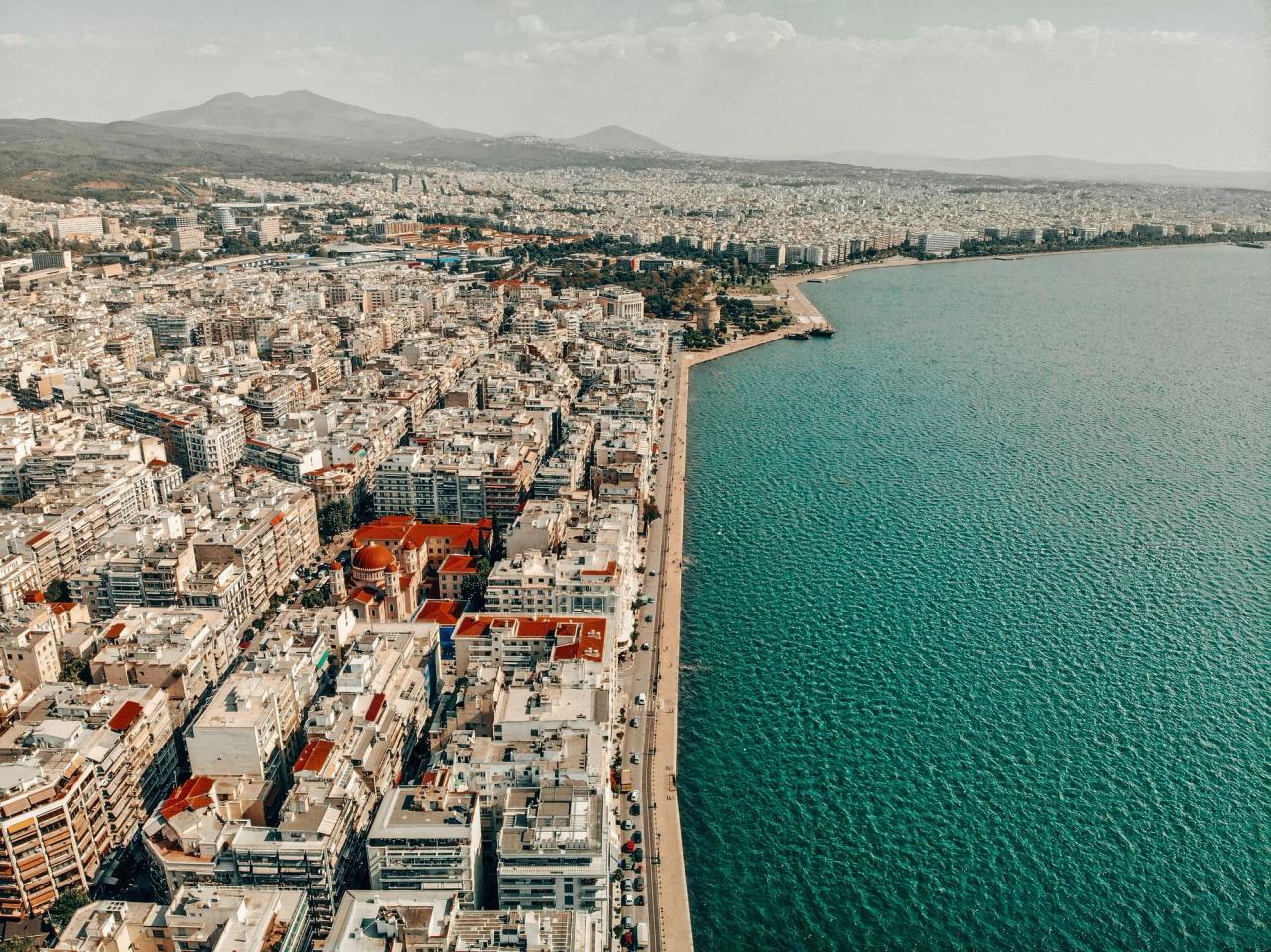
Thessaloniki is Greece's second-largest city and its cultural capital of the north. Built around a sweeping waterfront and defined by its Byzantine heritage, Ottoman landmarks, and buzzing student population, Thessaloniki offers a more relaxed and affordable alternative to Athens. The city's compact center, lively food scene, and strong sense of community make it especially appealing to young professionals, students, and expats who want authentic Greek life without the intensity of the capital.
Thessaloniki at a Glance
- Population
- ~1.1 million (metro area)
- Region
- Central Macedonia
- Known For
- Waterfront, Byzantine history, student nightlife, food culture
- Average Rent (1BR)
- €300–€550/month
- Average Salary
- €800–€1,100/month net
- Expat Community
- Growing; strong student and academic presence
Why Move to Thessaloniki
- More affordable than Athens: Rent, dining, and daily costs are noticeably lower, making it one of the best-value cities in the EU.
- Student energy: With Aristotle University and several other institutions, the city has a young, vibrant atmosphere with year-round cultural events.
- Walkable city center: Most of what you need is within a 20-minute walk. The waterfront promenade is one of the longest in Europe.
- Excellent food culture: Thessaloniki is considered Greece's food capital. Bougatsa, koulouri, and local tavernas are legendary.
- Gateway to northern Greece: Halkidiki beaches, Mount Olympus, and Lake Prespa are all within easy reach.
- Strong sense of community: Thessaloniki feels more like a big town than a city. Locals are proud, social, and welcoming.
Visa and Residency
EU/EEA citizens can live and work in Greece freely. Non-EU citizens need a residence permit. Common pathways include:
- Digital Nomad Visa: Proof of remote income ≥€3,500/month. One-year validity, renewable.
- Work Visa: Sponsored by a Greek employer. The employer initiates the process.
- Student Visa: Enroll at Aristotle University or another accredited institution.
- Retirement Visa: Proof of sufficient passive income and health insurance coverage.
Register at the local Aliens Bureau within 30 days of arrival. Thessaloniki's office is generally less congested than Athens'.
Residency Tips
- Get your AFM (tax number) first — it's required for banking, renting, and utilities.
- AMKA (social security number) is needed for healthcare and employment. Apply at KEP.
- Bring certified copies of all documents. Greek bureaucracy loves paperwork.
- Start renewals 60 days before expiry.
Finding Housing in Thessaloniki
Average Rents
| Neighborhood | 1-Bedroom | 3-Bedroom | Character |
|---|---|---|---|
| Ladadika | €400–€600 | €700–€1,100 | Restored historic district, nightlife, central |
| Ano Poli | €300–€500 | €550–€900 | Upper town, panoramic views, traditional |
| Toumba | €250–€400 | €450–€750 | Student-heavy, affordable, lively |
| Kalamaria | €350–€550 | €600–€1,000 | Suburban, coastal, family-friendly |
| City Center (Aristotelous) | €400–€650 | €750–€1,200 | Bustling, waterfront, shops and cafés |
| Panorama | €400–€650 | €700–€1,200 | Hillside, affluent, quiet, great views |
How to Find Housing
- Spitogatos.gr: The main property portal for Greece; filter by Thessaloniki.
- XE.gr: Large classifieds section with private landlord listings.
- Facebook groups: "Thessaloniki Expats" and "Rent in Thessaloniki" are active communities.
- Walk the neighborhoods you like — many rentals are advertised with window signs only.
- Estate agents charge one month's rent as commission.
Tips for Expats
- University areas (around Aristotle University) have the cheapest rents but can be noisy.
- Always insist on a written rental contract (μίσθωση) for legal protection.
- Older buildings are common; check heating systems (many use oil or natural gas central heating).
- August is a dead month for real estate — landlords and agents are on holiday.
- Furnished apartments are less common than in Athens; expect to budget extra for furniture.
Neighborhoods Guide
- Ladadika: The restored warehouse district near the port. Now packed with restaurants, bars, and boutique hotels. Central and lively. Best for young professionals and nightlife lovers.
- Ano Poli (Upper Town): The old Byzantine quarter with stone houses, narrow lanes, and city views. Quieter and more traditional. Great for those who want character and history over convenience.
- Toumba: A dense, student-dominated neighborhood near the university campus. Very affordable. Noisy but full of cheap food and energy. Ideal for students and budget expats.
- Kalamaria: A coastal suburb southeast of the center. More spacious, with parks and a marina. Family-friendly with a strong local community. Rents are moderate.
- Aristotelous / City Center: The commercial heart along the waterfront. Flat, walkable, and well-connected. Everything is at your doorstep. Best for convenience-focused expats.
- Panorama: A hillside residential area north of the city. Affluent, quiet, and green. Panoramic views of the Thermaic Gulf. Popular with families and professionals. Car recommended.
Cost of Living in Thessaloniki
Monthly Budget Breakdown
| Category | Budget Range |
|---|---|
| Rent (1BR, center) | €300–€550 |
| Utilities | €90–€160 |
| Internet | €22–€30 |
| Groceries | €180–€270 |
| Transport | €30–€50 |
| Dining out (4x/month) | €60–€110 |
| Leisure/Gym | €25–€45 |
| Total | €702–€1,210 |
Day-to-Day Costs
- Coffee (freddo): €2.50–€3.00
- Lunch (casual taverna): €7–€10
- Monthly transport pass (bus + metro): €30
- Beer (bar): €3.50–€5.00
- Cinema ticket: €6–€8
- Loaf of bread: €0.90–€1.30
- 1 litre of milk: €1.10–€1.40
- Dozen eggs: €2.80–€3.50
Getting Around Thessaloniki
- Metro: The Thessaloniki Metro opened in November 2024. Line 1 runs 9.6 km with 13 automated stations from the New Railway Station to Nea Elvetia, cutting through the city center along Egnatia Street. Line 2 (Kalamaria extension, 5 more stations) is expected to open in 2026. A single metro ticket is €1.00; a 90-minute integrated ticket covering both metro and bus is €1.30.
- Bus: OASTH operates an extensive bus network that connects with metro stations. A single ticket is €1.00; monthly pass is €30. Buses remain essential for areas not yet served by the metro.
- Cycling: The waterfront promenade is excellent for cycling. Elsewhere, bike infrastructure is limited.
- Driving: Traffic congestion is common in the center. Parking is difficult. A car is more useful for day trips and reaching suburbs like Panorama.
- Airport: Thessaloniki International Airport (SKG) is 15 km southeast. Bus line 78 connects to the center in 30–45 minutes.
- Intercity: Train and bus connections to Athens (4.5–5 hours), Kavala, and neighboring countries (North Macedonia, Bulgaria, Turkey).
- Taxis: Affordable. Use the Beat app for booking. Flag fall is €1.80.
- Ride-hailing: Beat works well in Thessaloniki. Uber is not widely available.
Healthcare in Thessaloniki
- Hospitals/Clinics: Major public hospitals include AHEPA and Papageorgiou. Private options like Interbalkan and Euromedica offer faster service and English-speaking staff.
- English-speaking doctors: Available in private practices, especially in the city center and Kalamaria.
- Pharmacies: Abundant throughout the city. Marked with a green cross. Pharmacists provide basic medical advice.
- Emergency number: 112 (EU-wide) or 166 (EKAB ambulance).
- Health insurance: EU citizens can use EHIC for short stays. Long-term residents need EFKA registration or private insurance.
- Dental care: Private dental clinics are affordable. A check-up costs €25–€45.
Planning your move?
Tell us about your move to compare quotes from international moving companies.
Banking & Finances
- Opening a bank account: You need an AFM, passport, and proof of address. Major banks: Alpha Bank, Eurobank, National Bank, Piraeus Bank.
- Cash culture: Greece still relies heavily on cash. Many tavernas, market stalls, and landlords prefer cash payments.
- Transfers: SEPA transfers within the EU are cheap. International transfers cost €10–€30.
- ATMs: Widely available. Withdrawal limits €300–€600/day. Non-customer fees may apply.
- Mobile banking: Most Greek banks have apps with English interfaces.
Language & Communication
- Official language: Greek. Thessaloniki also has a small community of Ladino (Judeo-Spanish) speakers from the historic Sephardic Jewish population.
- English proficiency: Good among students and younger professionals. Less common among older residents and in government offices.
- Learning Greek: Highly recommended. Aristotle University offers Greek language courses. Private frontistiria charge €150–€350/semester.
- Useful phrases: Kalimera (good morning), efharisto (thank you), parakalo (please/you're welcome), signomi (excuse me).
- SIM cards: Cosmote, Vodafone, and Wind all have strong coverage. Prepaid plans from €8–€12/month.
Culture & Lifestyle
- Byzantine heritage: Thessaloniki has 15 UNESCO-listed Byzantine churches. The Museum of Byzantine Culture is one of the best in Europe.
- Waterfront life: The 5 km promenade from the White Tower to the concert hall is the city's social spine. Locals walk, jog, and gather here daily.
- Festivals: The Thessaloniki International Film Festival (November) and Documentary Festival (March) are major events. The Dimitria festival runs cultural events all autumn.
- Nightlife: Bars cluster around Ladadika, Valaoritou, and Athonos squares. The scene is student-driven and affordable.
- Siesta culture: Smaller shops close 2–5 pm, especially in summer. Malls and supermarkets stay open.
Food & Dining
- Local specialties: Bougatsa (custard-filled pastry), koulouri (sesame bread ring), soutzoukakia (spiced meatballs), trigona panoramatos (cream-filled phyllo cones).
- Best areas for dining: Ladadika for upscale, Kapani Market for street food, Ano Poli for traditional tavernas, Modiano Market for fresh seafood.
- Budget options: Bougatsa costs €2–€3. Koulouri from street vendors is under €1. A full taverna meal with wine runs €10–€15.
Expat Community
- Meetup groups: Thessaloniki Expats, Internations Thessaloniki, and language exchange events at local bars.
- International organizations: The French Institute, Goethe-Institut, and British Council have local branches.
- University community: Aristotle University draws international students and researchers, creating a natural expat network.
Job Market in Thessaloniki
- Main industries: Education, food processing, technology, tourism, logistics (port city), healthcare.
- Major employers: Aristotle University, Ceravis (brewery), DELTA (dairy), various IT startups, Thessaloniki Port Authority.
- Average salaries by sector:
| Sector | Monthly Net |
|---|---|
| IT / Tech | €900–€1,500 |
| Tourism / Hospitality | €700–€1,000 |
| Teaching (English) | €650–€1,000 |
| Education / Research | €800–€1,300 |
| Food Industry | €750–€1,100 |
- Job search resources: Kariera.gr, Indeed Greece, LinkedIn, university career offices, local Facebook job groups.
Education in Thessaloniki
- International schools: Pinewood International School, Anatolia College (has international programs). Tuition ranges from €6,000–€15,000/year.
- Universities: Aristotle University of Thessaloniki (largest in Greece), University of Macedonia, International Hellenic University.
- Language schools: Many private frontistiria offer Greek and English courses. The Aristotle University School of Modern Greek is well-regarded for foreigners.
Moving Checklist for Thessaloniki
- Confirm visa or residency requirements (EU citizens: register at local police within 3 months)
- Research neighborhoods — Thessaloniki is compact so visit before committing
- Join Thessaloniki expat Facebook groups for leads and advice
- Arrange health insurance or confirm EHIC validity
- Start learning basic Greek
- Prepare certified copies of key documents
- Obtain AFM (tax number) from the local DOY (tax office)
- Open a bank account (Alpha Bank, Eurobank, or National Bank)
- Get a local SIM (Cosmote has the best coverage in northern Greece)
- Sign your rental contract and set up utilities
- Buy a monthly bus pass (€25)
- Locate your nearest pharmacy, supermarket, and KEP office
- Register with a local doctor or clinic
- Apply for AMKA (social security number)
- Walk the city and find your local market, bakery, and café
- Enroll in a Greek language course — locals deeply appreciate the effort
- Register with your embassy if applicable
- Set up mobile banking
Yes. Rent is typically 20–30% lower, and dining and transport costs are also more affordable. Thessaloniki offers a similar quality of life to Athens at a noticeably lower price point.
Not for daily life in the center. The city is flat and walkable, and buses cover most areas. A car is useful if you live in Panorama or want to explore Halkidiki and northern Greece on weekends.
Absolutely. Aristotle University is Greece's largest, and the city's social life revolves heavily around its student population. Affordable rents, cheap food, and a vibrant nightlife make it one of the best student cities in southeastern Europe.
Hot, dry summers (30–35°C) and cold winters (0–10°C) with occasional snow. Thessaloniki is noticeably cooler than Athens in winter. Rain is common in autumn and spring.
Opportunities exist in education (teaching English), tech, tourism, and call centers. Salaries are lower than Athens but so is the cost of living. Networking through expat groups and LinkedIn is the most effective approach.
Thessaloniki has no regular passenger ferry service. For the Sporades (Skiathos, Skopelos, Skiros), take a bus or drive to Volos (about 2.5 hours) and catch the ferry from there. For the Aegean islands, summer flights from SKG airport to Mykonos, Santorini, Crete, and Rhodes are the fastest option — expect 45 minutes to 1.5 hours. Halkidiki's beaches are only 1–2 hours by car or bus.
Yes. Line 1 opened in November 2024 with 13 stations running from the New Railway Station through the center to Nea Elvetia. It's fully automated and driverless, with trains every 3.5 minutes. Line 2 (Kalamaria extension) is expected in 2026, which will add 5 more stations. The metro has already transformed getting around the city.
Yes. EU citizens face no restrictions. Non-EU citizens can purchase property, with some border-area exceptions. Budget approximately 10% extra for transfer taxes, notary, and legal fees.
Tap water is safe to drink. Thessaloniki draws water from nearby mountain sources. No need to buy bottled water for drinking.
Generally yes. The center, waterfront, and Ladadika are well-lit and busy until late. Avoid isolated areas near the port late at night. Petty theft can occur in crowded bar areas.
It helps more than in Athens. English is common among students and in the center, but daily life outside the university area often requires at least basic Greek.
Internet & Connectivity
- Speeds: Thessaloniki has expanding fiber coverage. Average download speeds are 25–80 Mbps. Fiber is available in newer buildings and central areas.
- Providers: Cosmote, Vodafone, and Nova offer broadband from €22–€38/month.
- Mobile data: 4G covers the city well. 5G rollout is underway. Cosmote leads in coverage.
- Coworking spaces: Fewer than Athens but growing. Several cafés near the university have reliable Wi-Fi and remote-work-friendly atmospheres.
Related Guides
- [Moving to Greece] — comprehensive country guide
- [Moving to Athens] — the capital city guide
- [Moving to Larissa] — central Greece gateway