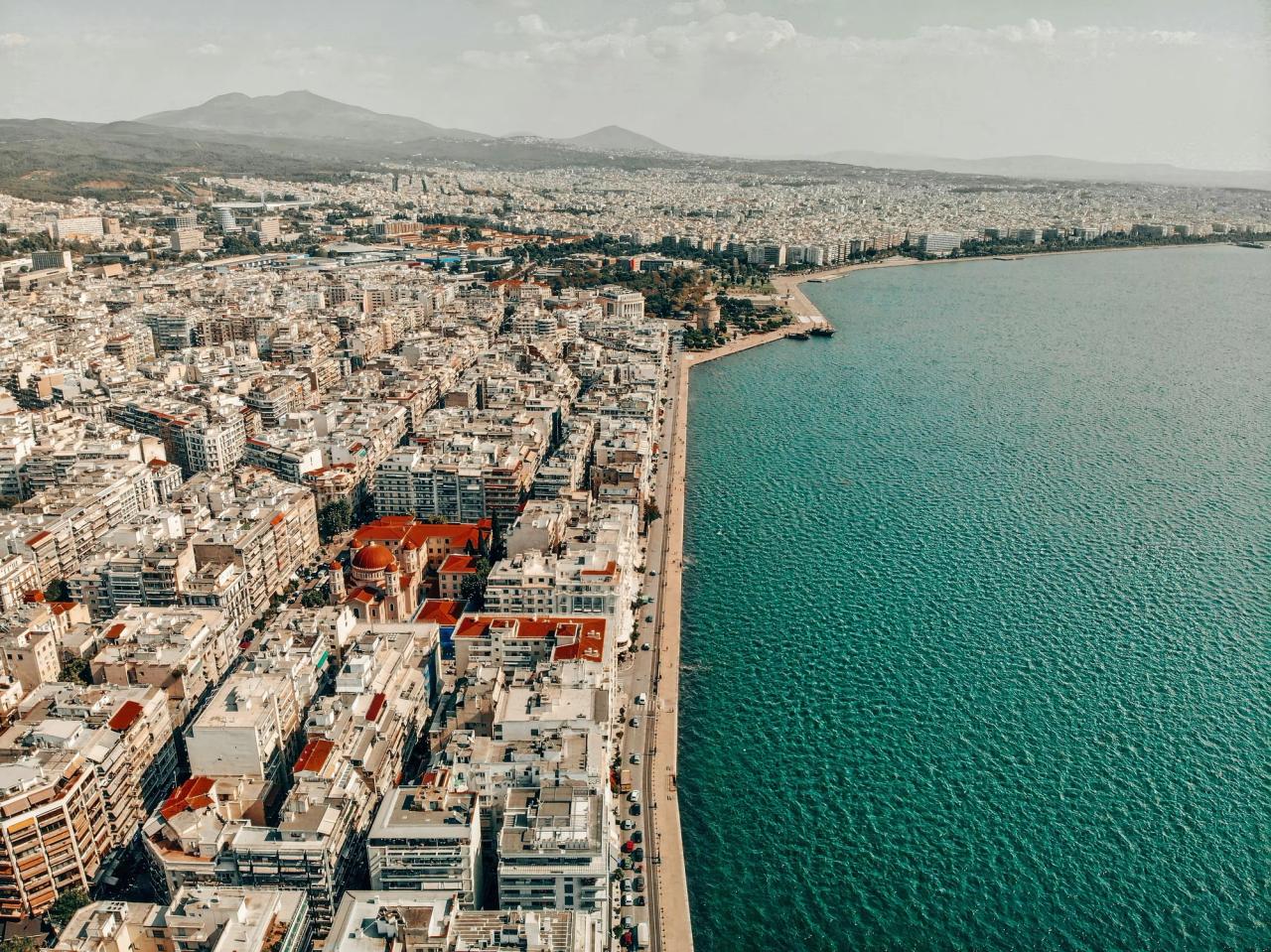
Thessaloniki é a segunda maior cidade da Grécia e a sua capital cultural do norte. Construída em torno de um passeio marítimo imponente e definida pelo seu património bizantino, marcos otomanos e uma população estudantil animada, Thessaloniki oferece uma alternativa mais descontraída e acessível a Atenas. O centro compacto da cidade, a vibrante cena gastronómica e o forte sentido de comunidade tornam-na especialmente atraente para jovens profissionais, estudantes e expatriados que desejam a autêntica vida grega sem a intensidade da capital.
Thessaloniki em Resumo
- População
- ~1,1 milhão (área metropolitana)
- Região
- Macedónia Central
- Conhecida Por
- Passeio marítimo, história bizantina, vida noturna estudantil, cultura gastronómica
- Renda Média (T1)
- €300–€550/mês
- Salário Médio
- €800–€1.100/mês líquido
- Comunidade de Expatriados
- Em crescimento; forte presença estudantil e académica
Porquê Mudar-se para Thessaloniki
- Mais acessível do que Atenas: a renda, os restaurantes e os custos diários são significativamente mais baixos, tornando-a numa das cidades com melhor relação qualidade-preço da EU.
- Energia estudantil: com a Universidade Aristóteles e várias outras instituições, a cidade tem uma atmosfera jovem e vibrante com eventos culturais durante todo o ano.
- Centro da cidade pedonal: a maior parte do que precisa está a 20 minutos a pé. O passeio marítimo é um dos mais longos da Europa.
- Excelente cultura gastronómica: Thessaloniki é considerada a capital gastronómica da Grécia. Bougatsa, koulouri e as tabernas locais são lendárias.
- Porta de entrada para o norte da Grécia: as praias de Halkidiki, o Monte Olimpo e o Lago Prespa estão todos facilmente acessíveis.
- Forte sentido de comunidade: Thessaloniki parece mais uma vila grande do que uma cidade. Os locais são orgulhosos, sociáveis e acolhedores.
Visto e Residência
Os cidadãos da EU/EEE podem viver e trabalhar na Grécia livremente. Os cidadãos não-EU necessitam de autorização de residência. As vias comuns incluem:
- Visto de Nómada Digital: Comprovativo de rendimentos remotos ≥€3.500/mês. Validade de um ano, renovável.
- Visto de Trabalho: Patrocinado por um empregador grego. O empregador inicia o processo.
- Visto de Estudante: Inscreva-se na Universidade Aristóteles ou noutra instituição credenciada.
- Visto de Reforma: Comprovativo de rendimentos passivos suficientes e cobertura de seguro de saúde.
Registe-se na repartição local de Estrangeiros dentro de 30 dias após a chegada. O escritório de Thessaloniki é geralmente menos congestionado do que o de Atenas.
Dicas de Residência
- Obtenha primeiro o seu AFM (número fiscal) — é necessário para operações bancárias, arrendamento e serviços públicos.
- O AMKA (número de segurança social) é necessário para cuidados de saúde e emprego. Candidate-se no KEP.
- Traga cópias autenticadas de todos os documentos. A burocracia grega adora papelada.
- Inicie as renovações 60 dias antes do termo de validade.
Encontrar Habitação em Thessaloniki
Rendas Médias
| Bairro | 1 Quarto | 3 Quartos | Carácter |
|---|---|---|---|
| Ladadika | €400–€600 | €700–€1.100 | Distrito histórico restaurado, vida noturna, central |
| Ano Poli | €300–€500 | €550–€900 | Cidade alta, vistas panorâmicas, tradicional |
| Toumba | €250–€400 | €450–€750 | Muitos estudantes, acessível, animado |
| Kalamaria | €350–€550 | €600–€1.000 | Suburbano, costeiro, familiar |
| Centro da Cidade (Aristotelous) | €400–€650 | €750–€1.200 | Movimentado, frente ribeirinha, lojas e cafés |
| Panorama | €400–€650 | €700–€1.200 | Encosta, abastado, tranquilo, ótimas vistas |
Como Encontrar Habitação
- Spitogatos.gr: O principal portal imobiliário da Grécia; filtre por Thessaloniki.
- XE.gr: Grande secção de classificados com anúncios de senhorios particulares.
- Grupos do Facebook: "Thessaloniki Expats" e "Rent in Thessaloniki" são comunidades ativas.
- Passeie pelos bairros que gosta — muitos arrendamentos são anunciados apenas com cartazes na janela.
- Os mediadores imobiliários cobram um mês de renda como comissão.
Dicas para Expats
- As zonas universitárias (em torno da Aristotle University) têm as rendas mais baixas, mas podem ser ruidosas.
- Insista sempre num contrato de arrendamento escrito (μίσθωση) para proteção legal.
- Edifícios mais antigos são comuns; verifique os sistemas de aquecimento (muitos usam aquecimento central a óleo ou gás natural).
- Agosto é um mês parado no setor imobiliário — senhorios e agentes estão de férias.
- Apartamentos mobilados são menos comuns do que em Atenas; preveja um orçamento extra para mobília.
Guia de Bairros
- Ladadika: O distrito de armazéns restaurados perto do porto. Agora repleto de restaurantes, bares e hotéis-boutique. Central e animado. Ideal para jovens profissionais e amantes da vida noturna.
- Ano Poli (Cidade Alta): O antigo bairro bizantino com casas de pedra, ruas estreitas e vistas sobre a cidade. Mais tranquilo e tradicional. Ideal para quem privilegia o encanto e a história em detrimento da conveniência.
- Toumba: Um bairro denso e dominado por estudantes, perto do campus universitário. Muito acessível. Barulhento, mas cheio de comida barata e energia. Ideal para estudantes e expatriados com orçamento limitado.
- Kalamaria: Um subúrbio costeiro a sudeste do centro. Mais espaçoso, com parques e uma marina. Acolhedor para famílias, com uma forte comunidade local. Os arrendamentos são moderados.
- Aristotelous / Centro da Cidade: O coração comercial ao longo da orla. Plano, pedestre e bem servido de transportes. Tudo à sua porta. Ideal para expatriados que valorizam a conveniência.
- Panorama: Uma zona residencial na encosta, a norte da cidade. Abastada, tranquila e verde. Vistas panorâmicas sobre o Golfo Termaico. Popular entre famílias e profissionais. Recomenda-se automóvel.
Custo de Vida em Thessaloniki
Repartição Mensal do Orçamento
| Categoria | Intervalo de Orçamento |
|---|---|
| Renda (T1, centro) | €300–€550 |
| Serviços domésticos | €90–€160 |
| Internet | €22–€30 |
| Mercearia | €180–€270 |
| Transportes | €30–€50 |
| Refeições fora (4×/mês) | €60–€110 |
| Lazer/Ginásio | €25–€45 |
| Total | €702–€1.210 |
Custos do Dia a Dia
- Café (freddo): €2,50–€3,00
- Almoço (taverna informal): €7–€10
- Passe mensal de transportes (autocarro + metro): €30
- Cerveja (bar): €3,50–€5,00
- Bilhete de cinema: €6–€8
- Pão (fôrma): €0,90–€1,30
- 1 litro de leite: €1,10–€1,40
- Dúzia de ovos: €2,80–€3,50
Deslocar-se em Thessaloniki
- Metro: O Metro de Thessaloniki inaugurou em novembro de 2024. A Linha 1 percorre 9,6 km com 13 estações automatizadas desde a Estação Ferroviária Nova até Nea Elvetia, atravessando o centro da cidade ao longo da Rua Egnatia. A Linha 2 (extensão de Kalamaria, mais 5 estações) está prevista abrir em 2026. Um bilhete único de metro custa €1,00; um bilhete integrado de 90 minutos para metro e autocarro é €1,30.
- Autocarro: A OASTH opera uma extensa rede de autocarros que liga com as estações de metro. Um bilhete único custa €1,00; o passe mensal é €30. Os autocarros continuam essenciais para zonas ainda não servidas pelo metro.
- Bicicleta: O passeio marítimo é excelente para andar de bicicleta. No resto da cidade, a infraestrutura ciclável é limitada.
- Automóvel: Os congestionamentos são frequentes no centro. O estacionamento é difícil. Um carro é mais útil para passeios de um dia e para chegar a subúrbios como Panorama.
- Aeroporto: O Aeroporto Internacional de Thessaloniki (SKG) fica a 15 km a sudeste. A linha de autocarro 78 liga ao centro em 30–45 minutos.
- Intermunicipais: Ligações de comboio e autocarro para Atenas (4,5–5 horas), Kavala e países vizinhos (Macedónia do Norte, Bulgária, Turquia).
- Táxis: Preços acessíveis. Utilize a aplicação Beat para reservas. A taxa de início é de €1,80.
- Transportes sob pedido: A Beat funciona bem em Salónica. O Uber não está amplamente disponível.
Cuidados de saúde em Salónica
- Hospitais/Clinicas: Os principais hospitais públicos incluem o AHEPA e o Papageorgiou. Opções privadas como a Interbalkan e a Euromedica oferecem um serviço mais rápido e pessoal falante de inglês.
- Médicos falantes de inglês: Disponíveis em consultórios privados, sobretudo no centro da cidade e em Kalamaria.
- Farmácias: Abundantes por toda a cidade. Identificadas com uma cruz verde. Os farmacêuticos prestam aconselhamento médico básico.
- Número de emergência: 112 (em toda a EU) ou 166 (ambulância EKAB).
- Seguro de saúde: Os cidadãos da EU podem utilizar o EHIC para estadias curtas. Os residentes de longo prazo necessitam de registo na EFKA ou de seguro privado.
- Cuidados dentários: As clínicas dentárias privadas são acessíveis. Uma consulta de rotina custa €25–€45.
Receba um plano de mudanca personalizado
Deixe o seu e-mail e enviaremos uma checklist personalizada e tres orcamentos de empresas verificadas.
Banca e Finanças
- Abrir uma conta bancária: Necessita de um AFM, passaporte e comprovativo de morada. Principais bancos: Alpha Bank, Eurobank, National Bank, Piraeus Bank.
- Cultura de dinheiro vivo: A Grécia ainda depende muito de dinheiro vivo. Muitas tavernas, bancas de mercado e senhorios preferem pagamentos em dinheiro.
- Transferências: As transferências SEPA dentro da EU são económicas. As transferências internacionais custam €10–€30.
- Multibanco: Amplamente disponíveis. Limites de levantamento de €300–€600/dia. Podem aplicar-se taxas para não clientes.
- Banca móvel: A maioria dos bancos gregos tem aplicações com interface em inglês.
Língua e Comunicação
- Língua oficial: Grego. Salónica também tem uma pequena comunidade de falantes de ladino (judeu-espanhol) proveniente da histórica população judaica sefardita.
- Proficiência em inglês: Boa entre estudantes e profissionais mais jovens. Menos comum entre residentes mais velhos e em serviços governamentais.
- Aprender grego: Altamente recomendado. A Universidade Aristóteles oferece cursos de língua grega. Os frontistiria privados cobram €150–€350/semestre.
- Expressões úteis: Kalimera (bom dia), efharisto (obrigado), parakalo (por favor/de nada), signomi (com licença).
- Cartões SIM: A Cosmote, a Vodafone e a Wind têm todas boa cobertura. Planos pré-pagos a partir de €8–€12/mês.
Cultura e Estilo de Vida
- Património bizantino: Salónica tem 15 igrejas bizantinas classificadas pela UNESCO. O Museu da Cultura Bizantina é um dos melhores da Europa.
- Vida na orla costeira: O passeio de 5 km desde a Torre Branca até à sala de concertos é a espinha dorsal social da cidade. Os habitantes locais passeiam, correm e reúnem-se aqui diariamente.
- Festivais: O Festival Internacional de Cinema de Salónica (novembro) e o Festival de Documentários (março) são eventos de grande relevo. O festival Dimitria apresenta eventos culturais durante todo o outono.
- Vida noturna: Os bares agrupam-se nas praças de Ladadika, Valaoritou e Athonos. O ambiente é estudantil e acessível.
- Cultura da sesta: As lojas mais pequenas fecham das 14h às 17h, especialmente no verão. Os centros comerciais e supermercados mantêm-se abertos.
Gastronomia e Restaurantes
- Especialidades locais: Bougatsa (pastel recheado com creme), koulouri (argola de pão com sementes de sésamo), soutzoukakia (almôndegas temperadas), trigona panoramatos (cone de massa filo recheado com creme).
- Melhores zonas para comer: Ladadika para refeições de qualidade, Mercado Kapani para comida de rua, Ano Poli para tavernas tradicionais, Mercado Modiano para peixe e marisco frescos.
- Opções económicas: A bougatsa custa €2–€3. O koulouri de vendedores de rua custa menos de €1. Uma refeição completa numa taverna com vinho fica por €10–€15.
Comunidade de Expatriados
- Grupos de encontro: Thessaloniki Expats, Internations Thessaloniki e eventos de permuta de línguas em bares locais.
- Organizações internacionais: O Instituto Francês, o Goethe-Institut e o British Council têm delegações locais.
- Comunidade universitária: A Universidade Aristóteles atrai estudantes e investigadores internacionais, criando uma rede natural de expatriados.
Mercado de Trabalho em Salónica
- Principais setores: Educação, indústria alimentar, tecnologia, turismo, logística (cidade portuária), cuidados de saúde.
- Principais empregadores: Universidade Aristóteles, Ceravis (cervejaria), DELTA (laticínios), várias startups de TI, Autoridade do Porto de Salónica.
- Salários médios por setor:
| Setor | Líquido Mensal |
|---|---|
| TI / Tecnologia | €900–€1.500 |
| Turismo / Hotelaria | €700–€1.000 |
| Ensino (Inglês) | €650–€1.000 |
| Educação / Investigação | €800–€1.300 |
| Indústria Alimentar | €750–€1.100 |
- Recursos de procura de emprego: Kariera.gr, Indeed Grécia, LinkedIn, gabinetes de carreira universitários, grupos de emprego no Facebook locais.
Educação em Thessaloniki
- Escolas internacionais: Pinewood International School, Anatolia College (tem programas internacionais). As propinas variam entre €6.000–€15.000/ano.
- Universidades: Aristotle University of Thessaloniki (a maior da Grécia), University of Macedonia, International Hellenic University.
- Escolas de línguas: Muitos frontistiria privados oferecem cursos de grego e inglês. A Escola de Grego Moderno da Aristotle University é bastante conceituada para estrangeiros.
Lista de Verificação para Mudança para Thessaloniki
- Confirme os requisitos de visto ou residência (cidadãos da UE: registe-se na polícia local dentro de 3 meses)
- Pesquise os bairros — Thessaloniki é compacta, por isso visite antes de se comprometer
- Junte-se a grupos de expatriados de Thessaloniki no Facebook para contactos e conselhos
- Organize o seguro de saúde ou confirme a validade do EHIC
- Comece a aprender grego básico
- Prepare cópias certificadas dos documentos importantes
- Obtenha o AFM (número de contribuinte) no DOY local (finanças)
- Abra uma conta bancária (Alpha Bank, Eurobank ou National Bank)
- Compre um cartão SIM local (a Cosmote tem a melhor cobertura no norte da Grécia)
- Assine o contrato de arrendamento e ative os serviços públicos
- Compre um passe de autocarro mensal (€25)
- Localize a farmácia, supermercado e esquadra KEP mais próximos
- Registe-se num médico ou clínica local
- Requisite o AMKA (número de segurança social)
- Percorra a cidade e encontre o mercado, padaria e café do seu bairro
- Inscreva-se num curso de grego — os locais valorizam muito o esforço
- Registe-se na sua embaixada, se aplicável
- Configure as aplicações bancárias
Internet e Conetividade
- Velocidades: Thessaloniki tem cobertura de fibra em expansão. As velocidades médias de download são 25–80 Mbps. A fibra está disponível em edifícios mais recentes e zonas centrais.
- Operadores: Cosmote, Vodafone e Nova oferecem banda larga a partir de 22–38 €/mês.
- Dados móveis: O 4G cobre bem a cidade. A implementação do 5G está em curso. A Cosmote lidera em cobertura.
- Espaços de coworking: Menos do que em Atenas, mas a crescer. Vários cafés perto da universidade têm Wi-Fi fiável e ambientes propícios ao teletrabalho.
Guias Relacionados
- [Mudar-se para a Grécia] — guia completo do país
- [Mudar-se para Atenas] — guia da capital
- [Mudar-se para Larissa] — porta de entrada para a Grécia central