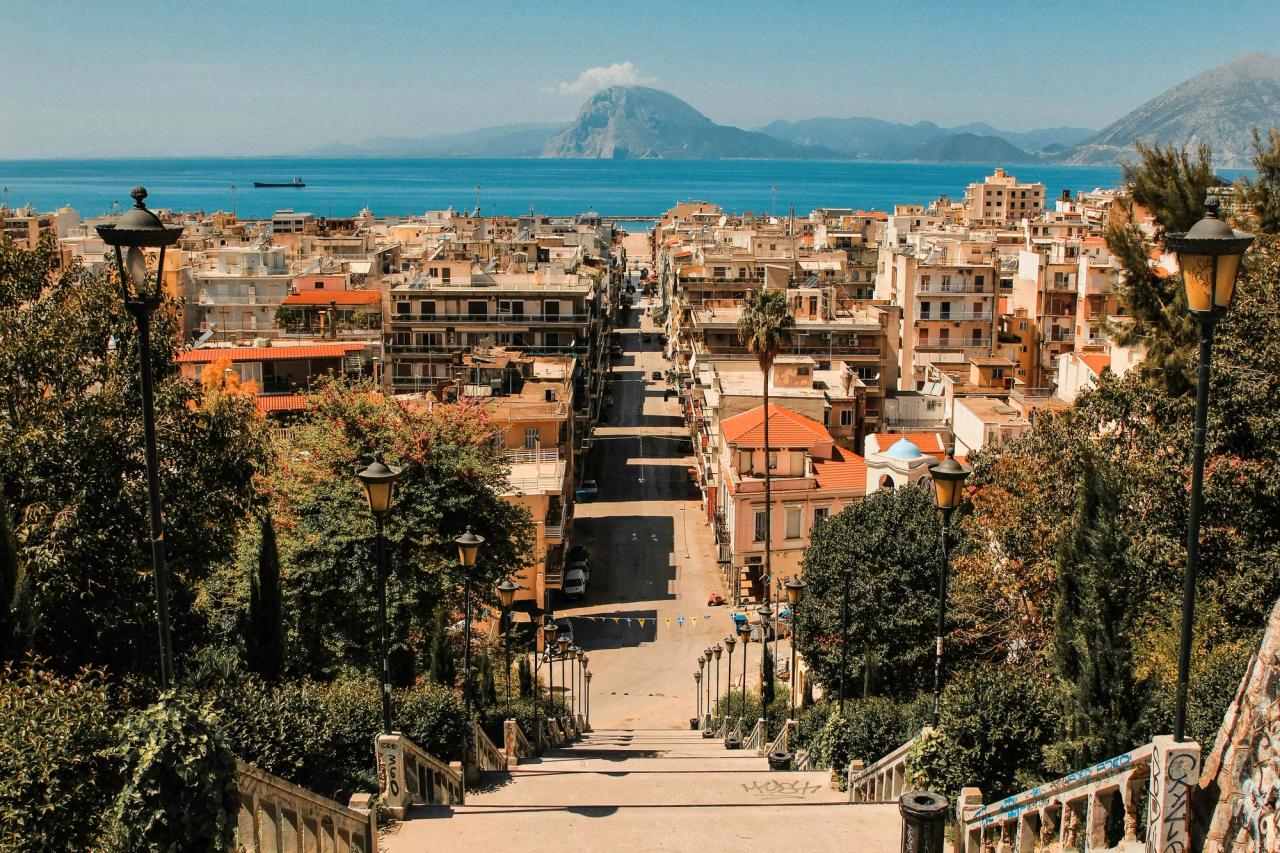
Patras is Greece's third-largest city and the main gateway to the Peloponnese. Known for its massive annual carnival, thriving university community, and busy port connecting to Italy, Patras combines a lively student atmosphere with the rhythms of a working coastal city. It's less polished than Athens or Thessaloniki but more affordable and authentically Greek, making it a strong option for expats who want a genuine, unhurried lifestyle on the western coast.
Patras at a Glance
- Population
- ~215,000 (municipality)
- Region
- Western Greece (Achaea)
- Known For
- Patras Carnival, University of Patras, port to Italy
- Average Rent (1BR)
- €350–€600/month
- Average Salary
- €800–€1,200/month net
- Expat Community
- Small but present; academic and Italian-ferry crowd
Why Move to Patras
- Very affordable: One of the cheapest cities in Greece for rent, food, and daily expenses. Budget-conscious expats can live well here.
- University energy: The University of Patras and Hellenic Open University bring a young, dynamic population and cultural programming.
- Carnival capital: The Patras Carnival is the largest in Greece and one of the biggest in Europe. The city transforms every February–March.
- Gateway to the Peloponnese: Ancient Olympia, Nafplio, and the mountain villages of Arcadia are all within day-trip range.
- Italian ferry connection: Regular sailings to Ancona, Bari, and Venice make Italy accessible for weekends and road trips.
- Mild climate: Warmer and sunnier than northern Greece. Winters are rainy but rarely cold.
Visa and Residency
EU/EEA citizens can live and work in Greece without restriction. Non-EU citizens require a residence permit. Relevant options:
- Digital Nomad Visa: Proof of remote income ≥€3,500/month (verify current requirements with Greek authorities). One-year, renewable.
- Work Visa: Employer-sponsored. Limited opportunities in Patras compared to Athens.
- Student Visa: Available through enrollment at the University of Patras.
- Retirement Visa: For those with sufficient passive income and health insurance.
Register at the local Aliens Bureau within 30 days. Patras has a smaller immigration office — processing can be faster than in Athens.
Residency Tips
- Get your AFM (tax number) first — required for banking, renting, and utilities.
- AMKA (social security number) is needed for healthcare and employment.
- Bring certified copies of all key documents.
- Start renewals 60 days before your permit expires.
Finding Housing in Patras
Average Rents
| Neighborhood | 1-Bedroom | 3-Bedroom | Character |
|---|---|---|---|
| City Center | €380–€600 | €600–€1,000 | Commercial, walkable, near port |
| Psila Alonia | €400–€650 | €650–€1,100 | Hilltop, views, quieter, upscale |
| Bozaitika | €350–€550 | €550–€900 | University-adjacent, student-friendly |
| Agios Dionysios | €320–€500 | €500–€850 | Residential, affordable, local |
| Tsivdi | €350–€550 | €550–€900 | Central, near castle, mixed character |
| Rio | €380–€600 | €600–€1,000 | Suburban, coastal, university campus area |
How to Find Housing
- Spitogatos.gr: Main portal; fewer listings than Athens but still the go-to.
- XE.gr: Good source for private landlord listings in Patras.
- Facebook groups: "Patras Expats" and university housing groups.
- Walk the city center — many rentals are only advertised with signs on windows and balconies.
- Estate agents exist but many deals happen direct between landlord and tenant.
Tips for Expats
- Student areas (Bozaitika, around the university) have the cheapest rents and a younger vibe.
- Furnished short-term apartments are harder to find than in Athens — most rentals are unfurnished.
- Ask about heating: many older buildings use individual oil heaters or fireplaces, which can be expensive in winter.
- Patras is hilly — if mobility is a concern, choose flats near the center rather than uphill neighborhoods.
- Negotiate rent — the market is not competitive, and landlords prefer long-term tenants.
Neighborhoods Guide
- City Center: Flat, walkable, and close to the port and bus station. Shops, markets, and restaurants within easy reach. Best for convenience and expats without a car.
- Psila Alonia: The hilltop neighborhood with the best views in Patras. A small park, neoclassical buildings, and a calmer atmosphere. Rents are higher for the area. Ideal for professionals.
- Bozaitika: Adjacent to the university campus. Dense with student housing, cheap cafés, and fast-food spots. Lively and noisy during the academic year. Great for students and young expats.
- Agios Dionysios: A residential neighborhood south of the center. Quiet streets, local shops, and very affordable. No tourist traffic. Best for families and long-term residents.
- Tsivdi: Near the medieval castle, mixing old and new. Central but with more character than the commercial zone. A good middle-ground neighborhood.
- Rio: A coastal suburb north of the city, home to the university campus and the Rio–Antirrio bridge. More spacious, with a beach. Popular with academics and families.
Cost of Living in Patras
Monthly Budget Breakdown
| Category | Budget Range |
|---|---|
| Rent (1BR, center) | €350–€600 |
| Utilities | €100–€160 |
| Internet | €25–€35 |
| Groceries | €200–€300 |
| Transport | €25–€45 |
| Dining out (4x/month) | €60–€100 |
| Leisure/Gym | €25–€50 |
| Total | €785–€1,290 |
Day-to-Day Costs
- Coffee (freddo): €2.00–€3.00
- Lunch (casual taverna): €6–€9
- Monthly bus pass (Astiko): ~€25
- Beer (bar): €3.00–€4.50
- Cinema ticket: €5–€7
- Loaf of bread: €0.80–€1.20
- 1 litre of milk: €1.00–€1.30
- Dozen eggs: €2.50–€3.20
Getting Around Patras
- Public transport: Astiko KTEL Patras runs a bus network covering the city and suburbs. A monthly pass is around €25. Service is decent but less frequent than Athens or Thessaloniki.
- Cycling: Patras is built on hills — cycling in the center is challenging. Flat coastal roads near Rio are better suited.
- Driving: Traffic can be congested in the center, especially near the port. Parking is easier than in larger Greek cities. A car is useful for exploring the Peloponnese.
- Airport: Patras does not have a commercial airport. The nearest is Araxos Airport (45 km south, seasonal flights) or Athens International Airport (2.5 hours by car/bus).
- Intercity: KTEL buses connect Patras to Athens (2.5 hours via the new highway), Pyrgos, and other Peloponnese towns. Ferries to Italy (Ancona, Bari, Venice) depart from the port.
- Taxis: Inexpensive within the city. Use the local dispatch or Beat app. Flag fall is €1.40–€1.85 (varies by time of day/rate).
Healthcare in Patras
- Hospitals/Clinics: University General Hospital of Patras is the main public facility. Private clinics like Metropolitan Hospital offer faster service.
- English-speaking doctors: Available at private clinics, especially among younger practitioners.
- Pharmacies: Plentiful throughout the city. Marked with a green cross. Pharmacists handle minor medical queries.
- Emergency number: 112 (EU-wide) or 166 (EKAB ambulance).
- Health insurance: EU citizens covered via EHIC for emergencies. Long-term residents should register with EFKA or carry private insurance.
- Dental care: Affordable private clinics. A check-up costs €25–€40.
Get a personalised relocation plan
Drop your email and we'll send a tailored checklist plus three quotes from vetted movers.
Banking & Finances
- Opening a bank account: You need an AFM, passport, and proof of address. Alpha Bank and Eurobank have branches in the center.
- Cash culture: Cash is still king in Patras. Tavernas, market stalls, and many landlords prefer cash.
- Transfers: SEPA transfers within the EU are cheap. International transfers cost €10–€30.
- ATMs: Available throughout the city. Withdrawal limits €300–€600/day.
- Mobile banking: Greek bank apps have English interfaces available.
Language & Communication
- Official language: Greek.
- English proficiency: Moderate. Students and younger residents speak English well. Outside the university, English is less common than in Athens.
- Learning Greek: Very useful here. Private frontistiria offer courses. The University of Patras has language programs for international students.
- Useful phrases: Kalimera (good morning), efharisto (thank you), parakalo (please/you're welcome), signomi (excuse me).
- SIM cards: Cosmote, Vodafone, and Wind available. Prepaid from €8/month.
Culture & Lifestyle
- Patras Carnival: A weeks-long festival culminating in a massive parade and the burning of the Carnival King. Over 40,000 participants. The city's defining cultural event.
- Apollon Theatre: A miniature replica of La Scala in Milan. Cultural hub for performances and events.
- Castle of Patras: The medieval castle overlooks the city. Free to enter, with panoramic views and regular cultural events.
- Coastal living: The seaside promenade stretches along the Gulf of Patras. Sunsets over the Rio–Antirrio bridge are spectacular.
- Siesta culture: Smaller shops close 2–5 pm. Larger stores and supermarkets remain open.
Food & Dining
- Local specialties: Pasteli (sesame-honey bars), syglino (smoked pork), grilled octopus, local Mavrodaphne wine.
- Best areas for dining: The waterfront for seafood tavernas, the center for traditional restaurants, and Bozaitika for cheap student meals.
- Budget options: Souvlaki wraps from €2.50. Bakeries serve cheap pies and pastries. A taverna dinner with wine can be under €10.
Expat Community
- Meetup groups: Small expat community; check Internations and Facebook for Patras-specific groups.
- University connections: International researchers and students at the University of Patras form the core of the expat network.
- Italian connection: The ferry route to Italy brings a steady flow of Italian-speaking visitors and residents.
Job Market in Patras
- Main industries: Education, port logistics, food production, light manufacturing, tourism.
- Major employers: University of Patras, Patras Port Authority, local food companies, regional government.
- Average salaries by sector:
| Sector | Monthly Net |
|---|---|
| IT / Tech | €900–€1,500 |
| Education / Research | €800–€1,300 |
| Tourism / Hospitality | €700–€1,000 |
| Teaching (English) | €650–€950 |
| Logistics / Port | €750–€1,100 |
- Job search resources: Kariera.gr, Indeed Greece, LinkedIn, university career services, local newspaper classifieds.
Education in Patras
- International schools: Limited options. The closest international schools are in Athens. Some families use the Arsakeio school system.
- Universities: University of Patras (strong in engineering, medicine, and sciences), University of the Peloponnese (nearby Tripoli campus).
- Language schools: Several private frontistiria offer English and Greek courses. The university offers Greek language programs for international students.
Moving Checklist for Patras
- Confirm visa or residency status (EU citizens: register at local police within 3 months)
- Research neighborhoods — Patras is small, so walking the city first is ideal
- Join local Facebook groups for housing and expat advice
- Arrange health insurance
- Start learning basic Greek — it matters more here than in Athens
- Prepare certified copies of all key documents
- Get an AFM (tax number) from the local DOY
- Open a bank account (Alpha Bank or Eurobank have branches in the center)
- Get a local SIM card
- Sign rental contract and set up utilities
- Buy a monthly bus pass (~€25)
- Locate your nearest pharmacy, supermarket, and KEP office
- Register with a local doctor
- Apply for AMKA (social security number)
- Explore the city on foot — Patras is best discovered walking
- Start Greek lessons — English is less widely spoken than in Athens
- Register with your embassy if applicable
- Set up mobile banking
Internet & Connectivity
- Speeds: Patras has decent broadband. Average download speeds are 20–60 Mbps. Fiber is expanding, particularly near the university.
- Providers: Cosmote, Vodafone, and Nova offer broadband from €22–€35/month.
- Mobile data: 4G covers the city. 5G is limited. Cosmote provides the most reliable connection.
- Coworking spaces: Limited. A few small spaces and many cafés with Wi-Fi serve remote workers.
Related Guides
- [Moving to Greece] — comprehensive country guide
- [Moving to Athens] — the capital city guide
- [Moving to Heraklion] — Crete's capital