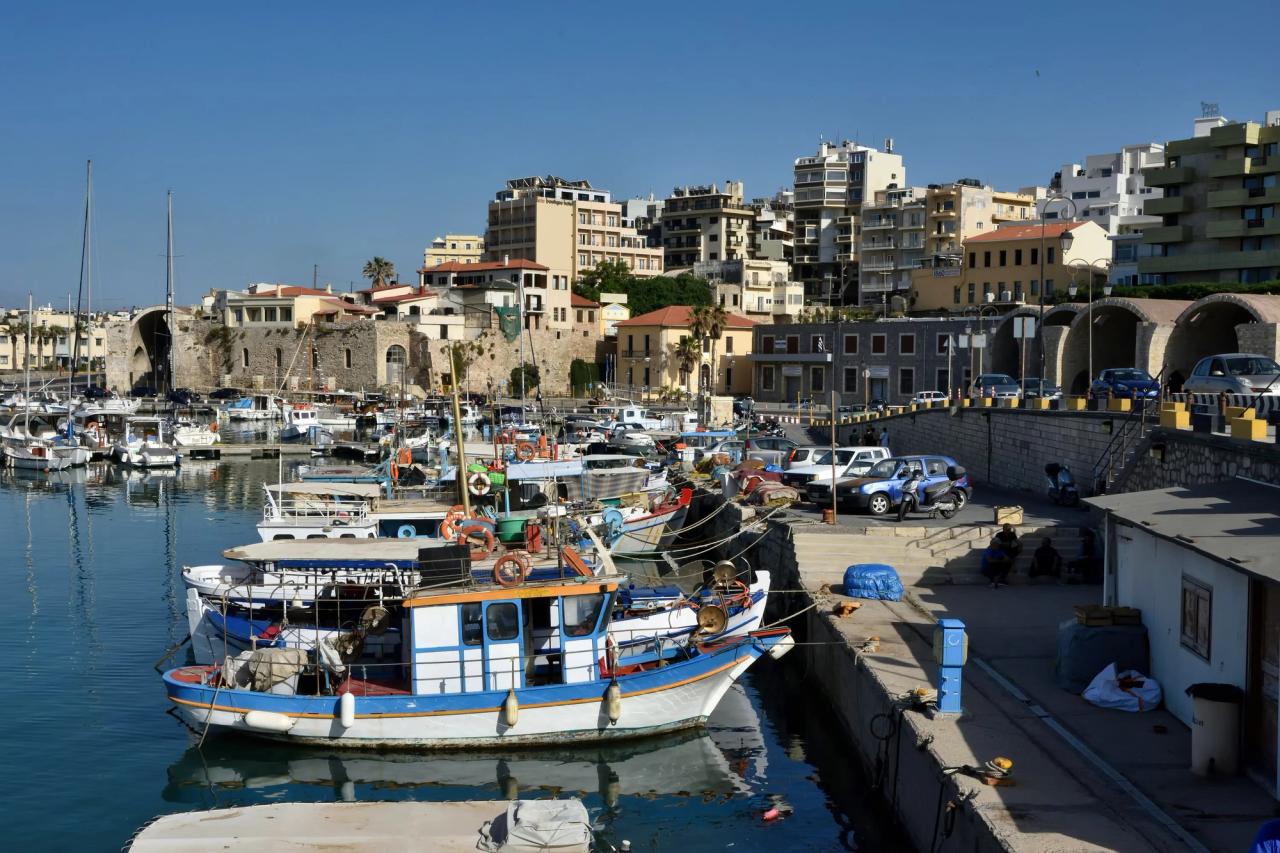
Heraklion is the capital of Crete and Greece's fifth-largest city. Built on the site of the ancient Minoan civilization, it blends thousands of years of history with a modern, cosmopolitan energy driven by tourism and a growing tech sector. The city sits on Crete's northern coast, offering Mediterranean living with access to world-class beaches, gorges, and mountain villages. Heraklion attracts expats who want island life without full isolation — it has an airport, a university, and year-round urban amenities.
Heraklion at a Glance
- Population
- ~180,000 (municipality); ~220,000 (metro area)
- Region
- Crete (Heraklion regional unit)
- Known For
- Knossos Palace, Minoan history, tourism, Cretan culture
- Average Rent (1BR)
- €350–€600/month
- Average Salary
- €800–€1,100/month net
- Expat Community
- Moderate; British, German, and Scandinavian retirees, plus digital nomads
Why Move to Heraklion
- Island living with city infrastructure: Heraklion has hospitals, a university, an international airport, and all major services — unlike smaller Greek islands.
- Incredible history: The Palace of Knossos, the Heraklion Archaeological Museum, and Venetian fortifications make it one of the most historically significant cities in Europe.
- Outdoor lifestyle: Samaria Gorge, Psiloritis mountain, and dozens of beaches are within easy reach. Hiking, swimming, and sailing are part of daily life.
- Cretan food culture: Crete has arguably the best cuisine in Greece. Local olive oil, cheese, raki, and meat dishes are exceptional.
- Year-round community: Unlike seasonal island towns, Heraklion has a permanent population and lively social scene all 12 months.
- Excellent connectivity: Direct flights to Athens (50 min) and many European cities make travel easy.
Visa and Residency
EU/EEA citizens can live in Greece freely. Non-EU citizens need a residence permit. Options include:
- Digital Nomad Visa: Remote income proof ≥€3,500/month. Valid one year, renewable.
- Work Visa: Employer-sponsored. Opportunities mainly in tourism, tech (FORTH), and education.
- Student Visa: Through the University of Crete.
- Retirement Visa: Popular pathway — proof of passive income and health insurance.
Register at the Heraklion Aliens Bureau within 30 days. Crete's immigration offices can be slower than mainland cities during summer.
Residency Tips
- Get your AFM (tax number) first — required for banking, renting, and utilities.
- AMKA (social security number) is needed for healthcare and employment.
- Bring certified copies of all documents. Greek bureaucracy requires patience and paper.
- Start renewals 60 days before your permit expires.
Finding Housing in Heraklion
Average Rents
| Neighborhood | 1-Bedroom | 3-Bedroom | Character |
|---|---|---|---|
| City Center (Lions Square area) | €400–€650 | €700–€1,100 | Tourist hub, Venetian harbor, busy |
| Knossos / Ammoudara | €300–€500 | €550–€900 | Suburban, coastal, quieter |
| Therissos | €280–€450 | €500–€800 | Residential, affordable, local |
| University Area (Voutes) | €250–€400 | €450–€750 | Student-heavy, modern buildings |
| Talos / Karteros | €320–€520 | €550–€900 | Beachside, eastern suburbs |
| Pankritio / Giofyros | €300–€480 | €500–€850 | Southern edge, newer development, affordable |
How to Find Housing
- Spitogatos.gr: Main property portal. Heraklion has fewer listings than Athens, so act fast on good options.
- XE.gr: Useful for private listings and room shares.
- Facebook groups: "Heraklion Expats," "Rent in Heraklion," and Crete-specific groups.
- Walk neighborhoods in person. Many rentals are advertised informally with signs.
- Agents charge one month's rent. Going direct to landlords saves this fee.
Tips for Expats
- Summer (June–September) is peak tourist season — short-term rental prices spike. Look for long-term contracts outside this window.
- Cretan landlords can be informal. Always push for a written contract even if they prefer a handshake.
- Check if the apartment has air conditioning — summers are hot and humid.
- Furnished apartments are more common than in mainland cities due to tourism.
- Avoid the tourist-heavy center if you want peace and lower rents — peripheral neighborhoods offer better value.
Neighborhoods Guide
- City Center (Lions Square / 1866 Street): The bustling heart near the Venetian harbor and old market. Dense, walkable, and full of shops and restaurants. Rents are higher and noise is constant. Best for those who want to be in the middle of everything.
- Knossos / Ammoudara: Southern and western suburbs with more space and proximity to the famous archaeological site. Ammoudara has a long beach. Quieter and more residential. Good for families.
- Therissos: A working-class neighborhood south of the center. Affordable and authentic. No tourist pretensions. Best for budget-conscious expats who want local life.
- University Area (Voutes): Near the University of Crete campus. Modern apartments, student atmosphere, and cheap eats. Connected by bus. Ideal for academics and young expats.
- Talos / Karteros: Eastern coastal suburbs near Karteros Bay. Beach access, seafood tavernas, and a relaxed vibe. Slightly pricier but popular with expat retirees.
- Pankritio / Giofyros: Southern neighborhoods with newer apartment blocks. Affordable, functional, and well-connected by bus. Good for practical-minded residents.
Cost of Living in Heraklion
Monthly Budget Breakdown
| Category | Budget Range |
|---|---|
| Rent (1BR, center) | €350–€600 |
| Utilities | €90–€160 |
| Internet | €25–€35 |
| Groceries | €180–€270 |
| Transport | €25–€40 |
| Dining out (4x/month) | €60–€110 |
| Leisure/Gym | €25–€45 |
| Total | €755–€1,260 |
Day-to-Day Costs
- Coffee (freddo): €2.50–€3.50
- Lunch (casual taverna): €7–€11
- Monthly bus pass (city buses): €25
- Beer (bar): €3.50–€5.00
- Cinema ticket: €6–€8
- Loaf of bread: €0.90–€1.30
- 1 litre of milk: €1.10–€1.40
- Dozen eggs: €2.80–€3.50
Getting Around Heraklion
- Public transport: Urban buses (KTEL Irakleiou and city buses) cover the city and suburbs. A monthly pass is around €25. Service is reliable but not extensive.
- Cycling: Flat coastal paths exist, but cycling infrastructure in the city is minimal. The center is hilly in places.
- Driving: Traffic congestion is common in the center, especially in summer. Parking is difficult. A car is essential for exploring Crete's villages, gorges, and southern coast.
- Airport: Heraklion International Airport (HER / Nikos Kazantzakis) is just 5 km from the center. Direct flights to Athens (50 minutes), many European cities, and seasonal charter routes.
- Intercity: KTEL buses connect Heraklion to Chania (2.5 hours), Rethymno (1.5 hours), Agios Nikolaos, and southern Crete. Ferries from Heraklion port run to Athens (Piraeus), Santorini, and other Cyclades.
- Taxis: Metered taxis are cheap by European standards. Flag fall is €1.80.
- Ride-hailing: Beat app works in Heraklion. Uber is not available.
Healthcare in Heraklion
- Hospitals/Clinics: University General Hospital of Heraklion (PAGNI) is the main public hospital. Private clinics like Venizelio and Creta Interclinic offer faster appointments and English-speaking staff.
- English-speaking doctors: Widely available, especially in private practice. Many doctors trained abroad or in Athens.
- Pharmacies: Abundant throughout the city. Marked with a green cross. Pharmacists provide advice and dispense many medications without prescriptions.
- Emergency number: 112 (EU-wide) or 166 (EKAB ambulance).
- Health insurance: EU citizens use EHIC for emergencies. Long-term residents register with EFKA or carry private coverage.
- Dental care: Private dental clinics are affordable. A check-up costs €25–€45.
Get a personalised relocation plan
Drop your email and we'll send a tailored checklist plus three quotes from vetted movers.
Banking & Finances
- Opening a bank account: You need an AFM, passport, and proof of address. Alpha Bank, Bank of Crete, and Eurobank operate in Heraklion.
- Cash culture: Cash is widely used, especially in markets and traditional tavernas. Larger businesses accept cards.
- Transfers: SEPA transfers within the EU are cheap. International transfers cost €10–€30.
- ATMs: Widely available. Withdrawal limits €300–€600/day.
- Mobile banking: Greek bank apps have English interfaces.
Language & Communication
- Official language: Greek. Cretan dialect is spoken informally but standard Greek is used everywhere officially.
- English proficiency: Good in tourist areas and among younger residents. Less common in residential neighborhoods and government offices.
- Learning Greek: Very helpful for daily life outside the tourist zone. The University of Crete offers courses. Private frontistiria charge €150–€350/semester.
- Useful phrases: Kalimera (good morning), efharisto (thank you), parakalo (please/you're welcome), signomi (excuse me), yassas (hello/goodbye).
- SIM cards: Cosmote has the best coverage on Crete. Vodafone and Wind are available. Prepaid plans from €8–€12/month.
Culture & Lifestyle
- Minoan heritage: The Palace of Knossos (1900 BC) is one of Europe's most important archaeological sites. The Heraklion Archaeological Museum houses the world's finest Minoan collection.
- Venetian legacy: The Koules Fortress, the old city walls, and the Morosini Fountain reflect centuries of Venetian rule. The old town is atmospheric and walkable.
- Cretan traditions: Live Cretan lyra and laouto music in local bars. Traditional villages in the hills maintain customs going back centuries.
- Beach life: Ammoudara, Amnisos, and Karteros beaches are minutes from the city. Matala, Elafonisi, and Balos are day trips.
- Raki culture: Cretans offer raki (tsikoudia) as a sign of hospitality — often free after a meal. Declining is considered impolite.
Food & Dining
- Local specialties: Dakos (barley rusk with tomato and feta), lamb with stamnagathi (wild greens), Cretan graviera cheese, apaki (smoked pork), kalitsounia (cheese pies), raki (tsikoudia).
- Best areas for dining: The old town around 1866 Street for tavernas, the harbor for seafood, and village restaurants in the hills for traditional Cretan cooking.
- Budget options: A dakos costs €3–€4. Souvlaki wraps from €2.50. A full Cretan meal with wine and raki runs €12–€18.
Expat Community
- Meetup groups: Heraklion Expats, Internations Crete, and Facebook groups for British, German, and Scandinavian expats in Crete.
- Retiree community: Crete is popular with northern European retirees, especially in nearby Hersonissos and Agios Nikolaos.
- Digital nomads: Growing scene around the city center, with coworking spaces and café culture supporting remote work.
Job Market in Heraklion
- Main industries: Tourism, agriculture (olive oil, wine), education, technology (FORTH research center), food production.
- Major employers: University of Crete, FORTH (Foundation for Research and Technology – Hellas), Heraklion Port Authority, hotel chains, agricultural cooperatives.
- Average salaries by sector:
| Sector | Monthly Net |
|---|---|
| IT / Tech | €900–€1,500 |
| Tourism / Hospitality | €700–€1,000 |
| Education / Research | €800–€1,300 |
| Teaching (English) | €650–€1,000 |
| Agriculture | €600–€900 |
- Job search resources: Kariera.gr, Indeed Greece, LinkedIn, FORTH job board, university career services, seasonal tourism job boards.
Education in Heraklion
- International schools: Limited in Heraklion itself. The closest options are small private schools with international curricula. Some families use the European School programs or homeschool.
- Universities: University of Crete (Heraklion campus — strong in sciences and humanities), Technological Educational Institute of Crete (TEI).
- Language schools: Private frontistiria offer English and Greek. The University of Crete offers Greek language courses for international students and staff.
Moving Checklist for Heraklion
- Confirm visa or residency requirements (EU citizens: register at local police)
- Research neighborhoods — visit during off-season for a realistic picture
- Join Crete expat Facebook groups for current advice
- Arrange health insurance or confirm EHIC coverage
- Start learning basic Greek
- Prepare certified copies of all key documents
- Obtain AFM (tax number) from the local DOY
- Open a bank account (Alpha Bank, Bank of Creta, or Eurobank)
- Get a local SIM card (Cosmote has the best coverage on Crete)
- Sign rental contract and set up utilities
- Buy a monthly bus pass (€25)
- Locate your nearest pharmacy, supermarket, and KEP office
- Register with a local doctor or clinic
- Apply for AMKA (social security number)
- Explore the old town and find your local spots
- Start Greek language lessons — Cretans are warm and appreciate the effort
- Register with your embassy if applicable
- Set up mobile banking
Internet & Connectivity
- Speeds: Heraklion has decent broadband. Average download speeds are 20–60 Mbps. Fiber is expanding, especially around the university and FORTH.
- Providers: Cosmote, Vodafone, and Nova offer broadband from €22–€38/month.
- Mobile data: 4G covers the city well. Cosmote has the best coverage on Crete. 5G is limited.
- Coworking spaces: Growing. Several coworking spots in the old town and near the university. Cafés are the primary remote work venues.
Related Guides
- [Moving to Greece] — comprehensive country guide
- [Moving to Athens] — the capital city guide
- [Moving to Patras] — western Greece gateway