Linz sits on the Danube in the heart of Upper Austria (Oberösterreich), combining heavy-industry muscle with a surprisingly vibrant arts and technology scene. Home to Voestalpine, one of Europe's largest steel producers, and the internationally renowned Ars Electronica festival, Linz draws engineers, IT professionals, researchers, and creative workers in equal measure. Rents run 20-30% lower than Vienna, the Danube riverbank provides a scenic daily backdrop, and Johannes Kepler University anchors a growing tech corridor. If you want a mid-sized Austrian city with real career opportunities and manageable costs, Linz deserves a close look.
Linz at a Glance

- Population
- ~212,000 (city); ~290,000 (metro area)
- Region
- Upper Austria (Oberösterreich), northern Austria
- Known For
- Steel industry, Ars Electronica, Danube riverfront, European Capital of Culture 2009
- Average Rent (1BR)
- €700–€1,000
- Average Salary
- ~€2,900/month net
- Expat Community
- Growing; concentrated around JKU campus, tech firms, and the OK Haus area
Why Move to Linz
- Lower cost of living than Vienna or Salzburg: Rent, groceries, and dining all run noticeably cheaper while Austrian-quality infrastructure remains intact.
- Strong industrial and tech job market: Voestalpine, Dynatrace, KEBA, and numerous suppliers provide steady demand for engineers, developers, and skilled trades.
- Compact and livable: You can cross the city by tram in under 25 minutes; most neighborhoods are within a 15-minute bike ride of the centre.
- Cultural punch above its weight: The Lentos Kunstmuseum, Ars Electronica Center, Brucknerhaus concert hall, and a packed annual events calendar make Linz anything but a dull industrial town.
Things to Consider
- Smaller expat scene: Linz has a fraction of Vienna's international community. If a large English-speaking social circle matters to you, expect to put in effort through Meetups and university events.
- Limited nightlife: Bars and clubs cluster along Landstraße and the Altstadt, but the scene winds down early and options are modest compared to Vienna or Graz.
- Industrial character: The Voestalpine plant on the city's southern edge is a visible (and occasionally olfactory) reminder that Linz is a working industrial city first and foremost.
- Air connections: Blue Danube Airport offers only a handful of routes. For long-haul flights, you will connect through Vienna or Munich.
Visas and Residency for Austria
All non-EU/EEA nationals need a visa or residence permit to live and work in Linz. The most common routes:
- Red-White-Red Card (Rot-Weiss-Rot-Karte): Points-based work permit for qualified professionals. Your employer initiates the application through the Austrian Public Employment Service (AMS). Points are scored for education, work experience, age, and German skills.
- EU Blue Card: Available if you have a university degree and a job offer with a salary at least 1.5 times the Austrian average (€63,672 gross/year in 2026).
- National Visa D: For stays over 90 days covering employment, study, or family reunification.
- Residence permit (Aufenthaltsbewilligung): Required if you plan to stay longer than six months.
EU/EEA citizens only need to register their residence within four months of arriving. The registration happens at the Meldeamt (registration office), located inside the Linz Magistrat (city hall) on Hauptstraße. You will receive a Meldezettel (registration certificate), which is required for nearly everything that follows — opening a bank account, signing a lease, enrolling in healthcare.
Key resources:
- Visa types and eligibility: https://www.migration.gv.at/en/types-of-immigration/visa/
- Austrian representations abroad: https://www.bmeia.gv.at/en/embassies-consulates/search-for-austrian-representation/
Finding Housing in Linz
Average Rents
| Neighborhood | 1-Bedroom | 3-Bedroom | Character |
|---|---|---|---|
| Innere Stadt (Old Town) | €800–€1,000 | €1,200–€1,700 | Historic centre, walkable, premium pricing |
| Urfahr | €650–€850 | €950–€1,400 | Across the Danube, student-friendly, lively |
| Ebelsberg | €600–€750 | €900–€1,250 | Family-oriented, quiet, good value |
| Dornach-Auhof | €600–€750 | €850–€1,150 | Residential, near JKU, affordable |
| Pöstlingberg | €850–€1,200 | €1,300–€1,800 | Hilltop views, upscale, green |
How to Find Housing
- Willhaben.at: Austria's dominant property portal. Filter by Linz postcode (4010–4030) and set alerts — good flats go fast.
- Housing.at: Operated by GWG, Linz's largest social-housing provider. Income-capped units with below-market rents; worth checking even as an expat.
- ImmobilienScout24.at: National portal with a decent Linz inventory, useful for comparison shopping.
- JKU bulletin boards and Facebook groups: The university's expat and student networks frequently post sublets and flatshares. Search "Wohnung Linz" or "Expat Linz" on Facebook.
- Estate agents (Immobilienmakler): RE/MAX and local agencies like Schtelnik & Partner handle rentals, but expect one month's rent as a commission.
Tips for Expats
- Landlords typically ask for a Kaution (deposit) of two to three months' cold rent (net rent excluding utilities). This is legally capped at six months.
- Bring proof of income or an employment contract in German if possible; many private landlords prefer it.
- Wohnbeihilfe (housing subsidy) is available from the Upper Austrian provincial government for lower-income households. Check ooe.gv.at for eligibility thresholds.
- Flats are advertised as "Kaltmiete" (net rent) plus "Betriebskosten" (building running costs) plus heating — always ask for the "Warmmiete" (total monthly cost) to avoid surprises.
Neighborhoods Guide
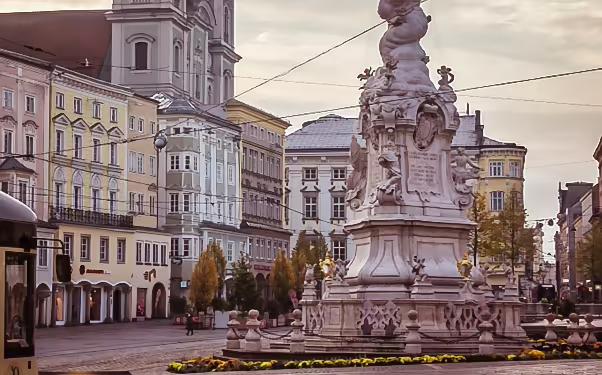
- Innere Stadt (Old Town): Historic centre with Baroque and medieval architecture around Hauptplatz and the Landstraße shopping street. Best for singles and couples who want to walk everywhere. Close to Lentos, Brucknerhaus, and the Donauufer. Rents are the highest in the city, but you save on transport.
- Urfahr: North of the Danube, connected by the Nibelungenbrücke and Vöestbrücke. Student-heavy thanks to its proximity to JKU, with plenty of WG (flatshare) options, budget eateries, and nightlife around OK Haus. The weekly Urfahrmarkt on Saturday mornings is a local institution. Rents are moderate.
- Ebelsberg: Southeast of the centre, popular with families for its parks (including the large Ebelsberg recreation area), good primary schools, and quieter residential streets. Served by tram Line 3. One of the most affordable neighbourhoods in Linz.
- Dornach-Auhof: Southwest, adjacent to the JKU campus. A mix of university housing, post-war apartment blocks, and newer builds. Ideal for students, junior researchers, and anyone working at the tech park. The LISA international school is located here. Budget-friendly rents.
- Pöstlingberg: The hillside neighbourhood on Linz's northern edge, known for its panoramic views, the Pöstlingbergbahn tram (Line 50), and large single-family homes. Attracts affluent families and professionals seeking green surroundings. Rents and purchase prices are the steepest in Linz.
- Franckviertel: East of the Hauptbahnhof, an up-and-coming area with converted industrial buildings, artist studios, and a growing café scene. More affordable than the Innere Stadt. Good rail and bus connections.
Cost of Living in Linz
Monthly Budget Breakdown
| Category | Budget Range |
|---|---|
| Rent (1BR, centre) | €750–€1,000 |
| Utilities (electricity, heating, water, waste) | €180–€280 |
| Internet | €30–€45 |
| Groceries | €300–€400 |
| Transport (monthly pass) | €55 |
| Dining out (4x/month) | €90–€160 |
| Leisure / gym | €50–€100 |
| Total | €1,530–€2,160 |
Day-to-Day Costs
- Coffee (Melange at a café): €3.20–€4.00
- Lunch (casual, daily special / Mittagsmenü): €8–€12
- Monthly transport pass (Linz AG): €55
- Beer (0.5L, Hofer or Wirtshaus): €3.80–€4.50
- Cinema ticket: €9–€12
- Leberkäse semmel (meatloaf roll, local snack): €2.50–€3.50
Getting Around Linz
- Public transport: Linz AG Linien operates four tram lines and a dense bus network. A single ticket costs €2.20; the monthly pass is €55 and covers all trams and buses within the city zone. The Linz Linien app lets you buy and validate tickets on your phone.
- Cycling: Flat terrain along the Danube makes cycling practical. The city has over 120 km of bike lanes. Nextbike rental stations dot the city; the first 30 minutes are free with a subscription.
- Driving: Parking in the Innere Stadt is managed by short-term zones (Kurzparkzone) — maximum 1.5 to 3 hours Monday through Friday. A residential parking permit (Parkpickerl) is essential if you live in the centre. Traffic is generally light compared to Vienna.
- Airport: Linz Airport (Blue Danube Airport, LNZ) is about 14 km southwest of the city with limited scheduled flights (mainly to Frankfurt and seasonal routes). Most international travellers use Vienna (2 hours by Railjet) or Munich (2.5–3 hours by train).
- Intercity: Linz Hauptbahnhof is a major ÖBB hub on the Weststrecke (western rail corridor). Railjet trains reach Vienna in 1h 20m, Salzburg in 1h 10m, and Munich in 2h 30m. WESTbahn, a private operator, also runs competing services on the Vienna–Linz–Salzburg route.
Healthcare in Linz
- Hospitals: AKh Linz (Allgemeines Krankenhaus der Stadt Linz), located on Krankenhausstraße, is the city's main hospital and one of the largest in Upper Austria. The Unfallkrankenhaus Linz (AUVA) handles workplace and emergency injuries. The Barmherzige Brüder (Brothers of Mercy) hospital on Seilerstätte is a well-regarded private option.
- Public insurance: Once employed, you are automatically enrolled in the ÖGK (Österreichische Gesundheitskasse — Austrian Health Insurance Fund) through payroll deductions. Your Sozialversicherungsnummer (social insurance number) is issued when you register your employment. The e-card you receive acts as your proof of coverage at any doctor or pharmacy.
- English-speaking doctors: Availability is decent but not abundant. The JKU campus area and the Innere Stadt have the highest concentration. The ÖGK's online doctor search (gesundheitskasse.at) lets you filter by language. Many specialists at AKh Linz speak English.
- Pharmacies (Apotheken): Found in every neighbourhood; the one at Hauptplatz is open late. After-hours duty pharmacies (Notdienst) rotate — check linz.ag or the posted signs on any pharmacy door.
- Emergency number: 112 (European general emergency); 144 (Austrian ambulance directly).
Planning your move?
Tell us about your move to compare quotes from international moving companies.
Banking and Taxes
Opening a Bank Account
You will need a valid passport or ID, your Meldezettel (proof of registered address), and ideally your Sozialversicherungsnummer. Major banks with branches in Linz:
- Raiffeisenlandesbank OÖ: Strongest regional presence; the branch at Landstraße is expat-friendly.
- Erste Bank: Branches throughout the city; offers an English-language online banking interface.
- Bank Austria (UniCredit): Good digital banking; the Hauptplatz branch handles international customers regularly.
- Flatex / DADAT: Online-focused options worth considering if you rarely visit a physical branch.
Most accounts cost €2–€5/month in maintenance fees. A Girokonto (current account) with a debit card (Bankomatkarte) is standard and sufficient for daily life.
Taxes
If you spend more than 183 days per year in Austria, you are a tax resident and taxed on worldwide income. Income tax (Einkommensteuer) is progressive, ranging from 0% to 55%. Your Steuernummer (tax number) is assigned by the local Finanzamt Linz (tax office on Mozartstraße). Employees have income tax and social-security contributions withheld automatically by their employer via Lohnversteuerung (payroll taxation). Austria has double-taxation treaties with over 90 countries, so check whether your home country's agreement prevents dual taxation.
Driver's Licence and Car Import
EU/EEA licences can be exchanged at the Magistrat Linz without a driving test. Non-EU licence holders must swap their licence within six months of establishing residency — most non-EU countries require both a theory test and a practical driving exam in German. If you import a car from outside the EU, you must declare it to Zollamt Österreich (Austrian Customs), pay applicable duties and VAT, pass a technical inspection, and register it with the local Bezirkshauptmannschaft (district authority) or Magistrat. Cars owned and used abroad for at least six months before relocation may qualify for duty-free import under transfer-of-residence rules.
Education in Linz
- LISA — Linz International School Auhof: A public international school offering the International Baccalaureate (IB) diploma, located in the Dornach-Auhof district near JKU. Tuition is free (it is a public school), but places are competitive.
- Europaschule Linz: Another public option with bilingual tracks, located in the city centre.
- Johannes Kepler University (JKU): Linz's flagship university, strong in computer science, mechatronics, economics, and law. Many master's programmes are taught in English. Tuition for EU/EEA citizens is approximately €750/semester; non-EU students pay around €1,500/semester.
- Kunstuniversität Linz (University of Art and Design): Focuses on fine arts, industrial design, and media. Ideal for creative professionals.
- Anton Bruckner Privatuniversität: Renowned for music, dance, and drama programmes.
- Language schools: Alpha Sprachenschule on Landstraße and Berlitz Linz offer German courses at all levels. Deutschkurs Linz at Volkshochschule (adult education centre) provides affordable intensive courses from €200–€400 per month.
Job Market in Linz
- Main industries: Steel and metals (Voestalpine), chemicals (Borealis, formerly Chemie Linz), IT and software (Dynatrace, KEBA, Fabasoft), automation engineering, logistics, and public administration for the Upper Austrian provincial government.
- Major employers: Voestalpine (steel/technology, ~5,000 employees at Linz site), Siemens (industrial technology), Dynatrace (software intelligence, HQ in Linz), KEBA (industrial and banking automation), Linz AG (city utilities and transport), Borealis (polyolefins), and the Upper Austrian Landesregierung (provincial government).
- Average salaries by sector:
| Sector | Monthly Gross | Monthly Net (approx.) |
|---|---|---|
| Software / IT | €4,200–€5,800 | €2,800–€3,600 |
| Engineering | €3,800–€5,200 | €2,500–€3,300 |
| Manufacturing / Skilled trades | €3,000–€4,000 | €2,100–€2,700 |
| Education / Research | €3,200–€4,600 | €2,200–€3,000 |
| Public administration | €3,000–€4,200 | €2,100–€2,800 |
- Job search resources: AMS (Arbeitsmarktservice) job bank at jobs.ams.at, LinkedIn (filter Linz), Karriere.at (Austria's main job portal), and the JKU Careers Service for university-linked roles. German language ability is a significant advantage, though IT positions at Dynatrace and similar firms often operate in English.
Culture and Lifestyle
- Ars Electronica Center: Linz's Museum of the Future on the Danube south bank, with interactive exhibits on AI, robotics, and media art. The annual Ars Electronica Festival each September draws 100,000+ visitors.
- Lentos Kunstmuseum: A striking glass-clad building on the Donauufer housing modern and contemporary art. Its night-time LED illumination is a city landmark.
- Brucknerhaus: The primary concert hall on Untere Donaulände, home to the Bruckner Orchestra and host to international touring acts.
- Pöstlingberg: A 539-metre hill on the north bank offering panoramic views over Linz and the Danube. Accessible via the Pöstlingbergbahn historic tram (Line 50). The hilltop pilgrimage church and the Grottenbahn (fairy-tale railway inside the fortifications) make it a popular weekend outing.
- Donauufer and Donaupark: The landscaped riverbank stretching from the Nibelungenbrücke eastward is Linz's outdoor living room — joggers, cyclists, and summer beer gardens all share the path.
Food and Dining
- Local specialties: Linzer Torte (the world's oldest known cake recipe, with a lattice-top crust and redcurrant jam filling, available at Jindrak confectionery on Landstraße). Leberkäse (a finely ground meatloaf) is a daily staple, best grabbed as a semmel (roll) from a Hofer or local Metzger.
- Best dining areas: Landstraße (main shopping street) for cafés and casual dining; the Altstadt (Old Town) around Hauptplatz for traditional Austrian Wirtshäuser (taverns); the area near the OK Haus and JKU for international and student-friendly options.
- Budget eating: Mittagsmenü (lunch menus) at Wirtshäuser run €7–€10 for a two-course meal. University mensa at JKU offers meals from €4–€6. Bäckerei (bakeries) like Ströck and Turbrot sell filled rolls and pastries for €3–€5.
Expat Community
- Expat groups: "Expats in Linz" on Facebook and Meetup.com is the most active community, organizing regular social events and networking nights.
- International organizations: The Austria-Ireland Society of Upper Austria and various cultural associations run events in English. The Linz International Business Club connects professionals from multinational firms.
- Language exchanges: Sprachcafé sessions run weekly at Café Museum and at the Volkshochschule Linz. Tandem partnerships are easy to arrange through JKU's language centre.
- OK Haus area: The student and expat cluster around Julius-Raab-Straße near JKU functions as Linz's unofficial international quarter, with pubs, international grocery shops, and a casual, multicultural atmosphere.
Moving Checklist for Linz
- Confirm your visa or residence permit is approved (Red-White-Red Card, EU Blue Card, or National Visa D)
- Book temporary accommodation for your first 2–4 weeks (hotel, Airbnb, or Wunderflats furnished rental)
- Gather documents: passport, birth certificate, marriage certificate (if applicable), university diplomas — all apostilled or legalized as required
- Obtain international health insurance coverage for your first weeks (travel insurance or a private policy) until Austrian public insurance kicks in
- Arrange shipment of personal belongings; prepare a detailed item-by-item inventory in German or English for customs (Zoll)
- If bringing a car from outside the EU, prepare the Certificate of Conformity (CoC), original title, and proof of prior ownership for at least six months
- Download the Linz AG Linien app and ÖBB Scotty app for public transport
- Register your address at the Meldeamt (Magistrat Linz, Hauptstraße 1–5) and obtain your Meldezettel — do this before anything else
- Open a Girokonto (bank account) at Raiffeisen, Erste Bank, or Bank Austria using your Meldezettel and passport
- Register with the Finanzamt Linz (Mozartstraße) to receive your Steuernummer if you are self-employed; employees get this automatically via payroll
- Sign up for Austrian health insurance (ÖGK) through your employer, or register independently at the ÖGK office on Gruberstraße if self-employed
- Activate your e-card (health insurance card) — it arrives by post within 2–3 weeks of enrollment
- Get a local SIM card: A1, Magenta (formerly T-Mobile Austria), and Drei all have shops on Landstraße; prepaid plans start at €10/month
- Find permanent housing; sign a Mietvertrag (lease) and pay your Kaution (deposit)
- Register your updated address again if you moved from your initial temporary accommodation
- Apply for the Wohnbeihilfe (housing subsidy) at the Upper Austrian provincial office if your income qualifies
- Enrol in a German course at Alpha Sprachenschule, Berlitz, or Volkshochschule to build toward the A2 or B1 certificate — essential for permanent residency
- Register children at a school: contact LISA (Linz International School Auhoz) early, as IB places fill up
- If you drove to Austria, begin converting your non-EU driver's licence at the local Bezirkshauptmannschaft or Magistrat within six months
- Set up utility accounts: electricity with Linz AG (the default city provider), internet with A1 or Magenta
- Apply for the Klimaticket Österreich if you plan intercity rail travel — the annual pass covers all public transport nationwide including Linz AG Linien
You can get by with English in IT roles and at JKU, but daily life — dealing with the Meldeamt, reading rental contracts, visiting doctors outside the hospital — runs in German. Aim for A2 within your first year; B1 is needed for permanent residency (Daueraufenthalt EU) after five years.
Linz is roughly 20–30% cheaper in rent, significantly quieter, and far more compact — your commute will rarely exceed 20 minutes. The trade-off is fewer international restaurants, a smaller expat community, and less nightlife. If you value short commutes, outdoor access, and savings over big-city variety, Linz wins.
Yes. Green spaces along the Danube, short commutes, good public schools, and a low crime rate make it family-friendly. Ebelsberg and Dornach-Auhof are particularly popular with families for their parks and school proximity. The LISA international school provides a tuition-free IB option for older children.
Start on Willhaben.at and set alerts for your target neighbourhoods. If you need a furnished flat immediately, use Wunderflats or HousingAnywhere for the first months while you search for an unfurnished long-term rental. Having a signed employment contract and your Meldezettel ready makes landlords far more receptive.
Linz sits at roughly 260 m elevation in a river valley. Winters average around -2°C to 3°C from December through February, with occasional cold snaps reaching -10°C. Snowfall is moderate — a few weeks of cover per winter. Invest in a proper winter coat, waterproof boots, and expect higher heating bills from November through March (budget €50–€80 extra per month).
Technically yes — the Railjet takes 1 hour 20 minutes — but it is a 2.5–3 hour daily round trip. Some people do a weekly commute (living in Linz, working in Vienna two to three days). For daily commuting, the travel time and cost (a yearly Railjet pass runs around €3,500–€4,000) make it impractical compared to simply living in Vienna.
Related Guides
- [Moving to Austria] — comprehensive country guide covering visas, taxes, and national healthcare
- [Moving to Vienna] — Austria's capital, largest city, and primary expat destination
- [Moving to Salzburg] — another major Austrian city, 1 hour west by rail
- [Moving to Graz] — Austria's second-largest city, with its own industrial and university character