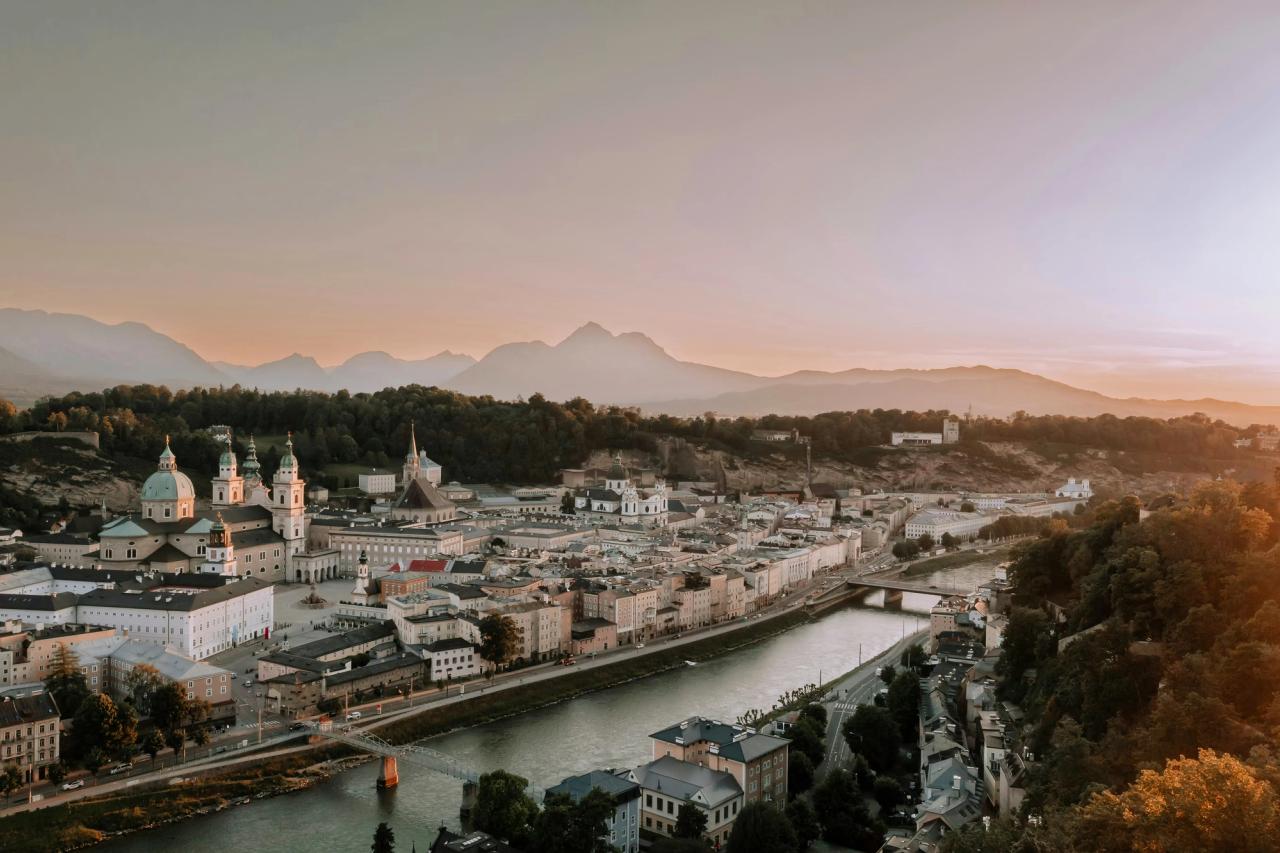

Salzburg is a compact, baroque city nestled beneath the Austrian Alps, best known as the birthplace of Wolfgang Amadeus Mozart and the setting of The Sound of Music. With a population of around 155,000, it feels more like an oversized town than a major metropolis — and that is exactly its appeal. The city straddles the Salzach River, with the medieval Festung Hohensalzburg fortress perched on a hilltop and the baroque Old Town spread below, creating a skyline that looks like a painting come to life. Expats who choose Salzburg are drawn by world-class culture, immediate access to ski slopes and hiking trails, and a quality of life that consistently ranks among the highest in Europe. The trade-off is cost: Salzburg is the second most expensive city in Austria after Vienna, and its job market leans heavily on tourism and hospitality. If you value nature, safety, and a rich cultural scene over the buzz of a large metropolis, Salzburg is an excellent fit. This guide breaks down everything you need to know before making the move.
Salzburg at a Glance
- Population
- ~155,000 (metro area ~220,000)
- Region
- Salzburg (federal state), northern Austria
- Known For
- Mozart's birthplace, Salzburg Festival, Festung Hohensalzburg
- Average Rent (1BR)
- €800–€1,200 per month
- Average Salary
- €2,200–€2,800 net per month
- Expat Community
- Moderate — international students, tourism professionals, and corporate workers
Why Move to Salzburg
- Alpine setting: The city sits in a valley ringed by mountains. You can reach skiing in 30 minutes and hiking trails in under 15. The Gaisberg peak is accessible by bus and foot from the city center, and the Untersberg massif offers challenging hikes with panoramic views stretching to Germany.
- Cultural depth: Mozart's legacy permeates the city year-round — his birth house on Getreidegasse, the Mozarteum concert halls, and a calendar packed with performances. The annual Salzburg Festival (July–August) is one of the world's premier classical music and drama events, drawing artists and audiences from across the globe.
- Safety and cleanliness: Salzburg consistently ranks among the safest cities in Europe, with low crime rates and immaculate public spaces. The tap water, sourced from alpine springs, is some of the purest in the world.
- Compact and walkable: The entire historic center is pedestrian-friendly, and most daily needs are within a 15-minute walk or short bus ride. The Salzach River, with its tree-lined banks, serves as the city's central artery for walking, jogging, and cycling.
- Central European location: Salzburg sits at the crossroads of Austria and Germany. Munich, Vienna, and Innsbruck are all reachable by train in under 2.5 hours, making weekend travel across Central Europe effortless.
- Outdoor lifestyle: Whether it is skiing in winter, hiking in summer, or swimming in nearby lakes like Wolfgangsee and Fuschlsee, the outdoors is woven into daily life. Locals take this seriously — expect your colleagues to disappear to the slopes on Friday afternoons in winter.
- Quality infrastructure: Despite its compact size, Salzburg has excellent public services, well-maintained roads, reliable utilities, and fast internet. Healthcare, education, and public transport all operate at a standard that exceeds what many larger cities offer.
Finding Housing in Salzburg
Average Rents
| Neighborhood | 1-Bedroom | 3-Bedroom | Character |
|---|---|---|---|
| Altstadt (Old Town) | €1,000–€1,500 | €2,200–€3,200 | Historic, touristy, limited supply |
| Nonntal | €850–€1,100 | €1,800–€2,500 | Residential, near the fortress, quiet |
| Maxglan | €750–€1,000 | €1,600–€2,200 | Family-friendly, good local shops |
| Lehen | €650–€900 | €1,400–€1,900 | Up-and-coming, more affordable |
| Parsch | €800–€1,050 | €1,700–€2,300 | Green, near Gaisberg mountain |
| Itzling | €700–€950 | €1,500–€2,100 | Practical, close to the main train station |
How to Find Housing
- Willhaben.at: Austria's largest classifieds platform — the first place to search for rentals. Most landlords and agencies list here.
- ImmobilienScout24: Popular for apartment listings with detailed filters, including floor plans and energy ratings.
- Salzburger Nachrichten (classifieds): The local newspaper still carries rental ads that sometimes appear before online listings.
- Facebook groups: "Wohnung Salzburg" and "Expats in Salzburg" groups regularly post available flats, especially short-term sublets.
- Local real estate agents (Immobilienmakler): They charge a commission (usually one to two months' rent) but can save time in a tight market.
Tips for Expats
- Start searching early — Salzburg's rental market is tight, especially before the summer festival season when short-term lets command premium prices.
- Be prepared to provide proof of income (Einkommensnachweis) and a credit reference. Austrian landlords expect these documents at the viewing.
- Many older buildings have no elevator. Confirm floor level if mobility is a concern.
- Nebenkosten (utility costs on top of rent) typically run €150–€250 per month. Always clarify what is included in the listed rent before signing.
- Watch out for short-term festival sublets being advertised as long-term rentals. Confirm the contract type before committing.
- Buying property is possible for foreigners but involves a Grundbuch (land registry) process and additional costs of roughly 4%–6% of the purchase price (transfer tax, notary, and registration fees).
Neighborhoods Guide
- Altstadt (Old Town): The postcard baroque center along the Salzach River. Tourist-heavy, expensive, and charming. Best for singles or couples who want to be in the heart of it, though noise from street performers and crowds is common in summer.
- Nonntal: Sits directly below Festung Hohensalzburg on the left bank of the river. Quiet, residential, with a village feel. Popular with academics, university staff, and families who want proximity to the center without the tourist noise.
- Maxglan: West of the river. A solid middle-class district with schools, parks, and weekly markets. Good value for families who want space and a neighborhood feel while staying well-connected by bus.
- Lehen: The most affordable central district, north of the Hauptbahnhof. Slightly rougher around the edges but gentrifying quickly with new cafés and cultural venues. Close to Mirabell Gardens by bus and increasingly popular with young professionals.
- Parsch: Eastern side of the city, facing the Gaisberg mountain. Green, peaceful, and popular with outdoor enthusiasts who want trails on their doorstep. Higher-end housing with mountain views.
- Itzling: North of the center, near Salzburg Hauptbahnhof. Practical for commuters and those who travel frequently by train to Vienna or Munich. More industrial in parts but well-connected and affordable.
Cost of Living in Salzburg
Monthly Budget Breakdown
| Category | Budget Range |
|---|---|
| Rent (1BR, center) | €850–€1,200 |
| Utilities | €150–€250 |
| Internet | €30–€45 |
| Groceries | €250–€350 |
| Transport | €55–€60 (monthly pass) |
| Dining out (4x/month) | €120–€200 |
| Leisure/Gym | €30–€60 |
| Total | €1,485–€2,165 |
Day-to-Day Costs
- Coffee (Melange): €3.50–€5.00
- Lunch (casual restaurant): €10–€15
- Monthly transport pass: €55
- Beer (half-liter, bar): €4.50–€6.00
- Cinema ticket: €10–€13
- Loaf of bread: €2.00–€3.50
- Monthly gym membership: €30–€60
- 1 kg of chicken breast: €8–€12
- Bottle of wine (supermarket): €5–€10
- Dinner for two (mid-range restaurant): €50–€80
Grocery Shopping
Salzburg has a competitive supermarket landscape. Spar and Billa are the most common chains for everyday shopping. Hofer (Austria's Aldi equivalent) offers the best prices. Interspar and Merkur (now rebranded as Billa Plus) are larger hypermarkets on the outskirts for bigger hauls. Weekly farmers' markets at Grünmarkt and Universitätsplatz offer local produce, cheese, and bread at reasonable prices.
Getting Around Salzburg
- Public transport: The Albus network covers the city with buses and trolleybuses. A monthly pass costs around €55 and covers all zones within the city. Services run roughly 5:00 AM to midnight, with night buses (Nightline) operating on Friday and Saturday nights. The Salzburger Verkehrsverbund (SVV) app allows mobile ticket purchases.
- Cycling: Salzburg is flat in the center and well served by bike lanes along the Salzach River and throughout the city. Citybike Salzburg offers a public bike-sharing system with stations across town — the first 30 minutes are free. Many residents cycle year-round, even in winter.
- Driving: Parking in the center is limited and expensive. A Parkpickerl (resident parking permit) is required for street parking in most districts and costs around €120 per year. Many expats find a car unnecessary for daily life, though one becomes useful for alpine day trips and grocery runs to larger supermarkets on the outskirts.
- Airport: Salzburg Airport (SZG) is just 4 km from the center, served by buses 2 and 10. It has budget flights to major European cities via Ryanair and easyJet. For long-haul connections, Munich Airport (MUC) is a 90-minute drive or 2-hour train ride and offers far more international routes.
- Intercity trains: Salzburg Hauptbahnhof connects to Vienna (2.5 hours by Railjet), Munich (1.5 hours), and Innsbruck (1.75 hours). The ÖBB rail system is efficient and comfortable. Booking in advance on the ÖBB app or website secures discounted Sparschiene fares.
- Cross-border convenience: Salzburg sits directly on the Austrian-German border. The S-Bahn (suburban rail) connects to Freilassing and other Bavarian towns, and you can walk across some border points without noticing.
Healthcare in Salzburg
- Hospitals/Clinics: The Universitätsklinikum Salzburg (LKH) is the main hospital and handles emergencies. Paracelsus Medical University is affiliated with the clinic, ensuring high standards of care and access to specialists. There are also several private clinics for those with supplementary insurance.
- English-speaking doctors: Available, particularly in private practices around the Nonntal and city center. The expat Facebook groups maintain updated lists of English-speaking GPs, dentists, and specialists. Booking via Docfinder.at allows you to filter by language.
- Pharmacies (Apotheken): Widely available across the city. They operate on a rotating night/weekend schedule — each pharmacy posts the current duty roster on its door, and the schedule is also published online.
- Health insurance: Austria's public system (ÖGK) covers most medical costs including doctor visits, hospital stays, maternity care, and prescriptions. Employees are automatically enrolled; self-employed and freelancers must register themselves. Private insurance (via companies like Uniqa or Generali) offers faster specialist access and private hospital rooms.
- Emergency number: 144 (ambulance), 112 (European emergency), 133 (police).
Get a personalised relocation plan
Drop your email and we'll send a tailored checklist plus three quotes from vetted movers.
Visa and Immigration
- EU/EEA citizens: Can live and work in Austria without a visa. You simply register your residence at the Meldeamt within three days of arrival and then register with the social insurance system.
- Non-EU citizens: Need a National Visa D (for stays over 90 days) or a residence permit. The Rot-Weiß-Rot Karte (Red-White-Red Card) is the most common work-based residence permit, tied to specific job categories and salary thresholds. Family reunification and student visas are also available.
- Freelancers and self-employed: Can apply for the Rot-Weiß-Rot Karte Plus or a self-employment visa, though requirements are stricter and include demonstrating economic benefit to Austria.
- Processing times: Typically 8–12 weeks for residence permits. Apply through the Salzburger Landespolizeidirektion (Fremdenpolizei) — the immigration authority responsible for Salzburg. Having all documents prepared and certified in advance significantly speeds up the process.
- Useful resources: The official Austrian immigration portal at migration.gv.at provides detailed information on visa types, eligibility, and required documents.
Culture & Lifestyle
- Music and performance: Salzburg is synonymous with classical music. Beyond the Festival, there are year-round concerts at the Mozarteum, the Grosses Festspielhaus, and smaller venues throughout the Old Town. Street musicians fill the Getreidegasse in summer. The city also has a vibrant jazz and indie scene at venues like Rockhouse and Jazzit.
- Outdoor recreation: Skiing at Flachau, Obertauern, and Zell am See is under an hour away by car or bus. Summer hiking on the Gaisberg and Untersberg starts right from the city edge. The Salzach River is popular for jogging and cycling. Nearby lakes (Wolfgangsee, Fuschlsee, Mattsee) are popular swimming spots from June to September.
- Architecture and sightseeing: The Festung Hohensalzburg fortress dominates the skyline and offers sweeping views of the city and Alps. The baroque churches and palaces of the Old Town — including Salzburg Cathedral and Mirabell Palace — are a UNESCO World Heritage Site. The Mozart Birthplace on Getreidegasse is a pilgrimage site for music lovers.
- Festivals: The Salzburg Festival (July–August) is the headline event, featuring opera, drama, and orchestral concerts. The Salzburg Advent Singing, Jazz & The City (October), and the Christkindlmarkt (Christmas market in front of the cathedral) are beloved local traditions. The Salzburg Marathon in May draws runners from across Europe.
Food & Dining
- Try Salzburger Nockerl (a sweet soufflé representing the three surrounding mountains), Kasnocken (cheese dumplings), and Mozartkugel (the original chocolate-marzipan praline invented in Salzburg in 1890).
- The Grüner Markt and Universitätsplatz farmers' markets are excellent for fresh produce, local cheeses, and bread.
- Budget-friendly eating: Stieglkeller for beer and traditional food with fortress views, Afro Café for international lunch menus, and kebab shops near the train station for quick meals under €7.
- For coffee and cake culture, head to Café Tomaselli (Austria's oldest coffeehouse, founded in 1703) or the more modern 220 Grad for specialty coffee.
- Stiegl is Salzburg's local brewery and a point of pride — you will see it on tap everywhere. The Stiegl Brauwelt (brewery museum) is worth a visit.
Expat Community
- Internations Salzburg: Regular meetups and networking events for expats across industries.
- Meetup.com groups: Language exchanges, hiking groups, and social events organized by locals and newcomers alike.
- University community: Paris Lodron University and the Mozarteum attract a steady stream of international students, visiting scholars, and researchers who form a natural expat network.
- Sports clubs: Running groups, climbing gyms (like Citywall), and ski clubs are popular ways to meet people with shared interests.
- Churches and community organizations: Several English-language church services operate in Salzburg, and various cultural associations host regular events for newcomers.
Job Market in Salzburg
- Main industries: Tourism and hospitality (the dominant sector), education and research, healthcare, trade and logistics (proximity to the German border), and creative industries tied to music and the arts.
- Major employers: Salzburg AG (energy and utilities), Red Bull (headquartered in nearby Fuschl am See — one of the region's largest private employers), Paracelsus Medical University, Land Salzburg (state government), Stiegl Brewery, and numerous hotel and tourism groups.
- Average salaries by sector:
| Sector | Average Monthly Net |
|---|---|
| Hospitality/Tourism | €1,600–€2,200 |
| Education | €2,000–€2,800 |
| Healthcare | €2,200–€3,200 |
| IT/Tech | €2,500–€3,500 |
| Trade/Logistics | €2,000–€2,800 |
- Job search resources: AMS (Arbeitsmarktservice) is Austria's public employment service and a mandatory registration point for job seekers. Karriere.at and StepStone.at are the main online job boards. The Wirtschaftskammer Salzburg (Chamber of Commerce) also lists opportunities. Networking is particularly important in Salzburg's tight-knit business community — many jobs are filled through personal connections.
- Freelancing and self-employment: Salzburg has a growing freelance and remote-work community, particularly in IT, design, and consulting. Self-employed individuals must register with the Wirtschaftskammer and arrange their own social insurance.
Taxes and Social Security
If you are a tax resident in Austria (generally if you spend more than 183 days per year in Austria or maintain your primary residence there), you are subject to taxation on your worldwide income. Austria uses a progressive income tax system with rates ranging from 0% to 55%.
| Tax Component | Description | Notes |
|---|---|---|
| Income Tax (Einkommensteuer) | Tax on global income | Progressive rates: 0% up to 55% |
| Social Security (Sozialversicherung) | Mandatory contributions | Covers pension, health, unemployment, and accident insurance |
| VAT (Mehrwertsteuer) | Sales tax | 20% standard rate, 10% on essentials like food |
Employees and self-employed individuals must contribute to Austria's social security system, which funds pensions, healthcare, and unemployment benefits. Contributions are split between employer and employee. Austria has signed double taxation treaties with over 90 countries to prevent residents from being taxed twice on the same income.
Education in Salzburg
- International schools: Salzburg International School (SIS) offers bilingual German-English education from primary through secondary. American International School Salzburg follows a US-style curriculum and is popular with diplomatic and corporate families on shorter assignments.
- Universities: Paris Lodron University of Salzburg offers a wide range of programs and has a strong international student community. Paracelsus Medical University specializes in medicine and health sciences. Mozarteum University is one of the world's most prestigious institutions for music and performing arts, attracting students from over 50 countries.
- Language schools: The Universität Salzburg Sprachenzentrum offers German courses for all levels, including intensive integration courses. Private options include Berlitz Salzburg and IKI (Internationales Kulturinstitut), which offer flexible schedules for working professionals.
- Childcare and preschool: Public kindergartens (Kindergarten) are available from age three, often subsidized. For younger children, private crèches (Kinderkrippe) exist but have long waiting lists — apply early.
Moving Checklist for Salzburg
- Secure a visa or residence permit if you are a non-EU citizen
- Arrange temporary accommodation for at least the first 2–4 weeks (Airbnb, serviced apartments, or short-term sublets)
- Gather apostilled copies of key documents (birth certificate, degree, marriage certificate)
- Research Austrian health insurance requirements (you need coverage before registering)
- Begin learning basic German — even A1 level helps with initial bureaucracy
- Notify your current bank and set up international transfers for the transition period
- If bringing a pet, ensure microchip, rabies vaccination, and EU Animal Health Certificate are ready
- Register your residence at the Meldeamt (registration office) within 3 days — this is a legal requirement
- Open an Austrian bank account (Erste Bank, Bank Austria, or Raiffeisen are common choices)
- Get an Austrian phone number (A1, Magenta, or Drei — prepaid SIMs are easy to set up at any supermarket)
- Register with a health insurance provider (ÖGK for employed, or a private insurer for self-employed)
- Familiarize yourself with the public transport network and buy a monthly pass
- Visit your local district office to understand what services are available in your area
- Obtain your Meldezettel (proof of residence) — you will need this for nearly every official interaction
- Sign up for German courses if needed
- Register your children with a school or kindergarten if applicable
- Get an annual Salzburg transit pass for savings over monthly passes
- Visit the Salzburger Landespolizeidirektion (Fremdenpolizei) if you need to extend or finalize your residence permit
- Explore your neighborhood — find your nearest supermarket, pharmacy, bakery, and doctor
- Register for a Handysignatur or ID Austria account for online government services
- Set up your social insurance number (Sozialversicherungsnummer) for employment and healthcare
Related Guides
- [Moving to Austria] — comprehensive country guide
- [Moving to Vienna] — Austria's capital city guide
- [Moving to Europe] — general European relocation overview
Salzburg rewards those who embrace its rhythm: a morning coffee at a baroque café, an afternoon hike in the Alps, and an evening concert in a centuries-old hall. It is not a city for everyone — the job market is limited and the cost of living is high — but for expats who value quality over scale, it is one of the best places in Europe to call home.