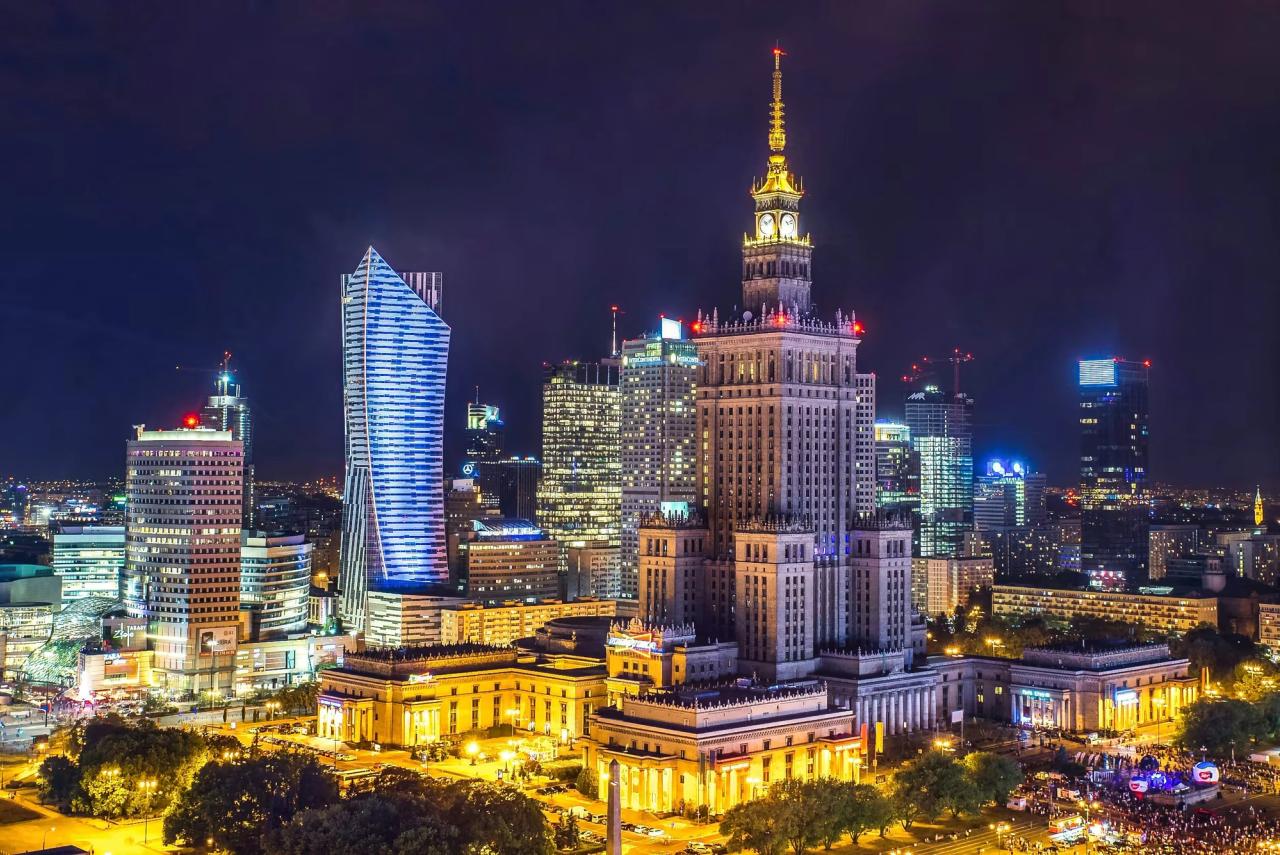
Warschau (Warszawa) ist die Hauptstadt und größte Stadt Polens, die im ostzentralen Teil des Landes zu beiden Seiten der Weichsel (Wisła) liegt. Nach nahezu vollständiger Zerstörung im Zweiten Weltkrieg wiederaufgebaut, hat sich die Stadt zu einem dynamischen Finanz- und Wirtschaftszentrum entwickelt, das von der Warschauer Börse (GPW) und einem rasch wachsenden Technologiesektor geprägt wird. Die Stadt zieht Expats mit ihrer Kombination aus mitteleuropäischen Preisen, einem zunehmend internationalen Arbeitsmarkt und einer Food- und Nachtleben-Szene an, die mit Städten vergleichbar ist, die doppelt so teuer sind. Wenn Sie berufliche Entwicklung in einer europäischen Hauptstadt ohne westeuropäische Mieten suchen, ist Warschau einen genauen Blick wert.
Warschau auf einen Blick
- Einwohnerzahl
- ~1,86 Millionen (Stadt), ~3,1 Millionen (Metropolregion)
- Region
- Woiwodschaft Masowien (województwo mazowieckie)
- Bekannt für
- Rekonstruierte Altstadt (UNESCO), Business-Skyline, Tech-Wachstum
- Durchschnittsmiete (1-Zimmer-Wohnung)
- 3.200–5.000 PLN (Stadtzentrum)
- Durchschnittsgehalt
- ~7.500 PLN netto/Monat (Stadtdurchschnitt)
- Expat-Community
- Groß und wachsend; stark in IT, Finanzen und Unternehmensdienstleistungen
Warum ein Umzug nach Warschau sich lohnt
- Karrieremöglichkeiten: Warschau beherbergt die Zentrale der meisten großen polnischen Unternehmen und Regionalbüros globaler Konzerne. Allein der Technologiesektor beschäftigt Zehntausende – Google, Amazon, Goldman Sachs und zahlreiche Fintechs sind hier stark vertreten.
- Kosten-Einkommen-Verhältnis: Die Bruttogehälter in Warschau sind im Durchschnitt auf über 8.000 PLN/Monat gestiegen, dennoch liegen Mieten und Lebenshaltungskosten deutlich unter denen von Berlin, Amsterdam oder Dublin. Als Single können Sie komfortabel leben und trotzdem sparen.
- Verkehrsinfrastruktur: Zwei U-Bahn-Linien (M1 Nord-Süd, M2 Ost-West mit laufender Erweiterung Richtung Gocław), ein weitverzweigtes Straßenbahnnetz und schnelle Schienenverbindungen vom Bahnhof Warszawa Centralna machen die Fortbewegung unkompliziert.
- Internationale Anbindung: Der Flughafen Chopin (WAW) liegt nur 10 km südlich des Zentrums mit Direktflügen in die meisten europäischen Hauptstädte und saisonalen Langstreckenverbindungen. Der Flughafen Modlin (WMI) bedient Billigflieger.
Visa und Aufenthaltsrecht
EU-/EWR-/Schweizer Staatsbürger können in Warschau frei leben und arbeiten, müssen ihren Aufenthalt jedoch innerhalb von 90 Tagen beim örtlichen Urząd Wojewódzki (Woiwodschaftsamt, ul. Marszałkowska 34) registrieren.
Staatsangehörige von Nicht-EU-Ländern kommen in der Regel über einen dieser Wege:
- Nationales Visum Typ D: Wird für Arbeit, Studium oder Familienzusammenführung ausgestellt. Erfordert eine Arbeitsgenehmigung oder eine Bestätigung der Befreiung. Gültig bis zu einem Jahr, verlängerbar.
- Vorläufige Aufenthaltserlaubnis (Karta Pobytu): Wird beim Mazowiecki Urząd Wojewódzki beantragt. Die Bearbeitung dauert 2–6 Monate. Gewährt das Recht auf Wohnsitz und, falls zutreffend, Arbeit. Wird für bis zu drei Jahre ausgestellt.
- EU-Blaue Karte: Verfügbar für hochqualifizierte Arbeitskräfte, die mindestens das 1,5-fache des durchschnittlichen nationalen Gehalts verdienen. Gewährt schnellere Rechte auf Familienzusammenführung.
- Karta Polaka (Polen-Karte): Für Personen, die polnische Abstammung oder kulturelle Verbundenheit nachweisen können. Sie ermöglicht die Arbeit in Polen ohne separate Arbeitsgenehmigung, ist jedoch selbst kein Aufenthaltsdokument – Sie benötigen weiterhin ein nationales Visum oder eine Aufenthaltserlaubnis, um in Polen zu leben. Sie vereinfacht den Weg zur Staatsbürgerschaft, und Inhaber können auf beschleunigtem Weg eine Niederlassungserlaubnis beantragen.
- Remote-Arbeiter: Polen hat Fernarbeitsregelungen im Einklang mit EU-Mobilitätsrahmenwerken geprüft. Stand Anfang 2026 sollten Nicht-EU-Remote-Arbeiter das nächste polnische Konsulat zu den aktuellen Visamöglichkeiten konsultieren oder das Visum Typ D in Betracht ziehen, falls Sie einen polnischen Arbeitgeber oder Auftraggeber haben.
Nach fünf Jahren durchgehendem legalen Wohnsitz (oder drei Jahren mit einer festen Arbeitsstelle und einer dauerhaften Wohnung) können Sie eine unbefristete Aufenthaltserlaubnis beantragen. Nach weiteren Jahren und mit einem Zertifikat über Polnischkenntnisse (B1) steht Ihnen die Einbürgerung offen.
Wohnungssuche in Warschau
Durchschnittsmieten
| Stadtteil | 1-Zimmer | 3-Zimmer | Charakter |
|---|---|---|---|
| Śródmieście (Centrum) | 3.500–5.000 PLN | 6.500–9.500 PLN | Dicht, fußgängerfreundlich, teuer, aktives Nachtleben |
| Wola | 2.800–4.200 PLN | 5.000–7.500 PLN | Bürotürme neben Vorkriegsbauten; gentrifiziert rasant |
| Mokotów | 2.800–4.500 PLN | 5.200–8.000 PLN | Grün, beliebt bei Expats, gute U-Bahn-Anbindung (M1) |
| Żoliborz | 3.000–4.500 PLN | 5.500–8.500 PLN | Ruhig, grün, elegante Vorkriegsarchitektur |
| Praga (Praga-Północ / Praga-Południe) | 2.200–3.200 PLN | 3.800–5.500 PLN | Aufstrebendes Ostufer; günstiger, künstlerisch, etwas rauer |
| Wilanów | 3.000–4.500 PLN | 5.500–9.000 PLN | Modernes Wohnviertel, familienfreundlich, weiter südlich |
| Ursynów | 2.400–3.500 PLN | 4.200–6.000 PLN | Bezahlbar, Metro-Anbindung (M1), viele Neubauten |
Wohnungssuche
- OLX.pl: Die größte Kleinanzeigenplattform in Polen. Die meisten privaten Vermieter inserieren hier. Filtern Sie nach Bezirk und Preis. Die Inserate sind auf Polnisch.
- Otodom.pl: Premium-Inserate, oft von Agenturen. Bessere Fotos und Beschreibungen. Hochwertigere Wohnungen, aber es können Maklergebühren anfallen.
- Idealista.pl: Wächst in Polen mit zweisprachigen Inseraten. Nützlich ergänzend zu den oben genannten Plattformen.
- Facebook-Gruppen: „Warsaw Expats Housing“, „Mieszkania Warszawa“ — direkter Kontakt zu Vermietern und ausziehenden Expats, die möblierte Wohnungen untervermieten.
- Relocation-Agenturen: Viele Angestellte in der Unternehmenswelt nutzen Anbieter wie Amando, Nestpick oder eine agenturgestützte Suche. Rechnen Sie mit einer Gebühr in Höhe einer Monatsmiete.
Tipps für Expats
- Polnische Mietverträge erfordern in der Regel eine Kaution in Höhe einer Monatsmiete. Vermieter können einen Bürgen oder einen Einkommensnachweis verlangen.
- Bestehen Sie immer auf einen schriftlichen umowa najmu (Mietvertrag) – mündliche Vereinbarungen bieten keinen rechtlichen Schutz.
- Fragen Sie, ob die Miete den czynsz administracyjny (Hausverwaltungskosten) und die Medien (Nebenkosten) einschließt. Manche angegebenen Preise sind nur die „kalte“ Miete.
- Melden Sie Ihre Adresse (Zameldowanie) beim Urząd Dzielnicy (Bezirksamt) innerhalb von 30 Tagen nach dem Einzug an. Ihr Vermieter muss Ihnen eine Bestätigung Ihres Wohnsitzes ausstellen.
- Die meisten Wohnungen sind im polnischen Sinn unmöbliert: Küchenschränke und -geräte sind vorhanden, aber keine Betten, Sofas oder Tische. Klären Sie vor dem Unterschreiben, was in der Wohnung bleibt.
Lebenshaltungskosten in Warschau
Monatliche Budgetübersicht
| Kategorie | Budgetrahmen |
|---|---|
| Miete (1-Zimmer, Zentrum) | ca. 3.500–5.000 PLN |
| Nebenkosten (Heizung, Wasser, Gas, Müll) | ca. 500–800 PLN |
| Internet + Mobilfunktarif | ca. 60–120 PLN |
| Lebensmittel | ca. 1.200–1.800 PLN |
| Verkehrsmittel (ZTM-Fahrkarte) | ca. 130 PLN |
| Essen gehen (4×/Monat) | ca. 300–600 PLN |
| Freizeit/Fitnessstudio | ca. 150–350 PLN |
| Gesamt | ca. 5.840–8.800 PLN |
Alltagskosten
- Kaffee: 12–18 PLN
- Mittagessen (zwanglos, Business-Lunch-Menü): 25–40 PLN
- Monatliche ZTM-Fahrkarte: 130 PLN (Zone 1, deckt das gesamte Stadtgebiet ab)
- Bier (Bar): 14–22 PLN
- Kinoticket: 25–35 PLN
- Fitnessstudio-Mitgliedschaft: 100–200 PLN/Monat
- Taxi (5 km Fahrt): 25–40 PLN
Gesundheitsversorgung in Warschau
Öffentliche Gesundheitsversorgung (NFZ)
Polens NFZ (Narodowy Fundusz Zdrowia — Nationaler Gesundheitsfonds) bietet eine universelle Absicherung für alle, die auf Basis eines polnischen Arbeitsvertrags beschäftigt sind. Ihr Arbeitgeber meldet Sie bei der ZUS (Zakład Ubezpieczeń Społecznych — Sozialversicherungsanstalt) an, wodurch Sie automatisch beim NFZ registriert werden. Besuche bei einem NFZ-Vertragsarzt (Hausarzt) sind kostenlos, die Wartezeiten bei Fachärzten können jedoch Wochen oder Monate betragen.
Private Gesundheitsversorgung
Die meisten Expats ergänzen oder ersetzen den NFZ durch eine private Krankenversicherung. Zu den großen privaten Kliniknetzwerken in Warschau gehören:
- Medicover: Der größte private Anbieter. Mehrere Standorte in der ganzen Stadt. Englischsprachige Ärzte an den meisten Einrichtungen verfügbar.
- Lux Med: Das zweitgrößte Netzwerk, wettbewerbsfähige Preise.
- Enel-Med / Da Vita: Kleinere Netzwerke mit guter englischsprachiger Unterstützung.
Ein privater Tarif kostet 200–500 PLN pro Monat, je nach Leistungsumfang, und umfasst Termine am selben oder nächsten Tag, Diagnostik und Facharztzugang. Viele Arbeitgeber bieten private Krankenversicherung als Zusatzleistung an.
Wichtige Hinweise
- Notrufnummer: 112 (europäischer Standard). Für den Rettungsdienst auch 999.
- Notfallkrankenhäuser: Szpital Praski (Praga), Szpital Czerniakowski (Mokotów), Wojskowy Instytut Medyczny (Stadtzentrum) — alle verfügen über eine Notaufnahme.
- Apotheken (Apteka): Überall vorhanden. Viele haben rund um die Uhr geöffnet, besonders in Śródmieście. Bringen Sie Ihr Rezept mit; einige Medikamente erfordern eine ärztliche Bescheinigung aus Polen, auch wenn sie in Ihrem Heimatland rezeptfrei sind.
- Zahnbehandlung: Für Erwachsene nicht über den NFZ abgedeckt. Private Zahnkliniken berechnen 150–400 PLN für Untersuchung und Reinigung, 500–1.500 PLN für eine Füllung.
Erhalten Sie einen persoenlichen Umzugsplan
Hinterlassen Sie Ihre E-Mail, und wir senden Ihnen eine passende Checkliste plus drei Angebote gepruefter Umzugsunternehmen.
Bankwesen
Die Eröffnung eines Bankkontos ist unkompliziert und meist innerhalb eines Tages erledigt. Zu den großen Banken mit englischsprachigem Online-Banking gehören:
- mBank: Beliebt bei jüngeren Bewohnern, gute App, englische Oberfläche.
- ING Bank Śląski: Guter Ruf bei Expats, englischsprachiges Online-Banking.
- PKO BP: Polens größte Bank; etwas traditioneller, aber zuverlässig.
- Santander Bank Polska: Internationale Marke, englischsprachiger Support.
Für die Kontoeröffnung benötigen Sie Ihre PESEL-Nummer (Powszechny Elektroniczny System Ewidencji Ludności — die nationale Identifikationsnummer). Die meisten Ausländer können einen PESEL beim örtlichen Bezirksamt (Urząd Dzielnicy) beantragen, unabhängig von ihrem Aufenthaltsstatus. Bestimmte Zwecke (Arbeit, Gesundheitsversorgung, Schulbesuch) berechtigen Sie bereits vor der formellen Anmeldung des Wohnsitzes zu einem PESEL.
Beliebte Fintech-Alternativen wie Revolut und Wise werden von Expats häufig für Überweisungen und den täglichen Gebrauch genutzt; beide unterstützen PLN-Konten.
Unterwegs in Warschau
Öffentlicher Nahverkehr (ZTM)
Die Warschauer ZTM (Zarząd Transportu Miejskiego — Warschauer Verkehrsbehörde) betreibt das gesamte Netz: U-Bahn, Straßenbahnen, Busse und einige Vorortbahnlinien. Ein Einzelticket gilt für alle Verkehrsmittel innerhalb Ihrer Zone.
- U-Bahn: Zwei Linien. M1 verläuft in Nord-Süd-Richtung von Młociny nach Kabaty durch das Zentrum. M2 verläuft in Ost-West-Richtung von Bemowo über Rondo Daszyńskiego (Wola), Świętokrzyska (Umstieg zur M1) und weiter ostwärts Richtung Targówek, mit laufenden Erweiterungen. In der Hauptverkehrszeit fahren die Züge alle 2–3 Minuten.
- Straßenbahnen: Ein umfangreiches Netz, das auch Gebiete abdeckt, die die U-Bahn noch nicht erreicht. Besonders nützlich in Mokotów, Żoliborz und Praga.
- Busse: Umfassendes Netz, inklusive Nachtlinien (N-Serie), die alle 30 Minuten fahren, nachdem die U-Bahn den Betrieb eingestellt hat.
- Warszawska Kolej Dojazdowa (WKD) und SKM: Vorortbahnen, die Warschau mit den umliegenden Orten verbinden. Nützlich, wenn Sie außerhalb der Stadtgrenzen wohnen.
- Monatskarte (Zone 1): 130 PLN. Semesterermäßigungen für Studierende. Senioren ab 70 fahren kostenlos.
- Fahrscheine: Erhältlich an Automaten an den Haltestellen, in den Fahrzeugen, über die Jakdojade-App oder über kontaktlose Kartenleser in Bussen und Straßenbahnen.
Fahrrad
- Veturilo: Das Warschauer Stadtfahrrad-System. Stationen in der gesamten Stadt. Die ersten 20 Minuten nach der Registrierung sind kostenlos.
- Fahrradwege werden weiter ausgebaut, insbesondere entlang der Weichsel-Uferpromenaden und durch große Parks wie Łazienki Królewskie und Pole Mokotowskie.
Auto
- Ein Auto ist in Warschau nicht erforderlich. Parkplätze in Śródmieście sind teuer und begrenzt, und der Verkehr zur Hauptverkehrszeit ist auf Routen wie der Wisłostrada und der Siekierkowski-Brücke erheblich.
- Wenn Sie fahren, benötigen Sie einen gültigen Führerschein. EU-Führerscheine werden anerkannt. Nicht-EU-Führerscheine können bis zu sechs Monate verwendet werden; danach müssen Sie ihn umtauschen oder eine polnische Fahrprüfung bestehen.
- Parkzonen (Strefa Płatnego Parkowania): Kostenpflichtiges Parken im Zentrum und in den meisten inneren Bezirken Montag–Freitag, 8:00–18:00 Uhr. Gebühren: 3–6 PLN/Stunde je nach Zone.
Flughafen
- Flughafen Chopin (WAW): 10 km südlich des Zentrums. Erreichbar mit dem Bus (Linien 175, 188), der S-Bahn S2/S3 (bis Warszawa Centralna in ca. 20 Minuten) und dem Taxi (40–60 PLN). Direktflüge nach London, Frankfurt, Paris, Amsterdam, Dubai, New York (saisonal) und viele weitere.
- Flughafen Modlin (WMI): 40 km nordwestlich. Dient Ryanair- und Wizz-Air-Billigrouten. Die Zug- plus Bus-Shuttle-Verbindung vom Zentrum dauert etwa 45–60 Minuten.
Fernreisen
- Warszawa Centralna: Hauptbahnhof. Hochgeschwindigkeitszüge des Typs Pendolino erreichen Kraków in 2h20m, Gdańsk in 2h50m, Wrocław in 3h40m.
- PKP Intercity und TLK: Langsamere, aber günstigere Zugverbindungen.
- FlixBus: Umfangreiches Fernbusnetz ab dem Busbahnhof Warszawa Zachodnia.
Bildung in Warschau
Internationale Schulen
- The British School Warsaw: Britisches Curriculum, Alter 2–18, in Sadyba (Mokotów). Seit langem etabliert mit einer starken Expat-Community.
- American School of Warsaw (ASW): In Konstancin (südliche Vororte) gelegen. IB- und amerikanisches Curriculum. Campus mit umfangreichen Einrichtungen.
- International European School Warsaw: In Sadyba gelegen. Bietet IB- und polnische Bildungsgänge an.
Universitäten
- University of Warsaw (UW): Die bestplatzierte Universität Polens. Starke Studiengänge in Polonistik, Politikwissenschaften und Sprachen. Einige englischsprachige Masterprogramme verfügbar.
- Warsaw University of Technology (Politechnika Warszawska, PW): Führende Ingenieur- und Technische Universität. Mehrere englischsprachige Studiengänge in Informatik und Ingenieurwissenschaften.
- Kozminski University: Private, dreifach akkredierte Business School. Beliebt für englischsprachige Management- und Finanzstudiengänge.
- SGH (Warsaw School of Economics): Älteste wirtschaftswissenschaftliche Universität in Polen. Einige Studiengänge werden auf Englisch unterrichtet.
Sprachschulen
Es wird dringend empfohlen, Polnisch zu lernen. Selbst Grundkenntnisse verbessern das tägliche Leben und behördliche Angelegenheiten erheblich. Beliebte Möglichkeiten:
- Polish Your Polish: Kleingruppen- und Einzelunterricht, zentral gelegen.
- Bab.la / Preply: Online-Nachhilfe für 40–80 PLN/Stunde.
- Kostenlose Möglichkeiten: Viele Warschauer Bibliotheken (biblioteki) veranstalten kostenlose Sprachaustausch-Treffen und Konversationstische.
Arbeitsmarkt in Warschau
- Wichtigste Branchen: IT und Software, Banken und Finanzen, Business Process Outsourcing (BPO/SSC), Beratung, Pharmazie, Medien, Immobilien.
- Großarbeitgeber: Google, Amazon, Goldman Sachs, Standard Chartered, UBS, Capgemini, Accenture, CD Projekt, InPost, Allegro, Pekao SA, PKO BP.
- Durchschnittsgehälter nach Branche (brutto/Monat):
| Branche | Bruttogehaltsspanne |
|---|---|
| Softwareingenieur | 12.000–25.000 PLN |
| Finanzen / Buchhaltung | 9.000–18.000 PLN |
| Marketingmanager | 9.000–16.000 PLN |
| Englischlehrer | 5.000–9.000 PLN |
| Kundensupport (Englisch) | 5.500–9.000 PLN |
- Stellenportale: Pracuj.pl (führendes polnisches Jobportal), LinkedIn (weit verbreitet), RocketJobs.pl (Kreativ und Marketing), JustJoin.it (IT-Fokus), Glassdoor.
Stadtteil-Guide
- Śródmieście (Stadtzentrum): Das pulsierende Herz. Alles zu Fuß erreichbar — Altstadt, Einkaufsstraße Nowy Świat, Einkaufszentrum Złote Tarasy, Nachtleben auf den Pawilony. Teuer. Ideal für Singles, die mittendrin sein möchten. 1-Zi.-Wohnung: 3.500–5.000 PLN.
- Wola: Das Geschäftsviertel westlich des Zentrums. Glashochhäuser rund um Rondo Daszyńskiego und die U-Bahn-Linie M2, ergänzt durch sanierte Vorkriegsstraßen um Mirow und Muranów. Zieht junge Fachkräfte an. Günstiger als Śródmieście. 1-Zi.-Wohnung: 2.800–4.200 PLN.
- Mokotów: Südlich des Zentrums, seit langem das bevorzugte Expats-Viertel. Grün (Park Pole Mokotowskie), gut angebunden durch die U-Bahn-Linie M1 und Straßenbahnen, voller Cafés und Restaurants rund um Plac Unii und die Puławska-Straße. Gut für Familien und Paare. 1-Zi.-Wohnung: 2.800–4.500 PLN.
- Żoliborz: Nordwestlich des Zentrums, ruhig und grün mit eleganter Vorkriegsarchitektur und Nähe zur Weichsel und dem Zitadellenpark. Beliebt bei Diplomaten und Familien, die Ruhe suchen, ohne die Stadt zu verlassen. Eingeschränkte U-Bahn-Anbindung. 1-Zi.-Wohnung: 3.000–4.500 PLN.
- Praga (Praga-Północ und Praga-Południe): Das Ostufer der Weichsel, lange vernachlässigt, aber jetzt im schnellen Wandel. Praga-Północ ist rau und künstlerisch — Heimat des Centrum Praskie Koneser-Komplexes (in einer ehemaligen Wodkafabrik) und unabhängiger Galerien. Praga-Południe ist ruhiger, grüner und zunehmend beliebt bei budgetbewussten Expats. Die U-Bahn-Linie M2 erschließt Teile von Praga. 1-Zi.-Wohnung: 2.200–3.200 PLN.
- Wilanów: Weit im Süden, überwiegend nach 2000 erbaut. Moderne Wohnanlagen, internationale Schulen in der Nähe und der Schlosspark Wilanów. Teilweise autodominiert, aber die Busverbindungen sind ausreichend. Ideal für Familien, die Platz und Ruhe möchten. 1-Zi.-Wohnung: 3.000–4.500 PLN.
- Ursynów: Der südlichste Bezirk an der U-Bahn-Linie M1. Erschwinglich, viele Neubauwohnungen, nah am Kabaty-Wald. Beliebt bei Studierenden (SGH-Campus in der Nähe) und jungen Familien. 1-Zi.-Wohnung: 2.400–3.500 PLN.
Kultur und Lebensstil
- Altstadt (Stare Miasto): nach nahezu vollständiger Zerstörung im Zweiten Weltkrieg detailgetreu wiederaufgebaut und als UNESCO-Weltkulturerbe anerkannt. Das Königsschloss, die Sigismund-Säule und der Marktplatz sind ein Muss für Besucher und bieten Anwohnern einen angenehmen Wochenendspaziergang.
- Museen: Das Polin-Museum (Museum der Geschichte der polnischen Juden) ist architektonisch beeindruckend und emotional bewegend. Das Warschauer Aufstandsmuseum (Muzeum Powstania Warszawskiego) dokumentiert den Aufstand von 1944 mit immersiven Ausstellungen. Das Nationalmuseum beherbergt eine der größten Kunstsammlungen Polens.
- Parks: Łazienki Królewskie (Park der Königlichen Bäder) ist das Juwele — 76 Hektar Gärten, Pfauen und kostenlose Sommerkonzerte mit Chopin-Musik. Pole Mokotowskie ist der Lieblingspark der Einheimischen zum Joggen, Fahrradfahren und Picknicken. Die Weichsel-Boulevards (Bulwary Wiślane) sind der Ort für Sommerabende, Foodtrucks und Open-Air-Veranstaltungen.
- Nachtleben: Pawilony (eine Ansammlung kleiner Bars in einer Gasse nahe der Nowy Świat), Pawilony Nowego Światu, die Clubs der ulica Mazowiecka und die alternativen Bars in der Ząbkowska im Stadtteil Praga. Warschaus Nachtleben beginnt spät — viele Orte füllen sich erst nach Mitternacht.
Essen und Gastronomie
- Polnische Klassiker, die Sie probieren sollten: Pierogi (Teigtaschen), Żurek (Sauerteigsuppe), Kotlet schabowy (paniertes Schweineschnitzel), Gołąbki (gefüllte Kohlrouladen) und Placki ziemniaczane (Kartoffelpuffer).
- Milchbars (Bar Mleczny): Cafeteriarestaurants aus der kommunistischen Ära, die günstiges, deftiges polnisches Essen servieren. Bary Mleczne in der ul. Szpitalna und Bar Prasowy in der ul. Marszałkowska sind Warschauer Institutionen. Ein vollständiges Essen kostet 15–25 PLN.
- Internationale Küche: Warschau hat sich der globalen Gastronomie geöffnet. Hala Koszyki (Foodhalle in Śródmieście), Fabryka Norblina (Wola) und Elektrownia Powiśle (Powiśle) beherbergen jeweils Dutzende Restaurants — von Sushi über mexikanisch bis hin zur modernen polnischen Küche.
- Sonntagsbrunch: Eine lebendige Wochenendtradition. Probieren Sie Cafę Florentka, Charlotte (in der ul. Krucza für französische Bäckereiküche) oder Ranny Ptasek in Żoliborz.
Expat-Community
- Warsaw Social, Internations Warsaw und Meetup.com: Regelmäßige Veranstaltungen, Networking-Abende und kulturelle Ausflüge.
- Warsaw Expat Facebook-Gruppen: Aktive Community für Wohnungsfragen, Empfehlungen und soziale Treffen.
- Sprachtandems: Tandem-Sprachveranstaltungen finden wöchentlich in verschiedenen Bars und Cafés statt — suchen Sie nach „Tandem Warszawa“ auf Facebook.
- Handelskammern: Die American Chamber of Commerce (AmCham) und die British Polish Chamber of Commerce (BPCC) veranstalten regelmäßig Networking-Events in Warschau.
Umzugscheckliste für Warschau
- Prüfen Sie, ob Sie ein Visum benötigen, und beginnen Sie den Antrag beim nächsten polnischen Konsulat
- Sammeln und beglaubigen/legalisieren Sie Dokumente: Geburtsurkunde, Heiratsurkunde (falls zutreffend), Universitätsdiplome
- Schließen Sie eine Krankenversicherung ab, die Ihre ersten Wochen abdeckt (Reiseversicherung oder ein internationales Angebot); der NFZ-Schutz greift erst nach der Arbeitgeberanmeldung
- Buchen Sie eine vorläufige Unterkunft für die ersten 2–4 Wochen (Airbnb, Booking.com oder eine kurzfristige Untermiete)
- Laden Sie ein offline polnisches Wörterbuch / eine Übersetzungs-App herunter (Google Translate mit heruntergeladenem Polnisch)
- Informieren Sie Ihre Bank über Ihren Umzug und bestätigen Sie die Kartennutzung in Polen
- Speichern Sie digitale Kopien aller wichtigen Dokumente in einem Cloud-Speicher
- Gehen Sie zum Urząd Dzielnicy (Bezirksamt) Ihres Bezirks, um eine PESEL-Nummer zu beantragen (falls Sie noch keine haben)
- Melden Sie Ihre Adresse (Zameldowanie) beim Urząd Dzielnicy an — bringen Sie Ihren Reisepass, den Mietvertrag und die Wohnbestätigung des Vermieters mit
- Eröffnen Sie ein polnisches Bankkonto (mBank, ING oder PKO BP) — Sie benötigen Ihre PESEL-Nummer und Ihren Reisepass
- Besorgen Sie sich eine polnische SIM-Karte oder eSIM (Orange, Play, Plus, T-Mobile — alle bieten Prepaid-Tarife ab 25–40 PLN/Monat)
- Aktivieren Sie Ihre ZTM-ÖPNV-Karte oder kaufen Sie eine Monatskarte über die Jakdojade-App
- Beginnen Sie mit der Wohnungssuche auf OLX.pl und Otodom.pl; besuchen Sie Besichtigungen vor Ort
- Wenn Sie angestellt sind, vergewissern Sie sich, dass Ihr Arbeitgeber Sie bei der ZUS und NFZ registriert hat — fordern Sie die ZUS-Registrierungsbestätigung (Formular ZUS RMUA) an
- Beantragen Sie eine Karta Pobytu (befristete Aufenthaltserlaubnis) beim Mazowiecki Urząd Wojewódzki, wenn Sie länger bleiben als Ihr Visum erlaubt, oder wenn Sie einen lokalen Ausweis möchten
- Melden Sie Ihre Kinder an einer Schule an (internationale Schulen haben eigene Bewerbungszeiträume — bewerben Sie sich frühzeitig)
- Schließen Sie eine private Krankenversicherung ab (Medicover, Lux Med), falls Ihr Arbeitgeber keine anbietet
- Registrieren Sie sich bei einer wohnortnahen NFZ-Hausarztpraxis (Przychodnia) — wählen Sie eine in der Nähe Ihrer Wohnung
- Beginnen Sie einen Polnisch-Sprachkurs — selbst A1-Grundkenntnisse erleichtern den Alltag erheblich
Verwandte Ratgeber
- Umzug nach Polen — umfassender Länderleitfaden zu Visa, Steuern und nationalen Systemen
- Umzug nach Krakau — Polens zweitgrößte Stadt mit anderem Tempo und eigenem Charakter
- Umzug nach Danzig — Alternative an der Ostseeküste mit einer starken Tech-Szene