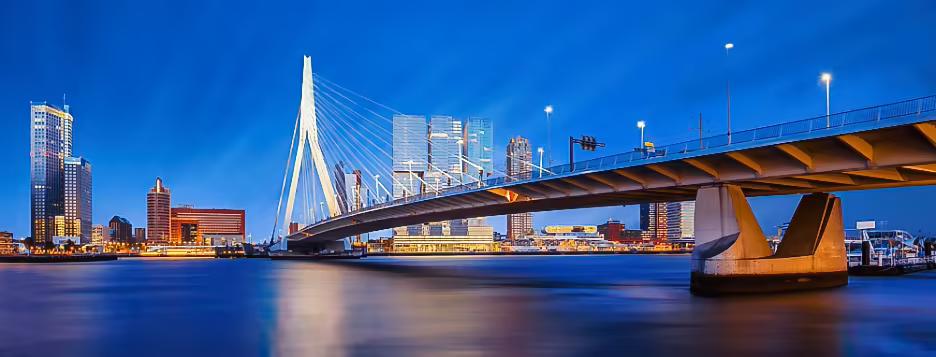
Rotterdam er Hollands næststørste by og Europas travleste havn, en dynamisk metropol defineret af dristig moderne arkitektur, en multikulturel befolkning og en rå kreativ energi, der skiller den ud fra enhver anden hollandsk by. Ødelagt under Anden Verdenskrig og genopbygget med visionær ambition, tiltrækker Rotterdam eksperter, der sætter pris på innovation, overkommelige priser og et ægte bymiljø. Fra glastårnene i Kop van Zuid til terrasserede Witte de Withstraat byder byen på karrieremuligheder inden for logistik, energi, ingeniørarbejde og tech til væsentligt lavere leveomkostninger end Amsterdam. Hvis du søger en fremadskuende by med ægte karakter, fortjener Rotterdam en plads på din liste.
Rotterdam i et nøddeskal
- Indbyggertal
- 673.000 (kommune), ca. 2,6 millioner (Rotterdam–Haag metropol)
- Region
- Sydholland, Vestnederlandene
- Kendt for
- Moderne arkitektur, Europas største havn, kunstscene, mangfoldige lokalsamfund
- Gennemsnitlig husleje (1-værelses)
- €1.100–€1.800 (centrum), €850–€1.250 (yderområder)
- Gennemsnitlig løn
- €2.800 netto/måned
- Ekspatmiljø
- Stort og internationalt — havnearbejdere, universitetsstuderende, kreative
Hvorfor flytte til Rotterdam
- Karrieremæssigt kraftcenter: Havnen i Rotterdam håndterer over 450 millioner tons gods årligt og er rygraden i Europas logistik- og energisektorer. Blandt de største arbejdsgivere er Shell, Unilever, Maersk og Port of Rotterdam Authority, mens Erasmus Universitet driver en blomstrende forsknings- og sundhedsøkonomi, der skaber jobmuligheder på tværs af fagområder.
- Overkommelige priser: Boligomkostningerne ligger 20–35 % under Amsterdam, restaurant- og underholdningsudgifter er 15–25 % lavere, og lønningerne er stadig konkurrencedygtige — især inden for ingeniørfag, finans og tech. Du får mere for pengene her, hvilket skaber reel forbedring af balancen mellem arbejdsliv og fritid.
- Arkitektonisk hovedstad: Skelnettede bygninger af Rem Koolhaas (OMA), MVRDV (Markthal) og Piet Blom (Kubuswoningen) gør Rotterdam til et friluftsmuseum for arkitektur. Erasmusbroen, kaldet "Svanen", er et ikon for efterkrigstidens hollandske designambitioner og en af Europas mest fotograferede broer.
- Genuint multikulturel: Over 180 nationaliteter kalder Rotterdam deres hjem, hvilket skaber et af Europas mest mangfoldige mad- og kulturmiljøer. Witte de Withstraat alene byder på alt fra surinamesisk til japansk til etiopisk mad, og internationale festivaler fejrer traditioner fra hele verden.
- Tilgængelighed: Amsterdam ligger 40 minutter med Intercity, Schiphol 30 minutter med direkte tog, Bruxelles 2t30 og Paris 2t45 med Eurostar (tidligere Thalys). Rotterdam The Hague Airport tilbyder desuden budgetflyvninger i Europa uden køen på Schiphol, hvilket gør det praktisk for weekendrejser.
- Transport: Fremragende togforbindelser gør Rotterdam til en port til Europa. Det effektive RandstadRail-system forbinder problemfrit med Haag og omkringliggende forstæder og udvider byens rækkevidde langt ud over kommunegrænsen.
Find bolig i Rotterdam
Gennemsnitlig husleje
| Bydel | 1-værelses | 3-værelses | Karakter |
|---|---|---|---|
| Centrum | €1.300–€2.000 | €2.000–€3.000 | Erhvervskvarter, moderne tårne, Markthal i nærheden |
| Kop van Zuid | €1.200–€1.700 | €1.800–€2.600 | Fornyet havneområde, Hotel New York, kultursteder |
| Kralingen | €1.000–€1.500 | €1.600–€2.200 | Studievenligt, grønt, tæt på Erasmus Universitet |
| Oude Noorden | €950–€1.400 | €1.400–€2.000 | Kreativt, vintagebutikker, multikulturelle spisesteder |
| Blijdorp | €900–€1.300 | €1.300–€1.900 | Stille, familievenligt, tæt på zoo og hospitaler |
| Delfshaven | €850–€1.200 | €1.200–€1.700 | Historisk 1600-talskvarter, overkommelige priser, mangfoldigt |
Sådan finder du bolig
- Pararius og Funda: De to primære lejeboligplatforme med engelsksprogede grænseflader og dækkende Rotterdam-udbud i alle bydele.
- Room Rotterdam: Specialiserer sig i værelser og delte lejligheder — nyttigt for nyankomne og studerende, der søger budgetvenlige muligheder.
- WoningNet: Socialt boligregister med 12–24 måneders ventelister i populære områder; registrer dig tidligt, hvis du er berettiget.
- Facebook-grupper: "Expats in Rotterdam" og "Rotterdam Housing" lister ledige boliger, før de dukker op på de store platforme. Tjek flere gange dagligt for nye opslag.
- Direkte fra udlejere: Tjek jaap.nl og lokale Facebook-grupper, hvor udlejere opslår boliger direkte uden formidlingsgebyr.
Tips til expats
- Begynd din søgning 4–6 uger før din flytning — markedet bevæger sig hurtigt, men lejlighederne er tilgængelige længere end i Amsterdam.
- Indkomstkravet er typisk 3 gange den månedlige husleje; nogle udlejere accepterer dokumentation for boligstøtte som indkomstdokumentation.
- Lejemæglere tager én måneds husleje plus 21 % VAT, men de kan væsentligt fremskynde processen for nyankomne, der ikke kender til hollandske lejetraditioner.
- Bydele uden for centrum (Delfshaven, Blijdorp, Oude Noorden) sparer dig for 20–35 % med fremragende metro- og sporvognsforbindelser, der opvejer afstanden.
- Midlertidig bolig via HousingAnywhere eller et kort Airbnb-ophold giver dig tid til at søge uden pres.
Guide til bydele
- Kop van Zuid: Rotterdam-regenerationens mesterværk — ombyggede havnelagre huser nu moderne lejligheder, det ikoniske Hotel New York og Fenix Food Hall. Populært blandt unge professionelle, der tiltrækkes af livet ved vandet. Mellemklassehuslejer med havneudsigt og kultursteder.
- Kralingen: Hjem for Erasmus Universitet og dets internationale studenterkrop. Grønne gader, overkommelige studenterboliger og skoven Kralingse Bos gør det til det mest akademisk prægede distrikt. Hyggelige caféer, uformelle spisesteder og en ungdommelig atmosfære.
- Oude Noorden: Rotterdams kreative frontlinje — vintagebutikker, mikrobryggerier, internationale restauranter og en stærk fællesskabsfølelse. Sammenlignes ofte med Brooklyn for sin rå, opadgående stemning. Huslejerne stiger, men ligger stadig under Centrum-priser.
- Delfshaven: Et historisk 1600-talskvarter med multikulturel karakter, traditionelle brune caféer og nogle af byens mest overkommelige huslejer. Direkte sporvognsforbindelse til centrum gør det ideelt for budgetbevidste nyankomne og familier, der søger ægthed.
- Blijdorp: Stille og grønt, med den berømte zoo Diergaarde Blijdorp som omdrejningspunkt og tæt på Dijkzigt Hospital og University Medical Center. Familier sætter pris på skolerne, parkerne og den 15-minutters sporvognspendling til centrum.
- Feijenoord: Industrielt arvegods forvandlet til boligfront. Det mest overkommelige indgangsniveau til livet i Rotterdam, med nye lejlighedskomplekser og forbedrede RandstadRail-sporvognsforbindelser, der driver en hurtig udvikling og byfornyelse.
Leveomkostninger i Rotterdam
Månedligt budgetoverblik
| Kategori | Budgetinterval |
|---|---|
| Husleje (1-værelses, centrum) | €1.100–€1.800 |
| Forbrugsudgifter | €115–€180 |
| Internet | €30–€48 |
| Dagligvarer | €230–€380 |
| Transport (RET-kort) | €85–€110 |
| Restaurantbesøg (4×/måned) | €60–€100 |
| Fritid/Træningscenter | €25–€50 |
| Total | €1.700–€2.700 |
Daglige udgifter
- Kaffe: €2,50–€4 (specialkaffekulturen i Oude Noorden matcher Amsterdams priser)
- Frokost (uformel): €7–€10 (arbejderfrokost på Markt-restauranter og frokoststeder)
- Månedligt transportkort: €85–€110 (RET ubegrænset rejse med sporvogne, metro og busser)
- Øl (bar): €4–€6 (traditionelle brune caféer i Oude Noorden og Delfshaven er mest overkommelige)
- Biografbillet: €12–€15 (storbiografer har standardpriser; arthouse-biografen Cinerama er lidt dyrere)
- Medlemskab af træningscenter: €25–€50 (Basic Fit i den lave ende, boutique-studier i den høje ende)
Transport i Rotterdam
- Offentlig transport: RET driver sporvogne, metro og busser i hele byen og de omkringliggende forstæder. En OV-chipkaart er uundværlig — køb et månedskort for €85–€110. RandstadRail-sporvognen strækker sig til Haag og forbinder forstæder effektivt. Natbusser kører fredag og lørdag med ruter, der dækker nøgleområder efter midnat.
- Cykling: Rotterdam er cykelvenligt med dedikerede cykelstier, selvom byen er fladere og mærkbart blæsere end Amsterdams beskyttede kanalruter. Brugte cykler starter fra €100–€150 via marktplaats.nl eller lokale cykelbutikker. Universitetets ansatte får ofte puljecykler til transport på campus.
- Bilkørsel: Trafikken er markant mindre overbelastet end i Amsterdam, men p-tilladelser er påkrævede og kan være dyre i centrale områder. Månedlig parkering i centralt parkeringshus koster €150–€250; tilladelseszoner koster €50–€100/måned i de fleste områder. Mange bosiddende klarer sig fint uden at eje bil.
- Lufthavn: Rotterdam The Hague Airport tilbyder europæiske budgetflyvninger på udvalgte ruter. Schiphol er kun 30 minutter med tog via direkte Intercity og giver maksimal fleksibilitet for internationale rejser.
- Intercity: Rotterdam Centraal er et stort europæisk knudepunkt — Amsterdam 40 min, Bruxelles 2t30, Paris 2t45 (Eurostar, tidligere Thalys). Selve stationen, designet af Benthem Crouwel Architects, er et arkitektonisk landemærke, der er værd at se.
Sundhedsvæsen i Rotterdam
- Hospitaler/klinikker: Erasmus MC er et af Europas førende universitetshospitaler med banebrydende forskning og specialiserede afdelinger. Maasstad Ziekenhuis og Franciscus Gasthuis tilbyder fremragende almen medicin med 24/7 skadestuer. Erasmus MC rummer Sophia Children's Hospital — en af Europas bedste børneafdelinger.
- Engelsktalende læger: Let at finde via zorgkaartnederland.nl med filtrering på engelsk. Expat Medical Centre i centrum specialiserer sig i expat-sundhedspleje med engelsktalende praktiserende læger, der kender det internationale miljø og international sygeforsikringsafregning.
- Apoteker: Apotheek findes i hvert kvarter, typisk åbent mandag til lørdag. Akut apotekstjeneste roterer daglig dækning — ring på 010-466 9378 for aften- og weekendapotekers placering.
- Nødnummer: 112 i nødsituationer. Ikke-akut medicinsk rådgivning: 010-444 1888, drevet af regionale sundhedstjenester.
Fa en personlig flytteplan
Skriv din e-mail, sa sender vi en skraeddersyet tjekliste plus tre tilbud fra godkendte flyttefirmaer.
Kultur og livsstil
- Arkitektur: Ikoniske vartegn inkluderer Markthal (spektakulær madhal med massivt indvendigt vægmaleri af Arno Coenen), De Rotterdam-tårnene af Rem Koolhaas (massivt multi-bygningskompleks), Kubuswoningen (postmoderne kubikhuse) og jernbanestationen af Benthem Crouwel. Arkitektur-gåture fortæller byens genopbygningshistorie efter krigen.
- Festivaler: Rotterdam afholder store begivenheder, herunder North Sea Jazz Festival i juli (en af Europas største), Rotterdam Unlimited sommerkarneval, den Internationale Filmfestival og Marathon. Byens kreative klasse organiserer utallige mindre arrangementer året rundt.
- Natteliv: Witte de Withstraat er byens sociale pulsårer — cocktailbarer, gallerier og sene caféer langs gaden. Oude Haven tilbyder vandkants-terrasser med havneudsigter, mens Oude Noorden byder på hipsterbarer, mikrobryggerier og live musik i ombyggede industrielle rum.
- Vandkant: Erasmusbroens promenade og Maasoever-udviklingen tilbyder løberuter, naturskønne promenader og rekreative områder langs Nieuwe Maas-vandvejen. Sommerfærger forbinder kvarterer langs vandet til fritidssejladser. Rijnhaven- og Maashaven-områderne undergår en hastig forvandling med nye bolig- og kulturudviklinger.
Bank og skat
- Bankvæsen: Hollandsk bankvæsen er ukompliceret. ING, ABN AMRO og Rabobank er de tre traditionelle banker med omfattende filial- og hæveautomatnetværk i hele Rotterdam. Bunq tilbyder app-baseret bankdrift, der er populær blandt teknologisk anlagte expats. iDEAL — det nationale online betalingssystem — bruges til praktisk talt al e-handel; du skal have en hollandsk bankkonto for at bruge det.
- Indkomstskat: Holland har et progressivt indkomstskattesystem. I 2026 beskattes indkomst op til ca. €38.000 med 36,97%, indkomst derover med 49,50%. 30%-ordningen nedsætter de effektive satser for kvalificerede expats, der er rekrutteret fra udlandet. Indsend din årlige selvangivelse via Belastingdienst (den hollandske skattemyndighed) hjemmeside.
- Moms og forbrugsudgifter: Moms (BTW) er inkluderet i alle viste priser — det du ser, er det du betaler. Standardsatsen er 21%; nedsat sats på 9% gælder for mad, bøger og visse tjenester.
Grundlæggende hollandsk til hverdagen
- Hallo / Hoi — Hej / Hejsa
- Dank je wel — Tak
- Alstublieft — Vær så venlig / Værsgo
- Spreekt u Engels? — Taler du engelsk?
- Ik zou graag... — Jeg vil gerne...
- Tot ziens — Farvel
- Pinnen? — Kan jeg betale med kort?
Rotterdams direkte stil er legendarisk, selv efter hollandske standarder — folk siger, hvad de mener, uden omsvøb. Det er praktisk effektivitet, ikke uhøflighed. Omfavn det, og du vil opleve kommunikationen som befriende ærlig.
Internet og mobil
- Hjemmeinternet: De største udbydere er Ziggo (kabel), KPN (fiber/DSL) og T-Mobile (fiber). Forvent €30–€48/måned for 100–500 Mbps. Fiberdækningen vokser hurtigt i det centrale Rotterdam. Aftaler løber typisk 12 måneder.
- Mobil: KPN, Vodafone og T-Mobile er de primære udbydere. Forudbetalte SIM-kort fås i supermarkeder fra €10. Månedlige abonnementer med data starter ved €15–€25. EU-roaming er inkluderet i alle abonnementer.
- Offentligt Wi-Fi: Fint tilgængeligt på caféer, restauranter, biblioteker og offentlige bygninger. Rotterdam tilbyder også gratis Wi-Fi i nogle offentlige områder og i RET-sporvogne.
Børnepasning og forældreliv
- Dagpleje (kinderdagverblijf): Børnepasning er tilskudsstøttet af den hollandske regering (kinderopvangtoeslag). De månedlige udgifter løber op til €1.600–€2.200 for fuldtidspleje før tilskud — lidt lavere end Amsterdam. Ansøg om tilskud via Belastingdienst efter registrering hos Gemeente Rotterdam.
- Fritidsordning (BSO): Tilgængelig for børn i alderen 4–12 år, typisk €500–€800/måned før tilskud. Skoler samarbejder ofte med BSO-udbydere.
- Legepladser og familieliv: Blijdorp Zoo, søparken Kralingse Bos og Vroesenpark tilbyder fremragende familierekreation. Rotterdams cykelkultur betyder, at børn cykler i skole fra 4–5-årsalderen. Byen har investeret massivt i moderne legepladser og familiefaciliteter.
Affald og genanvendelse
- Husholdningsaffald: Rotterdam bruger et underjordisk containersystem. Du åbner containere med dit kommunekort (milieupas). Restafval (restaffald), GFT (organisk) og PMD (plastic/metal/drikkekartoner) sorteres separat. Papir og glas afleveres i dedikerede containere på gaden.
- Stort affald: Bestil gratis afhentning via kommunens hjemmeside til store genstande som møbler og husholdningsapparater.
- Genbrug: Marktplaats.nl er den hollandske version af Craigslist — køb og sælg brugte varer lokalt. Kringloopwinkels (genbrugsbutikker) er populære til møbler og husholdningsartikler.
Coworking-miljøer
- 42workspace: Populært coworking-sted i centrum med fleksible skriveborde, mødelokaler og community-arrangementer.
- Spaces: Flere lokationer, herunder Kop van Zuid, med hot desks og private kontorer med internationalt netværk.
- Cambridge Innovation Centre (CIC): Beliggende i Groothandelsgebouw nær stationen, med fokus på startups og scale-ups.
Mad og spisesteder
- Lokale specialiteter: Kibbeling (panerede fiskestykker fra havneboder), bitterballen på traditionelle brune caféer, sild ved gadeboder og surinamisk roti i Delfshaven og Rotterdam-Zuid. Den maritime arv præger i høj grad den lokale madscene.
- Bedste spisesteder: Witte de Withstraat til trendy bistroer og tidlige aftendrikke, Kop van Zuid til fine restauranter i ombyggede pakhuse, Markthal for international mangfoldighed under ét spektakulært tag, og Oude Haven for udendørs spisning med havneudsigt.
- Budgetmuligheder: Ugentlige markeder ved Binnenrotte og Afrikaanderwijk tilbyder friske råvarer og internationale ingredienser under supermarkedspriser. Frokosttilbud starter ved €8; supermarkeder som Albert Heijn og Dirk van den Broek sælger færdige måltider under €6.
Expat-miljøet
- Meetup-grupper: InterNations Rotterdam (månedlige netværksarrangementer for tusindvis af medlemmer), Rotterdam Expat Meetup (sociale arrangementer og byudforskning) og den store Facebook-gruppe "Expats in Rotterdam" til boligråd og sociale kontakter.
- Internationale arbejdsgivere: Shell, Unilever, Heineken, Maersk og Erasmus Universitet opretholder aktive expat-netværk med integrationsprogrammer, buddysystemer og regelmæssige sociale arrangementer, der hjælper nyankomne med at falde hurtigt til.
- Sprogudveksling: Ugentlige hollandske samtalegrupper via Meetup.com og Facebook. Aftenkurser på ROC og privatskoler som Koentact. Tandem-sprogpartner-apps forbinder internationale med indfødte hollandsktalende, der ønsker at øve engelsk.
Arbejdsmarkedet i Rotterdam
- Hovedindustrier: Logistik og shipping (Port of Rotterdam Authority, Maersk), petrokemi (Shell, raffinaderier i Botlek-området), finans (ING, ABN AMRO), sundhedsvæsen (Erasmus MC) og kreative sektorer fra design til mode.
- Større arbejdsgivere: Port of Rotterdam Authority, Shell, Unilever, Heineken, Maersk, Erasmus MC, DAF Trucks, Zalando (stort logistikcenter i nærheden) og en voksende tech-startup-scene i centrum.
| Sektor | Månedlig netto (estimeret) | Årlig bruttoreference |
|---|---|---|
| Havn/Logistik | €2.800–€4.200 | €42.000–€65.000 |
| Finans/Bankvæsen | €3.000–€4.500 | €45.000–€70.000 |
| Sundhedsvæsen | €2.600–€3.800 | €38.000–€58.000 |
| Teknik/Ingeniørarbejde | €3.200–€5.000 | €48.000–€78.000 |
| Hotel- og restaurationsbranchen | €1.900–€2.600 | €28.000–€40.000 |
- Ressourcer til jobsøgning: LinkedIn dækker effektivt hollandske stillinger med engelsksprogede filtre. Indeed.nl samler brede opslag. Undutchables.nl henvender sig specifikt til engelsktalende jobsøgere. Specialiserede rekrutteringsbureauer som Michael Page og Robert Walters formidler internationale kandidater på tværs af brancher.
Uddannelse i Rotterdam
- Internationale skoler: Rotterdam International Secondary School (RISS) tilbyder IB-programmer. European School Rotterdam giver flersproget EU-uddannelse. The British School in Rotterdam dækker grundskole og gymnasium. Gebyrerne ligger på €3.000–€15.000 pr. år afhængigt af niveau.
- Universiteter: Erasmus Universitet Rotterdam (økonomi, jura, medicin, business — konsekvent rangeret blandt Europas top 50), Rotterdam University of Applied Sciences og Willem de Kooning Academy for kreative kunstarter. Mange programmer undervises på engelsk på både bachelor- og kandidatniveau.
- Sprogskoler: Hollandske sprogkurser gennem ROC (regionalt uddannelsescenter) med dag- og aftenhold. Private skoler som Koentact og Loqman specialiserer sig i intensiv nederlandsk undervisning for professionelle.
Tjekliste for flytning til Rotterdam
- Sikr dig beskæftigelse eller universitetsoptagelse (Rotterdams arbejdsmarked er centreret om havneoperationer, ingeniørarbejde og universitetet)
- Arranger midlertidig indkvartering (Airbnb, HousingAnywhere eller Booking.com) til de første 4–6 uger
- Forbered din lejemalsmappe: indkomstdokumentation (3× husleje), ansættelseskontrakt, pas, kontoudtog
- Sammenlign sundhedsforsikringsselskaber på Independer.nl eller Zorgwijzer.nl
- Undersøg bydele for at finde den bedste match i forhold til budget, pendling og livsstilspræferencer
- Tilmeld dig hos Gemeente Rotterdam for at få dit BSN (påkrævet inden 5 dage efter ankomst ved ophold over 4 måneder)
- Opret en hollandsk bankkonto (ING, ABN AMRO, Rabobank eller Bunq)
- Aktivér sundhedsforsikring (basisverzekering, i gennemsnit €133–€153/md.)
- Køb et OV-chipkaart og sæt dig ind i RET-netværket til daglig pendling
- Find fast bolig — Kralingen nær universitetet, Oude Noorden for et kreativt miljø, Blijdorp for et familievenligt område
- Tilmeld dig hos en huisarts ( praktiserende læge) tæt på din bolig via zorgkaartnederland.nl eller expat-grupper
- Ansøg om opholdstilladelse, hvis du er uden for EU (arbejdsgiveren sponserer normalt MVV/visumprocessen)
- Tilmeld dig hollandske sprogkurser gennem ROC eller en privatskole — aftenhold egner sig godt til erhvervsaktive
Relaterede guides
- [Flytning til Nederlandene] — omfattende landeguide om visa, beskatning og national kultur
- [Flytning til Amsterdam] — den hollandske hovedstads pulserende kulturliv og internationale forretningshub
- [Flytning til Haag] — politisk hovedstad med internationale organisationer og Scheveningen-stranden
- [Flytning til Utrecht] — centralt beliggende by med fremragende transportforbindelser og studentermiljø
- [Flytning til Eindhoven] — Brainport tech-hub med karrieremuligheder inden for højteknologisk produktion