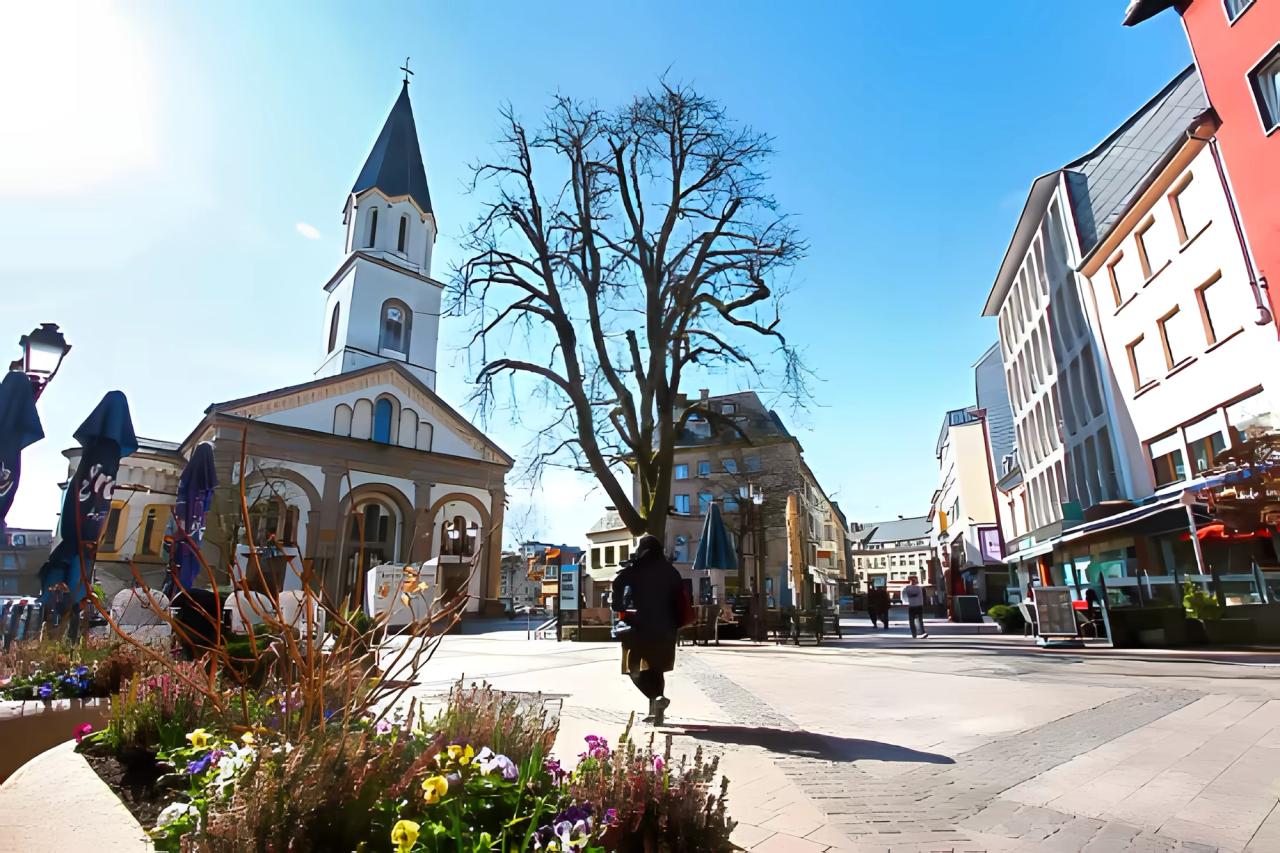

Ettelbruck ligger ved sammenløbet af floderne Sûre (Sauer), Wark og Alzette i det nordlige Luxembourg og fungerer som det vigtigste kommercielle og administrative center i Ëlzewelt (Éislek)-regionen. Med ca. 10.000 indbyggere leverer den langt over sin vægt: et vigtigt jernbaneknudepunkt, et hospitalscampus, en anerkendt teknisk lycée og den årlige Foire Agricole, der tiltrækker besøgende fra hele landet. Ekspatter vælger Ettelbruck for huslejer, der er ca. 30-40 % lavere end i Luxembourg by, en togreise på 30 minutter til hovedstaden og direkte adgang til Ardennernes natur. Byen passer til grænseoverskridende pendlere, familier, der ønsker plads og natur, og alle, der foretrækker en lillebys rytme uden at give afkald på god infrastruktur.
Ettelbruck på et øjeblik

- Befolkning
- ~10.000 (kommune); ~22.000 i det bredere Nordstad-funktionsområde
- Region
- Diekirch kanton, Ëlzewelt / Éislek (Luxembourgs Ardennes)
- Kendt for
- Regionalt transportknudepunkt, Centre Hospitalier du Nord (CHdN), Foire Agricole, General Patton Memorial Museum
- Gennemsnitlig husleje (1 sov.)
- €800–€1,100
- Gennemsnitlig løn
- ~€4.200/måned netto (på niveau med landsgennemsnittet; lokale jobs kan ligge lidt lavere)
- Ekspatsamfund
- Lille, men voksende; primært franske, tyske, belgiske og portugisiske statsborgere, der arbejder inden for sundhedsvæsen, uddannelse og logistik
Hvorfor flytte til Ettelbruck
- Overkommelig efter luxembourgske standarder: Huslejen er 30-40 % billigere end sammenlignelige lejligheder i Luxembourg by, og du får mere plads for pengene.
- Hurtig forbindelse til hovedstaden: CFL-tog når Luxembourg by på ca. 30 minutter, hvilket gør daglig pendling realistisk uden bil.
- Port til Éislek: Vandrestier, Bourscheid Slot, Mullerthal-ruten og Our- og Sûre-floddalene er alle inden for kort kørselsafstand.
- Regionale services lige ved hånden: CHdN-hospitalscampus, flere supermarkeder, specialbutikker og gymnasier betyder, at du sjældent behøver forlade byen for det nødvendige.
- Ægte lokalsamfundsfølelse: Med en befolkning på under 10.000 kender naboer hinanden, lokale foreninger er aktive, og livets tempo er mærkbart roligere end i hovedstaden.
Visa og opholdstilladelse
Luxembourg håndterer immigration på nationalt plan, så processen er den samme, uanset om du slår dig ned i Ettelbruck eller i hovedstaden. EU/EEA/schweiziske statsborgere må flytte frit, men skal udfylde en Déclaration d'arrivée (ankomstanmeldelse) hos den lokale Administration Communale (kommunekontoret) inden for 90 dage efter at have etableret bopæl. Ikke-EU-borgere skal have en midlertidig opholdstilladelse fra udenrigsministeriet, inden de ankommer, efterfulgt af en ansøgning om opholdstilladelse efter indrejse. I begge tilfælde kræves dokumentation for bolig i Ettelbruck, tilstrækkelig indkomst og sygesikringsdækning. Ettelbrucks Administration Communale ligger på Place de l'Hôtel de Ville og håndterer alle registreringsaftaler.
At finde bolig i Ettelbruck
Gennemsnitlige huslejer
| Kvarter | 1 soveværelse | 3 soveværelser | Karakteristik |
|---|---|---|---|
| Centre-Ville | €900–€1.150 | €1.500–€1.900 | Lejligheder over butikker, gangafstand til stationen og torvet |
| Gare (Stationskvarteret) | €800–€1.050 | €1.350–€1.750 | Blanding af nyere byggeri og ombyggede huse tæt på CFL-stationen |
| Warken | €750–€1.000 | €1.300–€1.650 | Rolige boliggader, familiehuse med have, svagt bakket terræn |
| Nord / Bebbour | €700–€950 | €1.250–€1.600 | Grønne udkanter, fritliggende boliger, populær blandt familier |
| Schieren (nabokommunen) | €700–€900 | €1.200–€1.500 | Landsbyatmosfære på den anden side af floden, kort køretur eller bustur til bycentret |
Sådan finder du bolig
- Athome.lu og Immotop.lu: De to dominerende luxembourgske ejendomsportaler. Filtrer efter postnummer L-9080 for Ettelbruck-specifikke annoncer.
- Wort Immo: Rubrikannoncerne i dagbladet Luxemburger Wort; ældre annoncer, men sommetider direkte fra udlejer.
- Administration Communales opslagstavle: Kommunekontoret offentliggør lejlighedsvis lokale lejeannnoncer, især for lejligheder i kommunalt ejede bygninger.
- Mund til mund: I en by af denne størrelse fylder udlejere og agenter ofte ledige boliger via personlige netværk, inden de annoncerer online. Spørg kollegaer på arbejdet eller på skolen.
Tips til ekspatter
- Udlejere kræver dokumentation for indkomst (typisk de seneste tre lønsedler eller en arbejdskontrakt) samt et depositum på en til to måneders husleje, der opbevares på en spærret bankkonto.
- Møblerede lejligheder er sjældnere end i Luxembourg by; sæt penge af til grundlæggende møbler, eller forhandl det med ind i aftalen.
- Lejekontrakter i Luxembourg løber typisk med et minimum på ét år med tre måneders opsigelse. Kortere lejeperioder findes, men koster ekstra.
- Google Maps-gadebilleder er mindre dækkende for Ettelbrucks boligsidegader end for hovedstaden; besøg stedet personligt, inden du skriver under.
Guide til kvartererne
- Centre-Ville: Bedst egnet til singler og par, der vil gå overalt. Tæt på torvet (Place du Marché), butikker, restauranter og CFL-stationen. Lejlighederne er ofte mindre og ældre, men har charme. Huslejen er den højeste i byen, men stadig beskeden efter nationale standarder.
- Gare (Stationskvarteret): Ideel for daglige pendlere til Luxembourg by. En blanding af mindre lejlighedsblokke og byhuse inden for ti minutters gang fra perronen. Lidt mere overkommelig end centrum og godt betjent af RGTR regionale busser.
- Warken: Det største boligkvarter, der strækker sig sydpå fra centrum. Populær blandt familier for sine rolige gader, større boliger og nærhed til Lycée technique d'Ettelbruck. Området stiger svagt opad, så visse adresser har udsigt over Alzette-dalen.
- Nord / Bebbour: Den grønne nordlige udkant, hvor fritliggende huse med have er normen. Velegnet til familier, der ønsker udendørsrum, og til dem, der ikke har noget imod en kort køretur eller bustur ind til byen. Huslejen er den laveste i kommunen.
- Schieren (nabo): Teknisk set en separat kommune på den anden side af Alzette-floden, men funktionelt en del af Ettelbrucks byområde. Ultraroeligt, meget overkommeligt og forbundet via en enkelt RGTR-buslinje. Godt for budgetbevidste lejere, der arbejder hjemmefra.
Leveomkostninger i Ettelbruck
Månedligt budgetoverblik
| Kategori | Budgetramme |
|---|---|
| Husleje (1 sov., centrum) | €900–€1.150 |
| Forsyninger (elektricitet, vand, varme) | €150–€220 |
| Internet + mobil | €40–€65 |
| Dagligvarer | €300–€450 |
| Transport (national offentlig transport er gratis) | €0 |
| Spisning ude (4 gange/måned) | €80–€160 |
| Fritid / fitnesscenter / sport | €40–€80 |
| Bidrag til sygesikring (CNS) | trækkes ved kilden (~3,05 % af lønnen) |
| I alt (ekskl. husleje) | €610–€975 |
Daglige udgifter
- Kaffe: €2,50–€3,50
- Frokost (dagens ret på en lokal café): €12–€18
- Månedligt transportkort: gratis (al offentlig transport i Luxembourg er gratis siden 2020)
- Øl (bar): €4–€6
- Biografbillet (Ciné-Cité Diekirch, nærmeste multiplex): €10–€12
Bankforhold
Det er ligetil at åbne en luxembourgsk bankkonto. Medbring gyldigt pas eller id-kort, bevis for Ettelbruck-adresse (lejekontrakt eller Attestation d'hébergement fra din udlejer) samt en nylig lønseddel eller arbejdskontrakt. Større banker med filialer i eller tæt på Ettelbruck er BGL BNP Paribas, Spuerkeess (BCEE) og POST Luxembourg. De fleste tilbyder netbank på engelsk. En luxembourgsk bankkonto er nødvendig til lønindbetalinger og til oprettelse af den spærrede depositumkonto, som udlejere kræver.
Dit matricule (socialsikringsnummer) udstedes automatisk, når du registrerer dig for beskæftigelse eller som beboer hos Centre Commun de la Sécurité Sociale (CCSS). Din arbejdsgiver håndterer typisk denne registrering, men ekspatter, der ankommer på egen hånd, bør kontakte CCSS direkte, efter at de har registreret sig hos Administration Communale.
Fa en personlig flytteplan
Skriv din e-mail, sa sender vi en skraeddersyet tjekliste plus tre tilbud fra godkendte flyttefirmaer.
At komme rundt i Ettelbruck
- Offentlig transport: Al offentlig transport i Luxembourg er gratis. CFL-tog fra Ettelbruck station kører til Luxembourg by (ca. 30 min.), Diekirch (10 min.), Kautenbach (15 min. med forbindelser til Liège-Guillemins i Belgien) og Wiltz (25 min.). RGTR regionale busser (linje 120, 137, 155 og andre) forbinder Ettelbruck med omliggende landsbyer og Diekirch.
- Cykling: Ettelbruck er forbundet til den nationale cykelrute PC16, som følger Sûre-dalen. Bycentret er kompakt og stort set fladt, hvilket gør korte ærinder nemme på cykel. Dedikerede cykelstier er begrænsede, men trafikken er let.
- Kørsel: Parkering i centrum er generelt let og billig sammenlignet med hovedstaden. Nationalvejene N7 og N15 forbinder Ettelbruck til motorvejen A7 (E421), der leder sydpå til Luxembourg by og nordpå til den belgiske grænse ved Troisvierges.
- Nærmeste lufthavn: Luxembourg Findel Airport (LUX) ligger ca. 35 minutter væk i bil eller 45 minutter med tog og bus. Alternativt er Liège Airport (LGG) i Belgien ca. 90 minutter mod nord.
- Intercity: CFL Ettelbruck er en krydsningsstation. Direkte tog betjener Luxembourg by, Diekirch, Wiltz og Kautenbach (til Liège-forbindelser). Busruter strækker sig til Vianden og Echternach.
- Delebiler og taxaer: CFL driver en Flexibus on-demand-tjeneste i Nordstad-regionen til aften- og weekendture. Lokale taxafirmaer betjener hospitalet og stationen. Den nationale deleplatform Copilot er tilgængelig til lejlighedsvise kørselsbehovet.
Sundhedsvæsen i Ettelbruck
- Centre Hospitalier du Nord (CHdN) — Ettelbruck-campus: Byens hospital er et af fire CHdN-steder i det nordlige Luxembourg. Det tilbyder akutberedskab, kirurgi, fødselafdeling og ambulante klinikker. CHdN's centrale administrative hovedkvarter er også i Ettelbruck.
- Praktiserende læger: Adskillige lægepraksisser er aktive i bycentret og Warken-kvarteret. Engelsktalende læger er tilgængelige, men ikke universelle; spørg i receptionen eller tjek CNS' udbyrerdatafortegnelse.
- CNS (Caisse Nationale de Santé): Luxembourgs offentlige sygesikringsfond. Registrering sker automatisk, når du begynder at arbejde. CNS refunderer ca. 85-90 % af standard lægeomkostninger. Mange beboere tegner også supplerende forsikring (mutuelle) for at dække den resterende egenbetaling og ekstraomkostninger som tandbehandling eller private hospitalsværelser.
- Apoteker: To apoteker betjener kommunen (Pharmacie Centrale på Grand-Rue og Pharmacie du Nord tæt på hospitalet). Luxembourgske apoteker har en natte- og weekendvagtrota; det vagthavende apotek er angivet på døren til hvert apotek og online.
- Alarmtelefon: 112 (pan-europæisk). Til CHdN Ettelbrucks akutmodtagelse, ring +352 26 33 31.
Uddannelse i Ettelbruck
- Grundskoler: Ettelbruck har adskillige grundskoler (enseignement fondamental), der dækker trin 1-4 (3-12 år). Undervisningen foregår på luxembourgsk med tysk og fransk indført gradvist. Administration Communale kan vejlede om skolekredstildeling.
- Lycée technique d'Ettelbruck (LTE): Den vigtigste ungdomsuddannelsesinstitution, der tilbyder tekniske og erhvervsfaglige programmer fra classes inférieures til BTS (brevet de technicien supérieur). Stærke programmer inden for mekanik, elektronik og erhverv. Nogle moduler undervises på fransk eller tysk.
- Internationale muligheder: Ettelbruck har ikke sin egen internationale skole. Familier, der søger engelsksprogede eller europæiske læseplaner, pendler typisk til European School Luxembourg II i Bertrange/Mamer (ca. 40 min. i bil) eller International School Michel Lucius i Luxembourg by.
- Voksensprogkurser: National Language Institute (INL) tilbyder luxembourgsk, fransk og tyske kurser over hele landet, herunder ved regionale centre i nord. Kommunen arrangerer lejlighedsvis gratis luxembourgske samtalekurser for tilflyttere.
- Børnepasning (Maison Relais): Ettelbruck har en Maison Relais (statsstøttet fritidsordning og feriepasning) og flere vuggestuer. Pladserne er hurtigt optaget; tilmeld dig så tidligt som muligt via Administration Communale.
- Universitet: Der er ingen universitetscampus i Ettelbruck. Luxembourgs Universitet (Belval-campus) kan nås på ca. 50 minutter med tog via Luxembourg by.
Kultur og livsstil
- Foire Agricole d'Ettelbruck: Afholdes hvert år i juli og er Luxembourgs største landbrugsmesse. Den fremviser husdyr, havebrug, regional mad og forlystelsesstander. Messen forvandler byen i en lang weekend og tiltrækker titusinder af besøgende.
- General Patton Memorial Museum: Beliggende i de tidligere kavaleribarakker dækker museet 1944-Ardenneroffensiven med fokus på General Pattons Tredje Armé og befrielsen af Ettelbruck. Et vigtigt stop på Luxembourgs anden verdenskrig-rute.
- Friluftsliv: Éislek-regionen rundt om Ettelbruck er gennemkrydset af afmærkede vandre- og mountainbikestier. Bourscheid Slot, en af Luxembourgs mest dramatiske middelalderlige ruiner, ligger 15 minutters kørsel nordpå. Mullerthal-ruten (Lille Schweiz) begynder ca. 25 km østpå.
- Diekirch lige ved siden af: Den nabobryggeriby er ti minutters togtur væk og hjemsted for National Museum of Military History og Diekirch-bryggeriet (kendt for sit Export-mærke). De to byer fungerer som et samlet byområde til hverdagsbrug.
- Ugentligt marked: Ettelbruck afholder et ugentligt udendørs marked (typisk lørdag formiddag) på og omkring Place du Marché, der sælger friske produkter, brød, ost og blomster fra lokale gårde. Det fungerer også som et socialt samlingspunkt og en god måde at møde naboer på.
- Årets kalender: Ud over Foire Agricole i juli er der et julemarked i december, en karnevalsoptog (Fuesent) i februar eller marts og sommerkonserter i parken ved Alzette-flodbredden. Kulturkalenderen er beskeden sammenlignet med hovedstaden, men konsekvent velbesøgt.
Mad og restauranter
- Lokale specialiteter inkluderer Judd mat Gaardebounen (røget svinekød med hestebønner), Kachkéis (blød ostefarce) og Gromperekichelcher (kartoffelkager) på det ugentlige marked.
- Grand-Rue og Place du Marché huser størsteparten af restauranterne, der spænder fra luxembourgske og franske bistroer til italienske og portugisiske muligheder, der afspejler den lokale ekspatbefolkning.
- Budgetvenlige frokostspecialer (plat du jour) til ca. €12–€15 er almindelige på mellemklasserestauranter og i lycée-kantinen (åben for personale og besøgende).
- Cactus og Auchan-supermarkederne i byens udkanter har internationale produkter, men for specialingredienser (asiatiske, mellemøstlige eller glutenfri) kan det være nødvendigt at bestille online eller besøge større butikker i Luxembourg by.
- Diekirch's caféscene, et kort togstop væk, tilbyder yderligere varieret madoplevelse, herunder en håndværksøl-bar på selve bryggeriet.
Ekspatsamfund
- Ettelbrucks ekspatscene er mindre og mindre formaliseret end i hovedstaden. De fleste sociale forbindelser opstår via arbejdspladsen (særligt hospitalet og lycéen), børns skoler og sportsklubber.
- Nordstad-regionen har aktive løbeklubber, en fodboldklub (FC Etzella Ettelbruck) og en skytteklub (Société de Tir), der alle byder nye medlemmer velkomne uanset nationalitet.
- Integrations- og statsborgerskabskontoret ved Administration Communale arrangerer velkomstarrangementer for nye beboere, herunder guidede byture og informationsmøder på fransk, tysk og engelsk.
- For et større ekspatnetværk deltager mange Ettelbruck-beboere i Luxembourg by-baserede grupper (Meetup, International Women's Club osv.) og deltager i arrangementer i hovedstaden i weekenderne.
Arbejdsmarkedet i Ettelbruck
- Vigtigste erhverv: Sundhedsvæsen, offentlig administration, uddannelse, detailhandel, landbrug og agritek, logistik.
- Større arbejdsgivere: Centre Hospitalier du Nord (CHdN), Administration Communale d'Ettelbruck, Lycée technique d'Ettelbruck, CFL (jernbaneinfrastruktur) og regionale filialer af nationale detailhandlere.
- Pendlingsmønster: En betydelig andel af de erhvervsaktive beboere pendler sydpå til Luxembourg by eller Kirchberg-erhvervsområdet med tog. Grænseoverskridende pendlere fra Belgien og Tyskland passerer også dagligt igennem Ettelbruck.
| Sektor | Ca. månedlig nettoløn |
|---|---|
| Sundhedsvæsen (sygeplejerske, CHdN) | €3.500–€4.500 |
| Offentlig administration | €4.000–€5.500 |
| Undervisning (gymnasiet) | €4.200–€5.800 |
| Detailhandel / gæstfrihed | €2.500–€3.200 |
| IT (pendling til hovedstaden) | €4.500–€6.500 |
- Jobsøgningsressourcer: ADEM (Administration de l'Emploi) har et regionalt kontor, der dækker nord. Jobs.lu, Indeed Luxembourg og Luxembourgs regerings GOVJOBS-portal viser stillinger over hele landet. For sundhedsstillinger specifikt offentliggør CHdN's hjemmeside ledige stillinger direkte.
Fordele og ulemper ved at bo i Ettelbruck
Fordele
- Huslejen er 30-40 % billigere end i Luxembourg by, og du får mere plads.
- Fremragende togforbindelse til hovedstaden (30 minutter, gratis).
- Direkte adgang til Ardennernes natur til vandring, cykling og weekendture.
- Fuldt hospital og gymnasieinfrastruktur betyder, at du ikke behøver rejse for det grundlæggende.
- Genuint lavt stress- og støjniveau sammenlignet med hovedstadsregionen.
- Stærk lokal identitetsfølelse og aktive lokalforeninger.
Ulemper
- Begrænset natteliv og underholdning; de fleste aftener er rolige.
- Ingen international skole i byen; familier skal pendle sydpå.
- Det mindre ekspatsamfund kan føles isolerende i starten.
- Færre muligheder for restauranter og shopping end i Luxembourg by eller Esch-sur-Alzette.
- Bil er stadig praktisk til ærinder i de omkringliggende landsbyer og til weekendture.
- Vintervejret i Éislek kan være mærkbart koldere og vådere end i den sydlige del af landet.
Tjekliste til flytning til Ettelbruck
- Bekræft passets gyldighed (mindst seks måneder ud over din planlagte ankomstdato).
- Ikke-EU-borgere: ansøg om midlertidig opholdstilladelse via Luxembourgs udenrigsministerium.
- EU/EEA-borgere: medbring gyldigt id-kort eller pas; intet visum kræves, men medbring bevis for ansættelse eller selvforsørgelse.
- Undersøg og book et flyttefirma med kendskab til Luxembourg; anmod om tilbud via ReloAdvisor for volumenbaserede priser.
- Ordne kæledyrsdokumenter til rejsen (EU-kæledyrspas, mikrochip, rabiesvaccination) hvis relevant; Luxembourg følger standard EU-regler for kæledyrsindrejse.
- Anmod om en fraflytningsattest fra dit nuværende bopælsland (hvis relevant).
- Saml apostillerede kopier af fødselsattester, vielsesattester og eksamensbeviser.
- Sørg for indledende sygesikringsdækning, der er gyldig fra din ankomstdato (rejseforsikring eller tidlig CNS-registrering via din arbejdsgiver).
- Book midlertidig indkvartering i Ettelbruck til dine første to til fire uger, mens du leder efter lejlighed.
- Registrer dig hos Administration Communale d'Ettelbruck (Place de l'Hôtel de Ville) og udfyld din Déclaration d'arrivée (ankomstanmeldelse). Medbring dit id-kort, lejekontrakt eller udlejers attestation og bevis for indkomst.
- Åbn en luxembourgsk bankkonto (BGL BNP Paribas, Spuerkeess eller POST Luxembourg). Medbring id og bevis for adresse.
- Besøg CHdN Ettelbruck-campus eller en lokal praktiserende læge for at registrere dig med en primærlæge.
- Har du børn, skal du kontakte Administration Communales skoleservicedesk for at tilmelde dem i det rette grundskoletrin.
- Opret et luxembourgsk mobilnummer (POST, Tango eller Orange; tilgængeligt i Ettelbrucks indkøbscenter).
- Modtag dit matricule (socialsikringsnummer) fra CCSS; bekræft aktivering af CNS-sygesikring med din arbejdsgiver.
- Gennemfør tremåneders kommuneregistrering for at formalisere din juridiske bopæl.
- Ombyt dit udenlandske kørekort hos SNCA (Société Nationale de Circulation Automobile) i Sandweiler, hvis det er påkrævet (EU-kørekort inden for et år; visse ikke-EU-kørekort inden for et år med mulig prøve).
- Tilmeld dig luxembourgske sprogkurser via INL eller kommunens integrationsprogram.
- Opret forsyningskonti, hvis de ikke er inkluderet i din husleje (elektricitet via Enovos eller Sudstroum, internet via POST eller Tango).
- Køb en cykel til lokale ærinder (cykelrute PC16 er forbundet til det nationale netværk).
- Udforsk Ettelbruck og Diekirch bycentre til fods for at finde dit nærmeste apotek, bageri, posthus og CFL-stationen.
- Besøg General Patton Memorial Museum for at forstå byens anden verdenskrig-historie og orientere dig i den lokale gadelivets indretning.
- Har du importeret et køretøj, skal du registrere det hos SNCA og indhente luxembourgske nummerplader (krævet inden for seks måneder for beboere).
Relaterede guider
- Flytning til Luxembourg — omfattende landeguide med visa, skat og opholdsdetaljer
- Flytning til Luxembourg by — hovedstaden, 30 minutter mod syd med tog
- Flytning til Esch-sur-Alzette — Luxembourgs næststørste by med en større industribase