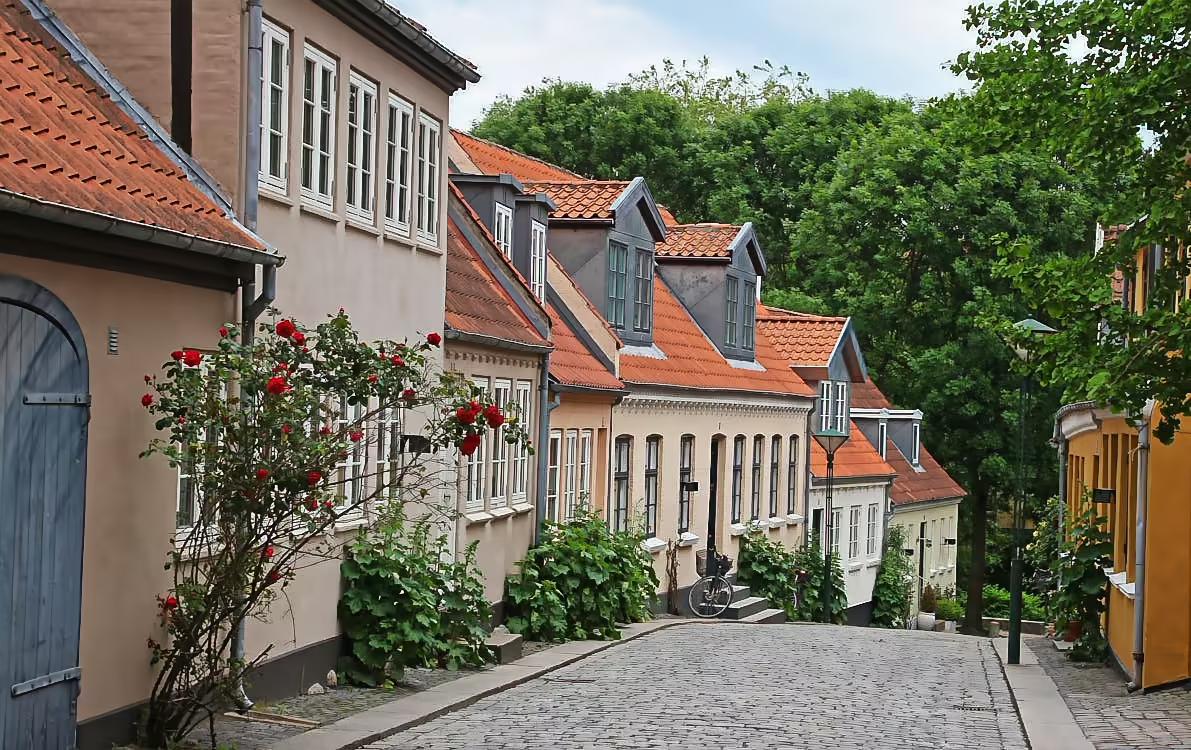

Odense é o local de nascimento de Hans Christian Andersen e a maior cidade da ilha de Funen – muitas vezes chamada de “ilha jardim” da Dinamarca pelas suas paisagens verdes onduladas e casas de fazenda com telhados de palha. A cidade passou por uma grande renovação urbana nos últimos anos, com um novo metro ligeiro, um centro pedonal e uma zona portuária revitalizada que transformou antigos edifícios industriais em espaços culturais e restaurantes. Odense oferece um estilo de vida descontraído de cidade dinamarquesa de tamanho médio, com moradias acessíveis, boas escolas e uma posição central estratégica entre Copenhague e Jutlândia. Os expatriados vêm aqui em busca da Universidade do Sul da Dinamarca, do setor de robótica em expansão e de uma alternativa mais silenciosa às cidades maiores.
Odense num relance
- População
- ~185.000 (cidade) / ~210.000 (município) / ~500.000 (metrô)
- Região
- Região do Sul da Dinamarca (Syddanmark)
- Conhecido por
- Local de nascimento de Hans Christian Andersen, Zoológico de Odense, centro de robótica, charme da ilha de Funen
- Aluguel médio (1BR)
- DKK 6.000–8.500/mês (centro da cidade)
- Salário médio
- DKK 27.000+/mês líquido (varia de acordo com o setor; veja Mercado de Trabalho)
- Comunidade de expatriados
- Pequenos e unidos – estudantes universitários, profissionais de saúde e engenheiros de tecnologia
- Moeda
- Coroa Dinamarquesa (DKK)
- Linguagem
- Dinamarquês (Inglês amplamente falado)
Por que mudar para Odense
- Acessível e habitável: O aluguel está entre os mais baixos das principais cidades da Dinamarca e os custos diários são visivelmente mais baratos do que Copenhague ou Aarhus. Uma única pessoa pode viver com 10.500–15.000 DKK/mês.
- Localização central em Funen: Estrategicamente localizado entre Copenhague (~1h15 de trem IC direto) e Jutlândia — ideal para explorar toda a Dinamarca. A Great Belt Bridge conecta Funen à Zelândia.
- Centro de robótica e tecnologia: Odense é um centro europeu líder em robótica colaborativa. A Universal Robots e a Mobile Industrial Robots (MiR) estão sediadas aqui, atraindo engenheiros e pesquisadores internacionais.
- Legado de Hans Christian Andersen: A identidade cultural da cidade é moldada pelo seu morador mais famoso – o H.C. O Museu Andersen, a casa de sua infância e esculturas e monumentos de contos de fadas estão presentes na vida cotidiana.
- Nova infraestrutura: O Odense Letbane (metrô leve, inaugurado em novembro de 2022) e a extensa rede cicloviária tornam o deslocamento fácil e sustentável.
Encontrar moradia em Odense
O mercado de arrendamento de Odense é mais calmo do que Copenhaga ou Aarhus, o que torna mais fácil encontrar habitação. Os contratos padrão exigem 3 meses de depósito mais 1 mês de aluguel pré-pago. O novo metro ligeiro tornou os bairros ao longo do seu percurso mais atrativos.
Aluguéis médios
| Vizinhança | 1 quarto | 3 Quartos | Personagem |
|---|---|---|---|
| Odense C (Centro) | DKK 6.500–9.000 | DKK 10.000–14.000 | Animado, histórico, perto de lojas e locais culturais |
| Dalum | DKK 5.500–7.500 | DKK 9.000–12.500 | Ambiente familiar, residencial, boas escolas |
| Skibhus | DKK 5.500–7.500 | DKK 9.000–12.000 | Casas antigas e apartamentos modernos, perto do porto |
| Bolbro | DKK 5.000–7.000 | DKK 8.000–11.000 | Acessível, popular entre estudantes e jovens profissionais |
| Hunderup | DKK 7.000–9.500 | DKK 11.500–16.000 | Vilas espaçosas e sofisticadas, ruas verdes tranquilas |
| Tarup | DKK 5.000–7.000 | DKK 8.500–11.500 | Subúrbio norte, moradias mais novas, shopping centers |
Como Encontrar Moradia
- BoligPortal: A principal plataforma de aluguel – assinatura necessária para contato com o locador.
- Findbolig.nu: Listagens vinculadas a universidades e instituições.
- Habitação SDU: A Universidade do Sul da Dinamarca ajuda os estudantes internacionais a encontrar alojamento através do seu gabinete de alojamento.
- Grupos do Facebook: "Bolig i Odense", "Odense Lejlighed" e "Roommate Odense" estão ativos para listagens privadas e compartilhadas.
- Boligforening de Odense: Associações habitacionais com aluguéis acessíveis – muitas vezes têm listas de espera, mas oferecem um bom valor.
- Dicas locais: O mercado está menos pressionado do que em Aarhus, mas comece a pesquisar pelo menos 2 meses antes da chegada. As moradias estudantis ficam lotadas antes do semestre de setembro.
Dicas para expatriados
- O depósito padrão é de 3 meses de aluguel mais 1 mês pré-pago.
- O novo metrô de superfície de Odense (Odense Letbane) conecta muitos bairros – considere a proximidade de uma parada ao escolher moradia para facilitar o deslocamento.
- Muitos aluguéis são em edifícios mais antigos – verifique o tipo de aquecimento (aquecimento urbano vs. gás), isolamento e etiquetas energéticas antes de assinar.
- A localização central de Funen significa que você pode viajar para Copenhague ou Jutlândia, se necessário, embora a tarifa diária do trem aumente.
Guia de Bairros
- Odense C (centro da cidade): O coração pedonal em torno da praça Flakhaven e do Museu Hans Christian Andersen. Cafés, lojas e a catedral estão todos a poucos passos. Melhor para solteiros e casais que desejam conveniência central. Os aluguéis são os mais altos em Odense, mas ainda bem abaixo dos níveis de Copenhague.
- Dalum: Uma área residencial ao sul com boas escolas, parques e uma atmosfera de aldeia. Popular entre as famílias que desejam um ambiente seguro e verde com fácil acesso ao centro da cidade.
- Skibhus: Ao norte do centro, perto do porto – uma mistura de charme antigo e empreendimentos mais recentes. Cada vez mais popular entre os jovens profissionais à medida que a área portuária se desenvolve.
- Bolbro: A oeste do centro com os aluguéis mais acessíveis em Odense. Boas conexões de ônibus e metrô, perto do campus universitário e popular entre os estudantes.
- Hunderup: O endereço de maior prestígio em Odense – casas grandes, ruas arborizadas e proximidade com a floresta Hunderup Skov. Ideal para famílias que buscam espaço e sossego.
- Tarup: Subúrbio ao norte com moradias mais novas, shopping Tarup Center e fácil acesso ao anel viário. Adequado para carros com boas conexões de ônibus.
Custo de Vida em Odense
Odense é uma das cidades mais acessíveis da Dinamarca devido ao seu tamanho. O orçamento abaixo reflete um estilo de vida confortável para uma pessoa solteira.
Detalhamento do orçamento mensal
| Categoria | Faixa de orçamento |
|---|---|
| Aluguel (1BR, centro) | DKK 6.000–8.500 |
| Serviços públicos (aquecimento, água, eletricidade) | DKK 800–1.200 |
| Internet | 200–300 DKK |
| Mantimentos | DKK 2.000–2.500 |
| Transporte (passe mensal) | 400–500 DKK |
| Jantar fora (4x/mês) | DKK 1.000–1.500 |
| Lazer/Academia | 200–350 DKK |
| Total | DKK 10.600–14.850 |
Custos do dia a dia
- Café (café com leite): DKK 38–48
- Almoço (restaurante casual): DKK 75–100
- Passe de transporte mensal: DKK 400–500
- Cerveja (barra): DKK 40–55
- Bilhete de cinema: DKK 95–120
- Cesta de compras (pão, leite, ovos, frango, legumes): DKK 130-170
Como se locomover em Odense
- Ciclismo: Odense é plana e investiu pesadamente em infraestrutura cicloviária com uma extensa rede de ciclovias dedicadas por toda a cidade. É uma das melhores cidades para ciclismo da Dinamarca, e a maioria dos residentes anda de bicicleta diariamente.
- Transporte público: Ônibus e o Odense Letbane (metrô leve, inaugurado em 2022) conectam a cidade. Um passe mensal custa cerca de 400–500 DKK. O Letbane atravessa o centro da cidade e se conecta à universidade e aos subúrbios.
- Condução: Fácil de navegar com trânsito leve e estacionamento disponível. Um carro é útil para explorar a zona rural de Funen, aldeias costeiras e viagens de fim de semana para outras partes da Dinamarca.
- Aeroporto: O Aeroporto de Odense (Aeroporto Hans Christian Andersen) tem voos comerciais muito limitados. A maioria dos residentes usa o Aeroporto de Billund (~1 hora de carro, ~1,5 horas de transporte público) ou o Aeroporto de Copenhague (~1h15 de trem direto) para viagens internacionais.
- Intermunicipal: Trens intermunicipais diretos para Copenhague (~1h15 pela ponte Great Belt), Aarhus (~1h40–2h) e Fredericia (~30 min). A posição central de Funen facilita viagens de fim de semana para qualquer parte da Dinamarca.
Cuidados de saúde em Odense
A Dinamarca tem um sistema de saúde público financiado por impostos. Todos os residentes com um número de RCP recebem cuidados médicos gratuitos, incluindo consultas médicas, tratamento hospitalar e encaminhamentos para especialistas.
- Hospitais/Clínicas: Hospital Universitário de Odense (OUH) — um dos maiores hospitais da Dinamarca e o principal hospital universitário da Universidade do Sul da Dinamarca. Departamentos especializados e um centro de trauma.
- Médicos que falam inglês: Disponível, especialmente, através do hospital universitário e clínicas municipais. A comunidade internacional de pesquisa garante que o inglês seja comum em ambientes médicos.
- Farmácias (Apotek): Vários locais no centro e subúrbios.
- Número de emergência: 112 (ambulância, bombeiros, polícia). Para aconselhamento médico não emergencial, ligue para 1813 (Lægevagten).
Receba um plano de mudanca personalizado
Deixe o seu e-mail e enviaremos uma checklist personalizada e tres orcamentos de empresas verificadas.
Cultura e estilo de vida
Odense combina o encanto dos contos de fadas com a ambição moderna. A identidade da cidade está profundamente ligada a Hans Christian Andersen, mas é também um centro tecnológico virado para o futuro com um cenário cultural crescente.
- HC Museu Andersen: Um museu de classe mundial redesenhado em 2021, situado num espaço arquitetônico subterrâneo que dá vida aos seus contos de fadas através de instalações imersivas.
- Casa de infância de Andersen: A pequena casa amarela no centro histórico onde o autor cresceu – hoje um museu com móveis originais e itens pessoais.
- Centro cultural Brandts: Um complexo de museu e galeria de arte em uma antiga fábrica têxtil – abriga exposições de arte contemporânea, um cinema e eventos culturais.
- Zoológico de Odense: Uma das atrações familiares mais populares da Dinamarca, situada ao longo do rio Odense, com animais de todos os continentes.
- Zona rural de Funen: Colinas ondulantes, casas de fazenda com telhados de palha, pomares e vilas costeiras estão a uma curta viagem de bicicleta ou de carro. O Castelo Egeskov (um castelo aquático renascentista) fica a 30 minutos ao sul.
Comida e Jantar
- Cozinha tradicional dinamarquesa, produtos locais de Funen (maçãs, carne de porco, laticínios) e um crescente cenário de restaurantes internacionais ao redor do porto e Flakhaven.
- Odense Havn (porto) foi transformado em um bairro gastronômico e cultural com restaurantes, cafés e vendedores de comida de rua.
- A área da praça Flakhaven oferece refeições ao ar livre no verão.
- Opções de orçamento: padarias, cantinas estudantis na SDU e ofertas de refeições em supermercados da Netto e Rema 1000.
Comunidade de expatriados
- O Escritório Internacional da SDU organiza programas de boas-vindas, sistemas de amigos e eventos sociais para estudantes e pesquisadores internacionais.
- Internations Odense e grupos de expatriados no Facebook para a área de Odense/Funen.
- Cafés de idiomas e grupos de conversação em dinamarquês administrados por voluntários em Borgernes Hus (a biblioteca principal).
- A comunidade de expatriados é menor e unida – é fácil construir conexões genuínas.
Mercado de Trabalho em Odense
A economia de Odense passou da manufatura tradicional para a robótica, tecnologia médica e educação. A cidade se autodenomina "RoboValley" — um centro europeu de robótica colaborativa.
- Principais indústrias: Robótica e automação (Robôs Universais, Robôs Industriais Móveis), saúde e tecnologia médica, educação, manufatura, agricultura.
- Principais empregadores: Universidade do Sul da Dinamarca (SDU), Hospital Universitário de Odense (OUH), Universal Robots, Terma (defesa e aeroespacial), Danish Crown (produção de alimentos).
- Salários médios por setor:
| Setor | Média Mensal Líquida (DKK) |
|---|---|
| Robótica / Engenharia | 28.000–42.000 |
| Tecnologia / TI | 27.000–38.000 |
| Assistência médica | 26.000–35.000 |
| Educação/Pesquisa | 25.000–33.000 |
| Serviço / Hospitalidade | 19.000–24.000 |
- Recursos de busca de emprego: Jobindex.dk, Trabalho na Dinamarca (workindenmark.dk), SDU Job Bank, LinkedIn, rede de cluster Odense Robotics.
Educação em Odense
- Escolas internacionais: Escola Internacional Odense (primária e secundária), Sct. Ginásio Knuds (programa IB).
- Universidades: Universidade do Sul da Dinamarca (SDU) — forte em engenharia, ciências da saúde, robótica e ciências sociais. A SDU tem uma população estudantil internacional significativa em todos os seus campi.
- Escolas de idiomas: Lærdansk Odense (cursos gratuitos de dinamarquês para portadores de RCP), Odense Sprogcenter.
Lista de verificação de mudança para Odense
- Confirme a autorização de residência ou o status da UE/EEE.
- Inscreva-se para obter moradia estudantil SDU ou pesquise no BoligPortal com 2 a 3 meses de antecedência.
- Preparar traduções juramentadas de documentos importantes.
- Providenciar seguro de saúde (CESD para cidadãos da UE, caso contrário, privado).
- Registre-se no Borgerservice para obter seu número de RCP.
- Abra uma conta bancária dinamarquesa (Danske Bank, Nordea ou Jyske Bank).
- Compre uma bicicleta usada ou ganhe um Rejsekort para transporte público.
- Configure o MitID para serviços públicos digitais.
- Registre-se com um médico local via sundhed.dk.
- Inscreva-se em cursos gratuitos de dinamarquês (Lærdansk).
- Ande de bicicleta pela cidade — Odense é plana e fácil de aprender de bicicleta.
- Visite o H.C. Museu Andersen e explore o distrito portuário.
- Configure o MobilePay vinculado à sua conta bancária dinamarquesa.
Trazendo seus pertences para a Dinamarca
Se estiver a mudar-se de fora da UE, poderá qualificar-se para a importação isenta de impostos e de IVA de bens domésticos usados ao abrigo das regras aduaneiras dinamarquesas:
- Os itens devem ser de propriedade e usados há pelo menos 6 meses.
- Você deve ter vivido fora da UE durante 12 meses consecutivos.
- As mercadorias devem chegar dentro de 6 meses antes ou 12 meses depois da sua mudança.
Na alfândega apresente lista de inventário, comprovante de residência no exterior e passaporte ou autorização de residência. Itens novos, veículos ou bens de alto valor podem estar sujeitos a 25% de IVA e direitos de importação. Os cidadãos da UE que se deslocam dentro da UE geralmente não enfrentam requisitos aduaneiros para pertences pessoais.
Aprendendo Dinamarquês
O dinamarquês não é essencial para a vida quotidiana em Odense, especialmente na SDU, mas aprendê-lo ajuda na integração social e nas perspectivas de emprego locais. O governo dinamarquês oferece cursos de línguas gratuitos a todos os residentes com número CPR.
- Lærdansk Odense: O principal fornecedor — cursos presenciais e online em todos os níveis.
- Odense Sprogcenter: Outra opção para o ensino da língua dinamarquesa.
- Duolingo e Babbel: Bom para o básico antes de chegar.
- Dica prática: O Escritório Internacional da SDU organiza eventos de intercâmbio linguístico — uma boa maneira de praticar dinamarquês e conhecer os habitantes locais.
Cultura Dinamarquesa e Normas Sociais
Compreender as normas sociais dinamarquesas ajuda os recém-chegados a instalarem-se mais rapidamente. Os dinamarqueses são amigáveis, mas reservados no início – construir conexões mais profundas leva tempo.
- Higiene: O famoso conceito dinamarquês de união aconchegante – velas, bebidas quentes e momentos de qualidade com os amigos. Não é apenas uma tendência, mas uma parte central da vida social dinamarquesa.
- Comunicação direta: Os dinamarqueses tendem a ser diretos e honestos. Isso não é grosseria – é eficiência valorizada. Não leve o feedback direto para o lado pessoal.
- Igualdade: A cultura dinamarquesa enfatiza hierarquias planas. Chefes e funcionários muitas vezes socializam como iguais. Mostrar riqueza ou status geralmente é desaprovado.
- Pontualidade: Chegar na hora certa é importante. Chegar atrasado sem avisar é considerado desrespeitoso.
- Equilíbrio entre vida pessoal e profissional: A semana de trabalho padrão é de 37 horas. Sair na hora certa para buscar os filhos ou frequentar hobbies é normal e respeitado.
- Orgulho Funen: Os habitantes de Funen (fynboer) são conhecidos por serem calorosos, acolhedores e um pouco mais relaxados do que os de Copenhague ou da Jutlândia. Odense mantém uma forte identidade local.
O que esperar: Clima e estações
Odense tem um clima oceânico temperado, um tanto protegido pela posição de Funen entre a Jutlândia e a Zelândia.
- Inverno (dezembro a fevereiro): Temperaturas médias 0–4°C. Dias curtos (7 horas de luz solar em dezembro). Neve ocasional, mas principalmente cinzenta e úmida. A geada é comum à noite.
- Primavera (março a maio): As temperaturas sobem de 4°C a 14°C. Os dias aumentam rapidamente. Os pomares de Funen florescem no final de abril.
- Verão (junho a agosto): Média 17–21°C, ocasionalmente mais quente. Dias longos com mais de 17 horas de luz do dia. Ideal para andar de bicicleta e explorar a ilha.
- Outono (setembro a novembro): Resfriamento de 14°C a 4°C. Chuvoso. Lindas cores de outono em Hunderup Skov e ao longo do rio Odense.
Estabelecendo-se: Dicas para a vida diária
- MobilePay: O aplicativo de pagamento dominante na Dinamarca — vinculado à sua conta bancária dinamarquesa. Usado para tudo, desde dividir contas até pagar em mercados. Configure-o imediatamente após abrir uma conta bancária.
- MitID/NemID: Sua identidade digital para acessar serviços públicos, bancos, declarações fiscais (SKAT) e saúde (sundhed.dk). Essencial para a vida diária na Dinamarca.
- Reciclagem: A Dinamarca leva a sério a triagem de resíduos. Cada edifício possui lixeiras para resíduos residuais, resíduos biológicos/alimentares, plástico, papel, vidro e metal. A classificação correta é esperada.
- Sistema de depósito (Pant): A maioria das garrafas e latas tem um depósito (1–3 DKK). Devolva-os em máquinas de venda reversa em supermercados.
- Horário de silêncio: A cultura dinamarquesa valoriza o silêncio. A maioria dos edifícios impõe horários de silêncio após as 22h.
- Gorjeta: Não é esperado na Dinamarca – o pessoal de serviço recebe salários justos. Arredondar a conta é apreciado, mas não obrigatório.
- Viagens de um dia saindo de Odense: A localização central de Funen facilita a visita ao Castelo de Egeskov (30 minutos), às praias do arquipélago sul de Funen e à Legoland em Billund (1,5 horas).
Guias Relacionados
- [Mudança para a Dinamarca] — guia completo do país
- [Mudança para Copenhague] — capital da Dinamarca
- [Mudança para Aarhus] — a segunda cidade da Dinamarca
- [Mudança para Aalborg] — vida acessível no Norte da Jutlândia
- [Mudança para Esbjerg] — a capital da energia eólica da Dinamarca
Odense combina o encanto dos contos de fadas com tecnologia de ponta – uma cidade onde o legado de Andersen encontra o futuro da robótica.