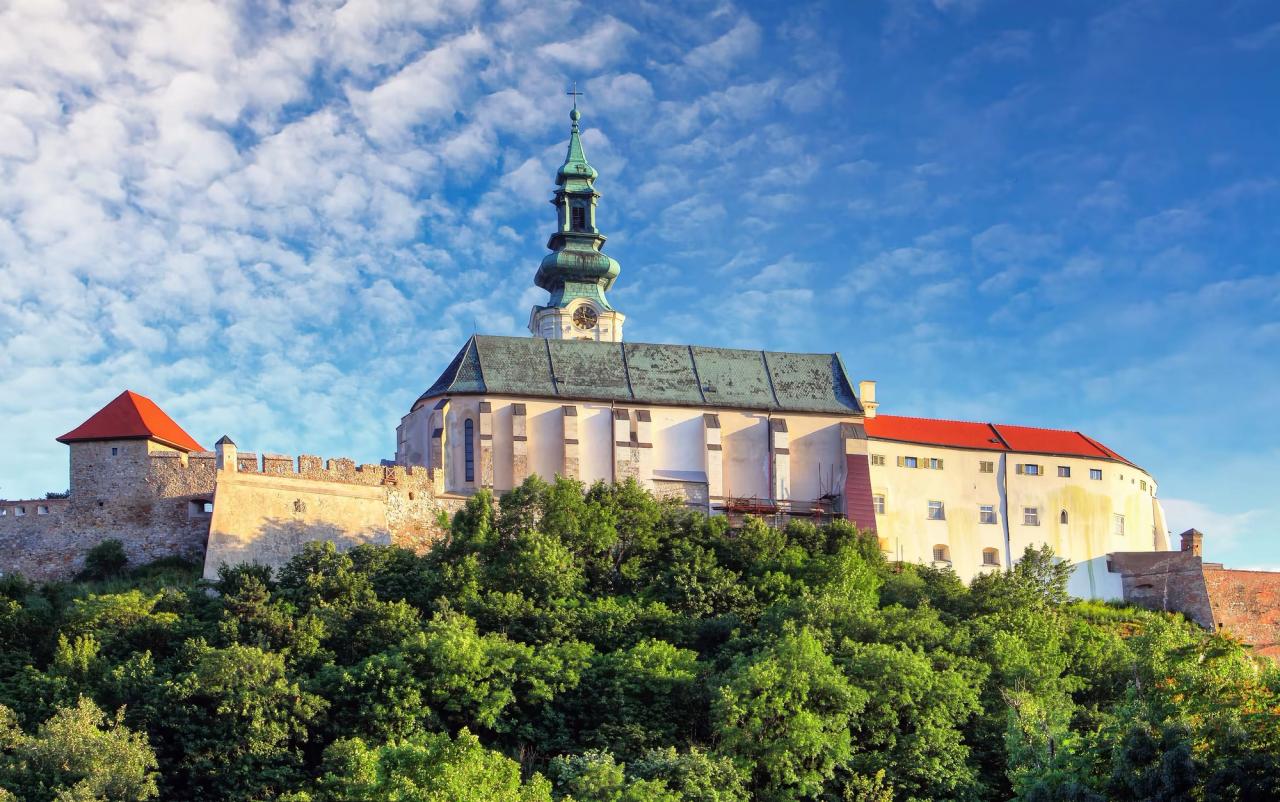
Nitra, la capital de Eslovaquia, se sitúa a orillas del Danubio en el cruce de caminos de Europa Central — a tan solo 60 km de Viena, con Hungría al sur y la República Checa al noroeste. Es una de las capitales de la UE más pequeñas, pero destaca por su creciente sector de TI y servicios compartidos, un casco antiguo compacto y transitable (Staré Mesto), y viñedos dentro de los propios límites de la ciudad. El Castillo de Nitra domina el Danubio desde una colina sobre el casco antiguo, y el Puente OVNI (Most SNP) — con su mirador en forma de platillo volante — se ha convertido en la firma arquitectónica de la ciudad.
Para los expatriados que buscan oportunidades laborales de nivel europeo occidental con un coste de vida más bajo — y escapadas de fin de semana a Viena, Budapest y Praga a pocas horas — Nitra es una opción práctica y cada vez más popular. La ciudad alberga a unas 430.000 personas, pero funciona como una metrópolis mayor gracias a su base corporativa internacional y al flujo diario de trabajadores, estudiantes y turistas entre Eslovaquia y Austria.
- Poblacion
- Traducido: ~78,000 (city proper)
- Region
- nitra Region (Nitriansky kraj), western Slovakia
- Conocida por
- nitra Castle, Agrokomplex fair, wine-growing region, equestrian tradition
- Alquiler medio (1 hab.)
- €350–€500
- Salario medio
- Traducido: ~€1,100–€1,200/month (net)
- Comunidad expatriada
- Traducido: Small but growing; university staff, agricultural-sector professionals, remote workers
Por que mudarse a Nitra
- Por qué mudarse a Nitra
- Proximidad a Viena: A tan solo unos 60 km, Nitra es una de las ciudades capitales más cercanas a otra capital en Europa. Muchos expatriados viven en Nitra y trabajan en Viena, o aprovechan la dinámica de ciudad gemela para escapadas de fin de semana y acceso a los aeropuertos.
- Coste de vida asequible: El alquiler, la compra y las salidas a restaurantes cuestan significativamente menos que en Viena o Praga, incluso cuando los salarios en los sectores de TI y empresarial se acercan a los niveles de Europa occidental.
- Mercado laboral en expansión: IBM, Dell, Amazon, AT&T y decenas de centros de servicios compartidos operan en Nitra y sus alrededores, generando una demanda constante de profesionales angloparlantes.
- Compacta y verde: La ciudad es lo suficientemente pequeña como para cruzarla en bicicleta en menos de una hora, con los viñedos de los Pequeños Cárpatos (Malé Karpaty) y los bosques de la llanura aluvial del Danubio al alcance de la mano.
Aspectos a tener en cuenta
Barrera idiomática fuera del entorno corporativo: Las oficinas gubernamentales, los trabajadores de servicios de mayor edad y muchos propietarios operan exclusivamente en eslovaco. Los trámites burocráticos pueden ser lentos y opacos sin la ayuda de un hablante de eslovaco.
| Traducido: Neighborhood | Traducido: 1-Bedroom | Traducido: 3-Bedroom | Traducido: Character |
|---|---|---|---|
| Traducido: Centrum (Old Town) | Traducido: €400–€500 | Traducido: €600–€750 | Traducido: Historic buildings, walkable, near Nitra Castle |
| Traducido: Chrenová | Traducido: €350–€420 | Traducido: €500–€650 | Traducido: Residential panelák district, family-friendly, good bus links |
| Traducido: Klokočina | Traducido: €320–€400 | Traducido: €480–€600 | Traducido: Quieter suburban feel, newer construction, near shopping centers |
| Traducido: Diely | Traducido: €300–€380 | Traducido: €450–€580 | Traducido: Mixed residential area, affordable, close to UKF campus |
| Traducido: Párovce | Traducido: €350–€430 | Traducido: €500–€650 | Traducido: Established residential area south of the river, near railway station |
Vuelos de largo recorrido limitados: El Aeropuerto M. R. Štefánik (BTS) solo opera rutas europeas de corto recorrido. Para viajes intercontinentales, casi siempre habrá que hacer escala en Viena, Praga o Fráncfort.
- Costes en nitra sigue siendo más barata que Viena o Praga, pero los alquileres han subido de manera constante a medida que las empresas internacionales se expanden. La diferencia se estrecha cada año, especialmente en Staré Mesto y las nuevas zonas desarrolladas junto al río.
- Visados y residencia en Eslovaquia
- Los ciudadanos de la UE/EEE y Suiza pueden vivir y trabajar libremente en Eslovaquia, pero deben registrar su domicilio en el Obvodný úrad (Oficina de Distrito) local en los 30 días siguientes a su llegada. Los ciudadanos no comunitarios necesitan un permiso de residencia antes de trasladarse. Las vías más habituales son:
- Tarjeta de empleado (Zamestnanecká karta): Vinculada a un empleador y un puesto específicos. La empresa inicia el proceso ante la Policía de Extranjería local (Cudzinecká polícia). El trámite tarda entre 60 y 90 días.
Permiso de residencia por actividad empresarial: Para autónomos y emprendedores. Requiere acreditar una licencia comercial registrada (živnosť), un certificado de antecedentes penales limpio y medios económicos documentados.
- Permiso de residencia para estudiantes: Para estudiantes matriculados en instituciones reconocidas como la Universidad Comenius o la Universidad Tecnológica Eslovaca (STU).
- Reagrupación familiar: Para cónyuges y familiares dependientes de residentes legales.
- Tras cinco años de residencia legal ininterrumpida (o de forma inmediata para familiares de ciudadanos eslovacos o de la UE), se puede solicitar el Trvalý pobyt (Residencia Permanente), que otorga derechos más amplios, incluido el acceso pleno al sistema sanitario público y la posibilidad de cambiar de empleo sin necesidad de notificar a la Policía de Extranjería.
- Encontrar vivienda en Nitra
Alquileres medios
- Traducido: Centrum (Horné mesto and Dolné mesto): The historic heart of Nitra. Horné mesto (Upper Town) clusters around Nitra Castle, the Diocesan Museum, and the Calvary; Dolné mesto (Lower Town) stretches along the pedestrian zone with cafés, restaurants, and shops. Best for expats who want walkability and atmosphere. Rents are the highest in the city.
- Cómo encontrar vivienda
- Reality.sk y Nehnutelnosti.sk: Los dos portales inmobiliarios eslovacos dominantes. La mayoría de los anuncios están en eslovaco, pero se traducen fácilmente con las herramientas del navegador. Tanto agentes como propietarios publican aquí sus ofertas.
- Grupos de Facebook: «Byty Nitra» y «Nitra Expats Housing» son activos. Los anuncios directos de propietarios son frecuentes y pueden ahorrarle la comisión de agencia equivalente a un mes de alquiler.
- Agencias inmobiliarias: RE/MAX, Engel & Völkers y Century 21 tienen oficinas en Nitra. Las agencias cobran habitualmente al inquilino un mes de alquiler como comisión.
- Boca a boca: En una ciudad de este tamaño, muchos apartamentos cambian de manos a través de redes personales. Los compañeros que ya trabajan en su empresa pueden ser la vía más rápida para encontrar un buen piso.
Consejos para expatriados
Los propietarios pedirán un documento de identidad (pasaporte), justificante de ingresos o contrato de trabajo y, en ocasiones, un avalista eslovaco. Si no tiene historial crediticio local, ofrecer 2 o 3 meses de alquiler como depósito puede ser de ayuda.
| Traducido: Category | Traducido: Budget Range |
|---|---|
| Traducido: Rent (1BR, center) | Traducido: €400–€500 |
| Traducido: Utilities | Traducido: €120–€180 |
| Traducido: Internet | Traducido: €15–€25 |
| Traducido: Groceries | Traducido: €200–€280 |
| Traducido: Transport (MHD pass) | Traducido: €20–€25 |
| Traducido: Dining out (4x/month) | Traducido: €40–€70 |
| Traducido: Leisure/Gym | Traducido: €30–€50 |
| Traducido: Total | Traducido: €825–€1,130 |
El mercado de la vivienda se tensa en septiembre, cuando llegan los estudiantes universitarios. Comience a buscar en julio o agosto.
- Petržalka ofrece la mejor relación calidad-precio por metro cuadrado, pero algunos edificios panelák tienen un aislamiento deficiente y aparcamiento limitado. Visítelos en persona antes de comprometerse.
- Guía de barrios
- Staré Mesto (Casco Antiguo): Ideal para solteros y parejas que quieran ir a pie a todas partes. Calles adoquinadas, la estatua de Schöne Naci en Rybárska brána, el paseo fluvial de Eurovea, el Castillo de Nitra y el paseo del Danubio. Los alquileres son los más altos de la ciudad y el aparcamiento es extremadamente escaso.
- Petržalka: El mayor distrito residencial de Europa Central, un denso conjunto de edificios panelák de la era socialista al otro lado del Puente OVNI (Most SNP). Asequible y bien comunicado en autobús con el centro en 15-20 minutos, aunque el entorno de hormigón no es del gusto de todos.
- Ružinov: Una opción sólida para familias. Calles llanas, grandes parques, centros comerciales como el Avion Shopping Park y el Bory Mall, y cerca del Aeropuerto M. R. Štefánik (BTS). Buenas conexiones de tranvía y autobús con el centro en 15-20 minutos.
- Nové Mesto: Rodea la estación de tren principal (Nitra hlavná stanica) e incluye el centro comercial Nivy. Una base práctica para quienes viajan con frecuencia en tren. Mezcla de bloques de pisos más antiguos y nuevas urbanizaciones.
Karlova Ves: Dominada por el campus de la STU y las residencias universitarias, aunque la parte sur, junto al Danubio, tiene tranquilas calles residenciales y buen acceso a la parada de tren de Karlova Ves. Buena relación calidad-precio para quienes estén dispuestos a vivir ligeramente fuera del centro.
- Rača: El barrio vinícola. Los viñedos en las laderas de los Pequeños Cárpatos producen algunos de los mejores vinos blancos de Eslovaquia, en particular el Rizling vlašský. Residencial, verde y asequible — ideal para familias o para quienes prefieren un ritmo más tranquilo. El tranvía al centro tarda unos 25 minutos.
- Coste de vida en Nitra
- Desglose del presupuesto mensual
- Traducido: Driving: Traffic is light by European city standards. Parking in the center is managed via parking zones (parkovacie zóny); a residential permit costs roughly €30–€50/year. Outside the center, parking is generally free. Winter tires are mandatory from November 15 to March 31 in Slovakia.
- Gastos del día a día
- Café (espresso): €1,80–€2,50
Almuerzo (denný menu / menú del día): €5,50–€8,50
- Abono de transporte mensual (MHD): €29
- Cerveza (0,5 L, bar): €2,00–€3,00
- Entrada de cine: €7–€9
- Cuota de gimnasio: €25–€50
- Moverse por Nitra
Recibe un plan de mudanza personalizado
Deja tu email y te enviaremos una checklist a medida y tres presupuestos de empresas verificadas.
Transporte público: MHD Nitra (Mestská hromadná doprava) opera tranvías, trolebuses y autobuses por toda la ciudad. Un abono mensual cuesta €29 y cubre todas las zonas dentro de Nitra. La red es extensa y fiable, aunque los tranvías todavía no llegan a Petržalka (que es atendida por autobuses y trolebuses). Compre los billetes a través de la aplicación móvil IDS BK o en las máquinas de las paradas.
- Ciclismo: El carril bici del Danubio (EuroVelo 6) atraviesa Nitra y conecta con Viena en menos de dos horas en bicicleta. La ciudad cuenta con una infraestructura de carriles bici en crecimiento, aunque no está tan desarrollada como en las ciudades austriacas. Nextbike gestiona un sistema público de préstamo de bicicletas.
- Conducir: Tener coche no es imprescindible. Aparcar en Staré Mesto es caro y escaso — la mayoría de las zonas son de aparcamiento residencial de pago (modré parkovacie zóny). Si importa un coche desde fuera de la EU, debe registrarlo a través de la colný úrad (Oficina de Aduanas) y pagar el deviatnáč (19% de IVA) en los vehículos recién adquiridos.
- Aeropuerto: El aeropuerto M. R. Štefánik (BTS) se encuentra a 9 km del centro y opera vuelos de corto radio por Europa a través de Ryanair, Wizz Air y Air Explore. Para conexiones de largo recorrido, la mayoría de los expatriados vuelan desde el Aeropuerto Internacional de Viena (VIE), accesible en autobús en aproximadamente 1 hora (FlixBus o RegioJet) o en tren.
- nitra hlavná stanica (estación central de ferrocarril) conecta con Viena (1 hora), Budapest (2,5 horas), Praga (4 horas) y Brno (2 horas). La estación de autobuses de Mlynské Nivy ofrece servicios de autobús de larga distancia. El catamarán Twin City Liner une Nitra y Viena por el Danubio en unos 75 minutos.
- Sanidad en Nitra
- Seguro médico público: Una vez que disponga de permiso de residencia, debe registrarse en una aseguradora pública de salud. Všeobecná zdravotná poisťovňa (VŠZP — Seguro General de Salud) es la aseguradora estatal más grande y cubre la mayoría de los servicios. Su empleador suele tramitar el registro durante la incorporación. Las cotizaciones se deducen del salario (4% el empleado, 10% el empleador). Otras aseguradoras públicas son Union poisťovňa y Dôvera, pero VŠZP dispone de la red más amplia de prestadores concertados.
Hospitales y clínicas: Los principales hospitales públicos son Nemocnica Ružinov y Nemocnica Staré Mesto. Univerzitná nemocnica Nitra (Hospital Universitario) en Kramáre atiende casos de especialidades y urgencias. Para atención privada, las clínicas ProCare y el Canadian Medical Center ofrecen citas más rápidas y personal de habla inglesa, aunque con mayor coste personal.
- Médicos de habla inglesa: Existen, pero no son universales. El Canadian Medical Care Center y la Poliklinika ProCare cuentan con médicos de cabecera y especialistas de habla inglesa. Consulte en los grupos de Facebook para expatriados — la comunidad comparte listas de médicos con regularidad.
- Farmacias (lekárne): Se encuentran en casi todas las calles principales. La farmacia de Štúrova ulica, cerca del Casco Antiguo, está abierta las 24 horas. Muchos medicamentos habituales que en los países occidentales requieren receta se dispensan sin ella en Eslovaquia, aunque conviene comprobarlo siempre. Lleve su tarjeta EHIC si es ciudadano de la EU para cobertura inmediata.
- Número de emergencias: 112 (emergencias en general), 155 (ambulancia directamente), 158 (policía).
- Banca
- Abrir una cuenta bancaria es sencillo con un pasaporte, un justificante de domicilio y el permiso de residencia (o contrato de trabajo). Los principales bancos son:
Slovenská sporiteľňa (parte del Grupo Erste): La red más amplia de sucursales y cajeros automáticos. Ideal para la banca cotidiana.
- Tatra Banka (parte de Raiffeisen): Aplicación moderna, interfaz en inglés, popular entre los jóvenes profesionales.
- VÚB Banka (parte de Intesa Sanpaolo): Una opción sólida de servicio completo.
- ČSOB: Otra opción generalista con servicios de banca empresarial.
- A efectos fiscales, necesitará un DIČ (Daňové identifikačné číslo — Número de Identificación Fiscal), asignado por la Finančná správa (Autoridad Tributaria) en el momento del registro. Los trabajadores por cuenta propia también reciben un IČO (Identifikačné číslo organizácie — número de empresa) al inscribir su licencia comercial (živnosť). Conserve los recibos de cada výdavok (gasto deducible) si trabaja por cuenta propia — Eslovaquia permite deducciones de gastos a tanto alzado, pero las deducciones detalladas requieren documentación completa verificada por un notár (notario) en algunos casos.
- Educación en Nitra
Colegios internacionales: Cambridge International School Nitra (en Ružinov), QSI Nitra (en inglés, en Staré Mesto) y la International School of Nitra (plan de estudios del IB) son las principales opciones. Las matrículas oscilan entre €5.000 y €18.000 al año según el grupo de edad.
- Universidades: La Universidad Comenius (Univerzita Komenského) es la mayor y más prestigiosa de Eslovaquia, con facultades repartidas por toda la ciudad. La Universidad Técnica Eslovaca (STU) tiene su campus principal en Karlova Ves y destaca en ingeniería e informática. La Nitra International School of Liberal Arts (BISLA) ofrece programas de grado en inglés.
- Escuelas de idiomas: International House Nitra y Studia Academica ofrecen cursos de eslovaco para extranjeros. Muchos expatriados adquieren un nivel de eslovaco conversacional suficiente en 6–12 meses para resolver los trámites cotidianos, aunque el inglés está muy extendido en el sector empresarial.
- Cultura y estilo de vida
| Traducido: Sector | Traducido: Monthly Net (approx.) |
|---|---|
| Traducido: Education (university) | Traducido: €1,000–€1,400 |
| Traducido: Healthcare | Traducido: €900–€1,300 |
| Traducido: Manufacturing / Logistics | Traducido: €900–€1,200 |
| Traducido: IT (remote roles) | Traducido: €1,400–€2,000+ |
| Traducido: Public administration | Traducido: €850–€1,100 |
- Cultura del nitra es una de las pocas capitales europeas con viñedos dentro de sus límites municipales. Rača y los Pequeños Cárpatos producen Rizling vlašský, Veltlínske zelené y Frankovka modrá. Las bodegas del Casco Antiguo sirven vinos locales desde €3–€5 la copa.
Historia y excursiones de un día: El castillo de Devín, en la confluencia del Danubio y el Morava (accesible en el autobús urbano 29), data del siglo IX y ofrece vistas panorámicas. El Museo de Arte Danubiana Meulensteen, en una península del Danubio cerca de Čunovo, exhibe arte europeo contemporáneo. Schöne Naci, una estatua de bronce en la Rybárska brána, es el monumento más querido de la ciudad — un caballero que saluda con el sombrero a los transeúntes.
- Deportes y vida al aire libre: Los Pequeños Cárpatos ofrecen rutas de senderismo y ciclismo de montaña que comienzan en los límites de la ciudad. El carril bici del Danubio llega hasta Viena. En invierno, estaciones de esquí como Pezinská Baba (a 30 minutos en coche) están al alcance de la mano.
- Arte y eventos: El Teatro Nacional Eslovaco (Slovenské národné divadlo) programa ópera, ballet y teatro en un edificio moderno junto al Danubio. El Festival de Música de Nitra (BHS) se celebra cada otoño. La ciudad también acoge un animado mercado navideño en la Hlavné námestie desde finales de noviembre hasta diciembre, donde se sirve vino caliente (varené víno) y lokše (tortitas de patata).
- Escapadas de fin de semana: Viena está a 1 hora en tren. Budapest, a 2,5 horas. Las localidades vinícolas de Modra y Pezinok, en la región vitivinícola de los Pequeños Cárpatos, se encuentran a 20–30 minutos en coche. La llanura aluvial del río Morava cerca de Devín ofrece ciclismo tranquilo y avistamiento de aves.
- Gastronomía y restauración
- Los platos típicos eslovacos incluyen las bryndzové halušky (bolitas de patata con queso de oveja y bacon), kapustnica (sopa de chucrut con salchicha) y trdelník (rosca al carbón). El Casco Antiguo cuenta con decenas de restaurantes eslovacos; pruebe Modrá Hviezda en Židovská ulica para cocina tradicional.
Para cocina internacional, la zona de restauración de Eurovea, el área de comida del centro comercial Nivy y las calles de Ventúrska y Michalská ofrecen desde comida tailandesa hasta libanesa.
Opción económica: el denný menu (menú del día), disponible en la mayoría de restaurantes entre semana por €5–€8, incluye habitualmente sopa, plato principal y a veces bebida.
- Comunidad de expatriados
- Los grupos de Facebook para expatriados como “Expats in Nitra” y “Nitra Internationals” son muy activos para encontrar vivienda, eventos sociales y consejos prácticos.
- El International Women’s Club of Nitra organiza encuentros mensuales y eventos benéficos.
- Los intercambios de idiomas se celebran semanalmente en bares como el Mockingjay Café de Staré Mesto. Los tándems eslovaco-inglés son fáciles de organizar a través de los tablones de anuncios universitarios y Facebook.
Mercado laboral en Nitra
Principales sectores: TI y desarrollo de software, servicios compartidos y BPO (externalización de procesos de negocio), finanzas y contabilidad, automoción (Volkswagen cuenta con una gran planta en Nitra) y logística.
Lista de mudanza para Nitra
- Traducido: Confirm your visa or residence permit status; EU/EEA citizens need only a valid passport or ID card
- Traducido: Book temporary accommodation (Airbnb or a pension in Nitra) for your first 2–4 weeks while flat-hunting
- Traducido: Gather documents: passport, birth certificate, marriage certificate (if applicable) — apostilled and translated into Slovak by a sworn translator (prekladateľ)
- Traducido: Arrange international health insurance to cover you until Slovak public insurance kicks in
- Traducido: If shipping belongings, prepare a detailed inventory in English and Slovak for customs clearance
- Traducido: Research neighborhoods on Reality.sk to get a sense of prices and availability before you arrive
- Traducido: Notify your home country's tax authority and bank of your relocation if required
- Traducido: Register your address at the Obvodný úrad Nitra (District Office) — bring your passport, rental contract, and landlord's written confirmation of residence
- Traducido: Apply for a residence permit at the Foreign Police (Cudzinecká polícia) office in Nitra if you are a non-EU national
- Traducido: Open a Slovak bank account (Slovenská sporiteľňa, Tatra banka, or VÚB)
- Traducido: Get a Slovak SIM card: Orange, Telekom, or O2 shops are all in the center
- Traducido: Buy an MHD bus pass at the ARRIVA Nitra customer center or via the eNitra app
- Traducido: Register with a GP (všeobecný lekár) and dentist; ask locally or in expat groups for English-speaking recommendations
- Traducido: Enroll in public health insurance (VšZP, Dôvera, or Union) — your employer usually arranges this, but confirm
- Traducido: Obtain a DIČ (tax number) from the Finančná správa if you are self-employed or need one for banking
- Traducido: Register children at the local school; bring Trvalý pobyt or rental contract and translated school records
- Traducido: Set up utilities: electricity with ZSE (Západoslovenská energetika), gas with SPP, internet with Orange or Magio (Slovak Telekom)
- Traducido: Exchange your foreign driver's license at the localÚrad (District Office) within 6 months if planning to drive long-term in Slovakia
- Traducido: Explore the city — walk up to Nitra Castle, hike Zobor, and find your favorite local vinárna (wine bar)
- Traducido: Familiarize yourself with the MHD bus routes, especially lines connecting your neighborhood to the center, the train station, and the shopping centers
- Traducido: If you have a car, visit the local vehicle registration office to begin the import/exchange process if applicable
Salarios medios por sector:
Traducido: Slovakia is in the Schengen Area and the EU. Your obligations depend on your citizenship:
- Recursos de búsqueda de empleo: Profesia.sk es el principal portal de empleo eslovaco. LinkedIn es ampliamente utilizado por empleadores multinacionales que buscan candidatos de habla inglesa. Los grupos de Facebook «Expats in Nitra» y similares también publican ofertas de trabajo con regularidad.
- Traducido: Non-EU nationals: You need a long-stay visa or temporary residence permit before arrival for most purposes. Common categories include employment (zamestnanecká karta — employee card), business (živnostenský list — trade license for freelancers), study, and family reunification.
- Traducido: Application process for non-EU nationals: Submit your application at the Slovak embassy in your home country. Processing times range from 30 to 90 days. Required documents typically include a valid passport, proof of accommodation in Nitra, proof of financial means (bank statements showing sufficient funds), a clean criminal record from your home country (apostilled and translated into Slovak by a sworn translator), and health insurance coverage.
- Traducido: Permanent residency: Available after 5 years of continuous legal residence in Slovakia. You must pass a Slovak language exam (level B1) unless exempt (e.g., minors, citizens of Slovak-speaking countries). Permanent residency gives you nearly the same rights as Slovak citizens, including access to the full welfare system.
- Guías relacionadas
Mudarse a Praga — capital checa, a 4 horas en tren
- Mudarse a Budapest — capital húngara, a 2,5 horas en tren
- Mudarse a Košice — la segunda ciudad de Eslovaquia, en el este del país
- Traducido: Moving to Trnava — another western Slovak city, 45 minutes by train, with a different industrial and cultural profile