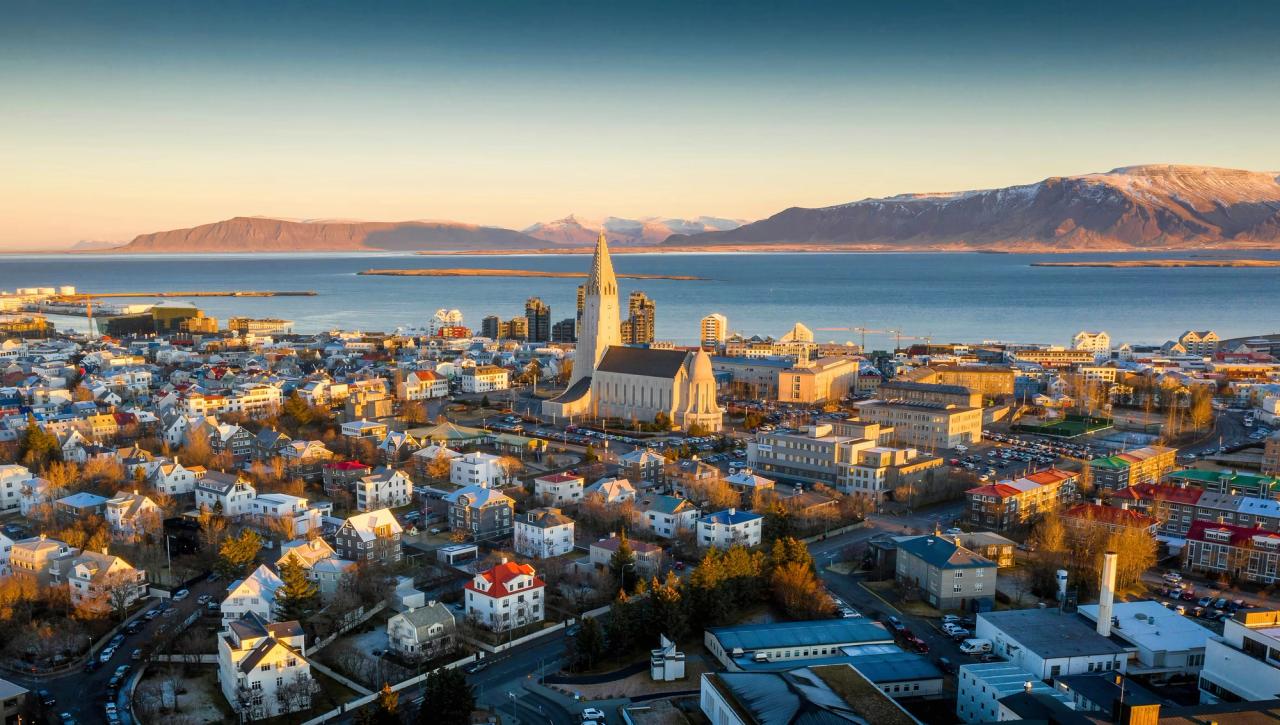
Reikiavik es la capital de Islandia y su única verdadera ciudad: un pueblo portuario compacto y peatonal, de casas de chapa corrugada de colores, piscinas geotermales y una energía creativa que supera con creces su tamaño. Unos 140.000 habitantes viven en la ciudad propiamente dicha, y más de 230.000 en el área metropolitana, lo que significa que dos tercios de la población total del país se concentran aquí. Si se muda a Islandia, lo más probable es que se mude a Reikiavik. Es ideal para trabajadores remotos atraídos por paisajes abruptos, profesionales del turismo y la tecnología, y para quienes valoran la seguridad y la naturaleza por encima de la vida nocturna y la expansión urbana. La ciudad destaca culturalmente muy por encima de su tamaño: acoge festivales de música de primer nivel, una aclamada escena gastronómica y una tradición literaria que publica más libros per cápita que cualquier otro lugar del planeta.
Reikiavik de un vistazo
- Población
- ~140.000 (área metropolitana ~230.000)
- Región
- Región de la Capital (Höfuðborgarsvæðið)
- Conocida por
- Auroras boreales, piscinas geotermales, vibrante escena artística
- Alquiler medio (1 dormitorio)
- ISK 220.000–320.000/mes
- Salario medio
- ISK 480.000–550.000/mes (neto)
- Comunidad expatriada
- Amplia y en crecimiento — fuertes comunidades europeas, norteamericanas y polacas
- Idioma principal
- Islandés (inglés muy extendido)
- Clima
- Oceánico subártico — inviernos suaves cerca de 0 °C, veranos frescos de 10–15 °C
Por qué mudarse a Reikiavik
- Seguridad: Islandia se sitúa sistemáticamente como el país más seguro del mundo. La delincuencia violenta es prácticamente inexistente, y se puede volver a casa solo a cualquier hora.
- Naturaleza a la puerta: Puede estar en un glaciar, un cráter volcánico o una playa de arena negra en menos de una hora tras salir de su apartamento.
- Conciliación laboral: La jornada estándar es de 40 horas semanales, y las empresas respetan tardes y fines de semana. La ley contempla un permiso parental generoso.
- Escena creativa y tecnológica: Una cantidad sorprendente de startups, estudios de videojuegos y proyectos musicales operan desde Reikiavik, impulsados por una sólida infraestructura de internet y ayudas gubernamentales.
- Calefacción geotermal: Los apartamentos se calientan con energía geotermal renovable, lo que mantiene los costes de suministros muy por debajo de la mayoría de ciudades nórdicas.
Buscar vivienda en Reikiavik
El mercado de alquiler de Reikiavik es reducido. La tasa de disponibilidad ronda el 1–2 %, y los apartamentos en los barrios más demandados se ocupan en cuestión de días. El distrito 101, en el centro, es la zona más competitiva y cara, mientras que distritos exteriores como Breiðholt y Grafarvogur ofrecen opciones más asequibles. La mayoría de propietarios exigen una Kennitala antes de firmar el contrato, así que tramitar su número de identificación nacional a la mayor brevedad es fundamental.
Alquileres medios
| Barrio | 1 dormitorio | 3 dormitorios | Características |
|---|---|---|---|
| 101 Miðbær (Centro) | ISK 260.000–350.000 | ISK 450.000–600.000 | Peatonal, vida nocturna, turistas |
| Laugardalur | ISK 220.000–300.000 | ISK 380.000–500.000 | Piscinas termales, parques, ideal para familias |
| Vesturbær | ISK 230.000–310.000 | ISK 400.000–520.000 | Residencial, cerca de la universidad |
| Grafarvogur | ISK 200.000–270.000 | ISK 350.000–460.000 | Suburbano, edificaciones recientes |
| Breiðholt | ISK 180.000–250.000 | ISK 320.000–420.000 | Económico, multicultural |
| Hlíðar | ISK 220.000–300.000 | ISK 370.000–490.000 | Tranquilo, montañoso, vistas al mar |
Cómo buscar vivienda
- Anuncios de Mbl.is: El mayor portal de anuncios de Islandia. La mayoría de propietarios publican aquí primero. Revíselo a diario: los buenos anuncios desaparecen rápido.
- Leigulistinn / Rental.is: Agregador de alquileres especializado en Reikiavik con filtros por distrito y precio.
- Grupos de Facebook: «Leiga á Íslandi» y «Reykjavik Apartments for Rent» son los más activos. Publique una presentación con su presupuesto y fecha de entrada.
- Boca a boca: En una ciudad pequeña, los contactos importan. Comente a sus compañeros y conocidos que busca vivienda: algunas de las mejores ofertas nunca se publican en internet.
- Consejos locales: Los apartamentos vuelan. Tenga su Kennitala (número de identificación nacional) preparada y esté listo para firmar a los pocos días de la visita.
Consejos para expatriados
- Espere pagar una mensualidad de fianza más el primer mes por adelantado.
- Hay apartamentos amueblados, pero son más caros: la mayoría de los alquileres son sin amueblar.
- La calefacción es barata gracias a la energía geotermal, pero la electricidad y el agua suman.
- Regístrese en Registers Iceland (Þjóðskrá) tan pronto como tenga una dirección.
- Lea su contrato con atención: muchos tienen un mínimo de 12 meses con un preaviso de 3 meses.
Guía de barrios
- 101 Miðbær (Centro): El corazón de Reikiavik. Bares, restaurantes, la sala de conciertos Harpa y la iglesia Hallgrímskirkja, todo a poca distancia. Ideal para jóvenes profesionales y solteros. Los alquileres más altos del país. Ruidoso los fines de semana.
- Laugardalur: Hogar de la piscina termal más popular de la ciudad, un gran jardín botánico y las principales instalaciones deportivas. Más tranquilo que el centro pero igualmente céntrico. Excelente para expatriados activos y familias con niños pequeños. El valle es verde y apacible.
- Vesturbær: Al oeste del centro, cerca de la Universidad de Islandia y el hospital Landspítali. Una mezcla de estudiantes, académicos y residentes de toda la vida. Alquileres de gama media estables. El paseo marítimo es excelente para caminar y correr.
- Grafarvogur: Suburbio al noreste con bloques de apartamentos recientes, un campo de golf y una gran zona comercial. Orientado a familias, con más espacio por corona. Buenas conexiones de autobús, pero tiene aire suburbano.
- Breiðholt: El distrito más asequible, con una importante población inmigrante. Buenas conexiones de autobús y muchos colegios. Una opción práctica si el presupuesto es ajustado. Los centros comunitarios ofrecen servicios de apoyo en varios idiomas.
- Hlíðar: Calles onduladas al sur de Laugardalur, con vistas al mar. Zona residencial tranquila, popular entre profesionales y parejas. A poca distancia tanto del centro como de los servicios de Laugardalur.
Coste de vida en Reikiavik
Reikiavik es cara según los estándares europeos, aunque los salarios son proporcionalmente altos. El mayor coste es la vivienda. El gasto en alimentación puede reducirse comprando en cadenas de descuento y cocinando en casa. El alcohol está fuertemente gravado: presupueste ISK 1.200–1.800 por una cerveza en un bar. El único punto luminoso en cuanto a costes es la calefacción: la energía geotermal la mantiene mucho más barata que en ciudades nórdicas comparables.
Desglose del presupuesto mensual
| Categoría | Rango presupuestario |
|---|---|
| Alquiler (1 dormitorio, centro) | ISK 260.000–320.000 |
| Servicios (electricidad, agua, residuos) | ISK 15.000–25.000 |
| Internet (fibra) | ISK 6.000–8.000 |
| Comestibles | ISK 60.000–90.000 |
| Transporte (abono de autobús o gastos de coche) | ISK 12.000–18.000 |
| Comer fuera (4 veces/mes) | ISK 30.000–50.000 |
| Ocio/Gimnasio | ISK 8.000–12.000 |
| Tarifa de telefonía móvil | ISK 3.000–5.000 |
| Total | ISK 394.000–528.000 |
Gastos diarios
- Café (flat white): ISK 600–800
- Almuerzo (restaurante informal): ISK 2.500–3.500
- Abono mensual de transporte (Strætó): ISK 12.500
- Cerveza (bar): ISK 1.200–1.800
- Entrada de cine: ISK 2.000–2.400
- Barra de pan: ISK 500–700
- 1 L de leche: ISK 180–220
Desplazarse por Reikiavik
- Transporte público: Strætó gestiona la red de autobuses. Un abono mensual cuesta ISK 12.500. La cobertura es aceptable dentro de la Región Capitalina, pero la frecuencia disminuye por las tardes y los fines de semana. No hay metro ni tranvía.
- Bicicleta: Reikiavik es en su mayor parte llana y cada vez más amigable con las bicicletas. Los carriles exclusivos se están ampliando, aunque el viento y la lluvia pueden ser intensos. Muchos residentes pedalean en verano y cambian al autobús o al coche en invierno.
- Conducir: Las carreteras están bien mantenidas. El aparcamiento en el centro es de pago y limitado (ISK 150–350/hora). Un coche es imprescindible si piensa explorar con regularidad fuera de la ciudad. Las glorietas están por todas partes: conozca las normas antes de ponerse al volante.
- Aeropuerto: El Aeropuerto Internacional de Keflavik (KEF) está a 50 km al suroeste; se puede llegar en Flybus o lanzadera en unos 45 minutos. Hay vuelos directos a la mayoría de ciudades europeas y norteamericanas.
- Interurbano: Strætó opera rutas de autobús a localidades cercanas como Selfoss. Los autobuses de larga distancia hacia Akureyri y más allá los gestiona Strætó BS (servicio de larga distancia). Los vuelos domésticos y los coches de alquiler son las principales formas de llegar al norte y al este.
- Viajes compartidos: No hay Uber ni Lyft en Islandia. Hreyfill y BSR son las principales compañías de taxi, con tarifas desde unos ISK 700–900.
Sanidad en Reikiavik
- Hospitales y clínicas: Landspítali (el Hospital Universitario Nacional) es el principal centro, con servicios de urgencias, especialistas y maternidad. Numerosas clínicas privadas y centros de salud operan en los distintos distritos para atención general.
- Médicos angloparlantes: Ampliamente disponibles. La mayoría de los islandeses hablan inglés con fluidez y el personal sanitario atiende habitualmente a pacientes internacionales. No hay barrera lingüística en el ámbito sanitario.
- Farmacias: Los Apótek (farmacias) se encuentran por toda la ciudad. La mayoría abren en horario laboral; algunos permanecen abiertos hasta más tarde. Las recetas requieren consulta médica.
- Odontología: No está cubierta por el seguro público para adultos. Las clínicas dentales privadas son abundantes pero caras: espere pagar entre ISK 8.000 y 15.000 por una revisión.
- Número de emergencia: 112
Recibe un plan de mudanza personalizado
Deja tu email y te enviaremos una checklist a medida y tres presupuestos de empresas verificadas.
Cultura y estilo de vida
- Piscinas: Reikiavik tiene más de una docena de piscinas geotermales públicas; Laugardalslaug es la más grande. Nadar es un ritual social fundamental, no solo ejercicio. La entrada cuesta ISK 1.000–1.200; hay abonos mensuales.
- Música en directo: A pesar de su tamaño, Reikiavik tiene una escena musical muy activa. El festival Iceland Airwaves atrae artistas internacionales cada noviembre. Locales más pequeños como Húrra y Gaukurinn programan bandas locales todo el año.
- Literatura: Islandia publica más libros per cápita que cualquier otro país. La tradición navideña del Jólabókaflóð (inundación de libros) es real: las librerías se llenan en noviembre y diciembre.
- Sol de medianoche e inviernos oscuros: El verano trae casi 24 horas de luz; el invierno solo 4–5 horas. El trastorno afectivo estacional es frecuente; muchos locales usan lámparas de fototerapia. Las auroras boreales son visibles desde la ciudad en noches despejadas de septiembre a marzo.
- Actividades al aire libre: Senderismo, paseos a caballo, observación de ballenas y excursiones a glaciares son accesibles a menos de una hora de la ciudad.
Gastronomía y restaurantes
- Los ingredientes básicos islandeses incluyen cordero, skyr, tiburón fermentado (hákarl) y pescado fresco.
- Laugavegur y Hverfisgata son las principales calles de restauración, con opciones desde perritos calientes baratos (Bæjarins Beztu, famoso por la visita de Bill Clinton) hasta menús degustación de alta cocina en Grillið y Dill.
- Supermercados: Bónus (el más barato), Krónan y Nettó son las principales cadenas. Prevea un presupuesto de ISK 8.000–12.000 semanales para una persona que cocine en casa.
- Las pescaderías y los comercios del puerto venden pescado fresco a precios más bajos que los restaurantes.
Comunidad expatriada
- Hay grupos activos en Facebook y Meetup.com para residentes internacionales: "Expats in Reykjavik" e "Internationals in Iceland" son los más grandes.
- El International House Reykjavik ofrece apoyo para la integración, cursos de idiomas y eventos de networking.
- Hay clases de islandés disponibles en la Universidad de Islandia, Mímir Símenntun y Tin Can Factory.
- Muchos expatriados socializan a través de clubes deportivos (fútbol, escalada, natación) y organizaciones de voluntariado.
Mercado laboral en Reikiavik
- Principales sectores: Turismo, pesca y procesamiento de marisco, tecnología y videojuegos, finanzas, energías renovables, biotecnología.
- Principales empleadores: Icelandair, Marel, CCP Games, Íslandsbanki, Landsbankinn, Össur y diversos organismos públicos.
- Salarios medios por sector:
| Sector | Salario neto mensual medio (ISK) |
|---|---|
| TI / Software | 550.000–750.000 |
| Turismo / Hostelería | 380.000–480.000 |
| Finanzas | 500.000–700.000 |
| Sanidad | 450.000–600.000 |
| Educación | 420.000–520.000 |
| Pesca / Marisco | 430.000–560.000 |
- Recursos de búsqueda de empleo: Vinnumálastofnun (Dirección de Trabajo), Tvinna.is, LinkedIn y las páginas de empleo de las empresas. Los contactos son importantes: muchos puestos se cubren a través de relaciones personales.
Educación en Reikiavik
- Colegios internacionales: International School of Iceland (currículo IB), Landakotsskóli (programas bilingües islandés-inglés).
- Universidades: Universidad de Islandia (la más grande, fundada en 1911), Universidad de Reikiavik (enfoque tecnológico y empresarial), Universidad de las Artes de Islandia, Universidad de Bifröst (empresariales, fuera de la ciudad).
- Escuelas de idiomas: Mímir Símenntun, Tin Can Factory y el Centro de Idiomas de la Universidad de Islandia ofrecen cursos de islandés para extranjeros. La mayoría son clases nocturnas para adaptarse a los horarios laborales.
- Educación infantil: Las guarderías públicas están subvencionadas y son muy accesibles, aunque las listas de espera pueden ser largas en los distritos más demandados.
Lista de tareas para mudarse a Reikiavik
- Obtenga un Kennitala (número de identificación nacional) si es elegible
- Investigue los requisitos de visado o permiso de residencia (EEE frente a fuera del EEE)
- Únase a grupos de vivienda en Facebook y guarde los anuncios de Mbl.is
- Empiece a aprender frases básicas en islandés
- Registre su dirección en Registers Iceland (Þjóðskrá)
- Abra una cuenta bancaria islandesa (Landsbankinn, Íslandsbanki o Arion)
- Inscríbase en el seguro de salud a través de Sjúkratryggingar Íslands
- Compre una tarjeta de autobús Strætó o descargue la aplicación Strætó
- Consiga un número de teléfono islandés (Síminn, Vodafone o Nova)
- Descubra la piscina más cercana y compre un bono múltiple
- Asista a un encuentro de expatriados o a un evento de orientación en International House Reykjavik
- Regístrese en un centro de salud local (heilsugælsa) de su distrito
Visado y residencia
- Nacionales del EEE/Espacio Schengen: No necesitan visado. Pueden permanecer hasta 3 meses sin registrarse, pero deben inscribirse en Registers Iceland si se quedan más tiempo. Tras el registro, recibirá una tarjeta de permiso de residencia.
- Nacionales fuera del EEE: Solicite un permiso de residencia a través de la Dirección de Inmigración (Útlendingastofnun). Las categorías incluyen permisos de trabajo, reagrupación familiar y permisos de estudiante. Los plazos de tramitación oscilan entre 2 y 6 meses.
- Permisos de trabajo: Requieren una oferta de empleo de un empleador islandés. El empleador debe demostrar que no había ningún candidato adecuado del EEE disponible. Los permisos están vinculados al empleador y al puesto específicos.
- Residencia permanente: Disponible tras 4 años de residencia legal continuada con un permiso válido. Requiere un nivel básico de islandés y un historial limpio.
- Ciudadanía: Tras 7 años de residencia (o 4 años para ciudadanos nórdicos), puede solicitar la ciudadanía islandesa. La doble nacionalidad está permitida desde 1995.
Impuestos y pensiones
- Islandia utiliza un sistema fiscal progresivo que combina impuestos municipales y nacionales. El tipo efectivo para la mayoría de los contribuyentes es del 35–45 %.
- El impuesto municipal lo fija el ayuntamiento correspondiente; el tipo de Reikiavik es aproximadamente del 14,44 %.
- Las cotizaciones a la pensión son obligatorias. Los empleados aportan un 4 % y los empleadores un 11,5 % del salario bruto. Se descuentan automáticamente.
- Existen convenios de doble imposición con la mayoría de los países occidentales, que evitan que se le tribute dos veces por los mismos ingresos.
- Las declaraciones de la renta se presentan anualmente a través del sitio web del Ríkisskattstjóri (Dirección de Rentas Internas). La mayoría de las declaraciones vienen precumplimentadas y pueden confirmarse en línea.
Mudarse con mascotas a Reikiavik
La entrada de mascotas a Islandia está sometida a una normativa estricta. Los perros y gatos deben:
- Llevar un microchip conforme a la norma ISO
- Estar vacunados contra la rabia (al menos 30 días antes del viaje)
- Contar con un certificado veterinario de salud en vigor, emitido en los 10 días previos al viaje
- Cumplir una cuarentena de 2 a 4 semanas en un centro autorizado tras su llegada
- Entrar únicamente por las rutas autorizadas
Las plazas de cuarentena son limitadas: reserve con meses de antelación a través de la Autoridad Islandesa de Alimentación y Veterinaria (MAST). Los costes de la cuarentena oscilan entre 150.000 y 250.000 ISK. Algunas razas de perros están restringidas.
Importar un vehículo
Si lleva un coche a Islandia:
- Debe declararse en aduana a la llegada
- El arancel de importación oscila entre el 10 y el 45 % según el valor del vehículo y sus emisiones
- Los vehículos deben superar una inspección técnica antes de su matriculación
- La matriculación y el impuesto de circulación deben abonarse antes de circular
- Los permisos de conducir del EEE pueden canjearse por permisos islandeses sin necesidad de examen
- Los titulares de permisos de conducir no pertenecientes al EEE pueden necesitar realizar un examen de conducción transcurridos 12 meses
Guías relacionadas
- [Mudarse a Islandia] — guía completa del país
- [Mudarse a Kópavogur] — guía de la ciudad vecina
- [Mudarse a Hafnarfjörður] — guía del pueblo cercano
- [Mudarse a Akureyri] — guía del norte de Islandia