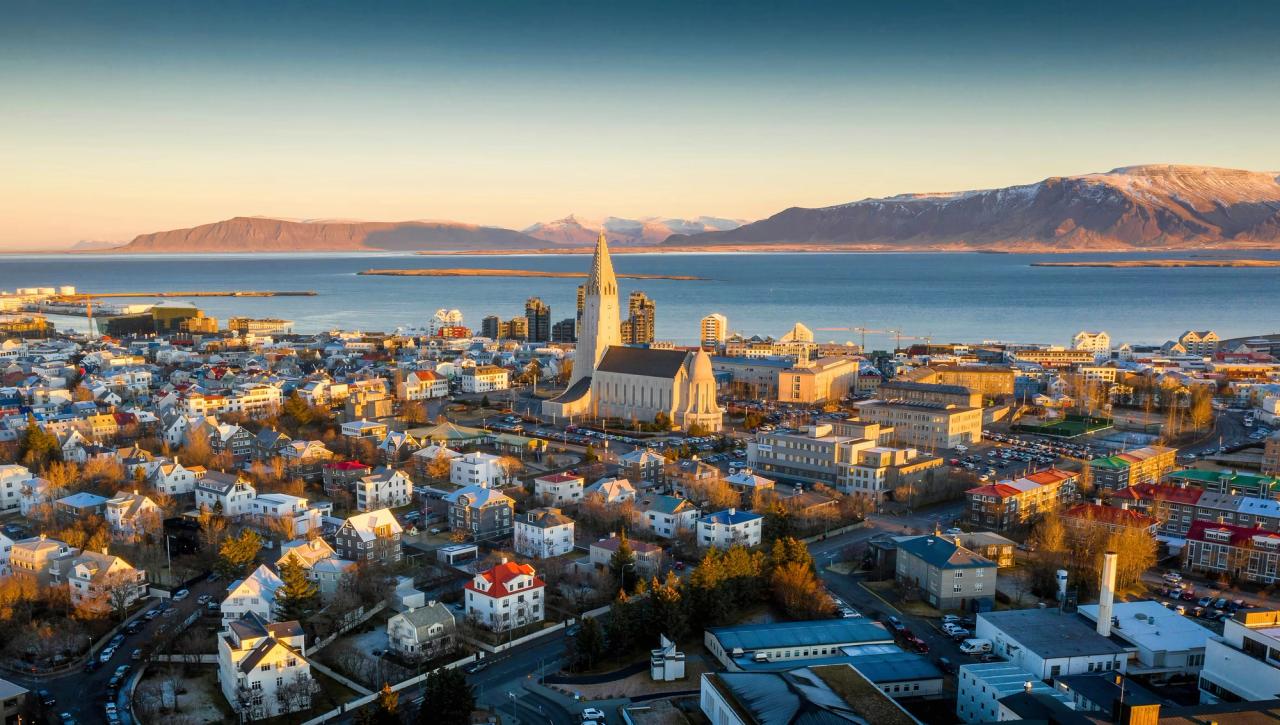
Reykjavik is Iceland's capital and its only true city — a compact, walkable harbor town of colorful corrugated-iron houses, geothermal swimming pools, and a creative energy that punches far above its weight. Roughly 140,000 people live in the city proper, with over 230,000 in the Greater Reykjavik area, which means two-thirds of the entire country is right here. If you are moving to Iceland, chances are you are moving to Reykjavik. It suits remote workers drawn to stark landscapes, professionals in tourism and tech, and anyone who values safety and nature over nightlife and sprawl. The city punches well above its weight culturally — hosting world-class music festivals, an acclaimed restaurant scene, and a literary tradition that sees more books published per capita than anywhere else on earth.
Reykjavik at a Glance
- Population
- ~140,000 (metro ~230,000)
- Region
- Capital Region (Höfuðborgarsvæðið)
- Known For
- Northern Lights, geothermal pools, vibrant arts scene
- Average Rent (1BR)
- ISK 220,000–320,000/month
- Average Salary
- ISK 480,000–550,000/month (net)
- Expat Community
- Large and growing — strong European, North American, and Polish communities
- Primary Language
- Icelandic (English widely spoken)
- Climate
- Subarctic oceanic — mild winters near 0°C, cool summers 10–15°C
Why Move to Reykjavik
- Safety: Iceland consistently ranks as the safest country in the world. Violent crime is virtually nonexistent, and you can walk home alone at any hour.
- Nature on your doorstep: You can be at a glacier, a volcanic crater, or a black-sand beach within an hour of leaving your apartment.
- Work-life balance: Standard working hours are 40 per week, and employers respect evenings and weekends. Generous parental leave is mandated by law.
- Creative and tech scene: A surprising number of startups, game studios, and music ventures operate out of Reykjavik, fueled by strong internet infrastructure and government grants.
- Geothermal heating: Apartments are heated with renewable geothermal energy, keeping utility costs far lower than in most Nordic cities.
Finding Housing in Reykjavik
Reykjavik's rental market is tight. Vacancy rates hover around 1–2%, and apartments in popular neighborhoods are snapped up within days. The 101 downtown district is the most competitive and expensive area, while outer districts like Breiðholt and Grafarvogur offer more affordable options. Most landlords require a Kennitala before signing a lease, so getting your national ID sorted early is critical.
Average Rents
| Neighborhood | 1-Bedroom | 3-Bedroom | Character |
|---|---|---|---|
| 101 Miðbær (Downtown) | ISK 260,000–350,000 | ISK 450,000–600,000 | Walkable, nightlife, tourists |
| Laugardalur | ISK 220,000–300,000 | ISK 380,000–500,000 | Thermal pools, parks, family-friendly |
| Vesturbær | ISK 230,000–310,000 | ISK 400,000–520,000 | Residential, near university |
| Grafarvogur | ISK 200,000–270,000 | ISK 350,000–460,000 | Suburban, newer builds |
| Breiðholt | ISK 180,000–250,000 | ISK 320,000–420,000 | Affordable, multicultural |
| Hlíðar | ISK 220,000–300,000 | ISK 370,000–490,000 | Quiet, hilly, sea views |
How to Find Housing
- Mbl.is classifieds: The largest Icelandic classifieds site. Most landlords post here first. Check daily — good listings disappear fast.
- Leigulistinn / Rental.is: Dedicated rental aggregator for Reykjavik with filters by district and price.
- Facebook groups: "Leiga á Íslandi" and "Reykjavik Apartments for Rent" are the most active. Post an introduction with your budget and move-in date.
- Word of mouth: In a small city, knowing people matters. Tell colleagues and new acquaintances you are looking — some of the best deals never make it online.
- Local tips: Apartments go fast. Have your Kennitala (national ID number) ready, and be prepared to sign within days of viewing.
Tips for Expats
- Expect to pay one month's deposit plus the first month upfront.
- Furnished apartments exist but are pricier — most rentals are unfurnished.
- Heating is cheap thanks to geothermal energy, but electricity and water add up.
- Register with Registers Iceland (Þjóðskrá) as soon as you have an address.
- Read your lease carefully — many contracts are 12-month minimum with 3-month notice periods.
Neighborhoods Guide
- 101 Miðbær (Downtown): The heart of Reykjavik. Bars, restaurants, Harpa concert hall, and Hallgrímskirkja church all within walking distance. Best for young professionals and singles. Highest rents in the country. Noisy on weekends.
- Laugardalur: Home to the city's most popular thermal pool, a large botanical garden, and the main sports facilities. Quieter than downtown but still central. Great for active expats and families with young children. The valley is green and peaceful.
- Vesturbær: West of the center, close to the University of Iceland and Landspítali hospital. A mix of students, academics, and long-time residents. Solid mid-range rents. The seaside path is excellent for walking and running.
- Grafarvogur: Northeastern suburb with newer apartment blocks, a golf course, and a large shopping area. Family-oriented with more space per króna. Good bus connections but feels suburban.
- Breiðholt: The most affordable district, with a significant immigrant population. Good bus connections and plenty of schools. A practical choice if budget is tight. Community centers offer support services in multiple languages.
- Hlíðar: Hilly streets south of Laugardalur, with views toward the sea. Quiet residential area popular with professionals and couples. Walking distance to both downtown and Laugardalur's amenities.
Cost of Living in Reykjavik
Reykjavik is expensive by European standards, though salaries are proportionally high. The biggest cost is housing. Groceries can be reduced by shopping at discount chains and cooking at home. Alcohol is heavily taxed — budget ISK 1,200–1,800 for a single beer in a bar. The one bright spot on costs is heating: geothermal energy keeps it far cheaper than equivalent Nordic cities.
Monthly Budget Breakdown
| Category | Budget Range |
|---|---|
| Rent (1BR, center) | ISK 260,000–320,000 |
| Utilities (electricity, water, waste) | ISK 15,000–25,000 |
| Internet (fiber) | ISK 6,000–8,000 |
| Groceries | ISK 60,000–90,000 |
| Transport (bus pass or car costs) | ISK 12,000–18,000 |
| Dining out (4x/month) | ISK 30,000–50,000 |
| Leisure/Gym membership | ISK 8,000–12,000 |
| Mobile phone plan | ISK 3,000–5,000 |
| Total | ISK 394,000–528,000 |
Day-to-Day Costs
- Coffee (flat white): ISK 600–800
- Lunch (casual restaurant): ISK 2,500–3,500
- Monthly transport pass (Strætó): ISK 12,500
- Beer (bar): ISK 1,200–1,800
- Cinema ticket: ISK 2,000–2,400
- Loaf of bread: ISK 500–700
- 1L milk: ISK 180–220
Getting Around Reykjavik
- Public transport: Strætó operates the bus network. A monthly pass costs ISK 12,500. Coverage is decent within the Capital Region but infrequent in evenings and on weekends. No metro or tram system exists.
- Cycling: Reykjavik is mostly flat and increasingly bike-friendly. Dedicated lanes are expanding, though wind and rain can be fierce. Many residents cycle in summer and switch to buses or cars in winter.
- Driving: Roads are well maintained. Parking downtown is metered and limited (ISK 150–350/hour). A car is essential if you plan to explore outside the city regularly. Roundabouts are everywhere — learn the rules before driving.
- Airport: Keflavik International Airport (KEF) is 50 km southwest, reachable by Flybus or airport shuttle in about 45 minutes. Direct flights connect to most European and North American cities.
- Intercity: Strætó runs bus routes to nearby towns like Selfoss. Long-distance intercity buses to Akureyri and beyond are operated by Strætó BS (long-haul service). Domestic flights and rental cars are the main ways to reach the north and east.
- Ride-sharing: No Uber or Lyft in Iceland. Hreyfill and BSR are the main taxi companies, with fares starting around ISK 700–900.
Healthcare in Reykjavik
- Hospitals/Clinics: Landspítali (the National University Hospital) is the main facility, offering emergency, specialist, and maternity care. Numerous private clinics and health centers operate across districts for general practice.
- English-speaking doctors: Widely available. Most Icelanders speak fluent English, and medical staff routinely work with international patients. No language barrier in healthcare settings.
- Pharmacies: Apótek (pharmacies) are found throughout the city. Most are open during business hours; a few operate late. Prescriptions require a doctor's visit.
- Dental care: Not covered by public insurance for adults. Private dental clinics are plentiful but expensive — expect ISK 8,000–15,000 for a checkup.
- Emergency number: 112
Get a personalised relocation plan
Drop your email and we'll send a tailored checklist plus three quotes from vetted movers.
Culture & Lifestyle
- Swimming pools: Reykjavik has over a dozen public geothermal pools — Laugardalslaug being the largest. Swimming is a core social ritual, not just exercise. Entry is ISK 1,000–1,200; monthly passes are available.
- Live music: Despite its size, Reykjavik has a thriving music scene. Iceland Airwaves festival draws international acts every November. Smaller venues like Húrra and Gaukurinn host local bands year-round.
- Literature: Iceland publishes more books per capita than any other country. The holiday tradition of Jólabókaflóð (Christmas Book Flood) is real — bookstores are packed in November and December.
- Midnight sun and dark winters: Summer brings nearly 24 hours of daylight; winter brings only 4–5 hours. Seasonal affective disorder is common — many locals use light therapy lamps. The northern lights are visible from the city on clear nights from September through March.
- Outdoor activities: Hiking, horseback riding, whale watching, and glacier tours are all accessible within an hour of the city.
Food & Dining
- Icelandic staples include lamb, skyr, fermented shark (hákarl), and fresh fish.
- Laugavegur and Hverfisgata are the main dining streets, with options from cheap hot dogs (Bæjarins Beztu, famously visited by Bill Clinton) to high-end tasting menus at Grillið and Dill.
- Grocery stores Bónus (the cheapest), Krónan, and Nettó are the main chains. Budget ISK 8,000–12,000 per week for one person cooking at home.
- Fish markets and harbor-side shops sell fresh catch at lower prices than restaurants.
Expat Community
- Active groups on Facebook and Meetup.com for international residents — "Expats in Reykjavik" and "Internationals in Iceland" are the largest.
- The International House Reykjavik offers integration support, language courses, and networking events.
- Icelandic language classes are available through the University of Iceland, Mímir Símenntun, and Tin Can Factory.
- Many expats socialize through sports clubs (football, climbing, swimming) and volunteer organizations.
Job Market in Reykjavik
- Main industries: Tourism, fishing and seafood processing, tech and gaming, finance, renewable energy, biotech.
- Major employers: Icelandair, Marel, CCP Games, Íslandsbanki, Landsbankinn, Össur, various government agencies.
- Average salaries by sector:
| Sector | Average Monthly Net (ISK) |
|---|---|
| IT / Software | 550,000–750,000 |
| Tourism / Hospitality | 380,000–480,000 |
| Finance | 500,000–700,000 |
| Healthcare | 450,000–600,000 |
| Education | 420,000–520,000 |
| Fishing / Seafood | 430,000–560,000 |
- Job search resources: Vinnumálastofnun (Directorate of Labour), Tvinna.is, LinkedIn, and company career pages. Networking matters — many jobs are filled through personal connections.
Education in Reykjavik
- International schools: International School of Iceland (IB curriculum), Landakotsskóli (bilingual Icelandic-English programs).
- Universities: University of Iceland (largest, founded 1911), Reykjavik University (tech and business focus), Iceland University of the Arts, Bifröst University (business, outside the city).
- Language schools: Mímir Símenntun, Tin Can Factory, and the University of Iceland Language Centre all offer Icelandic courses for foreigners. Most are evening classes to accommodate working schedules.
- Preschools: Public kindergartens are subsidized and widely available, though waitlists can be long in popular districts.
Moving Checklist for Reykjavik
- Secure a Kennitala (national ID number) if eligible
- Research visa or residence permit requirements (EEA vs. non-EEA)
- Join Facebook housing groups and bookmark Mbl.is listings
- Start learning basic Icelandic phrases
- Register your address with Registers Iceland (Þjóðskrá)
- Open an Icelandic bank account (Landsbankinn, Íslandsbanki, or Arion)
- Sign up for health insurance through Sjúkratryggingar Íslands
- Buy a Strætó bus card or download the Strætó app
- Get an Icelandic phone number (Síminn, Vodafone, or Nova)
- Explore your nearest swimming pool and buy a multi-pass
- Attend an expat meetup or orientation event at International House Reykjavik
- Register with a local health center (heilsugæsla) in your district
Visa and Residency
- EEA/Schengen nationals: No visa required. You may stay up to 3 months without registering, but must register with Registers Iceland if staying longer. After registration, you receive a residence permit card.
- Non-EEA nationals: Apply for a residence permit through the Directorate of Immigration (Útlendingastofnun). Categories include work permits, family reunification, and student permits. Processing times range from 2 to 6 months.
- Work permits: Require a job offer from an Icelandic employer. The employer must demonstrate that no suitable EEA candidate was available. Permits are tied to the specific employer and role.
- Permanent residency: Available after 4 years of continuous legal residence on a qualifying permit. Requires basic Icelandic language proficiency and a clean record.
- Citizenship: After 7 years of residence (or 4 years for Nordic citizens), you may apply for Icelandic citizenship. Dual citizenship has been permitted since 1995.
Taxes and Pensions
- Iceland uses a progressive tax system combining municipal and national taxes. The effective rate for most earners is 35–45%.
- Municipal tax is set by your local municipality — Reykjavik's rate is approximately 14.44%.
- Pension contributions are mandatory. Employees contribute 4% and employers contribute 11.5% of gross salary. This is deducted automatically.
- Double taxation treaties exist with most Western countries, preventing you from being taxed twice on the same income.
- Tax returns are filed annually through the Ríkisskattstjóri (Directorate of Internal Revenue) website. Most returns are pre-filled and can be confirmed online.
Moving with Pets to Reykjavik
Bringing pets to Iceland is strictly regulated. Dogs and cats must:
- Have an ISO-compliant microchip
- Be vaccinated against rabies (at least 30 days before travel)
- Have a valid veterinary health certificate issued within 10 days of travel
- Undergo 2–4 weeks of quarantine at an approved facility upon arrival
- Enter via approved routes only
Quarantine slots are limited — book months in advance through the Icelandic Food and Veterinary Authority (MAST). Costs for quarantine run ISK 150,000–250,000. Some breeds of dogs are restricted.
Importing a Vehicle
If you bring a car to Iceland:
- It must be declared at customs upon arrival
- Import duty ranges from 10–45% depending on vehicle value and emissions
- Vehicles must pass a technical inspection before registration
- Registration and road tax must be paid before driving
- EEA driving licences can be exchanged for Icelandic licences without a test
- Non-EEA licence holders may need to take a driving test after 12 months
Related Guides
- [Moving to Iceland] — comprehensive country guide
- [Moving to Kópavogur] — neighboring city guide
- [Moving to Hafnarfjörður] — nearby town guide
- [Moving to Akureyri] — northern Iceland guide