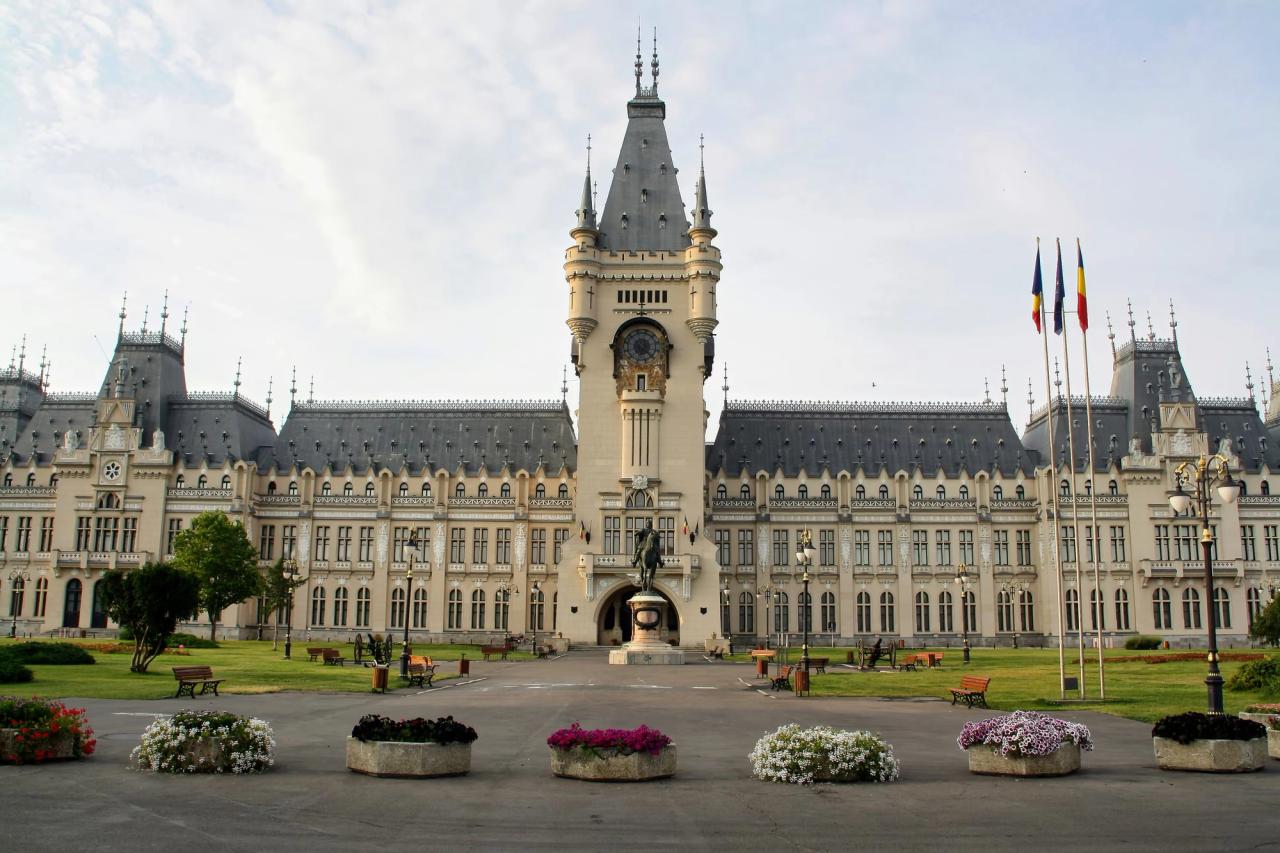

Iași sits in the heart of Romania's Moldova region and serves as its undisputed cultural and intellectual capital. Home to the iconic Palace of Culture, world-class universities, and a rapidly expanding IT sector, Iași draws students, remote workers, and families seeking an authentic Romanian experience at a fraction of Western European costs. If you value history, green spaces, and a strong academic atmosphere, Iași deserves a place on your shortlist.
Iași at a Glance

- Population
- ~290,000 (metro area ~382,000)
- Region
- Moldova (northeastern Romania)
- Known For
- Palace of Culture, 12 historic universities, vibrant arts scene
- Average Rent (1BR)
- 2,500–2,900 RON (€500–€580)
- Average Salary
- ~5,000 RON/month (€1,000 net)
- Expat Community
- Growing; students, IT professionals, and academics
Why Move to Iași
- Very affordable living: Rents, groceries, and dining cost significantly less than in Bucharest or Cluj-Napoca, making Iași one of Romania's best-value cities.
- Booming IT sector: Major tech firms like Amazon, Continental, and local startups have offices here, driving salary growth and job creation.
- Academic powerhouse: Over 60,000 university students create a young, dynamic atmosphere with constant cultural events.
- Rich cultural heritage: Iași was the former capital of Moldavia and is packed with churches, palaces, theatres, and museums — most within walking distance.
- Strong public transport: Buses and trams connect every district affordably, reducing the need for a car.
- Growing international scene: More English-language services, expat meetups, and international dining options appear each year.
Finding Housing in Iași
Average Rents
| Neighborhood | 1-Bedroom (RON) | 3-Bedroom (RON) | Character |
|---|---|---|---|
| Copou | 2,800–3,200 | 4,500–6,000 | Leafy, near university — popular with students and academics |
| Centru | 2,600–3,100 | 4,200–5,800 | Historic heart, walkable, lively nightlife |
| Tătărași | 2,200–2,700 | 3,500–4,800 | Affordable, quiet residential streets |
| Păcurari | 2,400–2,900 | 3,800–5,200 | Modern apartments, families, good transit |
| Alexandru cel Bun | 2,500–3,000 | 4,000–5,500 | Up-and-coming, mixed-use developments |
| Podu Roș | 2,100–2,600 | 3,200–4,500 | Budget-friendly, close to commercial areas |
How to Find Housing
- Imobiliare.ro — largest Romanian property portal; filter by city, budget, and furnished status
- OLX.ro — classifieds with many private landlord listings
- Storia.ro — another popular aggregator with map-based search
- Facebook groups — "Chirie Iași" and "Apartamente Iași" groups have daily postings
- Local tip: Furnished apartments are common. Negotiate directly with landlords for better rates on longer leases.
Tips for Expats
- Budget 1–3 months' rent as a security deposit, paid upfront with the first month.
- Always request a signed contract de închiriere (rental contract) for legal protection and residence registration.
- Confirm whether utilities (electricity, gas, internet) are included or extra — they usually are not.
- Ask about building age and insulation — older blocks in the centre may have higher heating costs in winter.
- Visiting in person before signing a lease is strongly recommended; photos on listings can be outdated.
Neighborhoods Guide
- Copou: Classic student and academic neighborhood surrounding Alexandru Ioan Cuza University. Quiet streets, mature trees, and some of Iași's oldest houses. Mid-range rents. Great for academics and those who enjoy greenery.
- Centru: The historic centre around Union Square (Piața Unirii). Restaurants, museums, and the Palace of Culture all nearby. Higher rents, but unbeatable walkability and nightlife. Best for young professionals who want to be in the action.
- Tătărași: East of the Bahlui River. More affordable, family-oriented, with parks and local markets. Good bus connections to the centre. A solid pick for budget-conscious expats and families with children.
- Păcurari: Western district with newer residential blocks, supermarkets, and quick access to the ring road. Popular with young professionals and families who want modern apartments at moderate prices.
- Alexandru cel Bun: Rapidly developing area with modern condos and growing commercial infrastructure. Mid-to-upper rent range. Attracts IT workers and entrepreneurs drawn to newer buildings and proximity to tech offices.
- Podu Roș: Budget-friendly zone near industrial and commercial areas. Suitable for those prioritizing savings over aesthetics. Basic amenities within walking distance.
Cost of Living in Iași
Monthly Budget Breakdown
| Category | Budget Range (RON) |
|---|---|
| Rent (1BR, centre) | 2,500–3,100 |
| Utilities | 500–750 |
| Internet | 40–70 |
| Groceries | 1,200–1,600 |
| Transport | 70–120 |
| Dining out (4x/month) | 400–600 |
| Leisure/Gym | 150–300 |
| Total | 4,860–6,540 (€970–€1,310) |
Day-to-Day Costs
- Coffee (espresso): 8–12 RON
- Lunch (casual restaurant): 25–40 RON
- Monthly transport pass (buses & trams): ~70 RON
- Beer (bar, draft): 8–14 RON
- Cinema ticket: 25–35 RON
- Gym membership (monthly): 100–200 RON
- Monthly grocery shop (single person): 1,200–1,600 RON
Utilities Explained
Romanian utility bills include electricity (Enel or E.ON), gas (Engie), water (ApăVital), and building maintenance (for apartment blocks). Heating is typically gas-based or centralized in older buildings. Winter months (November–March) can push utility bills 30–50% higher than summer averages. Budget accordingly if you rent a poorly insulated apartment.
How Iași Compares
| Expense | Iași (RON) | Bucharest (RON) | Cluj-Napoca (RON) |
|---|---|---|---|
| 1BR rent (centre) | 2,700 | 3,800 | 3,500 |
| Monthly transport | 70 | 100 | 90 |
| Casual lunch | 30 | 40 | 35 |
| Internet (monthly) | 50 | 50 | 50 |
Iași consistently comes out 20–35% cheaper than Bucharest for everyday living expenses. For a single expat, a comfortable lifestyle is achievable on 5,000–7,000 RON/month (€1,000–€1,400), including rent. Families should budget 8,000–12,000 RON depending on schooling and housing choices.
Getting Around Iași
- Public transport: Iași operates an extensive network of buses and trams managed by CTP Iași. A monthly pass costs approximately 70 RON and covers all routes. Services run from around 5:00 AM to 11:00 PM.
- Cycling: Flat to gently hilly terrain in most areas; bike lanes are expanding but still limited. Cycling is practical for short commutes in warmer months.
- Driving: Traffic is moderate by European standards. Parking in the centre can be tight; many expats rely on public transport instead. Fuel prices follow the national average.
- Airport: Iași International Airport (IAS) offers direct flights to London, Munich, Milan, Tel Aviv, Bucharest, and seasonal connections across Europe. The airport has expanded significantly in recent years.
- Intercity: Rail links to Bucharest (~5–6 hours), Suceava (~2 hours), and Cluj-Napoca (~7 hours). Long-distance buses connect to all major Romanian cities and can be cheaper than trains.
- Ride-hailing: Bolt and Uber operate in Iași, offering affordable rides within the city.
Healthcare in Iași
- Hospitals/Clinics: Spiridon Emergency Hospital is the largest public facility. MedLife and Arcadia offer private clinics with shorter wait times and English-speaking staff.
- English-speaking doctors: Available at private clinics such as MedLife and Arcadia; fewer in the public system. Booking in advance is recommended.
- Pharmacies: Widely available throughout the city; many in the centre stay open late. Prescription medication requires a local or EU prescription.
- Emergency number: 112 (pan-European emergency line)
- Private insurance: Many expats choose private health insurance for faster access. Policies from local providers (Signal Iduna, Metropolitan Life) or international insurers (Cigna, Allianz) are accepted at private clinics.
- Dental care: High quality and affordable. Iași attracts dental tourism due to competitive pricing — expect to pay 50–70% less than in Western Europe.
Planning your move?
Tell us about your move to compare quotes from international moving companies.
Culture & Lifestyle
- Palace of Culture: Iași's most famous landmark — a neo-Gothic palace housing four museums (Art, History, Ethnography, Science & Technology), set in a landscaped park. A must-visit for newcomers.
- Theatre and arts: The National Theatre and Romanian National Opera are both housed in a grand 19th-century building, one of the largest in Europe. Regular performances in Romanian and occasionally English.
- Botanical Garden: The oldest and largest in Romania, spanning 100 hectares — a favourite weekend destination with themed gardens, greenhouses, and lakeside paths.
- Festivals: George Enescu Festival satellite events, SFR Film Festival, Rocanotherworld music festival, and numerous literature festivals throughout the year.
- Religious heritage: Iași is known as the "City of 100 Churches." The Three Hierarchs Church (1639) is an architectural jewel, and the Metropolitan Cathedral is the largest Orthodox church in Romania.
Food & Dining
- Try moldovenești (Moldovan-style cuisine): mămăligă (polenta), sarmale (stuffed cabbage rolls), cozonac (sweet bread), and local wines from nearby Cotnari vineyards.
- Best dining areas: Strada Lăpușneanu (pedestrian street), Piața Unirii surroundings, and Bulevardul Ștefan cel Mare.
- Budget-friendly options: Student canteens (cantina) serve full meals for 15–25 RON.
- International cuisine: Italian, Asian, and Middle Eastern restaurants are growing in number, especially in the city centre and Păcurari.
Expat Community
- Iași Expat Community on Facebook is the primary hub for meetups and advice.
- Language exchanges at cafés and co-working spaces run weekly; Romanian-English exchanges are most common.
- International organizations: The American Corner Iași (at the Gheorghe Asachi County Library) hosts cultural events and English-language resources.
- Volunteer opportunities: Local NGOs welcome English-speaking volunteers, especially for environmental and educational projects.
- Sports and recreation: Gyms, swimming pools, and tennis courts are widely available. Nearby attractions include the Bicaz Gorge and the painted monasteries of Bucovina, both reachable as weekend trips.
Job Market in Iași
- Main industries: IT & software development, education, healthcare, manufacturing, and BPO services.
- Major employers: Amazon, Continental, Bitdefender, Capgemini, Deloitte, and local universities.
- Average salaries by sector:
| Sector | Average Net Monthly (RON) |
|---|---|
| IT / Software | 7,000–12,000 |
| Engineering | 5,000–8,000 |
| Education | 4,000–6,000 |
| Healthcare | 4,500–7,500 |
| Retail / Services | 3,000–4,500 |
- Job search resources: LinkedIn, eJobs.ro, BestJobs.ro, and local recruiter agencies.
- Remote work: Iași's affordable cost of living and fast internet make it increasingly popular with digital nomads and remote employees.
- IT ecosystem: The city has a growing startup scene supported by innovation hubs and university partnerships, attracting venture capital and international talent.
Education in Iași
- International schools: Limited options compared to Bucharest; international sections exist within private schools. Most expat families choose local private schools with enhanced language programs.
- Universities: Alexandru Ioan Cuza University (founded 1860 — the oldest in Romania), Gheorghe Asachi Technical University, Grigore T. Popa University of Medicine and Pharmacy, and University of Arts George Enescu.
- Language schools: Several private academies offer Romanian language courses for foreigners. University programs also provide language support for international students.
- Research: Iași universities are well-regarded in fields like computer science, medicine, and engineering, with active research partnerships across Europe.
- Erasmus and exchanges: Iași is a popular Erasmus+ destination. Incoming exchange students benefit from low living costs, a vibrant social scene, and English-taught courses at several faculties.
Visa and Residency in Romania
EU/EEA citizens can live and work in Romania without a visa. Non-EU nationals generally need a long-stay visa (D visa) for employment, study, or family reunification, followed by a residence permit obtained after arrival.
Key steps for non-EU citizens:
- Obtain a D visa from the Romanian embassy/consulate in your home country.
- Register with the General Inspectorate for Immigration (IGI) within 30 days of arrival.
- Apply for a temporary residence permit, renewable annually.
- After five consecutive years of legal residence, you may apply for long-term or permanent residency.
Documents typically required:
- Valid passport (at least 6 months remaining)
- Proof of accommodation (rental contract)
- Proof of income or employment
- Health insurance
- Criminal background check (apostilled)
- Passport-sized photos
Processing times for D visas vary by embassy but generally take 10–30 working days. Start the application at least 2 months before your planned move date. Fees are modest — typically under €120 for the visa itself.
Moving Checklist for Iași
Before Arriving
- [ ] Confirm visa or residence permit requirements for your nationality
- [ ] Arrange health insurance (public or private)
- [ ] Secure short-term accommodation or book an Airbnb for the first 2 weeks
- [ ] Prepare apostilled documents (birth certificate, marriage certificate, diplomas)
- [ ] Notify your home country's tax authority if applicable
- [ ] Research opening a Romanian bank account remotely if possible
First Week
- [ ] Register your address at the local immigration office
- [ ] Open a bank account (Banca Transilvania, BCR, or ING recommended)
- [ ] Obtain a local SIM card (Orange, Vodafone, or Digi Mobil)
- [ ] Register with a GP (medic de familie) for healthcare access
- [ ] Get a CTP transport card for buses and trams
First Month
- [ ] Apply for a tax identification number (CNP) if working
- [ ] Register children with a local school if applicable
- [ ] Explore co-working spaces if working remotely
- [ ] Familiarize yourself with public transport routes and the CTP app
- [ ] Open accounts on local delivery and grocery apps (Glovo, Tazz)
Yes. Iași is considered one of Romania's safer cities. Petty crime exists but is uncommon. Standard precautions — avoiding poorly lit areas late at night, securing valuables — apply. Violent crime rates are low.
Not immediately. Many younger residents and IT professionals speak English. However, learning basic Romanian significantly improves daily life, especially for dealings with landlords, doctors, and government offices. Free and affordable language courses are available through universities and private schools.
The Romanian Leu (RON), plural lei. Card payments are widely accepted in shops and restaurants, but carry cash for markets and smaller vendors. The euro is not used for everyday transactions, though some landlords quote rents in euros. As of early 2026, 1 EUR ≈ 5 RON. ATMs are plentiful and most international bank cards work without issue. Currency exchange offices (schimb valutar) are common in the centre — compare rates before exchanging.
Excellent. Romania consistently ranks among the fastest internet providers globally. Fiber-optic connections are standard in most apartments, with speeds of 300 Mbps–1 Gbps available from providers like Digi, Orange, and Vodafone for as little as 30–50 RON/month.
Yes. Dogs, cats, and ferrets must be microchipped, vaccinated against rabies, and accompanied by an EU pet passport or valid veterinary health certificate. Pets from outside the EU may require a rabies antibody test. Plan at least 4–6 weeks ahead for paperwork.
Iași has a continental climate. Summers are warm (25–33 °C), winters are cold with occasional snow (−5 to 3 °C), and autumn brings colourful foliage. Spring and early summer are the most pleasant seasons for exploring the city on foot.
Yes. Popular options include Fab Lab Iași, Hub Iași, and various tech-hub spaces connected to the local startup ecosystem. Monthly memberships typically range from 400–800 RON depending on amenities. Most offer high-speed internet, meeting rooms, and community events.
If you are employed or earning income in Romania, you need a Cod Numeric Personal (CNP). Your employer typically initiates the process, but you can also apply through the local ANAF (tax authority) office with your passport, residence permit, and employment contract. Processing usually takes a few working days.
Related Guides
- [Moving to Romania] — comprehensive country guide
- [Moving to Bucharest] — Romania's capital and largest city
- [Moving to Cluj-Napoca] — Transylvania's tech hub
- [Moving to Timișoara] — western Romania's innovation centre
*Last fact-checked: April 2026. Some rental and salary figures should be verified with current sources for 2026 accuracy.