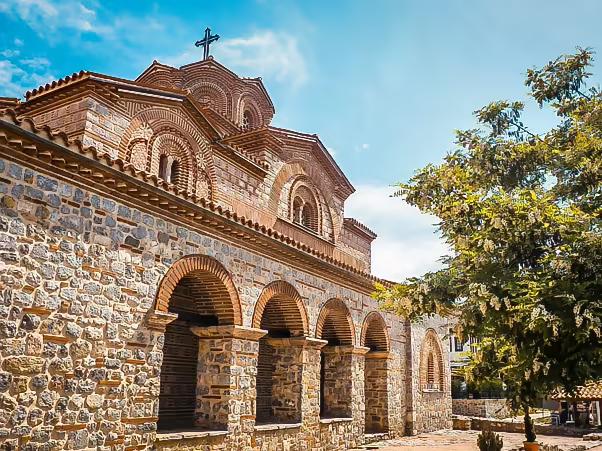
North Macedonia sits at the crossroads of the Balkans — a country of ancient lakeside towns, Ottoman-era bazaars, and some of the lowest living costs in Europe. Whether you are drawn by the UNESCO shores of Lake Ohrid, the growing digital nomad scene in Skopje, or simply the chance to stretch your budget further than almost anywhere else on the continent, this guide covers every step of relocating to North Macedonia in 2026. From visa rules and residence registration to healthcare, banking, housing, and cultural integration, you will find practical, country-specific information to plan your move with confidence.
North Macedonia at a Glance
- Population
- ~1.83 million
- Capital
- Skopje
- Currency
- Macedonian Denar (MKD)
- Average Salary
- ~35,000–47,000 MKD/month (~€570–€765)
- Language
- Macedonian; Albanian widely spoken in western regions; English increasingly common among younger people in cities
- Climate
- Continental — hot summers (30–38 °C), cold winters (−5 to 5 °C); milder around Lake Ohrid
- Time Zone
- CET (UTC+1) / CEST (UTC+2, summer)
Why Move to North Macedonia in 2026
- Extremely Affordable: North Macedonia is consistently ranked among the least expensive countries in Europe, with rent, groceries, and dining out costing a fraction of Western European prices.
- Visa-Free Entry for Many: Citizens of the EU, EEA, US, Canada, Australia, and many other countries can enter visa-free for up to 90 days, giving you time to explore before committing.
- Safe and Welcoming: Violent crime rates are very low. Macedonian hospitality — the tradition of welcoming strangers with food, drink, and conversation — is genuine and deeply rooted.
- Lake Ohrid and Natural Beauty: Lake Ohrid, one of Europe's oldest and deepest lakes, is a UNESCO World Heritage Site. The country also offers national parks, mountain ranges, and river canyons.
- EU Candidate Country: North Macedonia is an EU candidate, meaning gradual regulatory alignment with European standards. This makes it an attractive long-term bet for expats.
- Growing Digital Nomad and Expat Community: Skopje, Bitola, and Ohrid all have expanding coworking spaces, cafés with reliable Wi-Fi, and a small but growing international community.
Moving Costs to North Macedonia
Relocation costs depend on shipment volume, transport method, origin country, and customs-handling fees. Below are typical market ranges as of mid-2025:
| Origin | Estimated Cost Range | Container/Volume |
|---|---|---|
| Western Europe (e.g. Germany, Netherlands) | €900–€2,500 | 20-ft container |
| UK / Ireland | €1,200–€3,000 | 20-ft container |
| North America | €2,500–€5,500 | 20-ft container |
| Within the Balkans (e.g. Serbia, Bulgaria) | €400–€1,200 | Shared or full container |
| Air freight (any origin) | €3.50–€7.00+ per kg | Small shipments |
Component Costs Explained
- Transportation: €400–€3,500 depending on distance and container size. Road freight is the most common method from European origins.
- Insurance: €50–€200 for basic transit cover; all-risk insurance costs more but is recommended for valuable items.
- Customs Clearance: €100–€350 for documentation, broker fees, and inspection handling at the border.
- Packing Materials: €80–€250 for professional packing of a standard household.
- Storage (if needed): €30–€80 per month in Skopje; less in smaller cities.
- Administrative Fees: €50–€150 for notarised translations, certificates, and permits.
Need a personalised estimate?
Get three vetted moving-company quotes in under 48 hours.
Visa and Residency Requirements
Visa-Free Entry
Citizens of the EU, EEA, US, Canada, Australia, New Zealand, and many other countries can enter North Macedonia without a visa and stay for up to 90 days within any 180-day period. This is sufficient time to explore the country, view apartments, and begin the residence permit process.
Temporary Residence Permit
Employment
- Requirements: Signed employment contract, employer sponsorship letter, proof of qualifications, passport, health insurance, and proof of accommodation.
- Processing time: 2–6 weeks.
- Duration: Up to 1 year, renewable annually.
- Key details: Your employer typically initiates the work permit application on your behalf before you apply for residence.
Self-Employment / Business
- Requirements: Proof of business registration in North Macedonia, evidence of sufficient income or capital, passport, health insurance, and accommodation proof.
- Processing time: 3–8 weeks.
- Duration: Up to 1 year, renewable.
- Key details: You must register a company (DOO or other entity type) with the Central Registry before applying.
Study
- Requirements: Acceptance letter from a recognised North Macedonian university, proof of financial means, health insurance, passport, and accommodation.
- Processing time: 2–4 weeks.
- Duration: Duration of study programme, renewable annually.
- Key details: Universities in Skopje, Bitola, and Tetovo accept international students; some programmes are taught in English.
Family Reunification
- Requirements: Proof of family relationship (marriage or birth certificate), sponsor's residence permit, proof of accommodation and financial means.
- Processing time: 4–8 weeks.
- Duration: Matches the sponsor's permit duration.
- Valid passport (minimum 6 months validity beyond intended stay)
- Completed application form
- Proof of accommodation (rental contract or property deed)
- Health insurance certificate
- Proof of financial means (bank statements, employment contract)
- Criminal background check from your home country (apostilled)
- Passport-sized photographs
- Enter North Macedonia visa-free (if eligible) or with the appropriate visa.
- Within 48 hours of arrival (24 hours if staying in a hotel, which handles this for you), register at the nearest police station — your landlord may also handle this.
- Secure accommodation and obtain a signed rental contract.
- Collect all required documents, including apostilled background check and translated certificates.
- Submit your temporary residence permit application at the local MVR office.
- Pay the application fee (currently ~4,500 MKD / ~€73).
- Attend any required appointments or biometric data collection.
- Receive your residence card, typically within 2–6 weeks.
Finding Housing in North Macedonia
The rental market in North Macedonia is affordable by European standards and relatively informal compared to Western Europe. Most rentals are listed on online platforms and through local agents. Leases are commonly 12 months, though shorter arrangements are possible. A security deposit of 1–3 months' rent is standard, along with the first month's payment upfront.
Average Rents by Major City (2026)
| City | 1-Bedroom (City Centre) | 1-Bedroom (Outside Centre) | 3-Bedroom (City Centre) |
|---|---|---|---|
| Skopje | 15,000–27,000 MKD (€245–€440) | 10,000–18,000 MKD (€165–€295) | 25,000–45,000 MKD (€410–€735) |
| Bitola | 10,000–18,000 MKD (€165–€295) | 7,000–12,000 MKD (€115–€195) | 15,000–28,000 MKD (€245–€460) |
| Ohrid | 12,000–22,000 MKD (€195–€360) | 8,000–15,000 MKD (€130–€245) | 18,000–35,000 MKD (€295–€570) |
| Kumanovo | 9,000–16,000 MKD (€145–€260) | 6,000–11,000 MKD (€100–€180) | 14,000–24,000 MKD (€230–€390) |
Local Rent Terminology
- Стан (Stan): Apartment. The most common rental type in cities.
- Кирија (Kirija): Rent. You will hear this word in every conversation about housing.
- Депозит (Depozit): Security deposit, usually 1–3 months' rent.
- Комуналии (Komunalii): Utilities — electricity, water, heating, waste collection. Usually paid separately from rent.
How to Find Housing
Online Platforms:
- Pazar3: The largest classifieds site in North Macedonia; extensive rental listings.
- Reklama5: Another popular classifieds platform with a dedicated real estate section.
- Facebook Groups: Groups like "Apartments for Rent in Skopje" and expat community groups are active sources of listings.
Local Resources:
- Real estate agents (агент за недвижности): Agents typically charge one month's rent as a commission. They are useful if you do not speak Macedonian.
- Word of mouth: Ask colleagues, neighbours, or café owners — many rentals are found through personal connections.
Tips for Foreigners Finding Housing
- Always visit the apartment in person before signing a lease or paying a deposit.
- Confirm what is included in the rent — some landlords bundle utilities, but most do not.
- Request a written lease in Macedonian; have it translated before signing if needed.
- Photograph the apartment's condition on move-in day to protect your deposit.
Rental Agreement and Legal Protection
Leases should be registered with the local tax office for legal protection, though enforcement of tenant rights can be weaker than in Western Europe. Standard notice periods are 1–3 months. Landlords generally cannot evict without cause during a valid lease. If disputes arise, the municipal court handles rental cases.
Warning: Rental Scams
- Never wire money to a "landlord" you have not met in person.
- Be wary of prices far below market rates, especially for central Skopje apartments.
- Insist on seeing the property and verifying the owner's identity before paying anything.
Healthcare and Insurance
North Macedonia operates a public healthcare system funded by mandatory health insurance contributions, supplemented by a growing private sector. The quality of care varies — larger hospitals in Skopje offer modern facilities, while rural clinics may have limited resources.
Public Health Insurance
- Cost: Mandatory contributions are deducted from salary (~7.5% employee share); self-employed individuals pay ~10.6%.
- Coverage: GP visits, specialist referrals, hospital treatment, emergency care, and subsidised medications.
- Eligibility: All residents with a valid residence permit must enrol through the Health Insurance Fund (Фонд за здравствено осигурување, HIF).
- Best for: Long-term residents and employees seeking affordable baseline coverage.
Private Health Insurance
- Cost: ~€300–€800 per year depending on age, coverage level, and provider.
- Coverage: Faster specialist access, private clinics, dental care, and international coverage options.
- Eligibility: Available to everyone; often purchased by expats and higher-income residents.
- Best for: Those wanting shorter waiting times, English-speaking doctors, and access to private clinics in Skopje.
Top Insurance Providers
- HIF (Фонд за здравствено осигурување): The mandatory public health fund. Covers essential services but may involve waiting times.
- UNIQA Osiguruvanje: Offers private health plans with access to private clinics and international coverage.
- Sava Osiguruvanje: Another private insurer offering supplementary and comprehensive health packages.
Getting Healthcare Coverage (Timeline)
-
Obtain your EMBS and residence permit.
-
Register with the HIF at your local branch, bringing your EMBS, passport, and residence permit.
-
Select a GP (општ лекар) at a public health centre.
-
Receive your health insurance booklet (здравствена книшка).
-
If purchasing private insurance, contact the provider directly for a policy — coverage can begin within days.
Out-of-Pocket Costs (Without Insurance)
- GP visit: 500–1,500 MKD (~€8–€25)
- Specialist consultation: 1,500–4,000 MKD (~€25–€65)
- Basic dental cleaning: 1,000–3,000 MKD (~€16–€49)
- Hospital day (public): 2,000–5,000 MKD (~€33–€82)
- Prescription medication: Often subsidised; common generics are very affordable
Get a personalised relocation plan
Drop your email and we'll send a tailored checklist plus three quotes from vetted movers.
Banking and Finance
Opening a Bank Account
Opening a bank account in North Macedonia is straightforward for residents and generally possible for non-residents with valid identification.
- When: As soon as you have your EMBS — this number is required for most account types.
- Required documents: Passport, EMBS, proof of address (rental contract), and residence permit (for residents). Non-residents may open limited accounts with just a passport.
- Top banks for expats:
- Stopanska Banka (Стопанска банка): The largest bank in North Macedonia; extensive branch and ATM network, English-language online banking, and international transfer services.
- Komercijalna Banka (Комерцијална банка): One of the oldest and most established banks; strong digital banking platform and expat-friendly services.
- NLB Tutunska Banka: Part of the Slovenian NLB Group; good for cross-border banking within the Balkans.
- Sparkasse Banka Makedonija: Part of the Austrian Sparkasse group; reliable for European-standard services and English support.
Getting Your Tax Identification Number (TIN)
- What it is: The TIN (Единствен даночен број, ЕДБ) is issued by the Public Revenue Office (Управа за јавни приходи, UJP). It is separate from your EMBS but equally important.
- When issued: Upon starting employment or registering a business; your employer often handles the application.
- Why you need it: Required for employment contracts, tax filings, property transactions, and certain bank accounts.
Bank Account Features and Costs
- Monthly fee: 100–300 MKD (~€1.60–€4.90) depending on the bank and account type.
- Debit card: Usually included with the account; Mastercard or Visa Debit.
- Credit card: Available from most banks; income requirements apply.
- International transfers: 500–2,500 MKD (~€8–€41) per transfer; SWIFT transfers are standard. Wise and Revolut are increasingly used for cheaper transfers.
Payment Culture
North Macedonia is still a cash-heavy society, though card acceptance is growing rapidly in Skopje and larger cities. Contactless payments and mobile banking are becoming more common, especially among younger residents. Markets, small shops, and rural areas often prefer cash. ATMs are widely available and accept international cards.
Cost of Living in North Macedonia
North Macedonia is one of the most affordable countries in Europe. A single person can live comfortably on a moderate budget, and families benefit from low housing, food, and transport costs.
Monthly Budget Breakdown by City
| City | One-Person Budget | Family of 3 Budget | Cost Level |
|---|---|---|---|
| Skopje | 30,000–45,000 MKD (€490–€735) | 55,000–80,000 MKD (€900–€1,305) | Low–Moderate |
| Bitola | 25,000–38,000 MKD (€410–€620) | 45,000–68,000 MKD (€735–€1,110) | Low |
| Ohrid | 27,000–40,000 MKD (€440–€655) | 48,000–72,000 MKD (€785–€1,175) | Low |
| Kumanovo | 24,000–36,000 MKD (€390–€590) | 42,000–65,000 MKD (€685–€1,060) | Low |
Detailed Cost Breakdown
Housing:
- 1-bedroom apartment (city centre): 15,000–27,000 MKD/month (€245–€440)
- 3-bedroom apartment (city centre): 25,000–45,000 MKD/month (€410–€735)
- Utilities (electricity, water, heating, waste): 4,000–9,000 MKD/month (€65–€147)
- Internet (50+ Mbps): 800–1,500 MKD/month (€13–€25)
Groceries and Food:
- Weekly groceries (1 person): 2,500–4,500 MKD (€41–€73)
- Restaurant meal (casual, e.g. burek and yogurt): 150–350 MKD (€2.50–€5.70)
- Restaurant meal (mid-range, 2 courses): 600–1,200 MKD (€10–€20)
- Domestic beer (0.5L, bar): 100–180 MKD (€1.60–€2.95)
Transportation:
- Monthly public transport pass (Skopje): 1,200 MKD (~€20)
- Single bus ticket: 35 MKD (~€0.57)
- Taxi start + per km: 50 MKD + 30 MKD/km (~€0.80 + €0.49/km)
- Petrol (1L): 85–100 MKD (~€1.40–€1.65)
Insurance and Healthcare:
- Public health insurance (self-employed): ~10.6% of declared income
- Private health insurance: 18,000–49,000 MKD/year (€295–€800)
Leisure and Entertainment:
- Gym membership: 1,200–3,000 MKD/month (€20–€49)
- Cinema ticket: 250–400 MKD (€4.10–€6.55)
- Streaming (Netflix standard): ~500 MKD/month (~€8)
Comparison with Other Countries
- vs Germany: North Macedonia is roughly 55–65% cheaper across most expense categories.
- vs Serbia: North Macedonia is approximately 10–20% cheaper, particularly in rent and dining.
- vs Greece: North Macedonia is about 30–45% cheaper, with significantly lower rent.
Language and Culture Tips
Do You Need Macedonian?
In Skopje's city centre, tourist areas, and among younger generations, you can get by with English for daily tasks. However, for bureaucratic processes (government offices, police, tax authority), healthcare, and interactions in smaller towns and rural areas, Macedonian is essential. Learning even basic Macedonian will dramatically improve your daily life and earning of goodwill.
Macedonian Language Levels (CEFR)
- A1 (Beginner): Greetings, numbers, ordering food, basic directions — achievable in 2–3 months of study.
- A2 (Elementary): Simple conversations, shopping, describing your daily routine — 4–6 months.
- B1 (Intermediate): Discussing familiar topics, understanding most everyday interactions — 8–12 months.
- B2 (Upper Intermediate): Professional communication, following local news, nuanced conversation — 18+ months.
Language Learning Resources
- University of Skopje Language Centre: Offers Macedonian courses for foreigners at various levels.
- iTalki / Preply: Online tutors offering Macedonian lessons.
- "Macedonian: A Course for Beginning and Intermediate Students" by Christina E. Kramer — the standard textbook.
- Language exchange groups: Meetup and Facebook groups in Skopje connect learners with native speakers.
Key Local Terms to Know
- Здраво (Zdravo): Hello — informal, widely used.
- Ви благодарам (Vi blagodaram): Thank you (formal).
- Кирија (Kirija): Rent.
- Комуналии (Komunalii): Utilities.
- Здравствена книшка (Zdravstena knishka): Health insurance booklet.
- ЕМБС (EMBS): Personal identification number for foreigners.
- Валута (Valuta): Currency exchange office — common on every street in Skopje.
- Кафана (Kafana): Traditional restaurant; the heart of Macedonian social life.
Cultural Norms and Etiquette
Hospitality (Гостопримство):
- Macedonians take hospitality seriously — if invited to someone's home, expect to be offered coffee, rakija, and food repeatedly. Refusing can be considered impolite; at least taste what is offered.
- Bringing a small gift (wine, chocolates, flowers) when visiting a home is standard practice.
Religion and Respect:
- North Macedonia has both significant Orthodox Christian and Muslim communities. Respect both traditions — dress modestly when visiting churches or mosques, and be mindful of religious holidays like Orthodox Easter and Eid.
- Religious holidays are important cultural events; expect closures and family gatherings.
Social Interaction:
- Greetings often involve a handshake; close friends greet with kisses on both cheeks.
- Macedonians are direct and warm in conversation. Do not be surprised by personal questions early in a friendship — it is a sign of interest, not intrusion.
- Coffee culture is central to social life. Accept invitations for coffee (кафе) — it is how relationships are built.
Food and Drink Culture:
- Ајвар (Ajvar): A roasted red pepper spread, often called "vegetable caviar." Homemade ajvar-making in autumn is a communal tradition.
- Ракија (Rakija): Fruit brandy, usually plum or grape. Offered as a welcome drink; declining politely once is acceptable, but sharing a glass is the fastest way to connect.
- Meals are social events — do not rush through them.
Social Integration
- Expat communities: Facebook groups like "Expats in Skopje" and "Foreigners in North Macedonia" host regular meetups.
- Coworking spaces: Hub Skopje, Public Room, and other spaces in Skopje attract freelancers and remote workers.
- Volunteering: Organisations like the Red Cross and local NGOs offer opportunities to meet people and contribute to the community.
- Sports and recreation: Hiking clubs, football leagues, and cycling groups are popular and welcoming to newcomers.
Moving Checklist
- Research visa and residence requirements; begin document collection.
- Obtain apostilled criminal background check from your home country.
- Start gathering medical and dental records.
- Begin researching international moving companies and request quotes.
- Start basic Macedonian language study.
- Secure employment or confirm business/self-employment plans.
- Book your moving company and confirm shipment dates.
- Arrange health insurance for your first weeks (travel or short-term policy).
- Begin searching for accommodation online (Pazar3, Reklama5, Facebook groups).
- Notify your bank and credit card companies of your move.
- Confirm accommodation in North Macedonia (at least temporary).
- Ship or pack belongings; prepare customs inventory list.
- Obtain certified translations of key documents (birth certificate, marriage certificate, diplomas).
- Cancel or redirect utilities and subscriptions in your home country.
- Confirm arrival details with your landlord or temporary accommodation.
- Print and organise all documents: passport, visa, rental contract, insurance, inventory.
- Withdraw some MKD in cash for your first days (or plan to exchange on arrival).
- Notify your embassy or consulate in North Macedonia of your arrival.
- Register at the nearest police station within 24 hours of arrival.
- Collect keys and inspect your apartment; document its condition.
- Purchase a local SIM card (T-Mobile, A1, or LycaMobile) for calls and data.
- Set up basic utilities if not included in rent.
- Apply for your EMBS at the local administrative office.
- Open a bank account (Stopanska, Komercijalna, NLB Tutunska, or Sparkasse).
- Register with the Health Insurance Fund (HIF) and choose a GP.
- Submit your temporary residence permit application at the MVR office.
- Explore your neighbourhood: locate the nearest market, pharmacy, and public transport stops.
- Receive your residence card and EMBS confirmation.
- Register for the Public Revenue Office (UJP) tax number if starting employment.
- Set up mobile banking and auto-pay for utilities.
- Join local expat and social groups to begin building a network.
- Explore beyond your city — visit Lake Ohrid, Bitola, or Matka Canyon.
Where to Find Tools and Resources
ReloAdvisor Tools:
- Volume Calculator — estimate the size of your shipment
- Video Survey — get a remote assessment from moving companies
- Moving Cost Calculator — compare quotes for your relocation
Official North Macedonia Resources:
- Ministry of Foreign Affairs — Visa Information
- Ministry of Internal Affairs — Residence Permits
- Public Revenue Office (UJP)
- Health Insurance Fund (FZO)
Expat Communities:
- Facebook: "Expats in Skopje"
- Facebook: "Foreigners in North Macedonia"
- InterNations North Macedonia
Related Guides:
- Moving to Montenegro
- Moving to Serbia
- Moving to Bulgaria