Amsterdam is the capital and cultural heart of the Netherlands, renowned for its 17th-century canal ring, world-class museums, and famously liberal attitudes. The city draws tens of thousands of expats annually with its thriving tech and finance sectors, near-universal English fluency, and a compact city centre that is best explored by bicycle. From the bohemian charm of the Jordaan to the foodie paradise of De Pijp, Amsterdam offers an urban lifestyle that blends historic beauty with cutting-edge innovation. Whether you arrive as a highly skilled migrant, a creative professional, or a student, you will find one of Europe's most welcoming and internationally diverse communities waiting for you.
Amsterdam at a Glance
- Population
- 933,000 (municipality), 2.5 million metro area
- Region
- North Holland, Western Netherlands
- Known For
- Canals, cycling culture, tech startups, international business
- Average Rent (1BR)
- €1,500–€2,400 (city centre), €1,100–€1,700 (outer areas)
- Average Salary
- €3,000–€3,800 net/month
- Expat Community
- Large and diverse, 160+ nationalities, many multinational HQs
Why Move to Amsterdam
- Thriving Job Market: Amsterdam is home to the European headquarters of Booking.com, Adyen, Uber, Netflix, and dozens of unicorn startups. The Zuidas business district alone hosts more than 500 international companies spanning finance, law, and technology, making the city a genuine career launchpad for professionals across sectors.
- English Everywhere: Roughly 94% of Dutch residents speak English, and most international companies use it as their working language. Bureaucratic forms, healthcare appointments, and even school communications are routinely available in English, easing the transition dramatically compared to most continental European capitals.
- Unrivalled Connectivity: Schiphol Airport sits just 20 minutes from the city centre by direct train, offering non-stop flights to over 300 destinations. High-speed Eurostar trains reach Paris in 3h15 and Brussels in 1h55, making weekend European travel effortless for expats with wanderlust.
- Cycling Paradise: With more than 400 km of dedicated bike lanes, Amsterdam is purpose-built for two-wheeled commuting. Most daily trips take under 15 minutes by bicycle, and you can explore Vondelpark, the Amstel riverbanks, and the Amsterdamse Bos forest without ever starting a car engine.
- World-Class Culture: The Rijksmuseum, Van Gogh Museum, and Stedelijk form a museum quarter rivalled by few cities on earth. Year-round festivals — from King's Day in April to Amsterdam Pride in August to the Documentary Film Festival in November — keep the cultural calendar packed.
- International Schools: Families benefit from the British School of Amsterdam, International School of Amsterdam (ISA), and Amsterdam International Community School (AICS). Dutch public schools are excellent and free, with many offering bilingual streams for integration.
Finding Housing in Amsterdam
Average Rents
| Neighborhood | 1-Bedroom | 3-Bedroom | Character |
|---|---|---|---|
| Centrum | €1,800–€2,600 | €3,200–€4,500 | Historic canal houses, tourist-heavy, premium views |
| De Pijp | €1,500–€2,100 | €2,400–€3,200 | Trendy, multicultural, Albert Cuyp Market, vibrant nightlife |
| Jordaan | €1,600–€2,300 | €2,700–€3,800 | Artistic, charming canalside streets, galleries and boutiques |
| Oud-Zuid | €1,500–€2,200 | €2,600–€3,500 | Upscale, near Vondelpark, museum quarter, leafy streets |
| Oud-West | €1,400–€2,000 | €2,200–€3,000 | Family-friendly, great restaurants, parks nearby |
| Amsterdam Noord | €1,100–€1,600 | €1,700–€2,400 | Up-and-coming creative hub, ferry to centre, NDSM Wharf |
How to Find Housing
- Pararius: Premium rental portal with English interface and detailed filters for expats; updated daily with new listings.
- Funda: Largest Dutch property platform covering all neighborhoods and property types; the go-to for long-term rentals and purchases.
- HousingAnywhere: Short- and mid-term rentals ideal for landing before committing to a long lease. Verified landlords reduce scam risk.
- Facebook groups: "Expats in Amsterdam," "Amsterdam Housing," and district-specific groups list apartments before they hit mainstream platforms. Monitor multiple times daily.
- Woningnet: Social housing registry — realistic only for those planning to stay a decade or more, as waiting lists stretch beyond 10 years in popular areas.
Tips for Expats
- Prepare a complete dossier in advance: passport, employment contract, proof of income (landlords require 3–4× monthly rent in gross salary), and bank statements.
- Apartments in popular neighborhoods can receive 20–50 applications within hours. Be ready to view and commit on the same day.
- Rental agents (makelaars) charge one month's rent plus 21% VAT but can access off-market listings and negotiate on your behalf.
- Consider temporary housing via HousingAnywhere or Airbnb for the first 4–6 weeks while you search at a comfortable pace.
- Be alert for scams — never transfer money without viewing a property and verifying the landlord's identity and registered ownership.
Neighborhoods Guide
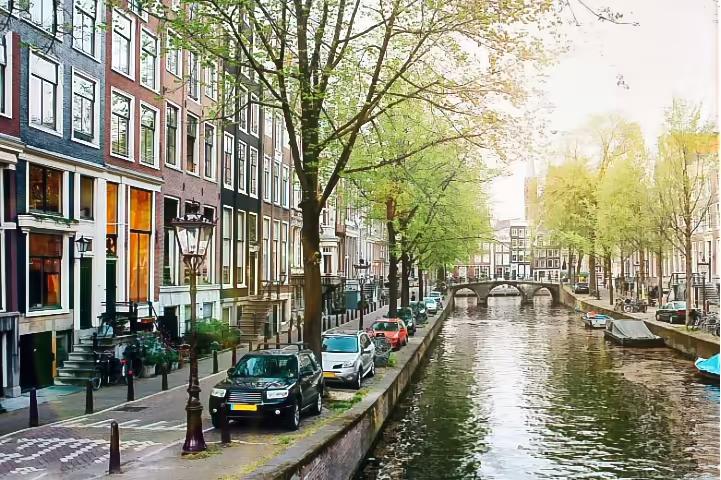
- Jordaan: Picture-postcard canals lined with independent boutiques, antique shops, and cozy brown cafés. Ideal for couples and creative professionals seeking quintessential Amsterdam charm. Rents are on the higher side, reflecting the desirable location near Westerpark and the city centre.
- De Pijp: Amsterdam's most multicultural neighborhood, centred on the bustling Albert Cuyp Market with over 260 stalls. Packed with international restaurants, rooftop terraces, and late-night bars. A favourite of young professionals and students. Mid-range rents with excellent tram access.
- Oud-Zuid: Upscale and leafy, home to the Rijksmuseum, Van Gogh Museum, and Vondelpark. The Beethovenstraat shopping street serves daily needs. Popular with expat families thanks to excellent international schools nearby. Premium rents reflect the desirable location.
- Oud-West: A well-connected residential area bordering Vondelpark, offering diverse dining, independent shops, and a genuine neighborhood feel. Families appreciate the schools and play areas, while professionals enjoy the 10-minute bike ride to the centre.
- Amsterdam Noord: Accessible by a free ferry from Centraal Station, Noord has transformed from an industrial zone into a creative hotspot. The EYE Film Institute, NDSM Wharf art district, and the upcoming Sluisbuurt development give it an edgy, artistic atmosphere. The most affordable area with central access.
- Plantage: Quiet and green, wrapping around the ARTIS Zoo and the Hortus Botanical Garden. Excellent for families and anyone who values tranquility within walking distance of theatres, museums, and the Jewish Historical Museum. Upper-mid rents.
Cost of Living in Amsterdam
Monthly Budget Breakdown
| Category | Budget Range |
|---|---|
| Rent (1BR, centre) | €1,500–€2,400 |
| Utilities | €130–€210 |
| Internet | €30–€50 |
| Groceries | €270–€420 |
| Transport (OV-chipkaart / OVpay) | €95–€120 |
| Dining out (4×/month) | €80–€130 |
| Leisure/Gym | €30–€60 |
| Total | €2,100–€3,400 |
Day-to-Day Costs
- Coffee: €3–€5 (specialty coffee culture; simple filter coffee at chain shops around €3)
- Lunch (casual): €8–€12 (worker's lunch deals at cafes and lunchrooms in business districts)
- Monthly transport pass: €95–€120 (GVB unlimited travel on trams, metros, and buses)
- Beer (bar): €5–€7 (traditional brown cafés charge €5, trendy bars in Centrum charge €7)
- Cinema ticket: €14–€18 (premium pricing for new releases; arthouse cinemas around €14)
- Gym membership: €30–€60 (Basic Fit at the low end, David Lloyd at the premium end)
Getting Around Amsterdam
- Public transport: GVB operates trams, metros, buses, and ferries throughout the city. You can use an OV-chipkaart or simply tap your contactless bank card via OVpay. Load credit or purchase a monthly pass for €95–€120. The metro efficiently extends to outer districts including Amsterdam Noord, while trams cover all central routes. Night buses (nachtbus) operate Friday and Saturday with routes N1, N2, and N5 connecting key areas after midnight.
- Cycling: Amsterdam is a cycling paradise with 400+ kilometres of dedicated bike lanes. Second-hand bikes start at €100–€200 from marktplaats.nl or bike shops; new bikes cost €400–€1,200. Cycling is often faster than public transport for short trips below three kilometres. Bike theft is common — use sturdy locks (€40–€80) and ideally store bikes inside overnight.
- Driving: Parking in the centre is extremely difficult and expensive, ranging from €5–€8 per hour at meters to €250/month for garage spaces. Resident permits have waiting lists often exceeding 12 months. Many expats sell their cars upon arrival and rely entirely on cycling, public transport, or car-sharing services like Greenwheels for rare occasions.
- Airport: Schiphol Airport is 20 minutes by direct train from Centraal Station, with departures every 10 minutes during the day. The airport offers direct flights to over 300 destinations worldwide and serves as a major European hub for KLM, Transavia, and budget carriers.
- Intercity: Amsterdam Centraal connects to all Dutch cities and European destinations. Eurostar high-speed trains reach Paris in 3h15 and Brussels in 1h55. Deutsche Bahn offers direct connections to Berlin. The domestic Intercity network reaches most cities within 1–2 hours.
Healthcare in Amsterdam
- Hospitals/Clinics: OLVG has two locations in the city offering 24/7 emergency care. Amsterdam UMC (formed by the merger of AMC and VUmc) is a leading academic hospital with specialised departments. OLVG Oost serves the eastern districts. Each neighborhood has nearby hospital or clinic access.
- English-speaking doctors: Widely available through platforms like zorgkaartnederland.nl. Many GP practices specifically cater to expats, including those associated with the Expat Medical Center and Huisartsencentrum Amsterdam. Finding an English-speaking GP takes a few days rather than weeks.
- Pharmacies: Apotheken (pharmacies) are distributed throughout every neighborhood, typically open Monday–Saturday. Emergency pharmacy service handles evenings and weekends — dial 0900-112 for rotating duty pharmacy information. Most staff speak English, and prescription translation is standard.
- Emergency number: 112 (universal European emergency number for police, fire, ambulance). Non-emergency police: 0900-8844 for property crimes or non-urgent matters.
Planning your move?
Tell us about your move to compare quotes from international moving companies.
Culture & Lifestyle
- Museums: The Rijksmuseum houses Dutch Masters including Vermeer and Rembrandt. The Van Gogh Museum holds the world's largest collection of his works. The Stedelijk Museum of Modern Art features contemporary masterpieces. Smaller gems include FOAM photography museum, the Anne Frank House, and the NEMO science centre.
- Nightlife: De Pijp buzzes with cocktail bars and late-night cafés. Leidseplein and Rembrandtplein offer mainstream clubs and live music venues. Amsterdam Noord hosts warehouse raves and the Shelter underground club. Note: coffeeshops (cannabis) are legally regulated and distinct from cafés serving coffee.
- Festivals: King's Day (April 27, city-wide orange party along the canals), Amsterdam Pride (August, world-famous canal parade), Amsterdam Dance Event (October, 1,000+ electronic music events), and the Holland Festival (June, performing arts).
- Nature: Vondelpark is the city's green living room, beloved for jogging, picnics, and summer open-air theatre. Amsterdamse Bos — three times the size of Central Park — offers rowing lakes, cycling trails, and a goat farm. Beaches at Bloemendaal and Zandvoort are under an hour by train.
- Dutch Directness: Locals value straightforward communication. This takes adjustment but leads to efficient, honest relationships. Dutch people will tell you directly if they disagree or if something is not working — this is cultural clarity, not rudeness. Embrace directness and reciprocate with honest feedback.
- Gezelligheid: This untranslatable Dutch concept captures a feeling of coziness, warmth, and conviviality. You will encounter it at brown cafés with candlelight, at birthday circles where everyone shakes hands, and at terrace drinks on summer evenings. Understanding gezelligheid is key to understanding Dutch social life.
- Living Below Sea Level: Amsterdam sits roughly two metres below sea level, protected by an intricate system of dikes, pumps, and canals managed by water authorities (waterschappen). This engineering marvel is a source of national pride and a reminder of the Netherlands' unique relationship with water.
Banking and Taxes
- Banking: Dutch banking is straightforward. ING, ABN AMRO, and Rabobank are the three traditional banks with extensive branch and ATM networks. Bunq and Revolut offer app-based banking popular with younger expats. iDEAL — the national online payment system — is used for virtually all e-commerce; you will need a Dutch bank account to use it.
- Income Tax: The Netherlands has a progressive income tax system. In 2026, income up to approximately €38,000 is taxed at 36.97%, income above that at 49.50%. The 30% ruling reduces effective rates for qualifying expats. File your annual tax return via the Belastingdienst (Dutch tax authority) website; most expats benefit from hiring a tax advisor for the first year.
- VAT and Consumer Costs: VAT (BTW) is included in all displayed prices — what you see is what you pay. The standard rate is 21%; reduced rate of 9% applies to food, books, and some services.
Dutch Language Basics for Daily Life
Learning even a few Dutch phrases transforms your experience:
- Hallo / Hoi — Hello / Hi (informal)
- Dank je wel — Thank you
- Alstublieft — Please / Here you are
- Spreekt u Engels? — Do you speak English?
- Ik zou graag... — I would like...
- Tot ziens — Goodbye
- Pinnen? — Can I pay by card? (you will hear this constantly)
Dutch people will often switch to English when they hear you struggle — do not be discouraged. Politely ask "Kunnen we Nederlands praten?" (Can we speak Dutch?) to practice.
Internet and Mobile
- Home internet: Major providers are Ziggo (cable), KPN (fibre/DSL), and T-Mobile (fibre). Expect €30–€50/month for 100–500 Mbps. Fibre coverage is extensive in central Amsterdam. Contracts are typically 12 months.
- Mobile: KPN, Vodafone, and T-Mobile are the main carriers. Prepaid SIM cards are available at supermarkets and phone shops from €10. Monthly plans with data start around €15–€25. EU roaming is included in all plans — your Dutch SIM works across Europe at no extra cost.
- Public Wi-Fi: Widely available in cafés, restaurants, libraries, and public buildings. Amsterdam also offers free municipal Wi-Fi in some public spaces.
Childcare and Parenting
- Daycare (kinderdagverblijf): Childcare is expensive but subsidised through the Dutch government (kinderopvangtoeslag). Monthly costs run €1,800–€2,400 for full-time care before subsidy. Apply for subsidy through the Belastingdienst immediately after registering with your municipality.
- After-school care (BSO): Available for children aged 4–12, typically €600–€900/month before subsidy. Schools often partner with BSO providers for seamless pickup.
- Nanny and au pairs: Au pair arrangements are regulated in the Netherlands — the au pair must be 18–30, live with the host family, and receive pocket money (maximum €340/month). Agencies like AuPairWorld and Buddy AuPair facilitate matching.
- Playgrounds and family life: Amsterdam is exceptionally family-friendly. Vondelpark has a large playground and paddling pool. Nearly every neighborhood has well-maintained public playgrounds. The city's cycling culture means children bike to school from age 4–5.
Pet Ownership
- Bringing pets: EU pets need a microchip, rabies vaccination, and EU pet passport. Non-EU pets require a rabies antibody test administered at least 3 months before travel.
- Dog registration: Dogs must be registered with the municipality and insured. Dog tax (hondenbelasting) applies — approximately €120/year in Amsterdam.
- Vets and pet care: English-speaking veterinarians are easy to find through zorgkaartnederland.nl. Pet shops like Jumper and Intratuin are widely available. Dog-friendly cafés and parks are common throughout the city. Pet-sitting and dog-walking services operate in English.
Weather and What to Expect
- Winter (Dec–Feb): Cold, grey, and damp. Temperatures 0–7°C. Occasional frost and rare snow. Short days (sunrise ~8:45, sunset ~16:30). Invest in a good waterproof coat, layers, and waterproof shoes.
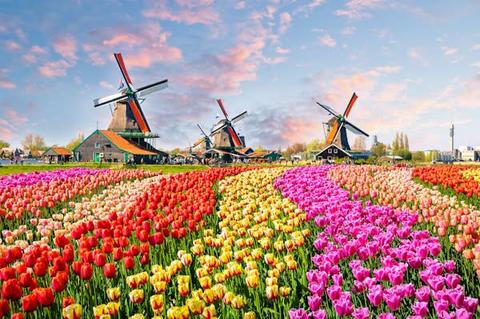
- Spring (Mar–May): Mild and increasingly sunny. Temperatures 8–17°C. Tulip season (April–May) is spectacular — visit Keukenhof or cycle through the Bollenstreek bulb fields south of the city.
- Summer (Jun–Aug): Warm and long days. Temperatures 17–25°C, occasionally reaching 30°C. Outdoor terrace season — cafés spill onto sidewalks and canal boats fill with locals. Rain is always possible; carry a light jacket.
- Autumn (Sep–Nov): Cooling temperatures (8–15°C) with increasing rain and wind. Beautiful autumn colours in Vondelpark and Amsterdamse Bos. Layers and waterproofs become essential daily wear.
Food & Dining
- Local specialties: Bitterballen (deep-fried meat croquettes served at bars), stroopwafels fresh from the market, raw herring (hollandse nieuwe, May–August), poffertjes (mini pancakes with butter and powdered sugar), and aged Gouda from the Albert Cuyp Market.
- Best areas for dining: De Pijp for global street food spanning Ethiopian to Mexican, Jordaan for traditional brown cafés with local dishes, Utrechtsestraat for upscale bistros, and the Foodhallen for trendy indoor market dining.
- Budget options: Dagschotel (daily lunch special) €10–€15 at local restaurants, FEBO snack automats €6–€10, and market stalls at the Albert Cuyp offering €5–€12 portions of international street food.
Expat Community
- Meetup groups: Amsterdam Expat Meetups through Meetup.com gather weekly for social events. InterNations Amsterdam organises monthly gatherings and networking events for thousands of members. Facebook-based groups like "Expats in Amsterdam" provide housing and social advice.
- International employers: Shell, Unilever, ING, Heineken, Booking.com, Adyen, and Uber maintain active expat communities with integration programmes, buddy systems, and social clubs that ease the transition.
- Language exchanges: Meetup.com organises Dutch conversation exchanges weekly throughout the city. Many expats combine working with Dutch classes at community colleges (ROC), private schools like Taalhuis Amsterdam and Koentact, or intensive courses at universities. Tandem exchange apps connect native Dutch learners with international residents.
Job Market in Amsterdam
- Main industries: Technology (Booking.com, Adyen, Uber, Elastic, GitLab), finance (ING, ABN AMRO, JP Morgan, Optiver), creative (advertising, design, gaming, media), energy (Shell, TotalEnergies), and logistics (Schiphol hub, port operations).
- Major employers: Multinational corporations populate the Zuidas business district, while the thriving startup ecosystem at Amsterdam Science Park and various incubators throughout the city provide innovative employment. Companies range from established Fortune 500 to emerging tech scale-ups.
| Sector | Monthly Net (estimated) | Annual Gross Reference |
|---|---|---|
| Tech/IT | €3,500–€5,500 | €55,000–€85,000 |
| Finance/Banking | €3,200–€5,000 | €50,000–€75,000 |
| Healthcare | €2,800–€4,000 | €42,000–€60,000 |
| Education | €2,400–€3,500 | €36,000–€52,000 |
| Hospitality | €2,000–€2,800 | €30,000–€42,000 |
- The 30% Ruling Advantage: Amsterdam employers frequently offer the 30% tax ruling to qualifying expats, which effectively increases take-home pay by making 30% of gross salary tax-free. This is especially common in the tech and finance sectors and can save qualifying professionals €5,000–€10,000+ per year in taxes.
- Freelancing and Self-Employment: Amsterdam has a thriving freelancer community, particularly in design, development, and consulting. You can register as a ZZP (zelfstandige zonder personeel — freelancer without employees) at the KvK (Chamber of Commerce). The startup visa route is also available for entrepreneurs with an innovative business idea approved by a recognised facilitator.
- Job search resources: LinkedIn effectively hosts Dutch positions with English-language filters. Indeed.nl aggregates broad job listings. Undutchables.nl specifically targets English-speaking job seekers. AngelList/Wellfound covers the startup scene. Specialised recruitment agencies like Michael Page and Robert Walters focus on placing international candidates.
Education in Amsterdam
- International schools: International School of Amsterdam (ISA) in Amstelveen offers IB programmes for primary and secondary. British School of Amsterdam (also in Amstelveen) provides the British curriculum. Amsterdam International Community School (AICS) offers the international stream. Fees range €4,000–€20,000/year depending on programme and year level.
- Universities: University of Amsterdam (UvA) provides research and undergraduate programmes across disciplines. VU Amsterdam combines research excellence with English-taught programmes for international students. Amsterdam University of Applied Sciences (HvA) offers practical degrees with industry connections.
- Language schools: Dutch courses available through community colleges (ROC) at reasonable costs. Private language schools like Taalhuis Amsterdam, Koentact, and Loqman offer intensive programmes. The Nt2 (Dutch as Second Language) programme provides recognised certification for professional language proficiency.
Moving Checklist for Amsterdam
- Secure a job offer or study place (highly skilled migrant permit requires employer sponsorship via the IND)
- Arrange temporary accommodation for the first 4–6 weeks (Airbnb, HousingAnywhere, or short-term rental)
- Gather rental dossier: employment contract, bank statements, passport copies, income proof
- Compare health insurance providers on Independer.nl or Zorgwijzer.nl
- Research neighborhoods based on budget, commute, and lifestyle preferences
- Start learning basic Dutch through apps like Duolingo or Babbel before arrival
- Register at Gemeente Amsterdam for your BSN (mandatory within 5 days for stays over 4 months)
- Open a Dutch bank account (ING, ABN AMRO, Rabobank, or Bunq — the first three are traditional banks)
- Activate health insurance (basisverzekering, €135–€155/month)
- Set up public transport payment — get an OV-chipkaart or start using OVpay with your contactless bank card for trams, buses, and metros
- Secure permanent housing — verify landlord identity and registered property ownership before signing
- Register with a huisarts (GP) near your home through local health centre or direct practice inquiry
- Apply for residence permit within IND deadlines if non-EU
- Enroll in Dutch language classes — even A1 level transforms daily interactions and shows employers commitment to integration
Extremely competitive. Quality listings in popular neighborhoods like De Pijp or Jordaan can receive dozens of applications within hours, sometimes within minutes of going live. Prepare your dossier before arriving, be ready to view and commit on the same day, and consider a rental agent (makelaar) for off-market access. Budget 4–6 weeks for a successful search. Having all documentation ready and meeting income requirements (3–4× rent) is essential.
Yes. English is the working language at most multinational companies, startups, and international organisations. Daily life — shopping, dining, healthcare, government services — is easily conducted in English. That said, learning Dutch significantly improves social integration, opens doors to Dutch-language employers, deepens relationships with Dutch colleagues and neighbours, and is increasingly valued for career advancement.
Amsterdam ranks among Europe's most expensive cities. A comfortable single-person budget runs €2,100–€3,400/month excluding international school fees (€4,000–€20,000/year per child). Housing alone can consume 40–50% of net income. However, salaries are higher than Dutch averages, and the 30% tax ruling can substantially reduce the tax burden for qualifying expats. Areas outside the ring road (Amsterdam Noord, Zuidoost) offer more affordable options with excellent transport connections.
The 30% ruling allows eligible expats to receive 30% of their gross salary tax-free as compensation for extraterritorial costs for up to five years (reduced from eight in recent reforms). To qualify, you must have been recruited from outside the Netherlands specifically for Dutch employment, possess specific skills in short supply, earn above the income threshold (approximately €45,637/year in 2026), and have lacked Dutch residency in the preceding 24 months. Your employer must apply through the Dutch tax authorities.
Oud-Zuid tops the list thanks to excellent international schools (ISA nearby), Vondelpark, and leafy streets. Oud-West offers a similar feel at slightly lower rents. Plantage is quiet and green with proximity to ARTIS Zoo and the zoo's playgrounds. Amsterdam Noord provides the best value for families willing to take the ferry. Buitenveldert near the Zuidas is another strong family option with good schools and parks.
Obtain your BSN first at Gemeente Amsterdam during mandatory city registration. Then compare insurance providers on Independer.nl or Zorgwijzer.nl — these are independent comparison tools. Basic insurance (basisverzekering) costs €135–€155/month with a €385 annual deductible (standard across all insurers). Children under 18 are insured free on a parent's basic plan. You must enrol within four months of arrival; late enrolment may incur fines.
Dutch landlords typically require a deposit of one to two months' rent, paid before the lease starts. The deposit must be returned within 14 days of the lease ending, minus any documented damages. Always photograph the property's condition during move-in and request a written inspection report. The deposit should be held in a separate account — if a landlord asks for an unusually high deposit or cash-only payment, treat it as a red flag.
Amsterdam is very safe by international standards. The city centre is well-lit and well-patrolled. As with any major city, exercise normal precautions: avoid poorly lit alleys near Central Station late at night, keep valuables secure in crowded tourist areas (pickpocketing occurs around Dam Square and on trams), and lock your bicycle with two locks. Violent crime against residents and expats is extremely rare.
Related Guides
- [Moving to the Netherlands] — comprehensive country guide covering visas, taxation, and national culture
- [Moving to Rotterdam] — Netherlands' port city with 20–30% lower living costs and modern architecture
- [Moving to The Hague] — political capital with international organisations and Scheveningen beach
- [Moving to Utrecht] — centrally located student city with unbeatable train connections
- [Moving to Eindhoven] — Brainport tech hub with high-tech career opportunities