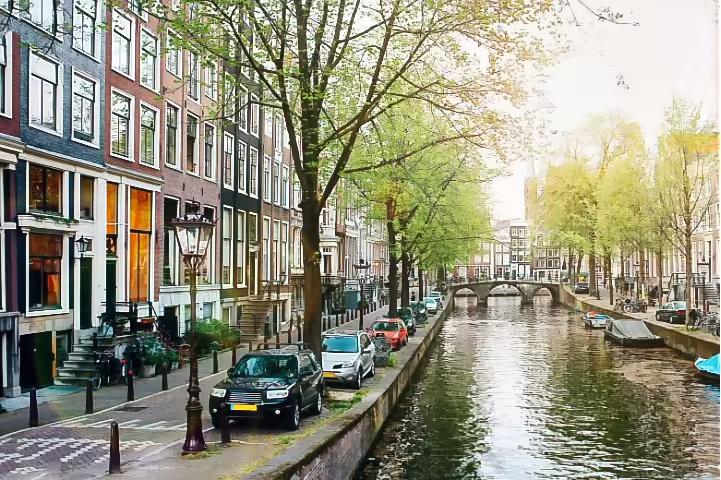
Amsterdam es la capital y el corazon cultural de los Paises Bajos, famosa por su anillo de canales del siglo XVII, sus museos de primer nivel y su conocida actitud liberal. La ciudad atrae cada ano a decenas de miles de expatriados gracias a sus sectores tecnologico y financiero en pleno auge, a un dominio del ingles casi generalizado y a un centro compacto que se recorre mejor en bicicleta. Desde el encanto bohemio del Jordaan hasta el paraiso gastronomico de De Pijp, Amsterdam ofrece un estilo de vida urbano que combina belleza historica con innovacion puntera. Tanto si llega como migrante altamente cualificado, profesional creativo o estudiante, encontrara una de las comunidades mas acogedoras e internacionalmente diversas de Europa.
Amsterdam de un vistazo
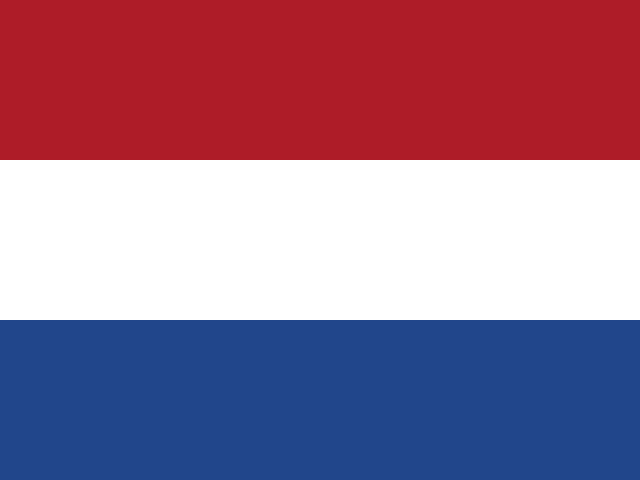
- Poblacion
- 933.000 (municipio), 2,5 millones en el area metropolitana
- Region
- Holanda Septentrional, oeste de los Paises Bajos
- Conocida por
- Canales, cultura ciclista, startups tecnologicas, negocios internacionales
- Alquiler medio (1 dormitorio)
- €1.500-€2.400 (centro), €1.100-€1.700 (zonas exteriores)
- Salario medio
- €3.000-€3.800 netos/mes
- Comunidad expatriada
- Grande y diversa, mas de 160 nacionalidades, muchas sedes de multinacionales
Por que mudarse a Amsterdam
- Mercado laboral dinamico: Amsterdam alberga las sedes europeas de Booking.com, Adyen, Uber, Netflix y decenas de startups unicornio. Solo el distrito empresarial de Zuidas reune mas de 500 empresas internacionales de finanzas, derecho y tecnologia, lo que convierte a la ciudad en una verdadera plataforma de lanzamiento profesional en muchos sectores.
- Ingles en todas partes: alrededor del 94 % de los residentes neerlandeses habla ingles, y la mayoria de empresas internacionales lo usan como idioma de trabajo. Los formularios administrativos, las citas medicas e incluso las comunicaciones escolares suelen estar disponibles en ingles, lo que facilita mucho la transicion en comparacion con la mayoria de capitales de Europa continental.
- Conectividad inigualable: el aeropuerto de Schiphol esta a solo 20 minutos del centro en tren directo y ofrece vuelos sin escalas a mas de 300 destinos. Los trenes Eurostar de alta velocidad llegan a Paris en 3 h 15 y a Bruselas en 1 h 55, por lo que viajar por Europa los fines de semana resulta muy sencillo para expatriados con ganas de explorar.
- Paraiso ciclista: con mas de 400 km de carriles bici dedicados, Amsterdam esta disenada para desplazarse sobre dos ruedas. La mayoria de trayectos diarios duran menos de 15 minutos en bicicleta, y puede explorar Vondelpark, las orillas del Amstel y el bosque Amsterdamse Bos sin arrancar nunca un coche.
- Cultura de primer nivel: el Rijksmuseum, el Van Gogh Museum y el Stedelijk forman un barrio de museos con pocos rivales en el mundo. Los festivales durante todo el ano, desde el Dia del Rey en abril hasta Amsterdam Pride en agosto y el Documentary Film Festival en noviembre, mantienen el calendario cultural siempre lleno.
- Colegios internacionales: las familias se benefician de la British School of Amsterdam, la International School of Amsterdam (ISA) y la Amsterdam International Community School (AICS). Los colegios publicos neerlandeses son excelentes y gratuitos, y muchos ofrecen itinerarios bilingues para favorecer la integracion.
Encontrar vivienda en Amsterdam
Alquileres medios
| Barrio | 1 dormitorio | 3 dormitorios | Caracter |
|---|---|---|---|
| Centrum | €1.800-€2.600 | €3.200-€4.500 | Casas historicas junto a los canales, mucha presencia turistica, vistas premium |
| De Pijp | €1.500-€2.100 | €2.400-€3.200 | De moda, multicultural, Albert Cuyp Market, vida nocturna animada |
| Jordaan | €1.600-€2.300 | €2.700-€3.800 | Artistico, calles encantadoras junto a los canales, galerias y boutiques |
| Oud-Zuid | €1.500-€2.200 | €2.600-€3.500 | Exclusivo, cerca de Vondelpark, barrio de los museos, calles arboladas |
| Oud-West | €1.400-€2.000 | €2.200-€3.000 | Ideal para familias, buenos restaurantes, parques cercanos |
| Amsterdam Noord | €1.100-€1.600 | €1.700-€2.400 | Polo creativo en auge, ferry al centro, NDSM Wharf |
Como encontrar vivienda
- Pararius: portal de alquiler premium con interfaz en ingles y filtros detallados para expatriados; se actualiza a diario con nuevos anuncios.
- Funda: la mayor plataforma inmobiliaria neerlandesa, con todos los barrios y tipos de vivienda; referencia para alquileres de larga duracion y compras.
- HousingAnywhere: alquileres de corta y media estancia ideales para instalarse al llegar antes de comprometerse con un contrato largo. Los propietarios verificados reducen el riesgo de estafas.
- Grupos de Facebook: "Expats in Amsterdam", "Amsterdam Housing" y grupos especificos por distrito publican pisos antes de que lleguen a las plataformas principales. Reviselos varias veces al dia.
- Woningnet: registro de vivienda social; solo es realista para quienes planean quedarse una decada o mas, ya que las listas de espera superan los 10 anos en zonas populares.
Consejos para expatriados
- Prepare un expediente completo con antelacion: pasaporte, contrato laboral, justificante de ingresos (los propietarios exigen un salario bruto de 3-4 veces el alquiler mensual) y extractos bancarios.
- Los pisos en barrios populares pueden recibir entre 20 y 50 solicitudes en cuestion de horas. Este listo para visitar y decidir el mismo dia.
- Los agentes inmobiliarios de alquiler (makelaars) cobran un mes de alquiler mas el 21 % de IVA, pero pueden acceder a anuncios fuera de mercado y negociar en su nombre.
- Considere una vivienda temporal mediante HousingAnywhere o Airbnb durante las primeras 4-6 semanas mientras busca con margen.
- Este atento a las estafas: nunca transfiera dinero sin haber visitado la vivienda y verificado la identidad del propietario y la titularidad registral.
Guia de barrios
- Jordaan: canales de postal bordeados de boutiques independientes, anticuarios y acogedores cafes marrones. Ideal para parejas y profesionales creativos que buscan el encanto mas tipico de Amsterdam. Los alquileres son mas altos, reflejo de su ubicacion deseada cerca de Westerpark y del centro.
- De Pijp: el barrio mas multicultural de Amsterdam, centrado en el animado Albert Cuyp Market, con mas de 260 puestos. Esta lleno de restaurantes internacionales, terrazas en azoteas y bares abiertos hasta tarde. Es favorito entre jovenes profesionales y estudiantes. Alquileres de gama media y excelente acceso en tranvia.
- Oud-Zuid: exclusivo y arbolado, alberga el Rijksmuseum, el Van Gogh Museum y Vondelpark. La calle comercial Beethovenstraat cubre las necesidades del dia a dia. Es popular entre familias expatriadas por los excelentes colegios internacionales cercanos. Los alquileres premium reflejan su ubicacion deseada.
- Oud-West: zona residencial bien comunicada junto a Vondelpark, con restaurantes variados, tiendas independientes y un autentico ambiente de barrio. Las familias valoran los colegios y zonas de juego, mientras que los profesionales disfrutan de estar a 10 minutos en bicicleta del centro.
- Amsterdam Noord: accesible mediante un ferry gratuito desde Centraal Station, Noord ha pasado de zona industrial a foco creativo. El EYE Film Institute, el distrito artistico NDSM Wharf y el futuro desarrollo de Sluisbuurt le dan un ambiente atrevido y artistico. Es la zona mas asequible con acceso central.
- Plantage: tranquila y verde, rodea ARTIS Zoo y el Jardin Botanico Hortus. Excelente para familias y para cualquiera que valore la tranquilidad a poca distancia a pie de teatros, museos y el Jewish Historical Museum. Alquileres de gama media-alta.
Coste de vida en Amsterdam
Desglose del presupuesto mensual
| Categoria | Rango de presupuesto |
|---|---|
| Alquiler (1 dormitorio, centro) | €1.500-€2.400 |
| Suministros | €130-€210 |
| Internet | €30-€50 |
| Compra de alimentacion | €270-€420 |
| Transporte (OV-chipkaart / OVpay) | €95-€120 |
| Comer fuera (4 veces/mes) | €80-€130 |
| Ocio/gimnasio | €30-€60 |
| Total | €2.100-€3.400 |
Gastos del dia a dia
- Cafe: €3-€5 (cultura de cafe de especialidad; cafe de filtro sencillo en cadenas por unos €3)
- Comida informal: €8-€12 (menus de mediodia para trabajadores en cafes y locales de almuerzo de zonas de negocios)
- Abono mensual de transporte: €95-€120 (viajes ilimitados de GVB en tranvias, metros y autobuses)
- Cerveza en bar: €5-€7 (los cafes marrones tradicionales cobran unos €5; los bares de moda en Centrum, unos €7)
- Entrada de cine: €14-€18 (precios premium para estrenos; cines de autor alrededor de €14)
- Cuota de gimnasio: €30-€60 (Basic Fit en el extremo economico, David Lloyd en el premium)
Moverse por Amsterdam
- Transporte publico: GVB opera tranvias, metros, autobuses y ferris por toda la ciudad. Puede usar una OV-chipkaart o simplemente acercar su tarjeta bancaria contactless mediante OVpay. Recargue saldo o compre un abono mensual por €95-€120. El metro llega de forma eficiente a distritos exteriores como Amsterdam Noord, mientras que los tranvias cubren todas las rutas centrales. Los autobuses nocturnos (nachtbus) funcionan los viernes y sabados, con rutas N1, N2 y N5 que conectan zonas clave despues de medianoche.
- Bicicleta: Amsterdam es un paraiso ciclista con mas de 400 kilometros de carriles bici dedicados. Las bicicletas de segunda mano empiezan en €100-€200 en marktplaats.nl o tiendas de bicicletas; las nuevas cuestan €400-€1.200. Para trayectos cortos de menos de tres kilometros, ir en bici suele ser mas rapido que el transporte publico. Los robos son frecuentes: use candados resistentes (€40-€80) e, idealmente, guarde la bicicleta dentro por la noche.
- Conducir: aparcar en el centro es muy dificil y caro, desde €5-€8 por hora en parquimetros hasta €250/mes por plazas de garaje. Los permisos de residente suelen tener listas de espera de mas de 12 meses. Muchos expatriados venden el coche al llegar y dependen por completo de la bicicleta, el transporte publico o servicios de coche compartido como Greenwheels para ocasiones puntuales.
- Aeropuerto: el aeropuerto de Schiphol esta a 20 minutos en tren directo desde Centraal Station, con salidas cada 10 minutos durante el dia. Ofrece vuelos directos a mas de 300 destinos en todo el mundo y funciona como gran hub europeo para KLM, Transavia y companias de bajo coste.
- Intercity: Amsterdam Centraal conecta con todas las ciudades neerlandesas y con destinos europeos. Los trenes Eurostar de alta velocidad llegan a Paris en 3 h 15 y a Bruselas en 1 h 55. Deutsche Bahn ofrece conexiones directas a Berlin. La red nacional Intercity llega a la mayoria de ciudades en 1-2 horas.
Sanidad en Amsterdam
- Hospitales/clinicas: OLVG tiene dos sedes en la ciudad con urgencias 24/7. Amsterdam UMC (formado por la fusion de AMC y VUmc) es un hospital universitario de referencia con departamentos especializados. OLVG Oost atiende los distritos orientales. Cada barrio cuenta con acceso cercano a hospitales o clinicas.
- Medicos que hablan ingles: son faciles de encontrar a traves de plataformas como zorgkaartnederland.nl. Muchas consultas de medico de cabecera atienden especificamente a expatriados, incluidas las asociadas con Expat Medical Center y Huisartsencentrum Amsterdam. Encontrar un medico de cabecera que hable ingles suele llevar dias, no semanas.
- Farmacias: las apotheken (farmacias) estan repartidas por todos los barrios y suelen abrir de lunes a sabado. El servicio de farmacia de guardia cubre tardes y fines de semana; llame al 0900-112 para saber que farmacia esta de turno. La mayoria del personal habla ingles y la traduccion de recetas es habitual.
- Numero de emergencias: 112 (numero europeo universal para policia, bomberos y ambulancia). Policia no urgente: 0900-8844 para delitos contra la propiedad o asuntos no urgentes.
Recibe un plan de mudanza personalizado
Deja tu email y te enviaremos una checklist a medida y tres presupuestos de empresas verificadas.
Cultura y estilo de vida
- Museos: el Rijksmuseum alberga maestros neerlandeses como Vermeer y Rembrandt. El Van Gogh Museum posee la mayor coleccion del mundo de sus obras. El Stedelijk Museum of Modern Art presenta grandes piezas contemporaneas. Entre las joyas mas pequenas estan el museo de fotografia FOAM, la Anne Frank House y el centro de ciencia NEMO.
- Vida nocturna: De Pijp vibra con bares de cocteles y cafes abiertos hasta tarde. Leidseplein y Rembrandtplein ofrecen discotecas generalistas y salas de musica en directo. Amsterdam Noord acoge raves en antiguos almacenes y el club underground Shelter. Nota: los coffeeshops (cannabis) estan regulados legalmente y son distintos de los cafes que sirven cafe.
- Festivales: Dia del Rey (27 de abril, fiesta naranja por toda la ciudad junto a los canales), Amsterdam Pride (agosto, desfile por los canales de fama mundial), Amsterdam Dance Event (octubre, mas de 1.000 eventos de musica electronica) y Holland Festival (junio, artes escenicas).
- Naturaleza: Vondelpark es el salon verde de la ciudad, muy querido para correr, hacer picnics y disfrutar del teatro al aire libre en verano. Amsterdamse Bos, tres veces mas grande que Central Park, ofrece lagos para remar, rutas ciclistas y una granja de cabras. Las playas de Bloemendaal y Zandvoort estan a menos de una hora en tren.
- Franqueza neerlandesa: la gente local valora la comunicacion directa. Requiere adaptacion, pero genera relaciones eficientes y honestas. Los neerlandeses le diran claramente si no estan de acuerdo o si algo no funciona; es claridad cultural, no mala educacion. Acepte esa franqueza y responda con comentarios honestos.
- Gezelligheid: este concepto neerlandes dificil de traducir recoge una sensacion de comodidad, calidez y convivencia. Lo encontrara en cafes marrones a la luz de las velas, en circulos de cumpleanos donde todos se dan la mano y en bebidas en terrazas durante las tardes de verano. Entender gezelligheid ayuda a entender la vida social neerlandesa.
- Vivir bajo el nivel del mar: Amsterdam se situa aproximadamente dos metros bajo el nivel del mar, protegida por un complejo sistema de diques, bombas y canales gestionado por autoridades del agua (waterschappen). Esta maravilla de ingenieria es motivo de orgullo nacional y recuerda la relacion unica de los Paises Bajos con el agua.
Banca e impuestos
- Banca: la banca neerlandesa es sencilla. ING, ABN AMRO y Rabobank son los tres bancos tradicionales, con amplias redes de oficinas y cajeros. Bunq y Revolut ofrecen banca por app, popular entre expatriados jovenes. iDEAL, el sistema nacional de pago online, se usa en practicamente todo el comercio electronico; necesitara una cuenta bancaria neerlandesa para usarlo.
- Impuesto sobre la renta: los Paises Bajos tienen un sistema progresivo de impuesto sobre la renta. En 2026, los ingresos hasta aproximadamente €38.000 tributan al 36,97 %, y los superiores a esa cifra al 49,50 %. La regla del 30 % reduce los tipos efectivos para expatriados que cumplen los requisitos. Presente su declaracion anual en la web del Belastingdienst (autoridad fiscal neerlandesa); a la mayoria de expatriados les compensa contratar a un asesor fiscal el primer ano.
- IVA y costes de consumo: el IVA (BTW) esta incluido en todos los precios mostrados; lo que ve es lo que paga. El tipo general es del 21 %; el reducido del 9 % se aplica a alimentos, libros y algunos servicios.
Frases basicas de neerlandes para la vida diaria
Aprender incluso unas pocas frases en neerlandes transforma su experiencia:
- Hallo / Hoi - Hola / Hola (informal)
- Dank je wel - Gracias
- Alstublieft - Por favor / Aqui tiene
- Spreekt u Engels? - Habla ingles?
- Ik zou graag... - Me gustaria...
- Tot ziens - Adios
- Pinnen? - Puedo pagar con tarjeta? (lo oira constantemente)
Los neerlandeses suelen cambiar al ingles cuando notan que le cuesta; no se desanime. Pida con educacion "Kunnen we Nederlands praten?" (Podemos hablar neerlandes?) para practicar.
Internet y movil
- Internet en casa: los principales proveedores son Ziggo (cable), KPN (fibra/DSL) y T-Mobile (fibra). Calcule €30-€50/mes por 100-500 Mbps. La cobertura de fibra es amplia en el centro de Amsterdam. Los contratos suelen ser de 12 meses.
- Movil: KPN, Vodafone y T-Mobile son los principales operadores. Las tarjetas SIM de prepago estan disponibles en supermercados y tiendas de telefonia desde €10. Los planes mensuales con datos empiezan alrededor de €15-€25. La itinerancia en la EU esta incluida en todos los planes: su SIM neerlandesa funciona por Europa sin coste adicional.
- Wi-Fi publico: esta ampliamente disponible en cafes, restaurantes, bibliotecas y edificios publicos. Amsterdam tambien ofrece Wi-Fi municipal gratuito en algunos espacios publicos.
Guarderia y crianza
- Guarderia (kinderdagverblijf): el cuidado infantil es caro, pero esta subvencionado por el gobierno neerlandes (kinderopvangtoeslag). Los costes mensuales son de €1.800-€2.400 por cuidado a tiempo completo antes de la subvencion. Solicite la ayuda a traves del Belastingdienst inmediatamente despues de registrarse en su municipio.
- Cuidado extraescolar (BSO): disponible para ninos de 4-12 anos, normalmente €600-€900/mes antes de la subvencion. Los colegios suelen colaborar con proveedores de BSO para facilitar la recogida.
- Nineras y au pairs: los acuerdos de au pair estan regulados en los Paises Bajos; la au pair debe tener 18-30 anos, vivir con la familia anfitriona y recibir dinero de bolsillo (maximo €340/mes). Agencias como AuPairWorld y Buddy AuPair facilitan el emparejamiento.
- Parques infantiles y vida familiar: Amsterdam es excepcionalmente comoda para familias. Vondelpark tiene un gran parque infantil y una piscina infantil. Casi todos los barrios cuentan con parques publicos bien mantenidos. La cultura ciclista de la ciudad hace que los ninos vayan al colegio en bicicleta desde los 4-5 anos.
Tener mascotas
- Traer mascotas: las mascotas de la EU necesitan microchip, vacuna antirrabica y pasaporte europeo para animales de compania. Las mascotas de fuera de la EU requieren una prueba de anticuerpos de rabia realizada al menos 3 meses antes del viaje.
- Registro de perros: los perros deben registrarse en el municipio y estar asegurados. Se aplica el impuesto canino (hondenbelasting), aproximadamente €120/ano en Amsterdam.
- Veterinarios y cuidado de mascotas: es facil encontrar veterinarios que hablan ingles en zorgkaartnederland.nl. Tiendas de mascotas como Jumper e Intratuin estan muy extendidas. Los cafes y parques aptos para perros son comunes en toda la ciudad. Los servicios de cuidado y paseo de perros operan en ingles.
Tiempo y que esperar
- Invierno (dic-feb): frio, gris y humedo. Temperaturas de 0-7 °C. Heladas ocasionales y nieve poco frecuente. Dias cortos (amanecer aprox. 8:45, puesta de sol aprox. 16:30). Invierta en un buen abrigo impermeable, capas y calzado resistente al agua.
- Primavera (mar-may): suave y cada vez mas soleada. Temperaturas de 8-17 °C. La temporada de tulipanes (abril-mayo) es espectacular: visite Keukenhof o recorra en bicicleta los campos de bulbos de Bollenstreek, al sur de la ciudad.
- Verano (jun-ago): calido y con dias largos. Temperaturas de 17-25 °C, ocasionalmente hasta 30 °C. Temporada de terrazas al aire libre: los cafes ocupan las aceras y los barcos por los canales se llenan de locales. La lluvia siempre es posible; lleve una chaqueta ligera.
- Otono (sep-nov): las temperaturas bajan (8-15 °C), con mas lluvia y viento. Preciosos colores otonales en Vondelpark y Amsterdamse Bos. Las capas y prendas impermeables se vuelven imprescindibles a diario.
Comida y restaurantes
- Especialidades locales: bitterballen (croquetas de carne fritas servidas en bares), stroopwafels recien hechos en el mercado, arenque crudo (hollandse nieuwe, mayo-agosto), poffertjes (mini tortitas con mantequilla y azucar glas) y Gouda curado del Albert Cuyp Market.
- Mejores zonas para comer: De Pijp para comida callejera global, de etiope a mexicana; Jordaan para cafes marrones tradicionales con platos locales; Utrechtsestraat para bistros de gama alta; y Foodhallen para un mercado interior moderno.
- Opciones economicas: dagschotel (plato del dia) por €10-€15 en restaurantes locales, maquinas de snacks FEBO por €6-€10 y puestos del Albert Cuyp con raciones de comida callejera internacional por €5-€12.
Comunidad expatriada
- Grupos de Meetup: Amsterdam Expat Meetups en Meetup.com organiza eventos sociales semanales. InterNations Amsterdam organiza encuentros mensuales y eventos de networking para miles de miembros. Grupos de Facebook como "Expats in Amsterdam" ofrecen consejos sobre vivienda y vida social.
- Empleadores internacionales: Shell, Unilever, ING, Heineken, Booking.com, Adyen y Uber mantienen comunidades activas de expatriados con programas de integracion, sistemas de buddy y clubes sociales que facilitan la transicion.
- Intercambios de idiomas: Meetup.com organiza intercambios de conversacion en neerlandes cada semana por toda la ciudad. Muchos expatriados combinan trabajo con clases de neerlandes en centros de formacion (ROC), escuelas privadas como Taalhuis Amsterdam y Koentact, o cursos intensivos universitarios. Las apps de intercambio tandem conectan a estudiantes nativos de neerlandes con residentes internacionales.
Mercado laboral en Amsterdam
- Sectores principales: tecnologia (Booking.com, Adyen, Uber, Elastic, GitLab), finanzas (ING, ABN AMRO, JP Morgan, Optiver), creatividad (publicidad, diseno, videojuegos, medios), energia (Shell, TotalEnergies) y logistica (hub de Schiphol, operaciones portuarias).
- Grandes empleadores: las multinacionales se concentran en el distrito empresarial de Zuidas, mientras que el dinamico ecosistema startup de Amsterdam Science Park y varias incubadoras por toda la ciudad ofrecen empleo innovador. Las empresas van desde companias consolidadas Fortune 500 hasta scale-ups tecnologicas emergentes.
| Sector | Neto mensual (estimado) | Referencia bruta anual |
|---|---|---|
| Tecnologia/IT | €3.500-€5.500 | €55.000-€85.000 |
| Finanzas/banca | €3.200-€5.000 | €50.000-€75.000 |
| Sanidad | €2.800-€4.000 | €42.000-€60.000 |
| Educacion | €2.400-€3.500 | €36.000-€52.000 |
| Hosteleria | €2.000-€2.800 | €30.000-€42.000 |
- Ventaja de la regla del 30 %: los empleadores de Amsterdam ofrecen con frecuencia la resolucion fiscal del 30 % a expatriados que cumplen los requisitos, lo que aumenta efectivamente el salario neto al dejar exento de impuestos el 30 % del salario bruto. Es especialmente comun en tecnologia y finanzas, y puede ahorrar a profesionales elegibles €5.000-€10.000 o mas al ano en impuestos.
- Trabajo freelance y autoempleo: Amsterdam tiene una comunidad freelance muy activa, especialmente en diseno, desarrollo y consultoria. Puede registrarse como ZZP (zelfstandige zonder personeel, autonomo sin empleados) en la KvK (Camara de Comercio). La via del visado startup tambien esta disponible para emprendedores con una idea de negocio innovadora aprobada por un facilitador reconocido.
- Recursos para buscar empleo: LinkedIn publica muchas vacantes neerlandesas con filtros por idioma ingles. Indeed.nl agrega ofertas amplias. Undutchables.nl se dirige especificamente a candidatos que hablan ingles. AngelList/Wellfound cubre el mundo startup. Agencias especializadas como Michael Page y Robert Walters se centran en colocar candidatos internacionales.
Educacion en Amsterdam
- Colegios internacionales: International School of Amsterdam (ISA), en Amstelveen, ofrece programas IB de primaria y secundaria. British School of Amsterdam (tambien en Amstelveen) imparte el curriculo britanico. Amsterdam International Community School (AICS) ofrece la via internacional. Las tasas van de €4.000 a €20.000/ano segun el programa y el curso.
- Universidades: University of Amsterdam (UvA) ofrece investigacion y programas de grado en multiples disciplinas. VU Amsterdam combina excelencia investigadora con programas impartidos en ingles para estudiantes internacionales. Amsterdam University of Applied Sciences (HvA) ofrece titulaciones practicas con conexion con la industria.
- Escuelas de idiomas: hay cursos de neerlandes en centros de formacion (ROC) a costes razonables. Escuelas privadas como Taalhuis Amsterdam, Koentact y Loqman ofrecen programas intensivos. El programa Nt2 (neerlandes como segunda lengua) proporciona certificacion reconocida de competencia linguistica profesional.
Lista de comprobacion para mudarse a Amsterdam
- Asegure una oferta de trabajo o plaza de estudios (el permiso de migrante altamente cualificado requiere patrocinio del empleador a traves del IND)
- Organice alojamiento temporal para las primeras 4-6 semanas (Airbnb, HousingAnywhere o alquiler de corta estancia)
- Reuna el expediente de alquiler: contrato laboral, extractos bancarios, copias del pasaporte y justificante de ingresos
- Compare proveedores de seguro medico en Independer.nl o Zorgwijzer.nl
- Investigue barrios segun presupuesto, desplazamiento al trabajo y preferencias de estilo de vida
- Empiece a aprender neerlandes basico con apps como Duolingo o Babbel antes de llegar
- Registrese en Gemeente Amsterdam para obtener su BSN (obligatorio en un plazo de 5 dias para estancias superiores a 4 meses)
- Abra una cuenta bancaria neerlandesa (ING, ABN AMRO, Rabobank o Bunq; los tres primeros son bancos tradicionales)
- Active el seguro medico (basisverzekering, €135-€155/mes)
- Configure el pago del transporte publico: obtenga una OV-chipkaart o empiece a usar OVpay con su tarjeta bancaria contactless para tranvias, autobuses y metros
- Asegure una vivienda permanente: verifique la identidad del propietario y la titularidad registral de la vivienda antes de firmar
- Registrese con un huisarts (medico de cabecera) cerca de su casa a traves de un centro de salud local o contactando directamente con la consulta
- Solicite el permiso de residencia dentro de los plazos del IND si no es ciudadano de la EU
- Matriculese en clases de neerlandes; incluso el nivel A1 transforma las interacciones diarias y muestra a los empleadores compromiso con la integracion
Guias relacionadas
- [Mudarse a los Paises Bajos] - guia completa del pais sobre visados, fiscalidad y cultura nacional
- [Mudarse a Rotterdam] - ciudad portuaria de los Paises Bajos con costes de vida un 20-30 % mas bajos y arquitectura moderna
- [Mudarse a La Haya] - capital politica con organizaciones internacionales y la playa de Scheveningen
- [Mudarse a Utrecht] - ciudad universitaria centrica con conexiones ferroviarias inmejorables
- [Mudarse a Eindhoven] - hub tecnologico Brainport con oportunidades profesionales de alta tecnologia