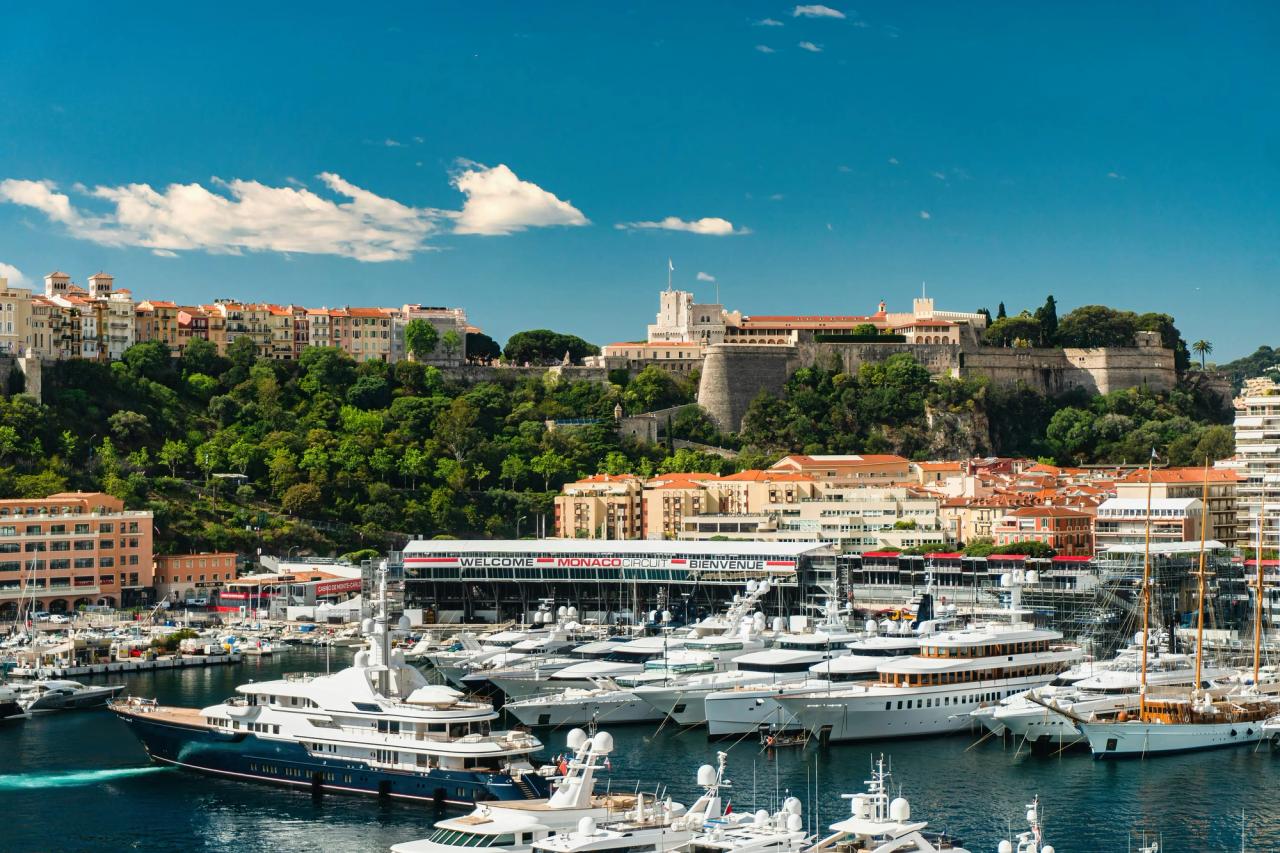
Monaco is the world's second-smallest sovereign state, wedged between the Mediterranean Sea and the French Riviera. Despite covering just 2 km², it packs in roughly 39,000 residents — including the highest density of millionaires and billionaires per capita anywhere on Earth. The principality's headline attraction is its zero personal income tax policy, which has drawn wealthy individuals, entrepreneurs, and high-net-worth professionals for decades. If you are considering a move to Monaco, this guide covers everything from residency permits and housing to healthcare, banking, and daily life in one of the world's most exclusive destinations.
Monaco is de facto part of the Schengen Area through its customs union with France, meaning EU and Schengen nationals can enter freely, and residents enjoy visa-free travel across the Schengen zone. The border with France is open, and most residents commute between the two countries daily.
Monaco at a Glance
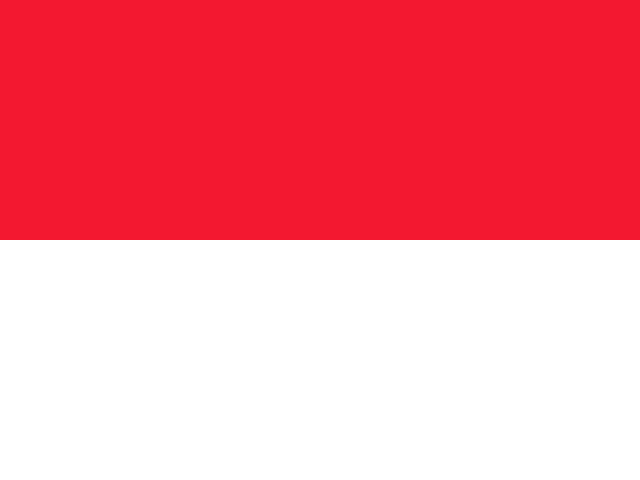
- Population
- ~39,000
- Area
- 2.02 km²
- Capital
- Monaco-Ville
- Currency
- Euro (EUR / €)
- Average Salary
- ~€4,931/month (gross; effectively net — no personal income tax)
- Language
- French (official); Italian, English, and Monégasque widely understood
- Climate
- Mediterranean — hot dry summers (26–30°C), mild winters (8–13°C)
- Time Zone
- CET (UTC+1) / CEST (UTC+2 summer)
- Government
- Constitutional monarchy — Prince Albert II
Why Move to Monaco in 2026
- Zero personal income tax: Monaco levies no personal income tax on most residents (an exception applies to French nationals under a 1963 bilateral treaty). This policy is the single biggest draw for high-net-worth expats and entrepreneurs.
- Exceptional safety: The principality has one of the lowest crime rates in the world, with a visible police presence and extensive CCTV coverage.
- Schengen access: Monaco is de facto part of the Schengen Area through France, allowing residents to travel freely across 27 European countries without border checks.
- World-class healthcare: Residents access the Monegasque social-security system and the broader French healthcare network, offering top-tier medical facilities.
- Mediterranean climate: Over 300 days of sunshine per year, with mild winters and warm summers along the Riviera coast.
- Cultural prestige: Home to the Formula 1 Grand Prix, the Monte-Carlo Casino, world-renowned opera, ballet, and a packed international events calendar.
- Strategic location: Tucked between France and Italy, with Nice Côte d'Azur Airport just 30 minutes away by car.
- Ultra-luxury lifestyle: Michelin-starred restaurants, designer boutiques, superyacht marinas, and private beaches are the everyday backdrop.
Moving Costs to Monaco
Relocation costs depend on shipment volume, transport method, origin country, and optional services such as packing, insurance, and customs handling. Monaco is served by road from France and Italy; sea freight arrives via the port of Nice or Marseille.
| Origin | Estimated Cost Range | Container/Volume |
|---|---|---|
| Within France / Western Europe | €1,200–€3,500 | 20-ft / 10–15 CBM |
| UK / Northern Europe | €2,000–€5,000 | 20-ft / 10–15 CBM |
| North America | €4,500–€9,000 | 20-ft / 10–15 CBM |
| Asia / Middle East | €5,000–€11,000 | 20-ft / 10–15 CBM |
| Australia / Oceania | €6,000–€13,000 | 20-ft / 10–15 CBM |
| Air freight (any origin) | €5.00–€9.50+ per kg | N/A |
Component Costs Explained
- Transportation: €800–€8,000+ depending on distance and method; road freight from France is the cheapest option.
- Insurance: Typically 1–3% of declared shipment value; strongly recommended for luxury items.
- Customs clearance: €200–€600 for standard household goods; higher for restricted or high-value items.
- Packing materials: €100–€400 for professional packing services.
- Storage (if needed): €100–€300/month in secure warehouse facilities near Monaco.
- Administrative fees: €50–€200 for documentation, permits, and coordination.
Need a personalised estimate?
Get three vetted moving-company quotes in under 48 hours.
Visa & Residency Requirements
Monaco is not an EU member state, but it is part of the Schengen Area and maintains an open border with France. Immigration rules differ based on nationality.
For EU / EEA / Swiss Citizens
EU, EEA, and Swiss nationals can enter Monaco without a visa and stay for up to 90 days. To reside long-term, they must apply for a Carte de Séjour (residence permit) through the Service des Résidents at the Monaco Town Hall (Hôtel de Ville).
For Non-EU Nationals
Non-EU nationals must first obtain a long-stay visa (Type D) from the French consulate, as Monaco's consular affairs are handled by France. Once in Monaco, they apply for the Carte de Séjour.
Carte de Séjour (Residence Permit)
The Carte de Séjour is Monaco's residence permit. It is the cornerstone of living legally in the principality.
Requirements for the Carte de Séjour
- Proof of accommodation: A lease agreement or property deed for a residence in Monaco of sufficient size for the applicant (and family). Studio apartments generally do not satisfy this requirement.
- Proof of sufficient funds: Bank statements showing substantial financial resources — typically a minimum balance of €500,000 or verifiable annual income well above average.
- Valid passport: With at least six months' validity remaining.
- Clean criminal record: From your country of origin and any country where you have lived for more than 12 months.
- Health insurance: Comprehensive coverage valid in Monaco.
- Employment contract or business registration (if applicable).
Categories of Carte de Séjour
| Permit Type | Duration | Who It Is For |
|---|---|---|
| Carte de Séjour Temporaire | 1 year (renewable) | New residents, retirees, investors |
| Carte de Séjour Ordinaire | 3 years (renewable) | Residents who have held a temporary permit for at least 12 months |
| Carte de Séjour Privilège | 10 years (renewable) | Long-term residents with a proven track record |
| Carte de Séjour Privilège (renewable indefinitely) | 10 years, renewable | Long-term residents with a proven track record (long-term residency, not to be confused with the Carte d'Identité Monégasque reserved for citizens) |
Application Process (Step-by-Step)
- Secure accommodation in Monaco — this is the first and most critical step.
- Gather documents: passport, proof of address, bank statements, criminal record, health insurance.
- Submit your application to the Service des Étrangers (Foreign Nationals Service) at the Direction de la Sûreté Publique.
- Attend an in-person interview (may be required).
- Receive your Carte de Séjour — processing typically takes 4–8 weeks.
The Déclaration de Résidence
All new residents must complete a Déclaration de Résidence (residence declaration) at the Monaco Town Hall within eight days of moving in. This is Monaco's equivalent of a registration process.
Required Documents
- Valid passport
- Proof of accommodation (lease or property deed)
- Proof of financial means
- Photographs (passport-size)
The Registration Process (Step-by-Step)
- Obtain your lease or property ownership documents.
- Visit the Mairie de Monaco (Monaco Town Hall) with all required documents.
- Complete the Déclaration de Résidence form.
- Receive confirmation of registration — this is needed for banking, healthcare, and other services.
- Update your registration whenever you change address within Monaco.
Finding Housing in Monaco
Monaco has the most expensive real estate market in the world. The principality is entirely urbanized, so there is no suburban option — every square meter is prime property. Apartments dominate the market; houses and villas are virtually nonexistent.
Average Rents by District (2026)
| District | 1-Bedroom | 3-Bedroom | Character |
|---|---|---|---|
| Monte Carlo | €4,000–€8,000+ | €12,000–€25,000+ | Casino district, luxury shopping, nightlife |
| La Condamine | €3,500–€6,500 | €10,000–€20,000 | Port area, markets, vibrant and central |
| Fontvieille | €3,000–€5,500 | €9,000–€18,000 | Residential, quiet, family-friendly, marina |
| Larvotto | €4,000–€7,500 | €11,000–€22,000 | Beachfront, high-end, Mediterranean views |
| Moneghetti | €3,000–€5,000 | €8,000–€16,000 | Hillside, panoramic views, quieter |
| Monaco-Ville (Le Rocher) | €3,500–€6,000 | €10,000–€19,000 | Old town, palace, cathedral, historic charm |
Monégasque Housing Terminology
- Loyer (Rent): The base rent amount.
- Charges (Service charges): Monthly building maintenance fees, typically €200–€600, sometimes included in rent.
- Dépôt de garantie (Security deposit): Usually 3 months' rent, returned at lease end minus any damages.
- Bail (Lease agreement): Standard leases run 12 months, often with a 3-year renewal option.
- Meublé (Furnished): Furnished apartments command a 10–20% premium over unfurnished.
How to Find Housing
Online Platforms:
- Monaco Propriétés: The leading local real estate portal with extensive listings.
- Barnes Monaco: High-end international agency specializing in luxury Monaco properties.
- Monacochannel.mc: Local portal with rental and purchase listings.
Local Resources:
- Licensed immobilier (estate agents) in Monte Carlo and La Condamine.
- Monaco Real Estate Chamber listings.
- Word-of-mouth through expat networks and private banking contacts.
Tips for Foreigners Finding Housing
- Budget generously — even modest Monaco apartments cost more than luxury properties in most European capitals.
- Act quickly: turnover is limited, and desirable units are rented within days.
- Have bank statements and references ready before viewing; landlords verify financial standing rigorously.
- Consider Fontvieille or Moneghetti for slightly lower rents while remaining within the principality.
- Engage a local immobilier who can access off-market listings.
Rental Agreement & Legal Protection
Leases are governed by Monegasque civil law. Tenants have protections including mandatory written lease terms, regulated deposit handling, and eviction procedures that require court involvement. Notice periods are typically 3 months for tenants and 6 months for landlords.
Warning: Rental Scams
Monaco's ultra-high rents make it a target for sophisticated scams. Never wire money before viewing a property in person. Verify ownership through the Monaco Land Registry (Conservation Hypothécaire). Use only licensed estate agents. Be skeptical of listings priced significantly below market — in Monaco, that is the surest red flag.
Healthcare & Insurance
Monaco offers one of the best healthcare systems in Europe. The principality runs its own public social-security system, and residents also have full access to the French healthcare network due to bilateral agreements.
Public Health Insurance
Caisses Sociales de Monaco
- Cost: Contributions are split between employer and employee — roughly 15–17% of gross salary total.
- Coverage: GP visits, specialist consultations, hospital stays, prescriptions, maternity care, dental basics, and rehabilitation.
- Eligibility: All employed and self-employed residents; retirees who have contributed sufficiently.
- Best for: Anyone working in Monaco — coverage is comprehensive and mandatory.
Private Health Insurance
Mutuelle / Complémentaire
- Cost: €50–€200/month depending on coverage level.
- Coverage: Tops up public insurance to cover private hospital rooms, advanced dental, optical, and non-reimbursed treatments.
- Eligibility: Available to all residents; recommended for full coverage.
- Best for: Expats who want gap-free coverage and access to private clinics.
Top Insurance Providers
- CPAM (Caisse Primaire d'Assurance Maladie): French social security body — accessible to Monaco residents who work in France or through bilateral agreements.
- MGEN: Popular mutual insurer with comprehensive expat-friendly plans.
- April International: Specialist expat health insurance with global coverage options.
Getting Healthcare Coverage (Timeline)
-
Register with the Caisses Sociales de Monaco upon starting employment or establishing residency.
-
Receive your Carte Vitale equivalent (social security card) — usually within 4–6 weeks.
-
Choose a mutuelle (top-up insurer) to complement public coverage.
-
Register with a GP (médecin traitant) in Monaco or nearby France.
Out-of-Pocket Costs
- GP visit: €25–€35 (largely reimbursed by public insurance)
- Specialist visit: €50–€120
- Prescriptions: 15–65% reimbursed depending on the medication
- Dental cleaning: €40–€80
- Hospital (per day, public): Covered by insurance; private room supplement €100–€300/day
Get a personalised relocation plan
Drop your email and we'll send a tailored checklist plus three quotes from vetted movers.
Banking & Finance
Monaco is a global private banking hub. Opening a bank account is a prerequisite for residency and daily life.
Opening a Bank Account
- When: As soon as you have proof of accommodation — a bank account is required for the Carte de Séjour application.
- Required documents: Valid passport, proof of Monaco address, proof of income or wealth, reference letters from existing banks.
- Top banks for expats:
- CFM Monaco (Compagnie Financière Monégasque): Major local bank with full retail and private banking services.
- Banque de Monte-Carlo: Prestigious institution offering wealth management and everyday banking.
- Barclays Monaco: International bank with English-language services, ideal for British and Anglophone expats.
- Société Générale Private Banking Monaco: Part of the French banking group, strong in investment management.
- HSBC Private Bank Monaco: Global network, specialized in international wealth structuring.
Getting Your Tax Identification Number (TIN)
- What it is: The Numéro d'Identification Fiscale issued by the Direction des Services Fiscaux (DSF — Monaco Tax Administration).
- When issued: After registering your residence and, if applicable, starting employment.
- Why you need it: Required for employment, banking, tax filings, and any interaction with Monegasque fiscal authorities.
Bank Account Features & Costs
- Monthly account maintenance: €10–€30 (often waived for high-balance accounts)
- Debit card: Typically included; Visa or Mastercard branded
- Credit card: Available from most banks; limits tied to deposits or income
- International transfers: €15–€40 per transfer; SEPA transfers often free
- Online and mobile banking: Standard at all major banks
Payment Culture
Monaco follows French payment norms. Credit and debit cards (especially Visa and Mastercard) are accepted everywhere. Contactless and mobile payments (Apple Pay, Google Pay) are widespread. Cash is still used in markets and smaller establishments but is not essential for daily life.
Cost of Living in Monaco
Monaco is consistently ranked among the most expensive places on Earth. The primary cost driver is housing, which accounts for the majority of monthly expenditure.
Monthly Budget Breakdown (2026)
| Category | One Person | Family of 3 |
|---|---|---|
| Rent (1-bed / 3-bed) | €4,000–€7,000 | €10,000–€20,000 |
| Utilities (electricity, water, heating) | €150–€300 | €250–€500 |
| Internet & mobile | €50–€80 | €80–€120 |
| Groceries | €400–€700 | €900–€1,500 |
| Dining out (moderate) | €300–€600 | €500–€1,000 |
| Public transport | €22 | €44–€66 |
| Private health insurance (mutuelle) | €50–€200 | €150–€500 |
| Leisure & entertainment | €200–€500 | €400–€800 |
| Total | €5,172–€9,402 | €12,324–€24,486 |
Detailed Cost Breakdown
Housing:
- 1-bedroom apartment (city centre): €4,000–€8,000/month
- 3-bedroom apartment (city centre): €10,000–€25,000/month
- Utilities: €150–€500/month
- Internet + TV: €40–€80/month
Groceries & Food:
- Weekly groceries (1 person): €100–€175
- Restaurant meal (casual): €20–€40
- Restaurant meal (mid-range): €60–€120 per person
- Fine dining: €150–€500+ per person
Transportation:
- Monthly public transport pass (Bus): ~€22
- Taxi within Monaco: €15–€25
- Car parking (monthly garage): €200–€400
- Fuel (per litre): €1.80–€2.10
Insurance & Healthcare:
- Public health contributions: Mandatory via employer (~15–17% of salary)
- Private mutuelle: €50–€200/month
Leisure & Entertainment:
- Gym membership: €80–€200/month
- Cinema ticket: €12–€18
- Yacht berth rental (annual): €20,000–€100,000+
Comparison with Nearby Cities
- vs Nice (France): Monaco is 2–3× more expensive, primarily due to rent.
- vs Paris (France): Monaco rents are 50–100% higher; daily expenses are comparable.
- vs London (UK): Monaco rents are higher, but zero income tax often offsets the difference for high earners.
Language & Culture Tips
Do You Need French?
French is the dominant language in Monaco — it is used in government, schools, business, and daily life. While English is spoken in hotels, banks, and international business settings, learning French is strongly recommended for full social integration and navigating administrative processes.
French Levels (CEFR)
- A1 (Beginner): Basic greetings and transactions — achievable in 2–3 months of study.
- A2 (Elementary): Simple conversations, shopping, directions — 4–6 months.
- B1 (Intermediate): Discuss everyday topics, handle bureaucracy — 8–12 months.
- B2 (Upper Intermediate): Professional fluency, nuanced social interaction — 12–18 months.
Language Learning Resources
- Alliance Française de Monaco: French courses specifically for expats.
- Institut de Langues Monégasque: Language school with group and private lessons.
- Duolingo / Babbel: Useful for building vocabulary before arrival.
Monégasque Terms to Know
- Monégasque: The demonym for a citizen of Monaco, and the name of the local dialect (a Ligurian language).
- Commune: Monaco's single municipality — the entire principality is one commune.
- Le Rocher: "The Rock" — the historic headland where Monaco-Ville (the old town, palace, and cathedral) sit.
- Le Rocher also colloquially refers to the Monaco-Ville district.
- La Roca: The Monégasque dialect name for Le Rocher.
- Fogolar: The Monégasque word for the traditional hearth — a symbol of local identity.
- Ballets de Monte-Carlo: The famous resident ballet company.
- Yacht Club de Monaco (YCM): The prestigious yacht club founded in 1953; a key social hub.
- Direction de la Sûreté Publique: Monaco's police and public security directorate.
- Hôtel de Ville: The Town Hall — your first stop for residence declarations.
Cultural Norms & Etiquette
Formality and dress:
- Monaco is formal. Smart casual is the minimum in restaurants, shops, and public spaces.
- The casino enforces a strict dress code: jacket required for men in the private rooms.
- Business attire is expected in banking, law, and finance.
Social etiquette:
- Greetings involve a handshake in business settings; cheek-kissing (la bise — two kisses, left cheek first) is standard among acquaintances.
- Punctuality is important in professional contexts.
- Tipping is included in service charges, but rounding up or leaving 5–10% for excellent service is appreciated.
Events and social life:
- The Formula 1 Monaco Grand Prix (late May) transforms the city — expect road closures, noise, and sky-high hospitality prices.
- The Monte-Carlo Rally (January), Monaco Yacht Show (September), and Monte-Carlo Rolex Masters (April) are major social anchors.
- Gala season peaks in winter, with charity balls and opera openings being key networking opportunities.
Social Integration
- Yacht Club de Monaco: Membership is prestigious and a major social gateway.
- Monte-Carlo Country Club: Tennis, squash, and networking.
- English-Speaking Club of Monaco: Active expat community with regular events.
- Rotary Club of Monaco: Business and philanthropic networking.
- International School of Monaco and Lycée Albert 1er: Key for families with children — school communities are tight-knit.
Moving Checklist
- Research Monaco residency requirements and begin gathering Carte de Séjour documents.
- Secure proof of accommodation — start searching for apartments immediately.
- Obtain criminal record certificates from all countries of residence.
- Contact international movers for quotes; request in-home or video surveys.
- Begin or intensify French language study.
- Sign your Monaco lease and obtain proof of address.
- Compile bank statements showing sufficient financial resources.
- Arrange comprehensive health insurance valid in Monaco.
- Confirm your moving date and book the chosen mover.
- Notify your current bank and utility providers of your departure.
- Submit your Carte de Séjour application to the Service des Étrangers (or begin the visa process with the French consulate if non-EU).
- Ship or carry essential documents: passport, birth certificate, marriage certificate, diplomas, medical records.
- Arrange pet relocation: microchip, rabies vaccination, EU pet passport.
- Cancel or transfer subscriptions, memberships, and mail forwarding.
- Confirm delivery details with your moving company.
- Pack a personal essentials bag (documents, medications, valuables, 2–3 days of clothing).
- Exchange currency or ensure your bank cards work internationally.
- Download offline maps of Monaco and the French Riviera.
- Complete the Déclaration de Résidence at the Mairie de Monaco within 8 days.
- Open a Monaco bank account (CFM Monaco, Banque de Monte-Carlo, or Barclays Monaco).
- Register with the Caisses Sociales de Monaco (social security) if employed.
- Obtain a local SIM card (Monaco Telecom or French providers with Riviera coverage).
- Receive confirmation of your Carte de Séjour application.
- Register with a GP in Monaco or nearby France.
- Set up utilities: electricity (SMEG), water, internet (Monaco Telecom).
- Explore your quartier (district): nearest supermarket, pharmacy, post office.
- Choose a mutuelle (private health top-up insurer).
- Apply for your Tax Identification Number (TIN) at the Direction des Services Fiscaux.
- Enroll children in school if applicable (International School of Monaco or public options).
- Attend an expat networking event to begin building your social circle.
- Familiarize yourself with the Monaco bus network (6 routes). Free travel is available during major events.
Where to Find Tools and Resources
ReloAdvisor Tools:
- Volume calculator
- Video survey
- Moving cost calculator
Official Monaco Resources:
- Monaco Government Portal: www.gouv.mc
- Direction de la Sûreté Publique (residency): www.gouv.mc/Citoyens
- Monaco Tax Administration (DSF): www.gouv.mc/Finances
Expat Communities:
- English-Speaking Club of Monaco
- InterNations Monaco
- Monaco Life (local English-language news and community): www.monacolife.net
Related Guides:
- Moving to France
- Moving to the French Riviera
- Moving to Switzerland