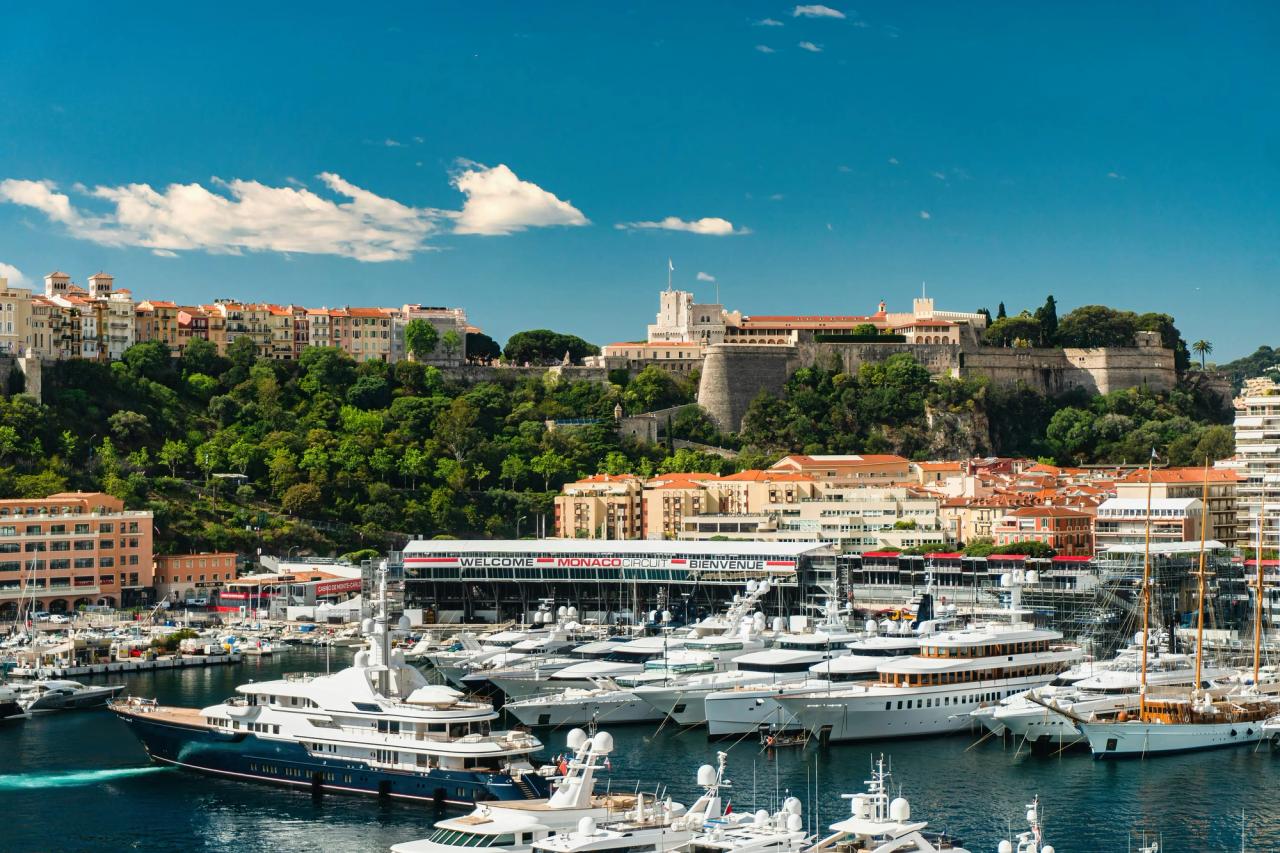
Mónaco es el segundo estado soberano más pequeño del mundo, ubicado entre el mar Mediterráneo y la Riviera francesa. A pesar de cubrir sólo 2 km², alberga aproximadamente 39.000 residentes, incluida la mayor densidad de millonarios y multimillonarios per cápita de cualquier lugar de la Tierra. El principal atractivo del principado es su política de cero impuestos sobre la renta personal, que ha atraído a personas ricas, empresarios y profesionales de alto patrimonio durante décadas. Si está considerando mudarse a Mónaco, esta guía cubre todo, desde permisos de residencia y vivienda hasta atención médica, banca y vida diaria en uno de los destinos más exclusivos del mundo.
Mónaco es de facto parte del Área Schengen a través de su unión aduanera con Francia, lo que significa que los nacionales de la UE y Schengen pueden ingresar libremente, y los residentes disfrutan de viajar sin visa a través de la zona Schengen. La frontera con Francia está abierta y la mayoría de los residentes viajan diariamente entre los dos países.
Monaco de un vistazo
- Poblacion
- ~39,000
- Área
- 2,02 km²
- capital
- Mónaco-Ville
- Moneda
- Euros (EUR/€)
- Salario promedio
- ~4.931€/mes (bruto; efectivamente neto, sin impuesto sobre la renta personal)
- Idioma
- francés (oficial); Italiano, inglés y monegasco ampliamente comprendidos.
- Clima
- Mediterráneo: veranos calurosos y secos (26-30 °C), inviernos suaves (8-13 °C)
- Zona horaria
- CET (UTC+1) / CEST (UTC+2 verano)
- Gobierno
- Desventajastitutional monarchy — Prince Albert II
¿Por qué mudarse a Mónaco en 2026?
- Impuesto sobre la renta personal cero: Mónaco no aplica ningún impuesto sobre la renta personal a la mayoría de los residentes (se aplica una excepción a los nacionales franceses en virtud de un tratado bilateral de 1963). Esta política es el mayor atractivo para los expatriados y empresarios de alto patrimonio.
- Seguridad excepcional: el principado tiene una de las tasas de criminalidad más bajas del mundo, con una presencia policial visible y una amplia cobertura de CCTV.
- Acceso Schengen: Mónaco es de facto parte del Área Schengen a través de Francia, lo que permite a los residentes viajar libremente a través de 27 países europeos sin controles fronterizos.
- Atención médica de primer nivel: los residentes acceden al sistema de seguridad social monegasco y a la red de atención médica francesa más amplia, que ofrece instalaciones médicas de primer nivel.
- Clima mediterráneo: Más de 300 días de sol al año, con inviernos suaves y veranos cálidos a lo largo de la costa de la Riviera.
- Prestigio cultural: sede del Gran Premio de Fórmula 1, el Casino de Montecarlo, ópera y ballet de renombre mundial y un calendario repleto de eventos internacionales.
- Ubicación estratégica: Ubicado entre Francia e Italia, con el aeropuerto de Niza Costa Azul a sólo 30 minutos en coche.
- Estilo de vida de ultralujo: restaurantes con estrellas Michelin, boutiques de diseñadores, puertos deportivos para superyates y playas privadas son el telón de fondo cotidiano.
Costos de mudanza a Mónaco
Los costos de reubicación dependen del volumen del envío, el método de transporte, el país de origen y los servicios opcionales como embalaje, seguro y manejo de aduanas. A Mónaco se llega por carretera desde Francia e Italia; El transporte marítimo llega a través del puerto de Niza o de Marsella.
| Origen | Rango de costos estimado | Contenedor/Volumen |
|---|---|---|
| Dentro de Francia/Europa Occidental | €1,200–€3,500 | 20 pies / 10–15 CBM |
| Reino Unido / Norte de Europa | €2,000–€5,000 | 20 pies / 10–15 CBM |
| América del Norte | €4,500–€9,000 | 20 pies / 10–15 CBM |
| Asia/Medio Oriente | €5,000–€11,000 | 20 pies / 10–15 CBM |
| Australia / Oceanía | €6,000–€13,000 | 20 pies / 10–15 CBM |
| Transporte aéreo (cualquier origen) | 5,00 €–9,50 €+ por kg | N/A |
Explicación de los costos de los componentes
- Transporte: 800€–8000+€ dependiendo de la distancia y el método; El transporte por carretera desde Francia es la opción más barata.
- Seguro: normalmente entre el 1% y el 3% del valor del envío declarado; Muy recomendado para artículos de lujo.
- Despacho de aduana: entre 200 y 600 euros para artículos domésticos estándar; más alto para artículos restringidos o de alto valor.
- Materiales de embalaje: 100€-400€ para servicios de embalaje profesionales.
- Almacenamiento (si es necesario): entre 100 y 300 € al mes en un almacén seguro cerca de Mónaco.
- Gastos administrativos: 50€-200€ por documentación, permisos y coordinación.
¿Necesita un presupuesto personalizado?
Obtenga tres cotizaciones examinadas de empresas de mudanzas en menos de 48 horas.
Requisitos de visa y residencia
Mónaco no es un estado miembro de la UE, pero forma parte del Espacio Schengen y mantiene una frontera abierta con Francia. Las reglas de inmigración difieren según la nacionalidad.
Para ciudadanos de la UE / EEE / Suiza
Los ciudadanos de la UE, el EEE y Suiza pueden ingresar a Mónaco sin visa y permanecer hasta 90 días. Para residir a largo plazo, deben solicitar una Carte de Séjour (permiso de residencia) a través del Service des Résidents del Ayuntamiento de Mónaco (Hôtel de Ville).
Para ciudadanos no pertenecientes a la UE
Los nacionales de países no pertenecientes a la UE deben obtener primero un visado para estancias de larga duración (Tipo D) en el consulado francés, ya que los asuntos consulares de Mónaco los gestiona Francia. Una vez en Mónaco, solicitan la Carte de Séjour.
Carta de Séjour (Permiso de Residencia)
La Carte de Séjour es el permiso de residencia en Mónaco. Es la piedra angular para vivir legalmente en el principado.
Requisitos para la Carta de Séjour
- Prueba de alojamiento: Un contrato de arrendamiento o un título de propiedad de una residencia en Mónaco de tamaño suficiente para el solicitante (y su familia). Los apartamentos tipo estudio generalmente no cumplen con este requisito.
- Prueba de fondos suficientes: extractos bancarios que muestren recursos financieros sustanciales (normalmente un saldo mínimo de 500 000 € o ingresos anuales verificables muy por encima del promedio).
- Pasaporte vigente: Con al menos seis meses de vigencia restantes.
- Antecedentes penales limpios: De su país de origen y de cualquier país donde haya vivido por más de 12 meses.
- Seguro médico: Cobertura a todo riesgo válida en Mónaco.
- Contrato de trabajo o registro empresarial (si aplica).
Categorías de Carta de Séjour
| Tipo de permiso | Duración | ¿Para quién es? |
|---|---|---|
| Carta de Séjour Temporaire | 1 año (renovable) | Nuevos residentes, jubilados, inversores. |
| Carta de Séjour Ordinaria | 3 años (renovable) | Residentes que hayan tenido un permiso temporal durante al menos 12 meses |
| Tarjeta de Séjour Privilège | 10 años (renovable) | Residentes de larga duración con trayectoria comprobada |
| Carte de Séjour Privilège (renovable indefinidamente) | 10 años, renovable | Residentes de larga duración con experiencia acreditada (residencia de larga duración, que no debe confundirse con la Carte d'Identité Monégasque reservada a los ciudadanos) |
Proceso de solicitud (paso a paso)
- Alojamiento seguro en Mónaco: este es el primer paso y el más importante.
- Reunir documentos: pasaporte, comprobante de domicilio, extractos bancarios, antecedentes penales, seguro médico.
- Envíe su solicitud al Service des Étrangers (Servicio de Extranjeros) en la Direction de la Sûreté Publique.
- Asista a una entrevista en persona (puede ser necesario).
- Reciba su Carte de Séjour: el procesamiento suele tardar entre 4 y 8 semanas.
La Declaración de Residencia
Todos los nuevos residentes deben completar una Déclaration de Résidence (declaración de residencia) en el Ayuntamiento de Mónaco dentro de los ocho días posteriores a la mudanza. Este es el equivalente en Mónaco a un proceso de registro.
Documentos requeridos
- Pasaporte válido
- Prueba de alojamiento (arrendamiento o escritura de propiedad)
- Prueba de medios económicos
- Fotografías (tamaño pasaporte)
El proceso de registro (paso a paso)
- Obtenga sus documentos de arrendamiento o propiedad.
- Visite la Mairie de Monaco (Ayuntamiento de Mónaco) con todos los documentos requeridos.
- Complete el formulario de Déclaration de Résidence.
- Reciba la confirmación del registro: esto es necesario para servicios bancarios, de atención médica y otros servicios.
- Actualice su registro cada vez que cambie de dirección dentro de Mónaco.
Encontrar vivienda en Mónaco
Mónaco tiene el mercado inmobiliario más caro del mundo. El principado está completamente urbanizado, por lo que no existe la opción suburbana: cada metro cuadrado es una propiedad de primera. Los apartamentos dominan el mercado; casas y villas son prácticamente inexistentes.
Alquileres promedio por distrito (2026)
| Distrito | 1 dormitorio | 3 dormitorios | Personaje |
|---|---|---|---|
| Montecarlo | €4,000–€8,000+ | €12,000–€25,000+ | Distrito de casinos, tiendas de lujo, vida nocturna |
| La Condamine | €3,500–€6,500 | €10,000–€20,000 | Zona portuaria, mercados, vibrante y céntrica. |
| Fontvieille | €3,000–€5,500 | €9,000–€18,000 | Residencial, tranquilo, ideal para familias, puerto deportivo. |
| Larvotto | €4,000–€7,500 | €11,000–€22,000 | Primera línea de playa, lujo, vistas al Mediterráneo. |
| Moneghetti | €3,000–€5,000 | €8,000–€16,000 | Ladera, vistas panorámicas, más tranquila. |
| Mónaco-Ville (Le Rocher) | €3,500–€6,000 | €10,000–€19,000 | Casco antiguo, palacio, catedral, encanto histórico |
Monégasque Vivienda Terminology
- Loyer (alquiler): el importe del alquiler base.
- Cargos (cargos por servicio): tarifas mensuales de mantenimiento del edificio, normalmente entre 200 y 600 €, a veces incluidas en el alquiler.
- Dépôt de garantie (Depósito de seguridad): normalmente 3 meses de alquiler, devuelto al finalizar el contrato de arrendamiento menos cualquier daño.
- Fianza (contrato de arrendamiento): Los arrendamientos estándar tienen una duración de 12 meses, a menudo con una opción de renovación de 3 años.
- Meublé (amueblado): los apartamentos amueblados tienen una prima del 10 al 20 % sobre los no amueblados.
How to Find Vivienda
Plataformas en línea:
- Monaco Propriétés: el portal inmobiliario local líder con listados extensos.
- Barnes Monaco: agencia internacional de alto nivel especializada en propiedades de lujo en Mónaco.
- Monacochannel.mc: Portal local con listados de alquiler y compra.
Recursos locales:
- Inmobilier autorizado (agentes inmobiliarios) en Monte Carlo y La Condamine.
- Listados de la Cámara de Bienes Raíces de Mónaco.
- Boca a boca a través de redes de expatriados y contactos de banca privada.
Consejos para extranjeros que buscan vivienda
- Haga un presupuesto generoso: incluso los apartamentos modestos en Mónaco cuestan más que las propiedades de lujo en la mayoría de las capitales europeas.
- Actúe rápidamente: la rotación es limitada y las unidades deseadas se alquilan en cuestión de días.
- Tenga extractos bancarios y referencias listos antes de verlos; Los propietarios verifican rigurosamente la situación financiera.
- Desventajasider Fontvieille or Moneghetti for slightly lower rents while remaining within the principality.
- Contrate a un inmobiliario local que pueda acceder a listados fuera del mercado.
Contrato de alquiler y protección legal
Los arrendamientos se rigen por el derecho civil monegasco. Los inquilinos tienen protecciones que incluyen términos de arrendamiento escritos obligatorios, manejo de depósitos regulados y procedimientos de desalojo que requieren la participación de los tribunales. Los períodos de notificación suelen ser de 3 meses para los inquilinos y de 6 meses para los propietarios.
Advertencia: estafas de alquiler
Los alquileres extremadamente altos de M?naco lo convierten en un objetivo para estafas sofisticadas. Nunca transfiera dinero antes de visitar una vivienda en persona. Verifique la propiedad a trav?s del registro inmobiliario de M?naco (Conservation Hypoth?caire). Use solo agentes inmobiliarios autorizados. Desconf?e de anuncios con precios muy por debajo del mercado; en M?naco, esa es la se?al de alarma m?s clara.
Sanidad y seguro
Mónaco ofrece uno de los mejores sistemas sanitarios de Europa. El principado gestiona su propio sistema público de seguridad social y los residentes también tienen pleno acceso a la red sanitaria francesa gracias a acuerdos bilaterales.
Seguro de salud pública
Cajas Sociales de Mónaco
- Costo: las contribuciones se dividen entre el empleador y el empleado: aproximadamente entre el 15% y el 17% del salario bruto total.
- Cobertura: visitas al médico de cabecera, consultas de especialistas, estancias hospitalarias, recetas, atención de maternidad, conceptos básicos de odontología y rehabilitación.
- Elegibilidad: todos los residentes empleados y autónomos; jubilados que hayan cotizado lo suficiente.
- Mejor para: cualquier persona que trabaje en M?naco ? la cobertura es completa y obligatoria.
Seguro médico privado
Mutuelle / Complémentaire
- Coste: 50€-200€/mes dependiendo del nivel de cobertura.
- Cobertura: Complementa el seguro público para cubrir habitaciones de hospitales privados, tratamientos dentales, ópticos avanzados y tratamientos no reembolsables.
- Elegibilidad: Disponible para todos los residentes; Recomendado para una cobertura completa.
- Mejor para: Expats who want gap-free coverage and access to private clinics.
Principales proveedores de seguros
- CPAM (Caisse Primaire d'Assurance Maladie): organismo de seguridad social francés, accesible a los residentes de Mónaco que trabajan en Francia o mediante acuerdos bilaterales.
- MGEN: mutua de seguros popular con planes integrales para expatriados.
- Abril Internacional: Seguro de salud especializado para expatriados con opciones de cobertura global.
Getting Sanidad Coverage (Timeline)
-
Regístrese en las Caisses Sociales de Monaco al iniciar un empleo o establecer su residencia.
-
Reciba su equivalente a Carte Vitale (tarjeta de seguro social), generalmente dentro de 4 a 6 semanas.
-
Elija una mutua (aseguradora complementaria) para complementar la cobertura pública.
-
Regístrese con un médico de cabecera (médecintreatment) en Mónaco o en la cercana Francia.
Costos de bolsillo
- Visita al médico de cabecera: 25-35 € (reembolsado en gran parte por el seguro público)
- Visita al especialista: 50€–120€
- Recetas: 15-65% reembolsado según el medicamento
- Limpieza dental: 40€–80€
- Hospital (por día, público): Cubierto por el seguro; Suplemento habitación privada 100€–300€/día
Obtenga un plan de reubicación personalizado
Envíe su correo electrónico y le enviaremos una lista de verificación personalizada más tres cotizaciones de empresas de mudanzas examinadas.
Banca y finanzas
Mónaco es un centro mundial de banca privada. Abrir una cuenta bancaria es un requisito previo para la residencia y la vida diaria.
Abrir una cuenta bancaria
- Cuándo: Tan pronto como tenga un comprobante de alojamiento, se requiere una cuenta bancaria para la solicitud de Carte de Séjour.
- Documentos requeridos: Pasaporte válido, comprobante de dirección en Mónaco, comprobante de ingresos o riqueza, cartas de referencia de bancos existentes.
- Los mejores bancos para expatriados:
- CFM Monaco (Compagnie Financière Monégasque): importante banco local con servicios completos de banca minorista y privada.
- Banque de Monte-Carlo: prestigiosa institución que ofrece gestión patrimonial y banca cotidiana.
- Barclays Monaco: banco internacional con servicios en inglés, ideal para expatriados británicos y anglófonos.
- Société Générale Private Banking Monaco: Parte del grupo bancario francés, fuerte en la gestión de inversiones.
- HSBC Private Bank Monaco: Red global, especializada en estructuración patrimonial internacional.
Obtener su número de identificación fiscal (TIN)
- Qué es: El Numéro d'Identification Fiscale emitido por la Direction des Services Fiscaux (DSF – Administración Tributaria de Mónaco).
- Cuándo se emite: Después de registrar su residencia y, si corresponde, de comenzar a trabajar.
- Por qué lo necesita: Necesario para el empleo, la banca, las declaraciones de impuestos y cualquier interacción con las autoridades fiscales monegascas.
Características y costos de la cuenta bancaria
- Mantenimiento de cuenta mensual: entre 10 y 30 € (a menudo no se aplica en cuentas con saldo elevado)
- Debit card: Typically included; Visado or Mastercard branded
- Tarjeta de crédito: Disponible en la mayoría de los bancos; límites ligados a depósitos o ingresos
- Transferencias internacionales: 15€–40€ por transferencia; Las transferencias SEPA suelen ser gratuitas
- Banca en línea y móvil: estándar en todos los bancos principales
Cultura de pago
Mónaco sigue las normas de pago francesas. Se aceptan tarjetas de crédito y débito (especialmente Visa y Mastercard) en todas partes. Los pagos móviles y sin contacto (Apple Pay, Google Pay) están muy extendidos. El efectivo todavía se utiliza en mercados y establecimientos más pequeños, pero no es esencial para la vida diaria.
Coste de vida en Mónaco
Mónaco figura constantemente entre los lugares más caros de la Tierra. El principal generador de costos es la vivienda, que representa la mayor parte del gasto mensual.
Desglose del presupuesto mensual (2026)
| categoría | una persona | familia de 3 |
|---|---|---|
| Alquiler (1 hab / 3 hab) | €4,000–€7,000 | €10,000–€20,000 |
| Servicios públicos (electricidad, agua, calefacción) | €150–€300 | €250–€500 |
| Internet y móvil | €50–€80 | €80–€120 |
| comestibles | €400–€700 | €900–€1,500 |
| Salir a cenar (moderado) | €300–€600 | €500–€1,000 |
| Transporte público | €22 | €44–€66 |
| Seguro médico privado (mutuelle) | €50–€200 | €150–€500 |
| Ocio y entretenimiento | €200–€500 | €400–€800 |
| totales | €5,172–€9,402 | €12,324–€24,486 |
Desglose de costos detallado
Vivienda:
- Apartamento de 1 dormitorio (centro ciudad): 4.000€–8.000€/mes
- Piso de 3 habitaciones (centro ciudad): 10.000€–25.000€/mes
- Servicios públicos: 150€-500€/mes
- Internet + TV: 40€–80€/mes
Abarrotes y comida:
- Compra semanal (1 persona): 100€–175€
- Comida en restaurante (informal): 20€–40€
- Comida en restaurante (gama media): 60€-120€ por persona
- Cena elegante: entre 150 y 500 € o más por persona
Transporte:
- Abono transporte público mensual (Autobús): ~22€
- Taxi dentro de Mónaco: 15€–25€
- Aparcamiento (garaje mensual): 200€–400€
- Combustible (por litro): 1,80€–2,10€
Insurance & Sanidad:
- Contribuciones a la salud pública: obligatorias a través del empleador (~15-17% del salario)
- Mutuelle privada: 50€–200€/mes
Ocio y entretenimiento:
- Membresía de gimnasio: 80€–200€/mes
- Entrada de cine: 12€–18€
- Alquiler de amarre para yates (anual): 20 000 €-100 000 €+
Comparación con ciudades cercanas
- vs Niza (Francia): Mónaco es entre 2 y 3 veces más caro, principalmente debido al alquiler.
- vs París (Francia): los alquileres en Mónaco son entre un 50% y un 100% más altos; Los gastos diarios son comparables.
- vs Londres (Reino Unido): los alquileres en Mónaco son más altos, pero el impuesto sobre la renta nulo a menudo compensa la diferencia para las personas con mayores ingresos.
Consejos de idioma y cultura
¿Necesitas francés?
El francés es el idioma dominante en Mónaco: se utiliza en el gobierno, las escuelas, los negocios y la vida diaria. Si bien se habla inglés en hoteles, bancos y entornos de negocios internacionales, se recomienda encarecidamente aprender francés para una integración social total y para afrontar los procesos administrativos.
Niveles de francés (MCER)
- A1 (Principiante): Saludos y transacciones básicos, que se pueden lograr en 2 a 3 meses de estudio.
- A2 (Elemental): Conversaciones sencillas, compras, direcciones: 4 a 6 meses.
- B1 (Intermedio): discutir temas cotidianos, manejar la burocracia: 8 a 12 meses.
- B2 (intermedio superior): fluidez profesional, interacción social matizada: 12 a 18 meses.
Idioma Learning Resources
- Alliance Française de Monaco: cursos de francés específicos para expatriados.
- Institut de Langues Monégasque: Idioma school with group and private lessons.
- Duolingo/Babbel: útil para desarrollar vocabulario antes de llegar.
Términos monegascos que debe conocer
- Monégasque: demonio de un ciudadano de Mónaco y nombre del dialecto local (una lengua de Liguria).
- Comuna: único municipio de Mónaco; todo el principado es una sola comuna.
- Le Rocher: "La Roca", el promontorio histórico donde se encuentra Monaco-Ville (el casco antiguo, el palacio y la catedral).
- Le Rocher también se refiere coloquialmente al distrito de Monaco-Ville.
- La Roca: nombre en dialecto monegasco de Le Rocher.
- Fogolar: palabra monegasca para hogar tradicional, símbolo de identidad local.
- Ballets de Monte-Carlo: la famosa compañía de ballet residente.
- Yacht Club de Monaco (YCM): El prestigioso club náutico fundado en 1953; un centro social clave.
- Direction de la Sûreté Publique: Dirección de policía y seguridad pública de Mónaco.
- Hôtel de Ville: El Ayuntamiento: su primera parada para las declaraciones de residencia.
Normas culturales y etiqueta
Formalidad y vestimenta:
- Mónaco es formal. El estilo informal elegante es lo mínimo en restaurantes, tiendas y espacios públicos.
- El casino aplica un estricto código de vestimenta: se requiere chaqueta para los hombres en las salas privadas.
- Se espera vestimenta de negocios en banca, derecho y finanzas.
Etiqueta social:
- Los saludos implican un apretón de manos en entornos comerciales; Besar las mejillas (la bise: dos besos, primero la mejilla izquierda) es algo habitual entre los conocidos.
- La puntualidad es importante en contextos profesionales.
- La propina está incluida en los cargos por servicio, pero se agradece redondear hacia arriba o dejar entre un 5% y un 10% por un servicio excelente.
Eventos y vida social:
- El Gran Premio de Mónaco de Fórmula 1 (finales de mayo) transforma la ciudad: espere cierres de carreteras, ruido y precios de hospitalidad altísimos.
- El Rally de Montecarlo (enero), el Salón Náutico de Mónaco (septiembre) y el Monte-Carlo Rolex Masters (abril) son importantes anclas sociales.
- La temporada de gala alcanza su punto máximo en invierno, y los bailes benéficos y las inauguraciones de ópera son oportunidades clave para establecer contactos.
Integración Social
- Yacht Club de Monaco: la membresía es prestigiosa y una importante puerta de entrada social.
- Monte-Carlo Country Club: tenis, squash y networking.
- Club de habla inglesa de Mónaco: comunidad activa de expatriados con eventos regulares.
- Club Rotario de Mónaco: establecimiento de contactos empresariales y filantrópicos.
- Escuela Internacional de Mónaco y Lycée Albert 1er: clave para familias con niños: las comunidades escolares están muy unidas.
Lista de verificación de mudanzas
- Investigue los requisitos de residencia en Mónaco y comience a recopilar documentos Carte de Séjour.
- Prueba de alojamiento segura: empiece a buscar apartamentos inmediatamente.
- Obtener certificados de antecedentes penales de todos los países de residencia.
- Póngase en contacto con empresas de mudanzas internacionales para obtener cotizaciones; Solicite encuestas a domicilio o por video.
- Iniciar o intensificar el estudio del idioma francés.
- Firme su contrato de arrendamiento de Mónaco y obtenga un comprobante de domicilio.
- Recopilar extractos bancarios que demuestren recursos financieros suficientes.
- Contrate un seguro médico a todo riesgo válido en Mónaco.
- Confirme la fecha de su mudanza y reserve la empresa de mudanzas elegida.
- Notifique a su banco actual y a sus proveedores de servicios públicos su partida.
- Envíe su solicitud de Carte de Séjour al Service des Étrangers (o comience el proceso de visa en el consulado francés si no es miembro de la UE).
- Enviar o llevar documentos esenciales: pasaporte, certificado de nacimiento, certificado de matrimonio, diplomas, registros médicos.
- Organizar el traslado de mascotas: microchip, vacunación contra la rabia, pasaporte UE para mascotas.
- Cancelar o transferir suscripciones, membresías y reenvío de correo.
- Confirme los detalles de entrega con su empresa de mudanzas.
- Empaque una bolsa de artículos esenciales personales (documentos, medicamentos, objetos de valor, ropa para 2 o 3 días).
- Cambie moneda o asegúrese de que sus tarjetas bancarias funcionen internacionalmente.
- Descargue mapas sin conexión de Mónaco y la Riviera francesa.
- Complete la Déclaration de Résidence en el Mairie de Monaco en un plazo de 8 días.
- Abra una cuenta bancaria en Mónaco (CFM Monaco, Banque de Monte-Carlo o Barclays Monaco).
- Regístrese en las Caisses Sociales de Monaco (seguridad social) si está empleado.
- Obtenga una tarjeta SIM local (Monaco Telecom o proveedores franceses con cobertura Riviera).
- Reciba la confirmación de su solicitud de Carte de Séjour.
- Regístrese con un médico de cabecera en Mónaco o en la cercana Francia.
- Configuración de servicios públicos: electricidad (SMEG), agua, internet (Monaco Telecom).
- Explore su barrio (distrito): supermercado, farmacia, oficina de correos más cercanos.
- Elija una mutua (aseguradora privada de recarga de salud).
- Solicite su Número de Identificación Fiscal (TIN) en la Direction des Services Fiscaux.
- Inscribir a los niños en la escuela, si corresponde (Escuela Internacional de Mónaco u opciones públicas).
- Asista a un evento de networking para expatriados para comenzar a construir su círculo social.
- Familiarícese con la red de autobuses de Mónaco (6 rutas). Los viajes gratuitos están disponibles durante los eventos importantes.
Dónde encontrar herramientas y recursos
Herramientas ReloAdvisor:
- calculadora de volumen
- Video encuesta
- calculadora de costos de mudanza
Recursos oficiales de Mónaco:
- Portal del Gobierno de Mónaco: www.gouv.mc
- Dirección de la Sûreté Publique (residencia): www.gouv.mc/Citoyens
- Administración Tributaria de Mónaco (DSF): www.gouv.mc/Finances
Comunidades de expatriados:
- Club de habla inglesa de Mónaco
- InterNations Mónaco
- Monaco Life (noticias y comunidad local en inglés): www.monacolife.net
Guías relacionadas:
- mudarse a francia
- Mudarse a la Riviera francesa
- Mudarse a Suiza