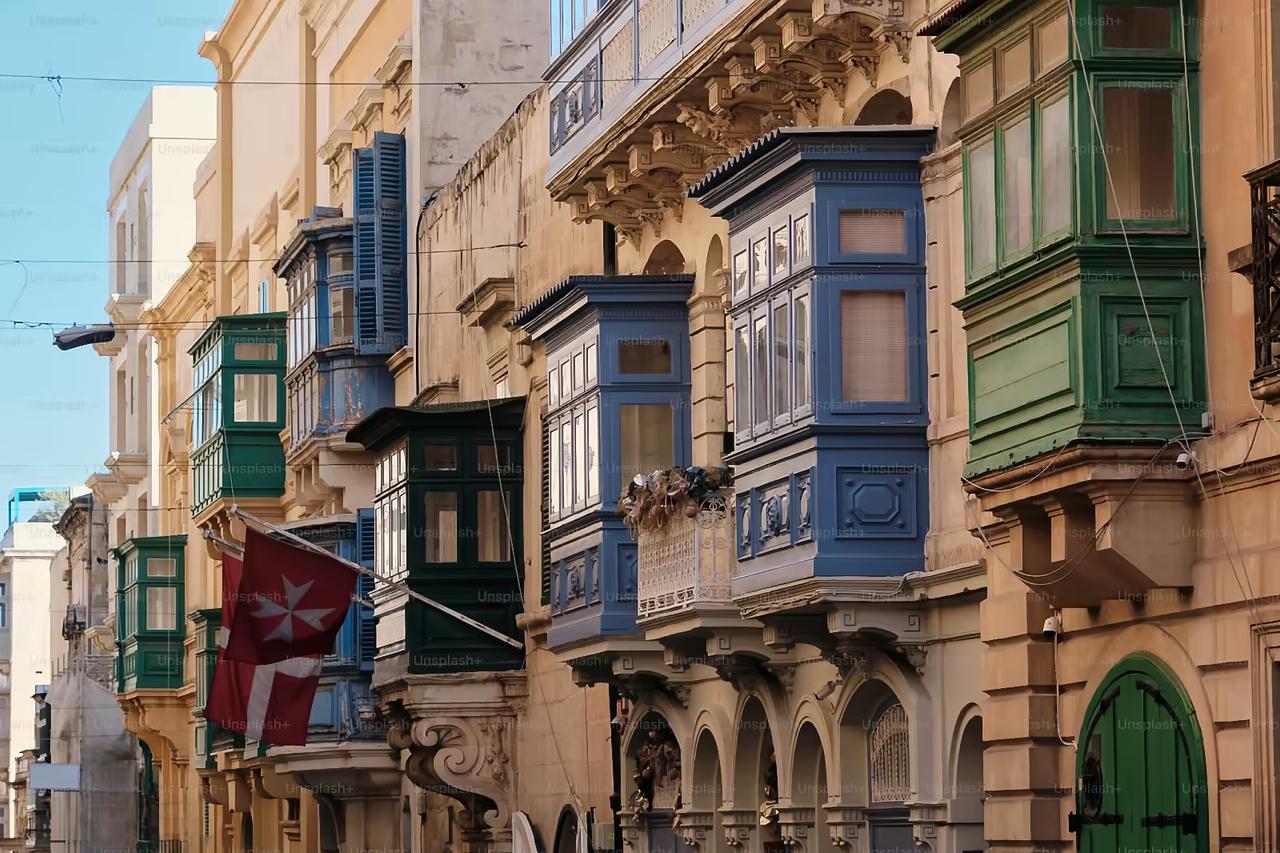
Malta is a tiny island nation in the central Mediterranean that punches far above its size. Spread across three inhabited islands — Malta, Gozo, and Comino — this archipelago covers just 316 km² and is home to roughly 545,000 people, making it the most densely populated country in the European Union. Despite its small footprint, Malta has become one of Europe's most attractive destinations for expats, drawn by year-round sunshine, English as an official language, a booming iGaming industry, and a lifestyle that blends North African warmth with Southern European charm. Whether you are a digital nomad, a finance professional, a remote worker, or a retiree seeking Mediterranean living without a language barrier, this guide walks you through every practical step of relocating to Malta in 2026.
Malta at a Glance
- Population
- ~545,000 (2026 estimate)
- Capital
- Valletta
- Currency
- Euro (€)
- Average Salary
- ~€22,000–€28,000/year (varies sharply by sector; iGaming roles often exceed €45,000)
- Languages
- Maltese and English (both official)
- Climate
- Mediterranean — hot, dry summers; mild, wet winters
- Time Zone
- CET (UTC+1), CEST in summer (UTC+2)
- EU Member
- Since 2004
- Driving
- Left-hand side (British heritage)
Why Move to Malta in 2026
- English is an official language: You can handle every bureaucratic process, sign a lease, open a bank account, and negotiate a salary entirely in English. Maltese is the national language, but English is universally spoken in business and government.
- iGaming and tech jobs: Malta is Europe's undisputed iGaming capital. Companies like Betsson, Kindred (Unibet), LeoVegas, and Evolution Gaming employ thousands of expats. The sector offers competitive salaries, relocation packages, and English-speaking environments.
- Favourable tax regime: Malta's full imputation system and numerous double-taxation treaties (70+ countries) make it attractive for high earners and entrepreneurs. The Global Residence Programme and other schemes offer effective tax rates as low as 15% on foreign income for qualifying residents.
- Mediterranean climate: Over 300 days of sunshine per year. Winters are mild (10–15°C), and summers are hot and dry (28–35°C). The swimming season runs from May through October.
- EU freedom of movement: EU and EEA citizens can relocate to Malta with minimal paperwork. Non-EU nationals benefit from targeted visa programmes, including a digital nomad visa launched in 2023.
- Safety and quality of life: Malta consistently ranks among the safest countries in the EU. Violent crime is rare, and the sense of community is strong, particularly in village neighbourhoods.
Moving Costs to Malta
Because Malta is an island, everything arrives by sea or air. Shipping costs are higher than mainland European moves of equivalent distance, and port handling at the Grand Harbour or Malta Freeport adds fees you would not face elsewhere.
Estimated Moving Costs by Origin (2026)
| Origin | Estimated Cost Range | Container/Volume |
|---|---|---|
| UK & Ireland | €1,800–€3,500 | 1–2 CBM (LCL) or 20-ft FCL |
| Northern Europe (Germany, Netherlands, Scandinavia) | €2,200–€4,500 | 1–2 CBM (LCL) or 20-ft FCL |
| Southern Europe (Italy, Spain) | €1,500–€3,000 | 1–2 CBM (LCL) or 20-ft FCL |
| North America (USA, Canada) | €3,500–€7,000 | 20-ft FCL |
| Australia / New Zealand | €5,000–€9,000 | 20-ft FCL |
| Air freight (any origin, ~1 m³ / 200 kg) | €1,500–€4,000 | Door-to-door |
Component Costs Explained
- Sea freight: The largest cost component. A 20-ft FCL from Northern Europe runs €2,000–€3,500. LCL (less-than-container-load) shipments are priced per cubic metre, typically €150–€300/CBM from Europe.
- Port handling and customs clearance: Expect €300–€600 for documentation, Malta Freeport fees, and customs broker services.
- Insurance: 2–4% of declared value for marine transit insurance.
- Packing materials: €200–€600 depending on volume. Self-packing saves money but increases breakage risk and may void insurance claims.
- Storage: €100–€250/month if you need temporary storage on the island before your lease starts.
- Road delivery (last mile): €150–€400 for delivery from the port to your apartment. Expect surcharges for addresses in Valletta, Mdina, or other areas with narrow streets and restricted vehicle access.
Money-Saving Tips
- Ship off-peak (October–March) when rates drop 10–20% compared to the summer relocation rush.
- Use LCL rather than FCL if your shipment is under 10 CBM.
- Compare at least three quotes through ReloAdvisor's moving cost calculator.
- Sell bulky furniture before moving — Malta's rental market is heavily furnished, and buying locally is often cheaper than shipping.
Real-life case: "I moved from Berlin to Sliema in January 2026 with about 8 cubic metres of personal belongings — no furniture, mostly clothes, books, and kitchen items. I used an LCL shipment that cost €1,900 door-to-door including packing, customs clearance, and delivery to my apartment on Tower Road. The whole process took about four weeks from pick-up to delivery. The moving company handled all customs paperwork through Malta Freeport." — Stefan K., relocated January 2026
Need a personalised estimate?
Get three vetted moving-company quotes in under 48 hours.
Visa and Residency Requirements
Malta's immigration authority is Identità Malta (formerly Identity Malta), the government agency responsible for visas, e-IDs, e-passports, and civil status. The Residency Malta Agency, a separate government entity, handles residency programmes including the Nomad Residence Permit and the Malta Permanent Residence Programme. Applications are submitted online or in person at Identità Malta offices or by appointment through servizz.gov, Malta's one-stop government services portal.
For EU and EEA Citizens
EU/EEA and Swiss citizens have the right to live and work in Malta without a visa. However, you must register your residence if staying longer than three months. The process is straightforward:
- Arrive in Malta with a valid passport or national ID card.
- Find accommodation and obtain a rental contract.
- Register with Identity Malta to obtain an e-ID — Malta's electronic identity card that serves as proof of residence and grants access to all government online services.
- Apply for a Maltese tax identification number (TIN) from the Commissioner for Revenue.
- Register for social security if you are employed.
The e-ID card is not mandatory but is strongly recommended. It simplifies interactions with every government department and is often required by banks and employers.
For Non-EU Nationals: Main Visa Categories
Work Permit (Single Permit)
- Requirements: A confirmed job offer from a Maltese employer, clean criminal record, valid passport, proof of qualifications, and medical insurance.
- Processing time: 4–8 weeks (can be longer during summer peak).
- Duration: Tied to the employment contract, typically 1–2 years, renewable.
- Key detail: The employer initiates the application through Identity Malta. The employee cannot apply independently.
Digital Nomad Visa
- Requirements: Proof of remote employment or freelance income of at least €3,500/month (€42,000/year), valid passport, health insurance, clean criminal record. (The threshold was raised from the original €2,700/month in April 2024.)
- Processing time: 30–60 days.
- Duration: Valid for 1 year, renewable for up to 4 years total.
- Key detail: Does not grant access to the Maltese labour market. You cannot work for Maltese employers on this permit. As of 2025, a 10% flat tax rate applies to authorised work income for the first year.
Malta Permanent Residence Programme (MPRP)
- Requirements (2025–2026):
- Government contribution: €40,000 (if purchasing property) or €58,000 (if renting)
- Property: Purchase minimum €350,000 (most areas) / €300,000 (Gozo or south of Malta) OR rental minimum €12,000/year (most areas) / €10,000/year (Gozo or south of Malta)
- Financial assets: Minimum €500,000 total, of which at least €150,000 must be in liquid financial assets
- Additional donations of €2,000 to a Maltese NGO and administrative fees apply
- Processing time: 6–12 months.
- Duration: Permanent, renewable every 5 years.
- Key detail: MPRP beneficiaries are taxed under standard Maltese income tax rules — there is no special reduced tax rate for this programme. Grant free movement within the Schengen area.
Student Visa
- Requirements: Acceptance letter from the institution, proof of funds to cover tuition and living costs (minimum €18,000/year), health insurance, clean criminal record.
- Processing time: 4–6 weeks.
- Duration: Aligned with the study programme, typically 1 year, renewable.
- Key detail: Students can work part-time (up to 20 hours/week) after their first year of study.
Family Reunification Visa
- Requirements: Proof of family relationship, sponsor's proof of income and accommodation, health insurance.
- Processing time: 6–10 weeks.
- Duration: Linked to the sponsor's permit validity.
Finding Housing in Malta
Malta's rental market is small, competitive, and expensive relative to the size and quality of properties available. The influx of iGaming workers, digital nomads, and international students has pushed rents up significantly over the past decade. Supply is tight, especially in coastal areas, and desirable apartments are often let within days of being listed.
Average Rents by Area (2026)
| Area | 1-Bedroom (Monthly) | 3-Bedroom (Monthly) | Market Competitiveness |
|---|---|---|---|
| Sliema | €1,000–€1,500 | €1,800–€2,800 | Very high |
| St. Julian's (Paceville area) | €900–€1,400 | €1,600–€2,500 | Very high |
| Valletta | €1,100–€1,700 | €2,000–€3,200 | High |
| Gzira / Ta' Xbiex | €900–€1,300 | €1,500–€2,400 | High |
| Birkirkara | €700–€1,000 | €1,200–€1,800 | Moderate |
| Mosta / Naxxar | €650–€950 | €1,100–€1,700 | Moderate |
| Gozo (Victoria / Xlendi) | €550–€850 | €900–€1,500 | Low–Moderate |
| Mdina / Rabat | €700–€1,000 | €1,100–€1,600 | Low–Moderate |
Understanding Maltese Rental Terms
- Furnished vs. unfurnished: Most rentals in expat areas come fully furnished, including kitchen appliances, sofas, and often even cutlery and linens. Unfurnished properties exist but are more common in local residential areas like Birkirkara or Mosta.
- Utilities: Electricity, water, and gas are almost never included in the rent. Budget an additional €100–€200/month for a one-bedroom apartment depending on air conditioning use.
- Letting agreement: Maltese law requires all rental contracts to be registered with the Housing Authority. Typical lease terms are 1 year, with a standard one-month deposit.
How to Find Housing
Online Platforms:
- MaltaPark.com.mt: The most popular classifieds site in Malta. Listings from landlords and agents. Searchable by area, price, and property type.
- Maltaproperty.com: Focused on sales but has a growing rentals section.
- Facebook Groups: "Apartments in Malta," "Malta Expats Housing," and "Flats to Rent in Malta" are extremely active. Many landlords post exclusively on Facebook.
- Quicklets.com.mt: Modern property portal with verified listings, including exclusive rentals and sales.
- Dhalia.com: Major Maltese real estate agency with a large online database of rentals and sales.
Local Estate Agents:
- Most towns have at least one estate agent (locally called a "broker" or "property agent"). In Sliema and St. Julian's, agents line the streets. Common agencies include Dhalia, Frank Salt Real Estate, and RE/MAX Malta.
Tips for Foreigners Finding Housing
- Start searching 4–6 weeks before your move. Do not expect to find something in a weekend.
- Budget for agency fees. Some agents charge the tenant one month's rent as a finder's fee; others are paid by the landlord. Clarify before signing anything.
- Visit properties in person if possible. Photos online are often outdated or shot with wide-angle lenses that make tiny apartments look spacious.
- Parking is a major issue in Sliema, St. Julian's, and Valletta. If you plan to have a car, confirm that the property includes a designated parking space.
- Be aware of construction noise. Malta is in a perpetual building boom. Ask about nearby construction sites before committing to a lease.
Warning: Rental Scams
Malta's housing market attracts scammers targeting newly arriving expats. Common red flags:
- The landlord asks for a deposit or first month's rent before you have seen the property or signed a registered contract.
- The listing price seems too good to be true (e.g., a seafront Sliema one-bedroom for €500).
- The "landlord" is abroad and wants to mail you keys after a wire transfer.
Always verify the property exists, insist on a Housing Authority-registered contract, and never transfer money before you or someone you trust has visited the property.
Healthcare and Insurance
Malta's public healthcare system is funded through national insurance contributions and is available to all legal residents. The system is centred around Mater Dei Hospital, the island's main public hospital located in Msida. Mater Dei is a modern facility and the primary acute-care hospital for the entire country.
Public Health Insurance
- Cost: Social security contributions of approximately 10% of gross salary (split between employee and employer — 10% each). Self-employed individuals pay the full 20% contribution.
- Coverage: GP visits, specialist care, hospital treatment, emergency services, maternity care, and prescription medications on the government formulary.
- Eligibility: All EU citizens with an EHIC card, and all non-EU residents who are employed and paying social contributions in Malta.
- Best for: Employed residents planning to stay long-term.
Private Health Insurance
- Cost: €500–€2,000/year depending on age, coverage level, and pre-existing conditions.
- Coverage: Faster access to private specialists, private hospital rooms, dental, optical, and medical evacuation.
- Eligibility: Anyone can purchase. Some iGaming employers include private insurance as a benefit.
- Best for: Expats who want shorter wait times, English-speaking doctors, and coverage at private facilities like St. James Hospital or Da Vinci Hospital.
Top Insurance Providers
- Mapfre Middlesea: One of Malta's largest insurers. Comprehensive plans for individuals and families.
- GasanMamo Insurance: Local provider with competitive expat packages.
- AXA Global Healthcare: International plan accepted at Maltese private clinics.
Getting Healthcare Coverage (Timeline)
-
Register your residence with Identità Malta.
-
Obtain your e-ID card.
-
Register with the Department of Social Security to begin contributions.
-
Choose a local GP (many expats use private GP clinics in Sliema and St. Julian's for convenience).
-
If using public healthcare, register at your local health centre.
Out-of-Pocket Costs
- GP visit (private): €40–€70
- Specialist consultation (private): €80–€150
- Prescription medications: Subsidised or free on the public formulary; €10–€50 for private prescriptions
- Dental cleaning (private): €50–€100
- Emergency room visit (public): Free for insured residents
Get a personalised relocation plan
Drop your email and we'll send a tailored checklist plus three quotes from vetted movers.
Banking and Finance
Opening a Bank Account
- When: As soon as you have a rental contract and proof of identity. Some banks allow you to start the application online before arrival.
- Required documents: Passport, proof of address (rental contract), e-ID or residence permit, proof of employment or income source. Non-EU nationals may need a reference from their home-country bank.
- Top banks for expats:
- Bank of Valletta (BOV): Largest local bank. Extensive branch network. Online banking is functional but not modern.
- HSBC Malta: Popular with expats due to the HSBC global network. Good for international transfers.
- BNF Bank: Smaller, more agile. Often faster to open accounts.
- Revolut and Wise: Widely used by expats for day-to-day spending and international transfers. Not a substitute for a local bank account for salary deposits from Maltese employers.
Malta's Credit and Banking System
Malta does not have a credit scoring system like the UK or US. Banks assess loan applications based on income, employment history, and existing debts. Your credit history from your home country is generally irrelevant unless you bank with HSBC and can leverage an international relationship.
Getting Your Tax Identification Number (TIN)
- What it is: A unique number issued by the Commissioner for Revenue. It is used for all tax, social security, and official purposes.
- When issued: You apply after registering your residence. Processing takes 1–2 weeks.
- Why you need it: Employers require it to set up payroll. Banks need it to open accounts. You need it to file tax returns.
Bank Account Features and Costs
- Monthly maintenance fee: €0–€12 (varies by bank and account type)
- Debit card: Usually free
- Credit card: €25–€75/year
- International transfer (SEPA within EU): Free or under €5
- International transfer (SWIFT outside EU): €15–€35 per transfer
Payment Culture
Card payments are widely accepted in urban areas, restaurants, and shops. Contactless payment is common. However, cash is still king in village shops, market stalls, and smaller establishments. Always carry some cash, especially when visiting Gozo or rural areas. Tipping in restaurants is customary at 10%.
Cost of Living in Malta
Malta is not a cheap destination. Because almost everything is imported and the island is tiny, groceries, consumer goods, and fuel carry a premium. Rent is the biggest expense, followed by food and going out.
Monthly Budget Breakdown by Area
| Area | One-Person Budget | Family of 3 Budget | Cost Level |
|---|---|---|---|
| Sliema / St. Julian's | €1,600–€2,400 | €2,800–€4,200 | High |
| Valletta | €1,700–€2,500 | €3,000–€4,500 | High |
| Gzira / Ta' Xbiex | €1,400–€2,100 | €2,500–€3,800 | Medium–High |
| Birkirkara / Mosta | €1,100–€1,600 | €2,000–€3,000 | Medium |
| Gozo | €950–€1,400 | €1,700–€2,600 | Medium–Low |
Detailed Cost Breakdown
Housing:
- 1-bedroom apartment (urban): €900–€1,500/month
- 3-bedroom apartment (urban): €1,600–€2,800/month
- Utilities (electricity, water, gas): €100–€200/month
- Internet (home broadband): €30–€50/month
Groceries and Food:
- Weekly groceries (1 person): €60–€100
- Pastizzi (traditional savoury pastry filled with ricotta or mushy peas): €0.50–€1.00 each — the cheapest meal in Malta
- Casual restaurant meal: €12–€20 per person
- Mid-range restaurant meal (3 courses): €30–€55 per person
- Cappuccino: €2.00–€3.50
Transportation:
- Monthly public transport pass (Tallinja Explore Card): from €21 for a 7-day pass (residents with a personalised Tallinja Card travel free on standard routes — card costs €25 to obtain)
- Single bus ticket: €2.00 (winter), €2.50 (summer), €3.00 (night)
- Fuel (petrol): €1.40–€1.60/litre
- Car insurance (annual): €400–€900
Insurance and Healthcare:
- Private health insurance: €500–€2,000/year
- Public healthcare (funded through social security): Contributions are made through Malta's Class 1 National Insurance system — fixed weekly rates (€55.93/week each for employer and employee on salaries above €29,084 in 2026). Self-employed pay double the standard rate.
Leisure and Entertainment:
- Gym membership: €40–€80/month
- Cinema ticket: €8–€12
- Pint of local beer (Cisk): €3.00–€5.00
- Diving excursion: €35–€60
Comparison with Other Countries
- vs UK (London): Malta is roughly 30–40% cheaper in rent and groceries, but salaries are also significantly lower.
- vs Germany (Berlin): Rent is comparable; groceries are 10–15% more expensive in Malta.
- vs Spain (Madrid): Malta is 10–20% more expensive overall, primarily due to import costs and the island premium.
Money-Saving Tips
- Shop at local grocers and the Valletta market rather than imported-goods supermarkets.
- Use the free Tallinja Card (residents) or Tallinja Explore pass for bus travel rather than taxis or Bolt.
- Eat where locals eat — village bars and snack bars sell pastizzi and hearty sandwiches for under €5.
- Consider living in Gozo and commuting by ferry if you work remotely; rents are substantially lower.
- Buy second-hand furniture and household goods on MaltaPark.com.mt classifieds rather than importing.
Transportation
Malta has no railway system. The primary mode of public transport is the bus network operated by Malta Public Transport (using the Tallinja ticketing system), which runs routes across Malta and Gozo. The main bus terminus is in Valletta, just outside the city gates. Residents with a personalised Tallinja Card travel free on standard routes.
Getting Around Malta
- Bus: The backbone of public transport. Residents with a personalised Tallinja Card travel free on standard routes. Tourists can buy Tallinja Explore passes (4-day or 7-day) or pay €2.00–€2.50 per trip. Buses connect all major towns, though frequency drops in the evening and on weekends.
- Ferry (Valletta–Sliema): A quick and scenic passenger ferry across Marsamxett Harbour. €1.50–€2.00 per crossing. Runs every 30 minutes.
- Ferry to Gozo: The Gozo Channel Line runs from Cirkewwa (Malta) to Mgarr (Gozo). The crossing takes about 25 minutes. Foot passengers pay €4.65 return; cars cost around €15.70 return.
- Ferry to Comino: Small passenger boats run from Cirkewwa and Mgarr to the Blue Lagoon on Comino. €10–€15 return.
- Driving: Cars drive on the left — a legacy of British colonial rule that ended in 1964. Roads are narrow, congested, and often poorly maintained outside main routes. Traffic in the Sliema–St. Julian's corridor is notoriously bad during rush hour.
- Taxis and ride-hailing: Bolt and eCabs are the dominant ride-hailing apps. A trip from Sliema to Valletta costs €8–€15.
- Bicycles and scooters: Possible in flatter areas but challenging due to hills, traffic, and limited cycling infrastructure. Not recommended as a primary commute method.
Malta International Airport (MLA)
Malta's only airport is Malta International Airport at Luqa, located in the centre of the island. It handles all commercial flights and is well-connected to the bus network. Direct flights serve most major European cities, with frequent connections to London, Frankfurt, Rome, and Paris. Low-cost carriers including Ryanair and Wizz Air maintain significant operations at MLA.
Education
Schools
Malta offers public, private, and international schooling options.
- Public schools: Free, taught in Maltese and English. Quality varies. Expats with young children often choose international schools instead due to the language factor.
- Church schools: Subsidised private schools run by the Catholic Church. Fees are lower than international schools (€1,000–€3,000/year). Admission is competitive.
- International schools: The main options include St. Andrew's International School, Verdala International School, and QSI Malta. Fees range from €5,000–€15,000/year depending on age group and school.
University of Malta
The University of Malta is the country's only public university, with its main campus in Msida. It offers undergraduate and postgraduate programmes in English across most disciplines. Tuition is free for EU citizens. Non-EU students pay €5,400–€10,800/year depending on the programme. The university has a strong reputation in marine science, engineering, and Mediterranean studies.
Job Market
Malta's economy is service-driven, with several sectors actively recruiting international talent.
Key Industries
- iGaming: Malta is the regulated online gaming capital of Europe. The Malta Gaming Authority (MGA) licenses hundreds of operators. Employers include Betsson, Kindred Group, LeoVegas, Evolution Gaming, and dozens of smaller operators and B2B providers. Roles in demand include customer support, compliance, fraud analysis, affiliate management, IT, and marketing.
- Financial services: Malta has positioned itself as a fintech and blockchain-friendly jurisdiction within the EU. Crypto exchanges, payment processors, and fund managers are licensed here.
- Tourism and hospitality: A year-round industry. Seasonal work in hotels, restaurants, and tour operations is common.
- IT and tech: Beyond iGaming, Malta has a growing tech sector including software development, cybersecurity, and AI.
- English language teaching: Malta has a large English-language school industry. TEFL-qualified teachers can find work, though pay is modest (€800–€1,400/month for full-time positions).
Job Search Resources
- LinkedIn is the primary recruitment tool for professional roles in Malta.
- Malta-specific portals: JobsinMalta.com, Keepmeposted.com.mt, and VacancyCentre.com.
- Many iGaming companies list roles directly on their career pages and offer relocation packages.
Average Salaries by Sector (2026)
| Sector | Entry-Level | Mid-Level | Senior |
|---|---|---|---|
| iGaming (customer support) | €22,000–€28,000 | €30,000–€40,000 | €45,000+ |
| iGaming (tech/management) | €35,000–€45,000 | €50,000–€70,000 | €80,000+ |
| Financial services | €28,000–€35,000 | €40,000–€60,000 | €70,000+ |
| IT / software development | €25,000–€35,000 | €40,000–€55,000 | €60,000+ |
| Teaching (TEFL) | €12,000–€16,000 | €16,000–€22,000 | — |
| Hospitality | €14,000–€18,000 | €20,000–€28,000 | €30,000+ |
Culture and Lifestyle
Maltese Language and Communication
Maltese (Malti) is a Semitic language with heavy Italian and English influence. It is the only Semitic language written in the Latin alphabet and an official EU language. You do not need to speak Maltese to live in Malta — English is used in all official, legal, and business contexts. However, learning basic greetings earns genuine warmth from locals.
Religion and Festas
Malta is overwhelmingly Catholic (approximately 95% of the population). The most visible expression of this is the festa season — village feast celebrations held between May and September. Every town and village has a patron saint, and each festa features brass bands, fireworks, street decorations, food stalls, and processions with statues. Festas are loud, colourful, and completely shut down the hosting village for the weekend. If your apartment is near a festa venue, expect fireworks starting at 8 AM.
Food and Drink
Maltese cuisine is a hearty blend of Italian, North African, and British influences:
- Pastizzi: Flaky diamond-shaped pastries filled with ricotta or mushy peas. Sold in pastizzerias on nearly every corner for less than €1. The quintessential Maltese snack.
- Fenkata: Traditional rabbit stew, often considered the national dish. Typically eaten communally at rural restaurants, especially in Mgarr and Baħrija. A full fenkata meal includes pasta with rabbit sauce, followed by slow-braised rabbit.
- Lampuki: Mahi-mahi (dolphin fish), seasonal from late summer to autumn. Often served baked or in a pie (torta tal-lampuki).
- Ġbejna: Small round cheeselet made from sheep's or goat's milk. Comes in fresh, salted, peppered, or dried varieties. A staple of the Maltese table.
- Hobz biz-zejt: Literally "bread with oil." A thick slice of Maltese bread rubbed with tomato, drizzled with olive oil, and topped with tuna, capers, and olives. Simple and excellent.
- Cisk: Malta's flagship lager beer. Crisp and light. Best consumed on a harbour terrace at sunset.
History and Heritage
Malta's historical layers are extraordinary. The megalithic temples of Hagar Qim, Mnajdra, and Ggantija on Gozo predate the Egyptian pyramids by over 1,000 years, making them among the oldest free-standing structures on Earth. The Knights of St. John (also known as the Knights Hospitaller) ruled Malta from 1530 to 1798, leaving behind Valletta — a UNESCO World Heritage city built entirely in baroque style after the Great Siege of 1565. St. John's Co-Cathedral in Valletta, with its ornate interior and Caravaggio's "The Beheading of Saint John," is one of Europe's most spectacular churches. Mdina, the Silent City, is a medieval walled city on a hilltop in the centre of Malta with narrow limestone streets, cathedral, and panoramic views.
Diving and Outdoor Activities
Malta is one of Europe's top diving destinations. The clear Mediterranean waters offer visibility of 30+ metres, underwater caves, wrecks, and reefs. Top dive sites include the Blue Hole on Gozo, the wreck of the Rozi near Cirkewwa, and the Inland Sea. Diving certification (PADI or BSAC) is inexpensive in Malta compared to northern Europe, with a full Open Water course typically costing €300–€400.
Other outdoor activities include hiking along the Dingli Cliffs, swimming at the Blue Lagoon on Comino, and sailing around the archipelago.
Social Integration
- Expat communities: Malta's expat scene is large and active, particularly in Sliema and St. Julian's. Facebook groups like "Malta Expats" and "Expats in Malta" have tens of thousands of members.
- Sports: Football (soccer) is the dominant sport. The Malta Marathon is held annually in February. Water sports, sailing, and rock climbing are all popular.
- Making local friends: Maltese people are generally warm and hospitable. Joining village band clubs, attending festas, and shopping at local markets are natural ways to connect with locals rather than staying in the expat bubble.
Pros and Cons of Living in Malta
Pros
- English is an official language — zero language barrier in daily life and business.
- Warm Mediterranean climate with long summers and mild winters.
- EU member with free movement for EU/EEA citizens.
- Thriving iGaming and tech job market with competitive salaries.
- Safe environment with low violent crime rates.
- Compact size — you are never more than 30 minutes from the coast.
- Digital nomad visa available for remote workers.
- Rich history and culture in a very small area.
Cons
- Rental market is expensive and competitive for what you get.
- Tiny island — can feel claustrophobic. Limited weekend getaway options without flying.
- Traffic congestion is severe, especially in the Sliema–St. Julian's corridor.
- Public transport is buses only — no trains or metro.
- Construction is constant and noisy in many areas.
- Internet infrastructure can be inconsistent outside main towns.
- Limited cultural diversity in entertainment and dining compared to major European cities.
- Bureaucracy can be slow and requires patience.
Moving Checklist for Malta
- Research visa requirements for your nationality at identita.gov.mt
- Secure a job offer (if applying for a work permit) or verify digital nomad visa eligibility
- Begin apartment search online (MaltaPark.com.mt, Facebook groups)
- Book temporary accommodation for your first 2–4 weeks (Airbnb or hotel)
- Obtain quotes from at least three international moving companies
- Apply for your visa or residence permit through Identity Malta
- Check if your driving licence can be converted or if you need to take a test
- Arrange pet import permits from the Veterinary Regulation Directorate if applicable
- Sign a rental agreement remotely if possible, or confirm temporary housing
- Book your moving shipment (sea freight recommended for cost)
- Obtain comprehensive health insurance that covers you from day one
- Notify your current bank, employer, and tax authority of your departure
- Gather documents: passport, birth certificate, marriage certificate (if applicable), medical records, university diplomas, and police clearance — all apostilled or legalised if required
- Set up a Wise or Revolut account for managing multi-currency transfers
- Cancel or transfer local subscriptions and utilities at your current address
- Pack and prepare your shipment for collection
- Confirm arrival logistics: airport transfer from MLA, keys to temporary housing
- Print copies of all documents: visa approval, rental contract, insurance policy, job contract
- Download the Tallinja app and order a bus card for collection or digital use
- Set up mail forwarding from your current address
- Check your mobile phone roaming options; consider a Maltese SIM (Melita, GO, or Vodafone Malta)
- Confirm moving company pick-up date and delivery timeline
- Pack carry-on luggage with essentials for your first two weeks (Malta's humidity can delay shipments)
- Exchange or order Euros for immediate expenses
- Confirm your Airbnb or hotel booking for arrival
- Save key contacts in your phone: Identity Malta, your employer HR, estate agent, moving company Malta agent
- Collect your rental car or learn the local bus routes from your accommodation
- Visit Identity Malta to finalise your residence permit or e-ID application
- Open a local bank account (Bank of Valletta, HSBC Malta, or BNF Bank)
- Buy a local SIM card if you have not arranged one already
- Explore your neighbourhood: locate the nearest pharmacy, grocery shop, bus stop, and GP clinic
- Apply for your Tax Identification Number (TIN) at the Commissioner for Revenue
- Register with the Department of Social Security if employed in Malta
- Register your rental contract with the Housing Authority (your landlord should do this, but confirm)
- Set up utilities in your name if renting long-term: electricity (Enemalta), water (Water Services Corporation), internet (Melita or GO)
- If you have children, research and apply to schools (international school places fill fast)
- Register with a local GP or health clinic
- Attend any Identity Malta appointments for biometrics or permit collection
- Collect your e-ID card from Identity Malta when ready
- If driving, begin converting your foreign licence through Transport Malta
- Enrol in Maltese language classes if interested (University of Malta and various private schools offer courses)
- Join expat groups and local organisations to build your social network
- Set up standing orders or direct debits for rent, utilities, and insurance
- File any required tax paperwork with the Commissioner for Revenue
- Explore the island — visit Valletta, Mdina, the Dingli Cliffs, and take the ferry to Gozo
Where to Find Tools and Resources
ReloAdvisor Tools:
- Volume calculator: http://reloadvisor.org/
- Video survey: http://reloadvisor.org/
- Moving cost calculator: http://reloadvisor.org/
Official Malta Resources:
- Identità Malta (visas, e-IDs, passports): https://identita.gov.mt
- Residency Malta Agency (MPRP, Nomad Residence Permit): https://residencymalta.gov.mt
- Commissioner for Revenue (tax): https://cfr.gov.mt
- Malta Gaming Authority: https://www.mga.org.mt
- Transport Malta: https://www.transport.gov.mt
- Malta Tourism Authority: https://www.visitmalta.com
Expat Communities:
- Facebook: "Malta Expats" (30,000+ members)
- Facebook: "Expats in Malta"
- Reddit: r/malta
Related Guides:
- Moving to Europe: Complete Expat Guide
- Moving to Cyprus: Complete Expat Guide
- Moving to Portugal: Complete Expat Guide