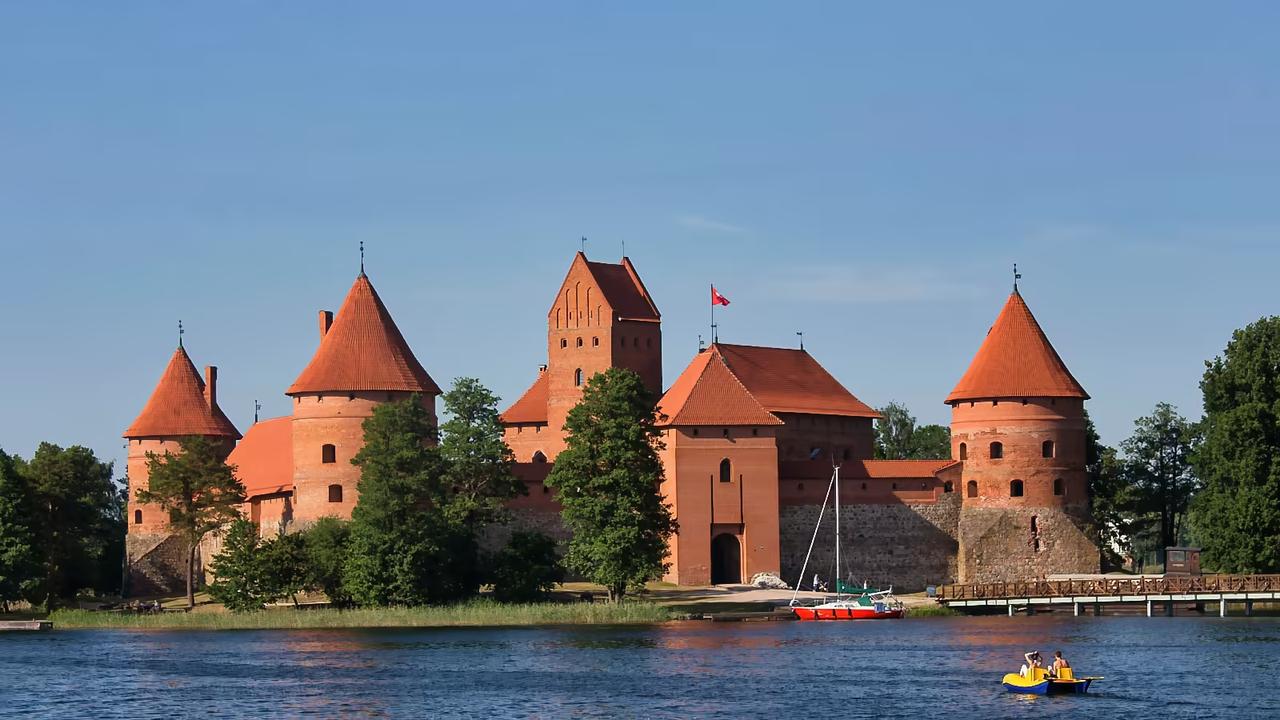

Lithuania is quietly becoming one of Europe's most compelling destinations for expats — a fast-growing fintech hub with a startup visa, very affordable living costs by EU standards, blazing-fast internet, and a population that takes its culture and nature seriously. Whether you're drawn by the booming tech scene in Vilnius, the baroque old town (a UNESCO World Heritage Site), or the chance to live well on a modest budget, this guide covers every practical step you need to relocate to Lithuania with confidence.
Lithuania at a Glance

- Population
- ~2.8 million (2025)
- Capital
- Vilnius
- Currency
- Euro (EUR) — adopted in 2015
- Average Salary
- ~€30,000 per year (gross, ~€1,780 net monthly)
- Language
- Lithuanian (English widely spoken in cities, especially among younger people)
- Climate
- Continental — warm summers (20–25 °C), cold winters (down to −10 °C or below)
- Time Zone
- EET (UTC+2) / EEST (UTC+3 in summer)
Why Move to Lithuania in 2026
- Very Affordable: Lithuania offers one of the lowest costs of living in the EU — rent, groceries, dining, and transport are all significantly cheaper than in Western or Northern Europe.
- Growing Fintech and Tech Hub: Vilnius has become a major European fintech centre, home to nearly 250 fintech companies and a regulatory sandbox that attracts startups from around the world.
- Startup Visa: Lithuania offers a dedicated Startup Visa programme for non-EU entrepreneurs building innovative businesses, with a streamlined application and residency path.
- Fast Internet: Lithuania consistently ranks among the top countries globally for internet speed, with widespread fibre-optic coverage and affordable gigabit plans.
- EU and Eurozone Member: Full EU membership means free movement for EU citizens and access to the single market; the Euro (€) has been the national currency since 2015, removing exchange-rate risk within the Eurozone.
- Safe Country: Lithuania has low crime rates by European standards, and its cities — especially Vilnius — are considered safe for residents and visitors alike.
- Rich Culture and Nature: From basketball obsession and midsummer (Joninės) celebrations to dense forests, pristine lakes, and a rugged Baltic coastline, Lithuania offers a lifestyle that blends urban energy with easy access to nature.
Moving Costs to Lithuania
Shipping costs vary by origin, volume, and transport mode. Typical market rates as of early 2026:
| Origin | Estimated Cost Range | Container/Volume |
|---|---|---|
| Within EU (Western Europe) | €1,500–€3,000 | 20 ft container (FCL) |
| Within EU (Western Europe) | €2,500–€4,500 | 40 ft container (FCL) |
| North America (USA/Canada) | €2,000–€2,800 | 20 ft container (FCL) |
| North America (USA/Canada) | €3,200–€5,000 | 40 ft container (FCL) |
| Air freight (~1 m³) | €3,000–€6,000+ | Door-to-door, 5–10 days |
Component Costs Explained
- Transportation: €800–€2,500 depending on distance; road freight within Europe is most common, with sea freight for intercontinental moves.
- Insurance: Typically 1–3% of declared goods value; recommended for all international moves.
- Customs Clearance: €150–€400 for documentation and processing; EU citizens moving from within the EU face no customs duties on personal belongings.
- Packing Materials: €100–€300 for professional packing; many movers include this in their quote.
- Storage (if needed): €50–€150 per month in Vilnius; less in smaller cities.
- Administrative Fees: €50–€150 for notarised translations and document preparation.
Need a personalised estimate?
Get three vetted moving-company quotes in under 48 hours.
Visa & Residency Requirements
Lithuania's immigration system distinguishes sharply between EU/EEA citizens and third-country nationals. The Migration Department (Migracijos departamentas) handles all residency matters.
For EU/EEA Citizens
EU and EEA citizens have the right to live and work in Lithuania without a visa. Key steps:
- Enter Lithuania with a valid passport or national ID card.
- Register your place of residence at the local municipality (seniūnija) within the declared address.
- Obtain an asmens kodas (personal code) — Lithuania's national identification number, used for tax, healthcare, banking, and all official registrations.
- If staying longer than three months, register with the Migration Department and apply for an EU citizen's registration certificate.
For Non-EU Citizens: Main Visa Categories
Work Visa (National Visa D or Temporary Residence Permit)
- Requirements: Valid employment contract with a Lithuanian employer, proof of qualifications, health insurance, and a clean criminal record.
- Processing time: 2–4 months for a temporary residence permit; 15 working days for a national visa D.
- Duration: Up to 2 years (renewable).
- Key details: Employers must often demonstrate that no suitable EU candidate was available for the position, though this requirement is waived for shortage occupations.
Startup Visa
- Requirements: Innovative, technology-driven business idea evaluated and approved by Startup Lithuania; proof of sufficient personal funds (approximately €12,500/year); health insurance with minimum coverage of €30,000. No minimum company capital is required.
- Processing time: 1–3 months.
- Duration: 1 year initially, extendable up to 2 years; leads to a temporary residence permit.
- Key details: Designed for founders of technology and innovation-driven startups; Lithuania's startup ecosystem is one of the fastest-growing in Europe.
Student Visa
- Requirements: Acceptance letter from a recognised Lithuanian educational institution, proof of sufficient funds, health insurance.
- Processing time: 1–2 months.
- Duration: Matches the length of the study programme.
- Key details: Students may work up to 20 hours per week during term and full-time during holidays.
Family Reunification Visa
- Requirements: Proof of family relationship (spouse, minor child, dependent parent), sponsor's valid residence permit and sufficient income.
- Processing time: 2–4 months.
- Duration: Matches the sponsor's residence permit duration.
Freelancer / Self-Employment Permit
- Requirements: Business registration in Lithuania (individual activity certificate or company), proof of contracts or client base, health insurance.
- Processing time: 2–3 months.
- Duration: Up to 2 years (renewable).
- Migration Department: https://www.migracija.lt/en/
- Startup Visa programme: https://www.startuplithuania.com/
Residence Registration (Gyvenamosios vietos deklaravimas)
Registering your address — called gyvenamosios vietos deklaravimas (residence declaration) — is one of the most important steps after arriving in Lithuania. It is mandatory and directly affects your access to healthcare, banking, tax obligations, and social services.
Required Documents
- Valid passport or national ID card
- Proof of address (rental agreement, property ownership document, or a declaration signed by the property owner)
- Residence permit or EU citizen registration certificate (for non-citizens)
- Completed residence declaration form (available at the local municipality or online)
The Registration Process (Step-by-Step)
-
Sign a rental agreement or obtain proof of property ownership.
-
Visit the local municipality office (seniūnija) or use the online portal at epaslaugos.lt.
-
Present your documents and complete the residence declaration form.
-
Receive confirmation of registration — your address is linked to your asmens kodas in the Lithuanian Population Register (Gyventojų registras).
-
If you are an EU citizen and staying longer than 3 months, also register with the Migration Department for an EU citizen registration certificate.
Timeline: Registration is typically processed same-day in person. Online registration takes 1–3 business days.
Finding Housing in Lithuania
Lithuania has a rental-heavy market in major cities, with strong tenant protections under the Civil Code. Most apartments are unfurnished, though furnished options exist and command a premium of 20–40%.
Average Rents by Major City (2026)
| City | 1-Bedroom (City Centre) | 1-Bedroom (Outside Centre) | 3-Bedroom (City Centre) | Market Competitiveness |
|---|---|---|---|---|
| Vilnius | €550–€800 | €380–€550 | €900–€1,400 | High — strong demand |
| Kaunas | €350–€550 | €250–€380 | €600–€950 | Moderate |
| Klaipėda | €300–€500 | €220–€350 | €500–€800 | Moderate |
| Šiauliai | €200–€350 | €150–€250 | €350–€550 | Low |
| Panevėžys | €180–€300 | €130–€220 | €300–€500 | Low |
Local Rent Terminology
- Nuoma: Lithuanian word for "rent" — you will see this on every listing.
- Šildymas: Heating costs — a major line item in winter, especially in older buildings. District heating (centralinis šildymas) is common in Vilnius and can be significantly cheaper than individual gas or electric heating.
- Komunaliniai mokesčiai: Utility charges — typically include water, waste, building maintenance, and sometimes heating. Often listed separately from the base rent.
- Depozitas: Security deposit — usually 1–2 months' rent, returned at the end of the lease if there is no damage.
How to Find Housing
Online Platforms:
- Aruodas.lt: The dominant property listing site in Lithuania — used by virtually all landlords and agencies.
- Domoplius.lt: Secondary platform with good coverage, especially outside Vilnius.
- Facebook Groups: "Butų nuoma Vilniuje" and similar city-specific groups are active and often list apartments before they appear on portals.
Local Resources:
- Real estate agencies (nekilnojamojo turto agentūros) can handle the search for a fee, typically one month's rent.
- University housing offices can assist international students.
Tips for Foreigners Finding Housing
- Have your documents ready (passport, visa, proof of income) — landlords in Vilnius move fast.
- Be prepared to pay the deposit and first month's rent upfront.
- Ask about heating type and average winter utility bills before signing — some older buildings have very high šildymas costs.
- Inspect the apartment carefully and take dated photos before moving in to protect your depozitas.
Rental Agreement & Legal Protection
Lithuanian rental law provides solid tenant protections. Leases must be registered with the Centre of Registers (Registrų centras) to be fully enforceable. Landlords must give at least 3 months' notice to terminate an indefinite-term lease. Tenants typically need to give 1 month's notice.
Warning: Rental Scams
- Never transfer money without viewing the apartment in person or via a verified video call.
- Be cautious of prices far below market rates — if it seems too good to be true, it likely is.
- Verify the landlord's ownership through the Centre of Registers (Registrų centras) if in doubt.
Healthcare & Insurance
Lithuania has a mandatory public healthcare system administered by the VLK (Valstybinė ligonių kasa) — the National Health Insurance Fund. If you are employed or legally residing in Lithuania, you are generally required to have compulsory health insurance (privalomasis sveikatos draudimas, or PSD).
Public Health Insurance
VLK
- Cost: Funded through social security contributions — employees pay approximately 6.98% of gross salary for health insurance as part of their social contributions. Self-employed individuals pay a fixed monthly amount (approximately €50–€70 per month in 2026).
- Coverage: GP visits, specialist referrals, hospital care, emergency services, maternity care, and subsidised medications.
- Eligibility: All employees, registered residents, students, and pensioners are covered. EU citizens can use the European Health Insurance Card (EHIC) for temporary stays.
- Best for: Anyone living and working in Lithuania — this is not optional.
Private Health Insurance
- Cost: €30–€100 per month depending on age, coverage level, and provider.
- Coverage: Shorter wait times, broader choice of doctors and clinics, dental care, and international coverage.
- Eligibility: Available to all residents.
- Best for: Expats who want faster access to specialists, English-speaking doctors, or dental care (which is limited under public insurance).
Top Insurance Providers
- Ergo Lietuva: One of the largest insurers with comprehensive health plans for individuals and families.
- If P&C Insurance: Offers private health insurance with wide clinic networks in Vilnius and Kaunas.
- Compensa Life: Popular for expat-oriented plans with international coverage options.
Getting Healthcare Coverage (Timeline)
-
Register your residence and obtain your asmens kodas.
-
If employed, your employer registers you with the VLK — coverage begins from the start of your employment.
-
If self-employed, register with the VLK directly and begin monthly PSD contributions.
-
Choose a GP (šeimos gydytojas) at a polyclinic (poliklinika) near your registered address.
Out-of-Pocket Costs
- GP visits: Free with VLK coverage (small co-pay of €1–€2 for some services).
- Prescriptions: Subsidised — patients typically pay 20–50% of the medication cost.
- Dental: Mostly not covered by public insurance; expect €30–€150 per procedure privately.
- Hospital: Covered by VLK; private hospitals charge €50–€200 per day for a room.
Get a personalised relocation plan
Drop your email and we'll send a tailored checklist plus three quotes from vetted movers.
Banking & Finance
Opening a Bank Account
- When: As soon as you have your residence registration and asmens kodas. You can open an account at most banks on the same day.
- Required documents: Passport or ID card, asmens kodas, proof of address (rental agreement or utility bill), and sometimes proof of employment or income.
- Top banks for expats:
- SEB bankas: Largest bank in Lithuania; extensive branch and ATM network; full English-language online banking.
- Swedbank: Strong digital platform, widely used for everyday banking and mortgages.
- Luminor: Third-largest bank; good for business accounts and international transfers.
- Šiaulių bankas: Smaller but competitive on savings products and personal loans.
Getting Your Asmens Kodas (Personal Code)
- What it is: The asmens kodas is Lithuania's 11-digit national identification number, similar to a Social Security Number or National Insurance Number. It is assigned upon birth for Lithuanian citizens or upon registration for foreign residents.
- When issued: Upon residence registration at the municipality or Migration Department.
- Why you need it: Required for virtually everything — employment contracts, tax filings, healthcare registration, bank accounts, phone contracts, and government services.
Bank Account Features & Costs
- Monthly fee: €0–€3 per month depending on bank and account type.
- Debit card: Free or included with the account at most banks.
- Credit card: €5–€15 per year; depends on the bank and card tier.
- International transfers (SEPA): Free within the Eurozone.
- International transfers (SWIFT): €15–€30 per transfer.
Payment Culture
Lithuania is highly digital. Contactless card payments (Visa, Mastercard) are accepted almost everywhere, including small shops and public transport. Mobile payment apps like Revolut and Paysera are popular. Cash is still used but increasingly rare in cities. Apple Pay and Google Pay are supported by most major banks.
Cost of Living in Lithuania
Monthly Budget Breakdown by City
| City | One-Person Budget | Family of 3 Budget | Cost Level |
|---|---|---|---|
| Vilnius | €1,000–€1,500 | €2,200–€3,200 | Moderate-Low |
| Kaunas | €800–€1,200 | €1,800–€2,600 | Low |
| Klaipėda | €750–€1,100 | €1,700–€2,400 | Low |
| Šiauliai | €650–€950 | €1,500–€2,100 | Very Low |
Detailed Cost Breakdown
Housing:
- 1-bedroom apartment (city centre): €380–€800 depending on city.
- 3-bedroom apartment (city centre): €500–€1,400 depending on city.
- Utilities (electricity, water, waste, heating): €100–€250 per month; winter heating can spike to €200+ in poorly insulated older buildings.
- Internet (100 Mbps fibre): €10–€15 per month — among the cheapest and fastest in Europe.
Groceries & Food:
- Weekly groceries (1 person): €40–€60.
- Restaurant meal (casual, lunch menu): €6–€10.
- Restaurant meal (mid-range, dinner for two): €30–€50.
Transportation:
- Monthly public transport pass (Vilnius): €30 for a single route, €65 for all routes.
- Taxi / ride-hailing (Bolt, eTaksi): €3–€6 for a typical city ride.
- Petrol: ~€1.50–€1.70 per litre.
Insurance & Healthcare:
- Health insurance (private, supplementary): €30–€100 per month.
- PSD (public health, self-employed): ~€50–€70 per month.
Leisure & Entertainment:
- Gym membership: €25–€50 per month.
- Cinema ticket: €7–€10.
- Streaming services (Netflix, Spotify): standard EU pricing.
Comparison with Other Countries
- vs Germany: Lithuania is roughly 40–50% cheaper across housing, dining, and transport.
- vs United Kingdom: Lithuania is approximately 50–60% cheaper; rent in Vilnius is a fraction of London prices.
- vs Poland: Similar cost levels, but Lithuania is slightly cheaper for rent and groceries.
Language & Culture Tips
Do You Need Lithuanian?
In Vilnius and Kaunas, you can manage daily life in English — especially in younger, tech-savvy environments. However, Lithuanian is important for deeper integration, dealing with government offices, reading official documents, and building friendships outside expat circles. Learning even basic Lithuanian is strongly recommended and widely appreciated by locals.
Lithuanian Language Levels (CEFR)
- A1 (Beginner): Basic greetings, ordering food, asking for directions. Achievable in 3–6 months of part-time study.
- A2 (Elementary): Simple conversations, understanding routine instructions. 6–12 months.
- B1 (Intermediate): Handling most daily situations, following workplace conversations. 12–24 months.
- B2 (Upper Intermediate): Professional-level fluency, nuanced discussions. 24–36 months.
Lithuanian is one of the oldest living Indo-European languages and is considered challenging for English speakers due to its complex grammar (seven noun cases, extensive declension). Persistence pays off — locals deeply respect any effort to speak their language.
Language Learning Resources
- Renkuosi Lietuva: Government-supported integration portal offering Lithuanian language classes for newcomers.
- Vilnius University Language Centre: Intensive Lithuanian courses for international students and professionals.
- Italki / Preply: Online tutors specialising in Lithuanian — affordable options from €10–€20 per hour.
- Lithuanian Out Loud (podcast): Practical language learning for daily situations.
Cultural Norms & Etiquette
Directness:
- Lithuanians tend to be straightforward and honest — this is not rudeness, but a cultural norm. Expect direct answers to direct questions.
Basketball Obsession:
- Basketball is practically a national religion. Lithuania has a proud Olympic and European championship history. Attending a Lietuvos rytas or Žalgiris game is a genuine cultural experience.
Midsummer (Joninės):
- Celebrated on June 23–24, Joninės (also known as Rasos) is one of Lithuania's most beloved holidays — bonfires, flower wreaths, singing, and celebrating the summer solstice in nature. It is deeply rooted in pre-Christian Baltic traditions.
Strong National Identity:
- Lithuanians are fiercely proud of their history, language, and independence. Respect for the flag, anthem, and national memory is important. The country's journey through Soviet occupation (1940–1990) is still within living memory.
Nature and Outdoors:
- Lithuania is one of Europe's greenest countries — over 33% forest cover, thousands of lakes, and the pristine Curonian Spit (a UNESCO World Heritage Site). Hiking, cycling, mushroom foraging, and berry picking are national pastimes.
Social Integration
- Join expat groups on Facebook (e.g., "Expats in Vilnius," "International Community Kaunas").
- Attend local events — Vilnius hosts numerous festivals, markets, and cultural events year-round.
- Volunteer with organisations like the Lithuanian Red Cross or Caritas Lithuania.
- Join a sports club — basketball, football, and running clubs are popular and welcoming.
Moving Checklist
- Research visa/residency requirements and begin your application.
- Request quotes from international movers and book your shipment.
- Gather and apostille/translate key documents (birth certificate, marriage certificate, diplomas).
- Notify your current employer, landlord, and utility providers.
- Secure temporary accommodation in Lithuania (Airbnb, serviced apartment, or hotel).
- Arrange health insurance coverage for your first weeks.
- Open an online Lithuanian bank account if possible (some banks allow remote onboarding with e-residency or video identification).
- Begin learning basic Lithuanian phrases.
- Confirm your moving date and delivery timeline with the mover.
- Cancel or transfer subscriptions, memberships, and mail forwarding.
- Prepare a carry-on bag with essential documents, medications, and valuables.
- Notify your embassy or consulate in Lithuania of your arrival.
- Finalise packing and inventory list for customs.
- Confirm temporary accommodation booking.
- Download essential apps (Bolt, Google Maps, bank app).
- Exchange some euros if arriving from a non-Eurozone country.
- Clear customs if arriving with shipped goods.
- Register your residence at the local municipality (seniūnija).
- Obtain your asmens kodas.
- Register with the VLK for health insurance (or confirm employer registration).
- Open a bank account at SEB, Swedbank, or another major bank.
- Choose a GP (šeimos gydytojas) at the nearest polyclinic (poliklinika).
- Get a local SIM card (Telia, Bite, or Tele2 — prepaid from €5).
- Begin your housing search on Aruodas.lt.
- Register with the tax authority (VMI) if self-employed.
- Sign a long-term rental agreement.
- Transfer utilities to your name.
- Register your rental contract with the Centre of Registers (Registrų centras).
- Explore your neighbourhood — find the nearest supermarket, pharmacy, and public transport stops.
- Attend an expat meetup or local event to start building your network.
Where to Find Tools and Resources
ReloAdvisor Tools:
- Volume calculator
- Video survey
- Moving cost calculator
Official Lithuanian Resources:
- Migration Department: https://www.migracija.lt/en/
- State Tax Inspectorate (VMI): https://www.vmi.lt/
- National Health Insurance Fund (VLK): https://www.vlk.lt/
- Startup Lithuania: https://www.startuplithuania.com/
- Enterprise Lithuania: https://www.enterpriselithuania.com/
Expat Communities:
- Expats in Vilnius (Facebook group)
- Internations Lithuania: https://www.internations.org/lithuania-expats
- Expat.com Lithuania Forum: https://www.expat.com/en/guide/europe/lithuania/
Related Guides:
- Moving to Poland
- Moving to Latvia
- Moving to Estonia