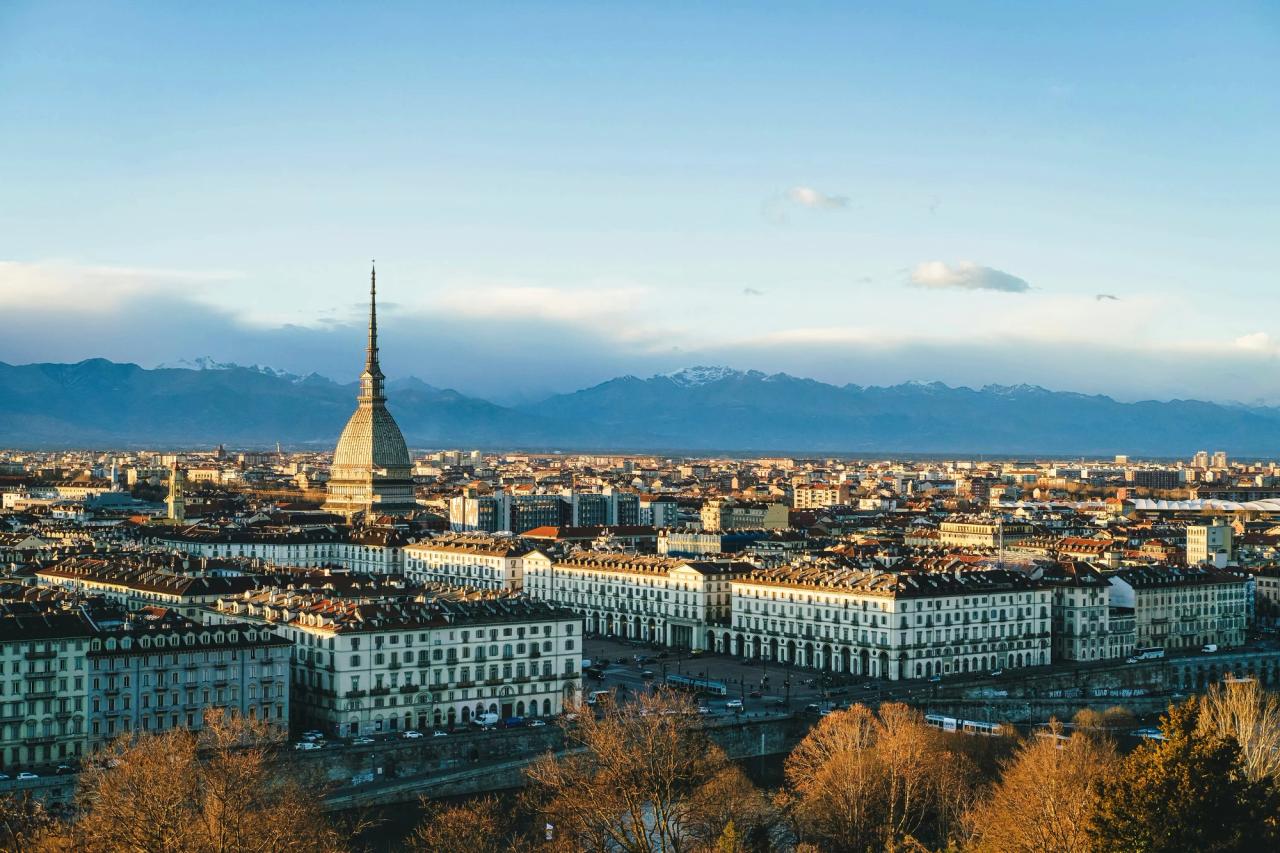
Turin is Italy's best-kept secret — a sophisticated, orderly city at the foot of the Alps with a rich industrial heritage, world-class museums, and a food culture that rivals any city in Italy.
If you want Italian quality of life without the tourist crowds or sky-high rents of Milan, Turin is an outstanding choice. It's clean, well-managed, and increasingly popular with tech workers, engineers, and families.
The city has a distinctly northern European feel — arcaded streets, grand piazzas, and chocolate shops on every corner. The Alps are visible on clear days and just an hour's drive for skiing. Yet it's unmistakably Italian in its food, pace of life, and social warmth.
Turin was the first capital of unified Italy and the birthplace of Fiat. Today it's reinventing itself as a hub for aerospace, tech, and innovation, while preserving its baroque elegance and culinary traditions.
This guide covers everything you need to know about moving to Turin — from housing and cost of living to healthcare, visas, and daily life.
Turin at a Glance
- Population
- 855,654 (city), 2.2 million (metro area)
- Region
- Piedmont
- Known For
- Automotive (Fiat), chocolate, Baroque architecture
- Average Rent (1BR)
- €550–€900/month
- Average Salary
- €1,800–€2,300/month net
- Expat Community
- Growing, especially in automotive and tech
- Language
- Italian (less English than Milan or Rome)
- Climate
- Continental — cold foggy winters, warm summers
Why Move to Turin
- Affordability: Turin offers excellent quality of life at a fraction of Milan's costs. Rent, dining, and transport are all significantly cheaper.
- Industry and innovation: The historic home of Fiat and now a growing tech and aerospace hub — great for engineers and innovators.
- Architecture and elegance: Baroque palaces, grand piazzas, and the iconic Mole Antonelliana give Turin a stately, almost Parisian feel.
- Alpine access: Ski resorts in the Alps are 1–1.5 hours away. Lake Orta and Lake Maggiore are close. Outdoor enthusiasts thrive here.
- Quality of life: Clean, safe, well-organised, and not overcrowded. Turin consistently ranks high in Italian quality-of-life surveys.
Finding Housing in Turin
Turin's rental market is less competitive than Milan's — take time to find the right place. Apartments are more spacious and affordable.
Average Rents
| Neighborhood | 1-Bedroom | 3-Bedroom | Character |
|---|---|---|---|
| Centro | €700–€1,000 | €1,400–€2,200 | Historic centre, elegant and walkable |
| San Salvario | €550–€850 | €1,100–€1,800 | Lively, multicultural, nightlife |
| Lingotto | €500–€750 | €1,000–€1,600 | Modern, former industrial area |
| Borgo Po | €650–€950 | €1,300–€2,100 | Green, residential, near the river |
| Quadrilatero Romano | €600–€900 | €1,200–€1,900 | Bohemian, vintage shops, wine bars |
| Crocetta | €650–€900 | €1,300–€2,000 | Upmarket, quiet, near Politecnico |
How to Find Housing
- Immobiliare.it: The go-to platform for Turin rentals — largest selection.
- Idealista.it: Good alternative with strong central listings.
- Subito.it: Classified ads — popular for rooms and short-term lets.
- Agencies: Commission is typically one month's rent. Many landlords prefer agency-managed contracts.
Tips for Expats
- Turin's rental market is less competitive than Milan's — take time to find the right place.
- Older buildings in the centre are beautiful but may lack lifts and have high ceilings that increase heating costs.
- Always request a registered contract (contratto registrato) for residency and tax deductions.
- Check heating type — central heating is standard, but costs can be high in winter.
- Ask about "spese condominiali" — building fees vary between €50–€150/month.
Neighborhoods Guide
- Centro (Quadrilatero Reale): The historic heart — grand piazzas (San Carlo, Castello), arcaded streets, and elegant apartments. Walking distance to everything. Best for professionals and couples.
- San Salvario: Turin's most multicultural and energetic neighbourhood. Ethiopian restaurants, Indian grocery stores, and buzzing bars along Via Madama Cristina. Popular with young professionals.
- Lingotto: Reimagined industrial zone — now home to the Lingotto Fiere exhibition centre, Eataly, and modern apartments. Good value and well-connected by metro.
- Borgo Po: Leafy, quiet, and residential along the Po River. Great for families — near Valentino Park and the hills.
- Quadrilatero Romano: The oldest part of the city — artisan shops, wine bars, and a distinctly bohemian atmosphere. Affordable and full of character.
- Crocetta: Upmarket residential area south of the centre. Well-maintained buildings, quiet streets, and proximity to the Politecnico. Favored by academics and families.
Cost of Living in Turin
Turin is significantly cheaper than Milan while offering comparable quality of life. The cost savings are most dramatic in housing.
Monthly Budget Breakdown
| Category | Budget Range |
|---|---|
| Rent (1BR, centre) | €650–€900 |
| Utilities (electricity, heating, water, waste) | €150–€220 |
| Internet | €25–€30 |
| Groceries | €220–€320 |
| Transport (monthly GTT pass) | €38 |
| Dining out (4x/month) | €80–€140 |
| Leisure/Gym | €30–€60 |
| Total | €1,193–€1,708 |
Day-to-Day Costs
- Coffee (espresso at the bar): €1.00–€1.20
- Lunch (casual trattoria): €8–€12
- Monthly transport pass: €38
- Beer (bar): €4.50–€6
- Cinema ticket: €8–€10
- Gelato: €2.50–€3.50
- Bicerin (traditional hot drink): €3–€5
Best Areas for Different Budgets
- Budget-friendly (€400–€650/month): Lingotto, Barriera di Milano, Mirafiori — further from centre but connected by metro and tram.
- Mid-range (€650–€900/month): Centro, San Salvario, Quadrilatero Romano — lively central neighborhoods with character.
- Premium (€900–€1,300/month): Borgo Po, Crocetta, Cit Turin — elegant, quiet, and well-served.
Internet and Connectivity
Turin has good internet infrastructure, especially near the Politecnico and in the city centre.
- Major providers: TIM, Fastweb, Vodafone, WindTre, Iliad.
- Average speed: 50–200 Mbps (fibre in central areas).
- Cost: €25–€30/month for broadband.
- Co-working spaces: Toolbox Coworking, Grappa, Nana Lab — popular with freelancers and startups.
Cost of Moving Your Belongings to Turin
Relocation costs vary by shipment size and origin. Typical mid-2025 rates:
| Shipment Method | Transit Time | Estimated Cost (EUR) |
|---|---|---|
| 20-ft container | 2–5 weeks | €1,800–€3,200 |
| 40-ft container | 2–5 weeks | €3,200–€5,000 |
| Air freight (per m³) | 2–8 days | €1,300–€2,000 |
| Customs / VAT fees | — | €180–€450 (if applicable) |
Real-life case: "I moved to Turin in September 2025 with about 20 cubic meters of belongings using a 20ft container. The total cost, including customs clearance and delivery to Borgo Po, was approximately €3,400. The shipment arrived within three weeks." — Giulia M.
Getting Around Turin
- Public transport: GTT network — metro (1 line), trams, and buses. Monthly pass costs €38. Relatively reliable by Italian standards.
- Cycling: Turin's flat terrain makes it one of Italy's most bike-friendly cities. Growing network of cycle lanes and bike-sharing.
- Driving: Easier than most Italian cities. Parking is manageable, and motorways connect to Milan, France, and the Alps.
- Airport: Torino Caselle Airport (TRN) is 16 km north with shuttle bus service. Budget airlines and ITA Airways serve European routes.
- Intercity rail: Torino Porta Susa and Porta Nuova connect to Milan (45 min by high-speed rail), Lyon, and Rome (4.5 hrs).
Safety and Security
Turin is one of Italy's safest large cities. Crime rates are lower than Milan, Rome, or Naples.
- Petty crime: Occasional pickpocketing in crowded areas and on public transport.
- Neighborhood safety: Centro, Crocetta, and Borgo Po are very safe. Some outer areas (Barriera di Milano) can feel rough.
- Police: Carabinieri and Polizia Locale are visible and responsive.
Healthcare in Turin
- Hospitals/Clinics: Ospedale Molinette (major public hospital), Ospedale Mauriziano, Clinica Fornaca — strong medical infrastructure.
- English-speaking doctors: Available in private clinics and some university hospital departments.
- Pharmacies: Widespread with rotating night/weekend schedules.
- Emergency number: 112 or 118.
Planning your move?
Tell us about your move to compare quotes from international moving companies.
Visa and Residency Requirements
Foreign nationals need a visa or residence permit to live, work, or study in Italy.
Common options include:
- Work permits (for employed expats)
- Student visas (popular with Politecnico students)
- Elective Residence Visa (for independent income)
- Startup Visa (for entrepreneurs)
- Temporary or long-term residence permits
You must register your address with the Anagrafe and maintain valid permits.
Tax and Pension Obligations
Tax residents (183+ days per year or primary residence) are taxed on worldwide income. INPS contributions are mandatory.
| Tax Component | Description | Notes |
|---|---|---|
| Income Tax | Tax on global income | Progressive rates: 23%–43% |
| Social Security (INPS) | Mandatory contributions for pensions and welfare | Paid by both employer and employee |
| Double Tax Treaties | Avoid double taxation | Agreements with 80+ countries |
Customs and Importing Belongings
Used personal belongings can be imported duty-free if owned and used for at least 6 months and intended for personal use.
Required documents:
- Detailed inventory list
- Proof of residence or residency registration
- Bill of lading or airway bill
- Customs declaration form
New items or commercial goods are subject to duties and VAT.
Pet Relocation
Dogs, cats, and ferrets must be microchipped, vaccinated against rabies, and have a veterinary health certificate issued within 10 days of travel.
Additional requirements:
- Pets from non-EU countries may need endorsed veterinary certificates
- Notify Italian customs in advance
- Follow EU pet travel regulations carefully
- Turin is very dog-friendly — many parks, cafés, and outdoor spaces welcome pets
Importing a Car and Driver's Licence Exchange
Vehicles from outside the EU may face import duties and VAT. Register with the Motorizzazione Civile after a technical inspection.
Key points:
- EU/EEA licences can be exchanged without testing
- Long-term non-EU residents must exchange their licence — may require exams
- Historic vehicles (30+ years) may qualify for tax exemptions
- Driving in Turin is easier than most Italian cities — less chaotic, more organised
Opening a Bank Account and Tax ID
You need a passport, proof of Italian address, and a Codice Fiscale.
Major banks in Turin:
- Intesa Sanpaolo: Headquartered in Turin — extensive branch network and good services
- UniCredit: Widely available with English support
- Banca Popolare di Sondrio: Regional bank with competitive fees
- Poste Italiane: Basic banking accessible to everyone
The Codice Fiscale (from the Agenzia delle Entrate) is required for employment, healthcare, and rental contracts.
Culture & Lifestyle
- Museums and art: The Egyptian Museum (second only to Cairo), the GAM (modern art), the Mole Antonelliana (National Cinema Museum), and the Royal Palace.
- Aperitivo tradition: Turin invented the aperitivo. Vermouth originated here, and the city's bar scene is among Italy's finest.
- Chocolate capital: Home to gianduja (hazelnut chocolate) and the annual CioccolaTò festival. Turin's chocolate tradition dates to the 18th century.
- Sports: Juventus FC and Torino FC. The 2006 Winter Olympics left excellent sports infrastructure.
Food & Dining
- Local specialties: Agnolotti del plin (small stuffed pasta), bagna càuda (warm garlic-anchovy dip), vitello tonnato, bollito misto.
- Best areas: Quadrilatero Romano for traditional trattorias, San Salvario for international food, Via Po for classic cafés.
- Budget options: Eataly (Lingotto) for quality affordable meals, local piola (taverns), Porta Palazzo market.
- Markets: Porta Palazzo — Europe's largest open-air market. Mercato di Porta Palazzo for fresh produce, meats, and cheeses.
Expat Community
- Growing due to the automotive, aerospace, and tech sectors. FIAT (now Stellantis), Leonardo, and Reply all have major presences.
- Active InterNations and Meetup communities, plus Torino Internazionale for networking.
- Language exchange groups and cultural associations are well-established.
- Co-working spaces attract freelancers and digital nomads.
Job Market in Turin
- Main industries: Automotive, aerospace, engineering, tech, food and wine, education.
- Major employers: Stellantis (Fiat), Leonardo (aerospace), Reply (tech), Lavazza, Ferrero.
- Average salaries by sector:
| Sector | Average Monthly Net |
|---|---|
| Automotive/Engineering | €2,000–€3,200 |
| Tech/IT | €1,800–€2,800 |
| Food and Beverage | €1,500–€2,200 |
| Education | €1,400–€2,000 |
- Job search: LinkedIn, Indeed Italia, InfoJobs, Politecnico career services, Manpower, Adecco.
Education in Turin
- International schools: International School of Turin, IIS Leonardo da Vinci (bilingual programmes).
- Universities: Politecnico di Torino (top engineering school in Italy), Università degli Studi di Torino, Università di Scienze Gastronomiche (Bra, nearby).
- Language schools: CLIC International House, Società Dante Alighieri, local private schools.
Moving Checklist for Turin
- Secure visa and work permit if non-EU
- Research neighborhoods — visit for a few days if possible
- Arrange temporary accommodation for 2–4 weeks
- Prepare apostilled documents and translations
- Apply for Codice Fiscale at the Agenzia delle Entrate
- Register at the Anagrafe for residency
- Open a bank account (Intesa Sanpaolo is headquartered here)
- Get an Italian SIM card (Iliad or Very Mobile are budget-friendly)
- Register with the SSN for public healthcare
- Finalize your rental contract and set up utilities (IREN for gas/electricity)
- Get a monthly GTT transport pass
- Explore Porta Palazzo market and find your local café
Turin is excellent for expats who value quality of life, affordability, and a well-organized city. It lacks the international glamour of Milan or the iconic landmarks of Rome, but compensates with elegance, green spaces, Alpine access, and a strong engineering and tech job market.
Turin has continental winters — temperatures drop to 0°C or below from December to February, with occasional fog. Summers are warm (30°C+) and humid. The Alps are visible on clear days and just an hour's drive for skiing.
Yes. Turin is not as tourist-heavy as Rome or Florence, so English is less widely spoken. Italian is essential for bureaucracy, daily errands, and social integration. The Politecnico and multinational companies are the main exceptions.
Very. The city is clean, safe, and well-organized with excellent parks (Valentino, Parco del Colle), good international schools, and family-oriented culture. Housing costs allow more space than Milan.
Turin has a strong engineering and automotive sector thanks to Stellantis and Leonardo. Tech is growing, with Reply and startups attracting talent. Salaries are lower than Milan but so is the cost of living — your money goes further.
The Susa Valley and Aosta Valley are 1–1.5 hours by car or train. Popular ski resorts like Sestriere, Bardonecchia, and Courmayeur are easily accessible for weekend trips.
Piedmontese cuisine is rich and refined — think fresh pasta, truffles, veal, and world-class chocolate. Turin is also home to the aperitivo tradition and some of Italy's best wine (Barolo, Barbaresco).
A single person can live comfortably on €1,800–€2,200/month, including rent in a central neighborhood. This is significantly cheaper than Milan (€2,500–€3,000) for a comparable lifestyle.
Related Guides
- [Moving to Italy] — comprehensive country guide
- [Moving to Milan] — nearby financial capital
- [Moving to Florence] — central Italy's cultural jewel
- [Moving to Rome] — Italy's capital city guide