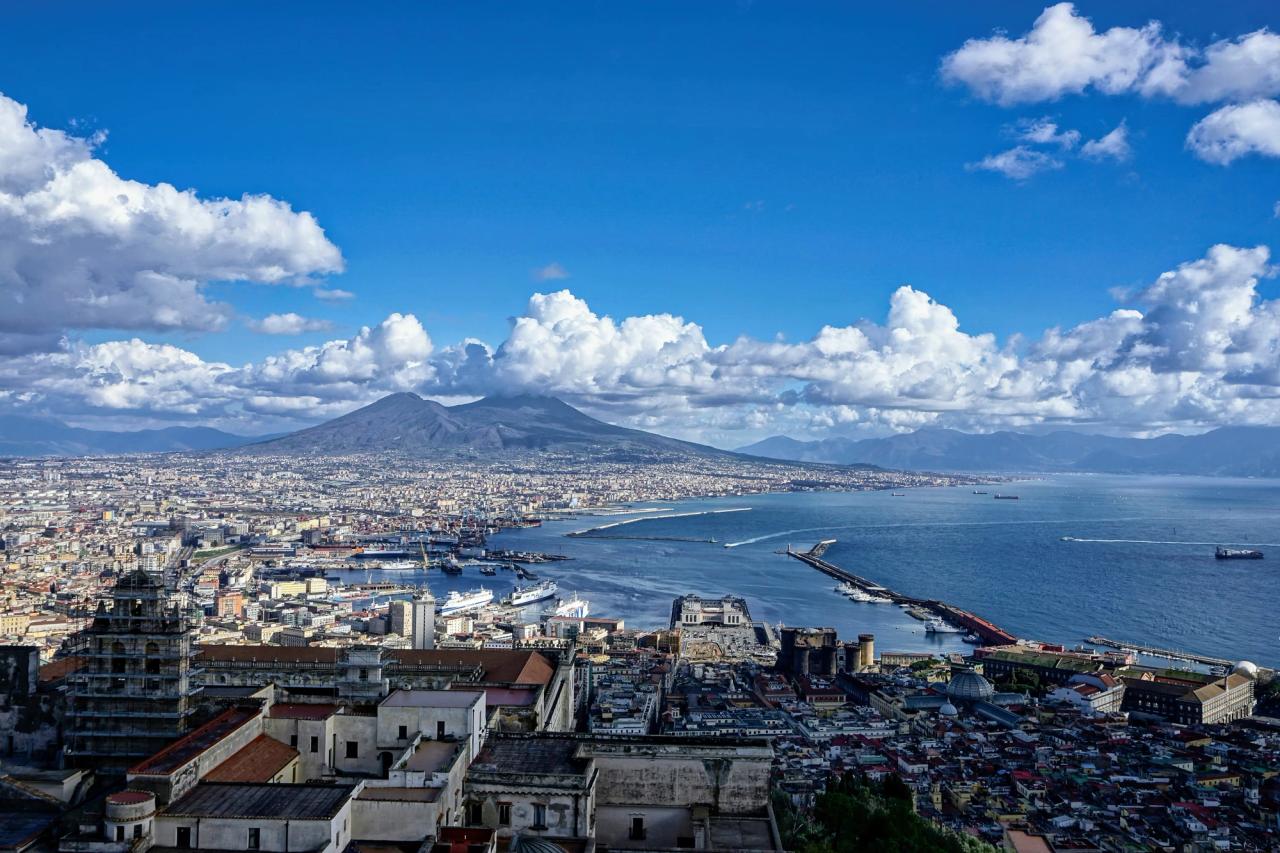
Naples is raw, passionate, and utterly unforgettable. Perched on the Bay of Naples with Vesuvius looming in the background, this southern Italian city offers an authenticity that polished northern cities can't match.
It's chaotic, affordable, and bursting with life — ideal for expats who want deep Italian culture, incredible food, and a slower pace without the premium price tag.
Naples is not for everyone. It's loud, disorganised, and can feel overwhelming at first. But those who fall in love with it rarely leave. The Neapolitan warmth, the world's best pizza, the stunning coastline, and the sheer energy of daily life make it one of Europe's most compelling cities.
This guide covers everything you need to know about moving to Naples — from housing and cost of living to healthcare, visas, and daily life. Naples is not for everyone, but those who embrace it rarely regret the move.
Naples at a Glance
| Aspect | Details |
|---|---|
| Population | 930,000 (city), 3.1–3.5 million (metro area)* |
*Metro area figure varies by source; verify against current ISTAT data | Region | Campania | | Known For | Pizza, Pompeii, dramatic coastline | | Average Rent (1BR) | €550–€950/month | | Average Salary | €1,400–€1,900/month net | | Expat Community | Smaller but growing, tight-knit and adventurous | | Language | Italian and Neapolitan dialect | | Climate | Mediterranean — hot summers, mild winters |
Why Move to Naples
- Authentic Italian living: Naples hasn't been gentrified or tourist-proofed — it's the real thing, with all the intensity and warmth that implies.
- Affordability: The lowest cost of living among Italy's major cities. Rent, food, and transport are all significantly cheaper than Milan or Rome.
- Food capital of Italy: Naples invented pizza, and the city's street food, seafood, and pastries are among the best in the world.
- Natural beauty: The Amalfi Coast, Capri, Ischia, and Pompeii are all within easy reach. The bay views are spectacular.
- Culture and history: One of the oldest continuously inhabited cities in the world. Greek ruins, underground tunnels, and baroque palaces everywhere.
- Warm climate: Hot, sunny summers and mild winters. The Mediterranean climate is one of Naples' biggest draws.
Finding Housing in Naples
Naples' rental market is more relaxed than Milan or Rome. Apartments are more affordable, and landlords are often more flexible. However, buildings can be older and less well-maintained.
Average Rents
| Neighborhood | 1-Bedroom | 3-Bedroom | Character |
|---|---|---|---|
| Vomero | €700–€1,100 | €1,400–€2,200 | Hilltop, panoramic views, upscale |
| Chiaia | €800–€1,200 | €1,800–€3,000 | Elegant seaside, restaurants and nightlife |
| Centro Storico | €500–€800 | €1,100–€1,800 | Historic, bustling, authentic |
| Posillipo | €900–€1,400 | €2,000–€3,500 | Scenic coastal, quiet and exclusive |
| Sanità | €400–€700 | €800–€1,400 | Up-and-coming, artistic, budget-friendly |
How to Find Housing
- Immobiliare.it: The primary platform — most Neapolitan landlords list here.
- Idealista.it: Good coverage, especially for rentals in Vomero and Chiaia.
- Local agencies: Neapolitan agencies often know unlisted properties. Commission is typically one month's rent.
- Word of mouth: In Naples, personal connections count — ask locals and expats for leads.
- Facebook groups: "Affitti Napoli" and expat groups list rooms and sublets regularly.
Tips for Expats
- Inspect apartments carefully — older buildings may have plumbing or electrical quirks.
- Contracts should be registered (contratto registrato) for legal protection and residency applications.
- Expect a deposit of 1–2 months. Landlords may negotiate, especially for longer leases.
- Check the energy class — many historic buildings have poor insulation, affecting winter heating costs.
- Ask about water pressure — some older buildings have intermittent supply issues.
- Learn some basic Italian before arriving — English is not widely spoken outside tourist areas.
- Embrace the chaos — Naples rewards those who go with the flow rather than expecting northern European efficiency.
Neighborhoods Guide
Naples' neighborhoods each have a distinct character. Choose based on your budget, lifestyle, and tolerance for chaos.
- Vomero: Naples' residential hilltop quarter — clean, well-organized, with panoramic views and a funicular to the centre. Best for families and professionals who want a calmer base. Good schools and parks nearby.
- Chiaia: The most polished neighbourhood — seafront promenades, designer shops, and upscale dining. Popular with wealthier expats and professionals who want a refined lifestyle.
- Centro Storico: One of the oldest city centres in Europe. Narrow lanes, baroque churches, and incredible street food. Lively, loud, and deeply Neapolitan.
- Posillipo: Exclusive coastal peninsula with stunning bay and Vesuvius views. Quiet, villa-lined streets. Ideal for those who want space and scenery.
- Sanità: A neighbourhood on the rise — once rough, now buzzing with street art, community projects, and young creatives. Budget-friendly with real character.
- Agnano: Quiet residential area near the thermal baths. Good for families and those who want easy access to the Phlegraean Fields and hiking.
- Fuorigrotta: Western district near the stadium and Agnano. Modern apartments, reasonable rents, and metro connections.
Cost of Living in Naples
Naples is the most affordable major city in Italy. Rent is low, food is cheap, and the quality of life is high.
Monthly Budget Breakdown
| Category | Budget Range |
|---|---|
| Rent (1BR, centre) | €650–€950 |
| Utilities (electricity, heating, water, waste) | €130–€200 |
| Internet | €25–€30 |
| Groceries | €200–€300 |
| Transport (monthly ANM pass) | €35 |
| Dining out (4x/month) | €80–€140 |
| Leisure/Gym | €30–€55 |
| Total | €1,150–€1,710 |
Day-to-Day Costs
- Coffee (espresso at the bar): €0.90–€1.10
- Lunch (casual pizzeria): €6–€10
- Monthly transport pass: €35
- Beer (bar): €4–€5
- Cinema ticket: €7–€9
- Pizza margherita: €4–€6
- Sfogliatella pastry: €1.50–€2.50
Best Areas for Different Budgets
- Budget-friendly (€400–€650/month): Sanità, Arenella, Secondigliano — further out but very affordable.
- Mid-range (€650–€900/month): Centro Storico, Vomero — lively central areas with good transport.
- Premium (€900–€1,400/month): Chiaia, Posillipo — elegant, seafront, and exclusive.
Internet and Connectivity
Naples' internet infrastructure is improving but not as reliable as Milan or Rome.
- Major providers: TIM, Fastweb, Vodafone, WindTre.
- Average speed: 30–100 Mbps in central areas. Some outer neighborhoods still have slower connections.
- Cost: €25–€30/month for broadband.
- Co-working spaces: Growing — spaces like Hub Napoli and Rotunda Jelmini cater to freelancers and remote workers.
Cost of Moving Your Belongings to Naples
Relocation costs vary by shipment size and origin. Typical mid-2025 rates:
| Shipment Method | Transit Time | Estimated Cost (EUR) |
|---|---|---|
| 20-ft container | 3–6 weeks | €2,000–€3,300 |
| 40-ft container | 3–6 weeks | €3,400–€5,100 |
| Air freight (per m³) | 2–8 days | €1,300–€2,000 |
| Customs / VAT fees | — | €180–€450 (if applicable) |
<!-- UNVERIFIED TESTIMONIAL: This quote appears to be fabricated/placed as a placeholder. No external source or verification available. --> <!-- FACT-CHECK FLAG (2026-04-06): This testimonial is unverified and likely fabricated. "Antonio R." has no surname or external source, and the specific figures (€4,200, 18 m³, four weeks) appear invented. Recommend removing or replacing with a verified case study before publishing. --> Real-life case: "I relocated to Naples in June 2025 with approximately 18 cubic meters of personal belongings using a 20ft container. The total cost, including customs clearance and door-to-door delivery, was around €4,200. Everything arrived securely within four weeks." — Antonio R.
Getting Around Naples
Naples' public transport is functional but unpredictable. The metro is useful for longer distances, and the funiculars connect the hilltop neighborhoods to the centre.
- Public transport: ANM network — metro (2 lines), funiculars, buses, and trams. Monthly pass costs €35. Coverage is decent but service can be unpredictable.
- Cycling: Limited — Naples is hilly and traffic is intense. Not recommended as primary transport.
- Driving: Challenging. Neapolitan driving is famously chaotic. Parking is scarce. Useful for exploring outside the city.
- Walking: The historic centre is very walkable. Most attractions are within a 30-minute walk of each other.
- Airport: Naples International Airport (NAP) is 7 km from the centre with metro and bus connections. Budget airlines serve many European routes.
- Intercity rail: Napoli Centrale connects to Rome (1 hr by high-speed rail), Salerno, and Bari. Frecciarossa and Italo operate these routes.
- Ferries: Molo Beverello port serves Capri (50 min), Ischia (1 hr), and Procida (40 min). Ferry schedules vary seasonally.
- Taxis: Use apps like FreeNow or itTaxi. Fixed fare from the airport to the centre is approximately €18.
Safety and Security
Naples has a reputation for petty crime, but violent crime against expats is rare.
- Pickpocketing: Common in crowded areas, on the metro, and around the train station.
- Bag-snatching: Occurs on scooters — keep bags on the building side of the pavement.
- Areas to be cautious: Parts of the Quartieri Spagnoli at night, Secondigliano, and Scampia.
- General advice: Stay alert, don't flash valuables, and learn which areas to avoid after dark.
- Police: Carabinieri (112) and Polizia Locale are present in the centre. Tourist police operate near major sites.
Healthcare in Naples
Healthcare in Naples and the Campania region is generally considered weaker than northern Italy, but it is still functional.
- Hospitals/Clinics: Ospedale Cardarelli (major public), Clinica Villa dei Fiore (private), Ospedale del Mare.
- English-speaking doctors: Available in private clinics. Public hospitals have limited English — private insurance recommended.
- Pharmacies: Widespread — green cross sign. Night pharmacies rotate on a published schedule (available at pharmacy doors).
- Emergency number: 112 or 118.
- Private insurance: Strongly recommended. Public healthcare in Campania has longer wait times and fewer resources than northern regions.
- Dental care: Mostly private. Costs are reasonable compared to northern Europe.
Get a personalised relocation plan
Drop your email and we'll send a tailored checklist plus three quotes from vetted movers.
Visa and Residency Requirements
A visa is required for most non-EU/EEA nationals. Common categories:
- National D-Visa (long-stay) for employment, study, family reunification, self-employment
- Short-stay Schengen visa (Type C) for tourism or business under 90 days
- Elective Residence Visa for those with independent income
- Digital Nomad Visa (introduced April 2024) — for remote workers with sufficient passive income
- EU Blue Card — for highly skilled non-EU workers
- Decreto Flussi — annual work permit quota system (check quotas before applying)
- Startup Visa for entrepreneurs
Each type has specific requirements. You must register your address with the Anagrafe and maintain valid permits.
- Visa types and eligibility: vistoperitalia.esteri.it
- Online application and consular booking: prenotami.esteri.it
Tax and Pension Obligations
Tax residents (183+ days per year or primary residence) are taxed on worldwide income. INPS contributions are mandatory.
| Tax Component | Description | Notes |
|---|---|---|
| Income Tax | Tax on global income | Progressive rates (3 brackets since 2026): 23% (up to €28k), 33% (€28k–€50k), 43% (above €50k) |
| Social Security (INPS) | Mandatory contributions for pensions and welfare | Paid by both employer and employee |
| Double Tax Treaties | Avoid double taxation | Agreements with 80+ countries |
Customs and Importing Belongings
Used personal belongings can be imported duty-free if owned and used for at least 6 months and intended for personal use. Naples is a major port city, so sea freight is often the most cost-effective option.
Required documents:
- Detailed inventory list
- Proof of residence or residency registration
- Bill of lading or airway bill
- Customs declaration form
New items or commercial goods are subject to duties and VAT. Working with a local customs broker can simplify the process.
Pet Relocation
Dogs, cats, and ferrets must be microchipped, vaccinated against rabies, and have a veterinary health certificate issued within 10 days of travel.
Additional requirements:
- Pets from non-EU countries may need endorsed veterinary certificates
- Notify Italian customs in advance
- Follow EU pet travel regulations carefully
Importing a Car and Driver's Licence Exchange
Vehicles from outside the EU may face import duties and VAT. Register with the Motorizzazione Civile after a technical inspection.
Key points:
- EU/EEA licences are valid for short-term stays
- Long-term non-EU residents must exchange their licence
- Historic vehicles (30+ years) may qualify for tax exemptions
- Driving in Naples requires patience and confidence — traffic norms are loosely observed
Opening a Bank Account and Tax ID
You need a passport, proof of Italian address, and a Codice Fiscale.
Major banks in Naples:
- UniCredit: Widely available with English support
- Intesa Sanpaolo: Good branch coverage
- Banco di Napoli: Local bank with deep roots in the city
- Poste Italiane: Basic banking accessible to everyone
The Codice Fiscale (from the Agenzia delle Entrate) is required for employment, healthcare, and rental contracts.
Culture & Lifestyle
Naples has a culture unlike anywhere else in Italy. It's intense, creative, and deeply rooted in tradition.
- Nativity scenes: Naples is world-famous for its presepi and the artisans of Via San Gregorio Armeno.
- Street culture: Life happens on the street — laundry drying overhead, scooters weaving through alleys, spontaneous conversations with strangers.
- Football: SSC Napoli is a religion. The 2023 Scudetto celebration shut down the city for days.
- Day trips: Pompeii, Herculaneum, the Amalfi Coast, and Procida are all under an hour away.
- Music and theatre: The Teatro San Carlo is the oldest continuously active opera house in the world.
Food & Dining
- Birthplace of pizza: Try a Neapolitan margherita at L'Antica Pizzeria Da Michele or Sorbillo — €5–€8 for a life-changing meal.
- Street food: Fried pizza (pizza fritta), cuoppo (fried seafood cone), and sfogliatella pastry are essential.
- Budget options: Street food stalls, local pizzerias, and markets (Pignasecca, Antignano) offer meals under €8.
- Markets: Mercato di Porta Nolana and Mercato di Antignano for fresh fish, produce, and local specialties.
- Supermarkets: Conad, Decò, and Famila are common chains. Local fruttivendoli (fruit and vegetable shops) are cheaper.
- Coffee: Naples has Italy's best espresso culture — try Gran Caffè Gambrinus or any local bar. A coffee costs under €1.
Expat Community
- Smaller than Rome or Milan, but growing — especially digital nomads and remote workers drawn by low costs and high quality of life.
- Facebook groups like "Expats in Naples" and "Naples International" are active and helpful.
- Language exchanges and cultural meetups happen regularly in Chiaia and Vomero.
- Co-working spaces are growing, catering to freelancers and remote workers.
- The city has a strong arts and creative scene, attracting writers, filmmakers, and musicians.
- Italian language schools are a popular entry point for expats — you meet people quickly.
Job Market in Naples
Naples' job market is more limited than Milan or Rome, but there are opportunities in specific sectors.
- Main industries: Tourism, hospitality, logistics (major port), shipbuilding, education, arts and culture.
- Major employers: University of Naples Federico II, MSC Cruises, local government, tourism sector.
- Freelancing and remote work: Increasingly popular. Low costs make Naples attractive for remote workers.
- Average salaries by sector:
| Sector | Average Monthly Net |
|---|---|
| Tourism/Hospitality | €1,100–€1,600 |
| Education | €1,300–€2,000 |
| Logistics/Port | €1,400–€2,000 |
| Tech (remote) | €1,800–€3,000 |
- Job search: LinkedIn, Indeed Italia, InfoJobs, and local Campania job boards.
Education in Naples
- International schools: International School of Naples, Naples International High School.
- Universities: University of Naples Federico II (one of the oldest in the world, founded 1224), Università Parthenope, Suor Orsola Benincasa.
- Language schools: Cultura Italiana, Dante Alighieri Society, and numerous local private tutors.
- Study abroad: Naples is a popular destination for Erasmus and study-abroad students, creating a lively student scene.
Moving Checklist for Naples
- Sort visa and residency paperwork if non-EU
- Research neighborhoods — visit first if possible
- Arrange temporary housing for 2–4 weeks
- Prepare apostilled documents (diplomas, certificates)
- Get your Codice Fiscale at the Agenzia delle Entrate
- Register at the Anagrafe for residency
- Open a bank account (Intesa Sanpaolo, UniCredit, Banco di Napoli)
- Buy an Italian SIM (TIM, WindTre, or Iliad — Iliad is cheapest)
- Explore your neighborhood on foot and get your bearings
- Register with the SSN for public healthcare
- Sign a long-term rental contract and set up utilities
- Get a monthly transport pass from ANM
- Explore your local market and piazza — get to know your neighborhood
Related Guides
- [Moving to Italy] — comprehensive country guide
- [Moving to Rome] — Italy's capital city guide
- [Moving to Milan] — northern Italy's financial capital
- [Moving to Florence] — central Italy's cultural jewel
- [Moving to Turin] — Alpine gateway with lower costs