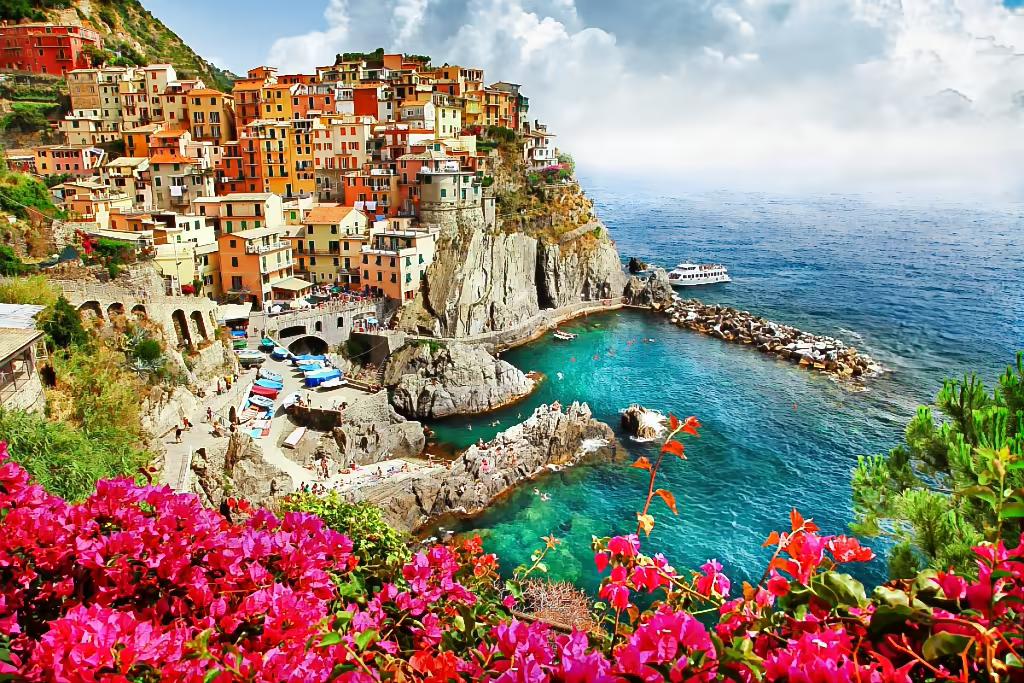

Dreaming of la dolce vita? Italy offers expats an unrivalled combination of world-class cuisine, rich history, stunning landscapes, and a culture that celebrates the good things in life. Whether you're drawn to Rome's ancient streets, Milan's fashion scene, or the Amalfi Coast's beauty, this guide covers everything you need for a smooth relocation in 2026.
If you are searching in Italian for "traslocare in Italia," you are asking the same practical questions this guide is built to answer: what does the move cost, how long does transit take, and how do you compare verified international movers for a move to Italy? Planning your timeline, budget, and mover quotes early makes the difference between a smooth relocation and a stressful one, whether you are arriving from within the EU or from further afield.
German-speaking movers often search "spedition deutschland italien" when planning a Germany-to-Italy household move. In this context "Spedition" refers to a removals or forwarding company handling furniture and personal belongings, so the practical priorities are transit time through the Alps, customs-free EU movement, and a mover with regular Germany-Italy household routes.
Italy at a Glance
- Population
- Around 59 million
- Capital
- Rome
- Currency
- Euro (EUR)
- Average Salary
- Around €1,675/month net (€25,000-€32,000/year gross)
- Language
- Italian (English spoken in tourist areas and international companies)
- Climate
- Mediterranean (south), continental (north), alpine (mountains)
- Time Zone
- CET (UTC+1) / CEST (UTC+2)
Why Move to Italy in 2026
- World-renowned lifestyle: Italy's emphasis on food, family, and leisure creates a quality of life that's hard to match. Long lunches, evening passeggiata, and weekend aperitivo are daily rituals.
- Exceptional food culture: From fresh pasta to regional wines, Italian cuisine varies dramatically by region — every area has its own specialties.
- Excellent public healthcare: Italy's Servizio Sanitario Nazionale (SSN) provides universal healthcare, ranked among Europe's best.
- Rich cultural heritage: More UNESCO World Heritage Sites than any other country. World-class museums, architecture, and art everywhere.
- Affordable compared to northern Europe: While Milan and Rome are pricey, most Italian cities offer significantly lower costs than London, Paris, or Amsterdam.
- Strategic European location: Easy access to the rest of Europe, North Africa, and the Mediterranean.
- Growing tech and startup ecosystem: Milan, Turin, and Bologna are emerging as innovation hubs.
Moving Costs to Italy
Costs by Origin Region
| Origin | Estimated Cost Range | Shipment Type |
|---|---|---|
| UK to Italy | €1,200 - €2,500 | Part load / shared container |
| USA to Italy | €3,500 - €7,000 | 20ft container |
| Germany to Italy | €800 - €1,800 | Part load / shared container |
| Australia to Italy | €4,500 - €9,000 | 20ft container |
| Within Italy | €400 - €1,200 | Removal van |
Component Costs Explained
- Transportation: €600 - €4,000 depending on distance and volume
- Insurance: €100 - €350
- Customs clearance: €100 - €300 (for non-EU moves)
- Packing materials: €80 - €250
- Storage: €40 - €150/month
Need a personalised estimate?
Get three vetted moving-company quotes in under 48 hours.
Visa & Residency Requirements
For EU/EEA Citizens
EU citizens can live and work in Italy without a visa. After 3 months, you should:
- Register at the local Anagrafe (civil registry) of your comune (municipality)
- Obtain a Certificato di Residenza
- Get your Codice Fiscale — essential for virtually everything
For Non-EU Nationals: Main Visa Categories
Digital Nomad Visa (Visto per Lavoratori Digitali)
- Who it's for: Remote workers employed by or freelancing for clients outside Italy
- Requirements: Minimum income of €28,000/year, health insurance, employment/contract outside Italy
- Duration: 1 year, renewable
- Key detail: Introduced in 2024 — limited annual quotas initially but expanding
Elective Residence Visa (Visto per Residenza Elettiva)
- Who it's for: Retirees and those with passive income (investments, pensions, property income)
- Requirements: Proof of stable income of at least €31,000/year (individual) or €38,000+ (couple), no work in Italy
- Duration: 1 year, renewable
- Key detail: Cannot work in Italy. Popular with retirees.
Work Visa (Visto per Lavoro Subordinato)
- Who it's for: Employees with a job offer from an Italian employer
- Requirements: Employer must apply for nulla osta (work authorization) through Sportello Unico
- Duration: Matches contract, typically 1-2 years
- Key detail: Subject to annual quota (Decreto Flussi) for non-EU workers
EU Blue Card (Carta Blu UE)
- Who it's for: Highly qualified non-EU workers
- Requirements: University degree + salary at least 1.5x average gross salary
- Duration: Up to 4 years
- Key detail: Facilitates EU mobility after 18 months
Student Visa (Visto per Studio)
- Who it's for: Enrolled in Italian educational institutions
- Requirements: University acceptance, proof of funds, health insurance
- Duration: Duration of studies
- Key detail: Can work up to 20 hours/week
Self-Employment Visa (Visto per Lavoro Autonomo)
- Who it's for: Freelancers, entrepreneurs, business owners
- Requirements: Proof of available funds, business plan, professional qualifications
- Duration: 2 years, renewable
- Key detail: Complex process — requires Chamber of Commerce registration
- Opening a bank account
- Signing a rental contract
- Getting a phone contract
- Accessing healthcare
- Paying taxes
- Almost any official interaction
- Apply at the Italian consulate in your home country (before moving) OR
- Apply at the local Agenzia delle Entrate (tax office) after arriving
- Bring passport, visa (if applicable), proof of address
- Free of charge — issued on the spot or within days
- Go to the local Questura (police headquarters) or post office (Sportello Amico)
- Fill out the application kit (available at post offices)
- Submit required documents: passport, photos, proof of accommodation, health insurance, financial means
- Attend fingerprinting appointment at Questura
- Receive your permesso (processing can take 2-6 months)
Finding Housing in Italy
The Italian rental market varies dramatically — Milan is extremely competitive, while southern cities are more relaxed and affordable.
Average Rents by Major City (2025-2026)
| City | 1-Bedroom (Center) | 1-Bedroom (Outside) | 3-Bedroom (Center) | Market Level |
|---|---|---|---|---|
| Milan | €850 - €1,400 | €600 - €1,000 | €1,600 - €3,000 | Very competitive |
| Rome | €750 - €1,200 | €550 - €900 | €1,300 - €2,500 | Competitive |
| Florence | €650 - €1,000 | €450 - €750 | €1,100 - €2,000 | Competitive |
| Bologna | €550 - €850 | €400 - €650 | €900 - €1,500 | Moderate |
| Turin | €450 - €700 | €350 - €550 | €750 - €1,300 | Relaxed |
| Naples | €400 - €700 | €300 - €500 | €650 - €1,200 | Relaxed |
Source: Numbeo, March 2026. National average 1BR center: €732.
Understanding Italian Rent Terms
- Affitto (Rent): Monthly rent amount
- Spese condominiali (Building fees): Maintenance costs for shared building areas — often €50-€200/month extra
- Deposito (Deposit): Typically 2-3 months' rent
- Contratto a canone libero: Free-market lease (4+4 years — 4 years, automatically renewed for 4 more)
- Contratto a canone concordato: Rent-controlled lease (3+2 years), lower rent but more restrictions
How to Find Housing
Online Platforms:
- Immobiliare.it: Italy's largest property portal
- Idealista.it: Very popular, good selection
- Casa.it: Third major portal
- Subito.it: Classified ads, direct from owners
- Spotahome: Virtual tours, expat-friendly
Required Documents for Renting
- Valid passport and Codice Fiscale
- Visa or residence permit (for non-EU)
- Proof of income (employment contract, bank statements)
- Italian bank account (many landlords require it for direct debit)
Tips for Foreigners
- Get your Codice Fiscale before searching — you need it for everything
- Italian apartments often come unfurnished (no kitchen!) — clarify "arredato" (furnished) vs "non arredato"
- Spese condominiali (building fees) are often NOT included in listed rent — always ask
- In Milan and Rome, be prepared to decide quickly
- Cash payments are still common for deposits in some cases
Healthcare & Insurance
Italy has an excellent public healthcare system available to all legal residents.
Public Healthcare (Servizio Sanitario Nazionale - SSN)
- Coverage: GP visits, specialist referrals, hospital care, emergency treatment, prescriptions (partially subsidized)
- How to register: At your local ASL/AUSL (Local Health Authority) with proof of residence and Codice Fiscale
- Cost: Free for employed residents (covered by social contributions). Voluntary registration for non-workers: ~€2,000/year minimum in 2026 (raised from €387.34 by the 2024 budget law; maximum ~€2,789)
- Quality: Italy's healthcare is ranked among the world's best — particularly strong in cardiology, oncology, and orthopedics
Tessera Sanitaria
Your health card — used for all medical services, prescriptions, and specialist visits. Issued after SSN registration.
Private Health Insurance
Many expats also carry private insurance:
- Cost: €50-€200/month depending on age and coverage
- Top providers: Allianz Care, Cigna Global, Generali, Unisalute
- Why: Shorter wait times, English-speaking doctors, broader dental/optical coverage
Doctor Visits & Costs
- GP visit (public): Free with Tessera Sanitaria
- Specialist (public): Small co-pay (ticket) of €20-€40
- Prescriptions: Partially subsidized — typically €1-€5 per medication
- Emergency: Free
- Private GP visit: €50-€150
Get a personalised relocation plan
Drop your email and we'll send a tailored checklist plus three quotes from vetted movers.
Banking & Finance
Opening a Bank Account
Required documents:
- Valid passport
- Codice Fiscale (essential)
- Proof of address
- Visa or residence permit (for non-EU)
Top banks for expats
Intesa Sanpaolo
- Largest Italian bank
- extensive network
UniCredit
- Second-largest
- strong international presence
FinecoBank
- Excellent online bank
- low fees
- popular with expats
N26 / Revolut
- Quick to open
- no branch needed
Tax System
- Income tax (IRPEF): Progressive rates with 3 brackets (2026): 23% up to €28,000, 33% from €28,001–€50,000, 43% above €50,000
- Social contributions: ~9-10% for employees (employer pays ~30%)
- VAT (IVA): 22% standard, 10% reduced, 4%/5% super-reduced
- Imposta di bollo: Stamp duty on bank accounts (~€34.20/year)
SPID Digital Identity
SPID (Sistema Pubblico di Identità Digitale) is Italy's digital identity system — increasingly required for:
- Accessing government services online
- Tax filing (Agenzia delle Entrate)
- Healthcare portal (Fascicolo Sanitario Elettronico)
- INPS (social security) services
How to get it: Apply through authorized providers (PosteID, Sielte, Aruba, etc.) — requires Codice Fiscale and Italian ID.
Cost of Living in Italy
Monthly Budget Breakdown by City
| City | One-Person Budget | Family of 3 Budget | Cost Level |
|---|---|---|---|
| Milan | €1,500 - €2,400 | €2,800 - €4,500 | High |
| Rome | €1,300 - €2,100 | €2,500 - €4,000 | Moderate-High |
| Florence | €1,100 - €1,800 | €2,200 - €3,500 | Moderate |
| Bologna | €1,000 - €1,600 | €2,000 - €3,200 | Moderate |
| Turin | €900 - €1,400 | €1,800 - €2,800 | Low-Moderate |
| Naples | €800 - €1,300 | €1,600 - €2,600 | Low |
Detailed Cost Breakdown
Housing:
- 1-bedroom apartment (city center): €500 - €1,400/month
- 1-bedroom apartment (outside center): €400 - €1,000/month
- Utilities (85m²): €130 - €319/month
- Internet: €24 - €38/month
Groceries & Food:
- Monthly groceries (1 person): €220 - €400
- Inexpensive restaurant meal: €10 - €25
- Mid-range restaurant for 2: €50 - €100
- Espresso at bar: €1.00 - €1.50 (more if seated)
- Aperitivo with snacks: €8 - €12
Transportation:
- Monthly public transport: €30 - €52 (Milan: ~€39, Rome: ~€35)
- Taxi start: €3.50 - €10.00
- Gasoline (1 liter): €1.69 - €1.90
- Frecciarossa high-speed train (Milan-Rome): €25 - €80
Comparison with Other Countries
- vs France: Italy is 10-20% cheaper overall; groceries and dining often less expensive
- vs UK: Italy is 20-30% cheaper; especially in rent outside Milan
- vs Spain: Comparable overall; Italy slightly more expensive for groceries, similar rent
Language & Culture Tips
Do You Need Italian?
Yes, definitely. Outside international companies and tourist hotspots, English is not widely spoken. Italian is essential for dealing with bureaucracy, landlords, doctors, and daily life.
Language Resources
- Dante Alighieri Society: International Italian language organization
- Local schools: €150-€350/month for group courses
- University language centers: Often affordable courses for foreigners
- Tandem partners: Available through apps and local meetups
Cultural Norms
Meals:
- Lunch is typically 12:30-14:30; dinner is 19:30-21:30 (later in summer)
- Aperitivo (pre-dinner drinks with snacks) is a daily social ritual, usually 18:00-20:00
- Never ask for parmesan on seafood pasta — it's a culinary sin
- Coffee (espresso) is drunk standing at the bar, after meals — never cappuccino after 11am
Social life:
- Italians are warm, expressive, and physical (cheek kisses, gestures)
- The passeggiata (evening stroll) is a daily tradition
- Fashion and appearance matter — dress well for social occasions
- Sundays are family days — many shops closed
Administrative culture:
- Italian bureaucracy is notoriously slow and complex
- Always bring original documents plus multiple photocopies
- Appointments are essential — but expect delays even with an appointment
- Patience is not optional — it's a survival skill
Moving Checklist
- Research visa requirements and start application
- Get Codice Fiscale from Italian consulate (if possible)
- Start learning Italian
- Get moving quotes
- Research cities and neighborhoods
- Apply for visa at Italian consulate
- Book moving company
- Arrange temporary accommodation for first 1-3 months
- Gather and apostille/translate documents
- Pack belongings
- Arrange travel to Italy
- Download essential apps (Immobiliare, Citymapper, Google Translate)
- Get Italian SIM card (TIM, Vodafone, Iliad, WindTre)
- Apply for Permesso di Soggiorno (within 8 days if non-EU)
- Open Italian bank account
- Register at Anagrafe (civil registry) of your comune
- Register with SSN at local ASL for Tessera Sanitaria
- Begin housing search
- Apply for SPID digital identity
- Sign a lease and move into permanent housing
- Set up utilities (electricity: Enel/Edison, gas, internet)
- Explore your neighborhood
Where to Find Tools and Resources
ReloAdvisor Tools:
- Volume calculator
- Video survey
- Moving cost calculator
Official Italian Resources:
- Agenzia delle Entrate — Tax authority (Codice Fiscale)
- Portale Immigrazione — Immigration portal
- SSN Registration — Ministry of Health
Expat Communities:
- Expat.com Italy — Forums and guides
- Internations Italy — Global expat network
- Expats in Italy (Facebook groups) — City-specific groups
Related Guides:
- Moving to Spain
- Moving to France