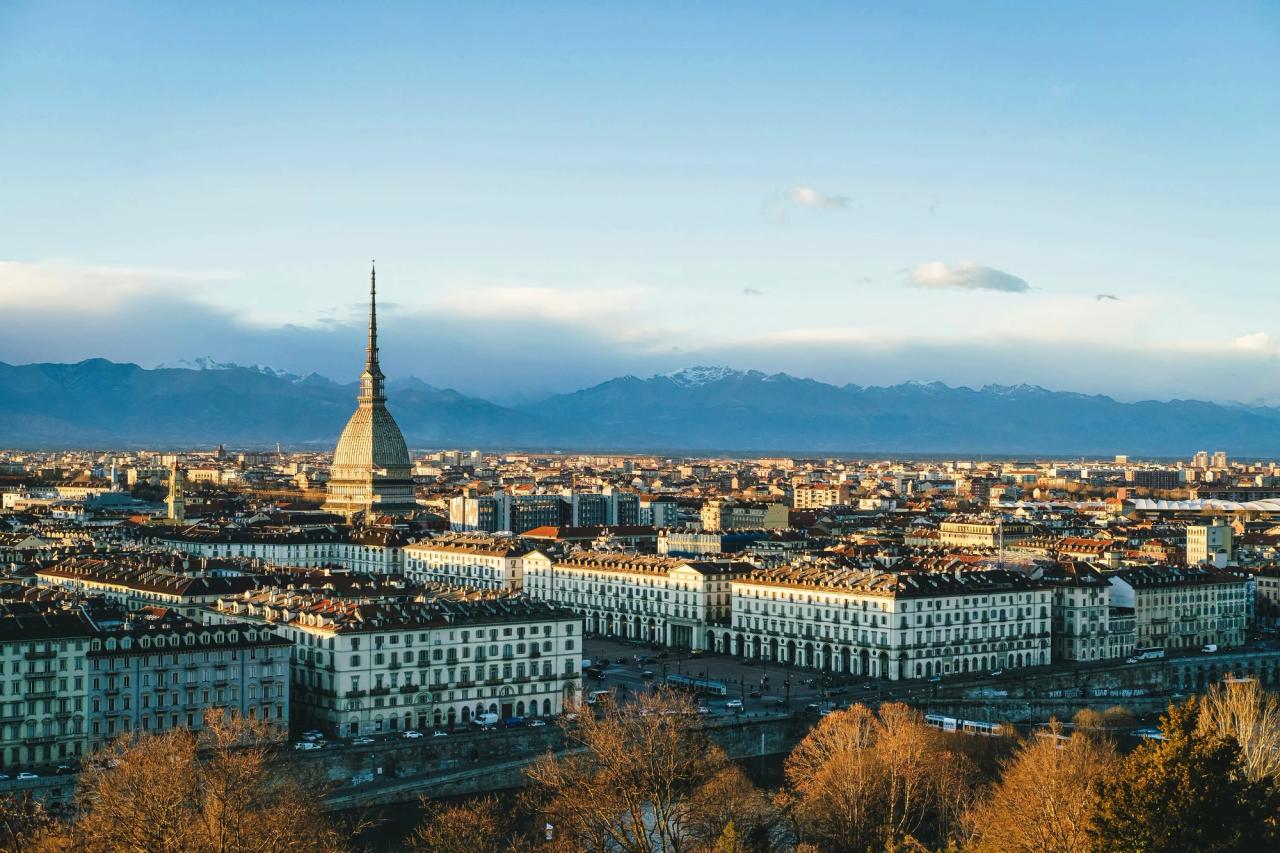

Torino er Italiens bedst bevarede hemmelighed — en sofistikeret, ordentlig by ved foden af Alperne med en rig industriel arv, verdensklasse-museer og en madkultur, der kan måle sig med enhver by i Italien.
Hvis du ønsker italiensk livskvalitet uden turistmængderne eller de astronomiske huslejer i Milano, er Torino et fremragende valg. Byen er ren, veldrevet og bliver stadig mere populær blandt tech-folk, ingeniører og familier.
Byen har en tydeligt nordeuropæisk atmosfære — gader med arkader, storslåede pladser og chokoladebutikker på hvert et hjørne. Alperne er synlige på klare dage og kun en times køretur for at stå på ski. Alligevel er den ubestridt italiensk i sin mad, sit livstempo og sin sociale varme.
Torino var det forenede Italiens første hovedstad og fødebyen for Fiat. I dag fornyr byen sig som et knudepunkt for luftfart, tech og innovation, mens den bevarer sin barokke elegance og kulinariske traditioner.
Denne guide dækker alt, hvad du behøver at vide om at flytte til Torino — fra boliger og leveomkostninger til sundhedsvæsen, visum og hverdagsliv.
Torino i korte træk
- Befolkning
- 855.654 (by), 2,2 millioner (storstadsområde)
- Region
- Piemonte
- Kendt for
- Bilindustri (Fiat), chokolade, barokarkitektur
- Gennemsnitlig leje (1-værelses)
- €550–€900/md.
- Gennemsnitlig løn
- €1.800–€2.300/md. netto
- Ekspat-miljø
- Voksende, især inden for bilindustri og tech
- Sprog
- Italiensk (mindre engelsk end Milano eller Rom)
- Klima
- Fastlandsklima — kolde tågede vintre, varme somre
Hvorfor flytte til Torino
- Overkommelige priser: Torino tilbyder fremragende livskvalitet til en brøkdel af Milanos omkostninger. Husleje, restauranter og transport er alle markant billigere.
- Industri og innovation: Det historiske hjem for Fiat og nu et voksende knudepunkt for tech og luftfart — ideelt for ingeniører og innovatører.
- Arkitektur og elegance: Barokpalæer, storslåede pladser og det ikoniske Mole Antonelliana giver Torino en statelig, næsten parisisk atmosfære.
- Nærhed til Alperne: Skisportssteder i Alperne ligger 1–1,5 times køretur væk. Lago d'Orta og Lago Maggiore ligger tæt på. Udendørsentusiaster trives her.
- Livskvalitet: Ren, sikker, velorganiseret og ikke overfyldt. Torino scorer konsekvent højt i italienske livskvalitetsundersøgelser.
At finde bolig i Torino
Torinos lejemarked er mindre konkurrencepræget end Milanos — tag dig tid til at finde det rette sted. Lejlighederne er mere rummelige og overkommelige i pris.
Gennemsnitlige huslejer
| Bydel | 1-værelses | 3-værelses | Præg |
|---|---|---|---|
| Centro | €700–€1.000 | €1,400–€2,200 | Historisk centrum, elegant og gåvenlig |
| San Salvario | €550–€850 | €1,100–€1,800 | Levende, multikulturelt, natteliv |
| Lingotto | €500–€750 | €1,000–€1,600 | Moderne, tidligere industriområde |
| Borgo Po | €650–€950 | €1,300–€2,100 | Grønt, boligområde, nær floden |
| Quadrilatero Romano | €600–€900 | €1,200–€1,900 | Bohemisk, vintagebutikker, vinbarer |
| Crocetta | €650–€900 | €1,300–€2,000 | Eksklusivt, roligt, nær Politecnico |
Sådan finder du bolig
- Immobiliare.it: Den foretrukne platform til lejeboliger i Torino — største udvalg.
- Idealista.it: Godt alternativ med mange annoncer i centrum.
- Subito.it: Rubrikannoncer — populært til værelser og korttidsleje.
- Ejendomsmæglere: Provisionen er typisk én måneds leje. Mange udlejere foretrækker formidlede kontrakter.
Tips til expats
- Torinos lejemarked er mindre konkurrencepræget end Milanos — tag dig tid til at finde det rigtige sted.
- Ældre bygninger i centrum er smukke, men de mangler ofte elevator og har højt til loftet, hvilket øger opvarmningsomkostningerne.
- Bed altid om en registreret kontrakt (contratto registrato) for opholdstilladelse og skattefradrag.
- Tjek opvarmningstype — centralvarme er standard, men omkostningerne kan være høje om vinteren.
- Spørg om "spese condominiali" — bygningsafgifter varierer mellem €50–€150/md.
Bydele-guide
- Centro (Quadrilatero Reale): Det historiske hjerte — storslåede pladser (San Carlo, Castello), buede gader og elegante lejligheder. Gåafstand til alt. Bedst for professionelle og par.
- San Salvario: Torinos mest multikulturelle og energiske bydel. Etiopiske restauranter, indiske købmænd og livlige barer langs Via Madama Cristina. Populært hos unge professionelle.
- Lingotto: Tidligere industriområde i ny fortolkning — nu hjem for messecentret Lingotto Fiere, Eataly og moderne lejligheder. God værdi og godt forbundet med metro.
- Borgo Po: Grønt, roligt og boligpræget langs Po-floden. Fantastisk for familier — tæt på Valentino Park og bakkerne.
- Quadrilatero Romano: Byens ældste del — håndværksbutikker, vinbarer og en tydelig bohemisk atmosfære. Overkommelig pris og fuld af charme.
- Crocetta: Eksklusivt boligområde syd for centrum. Velholdte bygninger, stille gader og nærhed til Politecnico. Foretrukket af akademikere og familier.
Leveomkostninger i Turin
Turin er væsentligt billigere end Milano, samtidig med at byen tilbyder en tilsvarende livskvalitet. De største besparelser finder du på boligområdet.
Månedlig budgetoversigt
| Kategori | Budgetinterval |
|---|---|
| Leje (1-værelses, centrum) | €650–€900 |
| Forbrugsudgifter (el, varme, vand, affald) | €150–€220 |
| Internet | €25–€30 |
| Dagligvarer | €220–€320 |
| Transport (månedlig GTT-kort) | €38 |
| Restaurantbesøg (4 gange/md.) | €80–€140 |
| Fritid/fitnesscenter | €30–€60 |
| Total | €1,193–€1,708 |
Daglige udgifter
- Kaffe (espresso på baren): €1.00–€1.20
- Frokost (afslappet trattoria): €8–€12
- Månedlig transportkort: €38
- Øl (bar): €4.50–€6
- Biografbillet: €8–€10
- Gelato: 2,50 euro-3,50 euro
- Bicerin (traditionel varm drik): €3–€5
De bedste boligområder til forskellige budgetter
- Budgetvenligt (€400–€650/md.): Lingotto, Barriera di Milano, Mirafiori — længere fra centrum, men forbundet med metro og sporvogn.
- Mellemklasse (€650–€900/md.): Centro, San Salvario, Quadrilatero Romano — livlige centrale bydele med karakter.
- Premium (€900–€1,300/md.): Borgo Po, Crocetta, Cit Turin — elegante, rolige og velbetjente områder.
Internet og forbindelse
Turin har en god internetinfrastruktur, især i nærheden af Politecnico og i centrum.
- Større udbydere: TIM, Fastweb, Vodafone, WindTre, Iliad.
- Gennemsnitlig hastighed: 50–200 Mbps (fiber i centrale områder).
- Pris: €25–€30/md. for bredbånd.
- Coworking-områder: Toolbox Coworking, Grappa, Nana Lab — populære blandt freelancere og startups.
Omkostninger ved at flytte dine ejendele til Turin
Omkostningerne til flytning varierer afhængigt af forsendelsesstørrelse og afsendelsessted. Typiske priser medio 2025:
| Forsendelsesmetode | Transittid | Anslået pris (EUR) |
|---|---|---|
| 20-fods container | 2–5 uger | €1.800–€3.200 |
| 40-fods container | 2–5 uger | €3.200–€5.000 |
| Luftfragt (pr. m³) | 2–8 dage | €1.300–€2.000 |
| Told-/momsafgifter | — | €180–€450 (hvis relevant) |
Virkelig historie: "Jeg flyttede til Torino i september 2025 med omkring 20 kubikmeter ejendele i en 20-fods container. De samlede omkostninger, inklusive toldklarering og levering til Borgo Po, var cirka €3.400. Forsendelsen ankom inden for tre uger." — Giulia M.
Transport i Torino
- Offentlig transport: GTT-netværket — metro (1 linje), sporvogne og busser. Månedskort koster €38. Forholdsvis pålideligt efter italienske standarder.
- Cykling: Torinos flade terræn gør byen til en af Italiens mest cykelvenlige byer. Voksende netværk af cykelstier og bycykel-ordninger.
- Bilkørsel: Nemmere end i de fleste italienske byer. Parkering er overskuelig, og motorveje forbinder til Milano, Frankrig og Alperne.
- Lufthavn: Torino Caselle Airport (TRN) ligger 16 km mod nord med shuttlebus-forbindelse. Budgetflyselskaber og ITA Airways betjener europæiske ruter.
- Togforbindelser: Torino Porta Susa og Porta Nuova forbinder til Milano (45 min med højhastighedstog), Lyon og Rom (4,5 timer).
Sikkerhed
Torino er en af Italiens sikreste store byer. Kriminalitetsraten er lavere end i Milano, Rom og Napoli.
- Lommetyveri: Forekommer lejlighedsvis i folkerige områder og i offentlig transport.
- Bydels-sikkerhed: Centro, Crocetta og Borgo Po er meget sikre. Nogle ydre bydele (Barriera di Milano) kan føles rå.
- Politi: Carabinieri og Polizia Locale er synlige og lydhøre.
Sundhedsvæsen i Torino
- Hospitaler/klinikker: Ospedale Molinette (stort offentligt hospital), Ospedale Mauriziano, Clinica Fornaca — stærk medicinsk infrastruktur.
- Engelsktalende læger: Tilgængelige på private klinikker og visse afdelinger på universitetshospitalerne.
- Apoteker: Udbredte med skiftende nat- og weekendvagter.
- Nødnummer: 112 eller 118.
Fa en personlig flytteplan
Skriv din e-mail, sa sender vi en skraeddersyet tjekliste plus tre tilbud fra godkendte flyttefirmaer.
Visum- og opholdskrav
Udenlandske statsborgere skal have visum eller opholdstilladelse for at bo, arbejde eller studere i Italien.
Almindelige muligheder omfatter:
- Arbejdstilladelser (til expats i ansættelsesforhold)
- Studievisum (populært blandt studerende på Politecnico)
- Elektiv opholdvisum (ved selvstændig indtægt)
- Startup-visum (til iværksættere)
- Midlertidige eller permanente opholdstilladelser
Du skal registrere din adresse hos Anagrafe og opretholde gyldige tilladelser.
Skatte- og pensionsforpligtelser
Skatteresidenter (183+ dage om året eller fast bopæl) beskattes af global indkomst. INPS-bidrag er obligatoriske.
| Skattekomponent | Beskrivelse | Bemærkninger |
|---|---|---|
| Indkomstskat | Skat af global indkomst | Progressive satser: 23%–43% |
| Social sikring (INPS) | Obligatoriske bidrag til pension og velfærd | Betales af både arbejdsgiver og medarbejder |
| Dobbeltskatteaftaler | Undgå dobbeltbeskatning | Aftaler med 80+ lande |
Told og import af ejendele
Brugte personlige ejendele kan importeres toldfrit, hvis de har været ejet og brugt i mindst 6 måneder og er bestemt til personlig brug.
Påkrævede dokumenter:
- Detaljeret inventarliste
- Bevis på bopæl eller bopælsregistrering
- Konossement eller flyvefragtseddel
- Tolddeklarationsformular
Nye varer eller kommercielle varer er underlagt toldafgifter og VAT.
Flytning af kæledyr
Hunde, katte og ilder skal være mikrochipmærket, vaccineret mod hundegalskab og have en veterinær sundhedsattest udstedt inden for 10 dage før rejsen.
Yderligere krav:
- Kæledyr fra lande uden for EU kan kræve attesterede veterinærcertifikater
- Giv italiensk told besked på forhånd
- Følg EU's regler for kæledyrsrejser nøje
- Torino er meget hundevenligt — mange parker, caféer og udendørsområder byder kæledyr velkommen
Import af bil og ombytning af kørekort
Køretøjer fra uden for EU kan være underlagt importtold og VAT. Registrer hos Motorizzazione Civile efter en teknisk syn.
Vigtige punkter:
- EU/EØS-kørekort kan ombyttes uden prøve
- Langsigtede borgere fra ikke-EU-lande skal ombytte deres kørekort — kan kræve prøver
- Historiske køretøjer (30+ år) kan kvalificere sig til skattefritagelse
- At køre bil i Torino er lettere end i de fleste italienske byer — mindre kaotisk, mere organiseret
Åbning af bankkonto og skatte-id
Du skal bruge et pas, bevis på italiensk adresse og en Codice Fiscale.
Større banker i Torino:
- Intesa Sanpaolo: Har hovedkvarter i Torino — omfattende filialnet og gode tjenester
- UniCredit: Udbredt med engelsk support
- Banca Popolare di Sondrio: Regional bank med konkurrencedygtige gebyrer
- Poste Italiane: Grundlæggende banktjenester tilgængelige for alle
Codice Fiscale (fra Agenzia delle Entrate) kræves til ansættelse, sundhedspleje og lejekontrakter.
Kultur & livsstil
- Museer og kunst: Det egyptiske museum (kun overgået af Kairo), GAM (moderne kunst), Mole Antonelliana (Nationalt filmmuseum) og Det kongelige palads.
- Aperitivo-tradition: Torino opfandt aperitivoen. Vermouth stammer herfra, og byens barmiljø er blandt Italias fineste.
- Chokoladehovedstad: Hjemsted for gianduja (hazelnøddechokolade) og den årlige CioccolaTò-festival. Torinos chokoladetradition går tilbage til 1700-tallet.
- Sport: Juventus FC og Torino FC. Vinter-OL 2006 efterlod en fremragende sportsinfrastruktur.
Mad & spisesteder
- Lokale specialiteter: Agnolotti del plin (små fyldte pasta), bagna càuda (varm hvidløgs-anchovis-dip), vitello tonnato, bollito misto.
- Bedste områder: Quadrilatero Romano til traditionelle trattoriaer, San Salvario til international mad, Via Po til klassiske caféer.
- Budgetmuligheder: Eataly (Lingotto) til kvalitetsmåltider til overkommelige priser, lokale piola (værtshuse), Porta Palazzo-markedet.
- Markeder: Porta Palazzo — Europas største friluftsmarked. Mercato di Porta Palazzo med friske råvarer, kød og oste.
Expat-fællesskab
- Vokser inden for bilindustri, rumfart og tech-sektoren. FIAT (nu Stellantis), Leonardo og Reply har alle store tilstedeværelser.
- Aktive InterNations- og Meetup-fællesskaber samt Torino Internazionale til netværk.
- Sprogudvekslingsgrupper og kulturelle foreninger er veletablerede.
- Co-working-miljøer tiltrækker freelancere og digitale nomader.
Jobmarkedet i Torino
- Hovedindustrier: Bilindustri, rumfart, ingeniørarbejde, tech, mad og vin, uddannelse.
- Større arbejdsgivere: Stellantis (Fiat), Leonardo (rumfart), Reply (tech), Lavazza, Ferrero.
- Gennemsnitlige lønninger efter sektor:
| Sektor | Gennemsnitlig månedlig netto |
|---|---|
| Bilindustri/Ingeniørarbejde | €2,000–€3,200 |
| Tech/IT | €1,800–€2,800 |
| Mad og drikkevarer | €1,500–€2,200 |
| Uddannelse | €1,400–€2,000 |
- Jobsøgning: LinkedIn, Indeed Italia, InfoJobs, Politecnico karrieretjenester, Manpower, Adecco.
Uddannelse i Torino
- Internationale skoler: International School of Turin, IIS Leonardo da Vinci (tosprogede programmer).
- Universiteter: Politecnico di Torino (Italias førende ingeniørskole), Università degli Studi di Torino, Università di Scienze Gastronomiche (Bra i nærheden).
- Sprogskoler: CLIC International House, Società Dante Alighieri, lokale privatskoler.
Tjekliste for flytning til Torino
- Søg visum og arbejdstilladelse, hvis du er fra lande uden for EU
- Undersøg bydele — besøg byen i et par dage, hvis muligt
- Arranger midlertidig bolig i 2–4 uger
- Klargør apostillerede dokumenter og oversættelser
- Ansøg om Codice Fiscale hos Agenzia delle Entrate
- Registrer dig hos Anagrafe for at få bopæl
- Åbn en bankkonto (Intesa Sanpaolo har hovedsæde her)
- Få et italiensk SIM-kort (Iliad eller Very Mobile er budgetvenlige)
- Registrer dig hos SSN for offentlig sundhedsordning
- Færdiggør din lejekontrakt og opsæt forsyninger (IREN til gas/elektricitet)
- Få et månedligt GTT-transportkort
- Udforsk markedet Porta Palazzo og find din lokale café
Relaterede guider
- [Flytning til Italien] — omfattende landeguide
- [Flytning til Milano] — nærliggende finanshovedstad
- [Flytning til Firenze] — det centrale Italiens kulturelle juvel
- [Flytning til Rom] — guide til Italiens hovedstad