Überlegen Sie, den Großen Weißen Norden zu Ihrem neuen Zuhause zu machen? Ob Sie von den Karrieremöglichkeiten, der erstklassigen Lebensqualität oder der beeindruckenden Naturlandschaft angezogen werden — Kanada bleibt eines der einladendsten Ziele für Expats weltweit. Dieser Leitfaden behandelt alles von Einwanderungswegen und Wohnungssuche über Gesundheitsversorgung und Bankwesen bis hin zu kulturellen Tipps — damit Sie Ihren Umzug zuversichtlich planen können.
Kanada auf einen Blick
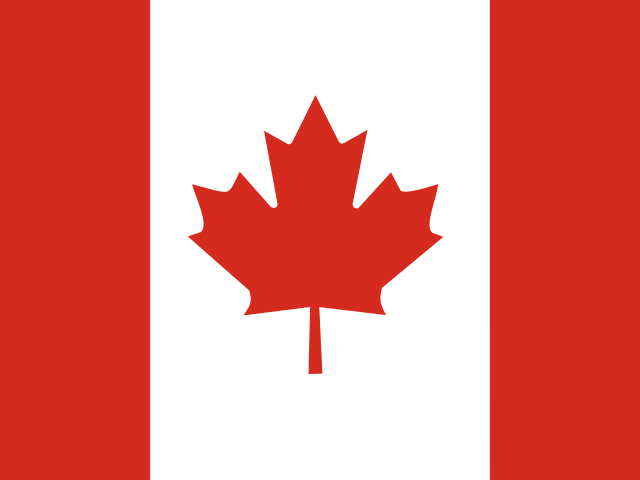
- Einwohnerzahl
- ca. 41 Millionen
- Hauptstadt
- Ottawa
- Währung
- Kanadischer Dollar (CAD)
- Durchschnittsgehalt
- Etwa CAD 62.000–CAD 68.000/Jahr
- Sprache
- Englisch und Französisch (zweisprachig; Französisch dominierend in Québec)
- Klima
- Stark variierend — kalte Winter in den meisten Regionen, warme Sommer
- Zeitzonen
- Sechs Zeitzonen, von UTC−3,5 (Neufundland) bis UTC−8 (Pazifik)
Warum Sie 2026 nach Kanada ziehen sollten
- Einwanderungsfreundliche Politik: Kanada nimmt jährlich etwa 380.000 neue Daueraufenthaltsberechtigte auf, mit klaren Wegen über Express Entry und die Programme für nominierte Provinzkandidaten.
- Universelle Gesundheitsversorgung: Die provinciale Krankenversicherung deckt Arztbesuche, Krankenhausbehandlungen und grundlegende medizinische Dienstleistungen ohne direkte Kosten für die Einwohner.
- Starker Arbeitsmarkt: Geringe Arbeitslosigkeit, wachsende Technologie- und Gesundheitssektoren sowie Bedarf an Fachkräften in allen Provinzen.
- Sicherheit und Stabilität: Kanada wird durchgehend zu den sichersten Ländern der Welt gezählt, mit niedrigen Kriminalitätsraten und verlässlichen Institutionen.
- Multikulturelle Gesellschaft: Über 20 % der kanadischen Bevölkerung sind im Ausland geboren — Vielfalt ist ein zentraler nationaler Wert, nicht nur eine politische Maßnahme.
- Lebensqualität: Saubere Städte, reichlich Grünflächen, hervorragende öffentliche Bildung und ein starkes soziales Auffangnetz.
- Weg zur Staatsbürgerschaft: Daueraufenthaltsberechtigte können bereits nach drei Jahren Wohnsitz die kanadische Staatsbürgerschaft beantragen.
Umzugskosten nach Kanada
Die internationalen Umzugskosten variieren je nach Sendungsgröße, Herkunftsort und Transportmethode. Typische Marktpreise Stand Anfang 2026:
| Umzugsart | Laufzeit | Geschätzte Kosten (EUR) |
|---|---|---|
| 20-Fuß-Container | 3–6 Wochen | €1.800–€4.200 |
| 40-Fuß-Container | 3–6 Wochen | €3.200–€6.800 |
| Luftfracht (pro kg) | 3–7 Tage | €5,00–€9,50+ |
| Zoll- / Bearbeitungsgebühren | — | €180–€550+ |
Umzugskosten nach Herkunftsland
| Herkunft | Geschätzte Kosten (EUR) | Volumen |
|---|---|---|
| Vereinigtes Königreich nach Kanada | €2.200–€4.500 | 20-Fuß-Container |
| Europa (Festland) nach Kanada | €2.500–€5.000 | 20-Fuß-Container |
| USA nach Kanada | €800–€2.500 | 1-5 m3 |
| Australien nach Kanada | €4.000–€7.500 | 40-Fuß-Container |
| Indien nach Kanada | €2.000–€4.500 | 20-Fuß-Container |
Einzelkosten im Überblick
- Transport: €1.200–€4.000 je nach Entfernung und Transportart (Seefracht ist die häufigste Wahl bei interkontinentalen Umzügen).
- Versicherung: €100–€400 — üblicherweise 2–4 % des deklarierten Warenwerts.
- Zollabfertigung: €180–€550 — umfasst Speditionsklärung, Zollbewertung und Abwicklung durch die Canada Border Services Agency (CBSA).
- Verpackungsmaterial: €100–€300 — professionelle Verpackung wird für zerbrechliche und wertvolle Gegenstände empfohlen.
- Lagerung (falls erforderlich): €80–€200 pro Monat am Zielort.
- Verwaltungs- und Dokumentationsgebühren: €50–€200 für Inventarlisten, Zollerklärungen und Genehmigungen.
Brauchen Sie eine personalisierte Schätzung?
Erhalten Sie drei geprüfte Angebote von Umzugsfirmen in unter 48 Stunden.
Visa- und Aufenthaltsbestimmungen
Kanada bietet eines der strukturiertesten und transparentesten Einwanderungssysteme der Welt. Ein Großteil der wirtschaftlichen Einwanderung läuft über Express Entry, es gibt jedoch mehrere Möglichkeiten, je nach Ihrem Profil.
Express-Entry-System
Express Entry ist Kanadas wichtigstes Einwanderungssystem für Fachkräfte. Es verwaltet drei bundesweite Programme über ein punktebasiertes Ranking, das Comprehensive Ranking System (CRS) genannt wird:
- Federal Skilled Worker Program (FSWP): Für Fachleute mit ausländischer Berufserfahrung, Ausbildung und Sprachkenntnissen.
- Canadian Experience Class (CEC): Für Bewerber mit mindestens einem Jahr Berufserfahrung als Fachkraft in Kanada.
- Federal Skilled Trades Program (FSTP): Für qualifizierte Handwerker (Elektriker, Klempner, Schweißer usw.).
So funktioniert die CRS-Punktbewertung:
- Sie erhalten eine CRS-Punktzahl von bis zu 1.200, basierend auf Alter, Ausbildung, Sprachkenntnissen (Englisch und/oder Französisch), Berufserfahrung und Anpassungsfaktoren.
- Zusätzliche Punkte gibt es für ein gültiges Arbeitsangebot, eine provinzielle Nominierung (+600 Punkte), eine kanadische Ausbildung oder Französischkenntnisse.
- Die Auslosungen finden etwa alle zwei Wochen statt. Bewerber, die über der CRS-Mindestpunktzahl liegen, erhalten eine Einladung zur Antragstellung (Invitation to Apply, ITA) für die dauerhafte Aufenthaltserlaubnis.
- Bearbeitungszeit nach der ITA: etwa 6–8 Monate.
Provinzielle Nominierungsprogramme (PNP)
Jede kanadische Provinz und jedes Territorium betreibt ein eigenes Provinzielles Nominierungsprogramm (PNP), das sich an Arbeitskräfte mit lokal gefragten Qualifikationen richtet. Eine provinzielle Nominierung bringt 600 CRS-Punkte für Ihr Express-Entry-Profil und garantiert damit praktisch eine ITA.
Wichtige PNP-Streams sind unter anderem:
- Ontario Immigrant Nominee Program (OINP): Richtet sich an Fachkräfte im Technologiesektor, im Gesundheitswesen und in gefragten Handwerksberufen.
- British Columbia PNP (BC PNP): Technologiespezifischer Stream mit schneller Bearbeitung.
- Alberta Advantage Immigration Program (AAIP): Schwerpunkt auf Tourismus, Gastgewerbe, Landwirtschaft und Ingenieurwesen.
- Saskatchewan Immigrant Nominee Program (SINP): Kategorie für internationale Fachkräfte mit niedrigeren CRS-Anforderungen.
- Manitoba Provincial Nominee Program (MPNP): Ein starkes Programm für Bewerber mit Verbindungen zu Manitoba oder einschlägiger Berufserfahrung.
- Quebec Skilled Worker Program: Wird unabhängig von Express Entry durchgeführt — erfordert eine separate Bewerbung über das Arrima-System von Québec.
Arbeitserlaubnisse
Wenn Sie in Kanada arbeiten möchten, bevor Sie die Daueraufenthaltserlaubnis erhalten, benötigen Sie eine Arbeitserlaubnis. Die wichtigsten Kategorien sind:
- LMIA-basierte Arbeitserlaubnis: Ihr Arbeitgeber beantragt eine Labour Market Impact Assessment (LMIA), die nachweist, dass kein kanadischer Arbeitnehmer für die Stelle verfügbar ist. Dies ist der häufigste arbeitgebergestützte Weg.
- LMIA-freie Arbeitserlaubnis: Verfügbar im Rahmen internationaler Abkommen (z. B. CUSMA/USMCA für US-amerikanische und mexikanische Staatsbürger), bei unternehmensinternen Versetzungen oder in Kategorien mit erheblichem Nutzen.
- Offene Arbeitserlaubnis (Open Work Permit, OWP): Nicht an einen bestimmten Arbeitgeber gebunden. Verfügbar für Ehepartner von Fachkräften oder internationalen Studierenden, Inhaber einer Arbeitserlaubnis nach dem Abschluss sowie für bestimmte PR-Bewerber.
Studienerlaubnisse
Kanada ist ein beliebtes Ziel für internationale Studierende. Eine Studienerlaubnis ermöglicht es Ihnen, an einer anerkannten Bildungseinrichtung (Designated Learning Institution, DLI) zu studieren und während des Semesters bis zu 20 Stunden pro Woche sowie in den Semesterferien Vollzeit zu arbeiten. Absolventen können sich für eine Arbeitserlaubnis nach dem Abschluss (Post-Graduation Work Permit, PGWP) qualifizieren, die über die Canadian Experience Class zur Daueraufenthaltserlaubnis (PR) führen kann.
Weg zur Daueraufenthaltserlaubnis
Die meisten befristeten Einwohner (Arbeitnehmer und Studierende) streben die Daueraufenthaltserlaubnis (Permanent Residence, PR) an. Wichtige Voraussetzungen für den Erhalt der PR:
- Erhalten Sie eine Einladung zur Bewerbung (Invitation to Apply, ITA) über Express Entry oder eine PNP-Nominierung.
- Bestehen Sie die medizinischen Untersuchungen und beantragen Sie polizeiliche Führungszeugnisse.
- Weisen Sie Niederlassungsgelder nach (sofern Sie kein gültiges Jobangebot oder kanadische Erfahrung haben).
- Reisen Sie innerhalb der Gültigkeitsdauer Ihrer Confirmation of Permanent Residence (COPR) nach Kanada ein — Sie müssen Kanada physisch betreten, bevor Ihr COPR abläuft.
- Nach der Einreise wird Ihre PR-Karte innerhalb weniger Wochen an Ihre kanadische Adresse versandt.
PR-Inhaber können überall in Kanada leben und arbeiten und haben Zugang zu denselben Sozialleistungen wie Staatsbürger, einschließlich der provinziellen Krankenversicherung und des öffentlichen Bildungswesens.
Social Insurance Number (SIN)
Die Social Insurance Number (SIN) ist eine neunstellige Nummer, die von Service Canada ausgestellt wird. Sie ist unerlässlich für alle, die in Kanada arbeiten oder Einkommen erzielen.
- Wer benötigt sie: Jede Person, die in Kanada arbeitet, Steuern erklärt oder staatliche Programme in Anspruch nimmt.
- Antragstellung: Persönlich in einem Service Canada-Zentrum mit Ihrem Reisepass und einem Nachweis Ihres Einwanderungsstatus (Arbeitserlaubnis, PR-Karte oder Studienerlaubnis). Für einige Kategorien sind auch Online-Anträge verfügbar.
- Bearbeitungszeit: Sofort bei persönlicher Antragstellung; per Post bis zu 20 Werktage.
- Warum das wichtig ist: Ohne eine SIN können Sie rechtlich nicht arbeiten, bestimmte Bankkonten eröffnen oder eine Steuererklärung einreichen. Halten Sie sie geheim — teilen Sie sie nur mit Arbeitgebern, Banken und Regierungsbehörden.
Erhalten Sie einen persönlichen Umzugsplan
Geben Sie Ihre E-Mail-Adresse ein und wir senden Ihnen eine maßgeschneiderte Checkliste plus drei Angebote von geprüften Umzugsunternehmen.
Wohnungssuche in Kanada
Der Wohnungsmarkt in Kanada variiert stark je nach Stadt und Provinz. Mieten ist die häufigste Option für Neuzuzügler, da der Kauf eine erhebliche Anzahlung und eine etablierte Bonitätshistorie voraussetzt.
Durchschnittliche Mieten nach Großstadt (2026)
| Stadt | 1-Zimmer-Wohnung (Stadtzentrum) | 3-Zimmer (Stadtzentrum) | Marktwettbewerbsfähigkeit |
|---|---|---|---|
| Toronto | CAD 2.200–CAD 2.800 | CAD 3.500–CAD 4.500 | Sehr hoch |
| Vancouver | CAD 2.300–CAD 3.000 | CAD 3.800–CAD 5.000 | Sehr hoch |
| Montreal | CAD 1.400–CAD 1.900 | CAD 2.200–CAD 3.000 | Moderat–hoch |
| Calgary | CAD 1.400–CAD 1.800 | CAD 2.000–CAD 2.800 | Moderat |
| Ottawa | CAD 1.700–CAD 2.200 | CAD 2.500–CAD 3.400 | Moderat–hoch |
Kanadische Mietterminologie
- Mietvertrag (befristet): In der Regel 12 Monate. Nach Ablauf der Erstlaufzeit gehen Mietverträge üblicherweise in ein monatliches Mietverhältnis über.
- Erste und letzte Monatsmiete: Die meisten Vermieter verlangen die erste Monatsmiete plus eine Kaution in Höhe einer Monatsmiete (sogenannte „Kaution für den letzten Monat“) im Voraus. Darüber hinausgehende Sicherheitskautionen sind in einigen Provinzen (z. B. Ontario) unzulässig.
- Nebenkosten: Meist nicht in der Miete enthalten — rechnen Sie mit separaten Zahlungen für Strom, Heizung, Internet und teilweise Wasser.
- Mietpreisbindung: Viele Provinzen (Ontario, BC, Quebec) begrenzen jährliche Mieterhöhungen für bestehende Mieter auf einen behördlich festgelegten Prozentsatz.
Wie man eine Wohnung findet
Online-Plattformen:
- Realtor.ca: Kanadas größtes Immobilienportal, das sowohl Miet- als auch Kaufangebote umfasst.
- Kijiji: Beliebte Kleinanzeigenplattform — wird häufig für Mietinserate genutzt.
- Facebook Marketplace und lokale Gruppen: Aktive Miet-Communities in jeder größeren Stadt.
- Padmapper: Bündelt Inserate aus verschiedenen Quellen mit kartengestützter Suche.
Lokale Ressourcen:
- Lokale Immobilienmakler (hilfreich, können jedoch eine Monatsmiete als Provision verlangen).
- Neuankömmlings-Zentren der Gemeinde führen oft Schwarze Bretter und Empfehlungslisten für Wohnraum.
Tipps für Ausländer bei der Wohnungssuche
- Erstellen Sie einen „Mieter-Lebenslauf“: Fügen Sie Einkommensnachweise, ein Arbeitszeugnis, Referenzen und gegebenenfalls einen Kreditbericht bei.
- Neuankömmlinge ohne kanadische Kredithistorie müssen möglicherweise mehrere Monatsmieten im Voraus zahlen oder einen Bürgen stellen.
- Seien Sie vorsichtig bei Vermietern, die nur Barzahlung verlangen oder einen schriftlichen Mietvertrag verweigern.
- Erwägen Sie eine Kurzzeitunterkunft (Airbnb, Zwischenmiete) für die ersten 1–2 Monate, während Sie vor Ort nach einer Wohnung suchen.
Mietvertrag & Rechtlicher Schutz
Die kanadischen Mieterrechte sind stark ausgeprägt, insbesondere in Ontario, BC und Québec. Vermieter können nicht ohne Grund kündigen, müssen eine angemessene Frist einhalten (in der Regel 60 Tage) und Kautionen gemäß den gesetzlichen Vorschriften zurückzahlen. Streitigkeiten werden von Provinzschlichtungsstellen wie dem Landlord and Tenant Board (LTB) in Ontario oder der Residential Tenancy Branch (RTB) in BC behandelt.
Warnung: Mietbetrug
Überweisen Sie niemals Geld vor einer Besichtigung der Immobilie. Seien Sie misstrauisch bei Inseraten, die weit unter dem Marktpreis liegen, bei Vermietern, die angeblich im Ausland sind, oder bei Aufforderungen, per Geschenkkarten oder Kryptowährung zu zahlen. Überprüfen Sie immer das Eigentum und bestehen Sie auf einem schriftlichen Mietvertrag.
Zoll & Einfuhr Ihrer persönlichen Gegenstände
Bei einem Umzug nach Kanada können gebrauchte Haushaltsgegenstände und persönliche Eigentumsgegenstände grundsätzlich zoll- und steuerfrei eingeführt werden, sofern sie seit mindestens 12 Monaten im Besitz und in Nutzung waren und ausschließlich für den persönlichen Gebrauch bestimmt sind.
Erforderliche Unterlagen
- Detaillierte Inventarliste (einzeln aufgeführt, auf Englisch oder Französisch)
- Gültiger Reisepass und Einwanderungsdokumente (COPR, Arbeitserlaubnis oder PR-Karte)
- Nachweis des Wohnsitzes in Kanada (Mietvertrag oder Nebenkostenabrechnung)
- Zollerklärung (B4E) — am Einreisehafen oder im Voraus auszufüllen
Vorschriften und Einschränkungen
- Neuwaren, hochwertige Elektronik und Handelswaren können Zollgebühren, GST (5 %) und anfallende provinzielle Umsatzsteuer unterliegen.
- Schusswaffen erfordern eine Transportgenehmigung (ATT) und eine Besitz- und Erwerbslizenz (PAL) — versenden Sie keine Schusswaffen, ohne vorher die entsprechenden Genehmigungen einzuholen.
- Bestimmte Medikamente, Pflanzenprodukte und tierische Erzeugnisse sind eingeschränkt oder erfordern eine Einfuhrgenehmigung.
- Die Freimengen für Alkohol und Tabak sind begrenzt: 1,5 Liter Wein, 1,14 Liter Spirituosen oder 8,5 Liter Bier; 200 Zigaretten und 50 Zigarren.
- Die Canada Border Services Agency (CBSA) kann Sendungen überprüfen — unvollständige oder ungenaue Angaben können zu Geldstrafen, Verzögerungen oder Beschlagnahmung führen.
Tipps für eine reibungslose Zollabfertigung
- Versenden Sie Ihr Umzugsgut so, dass es etwa zeitgleich mit Ihnen ankommt — zu früh eintreffende Sendungen können Lagergebühren im Hafen verursachen.
- Beschriften Sie Kartons deutlich und stimmen Sie sie mit Ihrer Inventarliste ab.
- Bewahren Sie alle Quittungen für neu gekaufte Gegenstände auf, falls die CBSA ihren Status als persönliche Gebrauchsgüter hinterfragt.
- Beauftragen Sie ein Umzugsunternehmen mit Erfahrung in kanadischen Zollverfahren — es kann die Formalitäten in Ihrem Namen erledigen.
Praxisbeispiel: „Als ich von Berlin nach Vancouver umzog, erstellte ich ein detailliertes Inventar all meiner persönlichen Gegenstände und reichte es zusammen mit meiner Zollerklärung bei der CBSA ein. Da meine Sachen seit über 12 Monaten in meinem Besitz und in Gebrauch waren, kamen sie für eine zoll- und steuerfreie Einfuhr in Frage. Meine Sendung kam per Seeweg in etwa fünf Wochen an, und das Umzugsunternehmen erledigte alle Zollformalitäten reibungslos. Alles wurde in einwandfreiem Zustand an meine Wohnung geliefert.“ — Thomas K., umgezogen im Februar 2025
Gesundheitsversorgung & Versicherung
Das öffentlich finanzierte Gesundheitssystem Kanadas, oft als Medicare bezeichnet, wird auf Provinzebene verwaltet — nicht bundesweit. Jede Provinz und jedes Territorium betreibt ein eigenes Krankenversicherungsprogramm, wobei die genauen Leistungen variieren.
Provinziale Krankenversicherung
- Ontario: Ontario Health Insurance Plan (OHIP), provinzielle Krankenversicherung
- British Columbia: Medical Services Plan (MSP), provinzielle Krankenversicherung
- Québec: Régie de l'assurance maladie du Québec (RAMQ)
- Alberta: Alberta Health Care Insurance Plan (AHCIP), provinzielle Krankenversicherung
- Andere Provinzen: Jede hat ihr eigenes Programm (z. B. Manitoba Health, Nova Scotia MSI)
Kosten: Über Steuern finanziert — in den meisten Provinzen gibt es keine monatlichen Beiträge (BC und Ontario haben früher Beiträge erhoben, diese aber abgeschafft; Alberta erhebt keine Beiträge).
Leistungen: Arztbesuche, Krankenhausaufenthalte, Notfallversorgung, diagnostische Untersuchungen und medizinisch notwendige Operationen. In den meisten Provinzen nicht abgedeckt sind verschreibungspflichtige Medikamente, Zahnbehandlungen, Sehhilfen und paramedizinische Leistungen (Physiotherapie, Massagen).
Voraussetzungen: Personen mit Daueraufenthaltsstatus, Inhaber einer Arbeitserlaubnis (in den meisten Provinzen) und Staatsbürger. Temporäre Aufenthaltsberechtigte (Besucher, Kurzzeitgenehmigungen) sind grundsätzlich NICHT versichert.
Wartezeit: Die meisten Provinzen verlangen eine Wartezeit von bis zu drei Monaten, bevor der Versicherungsschutz beginnt. Sie müssen sich nach der Ankunft sofort bei der provinziellen Krankenversicherung anmelden und für die Übergangszeit eine private Versicherung aufrechterhalten.
Private Krankenversicherung
Private Versicherungen schließen die Lücken im Versicherungsschutz der Provinzen. Zu den gängigen Anbietern gehören:
- Sun Life Financial: Bedeutende Gruppen- und Einzelverträge mit Deckung für Zahnpflege, Sehhilfen und verschreibungspflichtige Medikamente.
- Manulife: Umfassende erweiterte Krankenversicherungen, die bei Arbeitgebern beliebt sind.
- Blue Cross: Bietet Einzel- und Familienpläne, einschließlich Auslandsreise-Krankenversicherung.
Kosten: CAD 100–CAD 300 pro Monat für einen umfassenden Einzelplan.
Ideal für: Neuzuzüger während der provinziellen Wartezeit, befristet Beschäftigte und alle, die Zahn-, Seh- oder Arzneimitteldeckung benötigen.
Eigenanteile (ohne private Versicherung)
- Besuch beim Hausarzt: Abgedeckt durch die Provinzversicherung
- Verschreibungspflichtige Medikamente: CAD 20–CAD 200+ je nach Medikament
- Zahnreinigung: CAD 150–CAD 350
- Augenuntersuchung: CAD 100–CAD 200
- Notaufnahme-Besuch (Nichtansässige): CAD 500–CAD 2.000+
Bankwesen & Finanzen
Ein Bankkonto eröffnen
Das kanadische Banksystem ist stabil, gut reguliert und neuankömmlingsfreundlich. Die „Big Five“-Banken bieten alle spezielle Pakete für Neuankömmlinge an:
- RBC (Royal Bank of Canada): Newcomer Advantage Paket — im ersten Jahr keine monatlichen Gebühren.
- TD Canada Trust: TD New to Canada Banking Package — enthält eine Kreditkarte ohne erforderliche Kredithistorie.
- Scotiabank: StartRight-Programm für permanente Einwohner und Zeitarbeiter.
- BMO (Bank of Montreal): NewStart-Programm mit erlassenen Gebühren und einer Option für eine gesicherte Kreditkarte.
- CIBC: Welcome to Canada Paket — enthält ein Girokonto und internationale Geldüberweisungen.
Erforderliche Dokumente:
- Gültiger Reisepass
- Einwanderungsdokument (PR-Karte, Arbeitserlaubnis oder Studienerlaubnis)
- Nachweis einer kanadischen Adresse (Versorgungsrechnung, Mietvertrag oder Bankschreiben)
Wann eröffnen: Sobald Sie ankommen — idealerweise in Ihrer ersten Woche. Sie können ein Konto eröffnen, bevor Ihre Sozialversicherungsnummer (SIN) eintrifft, aber Sie benötigen die SIN, um Zinsen zu erhalten oder mit der Arbeit zu beginnen.
Kanadisches Bonitätssystem
Kanada nutzt ein Bonitätssystem, das von zwei Auskunfteien verwaltet wird: Equifax Canada und TransUnion Canada. Die Scores reichen von 300 bis 900.
- Wofür es genutzt wird: Anmietung von Wohnungen, Genehmigung von Kreditkarten und Krediten, teilweise sogar bei Hintergrundprüfungen im Rahmen einer Bewerbung.
- Herausforderung für Neulinge: Sie beginnen ohne Bonitätshistorie. Der Aufbau eines guten Scores dauert 6–12 Monate verantwortungsvoller Nutzung.
- So bauen Sie schnell Bonität auf:
- Besorgen Sie sich eine gesicherte Kreditkarte (hinterlegt mit einer Kaution) von Ihrer Bank.
- Nutzen Sie die Karte für kleine Einkäufe und bezahlen Sie den Saldo jeden Monat vollständig.
- Richten Sie automatische Rechnungszahlungen für Ihr Handy und Ihre Versorgungsleistungen ein.
- Nach 6–12 Monaten können Sie eine ungesicherte Kreditkarte oder einen kleinen Kreditrahmen beantragen.
Funktionen & Kosten des Bankkontos
- Monatliche Kontoführungsgebühr: CAD 4–CAD 16 (oft für Neulinge in den ersten 1–2 Jahren erlassen)
- Debitkarte: Kostenlos zum Girokonto
- Kreditkarte: Variiert; gesicherte Karten erfordern in der Regel eine Kaution von CAD 500–CAD 1.000
- Internationale Überweisungen: CAD 15–CAD 50 pro Überweisung
- Geldautomatengebühren: Kostenlos an Geldautomaten Ihrer eigenen Bank; CAD 1,50–CAD 3,00 bei anderen Banken
Zahlungskultur
Kanada ist überwiegend bargeldlos. Debitkarten (Interac) und Kreditkarten werden praktisch überall akzeptiert. Kontaktloses Bezahlen (Tap) ist bei Einkäufen unter CAD 250 der Standard. Mobile Zahlungen (Apple Pay, Google Pay) werden weitgehend unterstützt. Bargeld wird zwar noch akzeptiert, ist aber im Alltag immer seltener anzutreffen.
Lebenshaltungskosten in Kanada
Monatliches Budget nach Stadt
| Stadt | Budget für eine Person | Budget für eine 3-köpfige Familie | Kostenniveau |
|---|---|---|---|
| Toronto | CAD 3.500–CAD 5.000 | CAD 6.000–CAD 8.500 | Sehr hoch |
| Vancouver | CAD 3.500–CAD 5.200 | CAD 6.200–CAD 9.000 | Sehr hoch |
| Montreal | CAD 2.500–CAD 3.800 | CAD 4.500–CAD 6.500 | Mittel–hoch |
| Calgary | CAD 2.500–CAD 3.500 | CAD 4.200–CAD 6.000 | Moderat |
| Ottawa | CAD 2.800–CAD 4.000 | CAD 5.000–CAD 7.000 | Moderat–hoch |
Detaillierte Kostenaufschlüsselung
Wohnen:
- Ein-Schlafzimmer-Wohnung (Stadtzentrum): CAD 1.400–CAD 3.000 je nach Stadt
- Drei-Schlafzimmer-Wohnung (Stadtzentrum): CAD 2.200–CAD 5.000
- Nebenkosten (Strom, Heizung, Wasser): CAD 120–CAD 250/Monat
- Internet (Breitband): CAD 60–CAD 100/Monat
Lebensmittel & Essen:
- Wöchentliche Lebensmittel (1 Person): CAD 75–CAD 120
- Restaurantbesuch (ungezwungen): CAD 15–CAD 25
- Restaurantbesuch (mittlere Preisklasse, zwei Personen): CAD 80–CAD 130
Verkehr & Mobilität:
- Monatliche Fahrkarte für den öffentlichen Nahverkehr: CAD 100–CAD 180 (je nach Stadt)
- Kfz-Versicherung (Ontario): CAD 150–CAD 250/Monat (zu den höchsten in Kanada)
- Benzin: CAD 1,40–CAD 1,90 pro Liter
Versicherung & Gesundheit:
- Provinzielle Krankenversicherung: Kostenlos (steuerfinanziert)
- Private erweiterte Krankenversicherung: CAD 100–CAD 300/Monat
Freizeit & Unterhaltung:
- Mitgliedschaft im Fitnessstudio: CAD 40–CAD 80/Monat
- Kinoticket: CAD 14–CAD 18
- Streaming-Dienste (Netflix usw.): CAD 15–CAD 25/Monat
Provinzielle Unterschiede bei den Lebenshaltungskosten
- Alberta: Keine provinzielle Verkaufssteuer (nur 5 % GST), niedrigere Wohnkosten als Toronto oder Vancouver und keine Krankenversicherungsbeiträge.
- Québec: Niedrigere Mieten, aber höhere Einkommensteuersätze. Französisch ist die Hauptsprache, und viele Dienstleistungen werden nur auf Französisch angeboten.
- British Columbia: Die höchsten Wohnkosten im Land, aber ein mildes Klima (insbesondere im Lower Mainland).
- Ontario: Die 13%ige HST (Harmonized Sales Tax) gilt für die meisten Waren und Dienstleistungen. Toronto ist die teuerste Stadt für Miete.
Vergleich mit anderen Ländern
- vs. USA: Ähnliche oder etwas niedrigere Gehälter, aber die Krankenversicherung ist über die provinzielle Versicherung kostenlos. Lebensmittel und Konsumgüter sind 10–20 % teurer.
- vs. UK: Vergleichbare Lebenshaltungskosten. Die Miete in Toronto und Vancouver übertrifft in einigen Kategorien die in London. Die Gehälter im Tech-Bereich sind im Allgemeinen höher.
- vs. Australien: Ähnliche Lebensqualität. Die kanadischen Winter sind deutlich kälter, aber Wohnraum in großen kanadischen Städten ist etwas erschwinglicher als in Sydney oder Melbourne.
Ihre Steuerverpflichtungen in Kanada verstehen
Steuerlicher Wohnsitz
Sie werden in Kanada steuerpflichtig, sobald Sie erhebliche Wohnsitzverbindungen aufbauen — dazu gehören ein eigenes Zuhause, ein Ehepartner oder Lebenspartner sowie unterhaltsberechtigte Personen in Kanada. Steuerinländer werden auf ihr Welteinkommen sowohl auf Bundes- als auch auf Provinzebene besteuert. Nichtansässige werden nur auf Einkommen aus Kanada besteuert.
Bundes- und Provinzeinkommensteuer
Kanada verwendet ein gestaffeltes Steuersystem. Die Bundessätze für 2026:
| Zu versteuerndes Einkommen (CAD) | Bundessatz |
|---|---|
| Bis zu 58.523 CAD | 14 % |
| 58.523 CAD – 117.045 CAD | 20,5 % |
| CAD 117.045 – CAD 181.440 | 26 % |
| CAD 181.440 – CAD 258.482 | 29 % |
| Über CAD 258.482 | 33 % |
Die provinzialen Steuersätze kommen zusätzlich hinzu und variieren erheblich. Beispielsweise liegt Ontarios höchster kombinierter bundesstaatlich-provinzialer Grenzsteuersatz bei etwa 53,5 %, während Albertas höchster Satz bei etwa 48 % liegt.
Canada Pension Plan (CPP) und Employment Insurance (EI)
- CPP: Obligatorischer Rentenbeitrag für alle Arbeitnehmer zwischen 18 und 70 Jahren. Im Jahr 2026 zahlen Arbeitnehmer 5,95 % auf Einkommen zwischen CAD 3.500 und CAD 74.600, vom Arbeitgeber in gleicher Höhe. Selbstständige zahlen beide Anteile (11,9 %).
- EI: Die Beiträge zur Employment Insurance finanzieren Arbeitslosengeld, Elternzeit und Krankengeld. Der Arbeitnehmeranteil liegt bei etwa 1,63 % der versicherungspflichtigen Einkünfte bis zu einer jährlichen Höchstgrenze.
- Québec: Québec betreibt den Québec Pension Plan (QPP) anstelle des CPP mit leicht abweichenden Beitragssätzen sowie den Québec Parental Insurance Plan (QPIP) anstelle der EI für Elternleistungen.
Ihre Steuererklärung einreichen
- Das Steuerjahr läuft vom 1. Januar bis zum 31. Dezember. Die Abgabefrist ist der 30. April des Folgejahres (15. Juni für Selbstständige).
- Sie müssen bei der Canada Revenue Agency (CRA) unter Angabe Ihrer SIN einreichen.
- Neuankömmlinge sollten auch dann eine Steuererklärung einreichen, wenn sie erst im Laufe des Jahres eingereist sind — dadurch wird Ihre steuerliche Ansässigkeit festgestellt und Sie erhalten Anspruch auf Leistungen wie das GST/HST-Guthaben (vierteljährliche Rückerstattung für Gering- und Mittelverdiener) und die Canada Child Benefit (CCB).
- Kanada hat Doppelbesteuerungsabkommen mit über 90 Ländern, um eine Doppelbesteuerung zu vermeiden.
Autofahren in Kanada
Fahrzeug importieren
Der Import eines Fahrzeugs nach Kanada erfordert die Einhaltung des Registrar of Imported Vehicles (RIV)-Programms und der Canada Motor Vehicle Safety Standards (CMVSS). Die wichtigsten Punkte:
- Fahrzeuge aus den USA können oft eingeführt werden, wenn sie den kanadischen Sicherheitsstandards entsprechen — eine Konformitätsprüfung ist erforderlich.
- Fahrzeuge von außerhalb Nordamerikas können erhebliche Änderungen erfordern (Tagfahrlicht, Tachometer in metrischen Einheiten, Stoßfängerstandards) und die Anpassung an die Vorschriften kann teuer werden.
- Zollgebühren fallen an: 6,1 % für Fahrzeuge, die nicht in Nordamerika hergestellt wurden, zzgl. 5 % GST und anfallende provinzielle Steuern.
- Sie müssen das Fahrzeug innerhalb von 30 Tagen nach der Einfuhr in Ihrer Wohnprovinz anmelden.
Umschreibung Ihres Führerscheins
Ausländische Führerscheine sind nur begrenzt gültig (in der Regel 60–90 Tage, je nach Provinz). Danach müssen Sie einen kanadischen Führerschein erwerben. Die Vorschriften variieren je nach Provinz:
- Ontario: Fahrer aus vielen Ländern (einschließlich USA, UK, Australien und den meisten EU-Ländern) können ihren Führerschein ohne Prüfung umtauschen. Andere müssen eine theoretische und eine praktische Prüfung im Rahmen des gestuften Lizenzsystems absolvieren (G1 → G2 → G).
- British Columbia: Ein Führerscheintausch ist für Länder mit Gegenseitigkeitsvereinbarungen möglich. Für andere sind eine theoretische und möglicherweise eine praktische Prüfung erforderlich.
- Québec: Ähnliche Gegenseitigkeitsvereinbarungen. Alle Neubürger müssen innerhalb von 6 Monaten einen Führerschein aus Québec erwerben.
- Alberta: Direkter Umtausch für viele Länder möglich. Andere müssen eine theoretische und praktische Prüfung absolvieren.
Internationaler Führerschein (IDP): Empfohlen als vorübergehende Maßnahme während der ersten Wochen — er ist eine Übersetzung Ihres heimischen Führerscheins und wird kurzfristig in allen Provinzen akzeptiert.
Grundlagen des Winterfahrens
Das Fahren im kanadischen Winter erfordert besondere Vorsicht, insbesondere wenn Sie aus einem warmen Klima kommen:
- Winterreifen: In Québec gesetzlich vorgeschrieben (1. Dezember bis 15. März) und überall sonst dringend empfohlen. Kalkulieren Sie CAD 600 bis CAD 1.200 für einen Satz von vier Reifen ein.
- Motorblockheizungen: Gebräuchlich in Alberta, Saskatchewan und Manitoba — sie halten den Motor über Nacht bei extremer Kälte (unter −25 °C) warm.
- Glatteis und Schnee: Lernen Sie, auf vereisten Straßen zu fahren. Vergrößern Sie den Sicherheitsabstand, bremsen Sie sanft und halten Sie ein Notfallset im Auto bereit (Decke, Taschenlampe, Sand oder Katzenstreu für bessere Traktion).
Sprach- und Kulturtipps
Müssen Sie Französisch sprechen?
Außerhalb von Québec ist Kanada überwiegend englischsprachig. In Québec ist jedoch Französisch die Amtssprache, und Gesetz 96 (Bill 96) verlangt, dass die meisten staatlichen und gewerblichen Dienstleistungen auf Französisch angeboten werden. Ohne funktionierende Französischkenntnisse ist das Leben und Arbeiten in Montréal, Québec (Stadt) oder anderen Gemeinden in Québec schwierig.
Im restlichen Kanada — Ontario, BC, Alberta, Saskatchewan, Manitoba, die Atlantikprovinzen — reicht Englisch für den Alltag, die Arbeit und die soziale Integration aus. Zweisprachigkeit (Englisch + Französisch) ist ein Vorteil für Stellen in der Bundesverwaltung und ist in Ottawa sowie in Teilen von New Brunswick verbreitet.
Französischniveaus (GER)
- A1 (Anfänger): Einfache Begrüßungen, Essen bestellen, nach dem Weg fragen. In 2–3 Monaten Lernzeit erreichbar.
- A2 (Grundkenntnisse): Einfache Gespräche, Formulare und Anleitungen verstehen. 4–6 Monate.
- B1 (Mittelstufe): Alltägliche Arbeitsplatzkommunikation bewältigen. 8–12 Monate.
- B2 (Gute Mittelstufe): Professionelle Sprachbeherrschung, geeignet für die meisten Büroumgebungen. 12–18 Monate.
Ressourcen zum Sprachenlernen
- Duolingo und Babbel: Kostenlose und günstige Apps zum Aufbau von Französisch- oder Englischgrundlagen.
- LINC (Language Instruction for Newcomers to Canada): Kostenlose, staatlich geförderte Englischkurse für Inhaber einer Daueraufenthaltserlaubnis.
- Francisierungsprogramme: Kostenlose Französischkurse der Regierung von Québec für Einwanderer, die sich in Québec niederlassen.
Kulturelle Normen & Etikette
Höflichkeit und indirekte Kommunikation:
- Kanadier sind bekannt für ihre Höflichkeit. „Sorry" zu sagen ist reflexartig — selbst wenn man keinen Fehler gemacht hat.
- Meinungsverschiedenheiten werden in der Regel indirekt ausgedrückt. Harte oder konfrontative Kommunikation ist im beruflichen Umfeld unüblich.
Multikulturalismus:
- Kanada hat 1971 offiziell den Multikulturalismus als Staatspolitik verabschiedet. Vielfalt wird gefeiert, und kulturelle Gemeinschaften gedeihen in jeder Großstadt.
- Allein Toronto vertritt über 200 ethnische Gruppen. Sie finden kulturelle Vereine, Restaurants und Feste aus praktisch jedem Land.
Eishockey und Sportkultur:
- Eishockey ist die nationale Leidenschaft. Selbst eine oberflächliche Vertrautheit mit der NHL hilft Ihnen, sich gesellschaftlich zu vernetzen.
- Weitere beliebte Sportarten: Basketball (Toronto Raptors), Canadian Football (CFL) und Lacrosse.
Tim-Hortons-Kultur:
- Tim Hortons (oft „Timmies" genannt) ist eine kulturelle Institution. Einen „Double-Double" (Kaffee mit zwei Sahne- und zwei Zuckerportionen) zu bestellen, ist ein echtes Initiationsritual.
Trinkgeld:
- Trinkgeld wird erwartet: 15–20 % in Restaurants, 1–2 CAD pro Getränk in Bars, 10–15 % für Taxis und Friseure. Kein Trinkgeld zu geben, gilt als unhöflich.
Pünktlichkeit:
- Pünktlichkeit ist wichtig — sowohl bei privaten als auch bei beruflichen Terminen. 5–10 Minuten früher zu erscheinen, ist die Regel.
Gesellschaftliche Integration
- Wenden Sie sich an Neueinwanderer-Zentren (z. B. COSTI, Immigrant Services Calgary, MOSAIC in Vancouver), die bei der Eingliederung helfen und gesellschaftliche Veranstaltungen anbieten.
- Meetup.com und Community-Facebook-Gruppen sind in jeder größeren Stadt aktiv.
- Ehrenamtliche Arbeit ist ein hervorragender Weg, um ein Netzwerk aufzubauen und kanadische Referenzen zu sammeln.
- Freizeitsportligen (Eishockey, Fußball, Volleyball) sind beliebt und stehen allen Spielstärken offen.
Umzugscheckliste
- Express-Entry-Profil erstellen oder PNP-Nominierungsstatus bestätigen
- Internationales Umzugsunternehmen suchen und buchen — mindestens drei Angebote einholen
- Erforderliche Dokumente zusammentragen: Reisepass, Zeugnisbewertung (ECA), Sprachtestergebnisse (IELTS/TEF)
- Führungszeugnisse aus allen Ländern beantragen, in denen Sie länger als 6 Monate gelebt haben
- Einwanderungsmedizinische Untersuchungen bei einem zugelassenen Panel-Arzt absolvieren
- Ihr Umzugsdatum und die Versanddetails bestätigen
- Ihre Bank und Versorgungsunternehmen über Ihren Weggang informieren
- Kurzzeitunterkunft in Kanada arrangieren (Airbnb, Untermiete oder Hotel für die ersten 2–4 Wochen)
- Beglaubigte Kopien wichtiger Dokumente beschaffen: Geburtsurkunden, Heiratsurkunden, Studienzeugnisse, Impfpass
- Informationen zu den Anforderungen der Provinzkrankenversicherung in Ihrer Zielprovinz einholen
- Gegenstände, die Sie nicht mitnehmen, versenden oder spenden — Ausmisten senkt die Umzugskosten
- Zolldokumente prüfen: detailliertes Inventar, Eigentumsnachweis, Persönliche Gütererklärung
- Abonnements, Mitgliedschaften und wiederkehrende Dienstleistungen kündigen oder übertragen
- Nachsendeauftrag für Ihre aktuelle Adresse einrichten
- Private Krankenversicherung abschließen, um die Wartezeit der Provinzkrankenversicherung zu überbrücken
- Packen Sie eine Tasche mit dem Nötigsten: Dokumente, Medikamente, Ladegeräte, warme Kleidung und ausreichend Bargeld für die ersten Tage
- Bestätigen Sie Lieferdatum und Kontaktdaten Ihres Umzugsunternehmens
- Laden Sie Offline-Karten und nützliche Apps herunter (Arrive, Google Maps, Banking-App)
- Melden Sie Ihre Ankunft bei Ihrer Botschaft oder Ihrem Konsulat in Kanada
- Erledigen Sie die Zollabfertigung am Einreisehafen — legen Sie Ihren COPR, Reisepass und die Warenerklärung vor
- Beantragen Sie Ihre SIN bei einer Service-Canada-Stelle (oder online)
- Eröffnen Sie ein kanadisches Bankkonto
- Kaufen Sie eine kanadische SIM-Karte (Rogers, Bell, Telus oder günstige Anbieter wie Fido, Koodo, Public Mobile)
- Registrieren Sie sich sofort für die provinzielle Krankenversicherung
- Beantragen Sie Ihre provinzielle Gesundheitskarte (OHIP, MSP, RAMQ usw.)
- Richten Sie die wichtigsten Haushaltsdinge ein: Internet, Stromkonto, Heizung
- Melden Sie Ihre Kinder für die Schule an (öffentliche Schulen sind kostenlos; für die Anmeldung sind ein Adressnachweis und Impfzeugnisse erforderlich)
- Beginnen Sie mit dem Aufbau Ihrer Bonität: Besorgen Sie sich eine gesicherte Kreditkarte und richten Sie automatische Rechnungszahlungen ein
- Erkunden Sie Ihre Nachbarschaft: Lebensmittelgeschäfte, Haltestellen öffentlicher Verkehrsmittel, Gemeindezentren
- Nehmen Sie an einer Orientierungsveranstaltung für Neuzugezogene teil (kostenlos angeboten von Ansiedlungsagenturen)
- Beginnen Sie mit der Jobsuche — passen Sie Ihren Lebenslauf an das kanadische Format an (kein Foto, kein Geburtsdatum)
- Melden Sie sich bei Bedarf für kostenlose Sprachkurse an (LINC für Englisch oder Francisation für Französisch)
- Beantragen Sie eine Social Insurance Number, falls Sie dies noch nicht getan haben
- Machen Sie sich mit den Mieterrechten und Mietvertragsbedingungen Ihrer Provinz vertraut
Wo Sie Werkzeuge und Ressourcen finden
ReloAdvisor-Werkzeuge:
- Volumenrechner — schätzen Sie Ihr Sendungsvolumen, bevor Sie Angebote anfordern
- Video-Besichtigung — erhalten Sie präzise Angebote mit einer virtuellen Wohnungsbesichtigung
- Umzugskostenrechner — vergleichen Sie internationale Umzugskosten sofort
Offizielle kanadische Ressourcen:
- Immigration, Refugees and Citizenship Canada (IRCC), Einwanderung und Staatsburgerschaft: https://www.canada.ca/en/immigration-refugees-citizenship.html
- Express-Entry-Portal: https://www.canada.ca/en/immigration-refugees-citizenship/services/immigrate-canada/express-entry.html
- Canada Revenue Agency (CRA), Steuerbehorde: https://www.canada.ca/en/revenue-agency.html
- Service Canada (SIN-Anträge): https://www.canada.ca/en/employment-social-development.html
Expat-Gemeinschaften:
- InterNations Kanada: https://www.internations.org/canada-expats
- Reddit r/ImmigrationCanada, Forum: https://www.reddit.com/r/ImmigrationCanada
- Moving2Canada, Umzugsressource: https://moving2canada.com
Verwandte Ratgeber:
- Umzug in die USA
- Umzug nach Großbritannien
- Umzug nach Australien