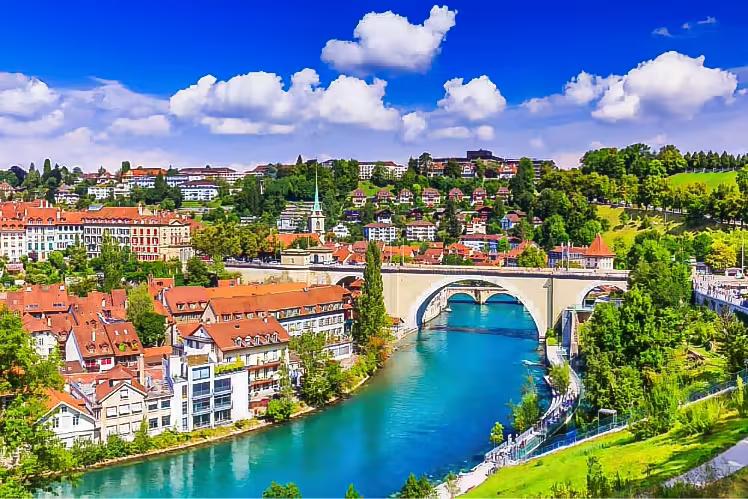

Bern er Schweiz' hovedstad, men den føles ikke som en i konventionel forstand. En UNESCO-fredet middelalderlig gammel bydel med sandstensarkader, en turkisfarvet flod der skærer igennem byens centrum, og en livsrytme som lokale kalder gemütlich – hyggelig og uforjaget. Den føderale forvaltning, Berns Universitet og en voksende tech-sektor bærer økonomien. Hvis du ønsker ægte schweizisk karakter med lavere huslejer end Zürich eller Genève, er Bern en seriøs overvejelse værd.
Byen fungerer primært på schweizisk tysk (Bärndütsch), og den lokale kultur hælder mod det traditionelle frem for det prangende. Bern belønner tålmodighed og integration – det er ikke en by, der serverer dig et ekspatlivsstil på et sølvfad, men den tilbyder noget, der er sværere at finde andetsteds: ægte schweizisk hverdagsliv til en rimelig pris.
Bern på et øjeblik

- Befolkning
- ~146.000 (storbyområde ~430.000)
- Region
- Kanton Bern, centralt-vestlige Schweiz
- Kendt for
- Middelalderlig gammel bydel (UNESCO), Aare-floden, Forbundshuset
- Gennemsnitlig leje (1 værelse)
- CHF 1.200–1.800/måned
- Gennemsnitlig løn
- CHF 5.500–7.000/måned netto
- Ekspatsamfund
- Moderat – koncentreret omkring regeringen, forskning og internationale organisationer
Hvorfor flytte til Bern
- Hovedstadens charme: Den UNESCO-fredede Altstadt (gammel bydel) er et af Europas bedst bevarede middelaldercentre med seks kilometer arkadebelagte shoppinggader (Lauben), renæssancespringvand og det berømte Zytglogge-klokketårn.
- Svømmetur i Aare-floden: Om sommeren flyder lokale ned ad den krystalklare Aare fra Schwellenmätteli til Marzilibad – en gratis, surrealistisk oplevelse som ingen anden national hovedstad kan matche. Vandet er rent, turkist og uforglemmeligt.
- Overkommelig efter schweiziske standarder: Huslejerne er mærkbart lavere end i Zürich, Genève eller Basel, mens lønningerne stadig er konkurrencedygtige, særligt inden for den offentlige sektor, forskning og uddannelse. Bern tilbyder det bedste forhold mellem livskvalitet og pris blandt de store schweiziske byer.
- Stats- og international beskæftigelse: Den føderale administration, det schweiziske parlament, diplomatiske missioner og internationale organisationer skaber et stabilt arbejdsmarked for politiske fagfolk, oversættere, jurister og embedsmænd.
- Central beliggenhed: Bern ligger i det geografiske centrum af det schweiziske jernbanenetværk, med Zürich, Basel, Lausanne og Luzern alle inden for en times togrejse.
Find bolig i Bern
Gennemsnitlige lejepriser
| Kvarter | 1 soveværelse | 3 soveværelser | Karakter |
|---|---|---|---|
| Länggasse | CHF 1.200–1.600 | CHF 2.200–3.000 | Nær universitetet, studie- og akademikermiljø |
| Kirchenfeld | CHF 1.400–1.900 | CHF 2.500–3.500 | Museumskvarter, diplomatisk, eksklusivt |
| Breitenrain | CHF 1.200–1.700 | CHF 2.200–3.100 | Trendy, restauranter, unge fagfolk |
| Mattenhof | CHF 1.100–1.500 | CHF 2.000–2.800 | Roligt, grønt, familieorienteret |
| Monbijou | CHF 1.200–1.600 | CHF 2.100–2.900 | Centralt, nær Aare, blandet boligkvarter |
| Brunnadern | CHF 1.300–1.800 | CHF 2.300–3.200 | Bakkebebyggelse, roligt, panoramaudsigt |
Sådan finder du bolig
- Homegate.ch: Primær portal for boligopslag i Bern, opdateret dagligt.
- ImmoScout24.ch: Bredt udvalg i alle kvarterer og prisklasser.
- FlatFox: Populær til direkte udlejer-til-lejer-opslag og delelejligheder uden mæglerhonorarer.
- Wohnbaugenossenschaften (boligandelsselskaber): Disse andelsselskaber ejer en betydelig del af Berns lejeboliger og tilbyder husleje under markedsprisen. Ventelisterne kan være lange (sommetider i årevis), men medlemskab giver langsigtet stabilitet og rimelige priser.
- RonOrp Bern og lokale Facebook-grupper: Fællesskabstavler med deleboliger, fremlejemuligheder og tips fra lokale.
Tips til ekspatrierede
- Forbered et komplet Mieterdossier (lejedossier) inden du begynder: ID, arbejdskontrakt, løndokumentation, gældsattest (Betreibungsauszug) og referencer fra tidligere udlejere.
- Berns boligmarked er mindre hektisk end Zürichs, men stadig konkurrencepræget. At være tilgængelig til personlig fremvisning gør en væsentlig forskel.
- Overvej boligandelsselskaber seriøst – de er et definerende træk ved Berns boliglandskab og tilbyder reel prisfordel og lejerbeskyttelse.
- Mange lejligheder i Bern leveres umøblerede – sommetider uden lysarmaturer, køkkenudstyr eller endda en køkkenvask. Afklar hvad der er inkluderet, inden du underskriver.
Kvarterguide
- Länggasse: Universitetsbydelen. Prisvenligt, gangafstand til den centrale banegård og fyldt med caféer og boghandlere. Populær hos studerende, akademikere og unge ekspatrierede. En stærk international atmosfære.
- Kirchenfeld: På den anden side af Aare via Kirchenfeldbrücken. Hjemsted for Berns Historiske Museum, Zentrum Paul Klee og flere ambassader. Roligt, elegant og det mest diplomatiske kvarter. Højere husleje.
- Breitenrain: Berns mest trendy kvarter. Uafhængige butikker, craft beer-barer, vintage-forretninger og en stærk fællesskabsfølelse. Huslejerne er steget, men forbliver moderate efter schweiziske standarder. Fremragende for unge fagfolk.
- Mattenhof: Boligkvarter, grønt og tæt på Wankdorf stadion-området. Godt for familier, der søger plads, rolige gader og nærhed til skoler.
- Monbijou: Ligger mellem den gamle bydel og Aare-floden. Bekvemt, blandet anvendelse og fremragende flodadgang om sommeren. Et solidt og alsidigt kvarter.
- Brunnadern: Ligger på en bakke øst for bycentret. Fredeligt med panoramaudsigt over Alperne på klare dage og en landsbylignende atmosfære. Godt forbundet med bus til centrum.
Leveomkostninger i Bern
Månedlig budgetoversigt
| Kategori | Budgetinterval (CHF) |
|---|---|
| Leje (1 værelse, centrum) | 1.200–1.800 |
| Forsyningsudgifter | 120–160 |
| Internet | 45–60 |
| Dagligvarer | 380–500 |
| Transport | 70–80 |
| Spisning ude (4 gange/måned) | 160–280 |
| Fritid/Fitnesscenter | 50–90 |
| Sygeforsikring | 280–420 |
| I alt | 2.305–3.390 |
Daglige udgifter
- Kaffe: CHF 4.50–5.50
- Frokost (almindelig restaurant): CHF 16–24
- Månedligt transportkort: CHF 75 (Bernmobil)
- Øl (bar): CHF 6.00–8.00
- Biografbillet: CHF 17–19
- Et brød: CHF 2.50–4.00
- 12 æg: CHF 5.50–7.50
- Månedligt fitnesscenter-abonnement: CHF 50–90
Tips til indkøb
Gå i Migros og Coop til daglige behov. Prisvenlige alternativer er Aldi og Lidl, som har flere butikker i Bern. Det ugentlige bondemarked i Bern på Bundesplatz (om lørdagen) tilbyder friske lokale varer. Til storkøb tilbyder Metro (kræver et medlemskort) engros-priser.
Tips til at reducere udgifterne
- Vælg en højere selvrisiko (franchise) på CHF 2.500 for at sænke de månedlige præmier med CHF 50–100.
- Brug Aldi og Lidl til basale varer og gem Migros og Coop til specialvarer.
- Lav mad hjemme – Berns restaurantpriser er moderate efter schweizisk standard, men det løber hurtigt op.
- Bliv medlem af et boligkooperativ for at spare på huslejen på lang sigt – Bern har mere kooperativt boligbyggeri end de fleste schweiziske byer.
- Overvej en delt lejlighed (WG/Wohngemeinschaft), hvis du er ny i byen – det hjælper med integration og udgifter.
- Udnyt gratis aktiviteter: svømning i Aare, vandring på Gurten og gåture i den gamle bys arkader.
- Månedlige mobilabonnementer fra Salt eller Sunrise starter ved CHF 20–30 for basale data – Swisscom er dyrere, men har den bedste dækning på landet.
At komme rundt i Bern
- Offentlig transport: Bernmobil driver sporvogne, busser og trolleybusser i hele byen og forstadsområderne. Et månedskort koster ca. CHF 75. Systemet er integreret med de regionale S-Bahn-tog drevet af BLS, som dækker storbyområdet Bern.
- Cykling: Bern er bygget på bakker, og terrænet er kuperet, men byen har investeret i cykelinfrastruktur, og el-cykler er populære til at klare bakker og dale. PubliBike-stationer findes overalt.
- Bilkørsel: Den gamle bydel er stort set bilfri. Parkering i bycentret er begrænset og dyr. De fleste beboere bruger offentlig transport og går. Mobility bildeling er tilgængeligt til lejlighedsvise ture.
- Lufthavn: Bern Lufthavn (BRN) i Belp er lille med begrænsede internationale ruter. De fleste Bern-beboere bruger Zürichs lufthavn (ZRH, 1 t 15 min med direkte tog) eller Basels lufthavn (BSL, 1 t med tog) til internationale flyvninger.
- Intercityforbindelser: Berns centrale beliggenhed gør det til den bedst togforbundne by i Schweiz. Zürich på 56 minutter, Basel på 56 minutter, Lausanne på 1 t 05 min, Luzern på 1 t 10 min, Interlaken på 45 min og Milano på 3 t med tog.
Sundhedsvæsen i Bern
- Hospitaler/klinikker: Inselspital (Universitetshospitalet i Bern) er et af Schweiz' førende undervisningshospitaler og forskningscentre. Salem-Spital og Tiefenau Spital er velfunderede alternativer til rutinebehandling.
- Engelsktalende læger: Tilgængelige, særligt i Länggasse (nær universitetet) og Kirchenfeld (det diplomatiske område). Inselspital har en international afdeling. Mange private praktiserende læger angiver engelsk som konsultationssprog.
- Apoteker: Apotheke (apoteker) er bredt fordelt på tværs af bydelene. Mange har udvidede åbningstider. Apoteket ved Berns hovedbanegård holder åbent til sent på aftenen og i weekenderne.
- Nødnummer: 144 (ambulance), 112 (europæisk nødopkald), 117 (politi), 145 (giftlinjen).
- Sygeforsikring: Grundlæggende sygeforsikring (LaMal/KVG) er obligatorisk og skal tegnes inden for tre måneder efter ankomst. Månedlige præmier i Bern ligger fra CHF 280–420, lavere end i Genève eller Zürich.
Fa en personlig flytteplan
Skriv din e-mail, sa sender vi en skraeddersyet tjekliste plus tre tilbud fra godkendte flyttefirmaer.
Kultur og livsstil
- UNESCOs gamle bydel: Brolagte gader, det ikoniske Zytglogge (klokketårn fra det 13. århundrede med astronomisk ur), Bjørneparken (BärenPark), Schweiz' parlamentsbygning (Bundeshaus) og seks kilometer Lauben-arkader. At gå rundt i Altstadt er en daglig fornøjelse, der aldrig bliver gammel.
- Aare-floden: Om sommeren flyder tusindvis ned ad Aare i oppustelige ringe eller svømmer over floden. Vandet er rent, turkisfarvet og når 18–22 °C i juli og august. Livreddere er stationeret ved nøglepunkter i sæsonen. Dette er den ultimative Bern-oplevelse.
- Zentrum Paul Klee: Et imponerende museum designet af Renzo Piano, dedikeret til den schweiziske kunstner og med over 4.000 værker. Selve bygningen er arkitektonisk bemærkelsesværdig – tre bølgende stålbølger, der rejser sig fra skråningen.
- Gurten: Berns lokale bjerg, der kan nås med funicular på 10 minutter. Panoramaudsigt over byen og de bernske alper, vandrestier, en restaurant og den årlige Gurtenfestival i juli (regionens største udendørs musikfestival).
- Bärengraben-arven: Den historiske bjørnegrav er blevet omdannet til den moderne BärenPark langs Aare – bjørne har været Berns symbol siden byens grundlæggende legende.
Mad og restauranter
- Berner Platte: Et traditionelt fad med røget kød, surkål og bønner – Berns signaturret og en solid afspejling af byens direkte madkultur.
- Zibelechueche (løgtærte): En velsmagende tærte, der serveres under Zibelemärit (Løgmarkedet) hver fjerde mandag i november – en unik Bern-tradition, der daterer sig hundredvis af år tilbage.
- Bedste restaurantområder: Kramgasse og Gerechtigkeitsgasse (den gamle bydel) til traditionel schweizisk mad, Breitenrain til moderne bistroer og håndlavede cocktails og Länggasse til afslappede, studentervenlige internationale muligheder.
- Budgetmuligheder: Migros og Coops selvbetjeningsrestauranter, universitetets Mensa-kantiner (åbne for offentligheden mod et lille tillæg) og Marktgasse-madboder og foodtrucks.
Expat-fællesskab
- InterNations Bern: Regelmæssige netværksarrangementer, sociale aktiviteter og interessegrupper (vandring, sprog, madlavning).
- Expat i Bern (Facebook-grupper): Aktive online-fællesskaber for nytilkomne, der deler tips, bolighenvisninger, anbefalinger til babysittere og information om møder.
- Sprogudveksling: Sprachcafés på Volkshochschule (VHS) og samtalegrupper på Bern Universitets sprogcenter tilbyder overkommelig træning i schweizisk tysk og Hochdeutsch.
- Internationale organisationer: Tilstedeværelsen af diplomatiske missioner og internationale NGO'er giver et færdiglavet socialt netværk for nytilkomne, der arbejder inden for politik og offentlige anliggender.
Arbejdsmarkedet i Bern
- Vigtigste brancher: Regeringen og den offentlige administration, uddannelse og forskning, sundhedsvæsen, teknologi og IT, forsvar og luftfart (RUAG), energi (BKW), post- og logistiktjenester (Swiss Post, SBB).
- Store arbejdsgivere: Den schweiziske føderale administration (diverse kontorer og afdelinger), Inselspital, Universitetet i Bern, SBB, PostFinance, BKW Energie, Swisscom (med hovedkvarter i nærliggende Ittigen), RUAG, Kanton Bern-administrationen.
- Gennemsnitslønninger pr. sektor:
| Sektor | Månedlig netto (CHF) |
|---|---|
| Staten/den offentlige sektor | 5.500–9.000 |
| Universitet/forskning | 4.500–7.500 |
| Sundhedsvæsen | 5.000–8.000 |
| Teknologi/IT | 5.500–9.000 |
| Finans | 5.500–9.500 |
| Hotelbranchen | 3.500–4.800 |
- Ressourcer til jobsøgning: admin.ch (føderale stillinger), jobup.ch, local.ch, LinkedIn, Bern Universitets karriereportal, Berner Kantonalbanks karrieresider.
Uddannelse i Bern
- Internationale skoler: International School of Bern (IS Berne, beliggende i nærliggende Gümligen), Swiss International School (SIS) på forskellige steder.
- Universiteter: Universitetet i Bern (stærkt inden for medicin, fysik og klimavidenskab), Bern University of Applied Sciences (BFH), PH Bern (læreruddannelse), Schweiziske Forbundsarkiver (beliggende i Bern).
- Sprogcentre: Migros Klubschule (tilbyder tysk, fransk og andre sprog), VHS Bern (billige integrations- og sprogkurser), Sprachschule Schneider, University of Bern Language Center.
Bank og økonomi
- Oprettelse af bankkonto: Kræver gyldigt pas og bevis for bopæl i Bern (registreringsbekræftelse fra Kreisbüro). Banker inkluderer PostFinance, BEKB (Kantonalbank Bern), UBS og Credit Suisse (nu UBS). PostFinance er populær for sine lave gebyrer og tilgængelighed.
- AHV-nummer: Socialforsikringsnummeret (AHV/AVS) udstedes automatisk, når du registrerer din bopæl hos det lokale Kreisbüro.
- Skat: Berns borgere betaler føderale, kantonale og kommunale skatter af deres globale indkomst. De kantonale skattesatser er moderate efter schweizisk standard. Sociale bidrag finansierer pensioner (AHV/AVS), invalideforsikring (IV) og dagpenge (ALV). Professionel skatterådgivning anbefales i det første år, især ved internationale indkomstsituationer.
Tjekliste for flytning til Bern
- Ansøg om visum eller opholdstilladelse via den schweiziske ambassade eller konsulat.
- Sikr dig ansættelse eller dokumentation for tilstrækkelige økonomiske midler.
- Udarbejd et komplet lejerdossier (ID, lønbevis, gældsattest, referencer).
- Indhent apostillerede eller legaliserede kopier af vigtige dokumenter (fødselsattest, vielsesattest, universitetsdiplomer).
- Undersøg sygeforsikringsudbydere – obligatorisk inden for 3 måneder efter ankomst.
- Undersøg boligforeninger og skriv dig på ventelister tidligt, hvis muligt.
- Registrer dig på Kreisbüro (kvarterskontoret) for dit nabolag inden for 14 dage efter ankomst.
- Åbn en schweizisk bankkonto (PostFinance, BEKB/Kantonalbank Bern, UBS).
- Underskriv lejekontrakten og indbetal depositummet (1–3 måneders husleje på en spærret konto).
- Køb et schweizisk SIM-kort (Swisscom for bedste dækning, Salt eller Sunrise for billigere abonnementer).
- Gå en tur i den gamle bydel, og find dit nærmeste supermarked, bageri og apotek.
- Indmeld børn i skole eller vuggestue/børnehave (ventelister til pasning og børnehave kan være lange – start tidligt).
- Tilmeld dig tyske eller schweizisk-tyske sprogkurser (VHS, Migros Klubschule).
- Køb et månedligt eller årligt transportkort til Bernmobil.
- Tilmeld dig hos en lokal praktiserende læge (Hausarzt) og tandlæge.
- Find dit badested ved Aare – sommeren kommer hurtigere, end du tror.
Schweizisk kultur og integrationstips
Schweizisk kultur sætter pris på punktlighed, præcision og respekt for regler. At møde til tiden er ikke valgfrit – det er et tegn på respekt. Stilletider (Ruhezeit) overholdes strengt, typisk fra kl. 22.00 til 07.00 og hele søndagen. Støjende aktiviteter som boring eller støvsugning om søndagen er mishaget og kan medføre klager fra naboer.
Genbrug tages alvorligt. Schweiz har et detaljeret affaldssorteringssystem – tjek din kommunes retningslinjer for glas, papir, pap, metal og organisk affald. Uautoriseret bortskaffelse kan resultere i bøder. Du skal købe officielle affaldsposer (Kehrichtsack), som inkluderer et bortskaffelsesgebyr.
Det er vigtigt at hilse på folk. Sig Grüezi eller det mere lokale Grüessech (bernisk schweizisk-tysk) til naboer, butiksejere og folk på gaden. Det er en lille gestus, der signalerer respekt og vilje til at integrere sig.
Om søndagen er næsten alle butikker lukket. Planlæg indkøb til lørdag. Restauranter, butikker på Berns hovedbanegård og nogle Spätverkauf (sene butikker) er de undtagelser, der holder åbent.
Told og indførsel af ejendele
Alle personlige ejendele skal angives ved ankomst ved hjælp af schweizisk toldformular 18.44. Hvis du flytter din primære bopæl til Bern, er brugte husholdningsartikler og personlige ejendele typisk fritaget for importafgifter. Nye eller højværdiartikler kan pålægges moms på 8,1 % eller andre gældende afgifter. Detaljerede fakturaer og pakkelister er afgørende for en smidig behandling ved tolden.
Hvis du sender et køretøj, skal det angives separat ved tolden. Importafgifter og moms gælder, medmindre køretøjet har været ejet i mere end seks måneder inden indførslen med korrekt dokumentation. De fleste EU/EØS-kørekort kan ombyttes til et schweizisk kørekort inden for 12 måneder uden at tage køreprøven igen.
At tage kæledyr med til Bern
Kæledyr skal være mikrochippede og vaccineret mod rabies med et gyldigt EU- eller schweizisk kæledyrspas. Hunde skal registreres hos Berns lokale myndigheder inden for 10 dage efter ankomst. Yderligere sundhedsprotokoller kan gælde afhængigt af oprindelseslandet. Bern har flere hundrevenlige parker langs Aare, og hunde er velkomne i den offentlige transport med en billet til nedsat pris.
Sikkerhed og nødinformation
Bern er en af de sikreste hovedstæder i Europa. Voldelig kriminalitet er ekstremt sjælden. De vigtigste bekymringer er lommetyveri nær banegården og i trængsomme dele af den gamle bydel i turistsæsonen. I nødstilfælde ring 144 for ambulance, 117 for politiet eller 112 for den europæiske nødlinje. Brandvæsenet kan nås på 118. Inselspital har en akutafdeling, der er åben 24 timer i døgnet.
Relaterede guider
- [Flytning til Schweiz] – komplet landeguide
- [Flytning til Zürich] – finanscenter og største by
- [Flytning til Genève] – internationalt diplomadicenter
- [Flytning til Basel] – farmaceutisk hovedstad ved Rhinen