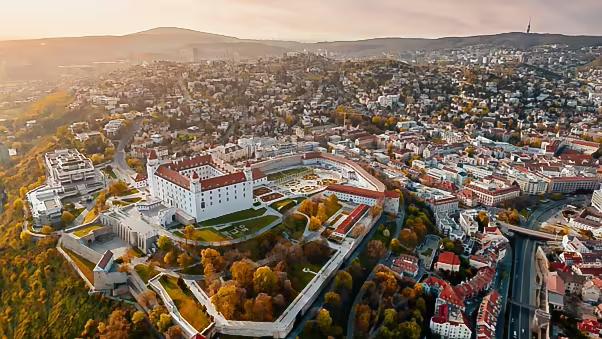
Bratislava, Slovakiets hovedstad, ligger ved Donau i hjertet af Centraleuropa – kun 60 km fra Wien, med Ungarn mod syd og Tjekkiet mod nordvest. Det er en af EU's mindste hovedstæder, men vejer tungt med en voksende IT- og shared services-sektor, en kompakt og gangbar gammel bydel (Staré Mesto) samt vinmarker inden for bygrænsen. Bratislava Slot kigger ud over Donau fra en bakke over den gamle bydel, og UFO-broen (Most SNP) – med dens tallerkenformede observationsdæk – er blevet byens arkitektoniske kendemærke.
For expats, der ønsker vesteuropæiske karrieremuligheder til lavere leveomkostninger – med weekendture til Wien, Budapest og Prag inden for få timers rækkevidde – er Bratislava et praktisk og stadig mere populært valg. Byen er hjemsted for ca. 430.000 mennesker, men fungerer som en større metropol takket være sin internationale erhvervsbase og den daglige strøm af pendlere, studerende og turister, der passerer mellem Slovakiet og Østrig.
Bratislava i korte træk
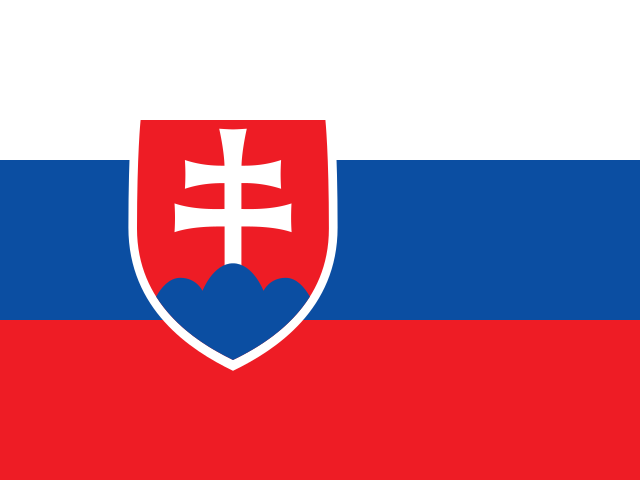
- Befolkning
- ~430,000 (by); ~600,000 (storbyområde)
- Region
- Bratislavský kraj (Bratislava-regionen), det sydvestlige Slovakiet
- Kendt for
- Donau-bredden, Bratislava Slot, nærhed til Wien
- Gennemsnitlig husleje (1 soveværelse)
- €500–€800
- Gennemsnitlig løn
- ~€1,700/måned (netto)
- Expat-fællesskab
- Voksende – koncentreret i IT, finans og shared services
Hvorfor flytte til Bratislava
- Nærhed til Wien: Med ca. 60 km er Bratislava en af de nærmeste europæiske hovedstæder til en anden. Mange expats bor i Bratislava og pendler til Wien eller udnytter to-by-dynamikken til weekendture og adgang til lufthavnen.
- Overkommelige leveomkostninger: Husleje, dagligvarer og restaurantbesøg koster betydeligt mindre end i Wien eller Prag, selv om lønningerne i IT- og virksomhedssektoren nærmer sig vesteuropæisk niveau.
- Voksende jobmarked: IBM, Dell, Amazon, AT&T og dusinvis af shared services-centre opererer i og omkring Bratislava og skaber stabil efterspørgsel efter engelsktalende fagfolk.
- Kompakt og grøn: Byen er lille nok til at cykle på tværs af på under en time, med Lille Karpaters (Malé Karpaty) vinmarker og Donaus flodsletsskove inden for nem rækkevidde.
Ting at overveje
- Sprogbarriere uden for erhvervslivet: Offentlige kontorer, ældre servicemedarbejdere og mange udlejere opererer udelukkende på slovakisk. Bureaukratiske processer kan være langsomme og uigennemsigtige uden en slovakisktalende til at hjælpe.
- Boligkvaliteten varierer: Mens nye byggerier er moderne og velbyggede, kan ældre panelák-lejligheder (almindelige i Petržalka og Karlova Ves) lide under dårlig isolering, ustabil opvarmning og forældet el-installation.
- Begrænsede langdistanceflyvninger: M. R. Štefánik Lufthavn (BTS) håndterer kun kortdistanceruter i Europa. For interkontinentale rejser skal du næsten altid skifte i Wien, Prag eller Frankfurt.
- Stigende priser: Bratislava er stadig billigere end Wien eller Prag, men huslejerne er steget støt i takt med, at internationale virksomheder ekspanderer. Kløften indsnævres hvert år, særligt i Staré Mesto og nyudviklede områder langs floden.
Visa og opholdstilladelse til Slovakiet
EU/EØS-borgere og schweiziske statsborgere kan bo og arbejde frit i Slovakiet, men skal registrere deres adresse hos det lokale Obvodnú úrad (distriktskontoret) inden for 30 dage efter ankomst. Ikke-EU-borgere har brug for en opholdstilladelse, inden de flytter. De mest almindelige muligheder er:
- Medarbejderkort (Zamestnanecká karta): Knyttet til en specifik arbejdsgiver og stilling. Din arbejdsgiver starter processen hos det lokale udlændingepoliti (Cudzinecká polícia). Sagsbehandlingstiden er 60–90 dage.
- Erhvervsmæssig opholdstilladelse: For freelancere og iværksættere. Kræver dokumentation for en registreret erhvervslicens (živnosť), en ren straffeattest og dokumenterede økonomiske midler.
- Studieopholdstilladelse: For indskrevne studerende ved anerkendte institutioner som Comenius Universitetet eller det Slovakiske Teknologiske Universitet (STU).
- Familiesammenføring: For ægtefæller og forsørgede familiemedlemmer til lovlige beboere.
Efter fem års uafbrudt lovligt ophold (eller straks for familiemedlemmer til slovakiske/EU-borgere) kan du ansøge om Trvalý pobyt (permanent ophold), som giver bredere rettigheder, herunder fuld adgang til det offentlige sundhedsvæsen og mulighed for at skifte job uden at underrette udlændingepolitiet.
Find bolig i Bratislava
Gennemsnitlige huslejer
| Kvarter | 1 soveværelse | 3 soveværelser | Karakter |
|---|---|---|---|
| Staré Mesto (Gamlebyen) | €650–€900 | €1,100–€1,600 | Historisk centrum, venligt for fodgængere, turistpræget, dyrest |
| Petržalka | €400–€550 | €600–€900 | Stort panelák-boligkompleks på den anden side af Donau, overkommeligt prissat, tæt bebygget |
| Ružinov | €500–€700 | €800–€1,200 | Boligkvarter, familievenligt, tæt på lufthavn og indkøbsmuligheder |
| Nové Mesto | €450–€650 | €700–€1,100 | Blanding af boliger og erhverv, tæt på den centrale jernbanestation |
| Karlova Ves | €400–€600 | €650–€950 | Studenterrigt område tæt på STU-campus, god pris |
| Rača | €400–€550 | €600–€850 | Forstadspræg, vinmarker, roligt, ved foden af Lille Karpaterne |
Sådan finder du bolig
- Reality.sk og Nehnutelnosti.sk: De to dominerende slovakiske ejendomsportaler. De fleste annoncer er på slovakisk, men oversættes nemt med browseren. Både mæglere og udlejere annoncerer her.
- Facebook-grupper: "Byty Bratislava" og "Bratislava Expats Housing" er aktive. Annoncer direkte fra ejeren er almindelige og kan spare dig for éen måneds mæglergebyr.
- Ejendomsmæglere: RE/MAX, Engel & Völkers og Century 21 har alle kontorer i Bratislava. Bureauer opkræver typisk én måneds husleje som kommission fra lejeren.
- Mund til mund: I en by af denne størrelse skifter mange lejligheder hænder via personlige netværk. Kolleger, der allerede arbejder i din virksomhed, kan være den hurtigste vej til en god lejlighed.
Tips til expats
- Udlejere vil bede om legitimation (pas), dokumentation for indkomst eller en ansættelseskontrakt og til tider en slovakisk kautionist. Hvis du mangler lokal kredithistorik, hjælper det at tilbyde 2–3 måneders husleje som depositum.
- De fleste lejemål løber over 12 måneder med automatisk fornyelse. Tjek, om forbrugsudgifter er inkluderet (všetky poplatky) eller faktureres særskilt.
- Boligmarkedet strammes i september, når universitetsstuderende ankommer. Begynd din søgning i juli eller august.
- Petržalka tilbyder den bedste værdi pr. kvadratmeter, men nogle panelák-bygninger har dårlig isolering og begrænsede parkeringsmuligheder. Besøg stedet personligt, inden du forpligter dig.
Kvarterguide
- Staré Mesto (Gamlebyen): For singler og par, der vil gå overalt. Brolagte gader, Schöne Naci-statuen ved Rybárska brána, Euroveas havnefront, Bratislava Slot og Donaus promenade. Huslejerne er de højeste i byen, og parkeringsmulighederne er meget begrænsede.
- Petržalka: Det største boligkvarter i Centraleuropa, en tæt klynge af panelák-bygninger fra socialisttiden på den anden side af UFO-broen (Most SNP). Overkommeligt prissat og velforbundet med bus til centrum på 15–20 minutter, men betonmiljøet er ikke for alle.
- Ružinov: Et godt valg for familier. Flade gader, store parker, indkøb i Avion Shopping Park og Bory Mall samt tæt på M. R. Štefánik Lufthavn (BTS). Gode sporvogns- og busforbindelser til centrum på 15–20 minutter.
- Nové Mesto: Omgiver den centrale jernbanestation (Bratislava hlavná stanica) og omfatter Nivy-indkøbscentret. Et praktisk udgangspunkt for pendlere, der rejser ofte med tog. Blanding af ældre lejlighedsblokke og nyere byggeri.
- Karlova Ves: Domineret af STU-campus og studenterboliger, men den sydlige del langs Donau har rolige boliggader og god adgang til Karlova Ves jernbanestation. God værdi for dem, der er villige til at bo lidt uden for centrum.
- Rača: Vinkvarteret. Vingårde på skråningerne af de Små Karpater producerer nogle af Slovakiets bedste hvidvine, særligt Rizling vlašský. Roligt, grønt og overkommeligt i pris – ideelt for familier eller alle, der foretrækker et roligere tempo. Sporvognen til centrum tager ca. 25 minutter.
Leveomkostninger i Bratislava
Månedligt budgetoverblik
| Kategori | Budgetramme |
|---|---|
| Husleje (2-værelses, centrum) | €600–€800 |
| Forsyninger (el, varme, vand, affald) | €150–€220 |
| Internet + mobilabonnement | €20–€35 |
| Dagligvarer | €200–€300 |
| Transport (månedligt MHD-kort) | €29 |
| Spisning ude (4 gange/måned) | €60–€100 |
| Fritid/Fitnesscenter | €30–€60 |
| I alt | €1.089–€1.544 |
Daglige udgifter
- Kaffe (espresso): €1,80–€2,50
- Frokost (denný menu / dagsmenu): €5,50–€8,50
- Månedligt transportkort (MHD): €29
- Øl (0,5 l, pub): €2,00–€3,00
- Biobillet: €7–€9
- Fitnessmedlemskab: €25–€50
Transport i Bratislava
- Offentlig transport: MHD Bratislava (Mestská hromadná doprava) driver sporvogne, trolleybusser og busser rundt i hele byen. Et månedskort koster €29 og dækker alle zoner inden for Bratislava. Netværket er omfattende og pålideligt, selvom sporvognene endnu ikke når Petržalka (den betjenes i stedet af busser og trolleybusser). Køb billetter via IDS BK-mobilappen eller ved automaterne ved stoppesteder.
- Cykling: Donau-cykelruten (EuroVelo 6) løber gennem Bratislava og forbinder byen med Wien på under to timer på cykel. Byen har en voksende cykelinfrastruktur, selvom den ikke er så veludviklet som i østrigske byer. Nextbike driver et offentligt cykludlejningssystem.
- Kørsel: Det er ikke nødvendigt at have bil. Parkering i Staré Mesto er dyr og svært at finde – de fleste zoner er afgiftsbelagte beboerparkeringszoner (modré parkovacie zóny). Importerer du en bil fra uden for EU, skal du registrere den via colný úrad (toldkontoret) og betale 19 % moms på nykøbte køretøjer.
- Lufthavn: M. R. Štefánik Airport (BTS) ligger 9 km fra centrum og betjener kortdistanceflyvninger i hele Europa via Ryanair, Wizz Air og Air Explore. Til langdistanceforbindelser flyver de fleste udlændinge fra Vienna International (VIE), som kan nås med bus på ca. 1 time (FlixBus eller RegioJet) eller med tog.
- Intercity: Bratislava hlavná stanica (hovedbanegården) forbinder Bratislava med Wien (1 time), Budapest (2,5 timer), Prag (4 timer) og Brno (2 timer). Mlynské Nivy-busstationen tilbyder langdistancebusser. Twin City Liner-katamaranen forbinder Bratislava og Wien ad Donau på ca. 75 minutter.
Sundhedsvæsen i Bratislava
- Offentlig sygesikring: Når du har opholdstilladelse, skal du tilmelde dig en offentlig sygesikringsforsikrer. Všeobecná zdravotná poisťovňa (VšZP – Almen Sygesikring) er den største statsejede forsikrer og dækker de fleste ydelser. Din arbejdsgiver registrerer dig typisk ved ansættelsen. Bidragene trækkes fra lønnen (4 % fra medarbejder, 10 % fra arbejdsgiver). Andre offentlige forsikringsselskaber inkluderer Union poisťovňa og Dôvera, men VšZP har det bredeste netværk af kontraktbundne udbydere.
- Hospitaler og klinikker: De vigtigste offentlige hospitaler inkluderer Nemocnica Ružinov og Nemocnica Staré Mesto. Univerzitná nemocnica Bratislava (Universitetshospitalet) på Kramáre varetager speciallæge- og akutbehandling. Til privat behandling tilbyder ProCare-klinikker og Canadian Medical Center hurtigere tider og engelsktalende personale mod højere egenbetaling.
- Engelsktalende læger: Tilgængeligt, men ikke overalt. Canadian Medical Care Center og Poliklinika ProCare har engelsktalende praktiserende læger og speciallæger. Spørg i expat-Facebook-grupper for anbefalinger – fællesskabet deler jævnligt lister over læger.
- Apoteker (lekárne): Findes på næsten alle hovedgader. Apoteket på Štúrova ulica nær den gamle bydel er åbent 24 timer i døgnet. Mange almindelige lægemidler, der kræver recept i vestlige lande, kan købes håndkøb i Slovakiet – men tjek altid. Tag dit EHIC-kort med, hvis du er EU-statsborger, for øjeblikkelig dækning.
- Nødnummer: 112 (generel nødsituation), 155 (ambulance direkte), 158 (politi).
Fa en personlig flytteplan
Skriv din e-mail, sa sender vi en skraeddersyet tjekliste plus tre tilbud fra godkendte flyttefirmaer.
Bankforhold
Det er nemt at åbne en bankkonto med pas, adressebevis og opholdstilladelse (eller ansættelseskontrakt). De vigtigste banker inkluderer:
- Slovenská sporiteľňa (del af Erste Group): Størst netværk af filialer og hæveautomater. God til daglig bankforretning.
- Tatra Banka (del af Raiffeisen): Moderne app, engelsk brugerflade, populær blandt unge fagfolk.
- VÚB Banka (del af Intesa Sanpaolo): Solid fuldservicebank.
- ČSOB: Endnu et populært valg med erhvervsbankydelser.
Til skattemæssige formål skal du have et DIČ (Daňové identifikačné číslo – skatteidentifikationsnummer), som tildeles af Finančná správa (skattemyndigheden), når du registrerer dig. Selvstændige modtager også et IČO (Identifikačné číslo organizácie – virksomheds-id), når de registrerer en erhvervslicens (živnosť). Gem kvitteringer for alle výdavky (fradragsberettigede udgifter), hvis du er selvstændig – Slovakiet tillader standardiserede udgiftsfradrag, men specificerede fradrag kræver i visse tilfælde fuld dokumentation bekræftet af en notár (notar).
Uddannelse i Bratislava
- Internationale skoler: Cambridge International School Bratislava (i Ružinov), QSI Bratislava (engelsksproglig, i Staré Mesto) og International School of Bratislava (IB-curriculum) er de vigtigste muligheder. Skolepenge varierer fra €5.000 til €18.000 om året afhængigt af aldersgruppe.
- Universiteter: Comenius University (Univerzita Komenského) er Slovakiets største og mest prestigiøse universitet med fakulteter spredt over hele byen. Slovak University of Technology (STU) har sit hovedcampus i Karlova Ves og er stærk inden for ingeniørfag og IT. Bratislava International School of Liberal Arts (BISLA) tilbyder engelsksprogede bachelorprogrammer.
- Sprogskoler: International House Bratislava og Studia Academica tilbyder slovakiske kurser for udlændinge. Mange expats lærer nok samtaleslovakisk på 6–12 måneder til at klare daglige ærinder, selvom engelsk er meget udbredt i erhvervssektoren.
Kultur og livsstil
- Den gamle bydel og åbredden: Staré Mestos Hlavné námestie (Hovedpladsen), Hviezdoslavovo námestie og Eurovea-havnekomplekset er byens sociale centrum. Om sommeren fyldes Donau-promenaden med udendørscaféer og pop-up-barer.
- Vinkultur: Bratislava er en af de få europæiske hovedstæder med vingårde inden for bygrænsen. Rača og de Små Karpater producerer Rizling vlašský, Veltlínske zelené og Frankovka modrá. Vinbarer i den gamle bydel skænker lokale vine fra €3–€5 pr. glas.
- Historie og dagsture: Devín Slot, ved sammenløbet af Donau og Morava (tilgængeligt med bybus 29), stammer fra det 9. århundrede og byder på panoramaudsigt. Danubiana Meulensteen Art Museum, på en halvø i Donau nær Čunovo, udstiller moderne europæisk kunst. Schöne Naci, en bronzestatue på Rybárska brána, er byens mest elskede monument – en gentleman, der løfter sin hat til forbipasserende.
- Sport og friluftsliv: De Små Karpater tilbyder vandre- og mountainbikestier, der starter ved byens udkant. Donau-cykelruten fører hele vejen til Wien. Om vinteren er skisportscentre som Pezinská Baba (30 minutters kørsel) inden for nem rækkevidde.
- Kunst og begivenheder: Det Slovakiske Nationalteater (Slovenské národné divadlo) opfører opera, ballet og drama i en moderne bygning ved Donau-åbredden. Bratislava Music Festival (BHS) løber af stablen hver efterår. Byen er også vært for et livligt julemarked på Hlavné námestie fra slutningen af november til december, der serverer gløgg (varené víno) og lokše (kartoffelpandekager).
- Weekendudflugter: Wien er 1 times togrejse væk. Budapest er 2,5 timer. Vinbyerne Modra og Pezinok i de Små Karpateres vinregion er 20–30 minutters kørsel væk. Morava-flodens oversvømmelsesslette nær Devín byder på rolig cykling og fuglekiggeri.
Mad og spisesteder
- Slovakiske specialiteter inkluderer bryndzové halušky (kartoffelboller med fåreost og bacon), kapustnica (surkålssuppe med pølse) og trdelník (skorstenskage). Den gamle bydel har et utal af slovakiske restauranter; prøv Modrá Hviezda på Židovská ulica for traditionel mad.
- Til international madoplevelse byder Euroveas foodcourt, Nivy-indkøbscenterets foodhall og gaderne omkring Ventúrska og Michalská på alt fra thai til libanesisk.
- Billig mulighed: denný menu (daglig frokostmenu), tilgængelig på de fleste restauranter på hverdage for €5–€8, inkluderer typisk suppe, en hovedret og sommetider en drik.
Expat-fællesskabet
- Expat-grupper på Facebook som "Expats in Bratislava" og "Bratislava Internationals" er meget aktive med boligspørgsmål, sociale arrangementer og praktiske råd.
- The International Women's Club of Bratislava arrangerer månedlige møder og velgørenhedsarrangementer.
- Sprogudvekslingsmøder finder sted ugentligt på pubber som Mockingjay Café i Staré Mesto. Slovakisk-engelske tandemer er nemme at arrangere via universitetsopslagstavler og Facebook.
Arbejdsmarkedet i Bratislava
- Vigtigste brancher: IT og softwareudvikling, fælles tjenester og BPO (business process outsourcing), finans og regnskab, bilindustri (Volkswagen har et stort anlæg i Bratislava) og logistik.
- Større arbejdsgivere: IBM (fælles tjenester), Dell (IT), Amazon (logistik og udvikling), AT&T (fælles tjenester), T-Systems, Lenovo, Accenture og Volkswagen Slovakia.
- Gennemsnitslønninger pr. sektor:
| Sektor | Månedlig bruttoløn |
|---|---|
| IT / Software | €2.800–€4.500 |
| Finans / Regnskab | €2.000–€3.500 |
| Fælles tjenester (entry-niveau) | €1.400–€2.000 |
| Ingeniørfag / Bilindustri | €1.800–€3.200 |
| Undervisning (internationale skoler) | €1,500–€2,500 |
- Jobsøgningsressourcer: Profesia.sk er den dominerende slovakiske jobportal. LinkedIn bruges i vid udstrækning af multinationale arbejdsgivere, der søger engelsktalende kandidater. "Expats in Bratislava" og lignende Facebook-grupper slår også løbende ledige stillinger op.
Tjekliste til flytning til Bratislava
- Sikr dig et jobtilbud eller universitetsoptagelse (påkrævet for de fleste opholdstilladelser)
- Ansøg om det relevante visum eller opholdstilladelse på den slovakiske ambassade i dit land
- Saml dokumenter: pas, fødselsattest, vielsesattest (hvis relevant) – få dem apostilleret og oversat til slovakisk af en statsautoriseret translatør
- Sørg for sundhedsforsikring til dine første uger (rejseforsikring eller EU-sygesikringskortet for EU-borgere)
- Undersøg bydele og book lejlighedsvisninger til din første uge (kontakt mæglere via Reality.sk eller Nehnutelnosti.sk)
- Hvis du indfører ejendele, skal du forberede en detaljeret fortegnelse for colný úrad (toldkontoret); genstande, der har været ejet og brugt i 6+ måneder, er berettiget til toldfri import
- Book midlertidig indkvartering til dine første 2–4 uger (Airbnb i Staré Mesto eller Ružinov)
- Hvis du flytter med børn, skal du undersøge optagelse på internationale skoler – pladser er optaget om foråret til september-start
- Underret dit hjemlands skattemyndighed om din flytning, hvis det kræves
- Registrer din adresse hos Obvodný úrad (distriktskontoret) – medbring din lejekontrakt, pas og opholdstilladelse
- Besøg Cudzinecká polícia (udlændingeafdelingen) for at bekræfte din bopælsregistrering
- Åbn en bankkonto (Slovenská sporiteľňa eller Tatra Banka anbefales til expats)
- Køb et slovakisk SIM-kort: Orange, Slovak Telekom eller O2 – alle tilbyder forudbetalte abonnementer fra €10/måned
- Køb et månedskort til MHD (€29) via IDS BK-appen eller på et billetkontor
- Registrer dig hos VšZP (eller din arbejdsgivers udpegede sygeforsikring) – din HR-afdeling håndterer normalt dette
- Sørg for registrering af kæledyr hos en lokal dyrlæge, hvis du har medbragt dyr – mikrochip og EU-kæledyrspas er påkrævet
- Opret en el-/gaskonto online hos ZSE eller SPP for at undgå skønsmæssige regninger
- Indhent dit DIČ (skatteidentifikationsnummer) fra Finančná správa, hvis din arbejdsgiver ikke håndterer det
- Hvis du er selvstændig, skal du registrere din erhvervslicens (živnosť) for at modtage dit IČO (virksomheds-id); nogle dokumenter skal muligvis bekræftes af en notár (notar)
- Find en lokal praktiserende læge (všeobecný lekár) – spørg i expat-grupper om anbefalinger til engelsktalende læger
- Tilmeld dig forsyningsselskaber, hvis det ikke er inkluderet i din husleje (el via ZSE, gas via SPP, internet via Orange eller Slovak Telekom)
- Udforsk dit nabolag – find dine nærmeste dagligvarebutikker (Billa, Lidl, Tesco, Kaufland)
- Bliv medlem af Facebook-gruppen "Expats in Bratislava" for sociale arrangementer, brugte møbler og lokale tips
- Tilmeld dig et slovakisk sprogkursus, hvis du planlægger at blive på lang sigt – International House Bratislava tilbyder aftenkurser
- Hvis du har importeret et køretøj, skal du gennemføre registrering og teknisk kontrol (STK) inden for 30 dage
- Søg om Trvalý pobyt (permanent ophold), hvis du allerede er berettiget – det forenkler fremtidig bureaukrati betydeligt
Relaterede guider
- Flytning til Slovakiet – komplet landsguide
- Flytning til Wien – byen kun 60 km væk
- Flytning til Prag – tjekkisk hovedstad, 4 timer med tog
- Flytning til Budapest – ungarsk hovedstad, 2,5 timer med tog
- Flytning til Košice – Slovakiets næststørste by, det østlige Slovakiet