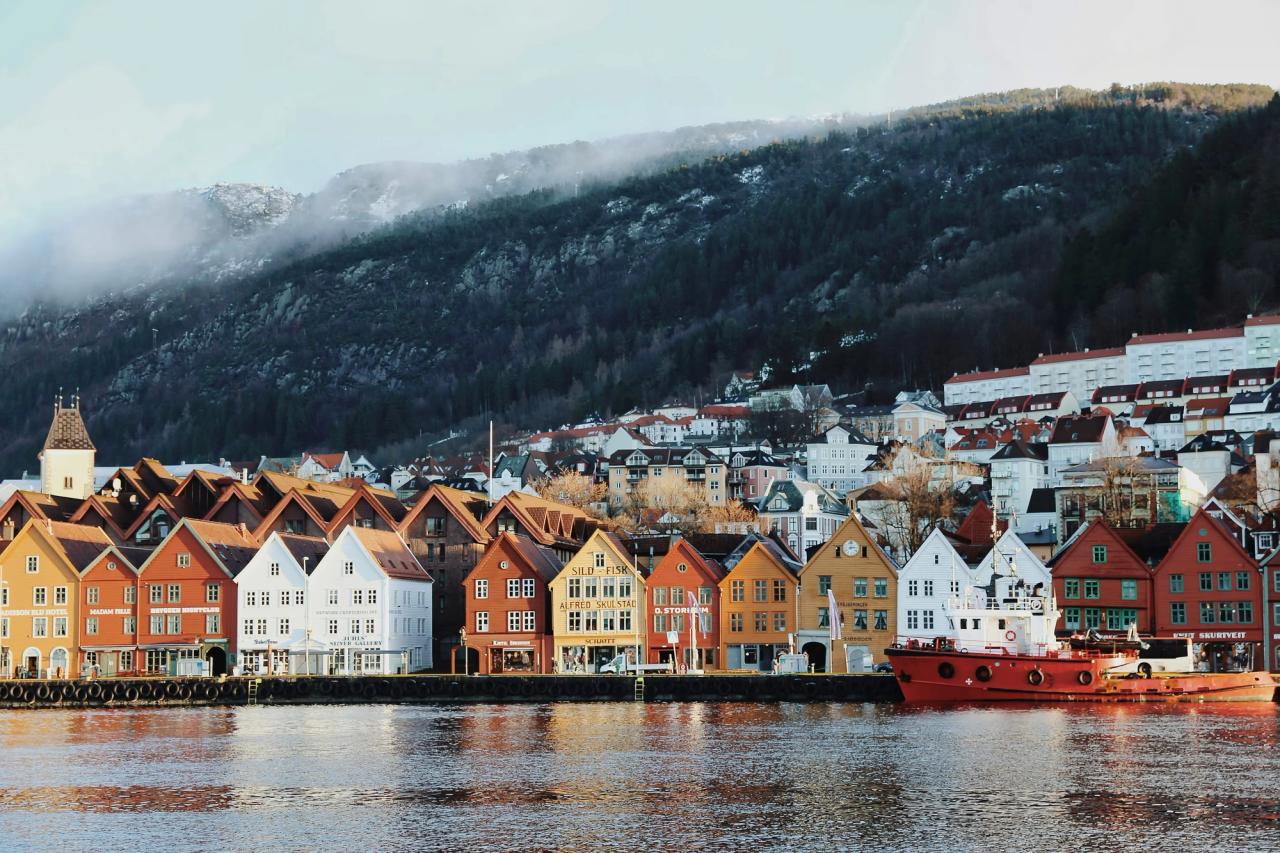

Bergen er Norges næststørste by og kaldes "Porten til fjordene" på grund af sin placering mellem syv fjelde og dybe kystindløb. Med den ikoniske Bryggen, en levende kulturscene og mere nedbør end næsten nogen anden by i Europa har Bergen en helt egen identitet, der adskiller den fra Oslo. Hvis du elsker fisk og skaldyr, dramatiske naturomgivelser og et tæt sammentømret lokalmiljø, er Bergen et oplagt valg, når du flytter til Norge.
Bergen kort fortalt

- Indbyggertal
- ~295.000 (storbyområde ~470.000)
- Region
- Vestnorge (Vestland)
- Kendt for
- Bryggen, fjorde, regn, hanseatisk arv
- Gennemsnitlig husleje (1 soveværelse)
- NOK 11.000–15.000/måned (centrum)
- Gennemsnitsløn
- NOK 48.000–65.000/måned brutto
- Expat-fællesskab
- Mellemstort – energisektor, universitet, søfart
Hvorfor flytte til Bergen
- Porten til fjordene: Sognefjorden, Hardangerfjorden og Nærøyfjorden ligger alle inden for få timers kørsel.
- Kulturel hovedstad: Hjemby for Bergen International Festival, KODE-kunstmuseerne og en blomstrende musikscene.
- Kompakt og gangvenlig: Det meste af det centrale Bergen kan let udforskes til fods.
- Stærkt jobmarked: Offshore-energi, søfart, akvakultur og en voksende techsektor.
- Markant identitet: Bergen har sin egen dialekt, sine egne traditioner og en stærk lokalstolthed – byen føles anderledes end resten af Norge.
Find bolig i Bergen
Gennemsnitlige huslejer
| Bydel | 1 soveværelse (NOK/måned) | 3 soveværelser (NOK/måned) | Karakter |
|---|---|---|---|
| Sentrum (centrum) | 13.000–16.000 | 23.000–30.000 | Historisk, livlig, tæt på Bryggen |
| Sandviken | 11.000–14.000 | 20.000–26.000 | Boligområde, fjordudsigt, roligt |
| Fantoft | 8.500–11.000 | 15.000–20.000 | Studievenligt, prisvenligt, tæt på Bybanen |
| Åsane | 9.500–12.000 | 17.000–22.000 | Forstadsmiljø, indkøbscentre, børnefamilier |
| Nesttun | 10.000–13.000 | 18.000–24.000 | Familievenligt, sporvognsforbindelse |
| Landås | 9.500–12.500 | 17.000–22.500 | Højtbeliggende, parker, skoler |
Sådan finder du bolig
- Finn.no: Den primære platform for alle leje- og købsannoncer i Bergen.
- Hybel.no: Nyttig til delelejligheder og mindre boliger.
- Sammen: Studieboligorganisationen for studerende ved Universitetet i Bergen eller HVL.
- Lokale Facebook-grupper: Aktive boliggrupper i Bergen lægger nye opslag op hver dag.
Tips til expats
- Forvent 2–3 måneders depositum plus første måneds husleje – det er standard i hele Norge.
- Bergen får 2.250 mm regn om året. Tjek for fugt og skimmelsvamp, når du ser lejligheder.
- Der findes prioriterede ventelister til populære områder – begynd at søge tidligt, især før universitetssemesteret starter i august.
- Et fødselsnummer eller D-nummer er nødvendigt til de fleste lejekontrakter.
- De fleste lejligheder i Norge er umøblerede – afsæt budget til møbler, eller kig efter møblerede (møblert) boliger til en højere pris.
- Garager og pulterrum (bod) koster ofte ekstra – spørg, før du skriver under.
Guide til bydelene
- Bryggen / Sentrum: Hjertet af Bergen. UNESCO-fredede træbrygger, restauranter og natteliv. Turistet, men charmerende. Høj husleje.
- Sandviken: Roligt boligområde nord for centrum med udsigt over fjorden. Populært blandt børnefamilier og fagfolk. Mellemhøj husleje.
- Fantoft: Stor studenterbefolkning, prisvenlige boligblokke og direkte forbindelse til Bybanen. Lav husleje.
- Nordnes: Halvø med farverige træhuse og havneudsigt. Gåafstand til centrum. Mellem til høj husleje.
- Laksevåg: På den anden side af havnen, mere prisvenligt, med voksende byudvikling og busforbindelser til centrum. Lav til mellemhøj husleje.
- Landås: Højtbeliggende boligområde med parker og skoler. God værdi for børnefamilier. Mellemhøj husleje.
- Ytre Sandviken: Nordlig forlængelse af Sandviken med nyere bebyggelse og havneadgang. Mellemhøj husleje.
Leveomkostninger i Bergen
Månedligt budgetoverblik
| Kategori | Budgetinterval (NOK) |
|---|---|
| Husleje (1 soveværelse, centrum) | 11.000–15.000 |
| Forbrug | 1.400–2.200 |
| Internet | 500–700 |
| Dagligvarer | 3.500–5.000 |
| Transport (månedskort) | 750–850 |
| Spise ude (4 gange/måned) | 2.000–3.500 |
| Fritid/fitness | 400–700 |
| I alt | 19.550–27.950 |
Daglige udgifter
- Kaffe: NOK 45–60
- Frokost (afslappet): NOK 140–180
- Månedskort til transport: NOK 750–850
- Øl (bar): NOK 85–110
- Biografbillet: NOK 130–160
- Et brød: NOK 30–45
- 1 liter mælk: NOK 18–23
- Månedligt fitnessmedlemskab: NOK 350–600
- Pizza ud af huset: NOK 180–250
- Flaske vin (Vinmonopolet): NOK 150–250
- Månedligt mobilabonnement: NOK 250–400
Sådan kommer du rundt i Bergen
- Offentlig transport: Skyss driver busser og letbanen Bybanen. Et månedskort koster omkring NOK 750–850.
- Cykling: Det bakkede terræn gør cykling udfordrende, men der er cykelstier i de fladere områder. Bysykkel-bycykler kan lejes i sæsonen.
- Bilkørsel: Smalle gader og begrænset parkering i centrum. Bomringe (bomring) opkræver daglige afgifter.
- Lufthavn: Bergen Flesland (BGO), 18 km syd for byen. Bybanen forbinder lufthavnen med centrum på cirka 45 minutter.
- Mellem byer: Direkte tog til Oslo (~7 timer). Hurtigbåde til kystbyer. Hurtigruten-kystfærgen afgår dagligt.
Sundhedsvæsen i Bergen
- Hospitaler/klinikker: Haukeland Universitetshospital er det vigtigste hospital i det vestlige Norge. Der findes også flere private klinikker.
- Engelsktalende læger: Let tilgængelige – de fleste sundhedsfaglige taler engelsk.
- Apoteker: Apotek 1 og Vitusapotek findes i hele byen.
- Alarmnumre: 113 (ambulance), 110 (brand), 112 (politi).
- Tilmelding til praktiserende læge: Vælg din fastlege via Helsenorge.no.
Fa en personlig flytteplan
Skriv din e-mail, sa sender vi en skraeddersyet tjekliste plus tre tilbud fra godkendte flyttefirmaer.
Visum og opholdstilladelse
- Arbejdsvisum (faglært): Kræver et jobtilbud og relevante kvalifikationer.
- Tilladelse til faglært arbejdskraft (uden for EU/EØS): Norge er ikke medlem af EU og udsteder ikke EU Blue Cards. Faglærte fra lande uden for EU/EØS søger via UDI's Skilled Worker-tilladelse – det kræver et jobtilbud og relevante kvalifikationer.
- Studievisum: Til personer optaget på UiB, NHH eller HVL.
- Familiesammenføring: Til nære familiemedlemmer til personer bosat i Norge.
- Selvstændig / startup-visum: Til iværksættere med en bæredygtig forretningsplan.
EU/EØS-borgere kan bo og arbejde i Norge uden visum, men skal registrere sig inden for 3 måneder.
Visuminformation: https://www.udi.no/en/want-to-apply
Forsyning og internet
- El: Vælg mellem flere udbydere (Fjordkraft, Tibber, Norgesenergi). Gennemsnitligt NOK 800–1.500/måned afhængigt af forbrug og årstid. Strømmen er billigere om sommeren.
- Internet: Udbyderne omfatter Telenor, Telia og Altibox. Fiberforbindelser er udbredte. Regn med NOK 500–700/måned for 100–500 Mbps.
- Vand og affald: Normalt inkluderet i kommunale gebyrer eller fællesomkostninger. Separate vandregninger er sjældne for lejligheder.
- Opvarmning: De fleste lejligheder bruger elektriske radiatorer. Ældre bygninger kan have højere varmeudgifter.
Kultur og livsstil
- Regn som identitet: Bergen omfavner sin regn – de lokale siger "der findes ikke dårligt vejr, kun dårligt tøj."
- Musikscene: Bergen har fostret internationale kunstnere som Kygo og indieduoen Kings of Convenience. Livemusiksteder spiller året rundt.
- Fjordeventyr: Weekendture til Hardangerfjorden, Voss og Sognefjorden er nemme og populære.
- Bergen International Festival: Afholdes hver maj/juni med klassisk musik, opera, teater og dans.
- Bergen Filharmoniske Orkester: Et af verdens ældste, der spiller jævnligt i Grieghallen.
Mad og spisesteder
- Bergen er Norges hovedstad for fisk og skaldyr – frisk torsk, laks, krabbe og rejer fra havnens fisketorv (Fisketorget).
- Bedste områder at spise: Bryggen, Engen og museumskvarteret omkring KODE.
- Billige muligheder: Bagerier og afslappede spisesteder omkring Torgallmenningen tilbyder måltider fra NOK 100–140.
Udlændingemiljø
- Bergen International Hub: Netværk og sociale arrangementer for internationale fagfolk.
- University of Bergens internationale kontor: Støtte til udenlandske studerende og forskere.
- Meetup-grupper: Sprogudveksling, vandregrupper og sociale træf.
- Sports- og friluftsklubber: Løbeklubber, klatreklubber og skiforeninger byder internationale velkommen.
Jobmarkedet i Bergen
- Vigtigste brancher: Olie og gas, maritim industri og shipping, akvakultur, turisme, videregående uddannelse, finans.
- Store arbejdsgivere: Equinor, DNV, Bergen Group, Grieg Group, Universitetet i Bergen, HVL.
- Gennemsnitsløn pr. branche (månedlig bruttoløn):
| Branche | Gennemsnit (NOK) |
|---|---|
| Olie og gas | 65.000–95.000 |
| Maritim | 50.000–75.000 |
| IT/tech | 52.000–78.000 |
| Sundhedsvæsen | 42.000–60.000 |
| Uddannelse | 43.000–55.000 |
| Hotel og restauration | 33.000–42.000 |
- Jobsøgningsressourcer: Finn.no/jobb, Nav.no, LinkedIn, jobopslag i Bergens Tidende.
Uddannelse i Bergen
- Internationale skoler: Bergen International School (BIS), som tilbyder tosproget undervisning for aldersgruppen 6–16 år.
- Universiteter: University of Bergen (UiB), Norwegian School of Economics (NHH), Western Norway University of Applied Sciences (HVL).
- Sprogskoler: Folkeuniversitetet Bergen, norskundervisning hos Bergen Kommune.
Bank og registrering
For at åbne en bankkonto skal du bruge: pas, fødselsnummer eller D-nummer, dokumentation for adresse og nogle gange dokumentation for ansættelse. Registrer dig hos Skatteetaten med dit pas, opholdstilladelse og adresse for at få dit fødselsnummer – det er afgørende for bank, sundhedsvæsen og skat.
Flyttetjekliste til Bergen
- Bekræft din opholdstilladelse eller EU/EØS-registrering.
- Arranger midlertidig bolig til de første uger.
- Pak ordentligt regntøj – det er et absolut must i Bergen.
- Undersøg skolepladser, hvis du flytter med børn.
- Registrer dig hos Skatteetaten for at få dit fødselsnummer eller D-nummer.
- Opret en bankkonto hos DNB, Danske Bank eller Sparebanken Vest.
- Køb et månedskort til Skyss.
- Find en permanent bolig via Finn.no eller Hybel.no.
- Tilmeld dig en praktiserende læge (fastlege) på Helsenorge.no.
- Få et norsk SIM-kort (Telia, Telenor eller ice).
Sådan flytter du dine ejendele til Bergen
Fragtomkostninger varierer efter mængde og afsendelsesland. Typiske markedspriser:
| Flyttetype | Tid | Pris (USD) |
|---|---|---|
| 20-fods container (FCL) | 2–6 uger | 1.450–4.100 USD |
| 40-fods container (FCL) | 2–6 uger | 2.450–5.100 USD |
| Luftfragt (~1 m³) | 3–5 dage | Fra 1.750 USD |
Norge er ikke med i EU – der pålægges importtold på 0–10 % + 25 % moms af CIF-værdien. Brugt indbo, du har ejet i mindst 6 måneder, kan være toldfrit, hvis du har boet i udlandet i mindst 12 måneder.
Sådan tager du bilen med til Bergen
Import af et køretøj kræver toldangivelse, 25 % moms og registreringsafgift (engangsavgift). Importerede biler skal bestå et teknisk syn. EU/EØS-kørekort er gyldige uden ombytning. Kørekort fra lande uden for EU skal byttes om inden for 12 måneder – nogle lande tillader ombytning uden prøve, mens andre kræver eksamen.
Sådan tager du kæledyr med til Bergen
Kæledyr skal være chippet, vaccineret mod rabies og have et EU-sundhedscertifikat eller Pet Passport. Kæledyr fra lande uden for EU har brug for et veterinærcertifikat udstedt inden for 10 dage. Visse hunderacer er forbudt i Norge. Kæledyr fra lande uden for EU/EØS skal indrejse via udpegede grænseovergange og kan blive kontrolleret af Mattilsynet.
Skattepligter i Bergen
Skattemæssigt hjemmehørende personer (183+ dage om året) beskattes af deres globale indkomst. Indkomstskatten er progressiv: cirka 22–45 %. Sociale bidrag udgør omkring 8 % af indkomsten. Dobbeltbeskatningsoverenskomster med 90+ lande forhindrer dobbeltbeskatning.
Norsk sprog og integration
- Er norsk nødvendigt? Du kan klare dig med engelsk, men det er afgørende at lære norsk for langvarig integration og mange jobs. Bergens særegne dialekt (bergensk) betyder, at de lokale bruger en lidt anden version af norsk – men standard bokmål forstås overalt.
- Gratis kurser: Bergen Kommune tilbyder gratis norskundervisning til registrerede borgere. Folkeuniversitetet Bergen tilbyder betalingskurser.
- Onlineressourcer: Duolingo (norsk bokmål), NTNU's gratis norskkursus og Memrise.
- Sprogniveau: De fleste arbejdsgivere forventer norsk på B1–B2-niveau inden for 1–2 år. Statsborgerskab kræver norsk på A2 både mundtligt og skriftligt.
- Tip til Bergen: De lokale er stolte af deres dialekt. At lære nogle få Bergen-specifikke vendinger gør dig populær i lokalsamfundet.
Relaterede guides
- Flyt til Norge – omfattende landeguide
- Flyt til Oslo – guide til hovedstaden
- Flyt til Trondheim – teknologi- og universitetscentrum
- Flyt til Stavanger – Norges oliehovedstad
- Flyt til Tromsø – livet nord for polarcirklen
- Flyt til Drammen – overkommelig pendlerby til Oslo