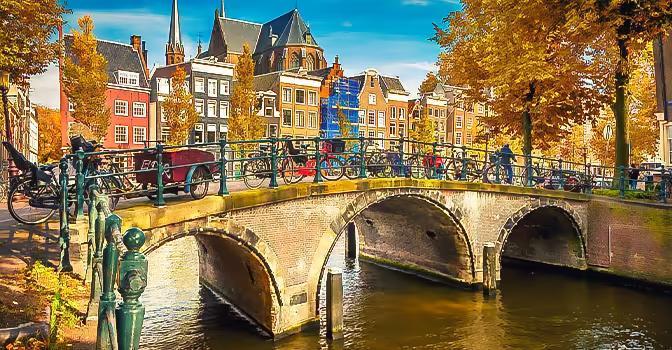
Overvejer du at flytte til landet med vindmøller, kanaler og cykling? Holland rangerer konsekvent blandt de bedste destinationer for expats takket være sin verdensklasses infrastruktur, høje engelskkundskaber og blomstrende internationale arbejdsmarked. Denne guide dækker alt, hvad du har brug for at vide - fra visa og 30% skatteafgørelsen til at finde bolig under en national boligkrise - så du kan planlægge din flytning med tillid.
Uanset om du er en højtuddannet professionel på vej til Amsterdams teknologiscene, en studerende, der tilmelder dig et hollandsk universitet, eller en EU-borger, der udforsker livet i et af Europas mest beboelige lande, vil denne trin-for-trin guide guide dig gennem de praktiske, økonomiske og kulturelle realiteter ved at bosætte dig i Holland i 2026.
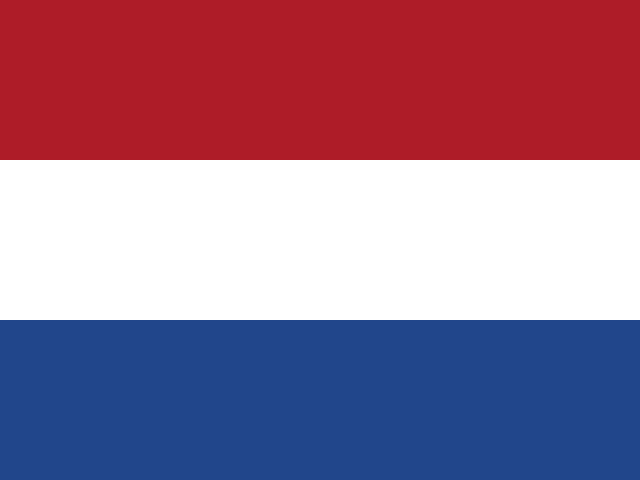
Holland i et overblik
- Befolkning
- 18.1 mio
- Kapital
- Amsterdam (regeringssæde i Haag)
- Valuta
- Euro (EUR)
- Gennemsnitsløn
- Omkring €44,000/år
- Sprog
- Hollandsk (93% af befolkningen taler engelsk flydende)
- Klima
- Mild maritim; kølige somre (17–22 °C), milde vintre (2–6 °C); hyppig regn og blæst
- Tidszone
- Centraleuropæisk tid (CET/CEST)
Hvorfor flytte til Holland i 2026
- Stærkt internationalt arbejdsmarked: Holland, som er hjemsted for det europæiske hovedkvarter for virksomheder som Uber, Booking.com, Adyen, ASML og Philips, har en af de laveste arbejdsløshedsrater i EU og en særlig efterspørgsel efter fagfolk inden for teknologi, teknik, finans og biovidenskab.
- 30% regerende skattefordel: Berettigede expats kan modtage op til 30% af deres bruttoløn skattefrit i fem år, hvilket markant øger hjemmeløn - en af de mest generøse expat-skatteordninger i Europa.
- Engelsk som andetsprog: Holland rangerer konsekvent #1 globalt for engelskkundskaber blandt ikke-modersmålstalere, hvilket betyder, at du kan navigere i dagligdagen, offentlige tjenester og de fleste arbejdspladser på engelsk, mens du lærer hollandsk i dit eget tempo.
- Centraleuropæisk beliggenhed: Schiphol Lufthavn i Amsterdam er et globalt knudepunkt med direkte fly til over 300-destinationer, hvilket gør weekendture i hele Europa ubesværet.
- Balance mellem arbejde og privatliv: Hollænderne arbejder i gennemsnit 32–36 timer om ugen, deltidsansættelse er kulturelt normaliseret (selv for professionelle), og 25 dage med betalt ferie er standard.
- Cykelinfrastruktur: Med over 35,000 km af dedikerede cykelstier er cykling den primære transportform i hollandske byer - sparer penge og holder dig i form.
- Høj livskvalitet: Holland rangerer i top 5 på World Happiness Index med fremragende offentlige tjenester, lave kriminalitetsrater og velholdte offentlige rum.
- Tolerance og mangfoldighed: Det hollandske samfund er historisk åbent, og større byer er vært for pulserende internationale fællesskaber med indbyggere fra over 200 nationaliteter.
Flytteomkostninger til Holland
Forsendelse af dine ejendele til Holland varierer afhængigt af oprindelse, volumen og transportmetode. Typiske priser fra begyndelsen af 2026 er:
| Oprindelse | Estimeret omkostningsinterval | Beholder/volumen |
|---|---|---|
| Storbritannien | €1,200–€2,800 | Stykgods eller 20 fodcontainer |
| Vesteuropa (Tyskland, Frankrig, Belgien) | €800–€2,500 | Stykgods eller 20 fodcontainer |
| USA (østkysten) | €3,500–€6,500 | 20–40 fod container |
| USA (Vestkysten) | €4,500–€8,000 | 40 fod container |
| Asien (Kina, Indien) | €3,000–€7,000 | 20–40 fod container |
| Australien | €5,000–€9,500 | 40 fod container |
Komponentomkostninger forklaret
- Transport (søfragt): €1,800–€5,000 afhængig af containerstørrelse og rute; luftfragt starter ved omkring €1,200 per kubikmeter, men er betydeligt hurtigere.
- Forsikring: Typisk 2–4 % af den deklarerede værdi af dine varer; fuld udskiftningsdækning anbefales.
- Fortoldning: €150–€400 for personlige personlige effekter; Holland anvender EU told for ikke-EU varer.
- Emballagematerialer: €200–€600 for professionel pakkeservice; selvpakning sparer omkostninger, men øger risikoen.
- Opbevaring (hvis nødvendigt): €150–€350 pr. måned for en 20 m² enhed i større byer.
- Administrative gebyrer: €100–€300 for dokumentation, tilladelser og mæglergebyrer.
Har du brug for et personligt overslag?
Få tre undersøgte tilbud på flyttefirmaer på under 48 timer.
Visum- og opholdskrav
Holland har et velstruktureret immigrationssystem, der administreres af IND (Immigratie- en Naturalisatiedienst — Immigration and Naturalization Service). Din visumvej afhænger af din nationalitet og formålet med opholdet.
Til EU/EEA og schweiziske statsborgere
EU, EEA og schweiziske statsborgere behøver ikke visum eller opholdstilladelse for at bo og arbejde i Holland. Du skal blot have et gyldigt pas eller et nationalt ID-kort. For ophold længere end fire måneder skal du registrere dig hos din lokale kommune (gemeente) for at få et BSN (Burgerservicenummer — Citizen Service Number), som er påkrævet for beskæftigelse, sundhedspleje, bankvirksomhed og stort set alle aspekter af det hollandske liv.
Hvis du er en EU-borger, der bliver længere end fire måneder uden at arbejde, skal du dokumentere tilstrækkelige midler og have en gyldig sygeforsikring.
For ikke-EU statsborgere: Hovedvisumkategorier
Højt kvalificeret migrantvisum (Kennismigrant)
- Krav: Gyldig ansættelseskontrakt eller bindende jobtilbud fra en anerkendt hollandsk arbejdsgiver; minimumsløngrænse på €5,942 om måneden (2026, eksklusive feriegodtgørelse) for ansøgere i alderen 30+, eller €4,357 om måneden for ansøgere under 30.
- Behandlingstid: Typisk 2–4 uger, når ansøgningen er indsendt af din arbejdsgiver.
- Varighed: Op til 5 år, kan forlænges.
- Nøgledetaljer: Din arbejdsgiver håndterer ansøgningen; du kan også få brug for en MVV (machtiging tot voorlopig verblijf — en midlertidig opholdstilladelse, i det væsentlige et indrejsevisum) afhængigt af din nationalitet. Ægtefælle og børn kan ledsage dig.
Orienteringsårsvisum (Zoekjaar voor Hoogopgeleiden)
- Krav: Skal have gennemført en master- eller ph.d.-grad på et top-200 verdensuniversitet eller ved en hollandsk højere uddannelsesinstitution inden for de seneste tre år.
- Behandlingstid: 2–4 uger.
- Varighed: 1 år (kan ikke fornyes).
- Nøgledetaljer: I løbet af dette år kan du arbejde frit uden en separat arbejdstilladelse. Hvis du finder et kvalificerende arbejde, kan du skifte til et højtkvalificeret migrantvisum uden at forlade landet. Ansøgningsgebyret er €228.
EU blåt kort
- Krav: Videregående uddannelse (minimum 3 år); ansættelseskontrakt på mindst 12 måneder; bruttoårsløn på mindst €5,942 pr. måned (2026-tærskel).
- Behandlingstid: 4–8 uger.
- Varighed: Op til 4 år.
- Nøgledetaljer: Tilbyder større mobilitet inden for EU end den hollandske højtuddannede migranttilladelse; efter 18 måneder kan du flytte til et andet EU-land med dit blå kort.
Almindelig arbejdstilladelse (TWV / GVVA)
- Krav: Arbejdsgiveren skal bevise, at der ikke er fundet nogen egnet EU/EEA-kandidat (arbejdsmarkedstest via UWV — Employee Insurance Agency).
- Behandlingstid: 5–7 uger for GVVA (kombineret opholds- og arbejdstilladelse).
- Varighed: Op til 3 år; knyttet til en bestemt arbejdsgiver.
- Nøgledetaljer: Sværere at opnå end den højt kvalificerede migrantrute; arbejdsgiveren igangsætter processen.
Studievisum
- Krav: Acceptbrev fra institutionen; bevis for tilstrækkelige midler (ca. €13,000 pr. år); sygesikring.
- Behandlingstid: 4–8 uger.
- Varighed: Studiets varighed plus 3 måneder.
- Nøgledetaljer: Studerende kan arbejde op til 16 timer om ugen i løbet af semesteret eller på fuld tid i juni, juli og august. Arbejdsgiver har brug for en TWV til studerende.
Familiesammenføringsvisum
- Krav: Sponsor skal have tilstrækkelig indkomst (mindst den lovbestemte mindsteløn); tilstrækkelig bolig; bevis på ægte forhold.
- Behandlingstid: Op til 90 dage.
- Varighed: Passer til sponsorens opholdstilladelses varighed.
- Nøgledetaljer: Sponsoren ansøger via IND; familiemedlemmet kan have brug for en MVV afhængigt af nationalitet.
BSN (Burgerservicenummer) Registrering
BSN (Burgerservicenummer — Citizen Service Number) er dit unikke registreringsnummer i Holland. Det svarer til et cpr-nummer og et skatteidentifikationsnummer kombineret. Du kan ikke arbejde, åbne en bankkonto, få adgang til sundhedspleje eller interagere med nogen hollandsk regeringstjeneste uden en.
Nødvendige dokumenter
- Gyldigt pas eller nationalt ID-kort
- Bevis for adresse i Holland (lejekontrakt eller boligbekræftelse)
- Opholdstilladelse (hvis relevant for ikke-EU statsborgere)
- Fødselsattest (skal muligvis apostilles og oversættes)
- Ægteskabs- eller partnerskabsattest (hvis relevant)
Registreringsprocessen (trin for trin)
-
Sikker bolig
Du skal have en registreret adresse, før du kan ansøge. Dette er den største flaskehals i Holland — se boligafsnittet nedenfor.
-
Bestil tid
Kontakt din lokale kommune (kommune) og planlæg en tilmeldingsaftale. I Amsterdam foregår dette gennem Amsterdam.nl; i Rotterdam, gennem Rotterdam.nl. Ventetider kan være 2–6 uger i store byer.
-
Mød op til aftalen
Medbring alle nødvendige dokumenter. Kommunen bekræfter din identitet og adresse og udsteder derefter din BSN på stedet eller inden for 5 hverdage.
-
Modtag din BSN
Du vil modtage en skriftlig bekræftelse med dit BSN-nummer. Husk eller gem dette nummer sikkert - du vil bruge det til enhver officiel interaktion i Holland.
Vigtige bemærkninger:
- Hvis du ankommer fra udlandet og endnu ikke har en bolig, tilbyder nogle kommuner (inklusive Amsterdam) en BSN-registreringsmulighed, men dette er begrænset.
- EU-borgere, der bliver mindre end 4 måneder, kan registrere sig som ikke-residenter (RNI — Registratie Niet-Ingezetenen) i udpegede kommuner og modtage en BSN uden fast adresse.
- Du skal afmelde dig, når du forlader Holland.
At finde bolig i Holland
Holland oplever en alvorlig boligkrise (woningcrisis). Efterspørgslen efter leje- og købsejendomme overgår langt udbuddet, især i Amsterdam, Utrecht og Haag. Forvent intens konkurrence, høje priser, og vær parat til at handle med det samme, når en fortegnelse dukker op.
De fleste hollandske udlejningsejendomme administreres af ejendomsmæglere (makelaars) og er opført på større platforme. Møblerede og halvmøblerede (gestoffeerd — altså med gulve og gardiner, men ingen hvidevarer) lejligheder er almindelige på udlandsmarkedet.
Gennemsnitlige huslejer efter større by (2026)
| By | 1-soveværelse (center) | 1-soveværelse (udenfor) | 3-soveværelse (center) | Markedets konkurrenceevne |
|---|---|---|---|---|
| Amsterdam | €1,800–€2,200 | €1,400–€1,800 | €3,200–€4,500 | Ekstrem — højeste efterspørgsel i landet |
| Rotterdam | €1,300–€1,800 | €1,000–€1,400 | €2,000–€2,800 | Høj — hurtigt stigende |
| Haag | €1,400–€1,900 | €1,100–€1,500 | €2,000–€2,800 | Høj — populær blandt expats og diplomater |
| Utrecht | €1,200–€1,700 | €900–€1,300 | €2,200–€3,200 | Meget høj — begrænset udbud |
| Eindhoven | €1,100–€1,500 | €800–€1,200 | €1,600–€2,200 | Moderat — efterspørgsel efter teknologisk sektor |
Hollandsk lejeterminologi
- Kale huur (Barleje): Grundleje eksklusive forsyningsselskaber, serviceomkostninger og internet.
- Huurprijs inclusief (inklusiv leje): Husleje, der inkluderer serviceomkostninger (serviceomkostninger) til bygningsvedligeholdelse, rengøring af fællesarealer og nogle gange forsyningsselskaber.
- Gestoffeerd (halvmøbleret): Inkluderer gulvbelægning, gardiner/persienner og nogle gange lysarmaturer - men ingen møbler.
- Gemeubileerd (Fuldt møbleret): Omfatter alle møbler, køkkenudstyr og apparater.
- Serviceomkostninger (Servicegebyrer): Månedlige gebyrer for bygningsvedligeholdelse, elevator, rengøring af fællesarealer - typisk €50–€200 oven i grundlejen.
Sådan finder du bolig
Online platforme:
- Pararius.nl: Den største uafhængige udlejningsplatform i Holland; omfattende engelsksprogede lister og filtre for møbleret/umøbleret.
- Funda.nl: Den dominerende ejendomsplatform for både udlejning og køb; drevet af den hollandske sammenslutning af ejendomsmæglere (NVM).
- HousingAnywhere.com: Ideel til møbleret leje på mellemlang sigt (1–12 måneder), populær blandt expats og internationale studerende.
- Kamernet.nl: Specialiseret sig i værelser og delt bolig – afgørende for studerende og budgetbevidste expats.
- Stekkies.com: Aggregerer fortegnelser fra flere platforme i realtid.
Lokale ressourcer:
- Makelaars (ejendomsmæglere): Ved at engagere en aankoopmakelaar (købsagent) eller huurmakelaar (udlejningsmægler) får du adgang til off-market lister, men forvent gebyrer på en måneds husleje plus 21% VAT.
- Expat boligbureauer: Virksomheder som Expat Housing Network, HousingDesk og IamExpat Housing specialiserer sig i at hjælpe internationale med at finde bolig.
Tips til udlændinge, der finder bolig
- Start før du ankommer: Tilmeld dig på alle platforme, opsæt advarsler, og svar på annoncer inden for få minutter - ejendomme udlejes ofte inden for 24 timer.
- Forbered et lejerdossier (huurdossier): Hollandske udlejere forventer en færdigmonteret pakke indeholdende din ansættelseskontrakt, seneste lønsedler (3 måneder), kontoudtog, BSN og en kopi af dit pas. At have dette klar øger dine chancer markant.
- Pas på indkomstkrav: De fleste udlejere kræver, at din månedlige bruttoindkomst er 3–4 gange den månedlige husleje. Hvis du ikke når denne grænse, kan der kræves en kautionist (borgsteller) eller større depositum.
- Overvej først midlertidig bolig: Book en korttidsmøbleret lejlighed eller Airbnb i dine første 1–3-måneder, mens du leder efter permanent bolig på jorden.
- Udvid dit søgeområde: Hvis du bor i nærliggende byer som Haarlem, Amstelveen, Leiden, Delft eller Diemen, kan du spare 20–40% på huslejen, mens du holder pendleriderne under 30 minutter med tog.
Lejeaftale & juridisk beskyttelse
Hollandsk lejerbeskyttelse er blandt de stærkeste i Europa:
- Depositum: Lovligt begrænset til maksimalt 2 måneders basisleje (i henhold til 2024-lovgivningen). Depositummet skal returneres inden for 14 dage efter lejemålets ophør, minus eventuelle lovlige fradrag.
- Opsigelsesfrist: Lejer skal give mindst 1 fuld kalendermåneds varsel. Udlejere har i de fleste tilfælde brug for en retskendelse for at opsige en lejekontrakt.
- Huslejestigninger: For liberaliseret (fri sektor) leje er de årlige stigninger begrænset ved lov - i 2026 er den maksimale stigning inflation + 1 %.
- Huslejedomstol (Huurcommissie): Hvis du mener, at din husleje er uberettiget høj for en ejendom i en reguleret sektor, kan du indgive en klage til Huurcommissie, som kan beordre lejenedsættelser med tilbagevirkende kraft.
Advarsel: Udlejningssvindel
Den hollandske boligkrise har ført til en stigning i lejesvindel, især rettet mod internationale nytilkomne:
- Overfør aldrig penge, før du ser en ejendom personligt eller gennem en verificeret videorundvisning med udlejeren eller agenten til stede.
- Bekræft ejeren: Tjek matrikelregistret for at bekræfte, at den person, der lejer ejendommen, er den faktiske ejer.
- Pas på "for godt til at være sandt"-lister: Hvis huslejen er væsentligt under markedsprisen i Amsterdam eller Utrecht, er det næsten helt sikkert et fupnummer.
- Brug verificerede platforme: Hold dig til Pararius, Funda og anerkendte udstationerede boligbureauer. Undgå at svare på opslag på Facebook Marketplace eller Craigslist uden uafhængig bekræftelse.
Sag fra det virkelige liv: "Da jeg flyttede fra Toronto til Amsterdam i 2025, sikrede jeg mig en 45 m² lejlighed i Amsterdam Oost til €1,650 om måneden. Jeg var nødt til at levere tre måneders lønsedler, min ansættelseskontrakt og mit pas — udlejeren modtog over 60 svar inden for 60-svar inden for 60-besvarelser inden for 60-besvarelser inden for 60-besvarelser inden for 60, før du har klargjort dit opslag: du har endda rådgivning klar. kigger." — Sarah K., flyttede til Amsterdam i september 2025
Sundhedspleje & Forsikring
Holland har et universelt sundhedssystem baseret på obligatorisk privat sygeforsikring. Hver beboer skal tegne en hollandsk sygeforsikring inden for fire måneder efter registrering i deres kommune - også selvom du allerede har international dækning. Systemet finansieres gennem forsikringspræmier, indkomstafhængige bidrag og beskatning.
Obligatorisk grundsygesikring
Den hollandske regering definerer en standardpakke af væsentlige sundhedsydelser kaldet basispakken (grundpakke).
- Omkostninger: €140–€180 pr. måned (2026-præmier varierer efter forsikringsselskab og forsikringstype).
- Dækning: Alment praktiserende læge (huisarts) besøg, hospitalsbehandling, specialistkonsultationer, receptpligtig medicin, mental sundhed, barselspleje, ambulancetjenester og begrænset tandpleje til under 18 år.
- Selvrisiko (Eigen risiko): €385 om året (2026). Det er det beløb, du selv betaler, før forsikringen dækker omkostningerne. GP besøg og barselspleje er fritaget for egenbetaling.
- Berettigelse: Alle beboere i alderen 18+, som bor eller arbejder i Holland.
- Bedst til: Alle – det er lovpligtigt.
Tillægsforsikring
Valgfrie tillægspakker, der dækker tjenester, der er udelukket fra basispakken.
- Pris: €5–€150+ pr. måned afhængig af dækningsniveau.
- Dækning: Voksetandpleje, fysioterapi, alternativ medicin, briller/kontaktlinser, prævention, rejsevaccinationer og international dækning.
- Berettigelse: Tilgængelig for alle med en basisforsikring. I modsætning til grundforsikringen kan forsikringsselskaberne afvise ansøgere eller anvende karensperioder for supplerende dækning.
- Bedst til: Expats, der har brug for tanddækning, fysioterapi eller udvidet international lægebehandling.
Top sundhedsforsikringsudbydere
- Zilveren Kruis: Største hollandske forsikringsselskab; omfattende hospitalsnetværk og konkurrencedygtige præmier fra €147/måned.
- FBTO: Populær til fleksible, modulære supplerende pakker; grundpræmier fra €132/måned.
- CZ: Stærk kundetilfredshedsvurderinger; omfattende basispakke fra €139/måned.
- Menzis: Kendt for konkurrencedygtige priser og digitale tjenester; præmier fra €135/måned.
- ONVZ: Premium forsikringsselskab med frit valg af enhver sundhedsudbyder; præmier fra €143/måned.
Tip: Brug det uafhængige sammenligningswebsted Independer.nl eller Zorgwijzer.nl til at sammenligne alle hollandske sygeforsikringsselskaber side om side i den årlige åbne tilmeldingsperiode (november 12 – januar 1).
Få sundhedsdækning (tidslinje)
-
Tilmeld dig i din kommune og modtag din BSN.
-
Vælg et sygeforsikringsselskab inden for fire måneder efter registreringen - dette er en juridisk forpligtelse. Manglende forsikring kan resultere i en bøde fra CAK (det statslige organ, der overvåger overholdelse).
-
Vælg din politiktype
Naturapolis (kontrakterede udbydere - billigere), combinatiepolis (blandet) eller restitutiepolis (frit valg af enhver udbyder - dyrere).
-
Tilmeld dig med en huisarts (GP)
GP er gatekeeper for det hollandske sundhedssystem. Du skal registrere dig hos en lokal GP (huisarts), før du kan se en specialist. Mange GP-praksis i større byer har ventelister, så tilmeld dig tidligt.
-
Ansøg om sundhedsydelse (Zorgtoeslag)
Hvis din indkomst er under ca. €38,500 om året (2026-grænsen for singler), kan du være berettiget til et offentligt tilskud til at modregne forsikringspræmier.
Ud-af-lomme omkostninger
- GP-besøg: Dækket af forsikring, ingen selvrisiko — €0 ude af lommen.
- Recepter: Dækket efter selvrisiko; nogle medikamenter kræver en lille egen bijdrage.
- Dental (voksne): Ikke dækket af basispakke; tillægsforsikringen dækker 50–100% afhængig af plan. Et tjek koster €25–€50; en fyldning koster €50–€150.
- Sygehus: Fuldt dækket efter selvrisiko; ingen ekstra gebyrer for pleje i netværket.
- Fysioterapi: Ikke dækket af basispakke undtagen for kroniske lidelser; Tillægsforsikringen dækker 6–36 sessioner om året.
Få en personlig flytteplan
Smid din e-mail, og vi sender en skræddersyet tjekliste plus tre tilbud fra kontrollerede flyttemænd.
Bank & Finans
Åbning af en bankkonto
En hollandsk bankkonto er afgørende for dagligdagen. De fleste hollandske arbejdsgivere kræver en hollandsk IBAN (kontonummer, der starter med NL) til lønudbetalinger, og tjenester som iDEAL (det dominerende online betalingssystem) og Tikkie (en populær betalingsopdelingsapp) fungerer kun med hollandske bankkonti.
- Hvornår: Så hurtigt som muligt efter modtagelse af din BSN. Nogle banker giver dig mulighed for at åbne en konto, før du modtager din BSN med en 90-dages henstandsperiode.
- Nødvendige dokumenter: Gyldigt pas eller ID; BSN; bevis for adresse (lejekontrakt); opholdstilladelse (hvis relevant).
Topbanker for expats
ING
- Største bank i Holland med 170+ filialer og fuld engelsksproget app.
- Engelsksproget hjemmeside.
- Engelsksproget kundeservice. Månedligt gebyr: €3.00. Gratis studiekonti. BSN kræves straks.
ABN AMRO
- Profilerer sig som "experts on expats" med dedikerede engelsktalende rådgivere og 90 dages BSN-frist. Månedligt gebyr: €4.30. Stærk på realkredit og investering.
Rabobank
- Stor hollandsk bank med 22.8% markedsandel. God digital platform, men hjemmeside og kundeservice er kun på hollandsk. Ikke anbefalet til personer, der ikke taler hollandsk. Månedligt gebyr: €3.70.
bunq
- Amsterdam-baseret fintech til internationale. Gratis niveau (€0/måned) med 2.01% rente på opsparing.
- 90 dages BSN-frist.
- Fuld iDEAL/Tikkie-understøttelse. Kan åbnes helt online på 5 minutter før ankomst til Holland.
N26
- Tysk digital bank med konti til €0/måned og stærk engelsksproget support.
- Den giver dog et tysk IBAN (DE-præfiks)
- som ikke kan bruge iDEAL eller Tikkie; bedst kun som sekundær konto.
Topbanker for expats (2026):
ING: Største bank i Holland med 170+ filialer. Fuld engelsksproget app, hjemmeside og kundeservice. Månedligt gebyr: €3.00. Gratis elevkonti tilgængelige. BSN påkrævet med det samme.
- ABN AMRO: Positionerer sig selv som "eksperter på expats" med dedikerede engelsktalende rådgivere og en 90-dages BSN henstandsperiode. Månedligt gebyr: €4.30 (højest blandt traditionelle banker). Stærk realkredit- og investeringsservice.
- Rabobank: Hollandsk storbank med 22.8 % markedsandel. Fremragende digital platform, men kun hollandsk hjemmeside og kundeservice - anbefales ikke til ikke-hollandsktalende. Månedligt gebyr: €3.70.
- bunq: Amsterdam-baseret fintech designet til internationale. Gratis niveau (€0/måned) med 2.01 % rente på opsparing, 90-dages BSN henstandsperiode og fuld iDEAL/Tikkie-support. Kan åbnes helt online i 5 minutter før ankomst til Holland.
- N26: Tysk digital bank med €0/måned konti og fremragende engelsk support. Det giver dog en tysk IBAN (DE præfiks), som ikke kan bruge iDEAL eller Tikkie - bedst kun brugt som en sekundær konto.
- Betalingskultur
Holland bevæger sig hurtigt mod et kontantløst samfund:
Debetkort dominerer: De fleste butikker, supermarkeder (inklusive Albert Heijn, den største kæde) og restauranter foretrækker betalingskortbetalinger. Kreditkort accepteres på hoteller, lufthavne og nogle internationale kæder, men bliver ofte afvist i mindre butikker og supermarkeder.
- iDEAL: Standard online betalingsmetode i Holland, integreret med alle større hollandske banker. Bruges til online shopping, regningsbetalinger og offentlige tjenester.
- Tikkie: En enormt populær app til at opdele regninger og anmode om små betalinger mellem enkeltpersoner - dybt indlejret i hollandsk social kultur.
- Kontaktløs og mobil: Apple Pay og Google Pay er bredt understøttet. Kontaktløse betalingskortbetalinger er normen.
- Kontanter: Stadig accepteret, men stadig mere ualmindeligt. Nogle virksomheder, især i Amsterdam, er blevet fuldstændig kontantløse.
- Få din skat ID (Burgerservicenummer)
Din BSN fungerer også som dit skatte-id-nummer. Den tildeles automatisk, når du tilmelder dig din kommune. Du skal bruge det til:
Ansættelses- og lønadministration
- Indgivelse af årlige selvangivelser til Belastingdienst (den hollandske skattemyndighed)
- Åbning af en bankkonto
- Tilmelding til sygesikring
- Adgang til offentlige tjenester og ydelser
- Hvis du mister din BSN, kan du hente den gennem Belastingdiensts hjælpelinje eller ved at besøge dit lokale skattekontor med gyldig ID.
Bankkontofunktioner og omkostninger
Månedligt gebyr: €0 (bunq, N26) til €4.30 (ABN AMRO)
| By | Budget for én person | Familie af 3 Budget | Omkostningsniveau |
|---|---|---|---|
| Amsterdam | €2,200–€2,800 (ekskl. leje) | €4,000–€5,200 (ekskl. leje) | Meget høj |
| Rotterdam | €1,800–€2,300 (ekskl. leje) | €3,200–€4,200 (ekskl. leje) | Høj |
| Haag | €1,800–€2,400 (ekskl. leje) | €3,300–€4,400 (ekskl. leje) | Høj |
| Utrecht | €1,900–€2,500 (ekskl. leje) | €3,400–€4,500 (ekskl. leje) | Høj |
| Eindhoven | €1,600–€2,100 (ekskl. leje) | €2,900–€3,800 (ekskl. leje) | Moderat-Høj |
Detaljeret omkostningsfordeling
Bolig:
- 1-værelseslejlighed (bymidte): €1,500–€2,200 pr. måned
- 1-værelseslejlighed (udenfor centrum): €1,100–€1,600 pr. måned
- Forsyning (gas, elektricitet, vand, affald — 85 m² lejlighed): €200–€300 pr. måned
- Internet (fiber, 100+ Mbps): €30–€50 pr. måned
Dagligvarer og mad:
- Ugentlige dagligvarer (1 person): €50–€80 (Albert Heijn, Jumbo, Lidl, Aldi)
- Afslappet restaurantmåltid: €15–€25 per person
- Mellemklasse restaurantmåltid (2-retter): €25–€45 per person
- Kaffe (cappuccino, café): €3.20–€4.50
- Hollandsk øl (0.5L, bar): €5.50–€7.50
Transport:
- Månedlig offentlig transport (OVpay/kontaktløs eller OV-chipkort): €100–€180 afhængig af pendling
- Cykling: €50–€300 for en brugt cykel; €0 løbende omkostninger
- Benzin (1L): €1.90–€2.15
- Bilforsikring (grundlæggende WA): €35–€80 pr. måned
Forsikring og sundhedspleje:
- Obligatorisk sygeforsikring: €140–€180 om måneden
- Årlig selvrisiko (egen risiko): €385 om året
Fritid og underholdning:
- Gymnastikmedlemskab: €25–€60 om måneden
- Biografbillet: €11–€15
- Netflix-abonnement: €8–€14 om måneden
- Månedligt underholdningsbudget: €150–€300
Sammenligning med andre lande
- vs. Storbritannien: Holland er 5–15 % dyrere samlet set, primært på grund af højere huslejer. Dagligvarer og spisning er sammenlignelige.
- vs. Tyskland: 10–20 % dyrere, med Amsterdam-lejen næsten dobbelt så høj som i Berlin. Udgifterne til sundhedsvæsenet er de samme.
- vs. USA: 10–20 % generelt billigere; sundhedsvæsenet er dramatisk billigere på grund af det obligatoriske forsikringssystem.
- vs. Spanien: 30–40 % dyrere, især til bolig og spisning.
Sprog- og kulturtips
Har du brug for hollandsk?
Holland har de højeste engelskkundskaber i et hvilket som helst ikke-engelsktalende land. I Amsterdam, Rotterdam og Haag kan du arbejde, socialisere og håndtere de fleste daglige opgaver udelukkende på engelsk. Men at lære hollandsk er vigtigt for:
- Håndtering af regeringsbureaukrati (mange officielle breve og formularer er på hollandsk)
- Opbygning af dybere sociale forbindelser med hollændere
- Karrierefremgang i hollandsk ejede virksomheder
- Bestå civil integrationseksamen (inburgeringsexamen), hvis det kræves for dit visum eller permanent ophold
- Forstå din lejekontrakt og juridiske dokumenter
Hollandske sprogniveauer (CEFR)
- A1 (begynder): Grundlæggende hilsener, bestilling af mad, spørg om vej. Opnåelig i 2–3 måneders regelmæssigt studie.
- A2 (Elementær): Simple samtaler, forståelse af grundlæggende bogstaver, shopping. Opnåelig i 4–6 måneder.
- B1 (Intermediate): Holde hverdagssamtaler, forstå arbejdspladsen hollandsk, læse nyheder. Opnåelig i 9–12 måneder.
- B2 (Upper Intermediate): Kommunikation på professionelt niveau, komplekse diskussioner, flydende daglig brug. Opnåelig i 18–24 måneder.
Ressourcer til sprogindlæring
- Duolingo / Babbel: Populære gratis/betalte apps med hollandske kurser — gode til at opbygge ordforråd.
- Taalhuis: Amsterdam-baserede sprogskoler tilbyder intensive og aftenkurser fra €250 pr. niveau.
- NT2 (Nederlands als Tweede Taal): Offentligt finansierede hollandske kurser til integration — tilgængelige på B1- og B2-niveau til subsidierede priser.
- Meetup.com sprogudveksling: Gratis eller billige "taalcafé"-arrangementer i større byer, hvor du øver hollandsk med modersmål.
- hollandske regeringsintegrationskurser (inburgeringscursussen): Obligatorisk for nogle visumindehavere; støttet af regeringen ved DUO (Dienst Uitvoering Onderwijs).
Kulturelle normer og etikette
Direkte (hollandsk direktehed):
- Hollænderne er berømt direkte i kommunikation. Kolleger, ledere og endda fremmede vil give afstumpede meninger uden at blødgøre budskabet.
- Dette er ikke uhøflighed - det er en kulturel norm med rod i den hollandske værdi af effektivitet og ærlighed. Tag det ikke personligt.
- Til gengæld forventer hollænderne, at du udtrykker din egen mening klart og ærligt. Tøven eller overdreven høflighed kan opfattes som undvigelse.
Borrel kultur:
- En borrel er en afslappet drink efter arbejde, normalt fredag eftermiddag. Øl, vin og bitterballen (friturestegt kødsnacks) er standard.
- At deltage i borrels er en af de bedste måder at opbygge sociale forbindelser med hollandske kolleger. At falde for ofte kan opfattes som uhensigtsmæssigt.
Cykelkultur:
- Holland har flere cykler end mennesker (ca. 23 millioner cykler til 18.1 millioner indbyggere).
- Cykling er ikke en hobby - det er den primære transportform. I Amsterdam foretages 60 % af indre byrejser på cykel.
- Lås altid din cykel med to låse (ramme og hjul). Cykeltyveri er ekstremt almindeligt - cirka 700,000 cykler bliver stjålet hvert år på landsplan.
- Gå aldrig i cykelstien. Hollandske cyklister vil ikke bremse, og kollisioner er almindelige blandt turister, der ved et uheld træder ind på cykelstier.
Fødselsdagskalendere (Verjaardagskalender):
- Hollændere holder fødselsdagskalendere på deres badeværelser. Hvis du besøger et hollandsk hjem, kan du se en hængende på bagsiden af døren.
- At lykønske nogen med fødselsdagen betyder også at lykønske de tilstedeværende familiemedlemmer: "Gefeliciteerd met je moeder!" (Tillykke med din mor!) er en normal fødselsdagshilsen.
Opdeling af regningen (Going Dutch):
- Udtrykket "at gå hollandsk" findes af en grund. Hollænderne opdelte omhyggeligt regninger til cent. Apps som Tikkie gør dette ubesværet.
- Forvent ikke, at en hollandsk ven behandler dig - og føl dig ikke forpligtet til at behandle dem. Lige opdeling er standard.
Punktlighed:
- Hollænderne er punktlige. At ankomme mere end 5 minutter for sent til en social eller professionel aftale uden varsel betragtes som uhøfligt.
- Middagsinvitationer i hollandske hjem starter typisk præcis til tiden. At ankomme 15 minutter "modemæssigt sent" (som det er almindeligt i Sydeuropa) vil ikke blive værdsat.
Social integration
- Tilmeld dig en sportsklub (sportvereniging): Holland har over 35,000 sportsklubber. Fodbold (fodbold), hockey, tennis og korfball er de mest populære. Årlige medlemsgebyrer varierer fra €100 til €500.
- Frivillig: Organisationer som Vrijwilligers Centrale Amsterdam og NL Cares forbinder expats med lokale frivillige muligheder.
- Expat-fællesskaber: InterNations, Amsterdam Expats (Facebook-gruppe med 80,000+ medlemmer) og Together Abroad arrangerer regelmæssige netværks- og sociale arrangementer.
- Nabolagsaktiviteter: Mange hollandske kvarterer arrangerer årlige gadefester (straatfeesten), fælles middage og kulturelle begivenheder - en fremragende måde at møde lokale beboere på.
Skattesystemet og 30 %-dommen
Oversigt over det hollandske skattesystem
Holland har et progressivt indkomstskattesystem, der administreres af Belastingdienst (den hollandske skattemyndighed).
| Skattekomponent | Beskrivelse | Pris (2026) |
|---|---|---|
| Indkomstskat (boks 1) | Om arbejdsindkomst og pensioner | 35.75 % op til €38,883; 37.56 % op til €78,426; 49.50 % over €78,426 |
| Socialsikringsbidrag | Pension, arbejdsløshed, langtidspleje | Inkluderet i Box 1 priser |
| Moms (BTW) | På varer og tjenesteydelser | 21% standard; 9 % reduceret (mad, bøger, medicin) |
| Formueskat (boks 3) | Om opsparing og investeringer | 36 % af anset afkast (varierer efter aktivsammensætning) |
| Dobbeltskatteaftaler | Undgå dobbeltbeskatning | Aftaler med 100+ lande |
30%-dommen (30%-ordningen)
30%-dommen er et hollandsk skatteincitament designet til at kompensere udstationerede for de ekstra omkostninger ved at leve og arbejde uden for deres hjemland (ekstraterritoriale omkostninger). Det giver arbejdsgivere mulighed for at betale op til 30 % af en berettiget medarbejders bruttoløn skattefrit i højst fem år.
Krav (2026):
- Rekrutteret fra udlandet: Du skal være blevet ansat uden for Holland eller overført til en hollandsk enhed.
- 150 km-reglen: I 24-månederne før du starter din hollandske beskæftigelse, skal du have boet mindst 16 måneder mere end 150 km fra den hollandske grænse. Dette udelukker reelt indbyggere i det nærliggende Belgien og Tyskland fra de vestlige grænseregioner.
- Minimumslønsgrænse: Din skattepligtige løn (efter anvendelse af dommen) skal være ca. €47,661 om året (2026). For medarbejdere under 30 med en kvalificerende kandidatgrad er den reducerede tærskel ca. €35,690 om året.
- Arbejdsgiveren skal være en hollandsk tilbageholdelsesagent, der er registreret hos Belastingdienst.
Sådan fungerer det (eksempel):
Hvis din bruttoløn er €80,000 om året, kan op til €24,000 (30%) udbetales skattefrit. Du betaler kun indkomstskat af de resterende €56,000 — hvilket resulterer i en markant højere nettoløn sammenlignet med en ikke-berettiget medarbejder, der tjener det samme bruttobeløb.
Ændringer for 2027:
Fra januar 1, 2027 reduceres den skattefri procentdel fra 30% til 27% for alle. Medarbejdere, der allerede brugte dommen før 2024, er stort set upåvirket af denne ændring under overgangsregler.
Ansøgningsproces:
- Både arbejdsgiver og arbejdstager indgiver en fælles anmodning til Belastingdienst.
- Anmodningen skal indgives senest fire måneder efter startdatoen for anvendelse med tilbagevirkende kraft.
- Godkendelse resulterer i en formel beslutning (beschikking), der gælder i op til fem år.
Større byer: Hvor skal man bo i Holland
Amsterdam
Hovedstaden og største by, Amsterdam, er Hollands kulturelle, finansielle og turisme-hub.
- Internationalt arbejdsmarked: Tech (Booking.com, Uber, Adyen), finans (ING hovedkvarter), kreative industrier og startup-scenen.
- Udstationerede befolkning: Over 200 nationaliteter; Engelsk er de facto sproget på mange arbejdspladser og sociale miljøer.
- Livsstil: Museer i verdensklasse (Rijksmuseum, Van Gogh Museum, Stedelijk), pulserende natteliv, liv ved kanalen og en berømt liberal kultur.
- Ulemper: Højeste husleje i landet; ekstrem boligkonkurrence; overfyldte turistområder i centrum.
- Bedst til: Tekniske fagfolk, kreative, finansarbejdere, single expats, der værdsætter natteliv og kultur.
Rotterdam
- Arbejdsmarked: Logistik og havnerelaterede industrier, maritim teknik, arkitektur og en voksende teknologiscene.
- Mere overkommelig: Huslejen er 25–40 % lavere end i Amsterdam, og bolig er noget lettere at finde.
- Livsstil: Banebrydende arkitektur (Markthal, Cube Houses), blomstrende madscene, forskellige kvarterer og en mere grusom, mere industriel karakter end andre hollandske byer.
- Bedst til: Fagfolk inden for logistik og teknik, familier, der søger mere plads, dem, der foretrækker et mindre turistet miljø.
Haag
Den Haag
- Arbejdsmarked: International ret, diplomati, ngo'er, regeringen og hovedkvarteret for virksomheder som Shell (historisk set) og Siemens Energy.
- Udlændingesamfund: Stort internationalt diplomatisk samfund; mange internationale skoler.
- Livsstil: Kystbeliggenhed med Scheveningen strand, statelig arkitektur og et mere afslappet tempo end Amsterdam.
- Bedst til: Diplomater, advokater, NGO-arbejdere, familier med børn, der søger internationale skoler.
Utrecht
Utrecht ligger centralt og kombinerer historiske kanaler med en ung universitetsstemning.
- Arbejdsmarked: Uddannelse, forskning (Utrecht University er en af Europas førende forskningsinstitutioner), IT og den offentlige sektor.
- Central beliggenhed: Hollands vigtigste jernbaneknudepunkt - du kan nå enhver hollandsk by inden for 45 minutter med tog.
- Livsstil: Smukke kanaler (med unikke kajkældre), livlig cafékultur og et stærkt studenterfællesskab.
- Bedst til: Akademikere, studerende, familier, pendlere, der arbejder i Amsterdam, men ønsker en mere overkommelig og roligere hjemmebase.
Eindhoven
- Arbejdsmarked: Halvledere, fotonik, elektronik, bilindustrien (DAF Trucks) og højteknologisk fremstilling. Uovertruffen for teknikere og tekniske hardwareprofessionelle.
- Mest overkommelige storby: Markant lavere husleje end Randstad-byerne.
- Livsstil: Moderne designscene (hollandsk designuge), voksende internationalt samfund, mindre turistorienteret og en praktisk, no-nonsense brabantkultur.
- Bedst til: Ingeniører, tekniske fagfolk, dem, der søger lavere leveomkostninger med et stærkt arbejdsmarked.
Sådan overholder du told- og importregler
Når du flytter til Holland uden for EU, kan du være berettiget til toldfri import af personlige husholdningsartikler under EU flytning af opholdsfritagelse, forudsat at genstande har været ejet og brugt i mindst seks måneder.
Overførsel af opholdstilladelse
Kvalifikationskrav:
- Du flytter din primære bopæl til Holland.
- Ting har været ejet og brugt i mindst seks måneder før flytningen.
- Varer er kun til personlig brug, ikke til videresalg eller kommercielle formål.
- Du opbevarer varerne i mindst 12 måneder efter ankomst.
Nødvendige dokumenter:
- Udfyldt toldangivelsesskema
- Detaljeret beholdningsliste (på hollandsk, engelsk, fransk eller tysk) med varebeskrivelser, mængder og anslåede værdier
- Bevis for hollandsk bopæl (lejekontrakt eller arbejdsgiverbekræftelse)
- Kopi af dit pas og opholdstilladelse
- Bevis for ejerskab (købskvitteringer, forsikringsdokumenter)
- Ansættelseskontrakt eller bevis for flytning
Toldpligtige genstande
Nye eller kommercielle varer importeret til Holland er underlagt:
- Importafgift: Varierer efter produkttype (typisk 0–17%)
- VAT (BTW): 21 % standardsats på toldværdien plus told
- Punktafgifter: Gælder alkohol, tobak, parfume og visse luksusvarer
Forbudte og begrænsede genstande:
- Narkotika og kontrollerede stoffer (Holland har strenge regler, selvom bløde stoffer tolereres indenlandsk)
- Våben og ammunition uden gyldig tilladelse
- Produkter med truede arter (CITES-reguleret)
- Forfalskede mærkevarer
- Visse fødevarer uden for EU (kød, mejeriprodukter og planteprodukter er begrænset)
- Planter og jord kan kræve et plantesundhedscertifikat
For at forhindre forsinkelser skal du indsende al tolddokumentation, før din forsendelse ankommer til Holland, og arbejde med en autoriseret toldmægler, hvis din flytning involverer en fuld container.
Sag fra det virkelige liv: "Da jeg sendte mine husholdningsartikler fra Singapore til Rotterdam, færdiggjorde jeg toldpapirerne tre uger før containeren ankom. Fordi jeg kvalificerede mig til Transfer of Residence-relief på mine brugte møbler og elektronik, betalte jeg ingen importafgifter. Nøglen var at have en detaljeret inventarliste med serienumre for elektronik." — Priya M., flyttede til Haag i april 2025
Sådan administrerer du flytning af kæledyr
Hunde, katte og fritter, der kommer ind i Holland, skal opfylde EU rejseregler for kæledyr. Kravene er ligetil, men forberedelsen bør begynde måneder i forvejen.
Krav til hunde, katte og ildere
Væsentlige krav:
- Mikrochip: ISO 11784/11785 kompatibel 15-cifret mikrochip — skal implanteres før rabiesvaccinationen.
- Rabiesvaccination: Indgivet mindst 21 dage før rejsen; skal være aktuel (ikke udløbet).
- EU kæledyrspas: Påkrævet for kæledyr, der ankommer fra EU/EEA-lande.
- Veterinærsundhedscertifikat: Påkrævet for kæledyr, der ankommer fra lande uden for EU, udstedt af en officiel statsdyrlæge inden for 10 dage efter rejsen.
- Rabies-antistoftest (titertest): Påkrævet for kæledyr, der ankommer fra lande, der ikke er opført i EU's "listede" landeregister; skal tages mindst 30 dage efter vaccination og 3 måneder før rejsen.
Aldersbegrænsninger
- Hvalpe og killinger under 15 uger kan ikke komme ind i Holland, fordi rabiesvaccinationen først er effektiv fra 12 ugers alderen, og der er en obligatorisk 21-dages ventetid efter vaccination.
Fugle og andre dyr
- Fugle: Kræver en importtilladelse fra NVWA (Netherlands Food and Consumer Product Safety Authority) og kan have brug for karantæne- eller fugleinfluenzatest afhængigt af oprindelseslandet.
- Kaniner, gnavere, krybdyr: Generelt tilladt uden specifik EU dokumentation, men tjek med NVWA for artsspecifikke regler.
- Eksotiske dyr: Kan kræve en CITES-tilladelse.
Tips til flytning af kæledyr
- Start tidligt: Begynd forberedelserne 3–4 måneder før din flyttedato.
- Brug en specialist i flytning af kæledyr: Virksomheder som PetAir UK, WorldCare Pet Transport eller Global Paws håndterer dokumentation, flyreservationer og toldbehandling.
- Book direkte fly: Minimer stress og håndteringsrisici ved at undgå mellemlandinger, hvor det er muligt.
- Tjek flyselskabets regler: KLM (det hollandske nationale flyselskab) tillader små kæledyr i kabinen og større kæledyr i lastrummet på de fleste ruter.
- Tilmeld dig hos en hollandsk dyrlæge: Når du er i Holland, skal du registrere dit kæledyr hos en lokal dierenarts (dyrlæge). Konsultationer koster €30–€50.
- Hundeskat (hondenbelasting): Nogle hollandske kommuner opkræver en årlig hundeskat (hondenbelasting) på €50–€150 pr. hund. Amsterdam afskaffede denne skat i 2024, men andre byer anvender den stadig.
Uddannelse for udstationerede familier
Det hollandske skolesystem
Holland har et af de højest vurderede uddannelsessystemer i Europa. Skolegang er obligatorisk fra 5 til 16, selvom de fleste børn starter i alderen 4.
- Grundskole (basisskole): Alder 4–12, otte år. Undervist udelukkende på hollandsk.
- Gymnasium (middelbare skole): Alder 12–16/18. Opdelt i spor — VMBO (erhvervsuddannelse), HAVO (almen) og VWO (før-universitet/gymnasium).
- Offentlige skoler (openbaar): Offentligt finansierede, ikke-religiøse, gratis.
- Specialskoler (bijzonder onderwijs): Montessori, Dalton, Jenaplan eller religiøst baserede skoler - også statsfinansierede og gratis, men kan have ventelister.
Internationale skoler
For udstationerede familier, der foretrækker engelsksproget uddannelse eller planlægger at flytte igen, har Holland over 100 internationale skoler:
- Amsterdam International Community School (AICS): Engelsksproget, IB læseplan; gebyrer €5,000–€12,000 om året.
- Den britiske skole i Holland (BSN): Beliggende i Haag; britisk læseplan; gebyrer €10,000–€25,000 pr. år.
- International School of Amsterdam (ISA): IB World School i Amstelveen; gebyrer €15,000–€30,000 om året.
- Eindhoven International School: Tjener Eindhovens teknologisamfund; gebyrer €6,000–€15,000 pr. år.
Offentligt tilskud (externenregeling): Nogle arbejdsgivere dækker internationale skolepenge som en del af en flyttepakke, og 30%-dommen tillader refusion af internationale skoleomkostninger oven i den skattefrie godtgørelse.
Børnepasning
- Dagpleje (kinderdagverblijf): For børn i alderen 0–4; koster €2,000–€2,500 om måneden før statstilskud.
- Efterskole (buitenschoolse opvang — BSO): For børn i alderen 4–12; koster €600–€900 om måneden.
- Børnepasningsydelse (kinderopvangtoeslag): Den hollandske regering subsidierer udgifter til børnepasning baseret på husstandsindkomst. De fleste arbejdende familier modtager betydelig refusion — op til €9.65 i timen for dagpleje (2026).
Sådan importerer du en bil og bytter dit kørekort
Bilimportproces
Hvis du medbringer en bil uden for EU, skal du udføre flere trin:
Trin 1: Tolderklæring
- Angiv dit køretøj hos det hollandske toldvæsen ved ankomst.
- Hvis du er berettiget til fritagelse for flytning af bopæl, kan din bil være fritaget for importafgifter og VAT.
Trin 2: Køretøjsinspektion (RDW)
- Alle importerede køretøjer skal bestå en inspektion hos RDW (Rijksdienst voor het Wegverkeer) for at verificere, at de opfylder hollandske og EU sikkerheds- og emissionsstandarder.
- Eftersynet koster cirka €100–€200.
- Ændringer kan være nødvendige (f.eks. lygtejustering for højrekørsel, speedometer i km/t).
Trin 3: BPM Skat (Belasting van Personenauto's en Motorrijtuigen)
- BPM er en engangsregistreringsafgift baseret på CO₂-emissioner. For nye eller relativt nye biler kan dette være en betydelig omkostning (€1,000–€10,000+).
- Hvis du er berettiget til flytning af opholdstilladelse og kan bevise, at bilen var ejet og brugt i mindst 6 måneder før flytning, kan du modtage en delvis eller fuld BPM-fritagelse.
Trin 4: Registrering og forsikring
- Registrer køretøjet på RDW og få hollandske nummerplader.
- Køb obligatorisk WA (tredjepartsansvar) forsikring — det juridiske minimumskrav. WA+ og All-Risk-dækning er også tilgængelig.
- Årlig motorkøretøjsafgift (MRB) betales månedligt eller kvartalsvis og varierer efter brændstoftype og vægt.
Udveksling af kørekort
EU/EEA-licenser:
- Gyldig i Holland på ubestemt tid - ingen ombytning nødvendig.
- Du kan frivilligt bytte til en hollandsk licens på RDW.
Ikke-EU-licenser:
- Gælder i 185 dage efter du har tilmeldt dig i din kommune.
- Efter 185 dage skal du ombytte dit kørekort eller stoppe med at køre.
- Udvekslingsregler afhænger af dit oprindelsesland:
- Lande på listen "gratis udveksling" (inklusive Japan, Sydkorea, Singapore og flere andre): direkte udveksling, ingen test påkrævet.
- Andre lande: du skal bestå en hollandsk køreeksamen (teori og praktisk).
- US og canadiske kørekort: kan ikke ombyttes direkte — du skal tage den fulde hollandske køreprøve (ca. €2,000–€3,000 samlede pris).
- 30%-herskende undtagelse: Hvis du har 30%-dommen, kan du bytte enhver udenlandsk licens uden at tage en test, forudsat at licensen blev udstedt før din ankomst til Holland.
Væsentlige hollandske sætninger for nytilkomne
Hilsen:
- Goedemorgen — Godmorgen
- Goedemiddag — God eftermiddag
- Goedenavond - God aften
- Hallo / Hoi — Hej / Hej (uformelt)
- Tot ziens - Farvel
- Doei - Bye (uformelt)
Høflige sætninger:
- Alstublieft — Vær så god / Her har du
- Dank u wel / Bedankt — Tak / Tak
- Undskyld / Undskyldninger — Undskyld / Undskyld mig
- Ja / Nej - Ja / Nej
Væsentlige spørgsmål:
- Spreekt u Engels? – Taler du engelsk?
- Hvor er...? – Hvor er...?
- Hvor meget koster det? – Hvor meget koster dette?
- Kan du hjælpe mig? – Kan du hjælpe mig?
- Ik begrijp het niet — jeg forstår det ikke
Tal (1–10):
- Een, twee, tørre, vier, vijf, zes, zeven, acht, negen, tien
Nyttige overlevelsessætninger:
- Jeg vil gerne afrekenen — jeg vil gerne betale (regningen)
- Mag ik de rekening? – Må jeg få regningen?
- Hvor er det tætstbijzijnde togstation? – Hvor er den nærmeste togstation?
- Ik ben hier nieuw — Jeg er ny her
- Ingen plastic tas alsjeblieft — Ingen plasticpose tak
Flyttetjekliste: Holland-specifikke trin
- Undersøg visumkrav og start ansøgningsprocessen med din arbejdsgiver (for højtuddannet migrantvisum) eller IND
- Begynd at indsamle og afskrive officielle dokumenter (fødselsattest, vielsesattest, gradsattester)
- Begynd at lære grundlæggende hollandske sætninger og hilsner
- Indhent tilbud fra internationale flyttefirmaer via ReloAdvisor
- Forskning byer og kvarterer; Deltag i udstationerede Facebook-grupper og fora for insiderinformation
- Hvis du medbringer kæledyr, skal du kontrollere Hollands krav (mikrochip, rabiesvaccination, EU kæledyrspas eller sundhedscertifikat)
- Giv besked til din nuværende arbejdsgiver og forhandle omplaceringsvilkår, hvis det er relevant
- Bekræft dit visum og din MVV-godkendelse; afhent din MVV hos den hollandske ambassade eller konsulat
- Book dit flyttefirma eller fragtcontainer
- Arranger midlertidigt møbleret bolig for dine første 1–3 måneder
- Annuller eller overfør nuværende hjælpeprogrammer, abonnementer og medlemskaber
- Giv din bank besked og konfigurer en international overførselsmetode (Wise, Revolut)
- Forbered dit lejerdossier (huurdossier): ansættelseskontrakt, lønsedler, paskopi, kontoudtog
- Anmod om en frameldingsattest fra dit nuværende lands kommune, hvis det er relevant
- Pak og mærk ejendele tydeligt; separate væsentlige genstande til at tage med dig
- Arranger rejser til Holland (bestil fly eller planlæg en rute)
- Videresend mail fra din nuværende adresse til din nye hollandske adresse eller en mail-videresendelsestjeneste
- Informer din nuværende bank om din internationale flytning for at undgå kontofrysning
- Download væsentlige hollandske apps: 9292 (planlægger for offentlig transport), Buienradar (regnradar), Marktplaats (classifieds), Tikkie (betalinger)
- Ankomme til Holland og bosætte sig i midlertidig bolig
- Åbn en hollandsk bankkonto (bunq eller ABN AMRO tillader åbning uden øjeblikkelig BSN)
- Tilmeld dig hos din lokale kommune for at få din BSN (medbring alle nødvendige dokumenter)
- Ansøg om et OV-chipkort til offentlig transport på enhver togstation
- Køb eller lej en cykel - afgørende for dagligdagen i hollandske byer
- Få et hollandsk SIM-kort eller eSIM (udbydere: KPN, T-Mobile, Vodafone eller budgetmuligheder som Ben, Simyo)
- Tegn obligatorisk hollandsk sygeforsikring (basisverzekering) inden for fire måneder efter registreringen - begynd at sammenligne på Independer.nl
- Tilmeld dig hos en huisarts (GP) i dit nabolag - mange har ventelister
- Begynd aktiv boligsøgning på Pararius, Funda og HousingAnywhere; deltage i visninger
- Ansøg om 30%-dommen (hvis berettiget) gennem din arbejdsgiver - skal ske inden for fire måneder efter påbegyndelse af arbejdet
- Hvis du har børn, skal du kontakte internationale skoler eller din lokale kommune for tilmelding til skolen
- Opsæt forsyningsselskaber (gas, elektricitet, vand, internet) i dit navn, når du har en permanent adresse
- Flyt i permanent bolig og tilmeld din nye adresse hos kommunen (adresændring)
- Modtag din BSN-bekræftelse og bekræft den hos din arbejdsgivers lønafdeling
- Udforsk dit nabolag: find det nærmeste supermarked, apotek, hospital og politistation
- Tilmeld dig et hollandsk sprogkursus (Taalhuis, NT2 eller community taalcafé)
- Ansøg om zorgtoeslag (sundhedsydelse), hvis din indkomst er berettiget
- Byt dit udenlandske kørekort hos RDW (Dutch Vehicle Authority) — EU-kørekort er gyldige på ubestemt tid; ikke-EU licenser er gyldige i 185 dage og skal derefter ombyttes (nogle nationaliteter kan bytte direkte; andre skal tage køreprøven igen)
- Tilmeld dig en sportsklub, expat-gruppe eller frivillig organisation for at begynde at opbygge dit sociale netværk
Hvor kan man finde værktøjer og ressourcer
ReloAdvisor Værktøjer:
- Volumenberegner — Estimer dine forsendelsesbehov
- Videoundersøgelse — Få et skræddersyet flyttetilbud
- Flytteomkostningsberegner — Budgetter din flytning
Officielle hollandske ressourcer:
- IND (Immigration and Naturalization Service) — Ansøgninger om visum og opholdstilladelse
- Government.nl — Officiel hollandsk regeringsportal
- Belastingdienst — den hollandske skattemyndighed; 30% afgørelsesansøgninger
- DUO — Finansiering af uddannelses- og integrationskurser
Expat-fællesskaber:
- IamExpat.nl — Nyheder, boliger, job og begivenheder for internationale
- DutchReview — engelsksprogede nyheder og livsstilsdækning
- InterNations Holland — Globalt udstationeret netværk med lokale begivenheder
- Together Abroad — Expat job bestyrelse og samfund
Relaterede guider:
- Flytter til Tyskland
- Flytter til Belgien
- Flytter til Spanien