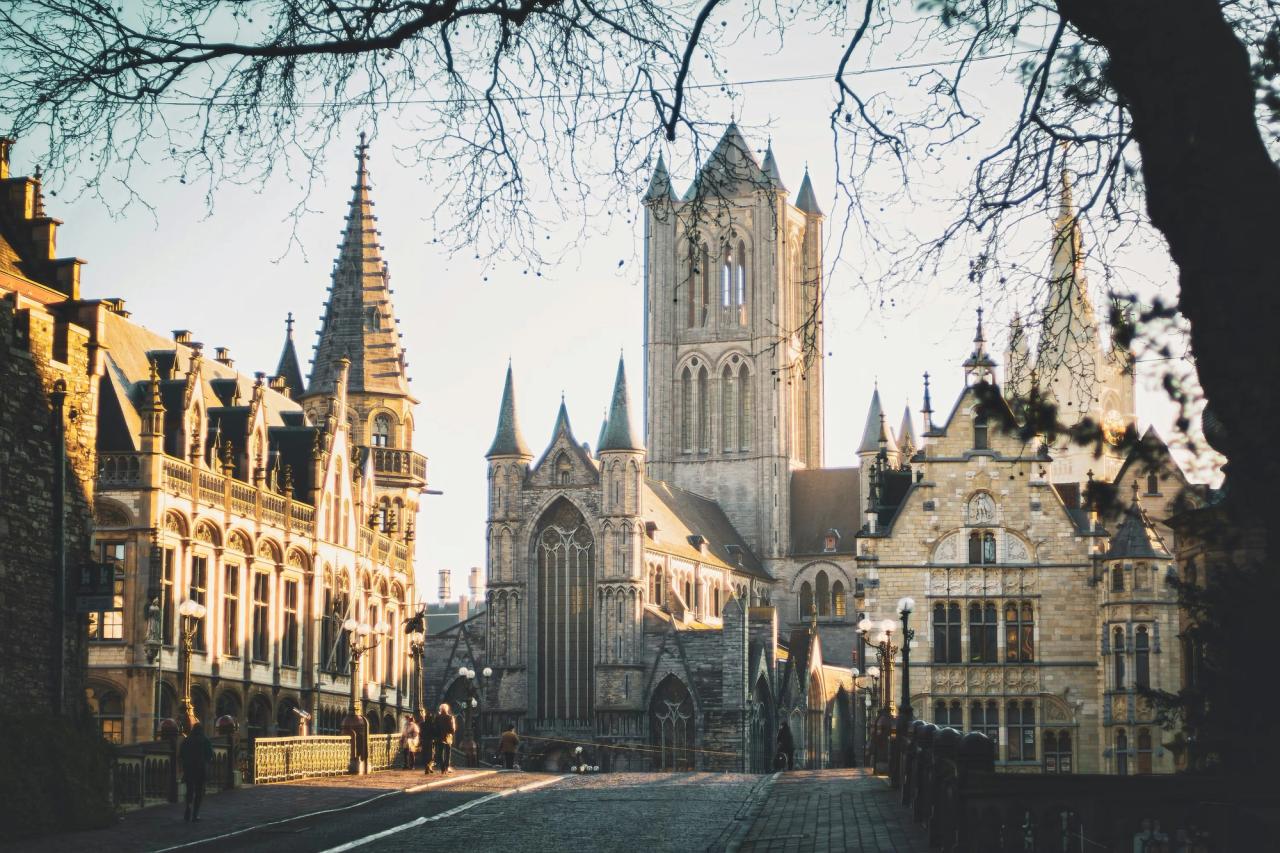
Ghent er en livlig universitetsby, hvor middelalderlige kanaler, brostensgader og et UNESCO-listet klokketårn møder en blomstrende kreativ kunstscene og en af Europas mest progressive madkulturer. Med cirka 263,000 indbyggere og en stor international studenterbefolkning rammer Ghent en sjælden balance: den kulturelle rigdom fra en historisk by med overkommeligheden og den afslappede energi fra en studieby. Den tiltaler studerende, unge professionelle og familier, der vil have gåvenlige gader, fremragende cykelinfrastruktur og et imødekommende, åbent fællesskab — alt sammen uden priser på Bruxelles-niveau.
Ghent bliver ofte overskygget af Bruxelles og Bruges, men belønner dem, der kigger nærmere. Patershol-kvarteret byder på middage i stearinlysets skær i middelalderlige gyder, Dok-Noord-området summer af kreative startups og street art, og kanalerne, der snor sig gennem byens centrum, føles som frosset i tiden. Men under den gamle verdens charme ligger en dybt moderne, bæredygtig by — trafikbegrænsede zoner, et "veggieday"-initiativ og et af de bedste cykelnetværk i Nordeuropa. Uanset om du er studerende, fjernarbejder eller en familie, der søger en tryg og kulturrig base, leverer Ghent.
Ghent i korte træk

- Befolkning
- Ca. 263.000 (metroregion ca. 600.000)
- Region
- Østflandern, Flandern
- Kendt for
- Middelalderligt bycentrum, Ghent University, kreativ kunstscene, Europas vegetariske hovedstad
- Gennemsnitlig husleje (1 soveværelse)
- €700-€950/måned
- Gennemsnitlig løn
- €2,100-€2,600 netto/måned
- Expat-fællesskab
- Mellemstort, studenterpræget, meget internationalt
- Sprog
- Nederlandsk (flamsk), engelsk tales bredt
- Klima
- Maritimt — milde vintre (2-6°C), kølige somre (18-23°C)
Hvorfor flytte til Ghent
- Overkommelig efter belgiske standarder: Huslejer og daglige udgifter er mærkbart lavere end i Bruxelles eller Antwerpen, hvilket gør Ghent til en af de byer i Flandern, hvor expats får mest for pengene.
- Belgiens cykelhovedstad: En flad by med over 300 km dedikerede cykelstier, cykelprioriterede gader og en kultur, hvor cyklen er standardtransportmidlet.
- Kreativ og kulturel energi: Street art, uafhængige gallerier, spillesteder med livemusik og den årlige Ghent Festivities-festival skaber en helårskalender for kultur, der kan måle sig med langt større byer.
- Studenterstemning med substans: Ghent University (grundlagt 1816) tiltrækker cirka 47,000 studerende og fylder byen med international energi, prisvenlige spisesteder og et væld af sprogudvekslinger og sociale grupper.
- Kompakt og gåvenlig: Det meste af det centrale Ghent er gågade eller trafikbegrænset, så daglige ærinder, socialt liv og pendling er behageligt uden bil.
- Central europæisk placering: Ghent ligger inden for 30 minutter fra Bruxelles, 25 minutter fra Bruges og under 3 timer fra Paris eller London med tog — en fremragende base til at udforske Europa i weekenderne.
At finde bolig i Ghent
Gennemsnitlige huslejer
| Kvarter | 1 soveværelse | 3 soveværelser | Karakter |
|---|---|---|---|
| Patershol | €850-€1,050 | €1,400-€1,800 | Middelalderlig labyrint, trendy restauranter, stemningsfuldt |
| Sint-Amandsberg | €650-€850 | €1,100-€1,400 | Roligt boligområde, familievenligt, gode sporvognsforbindelser |
| Brugse Poort | €600-€800 | €1,000-€1,300 | På vej frem, mangfoldigt, prisvenligt |
| Citadelpark-området | €750-€950 | €1,200-€1,600 | Grønt, tæt på museer, populært blandt expats |
| Binnenstad (centrum) | €850-€1,100 | €1,500-€1,900 | Turistisk hjerte, alt kan nås til fods, dyrest |
| Rabot | €550-€750 | €900-€1,200 | Studenterpræget, multikulturelt, budgetvenligt |
Sådan finder du bolig
- Immoweb.be: Belgiens største boligportal — første stop for de fleste expats, der leder efter lejligheder og huse.
- Zimmo.be: Samler boligannoncer fra flere kilder og er nyttig til at sammenligne muligheder på tværs af platforme.
- Facebook-grupper: Grupperne "Flats/Ghent" og "Expats in Ghent" slår jævnligt fremleje, deleboliger og korttidslejemål op.
- Studenterboliger (koten): For studerende viser universitetets boligkontor og websites som kot.gent ledige værelser i studenterboliger og delelejligheder.
- Lokalt tip: Mange udlejere i Ghent foretrækker længere lejekontrakter (1+ år). Begynd at søge mindst 4-6 uger før din flyttedato.
Lejeprocessen i Belgien
Det belgiske lejesystem har særlige regler, som expats bør kende:
- Lejekontrakttyper: De fleste lejekontrakter er "3-6-9"-kontrakter (standardlejemål på 9 år med opsigelsespunkter hvert 3. år). Kortere tidsbegrænsede lejemål er mulige, men mindre almindelige og kan have højere husleje.
- Depositum: Udlejere kræver typisk 2-3 måneders husleje som depositum, der står på en spærret bankkonto. Depositummet tilbagebetales ved lejemålets afslutning minus eventuelle skadesomkostninger.
- Indflytningsrapport (plaatsbeschrijving): En detaljeret registrering af boligens stand laves ved lejemålets start og slutning. Det beskytter både lejer og udlejer — sørg for, at den er grundig.
- Opsigelsesvarsel: Lejere skal give 3 måneders varsel ved fraflytning. I de første 3 år kan opsigelse af en 3-6-9-lejekontrakt kræve betaling af 1-3 måneders husleje i kompensation.
Tips til expats
- Ghent kræver registrering på rådhuset (Stad Gent) inden for 8 dage efter ankomst — udlejere forventer dette og vil ofte bede om bevis for registrering.
- Delebolig (koten) er almindeligt nær universitetet og er den billigste løsning (€350-€550/måned).
- Bed altid om en underskrevet lejekontrakt, og verificer Energy Performance Certificate (EPC), før du forpligter dig.
- Huslejer inkluderer ikke altid fællesudgifter (gemeenschappelijke kosten). Bekræft altid, om den oplyste pris er alt inklusive, før du underskriver.
- Vær opmærksom på svindel — overfør aldrig penge, før du har set boligen personligt eller gennem en verificeret kontakt.
- Hvis du kun bliver kortvarigt (under 6 måneder), kan servicerede lejligheder eller månedlige Airbnb-lignende lejemål være nemmere end at navigere på det traditionelle lejemarked.
Kvartersguide
- Patershol: Et middelalderligt kvarter med smalle gyder og restauranter i stearinlysets skær. Ideelt for madelskere og historieinteresserede, der er villige til at betale ekstra for stemning. Huslejerne er blandt de højeste i Ghent, men oplevelsen af at bo i et kvarter fra det 13. århundrede er unik. Området har begrænset parkering og passer bedst til dem, der bruger cykel eller offentlig transport.
- Binnenstad (bycentrum): Gåafstand til det hele — Gravensteen-slottet, Korenmarkt-pladsen, shopping og natteliv. Bedst for korttids-expats eller dem, der foretrækker et bilfrit liv. Forvent turisttrafik til fods om sommeren og støj fra weekendens festglade folk nær studenterområdet Overpoort.
- Sint-Amandsberg: Et fredeligt boligområde øst for centrum med gode sporvognsforbindelser og lavere huslejer. Populært blandt familier og professionelle, der søger mere plads og et roligere tempo. Ugentlige markeder og lokale butikker giver det en landsbyagtig stemning midt i byen.
- Brugse Poort: Et multikulturelt kvarter vest for Leie-floden, som gennemgår en stille gentrificering. Godt for budgetbevidste expats, der ønsker lokal karakter, en spirende cafekultur og nærhed til kanalen. Nye coworking-steder og kunstneratelierer tiltrækker et yngre kreativt miljø.
- Bourgoyen-området: Grønt og rummeligt, tæt på naturreservatet Bourgoyen-Ossemeersen. Ideelt for friluftsmennesker og børnefamilier, der vil have naturen lige uden for døren og stadig være inden for cykelafstand af centrum. Boligerne er mest fritliggende eller halvfritliggende og ligger i de højere prisklasser.
- Citadelpark-kvarteret: Med SMAK-museet for samtidskunst, Museum of Fine Arts og en stor park som ankre tiltrækker området akademikere, kulturorienterede expats og familier, der værdsætter grønne områder tæt på centrum. Huslejerne er moderate, og stemningen er rolig og boligpræget.
Leveomkostninger i Ghent
Månedligt budgetoverblik
| Kategori | Budgetinterval |
|---|---|
| Husleje (1 soveværelse, centrum) | €750-€950 |
| Forsyning (el, vand, varme) | €120-€180 |
| Internet | €35-€50 |
| Dagligvarer | €250-€350 |
| Transport (cykel/lejlighedsvis sporvogn) | €20-€60 |
| Spise ude (4x/måned) | €80-€140 |
| Fritid/fitness | €25-€45 |
| I alt | €1,280-€1,775 |
En enlig kan leve komfortabelt i Ghent for cirka €1,600/måned. Familier på fire bør budgettere med omkring €3,200-€3,800/måned, afhængigt af bolig og valg af børnepasning. Ghent er cirka 15-20% billigere end Bruxelles for et sammenligneligt livsstilsforbrug.
Daglige udgifter
- Kaffe: €3.00-€3.50
- Frokost (uformelt): €12-€16
- Månedskort til transport (De Lijn): €56 (enkeltzone)
- Øl (bar): €3.50-€5.00
- Biografbillet: €10-€12
- Fitnessmedlemskab: €25-€45/måned
- Månedligt mobilabonnement: €10-€20
- Brød: €2.00-€3.00
- Måltid på en mellemklasse-restaurant: €20-€35
At komme rundt i Ghent
- Cykling: Ghent er den bedste by i Belgien at cykle i. De fleste indbyggere cykler året rundt, også i regn. Køb en brugt cykel for €50-€150 i en af de mange cykelbutikker eller via 2dehands.be. Byen tilbyder også Velo-cykeldelingssystemet for €60/år med stationer over hele centrum. Kommunen investerer aktivt i nye cykelparkeringer, cykelmotorveje og cyklistvenlige kryds.
- Offentlig transport: De Lijn driver sporvogne og busser i hele byen og forstæderne. En enkelt tur koster €2.50; et månedskort koster €56. Sporvognsnettet er pålideligt til at nå yderkvarterer og togstationen.
- Bil: Ghent har en lavemissionszone (LEZ) — ældre dieselkøretøjer kan få bøder eller adgangsforbud. Parkering i centrum er dyrt (op til €3.50/time) og begrænset. De fleste indbyggere har ikke brug for bil i hverdagen. Delebilstjenester som Cambio og Poppy er tilgængelige til lejlighedsvis brug.
- Lufthavn: Brussels Airport (BRU) ligger cirka 60 minutter væk med tog. Brussels South Charleroi (CRL) betjener lavprisselskaber og ligger cirka 90 minutter væk med shuttlebus.
- Intercitytog: Stationen Ghent-Sint-Pieters forbinder til Bruxelles (30 min), Bruges (25 min), Antwerpen (50 min) og Paris (via Eurostar-forbindelse, cirka 2.5 timer). Togene kører hyppigt hele dagen.
- Vandtransport: Ghent-Terneuzen-kanalen forbinder byen med Nordsøen og understøtter en af Europas travleste indlandshavne. Passagerkanalbåde tilbyder naturskønne ture gennem byens centrum.
- El-løbehjul og elcykler: Delte mikromobilitetstjenester som Lime og Bolt opererer i Ghent og tilbyder appbaseret leje til korte ture. Priserne er typisk €1 for oplåsning + €0.15-€0.25/minut.
- Taxaer: Taxaer er tilgængelige, men bruges ikke ofte af indbyggere på grund af den udbredte cykling og offentlige transport. Uber opererer i Ghent med priser, der typisk er 10-20% billigere end traditionelle taxaer.
Sundhedsvæsen i Ghent
- Hospitaler/klinikker: UZ Gent (University Hospital Ghent) er et af Belgiens førende medicinske centre og et stort forskningshospital med specialister inden for næsten alle områder. AZ Sint-Lucas er en anden velanset mulighed med et bredt udvalg af specialer og ry for kortere ventetider.
- Engelsktalende læger: Bredt tilgængelige, især nær universitetshospitalet og i kvarterer, der er populære blandt expats. Ghents expat-fællesskab deler jævnligt anbefalinger i onlinegrupper. UZ Gents website oplister engelsktalende specialister efter afdeling.
- Apoteker: Der er mange over hele byen. Kig efter det grønne kors. De fleste har åbent mandag-lørdag; nogle tilbyder weekend- og aftentimer. Apotekere i Belgien kan rådgive om mindre helbredsproblemer uden tidsbestilling.
- Alarmnummer: 112 (ambulance/brand) eller 101 (politi). For ikke-akut lægelig rådgivning uden for åbningstid, ring 1733.
Sygesikring
- Alle belgiske indbyggere skal være medlem af en sygekasse (mutualiteit). De vigtigste muligheder er CM, Solidaris, Helan og Liberale Mutualiteit.
- Dækningen refunderer de fleste besøg hos praktiserende læge (typisk €4-€6 i egenbetaling), hospitalsophold, tandbehandling og recepter.
- Expats ansat i Belgien er automatisk dækket gennem sociale sikringsbidrag.
- Selvstændige expats skal selv registrere sig hos en mutualiteit og betale kvartalsvise bidrag.
- Overvej supplerende privat forsikring for hurtigere adgang til specialister eller private hospitalsstuer.
- Belgisk sundhedsvæsen er blandt de bedste i Europa og ligger konsekvent i den globale top 20. Ventetider er generelt rimelige, selvom ikke-akutte specialisttider kan tage flere uger.
Fa en personlig flytteplan
Skriv din e-mail, sa sender vi en skraeddersyet tjekliste plus tre tilbud fra godkendte flyttefirmaer.
Kultur og livsstil
- Middelalderarv: Gravensteen-slottet, St. Bavo's Cathedral (hjemsted for det berømte Ghent Altarpiece af Van Eyck-brødrene) og det UNESCO-listede Belfry skaber et levende museum i byens centrum. At gå gennem de middelalderlige gader er en daglig fornøjelse for Ghents indbyggere.
- Kunst og musik: Ghent er vært for Ghent International Film Festival, Jazz Fest Gent og utallige street art-installationer. Kunstcentret Vooruit — en ombygget arbejderhal — er et ikonisk kultursted med koncerter, teater og udstillinger året rundt. Koncertsalen Handelsbeurs er endnu en perle for klassisk og moderne musik. Den årlige Ghent Light Festival forvandler byens middelalderfacader til lærreder for lyskunst.
- Vegetarisk hovedstad: Ghent erklærede torsdag for "Veggieday" og har flere vegetariske og veganske restauranter per indbygger end nogen anden belgisk by. Det ugentlige fredagsmarked på Vrijdagmarkt er en lokal institution for friske råvarer og lokale specialiteter.
- Ghent Festivities (Gentse Feesten): En 10-dages gratis gadefestival hver juli, en af Europas største kulturfestivaler, der tiltrækker over 1.5 million besøgende. Forvent livemusik på hvert hjørne, pop-up-barer, teaterforestillinger og en by, der summer af energi.
- Natteliv: Overpoortstraat-området er centrum for studenter-nattelivet, mens Patershol- og Dok-Noord-områderne tilbyder mere sofistikerede cocktailbarer, mikrobryggerier og spillesteder med livemusik. Ghents natteliv er livligt, men overskueligt — du kan få en fantastisk aften ude uden intensiteten fra Bruxelles eller Amsterdam.
- Vandveje og parker: Ghents kanaler er ikke bare smukke — de definerer byen. Kajak, bådture og picnic ved vandet er en del af hverdagen. Parker som Citadelpark og naturreservatet Bourgoyen giver grønne åndehuller.
Mad og spisesteder
- Lokale specialiteter: Waterzooi (cremet kyllinge- eller fiskestuvning), Neuzekes (kegleformet slik), Mattentaarten (butterdejstærter) og Tierenteyn-Verlent-sennep. Ghent har også en stærk chokoladetradition — besøg chocolatiers som Chocolaterie Van Hoorebeke for håndlavede belgiske praliner.
- Bedste spiseområder: Patershol for eksklusivt flamsk køkken, Overpoort for billige studentermåltider og Dok-Noord-området for trendy nye spisesteder og mikrobryggerier.
- Budgetmuligheder: Universitetets studenterrestauranter tilbyder komplette måltider for €5-€7. Supermarkeder (Colruyt, Aldi, Lidl) er billigst til dagligvarer. De ugentlige markeder på Vrijdagmarkt og Groentenmarkt tilbyder friske råvarer til konkurrencedygtige priser.
- Kaffekultur: Ghent har en blomstrende specialkaffescene. Prøv OR Espresso Bar, Mokabon og Bar Bidon for lokalt ristede bønner og en afslappet, arbejdsvenlig atmosfære.
- Øl: Belgiens ølarv lever i Ghent. Besøg Gruut Brewery (som brygger uden humle og bruger middelalderlige urter), eller prøv lokale barer som Het Waterhuis aan de Bierkant langs Leie-floden.
Vandveje og parker
Ghents kanaler er ikke bare smukke — de definerer byen. Kajak, bådture og picnic ved vandet er en del af hverdagen. Parker som Citadelpark, naturreservatet Bourgoyen-Ossemeersen og fritidsområdet Blaarmeersen giver grønne åndehuller med svømning, beachvolley og sejlads. Det nyudviklede havnefrontområde Dok-Noord kombinerer industriel arv med moderne boliger, kunstrum og weekendmarkeder.
Expat-fællesskab
- Expats i Ghent: Aktive Facebook-grupper ("Expats in Ghent", "Internationals in Ghent") og Meetup.com-grupper arrangerer regelmæssige sociale events, netværksaftener og sprogudvekslinger.
- Internationale organisationer: Ghent Universitys International Office afholder introduktionsprogrammer for nye studerende og forskere. Byens integrationstjeneste (In-Gent) tilbyder støtte med papirarbejde, nederlandskkurser og lokale kontakter.
- Sprogudvekslinger: Tandem Ghent og Café Lingua-events parrer nederlandskstuderende med modersmålstalere i afslappede barmiljøer — en fremragende måde at få lokale venner på, mens du forbedrer dine sprogfærdigheder.
- Sport og hobbyer: Ghent har løbeklubber, roning på kanalerne, klatrehaller og mange motionsligaer, der er åbne for internationale.
- Familieressourcer: Ghents expat-familienetværk arrangerer legeaftaler, skoleintroduktioner og weekendudflugter for familier, der vænner sig til livet i Flandern.
Jobmarked i Ghent
- Vigtigste brancher: Bioteknologi, logistik (Ghents havn er en af Europas største), videregående uddannelse, digitale/kreative sektorer og beskæftigelse i den offentlige sektor.
- Store arbejdsgivere: Ghent University, UZ Gent hospital, ArcelorMittal, VolkerWessels og talrige tech-startups i Dok Noord- og Rabot-distrikterne.
- Gennemsnitlige lønninger efter sektor:
| Sektor | Månedligt netto |
|---|---|
| IT / tech | €2,200-€3,200 |
| Sundhedsvæsen | €2,000-€2,800 |
| Uddannelse / akademisk | €2,100-€2,900 |
| Logistik / havn | €2,000-€2,600 |
| Kreativ / medier | €1,900-€2,500 |
- Ressourcer til jobsøgning: VDAB (Flanderns arbejdsformidling, vdab.be), LinkedIn Belgium, Ghent Universitys jobportal (jobs.ugent.be) og karriereportalen for Ghents havn.
- Freelance og selvstændig virksomhed: Ghents kreative miljøer og techmiljøer egner sig godt til freelancere. Belgiske skatteforpligtelser for selvstændige håndteres gennem en socialforsikringskasse (sociaal verzekeringsfonds) og kvartalsvise VAT-angivelser.
- Arbejdstilladelser: Ikke-EU-borgere skal have arbejdstilladelse. Højt kvalificerede medarbejdere kan ansøge om en single permit, der kombinerer arbejds- og opholdstilladelse. Arbejdsgivere i Ghent sponsorerer jævnligt internationalt talent, især inden for biotek og akademia. EU/EEA-borgere kan arbejde frit uden tilladelse.
- Fjernarbejde: Ghents coworking-steder (herunder Bar d'Office, Co.Station og mange cafevenlige steder) gør byen til en stærk base for fjernarbejdere. Byens livskvalitet, pålidelige internet og centrale europæiske placering er store trækplastre.
- Bemærk: Belgiske indkomstskattesatser er relativt høje (25-50% interval), men de finansierer robuste offentlige tjenester, herunder sundhedsvæsen, uddannelse og infrastruktur.
Uddannelse i Ghent
- Internationale skoler: Ghent International School (GIS, alder 3-18, engelsksproget læseplan), Edith Stein International School (katolsk, tosproget nederlandsk-engelsk) og European School i nærliggende Mol for familier tilknyttet EU-institutioner.
- Universiteter: Ghent University (UGent) — konsekvent placeret i den globale top 100 — tilbyder et bredt udvalg af engelsksprogede kandidatprogrammer og tiltrækker forskere fra hele verden. Artevelde University of Applied Sciences tilbyder praksisorienterede bachelorgrader med stærke bånd til erhvervslivet.
- Sprogskoler: CVO Ghent (Centrum voor Volwassenenonderwijs) tilbyder statsstøttede nederlandske integrationskurser (ofte gratis for registrerede nyankomne). Private akademier, herunder Berlitz og ILT, henvender sig til expats, der har brug for undervisning i engelsk, fransk eller nederlandsk.
- Børnepasning: Ghent har et veludbygget system af offentlige og private vuggestuer og fritidsordninger (Buitenschoolse Opvang). Efterspørgslen er høj — registrer dig tidligt, helst under graviditeten eller før ankomst. Omkostninger afhænger af indkomst og kan ligge fra €5 til €30 per dag.
- Børnehave og grundskole: Det belgiske system tilbyder gratis offentlig skolegang fra 2.5-årsalderen. Nederlandsk er undervisningssproget i flamske skoler, hvilket hjælper børn med hurtigt at blive integreret. Tilmeld tidligt — populære skoler bliver hurtigt fyldt, især i centrale kvarterer.
- Videregående uddannelse ud over UGent: Ud over de vigtigste universiteter har Ghent flere forskningsinstitutter, designskoler og konservatorier, der tager imod internationale studerende. Byens akademiske økosystem rækker ud over traditionelle universitetsprogrammer og ind i erhvervsrettet og kreativ uddannelse.
Flyttetjekliste for Ghent
- Sikr bolig eller midlertidig indkvartering (4-6 uger i forvejen)
- Få det nødvendige visum eller opholdstilladelse via den belgiske ambassade i dit hjemland
- Arranger sygesikring (kræves for belgisk registrering)
- Saml apostillepåtegnede dokumenter (fødselsattest, vielsesattest, universitetsgrader)
- Undersøg dit kvarter, og opret søgealarmer på Immoweb og Zimmo
- Download nyttige apps: De Lijn (offentlig transport), Immoweb, 2dehands.be (annoncer) og Too Good To Go (billig mad fra lokale restauranter)
- Registrer dig på Ghent City Hall (Stad Gent) inden for 8 dage efter ankomst — medbring lejekontrakt, pas og opholdstilladelse
- Åbn en belgisk bankkonto (KBC og BNP Paribas Fortis er populære blandt expats; de fleste kræver personlig aftale)
- Registrer dig til et belgisk telefonnummer (Proximus, Base eller Mobile Vikings for prisvenlige forudbetalte muligheder)
- Registrer dig hos en lokal praktiserende læge (huisarts) nær din adresse — spørg naboer eller expat-grupper om anbefalinger
- Book tid til dit eID (belgisk elektronisk identitetskort), hvis relevant
- Download Stad Gent-appen til lokale nyheder, events og kommunale tjenester
- Ansøg om et Velo-cykeldelingsabonnement (€60/år) ved en Velo-station eller online
- Tilmeld dig et nederlandsk sprogkursus hos CVO Ghent eller en privat sprogskole
- Meld dig ind i mindst én expat- eller social gruppe for at opbygge dit lokale netværk
- Udforsk dit kvarter — find dit lokale bageri, marked og park
- Opret forsyningskonti (vand, gas/el), hvis de ikke er inkluderet i din husleje
- Registrer din cykel hos det lokale politi for tyverisikring
- Åbn en opsparings- eller investeringskonto, hvis det er nødvendigt (belgiske skatteresidenter kan få fordel af skattebegunstigede opsparingsordninger)
- Sæt dig ind i belgiske skatteforpligtelser — kontakt en lokal revisor, hvis du har international indkomst
Relaterede guides
- [Flytning til Belgien] — omfattende landeguide
- [Flytning til Bruxelles] — guide til hovedstaden
- [Flytning til Bruges] — guide til nærliggende flamsk by
- [Flytning til Antwerpen] — guide til Belgiens største havneby